

I was at the European Union (EU) Cotton Alliance informational lunch this spring, trying to neatly nibble on European cheeses when I was passed a plain brown Pima Cotton shirt with a QR code brandished on its tag. Within seconds of scanning I was directed to a website:
“You know what you choose! From farm to end product, EU Cotton ensures full transparency and responsibility at every stage of production.”
I was able to access information about farms, suppliers, and production facilities. What I couldn’t find was the people behind it. That gap stayed with me.
The QR code was an introduction to the EU’s new mandated Digital Product Passports (DPP), an addition to global pushes for ‘Extended Producer Responsibility’ intended to increase transparency and enable sustainability measures.
But really, it’s nothing we haven’t seen before. From NFC Chips, certifications, to DPP’s - solutions for transparency leave one key thing out: people.
Ignoring this, industry leaders endlessly pontificate on new tools they can create to achieve transparency and knowledge sharing, to their dissatisfaction.
But there is a better way.
And that way may not even be in the room where these pontifications are happening. It is sitting in a village in Rajasthan where traceability systems are enabled through applications of community building and centering marginalized communities to create a structure of trust.
Madhu Vaishnav, a Jodhpur native and self-proclaimed “woman of the desert” was in that village when she sought to reimagine traceability systems by piloting a Cotton Project. This project created traceability from seed to garment under her slow fashion social enterprise, Saheli Women.
More than that, the project showed that traceability is actually very simple if we alter our lens slightly; to trust in people holding indigenous knowledge systems rather than tens of rounds of new methods to show metrics.
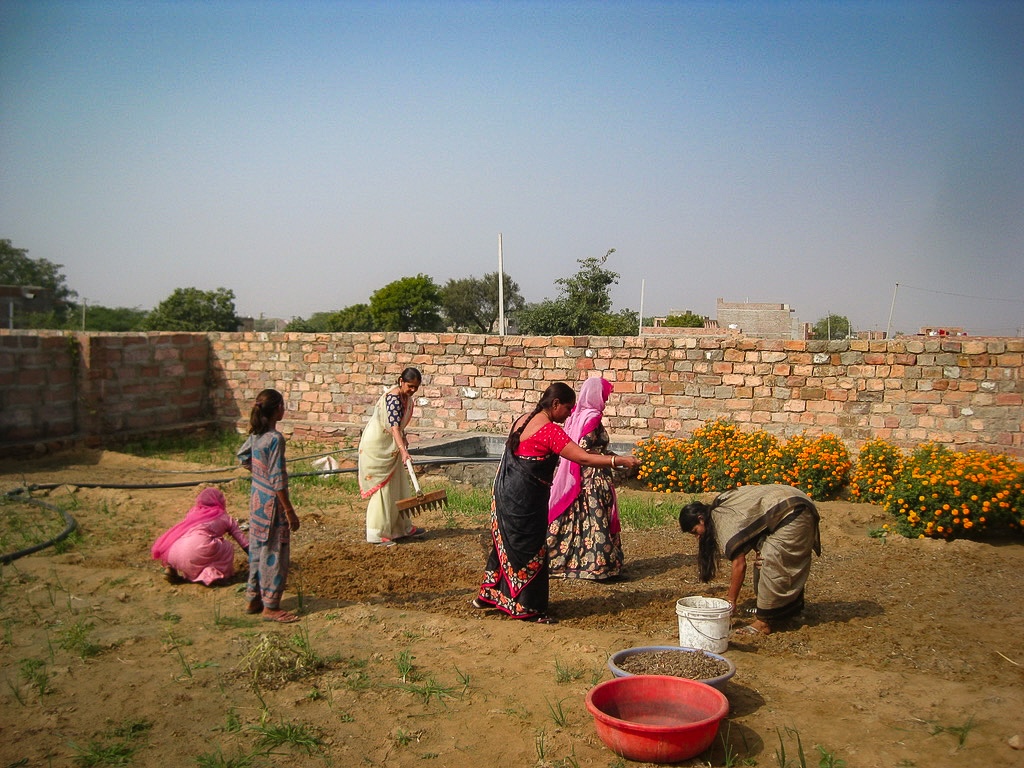
Before British colonization, whole communities in India built economies around their product, signifying a symbiotic value chain in conversation with the land. In these communities, people farmed, cleaned, and spun cotton to create garments. But the British introduced separate factories and monoculture farms, increasing the use of pesticides and completely disconnecting the value chain.
Colonialism not only changed how cotton was produced - it fractured the relationships that once connected every step of the value chain.
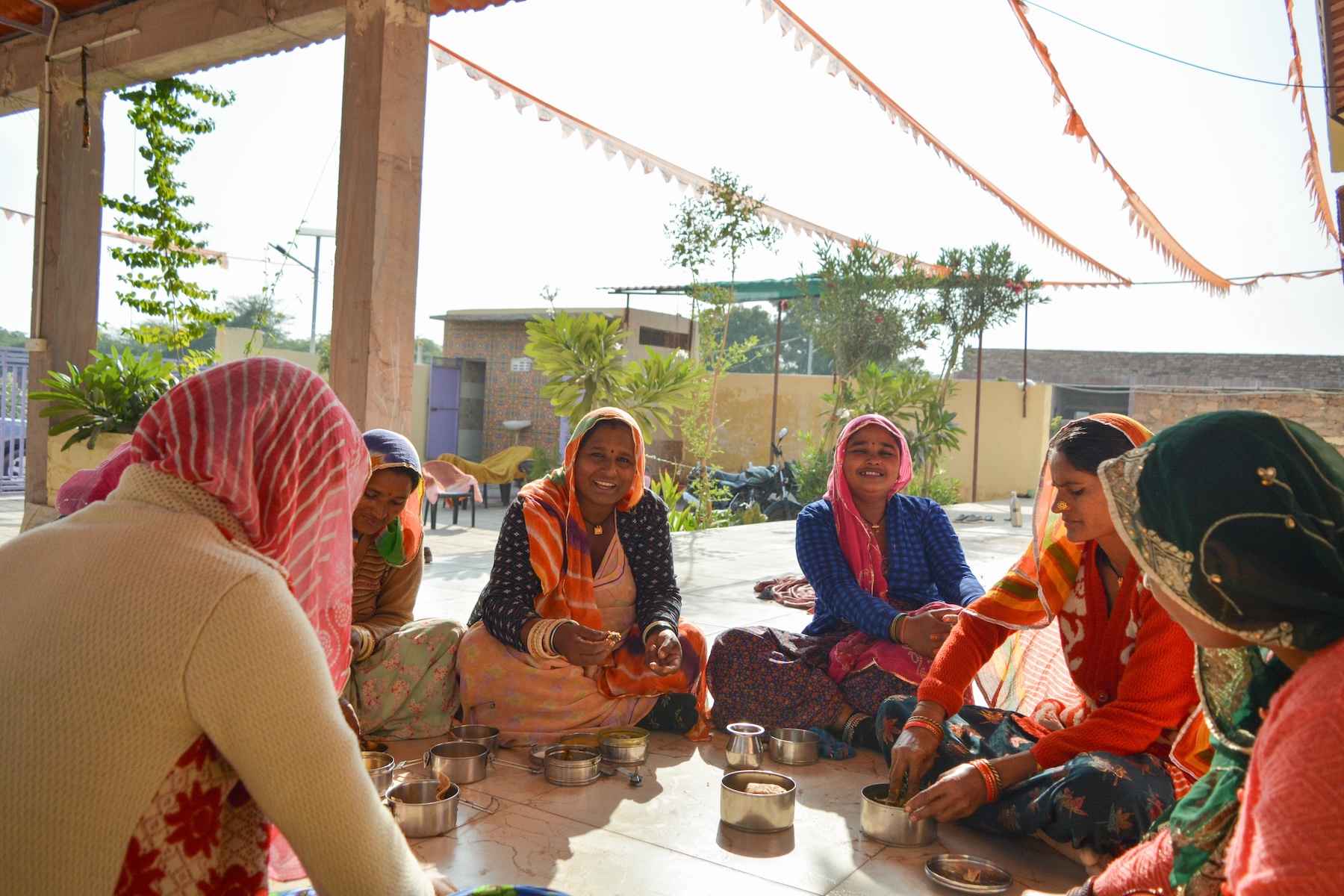
With Madhu’s Cotton Project, she sought to revive pre-British methods of production, localizing the value chain from farmer, to spinner, to weaver.
“Brands always ask for certifications but it’s a very complex system. We are doing this [project] so we can show you where our garments were made from the seed. All these certifications are greenwashing…” she continued, talking about new measures of data sharing, “It’s so difficult to crack how much water is being moved and saved. If we ourselves can’t track it, how are we expected to get this information to others? Suppliers will lie after being demanded questions.”
Citing these challenges and information gaps, her approach placed specific rules on the project: ensuring regular meetings, additional revenue sources for the farmers they worked with, and the prioritization of indigenous farming knowledge.
“The value in these rules was in protecting mother earth and giving better revenue and support for farmers. If there’s anyone that can improve earth health on a massive level that is the farmer,” Madhu explained, touching on the foundations of the project.
Bringing back Indigenous seeds and cotton communities was a pioneering effort in Rajasthan. Saheli Women was tasked with restoring regenerative methods of relationships and farming in the value chain.
Or as Madhu calls it, “human chain.”
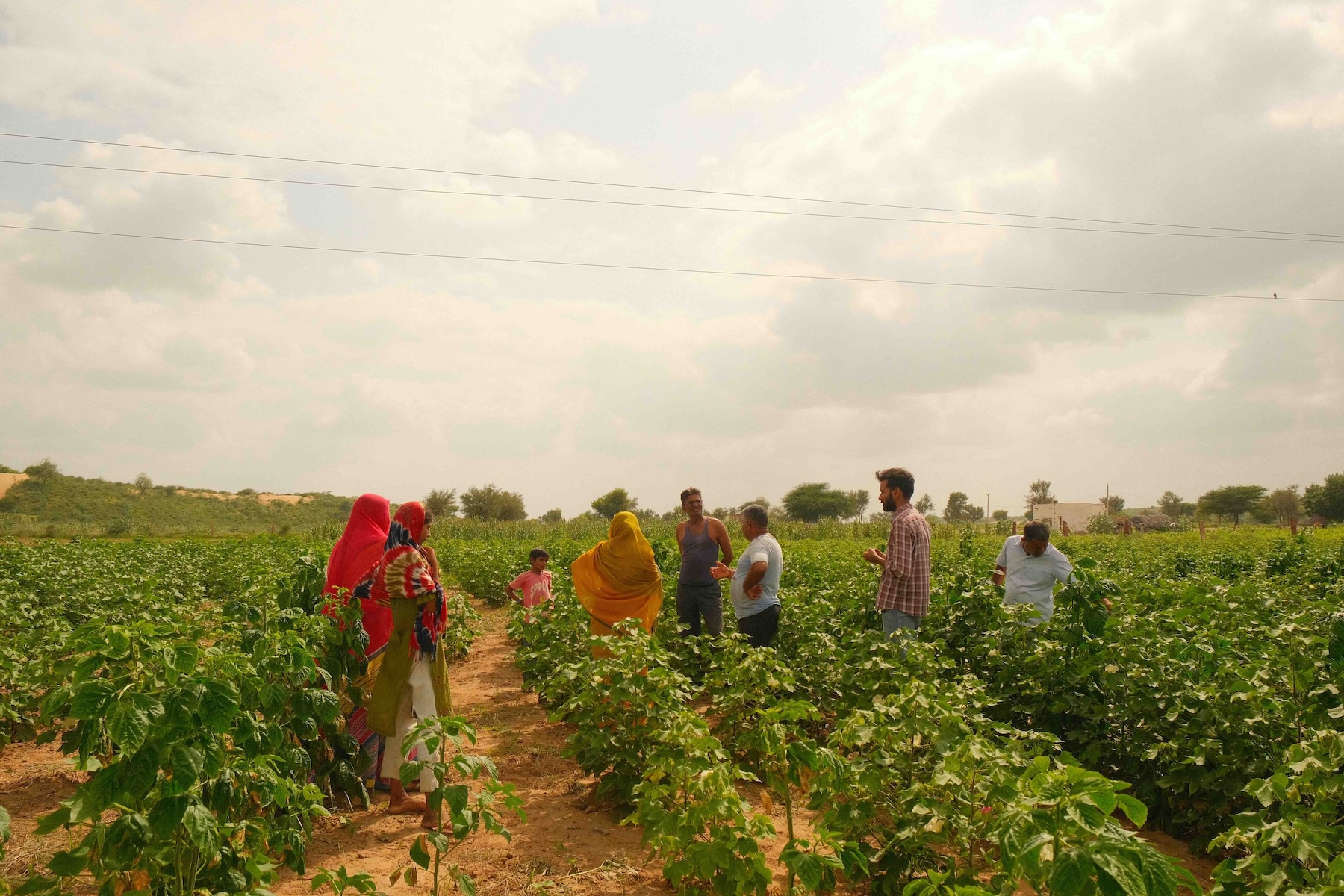
Photo by Kitila Davies
In starting her pilot of 8 farming families, Madhu went back to the basics; she built relationships with the farmers and enlisted an outreach leader, Imramji, who was from the local farming community and husband of one of Saheli Women’s weavers.
“Imramji spoke to the people about the impact and the passion. He understands the value of protecting the earth, so we chose him as our outreach person,” Madhu explained, stressing the importance of working with people within the community.
But her and her team were not mere conductors. Throughout the cotton process, they created infrastructure for support. They kept it simple and accessible, creating Whatsapp groups and scheduling communal meetings where everyone was able to troubleshoot and share tips with one another. Compromise was reached between different steps of the value chain and problems were solved by understanding the unique knowledge, expertise, and even limits of each person. A simple idea of collectivity that was rooted in process.
Many times, the Saheli Women team would simply go to the farms to drink chai, keeping farming talk to a minimum as they joked and baked in the desert heat, the women dabbing their sweat with chunnis.
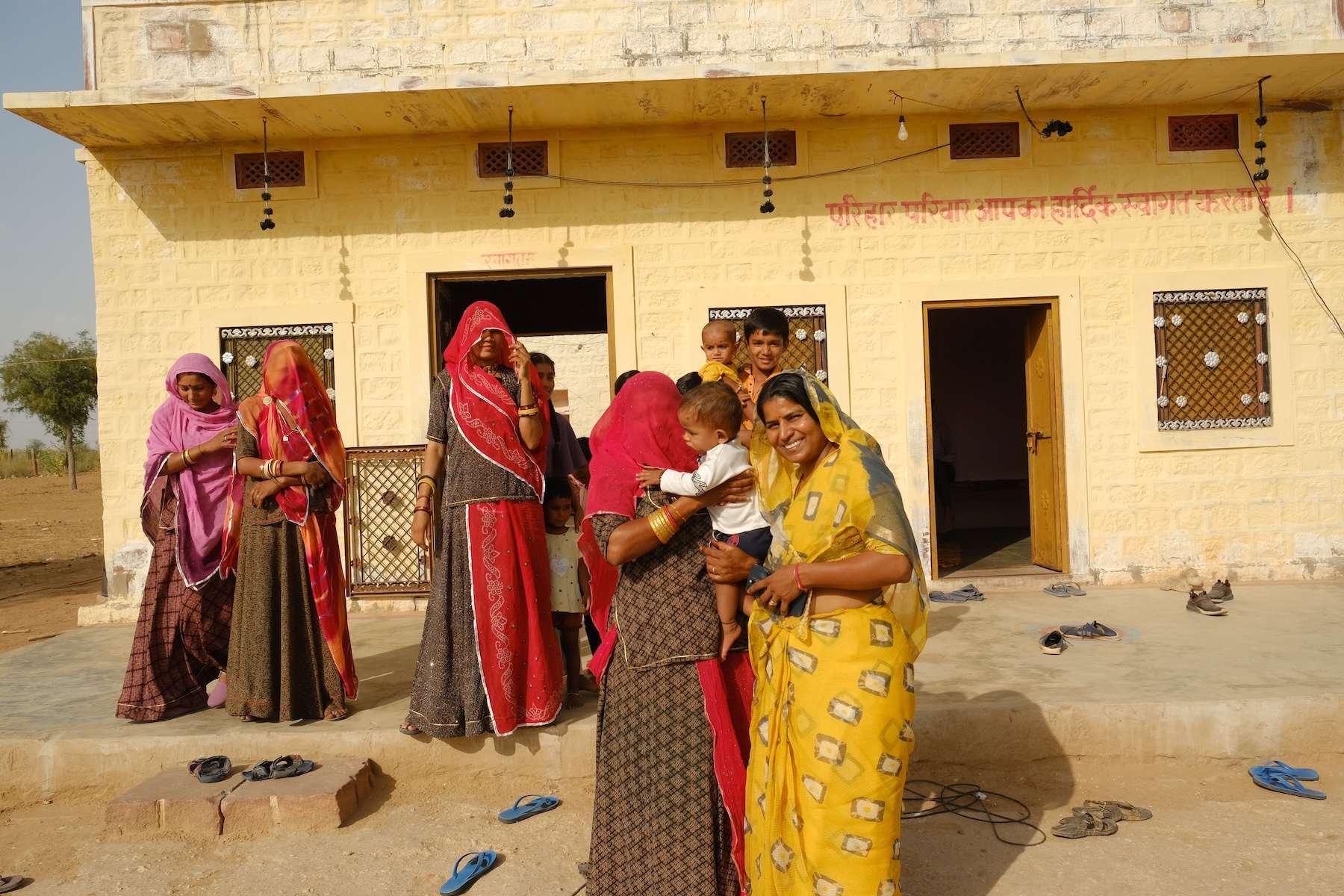
Photo by Kitila Davies
Some such visits make it to the Saheli Women instagram page, brandishing vibrant photos of smiles, laughs, and general feelings of familiarity. From the outside, it seems spontaneous. And while Madhu seizes any opportunity to visit the home of a partner, these visits were also very intentional. She recognized the importance in building back broken relationships in the value chain; building trust that enabled better problem solving, better transparency, and better experiences. In systems where we sit so far from each other, spontaneous visits to a partner’s home is not possible, and according to Madhu, then neither is the ability to achieve traceability.
A few months after launching the Saheli Cotton Project, there was an eruption of pests. Normally, when pests would come, indigenous farmers used neem on their own crops, knowing that it would do the trick. But they hadn’t done it on a commercial scale.
“Whenever we farm for our own family we never use pesticides but we do for the market for the crop to come out good,” mentioned one farmer, Sohani Devi.
“Good” meant plentiful; but organic farming hadn’t been used on a commercial scale in so long that it really meant no one had given farmers the interest, time, and investment to test their indigenous knowledge of pest control. While balancing yield pressures from suppliers, farmers must also grapple with the realities of pesticide-use degrading their soil in order to meet demands. Most of the time, pesticide packets are sold with disclaimers in English, leaving the farmers unaware of the extent of health impacts; a knowledge gap indicating a disconnected value chain.
On one hand companies are demanding data from farmers like water retention and resource use. On the other hand, they are not investing or asking for health data coming from pesticide-use.
Failing to see farmers as humans with health needs is the same blindspot that prevents them from inquiring about alternative forms of data collection and land-based approaches to sustainability goals. The cycle of trust breaks, and farmers keep their data close to their chest.
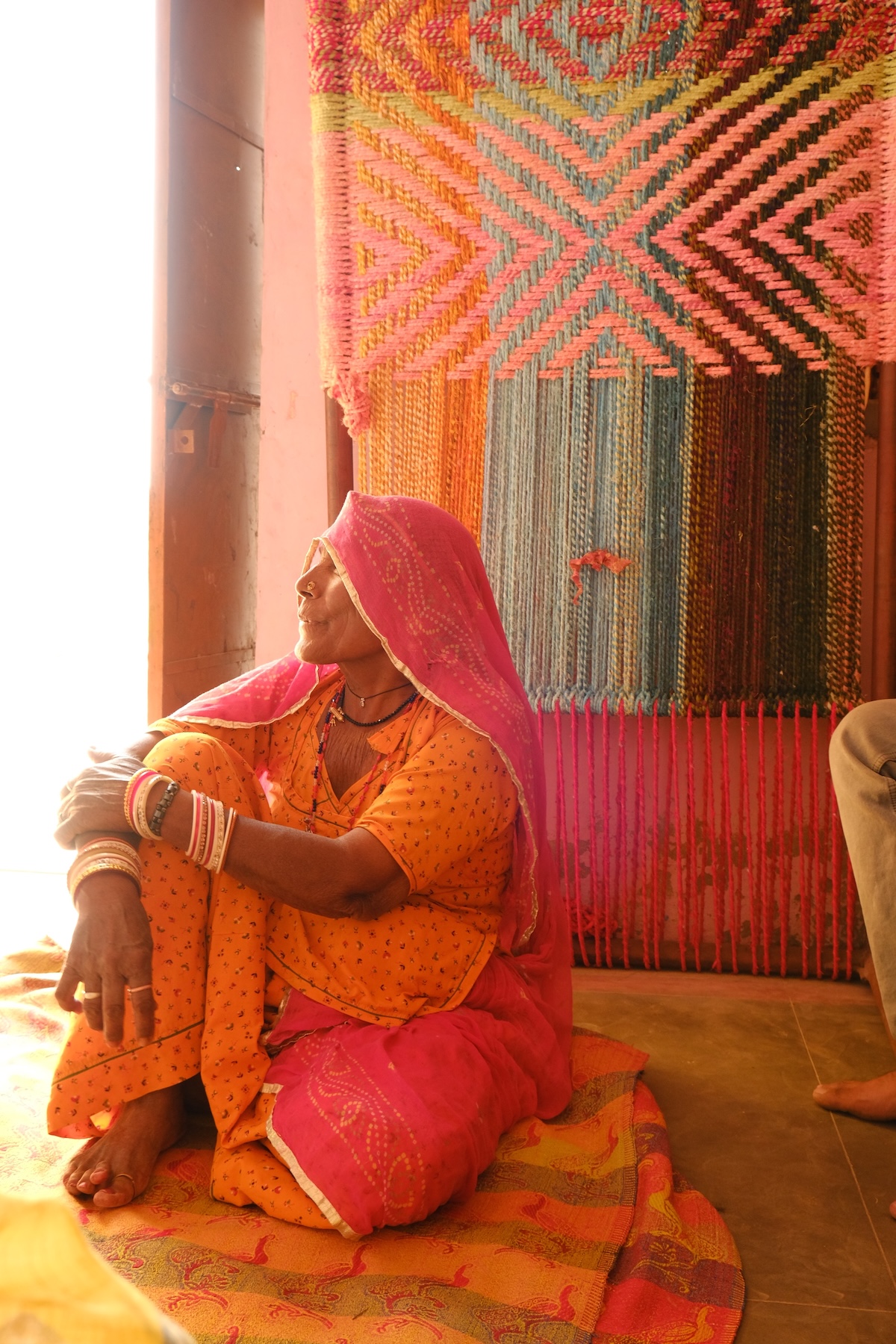
Photo by Kitila Davies
“So much is hidden, [the farmers] don’t have a platform to speak or share their success and challenges,” explained Madhu.
In one focus group meeting, they tested their ability to compromise on a simple step of the process - making the neem oil. In some communities, neem oil was made by the farmers. Upon feedback of its labor-heavy process Madhu simply supplied the oil for them to use, absorbing the increased cost margin not to save time, but to alleviate the burden on the farmers.
This kickstarted success.
The effectiveness of the indigenous cotton-planting methods spoke for themselves. In fact, seven of the eight pilot families recorded yields equal to or greater than the previous year.
More importantly, the project increased confidence levels and lowered stress amongst the farmers, leading to an increased willingness to participate in the project again, and an increased willingness to compromise and share information.
Satisfied with the results, Madhu turned her gaze towards the other steps of the cotton process. To complete the circle of true transparency, the Saheli Women ecosystem also had to bring cleaning, ginning, and charkha spinning into their local human chain - much like how it was practiced before. So Madhu sent the call to others with similar traceability systems.
One community in Maharashtra, Graham Sewa Mandal, had that same vision. Nestled in the heart of Wardha - mere miles from the Gandhi ashram - members of that community planted, spun, and wove their indigenous Desi cotton, welcoming Saheli Women into their fold of sustainability with open arms.
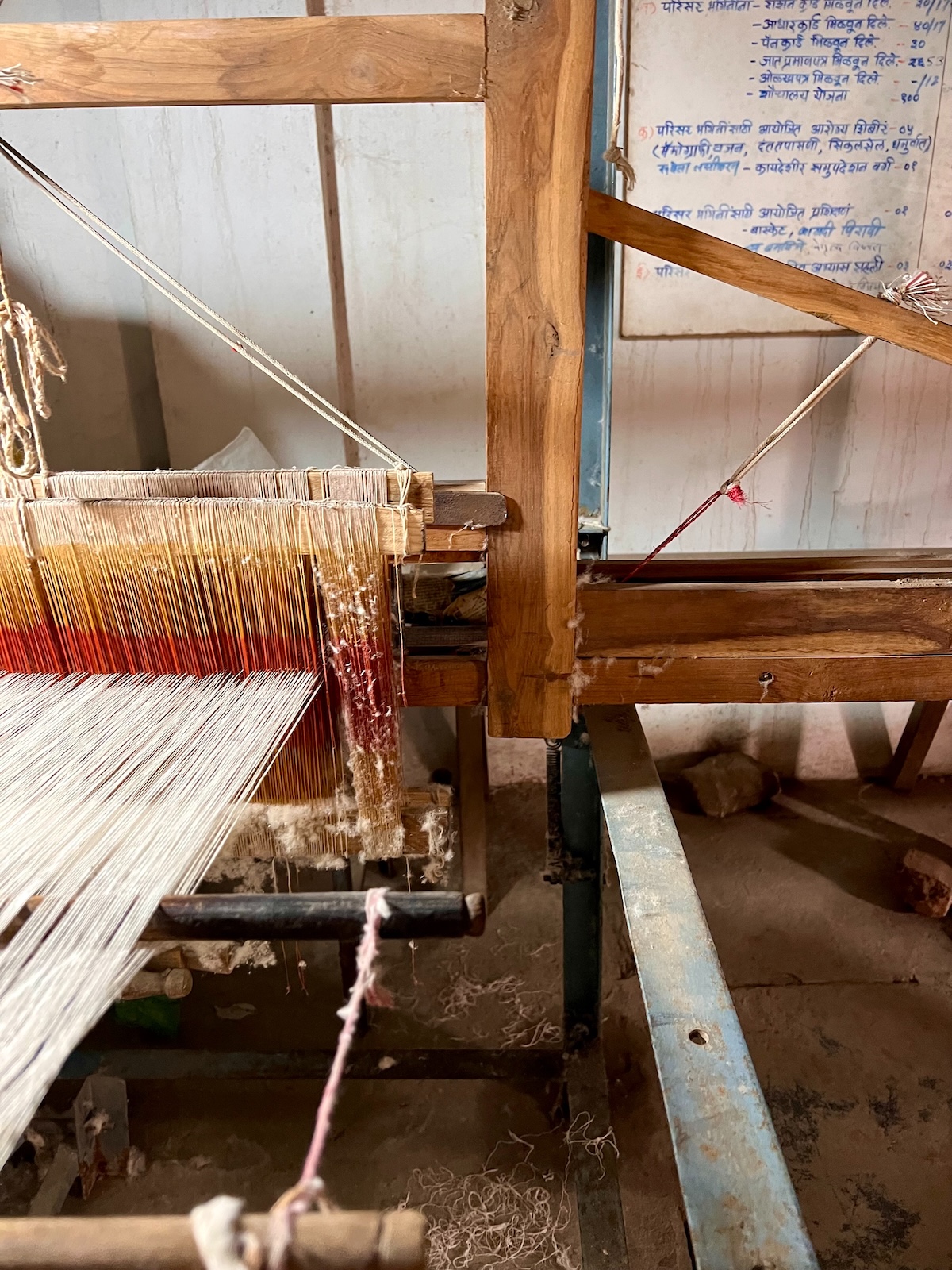
The founder’s grandson, Chinmay, gave a tour of their village, explaining the intricacies of organic cotton farming and how to turn the native plant into yarn with less resource-consuming methods.
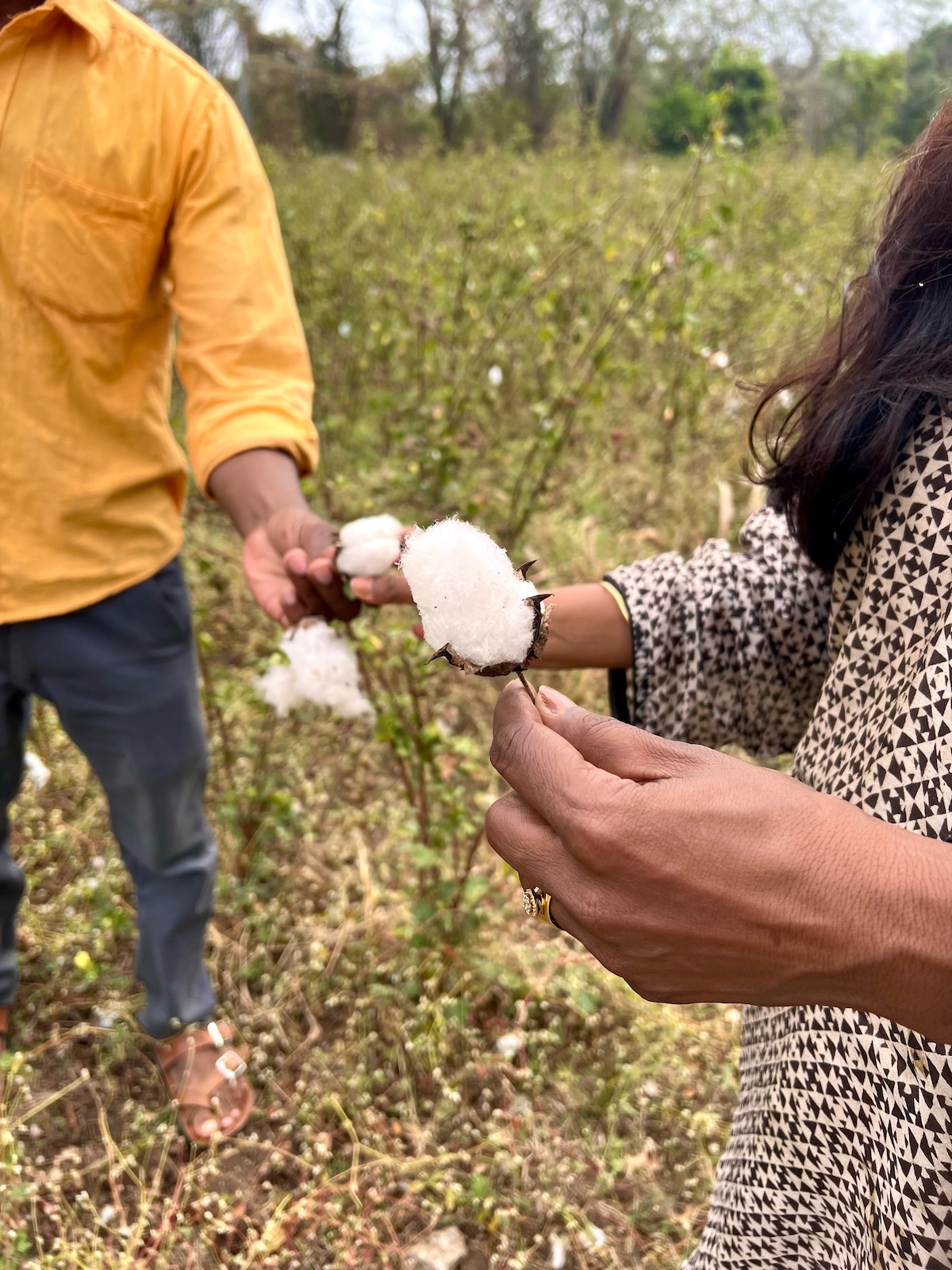
As Chinmay passed fields of dull green, cotton farmers moved rhythmically in the background, sifting the seeds just like Saheli Women’s weavers combed threads on the loom. Pointing at the indigenous cotton’s characteristically rough texture, he began to explain the importance of wages and prices, mentioning that they buy organic cotton for 20% above the mandi rate; people are willing to pay more for organic cotton so farmers are willing to work with it.
This shifted the traditional onus from upstream to downstream. They invested in their value chain to strengthen their sustainability goals, and listened to price demands. Wages became a form of care that provided quality of life to the human chain, and improved compliance with sustainability measures.
Graham Sewa Mandal didn’t just open their doors, but they ensured that Saheli Women was supported in the venture, sending people to not only teach the women how to use the ambar charkha but also sending an envoy to trouble-shoot in case something went wrong with the machines. For the value chain to work properly, farmers, weavers, and organizations met each other half way. Trust on every level.
When Madhu showed some Saheli Women weavers the cotton, they were amazed - previously they had only worked directly with the yarn, never seeing the process beforehand. When the cotton value chain was in one localized place, “it had little information asymmetry and price distortion… the artisans acted as both producers and sellers, and they had almost complete control over the cotton value chain.” The Saheli Women family just got closer in proximity.
And now, Saheli Women’s effort toward heightened traceability meant rebuilding relationships with each other and the earth that were once lost. They had access to more information, better problem solving, and new, lasting relationships.
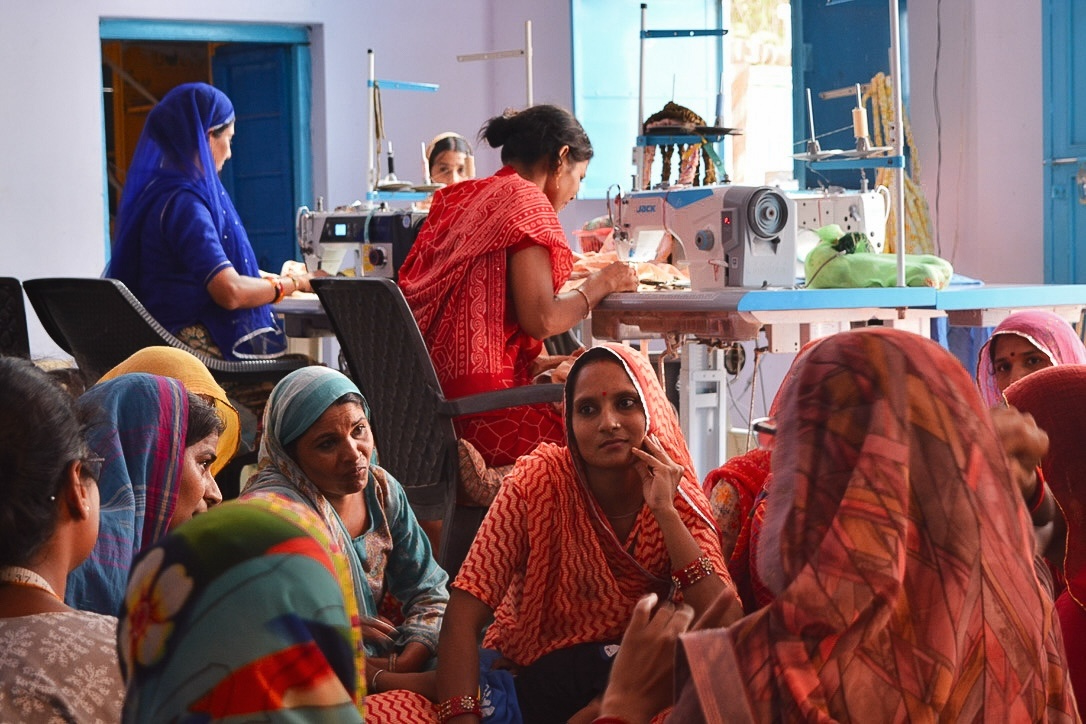
Traceability is often framed as a question of information. The Saheli Women project suggests it is first a question of relationship. So while data can tell us where our garment came from, relationships tell us who planted the seed, who spun the fibers, what makes them laugh, and what conditions make the production process beneficial to all.
It begins with trust, not tech.