

When we begin to write about our homelands, we are often motivated by the prospect of delivering a story of hope and example to our fellow peers across the planet. We wish for our words to speak loud and clear on behalf of our grieving mothers and fathers, and our traumatised communities, without detracting from the beauty of our cultures and geographies. For those of us writing as part of the intellectual ecosystem of the Global South, we are often cognisant of our partial detachment from the painful reality of conflict, trauma and death, by mere fact of our material distance from the homeland. Yet we still honour our histories of resistance as locomotives of struggle for the present, while discursively defending our homelands against all the isms we oppose. Against war, oppression and tyranny of all sorts. What happens, though, when one chapter of a colonial story – its latest being spectacular war – is brought to a close? What happens when peace is uttered so extensively across all elements of state, society and movement?
On 10 August 2026, Turkey’s parliament passed the landmark Law on Strengthening National Solidarity and Social Integration. The 12-article legislation establishes a legal framework for the return and reintegration of members of the Kurdistan Workers’ Party (PKK) as part of an effort to end the decades-long conflict between the Turkish state and Kurdish militants in the mountains. The legislation, albeit short of offering genuine hope for a lasting solution to the “Kurdish question” in Turkey, is a result of nearly two years of dialogue between imprisoned Kurdish leader Abdullah Öcalan and Turkish state authorities. During this period of dialogue, interventions have surged from figures across state, civil society, intelligentsia and media - each offering their own narrative of the process. For the Turkish state, it marks a closing settlement of a longstanding war that has haunted a handful of heads of state across the decades; for the Kurdistan Freedom Movement, it is a phased transformation in the method of struggle for liberation.
I say with frankness, and upon reflection, with a fraction of guilt, that I have had an underlying reluctance to write about the peace pact in Turkey throughout these times. Stemming from the array of public opinion on the viability of a Kurdish-Turkish peace, the influence of conversations with friends across ideological and political traditions, the gravity of ensuring any discharged intervention is careful and productive, and not least, my own lengthy prosecution in the United Kingdom and its censoring effects, I now observe that, in Öcalan’s own words, “the first step of a thousand-kilometer journey” is in effect materialising. That this particular journey towards peace and democratic politics – the latest iteration of dialogue and negotiations which have historically failed between the two parties – is inevitable. That the Kurds must wake up to a new reality, a new lexicon and a new compass of struggle, and let go of the period of protracted conflict as a matter of history. Of course, the process of letting go, or what the average trauma psychologist would say, of acceptance, is a journey in itself. So where does one begin in order to acquire clarity when our political compasses require recalibration? I offer this intervention with the hope that it allows reflection for those engaged in political movements wherever they are, for we are all bound to feel lost, confused, dissociated or disillusioned in our movements at some point in our lives.
The Symbiosis of Collective Trauma and Peacemaking
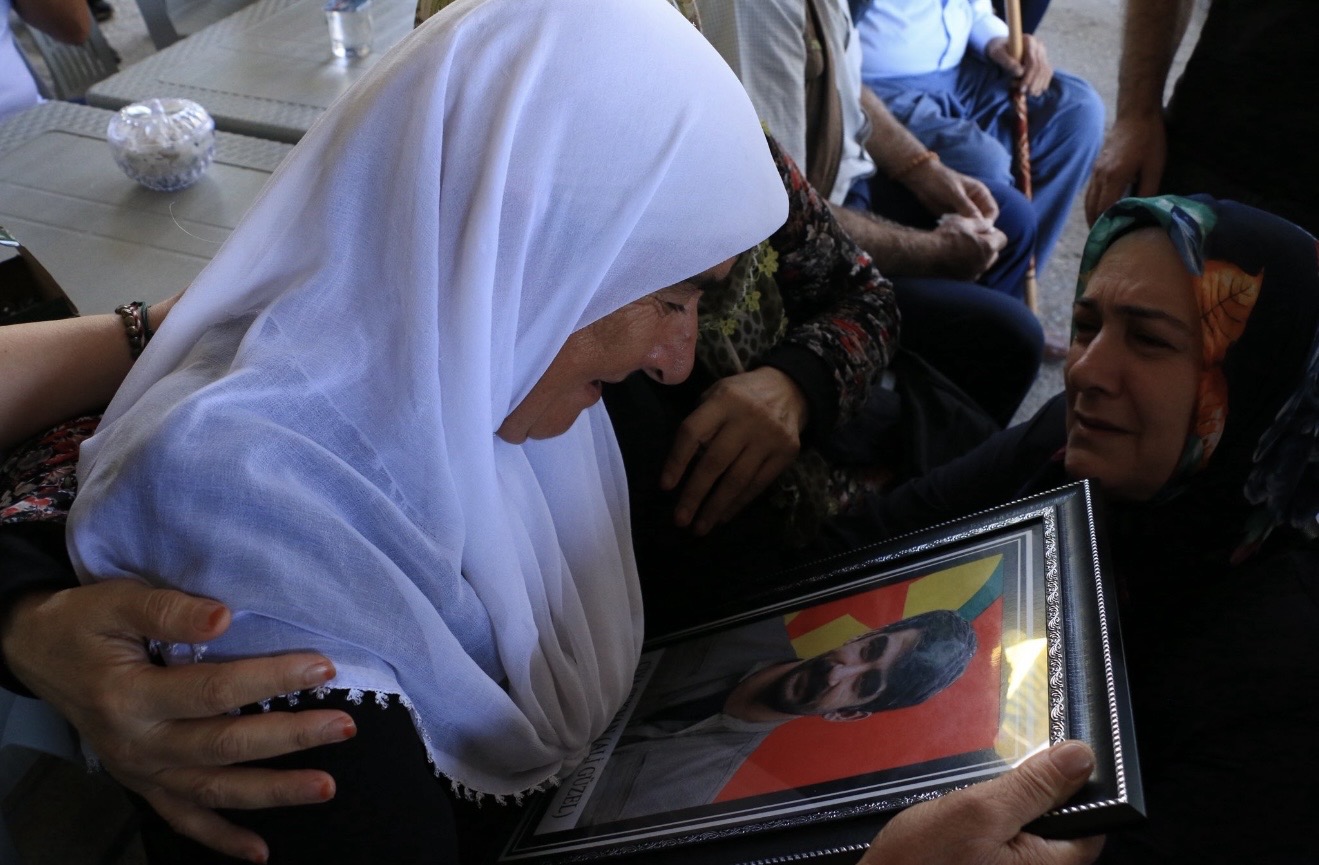
On 21 August 2026, the Kurdistan Freedom Movement began releasing the identities of hundreds of its fallen cadres. For many of us, the pain felt close to home. I stop here to emphasise this particular point; the organic relationship between liberation movements and the ordinary people is a universal reality across struggles in the world. These movements are hardwired to generate their force, in whatever form that may be, from the grassroots. The Kurdish case is exemplary to that effect: the labour and moral contribution of Kurdish families is foundational to the material existence of the liberation movement in the first place. Many families have lost a loved one, or several, in the struggle. For the Kurds, as is for many communities engaging with their own liberation struggles, the fact of death may be an individual actuality, yet its effects are collective. For a people left wounded that are forgotten by those penning history, and by a large part of the Western academy, even till this day.
Mass memorial gatherings have been organised across cities in Northern Kurdistan (modern southeastern Turkey), with a period of collective mourning in effect. Concurrently, in the Turkish capital of Ankara, the state is preparing the groundwork to formally declare the PKK a dissolved organisation, paving the way for the phased return of its members under the coordination of its founding leader Abdullah Öcalan. While the Kurds grieve for their fallen children in Amed and beyond, they negotiate the destiny of their future generations in a process Öcalan describes as the arrival of the Kurdish question “from the gallows to the table”.
For many within the Kurdish community, there is legitimate scepticism about what this process will ultimately yield for the Kurds in Turkey. Peace processes have failed before, while the Turkish state has travelled only a limited distance in delivering the practical commitments necessary to address the century-old “Kurdish question”.
The stateless Kurdish subjectivity has, quite naturally, long imagined liberation through the establishment of a free and independent Kurdistan; yet the conditions on the ground remain far from offering such an opening.
The Kurds are dispersed across four states, each governed by distinct political orders, while Kurdistan sits on a strategically vital geography between rival regional powers, including Turkey, Israel and Iran. This is the difficult geopolitical reality that repeatedly collides with the rightful Kurdish aspiration for a homeland recognised in the world not merely as an historical or cultural claim, but as a political reality on its own terms.
It is within this tension that the present moment has generated a particularly uncomfortable debate. Amid a Middle East increasingly shaped by the U.S.–Israel–Iran confrontation, some interventions have emerged - often with questionable motives and potentially dangerous implications - suggesting that the Kurdistan Freedom Movement is negotiating with the “devil” at precisely the moment when alternative alliances might offer a pathway towards international recognition of a Kurdish state. The temptation is understandable: after a century of statelessness, the possibility of recognition can appear difficult to distinguish from liberation itself. Yet this is precisely the question that the current transformation of the movement forces us to confront.
When the political strategy of a liberation movement changes - when it begins to move beyond a protracted method of struggle - how does its political community learn to change with it? For the Kurds, the answer may lie between resisting imperial narratives that manufacture illusions of liberation and remaining faithful to the emancipatory character of the struggle while navigating a transitional period towards a new compass of liberation.
The Grammar of Dissolution for a People with “No Friends but the Mountains”
While crafting this intervention, a new headline emerges by the hour in Kurdistan. On 25 August, Former Commander-in-Chief of the Kurdish-led Syrian Democratic Forces Mazloum Abdi - who subsequently took up a government role as Advisor to the Syrian Presidency - announced the effective completion of the mission, namely dissolution, of his military forces and their integration into the Syrian state. This follows a parallel process of talks, in conjunction with the Turkey-PKK dialogue, between the transitional government in Damascus and the Kurdish-led administration in what is globally and colloquially renowned as Rojava.
From 2012 onwards, Rojava became a significant instantiation of both Kurdish national liberation, and 21st century internationalism as part of the global fight against ISIS. Thousands of internationalists from across the world poured into northern Syria, as Kurdish political parties declared autonomous administrations and launched an armed movement in the fight against ISIS. Having survived against all odds for over a decade, Rojava begins to materialise as the latest archive of spectacular resistance, and a beacon of hope in a hopeless moment.
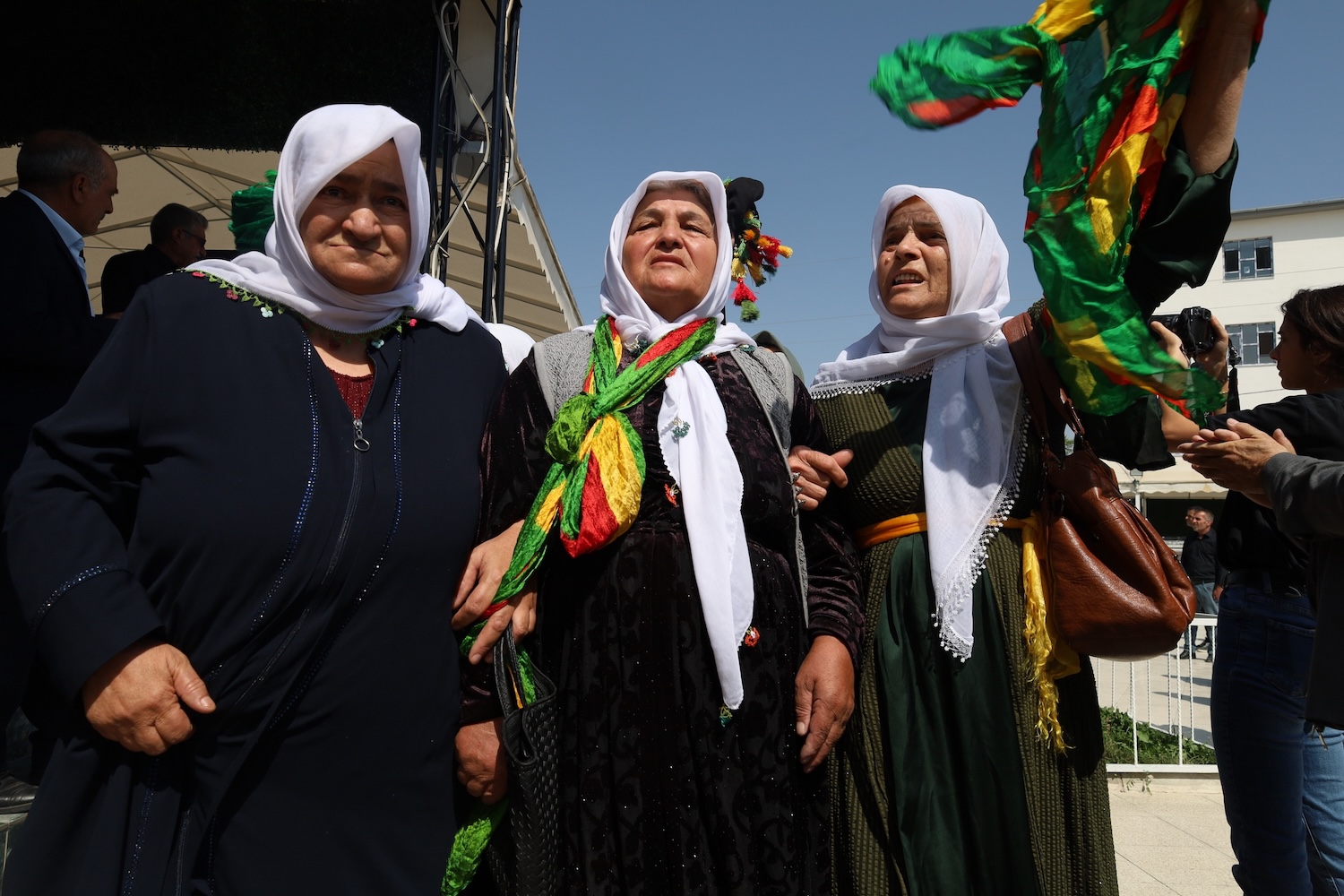
“Dissolution” is a word the Kurds have been hearing way too often in the last two years, and unsurprisingly, is received with profound resentment and despair. For the only tangible Kurdish entities to move to declare their integration with states which have historically oppressed their Kurdish populations isn’t a straightforward matter to reconcile with. There is equally a tendency within the revolutionary optimist to tone down the internal critical voice when realpolitik is on the offence left, right and centre. I propose it is precisely talking about our fears, disillusionments and apathies which may offer a glimmer of hope in addressing the fatigue of the revolutionary vis-à-vis the helplessness they feel.
It is also a matter for the liberation movement to mobilise a grammar of hope to its grassroots. Not only have peace talks failed on several occasions in the past - some of which were facilitated by British and European mediators - but the breakdown in dialogue has often been followed by immediate war. The most recent return to hostilities saw Turkey’s military invasion of Kurdish cities in Syria in August 2016, and cross-border aerial operations which targeted Kurdish journalists and activists. The consequence of a history of deadlock in peaceful dialogue has of course led to a deep-rooted mistrust across the community and movement towards the current one.
Conscious of the collective psychology of mistrust, the Kurdistan Freedom Movement appears to navigate the process as one to yield fruits through collective struggle, rather than assuming the state will unilaterally move towards a permanent peace with the Kurds. Part of this perspective is rooted in the movement’s intellectual tradition which lacks trust in and critiques the state as a form of and inherently tending towards organised violence. Another part is perhaps in response to some of the most violent commentary it faces in its history, with some circles claiming that the movement has completely abandoned the struggle for Kurdistan. That its renunciation of armed struggle has yielded a decline in faith to its commitment to the broader cause poses the question of how far we have truly understood the politics of the Kurdistan Freedom Movement. Are we to support our movements only when the threat of war is constantly at our door? When one delves deeper into the resentful remarks of these circles, it becomes obvious that even the most ideologically distant individual has placed a remarkable level of expectation on the liberation movement.
As humans, we become resentful when our expectations aren’t met, or if our hearts are broken by those we value. I am convinced to believe that the most critical Kurd, whether channeling its opposition appropriately or not, has at some point had some affinity to the largest and longest standing revolutionary movement in Kurdistan. I include some of my dearest friends in this hopeful belief, and wish that time will allow us to understand that while armies and entities rise and fall, memories and archives solidly push the struggle forward. We have no choice but to organise a politics of hope independent of external narratives and half promises - Sykes-Picot, Sèvres, Lausanne… the Kurds know too well that hope and mistrust sit side by side in their political condition across time and space.
Acronyms dissolve, promises survive.
The admission, after all, is that the developments in Turkey and Syria have shaken the compass of the Kurdish people, as a natural consequence of any transformational process in liberation movements. No movement can undergo its own political transformation, i.e. some form of evolution, without its side effects. We must, however, humanise our liberation movements for the living organisms they are; they cannot always deliver the perfect utopias of our subjective imaginaries, not least with our faithlessness overshadowing their day-to-day struggles. It is us who will make what will become of our liberation movements, for our fallen have already made what they can, in the most difficult conditions they were in.
For the case of the Kurdistan Freedom Movement, the struggle for Kurdish autonomy and the broader democratic socialist project is one which has a long way to travel, and a long way to convince. I stand firmly in the belief that we must resist a politics of catastrophe and despair, and let history unfold in the way it intends to. 100 years ago, the Sykes-Picot order of modernity completely tarnished Kurdish self-determination and pushed the Kurds into seeking their freedoms in the Taurus-Zagros corridor. Today, the Kurds finally emerge as significant chess players in the politics of states which once criminalised the uttering of their existence.