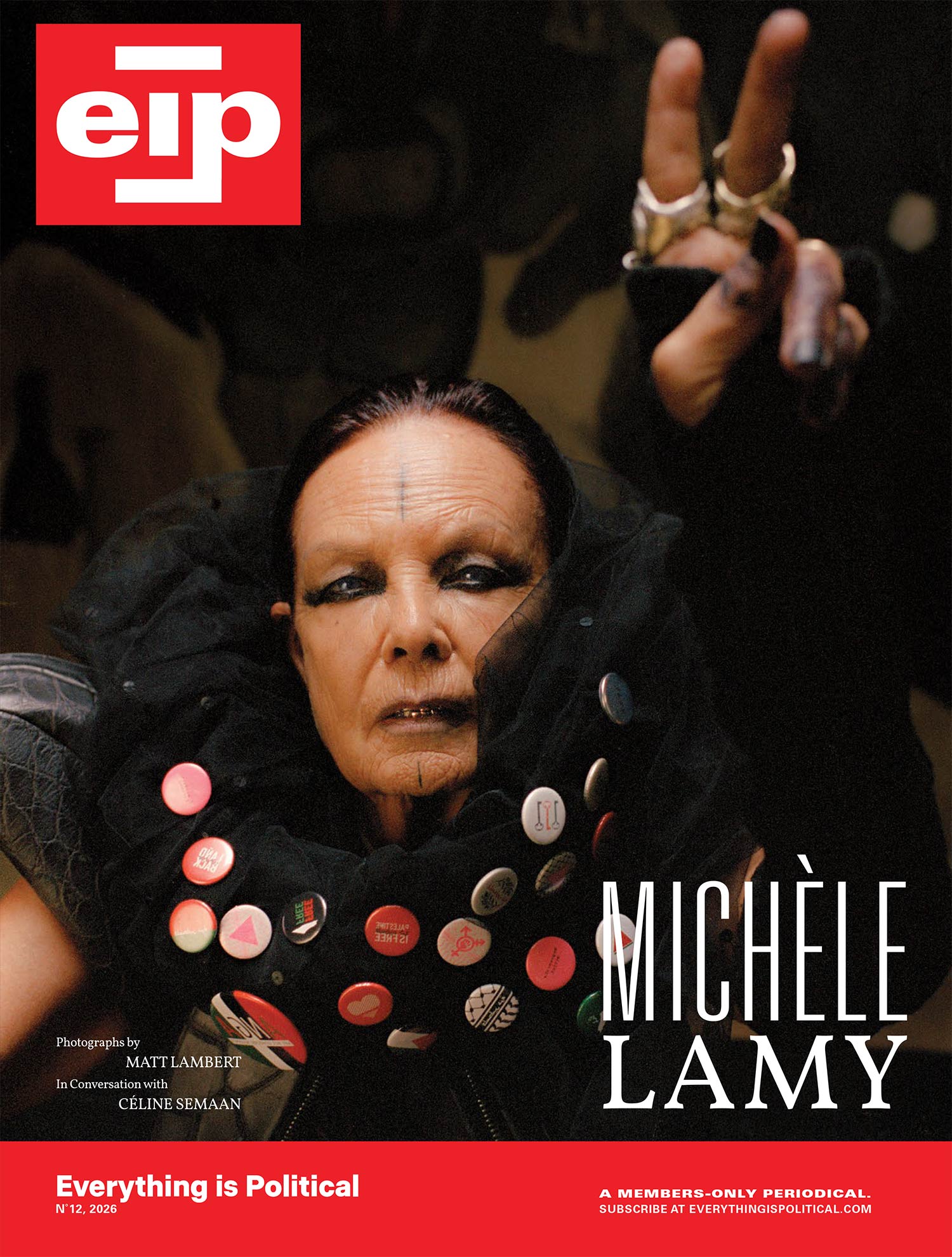

susan abulhawa is a respected Palestinian author, who has consistently come under fire from right-wing Zionist forces for her unflinching criticism of the brutal occupation that murdered many members of her family and drove her into exile. As she states, “Palestinians are the only people in the world who are expected to watch what we say so we don’t offend those who did this to us.”
CÉLINE SEMAAN: We recently published an excerpt from your new book Every Moment is a Life, which is a compilation of short stories by writers in Gaza. Tell me about that project. How did it come about?
SUSAN ABULHAWA: I went to Gaza and a friend of mine, who runs an organization called the “Culture & Free Thought Association,” asked me if I would conduct a writing workshop. When the genocide started, I had a feeling of impotence, which is why I did everything I could to go to Gaza. At that point, the border was controlled by Egypt, and officially we were allowed to take only a few suitcases. I thought that the worst they could do is confiscate the supplies. I had about 20 suitcases with medicines, clothes, hygiene kits, and things like that. We got them all through. The Egyptians were looking for drugs and weapons. These were fellow Arabs and Muslims; they understood what was happening, so they weren’t going to stop medicines.
I am uniquely positioned to impart whatever skills I have, to empower people in Gaza, especially young people, to narrate their own stories. I feel strongly that this moment should be told by people who experienced it. Israel is aware of the power of narrative. And they, if you notice, targeted Palestinian intellectuals throughout Gaza. They targeted the storytellers and artists. My friend Refaat Alareer (author of If I Must Die) was one of the first people they murdered. They also went after artists. There was a documentary made of Fatima Hassouna’s incredible photographs. And literally, the day after the documentary came out, they assassinated her.
On my second trip to Gaza, I made a point of prioritizing the writing workshops. These sessions lasted four to five hours, sometimes more. After every session, each person would read what they had written, and then we would go around giving them feedback. One of the major things we concentrated on was making the stories small, capturing just one moment. I would say, “Don’t tell me you were bombed because you didn’t know that initially. You only had sensory input. Tell me what that sensory input was… was it a flash of light? Was it a sound?”
One of the workshop participants, Diana, wrote about the trail of soap she walked through the first time she had to use a bathroom that was shared by hundreds of women. She is a young woman who came from a solidly middle-class family. They had a beautiful home, clean running water and toilets…. comforts. She described the indignity of that single moment in the communal bathroom. There was a story about a woman struggling to make the decision to burn her brother’s bed frame, because it was wooden, and they needed to build a fire to cook. But her brother had died and the bed frame was the only thing she had left of him. It was these small, very human glimpses into what it’s like to live in the midst of an ongoing genocide with bombs falling all around you… We were going to publish the stories with a small independent press, but then my agent sent the compilation to Simon & Schuster. They wanted to publish the book. It was a very pleasant surprise. I was happy the writers were going to get a larger audience.
CÉLINE: Your 2010 novel Mornings in Jenin introduced many readers to the lived experience of Palestinian displacement. What can literature communicate about the Palestinian story that journalism or political analysis often cannot?
SUSAN: Literature is a reflection of a society; it’s not just the outward-facing countenance, but the inward-facing one as well. It allows society to see who they are, and it serves successive generations. Literature and culture take on an entirely different dimension when a society is literally being erased, actively obliterated, or denied. Zionists like to say that we don’t actually exist; therefore, one’s artistic, literary, musical, and cultural productions necessarily take on a political dimension. They are an affirmation of our presence in the world—in history, in ancient history, and in the future.
We do have an ancient past, and we do have a future, but we are so misunderstood in the present—specifically in everything surrounding 1948 until now.
1948 is such a profound festering wound; for us, time stopped in 1948. We obsess over that.
We obsess over 1967 because it is the time of our most profound anguish, and it’s also the point in time when the fate of every Palestinian, no matter where we are in the world, was determined from that moment. If we stayed, the course of our lives was charted from there, whether we ended up in refugee camps, stayed under military oppression and restrictions of Zionists, went to the Gulf, or to the West, the course of our lives was charted at that moment.
And so, I think it’s very natural for us to explore that pain. Our political orientations, our economic positions, our psychological dispositions, our geographic borders, all exist in this wound. I’m grateful that the rest of the world is reading my books. But for me, the more important audience are Palestinians. So we can understand what happened to us—to see the colors, to detect the smells, to feel the wind—not just to understand the political moments. Some of the most poignant and affecting letters from readers came to me from Palestinians. A few letters came from young Palestinians who told me that they understood their parents and grandparents more after reading my book. This is the power of art, of literature.
CÉLINE: You are from a generation of Palestinians born into displacement. How did you piece these stories together? Was it through research, interviews, or family stories? How were you able to record the unrecorded?
SUSAN: The Palestinian poet and author Mourid Barghouti wrote: “Most people live in their country, but for Palestinians, our country lives in us.” That was the case, of course, for my family… We went to Kuwait, but we didn’t become Kuwaitis. We brought our own traditions to Kuwait, our own dialect, our own food. Coming from a Palestinian family, I was immersed in a Palestinian milieu, and Palestinian heritage, a way of speaking, a way of interacting with the world. I also lived in Jerusalem for several years. I actually lived in an orphanage in Jerusalem. There’s a chapter in Mornings in Jenin called “The Orphanage” that is mostly autobiographical. I lived there under occupation. I experienced what it was like to live under a Zionist regime. But it wasn’t nearly as bad then as it is now, because at that time—in the ‘80s, before the First Intifada—when Palestine was still kind of open, people in the West Bank could go to Jerusalem… It’s completely closed now. Palestinian Muslims and Palestinian Christians are cut off from Jerusalem.
There was a moment… it was a weekend or a holiday or something, and two of my cousins came to get me and take me back to where my family is from—a village near the Mount of Olives in East Jerusalem. We were pulled over by a group of soldiers. We were walking. I was probably 11, which would have made my cousins 12 and 13. The soldiers made my cousins sit across from each other and told them that they would let us go if my cousins successfully spit in each other’s mouths. The soldiers were laughing; my cousins were terrified. They were really scared. The soldiers would hit my cousins upside the head when they couldn’t do it. Then finally, one of them spat, and it went. I was so scared that I actually peed myself. The soldiers laughed, and then finally let us go. We were all crying. My cousins were so humiliated, and they took it out on me. They pushed me and told me to shut up. They were taking their humiliation out on me for having witnessed their humiliation. I think back to that moment—there are so many psychological lessons that emerge from that moment—the way abuse flows from this impotence, this inability to control your life, this constant humiliation.
CÉLINE: From your perspective, how has the language and storytelling the media employs been shaping the global understanding of the genocide in Gaza?
SUSAN: This has been a profound and spectacular moment—spectacular in its violence, in its obliteration of the gatekeeping of knowledge, and spectacular in the awakening of people. It’s almost like Gaza is liberating the world in many different ways. They’re breaking down these walls that Zionists have so carefully built and fortified. They’re tearing the walls down; it is horrific, but it is also deeply hopeful.
Anytime people awaken from the slumber of propaganda and misinformation, it is hopeful thing.
CÉLINE: Often we look at the near future with a more apocalyptic mindset than with radical imagination, because it comes so easily to us to imagine the worst-case scenario. How do you see the near future?
SUSAN: The past is our power. I don’t think you’re going to have a future without a real past. Which is why Israel’s presence and their future have always been tenuous because they don’t actually have a real foundational past in the land. We should never look to the future without a firm grip on our roots, because you can’t have a real future without knowing the past, without understanding it and holding it with you. What makes us who we are? It’s the collection of stories we have of ourselves, of our identity. If we didn’t have that, we’d just be like people with dementia, who are just going through the world. You can’t have a future without having a past.
When they were first colonizing Palestine, they were explicit in what they were doing. They thought, “We’ll just move them like cattle. They’re nothing, they’re stupid, they’re backward, they’re going to be happy that we’re here and they’ll worship us…” This was their mentality. But the next generation of colonizers were like, “That narrative doesn’t work anymore.” So now they’re like, “We’re the Indigenous people.” They literally stole our past. They stole our story; they wear our skin. They try to be us, but they don’t have our stories. They came from Europe, the United States, Ethiopia, and other parts of the world. They literally have no familial Indigenous stories that are rooted in the land. They don’t have traditions; they don’t have food that is rooted in the land. They don’t have music or dance or anything that has any relevance to the land. They have no genetic connection to the land. They have no cultural connection to the land, no linguistic connection to the land.
CÉLINE: Palestinians are the Indigenous people of the land. That fact changed in the Zionist narrative, and they started saying that they are, in fact, the Indigenous people. They went back 3000 years to an Abrahamic text that is fiction, and have essentially built back from there.
SUSAN: This is part of why I say their presence is tenuous. Their roots are tenuous. Initially, they came with that European superiority, and they did not want to be like the Indigenous people. Because they saw themselves as better. They looked at us as dirty, backward, stupid. They envisioned a European nation. Basically. They wanted nothing to do with the Indigenous population. When they started bringing Arab Jews over, they didn’t want to do it. But they needed numbers, because they knew they could not conquer us and take our place without numbers. It was a bitter pill they had to swallow to bring in Yemeni Moroccans. They did everything they could to Europeanize them. They stole Jewish Yemeni babies and gave them to Ashkenazi white European Jews to raise. As you know, when they brought Ethiopians over, they sterilized the women, so they didn’t have too many Black Jews.
Later they decided they wanted to be considered Indigenous, so they embraced the Arab Jewish cuisine, and now they call it Israeli food. They also renamed these people. They decided that they were Mizrahi Jews. They could not abide them being Iraqi Jews or Yemeni Jews, so they wanted to erase their Indigenous identities, give them a new identity as Mizrahi. Mizrahi means Eastern Jews. They couldn’t just be like them; they had to make a distinction, because they still looked down on them. They were still a few rungs beneath the real Jews, the white Jews. They had to give them a new designation to separate themselves from them.
The decolonization movements, the Land Back movements (decentralized, Indigenous-led initiatives focused on reclaiming political, legal, and stewardship control over ancestral territories) really were a threat to the story, and so they invented a whole new story that they’re the Indigenous people. But it doesn’t hold water. They make movies, create media, conduct PR campaigns, and spend hundreds of millions of dollars to push the fairy tale that these people with zero connection to the land—who are literally allergic to olive trees, the most iconic tree in the region—are somehow Indigenous. It’s absurd, and it falls apart quickly under the slightest scrutiny, which is why they are so profoundly threatened by Palestinian culture. They hate it.
They attacked the Palestine Writes Literature Festival with such vehemence, with such a coordinated, highly funded campaign to destroy us and then destroy the university that allowed us to have the festival. They cannot abide us, because we come with receipts. We have the photos, we have the documents. We have everything they tried to erase when they invaded Beirut in 1982. The first target was the PLO archives which they still have, though it’s possible that they destroyed them. I suspect they have them, and I say that because in 1948 they also specifically targeted our books, our libraries, and archives. Those books still exist. There’s a documentary called The Great Book Robbery. The filmmakers came across these books that had weird labels, and they started investigating. It turned out that they’re held in a special section of Israeli libraries, and they have specific number designations that indicate that these books were looted from Palestinian homes and libraries.
Even in 2002, when they committed massacres in Jenin and throughout the West Bank, one of the first places they targeted was the archives. They did the same thing in Gaza. They targeted cultural centers. They targeted cultural monuments, universities, schools, and libraries. They are scared of books. By destroying cultural artifacts, you erase memory and ultimately identity, which is why stories are so profoundly important.