

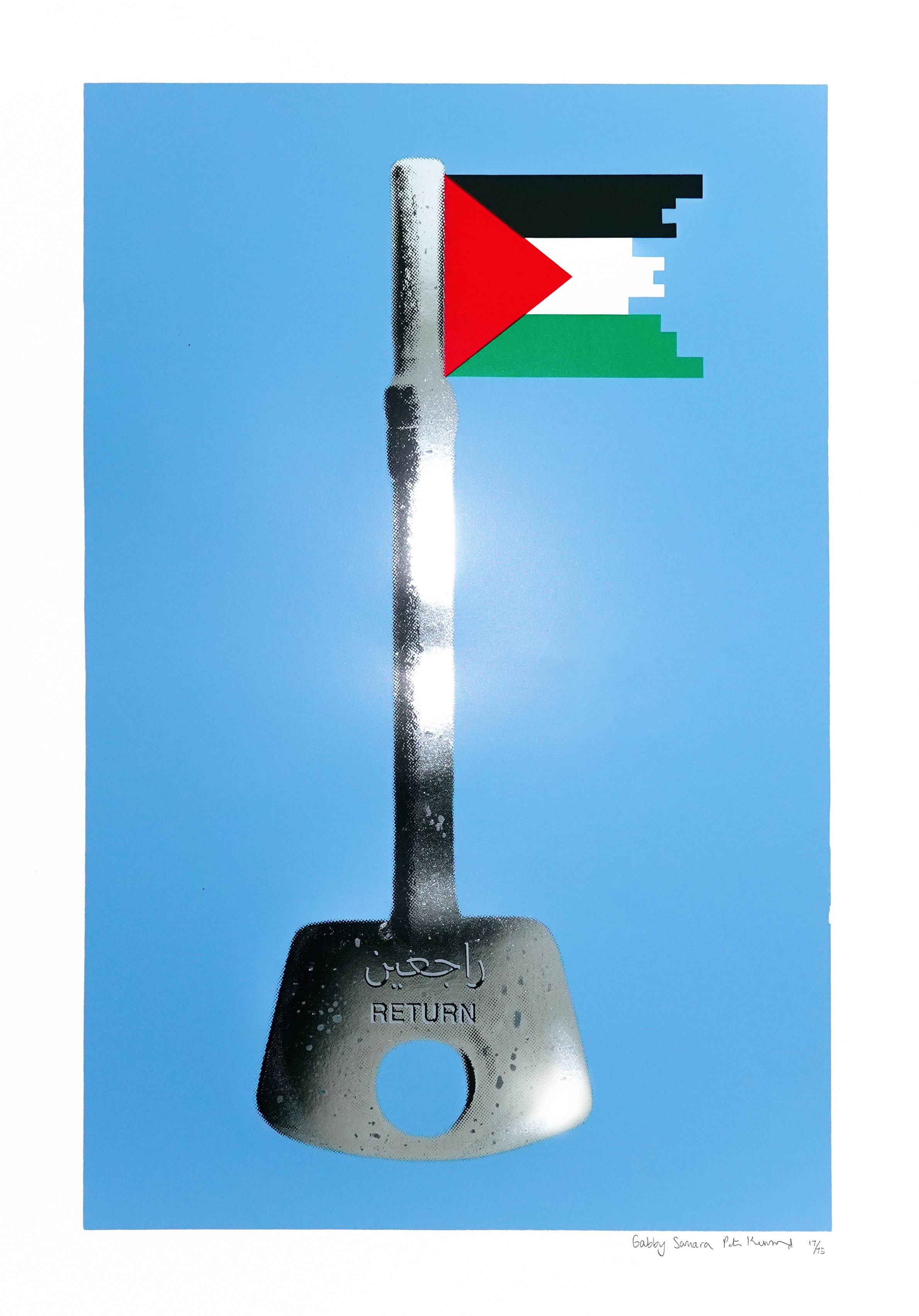
Courtesy of Malak Mattar and Peter Kennard
At a time when images from Gaza and across Palestine circulate with relentless speed, often flattened into statistics or fleeting headlines, art insists on something deeper. It insists on the humanity of our wounds and rage. The exhibition “If the Olive Trees Knew,” held at BOTH Gallery in London, does precisely this. Bringing together my journey as a Palestinian artist and that of London-based artist Peter Kennard, the show is not merely an artistic collaboration; it is an urgent act of witnessing and protesting.
It asks: What does it mean to create art in the shadow of ongoing genocide? And perhaps more importantly, what does it mean to look at it? With more horrors unfolding in your region with immunity, when “ceasefire” becomes a myth or simply a painkiller for an ongoing wound.
My work answers with personal and collective memory. My paintings return us to the olive tree, not as a distant symbol, but a lived experience. Here, I recall childhood seasons of harvest in Gaza: blankets spread beneath branches, hands gathering fruit, families working in quiet coordination. These are records of a way of life that has been systematically disrupted. When I speak of olive trees being uprooted, burned, or bombed, the loss is familial, cultural, and deeply personal.
In this way, painting becomes both refuge and resistance. I return to the roots of the olive trees to find strength in their resilience, a quiet reminder of steadfastness. There is something profound in this idea of return, not as retreat, but as insistence. Images of Mahouza Odeh, for instance, an elderly woman who hugged her olive tree so tightly, despite it being cut by soldiers, is a perfect reminder of this. The land remembers, even when it is scarred. And through her work, so do we.
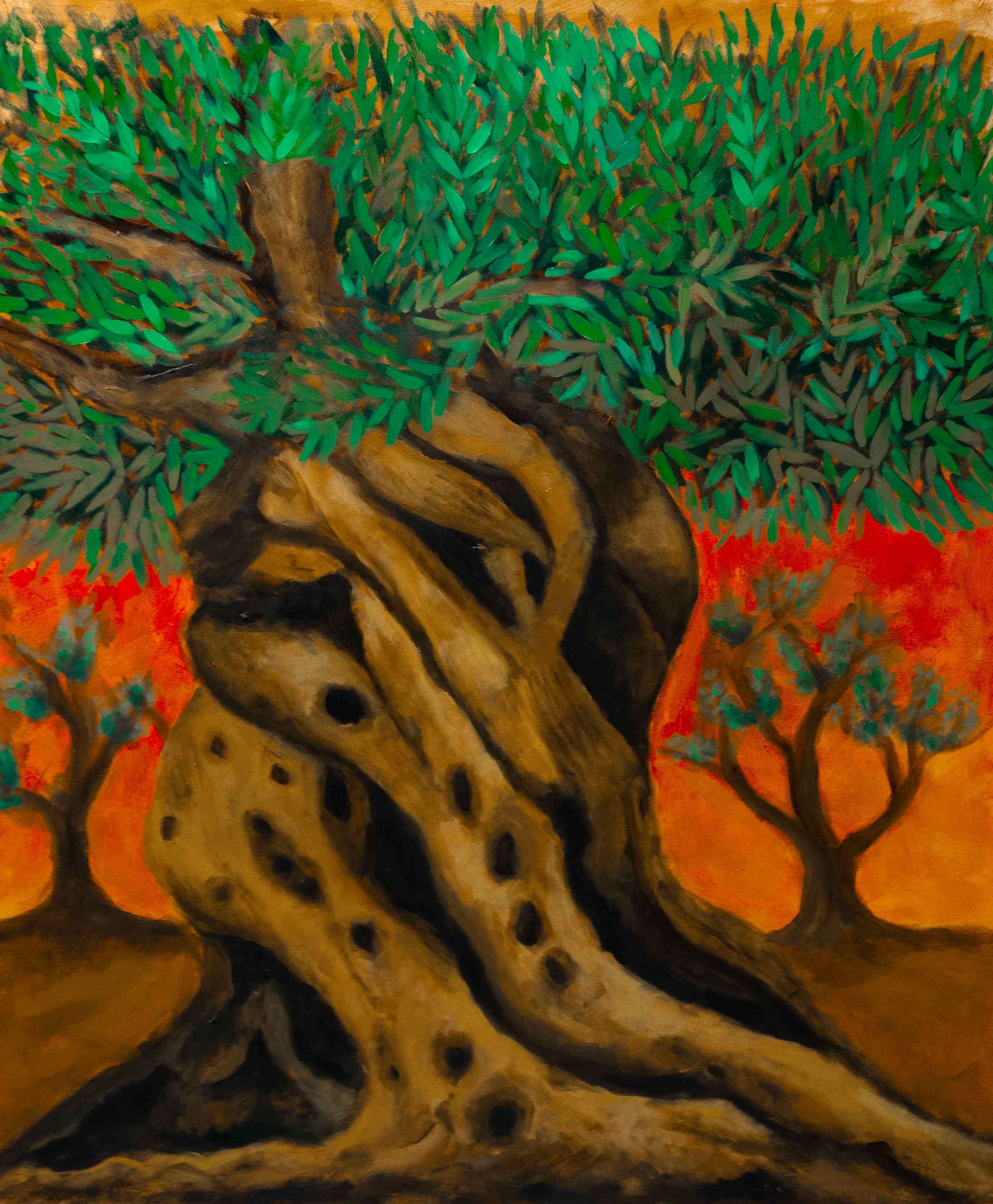
Courtesy of Malak Mattar and Peter Kennard
Kennard, working in photomontage, approaches the same reality from a different angle but with equal urgency. His practice has long been shaped by political commitment, from anti-war movements to nuclear disarmament. In this exhibition, he draws on the writing of Palestinian poet Marwan Makhoul to frame his response: “In order for me to write poetry that isn’t political / I must listen to the birds / and in order for me to hear the birds / the warplanes must be silent.”
It is a stark reminder that silence, true, peaceful silence, is political. For Kennard, photomontage becomes a kind of visual poetry, layering fragments of reality to expose contradictions and provoke reflection. His work does not ask for passive viewing; it demands engagement.
Together, we have created a dialogue across geography, generation, and medium: one rooted in lived experience, the other in solidarity; one grounded in memory, the other in critique. Yet both converge on a shared refusal to look away.
“If the Olive Trees Knew” is not an easy exhibition. Nor should it be. It asks viewers to sit with grief, to confront histories of displacement, and to recognize the ongoing realities faced by Palestinians. But it also offers something else: a testament to endurance. In every brushstroke and photomontage, there is a refusal to be erased.
Art cannot stop warplanes. It cannot rebuild uprooted trees. But it can insist on memory. It can challenge indifference. And it can remind us that behind every headline are lives, histories, and connections that demand more than a passing glance. If the olive trees could speak, they would tell stories of generations, of care, of loss, of resilience. Through this exhibition, those stories are felt. And once felt, they are difficult to forget.
To be in the studio, to work, to read poetry and testimonies becomes a radical act. They will never take that away from us.
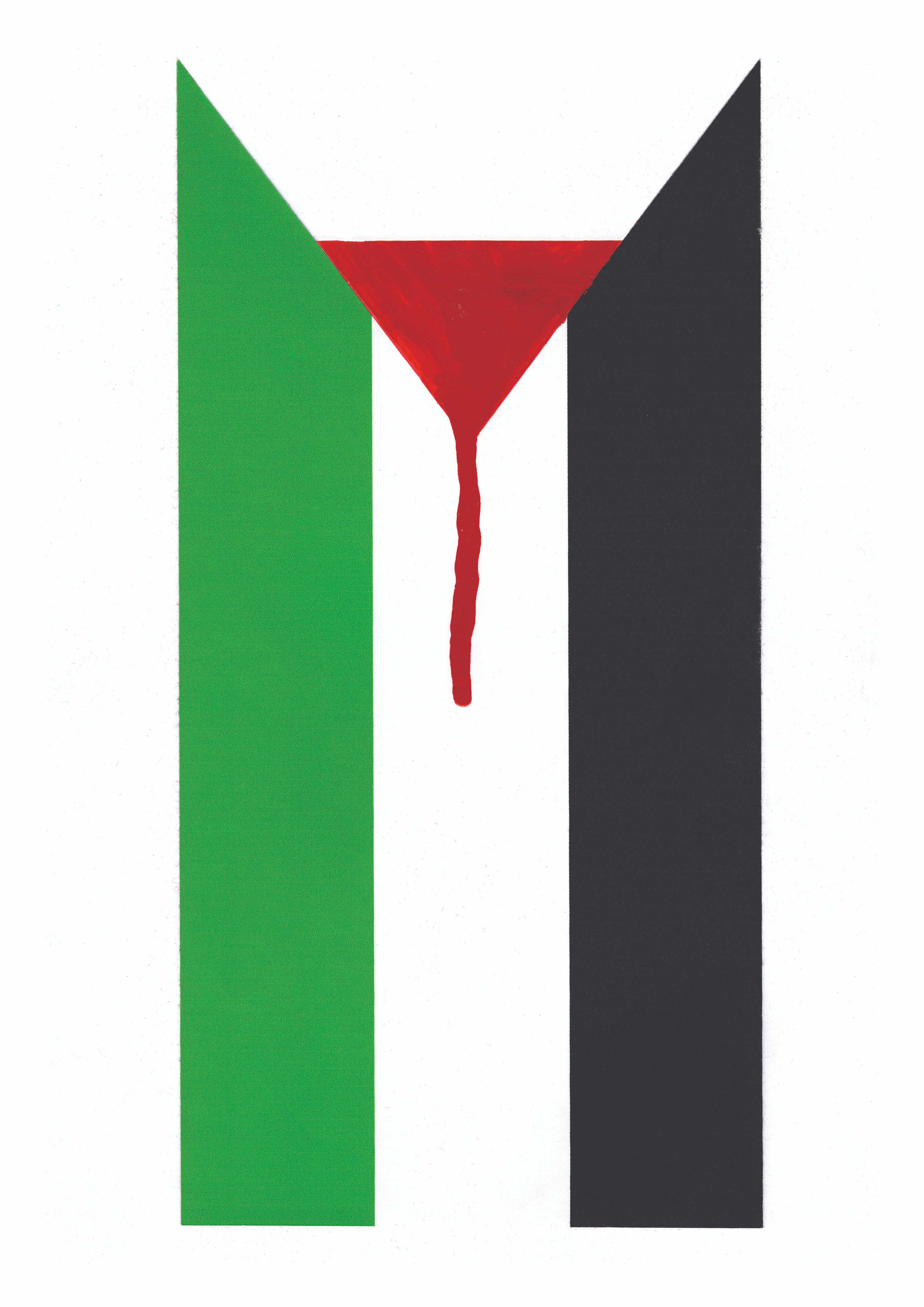
Courtesy of Malak Mattar and Peter Kennard