

On my graduation day, I wore a yellow dress and a kuffiyeh.
My mother, watching me graduate, was coincidentally dressed the same. My university was international, populated by students from across the world, yet the symbolism of what we wore was immediately legible and contested. A classmate approached me and said she respected my decision to wear the kuffiyeh despite what others were thinking. At the same time, a German woman told my mother that it was neither the time nor the place. While I received glances, my mother received comments.
Despite this, or perhaps because of it, I felt an overwhelming sense of joy. When my name was called, I was ecstatically jumping on stage to receive my diploma. I was not performing defiance; I was inhabiting happiness. Living in a foreign country has often made me hyperaware of my body and what I put on it, whether that be the stares and the knowledge that in other similar places, students wearing similar symbols had been surveilled, punished, or even killed. Yet on that day, none of those anxieties overtook me. I was present. I was grateful. I was simply graduating.
In that moment, joy is my resistance emerged not as a slogan but as an understanding, a phrase often attributed to poet Toi Derricotte.
While others projected judgment, stereotype, and political discomfort onto my body, my joy exceeded their assumptions, refusing their narratives. In choosing celebration over self-erasure, I asserted a reality that did not align with their expectations of who I was meant to be.
My joy resisted fear, surveillance, or misrecognition in dictating how I inhabited a moment of achievement. In that sense, joy became not only personal but a political act of resistance.
My lived experience does not know occupation or direct forms of oppression; even so, any claim that I experience greater ease than others of the same nationality, significantly understates existing disparities. Yet this awareness does not absolve me from responsibility, nor does it distance me from solidarity. Rather, it sharpens my understanding of how privilege and proximity coexist, how safety, mobility, and recognition are unevenly distributed, even among those who share histories, nationalities, symbols, and lineages.
To wear the kuffiyeh in a moment of celebration was not to claim suffering that is not mine, but to acknowledge connection: to histories I inherit, to struggles I witness, and to lives whose realities remain far more precarious than my own. In this sense, joy does not erase injustice; it insists on presence without appropriation, celebration without denial, and visibility without victimhood.
What I am proposing here is that joy is a radical counter-practice, not dismissing trauma from material violence, but rather showing how it is an effective strategy that sustains collective life. Joy is resistance explores how celebration, ritual, and embodied communal gathering function as credible modes of survival and refusal. Radical joy, articulated by Coraline Thomas calls us to “seek joy in the impossible”. In a world that is structured by hate and exclusion, joy itself becomes radical because it resists what seeks to diminish us. To choose joy is to refuse the logic that says survival must be joyless, that pain and suffering is all we are allowed to hold. Joy can be the ultimate healing response, one that affirms the right to live fully, to feel, to connect, to find meaning even amid struggle.
As Frances Negrón-Muntaner articulates through the concept of decolonial joy, it is “an emotion people feel with the possibility of a different future where neither colonialism nor coloniality dominate their lives.” (Negrón-Muntaner, Frances. 2021). This, perhaps, counterpoints a tendency within diasporic discourse to internalize inevitability: the persistent sense that the colonizer always wins and the colonized always loses, that hope is naive, faith is misplaced, and conditions only continue to worsen. Within this framework, joy is often viewed with suspicion, as if to feel joyful is to forget, to betray, or to concede defeat. Yet decolonial joy does not emerge from denial, nor from the exclusion of trauma. It arises precisely from an awareness of the structural repercussions of coloniality and its asymmetries, insisting on the possibility of life, imagination, and futurity beyond the “inevitability” of colonial domination.
In this sense, joy becomes a refusal to accept despair as the only available political or emotional horizon.
However, I’d like to offer a necessary counterpoint which is the concept of killjoy explored by Sara Ahmed, reminding us of its right to exist. In the second chapter of The Promise of Happiness, Ahmed describes the feminist killjoy as the one who refuses to maintain happiness at the expense of justice. The killjoy refuses to cover injustice with a smile, resisting the demand for comfort that sustains dominant narratives. Through its presence, the existence of oppressed people, and the ongoing nature of their struggle, becomes a reminder of histories that institutions and hegemonic frameworks seek to bury. The killjoy does not disrupt joy for its own sake; rather, it exposes the violence that requires silence, appeal, and erasure in order to persist.
By all means, anger has every right to be present. Saying that joy is resistance does not erase or diminish other emotions; rather, it grants them purpose and faith in the possibility of life beyond oppression. Joy is inseparable from grief, just as Khalil Gibran writes in The Prophet when he speaks of Joy and Sorrow: “Your joy is your sorrow unmasked.” He explains that “the deeper that sorrow carves into your being, the more joy you can contain,” reminding us that joy and sorrow arise from the same core. And so, “when you are joyous, look deep into your heart and you shall find it is only that which has given you sorrow that is giving you joy.” One does not exceed the other, for “they are inseparable; together they come.” Dancing especially functions as an outlet that merges both joy and sorrow into a single embodied experience. Each movement carries release and resistance, celebration and mourning. Emotional dualities are negotiated physically rather than intellectually, allowing an integrated form of expression that embodies these two opposite emotions.
Through acts of dancing, feasting, and rituals - communities situate joy as an affective practice, generating alternative social and cosmological orders that challenge dominant structures of power.
These practices do not provide momentary relief, but rather actively refuse the normalization of racialized bodies as sites of perpetual mourning, suffering, or silence. In creating spaces of collective joy, communities assert their humanity against systems that seek to diminish their spirit and reduce them to grief alone. Colonial Latin America, alongside its colonizing Iberian empires, functioned as a primary site for the formation of modern racial thought and racialized oppression. Yet marginalized groups continuously resisted these mechanisms through festive practices like carnival, dances, communal feasts, and syncretic rituals that exceeded colonial control, creating fertile grounds for expressions of resistance.
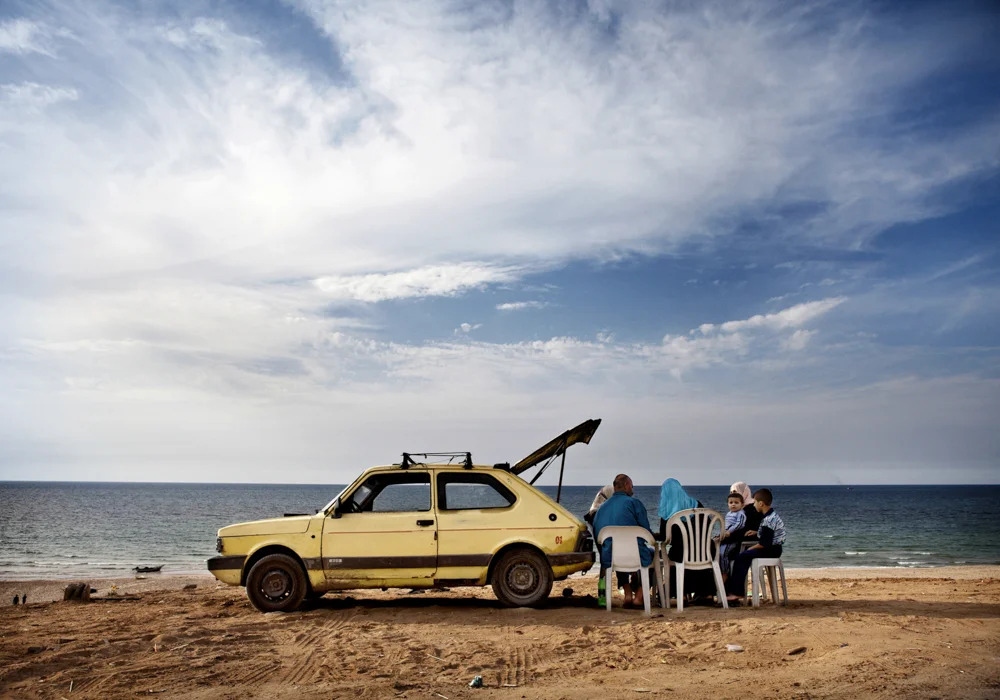
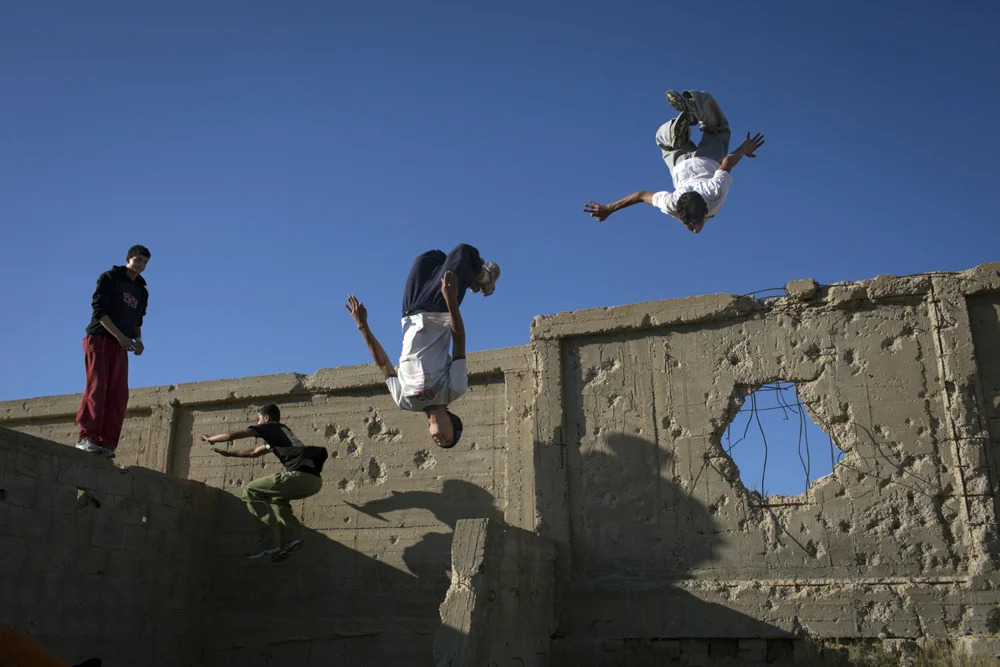
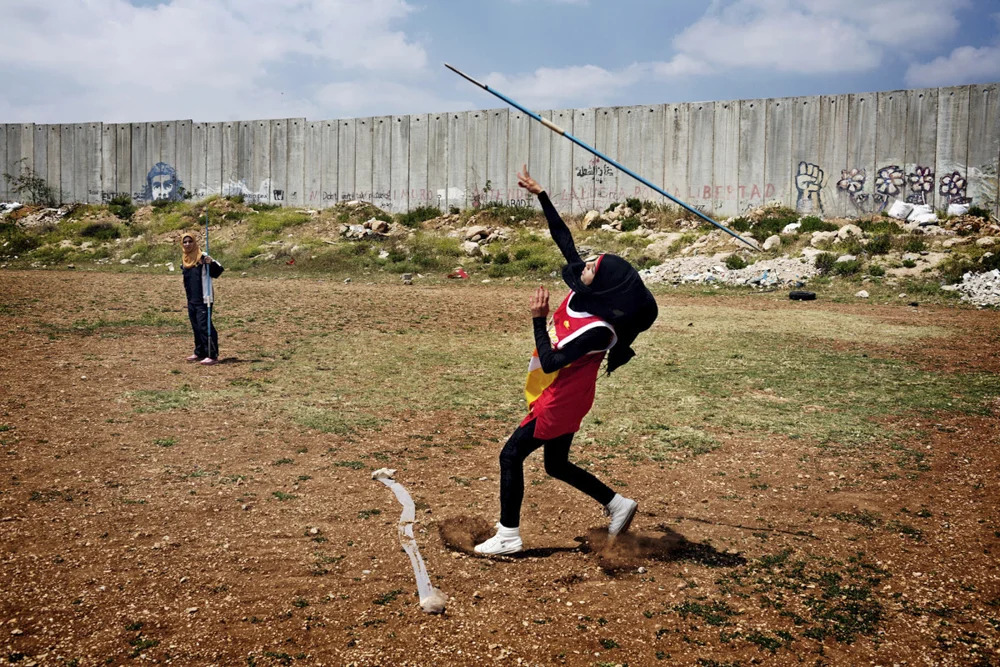
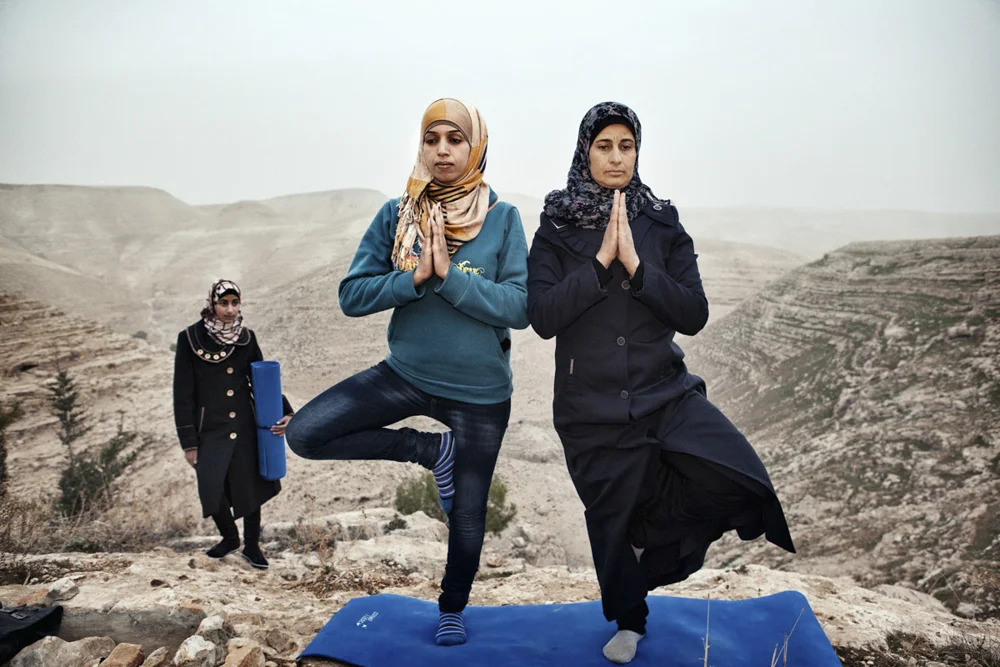
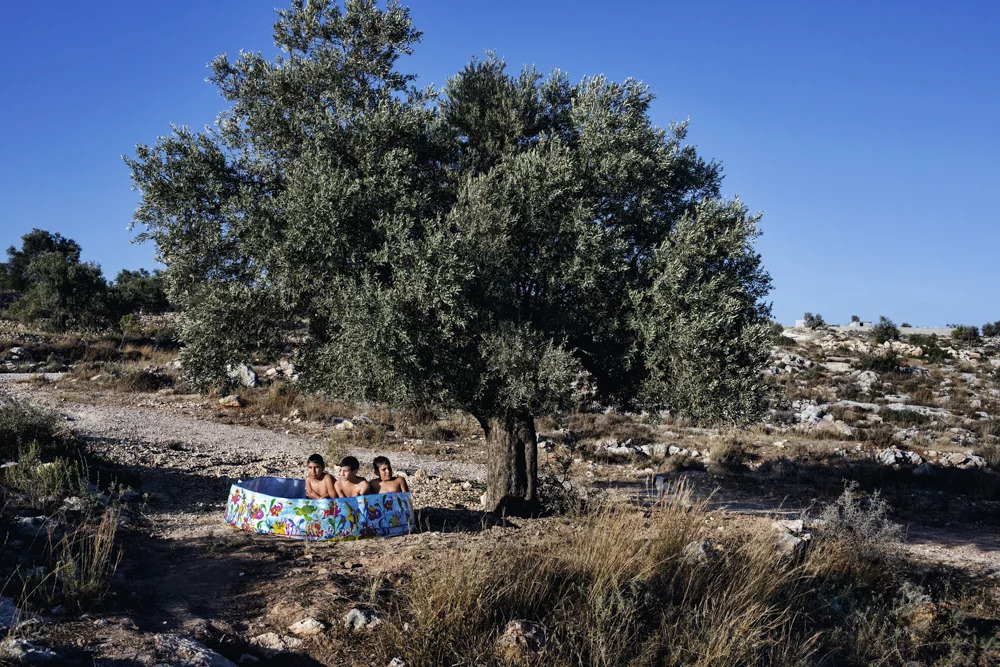
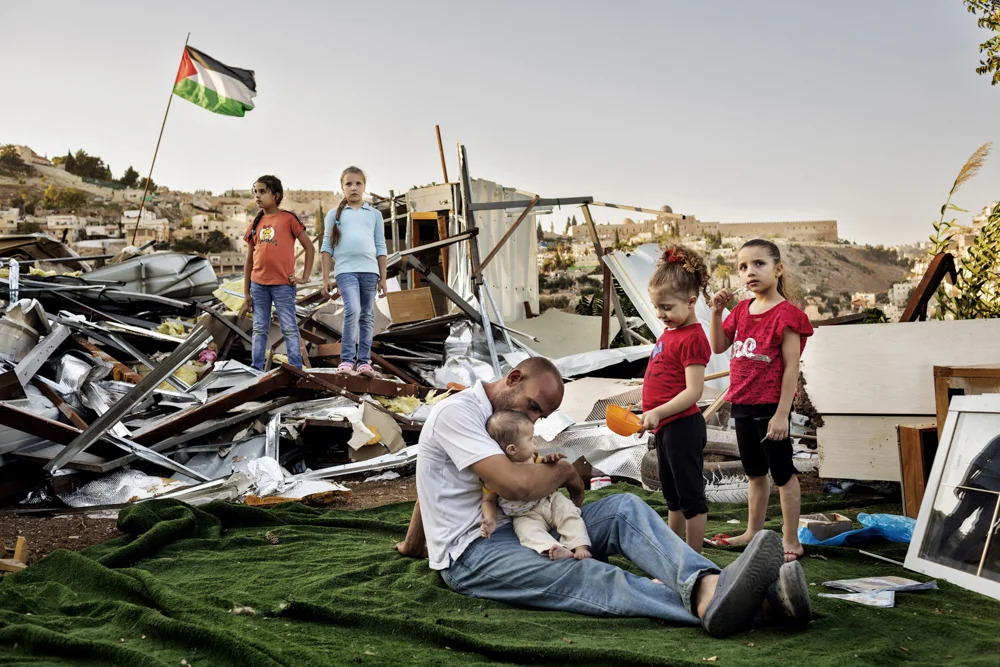
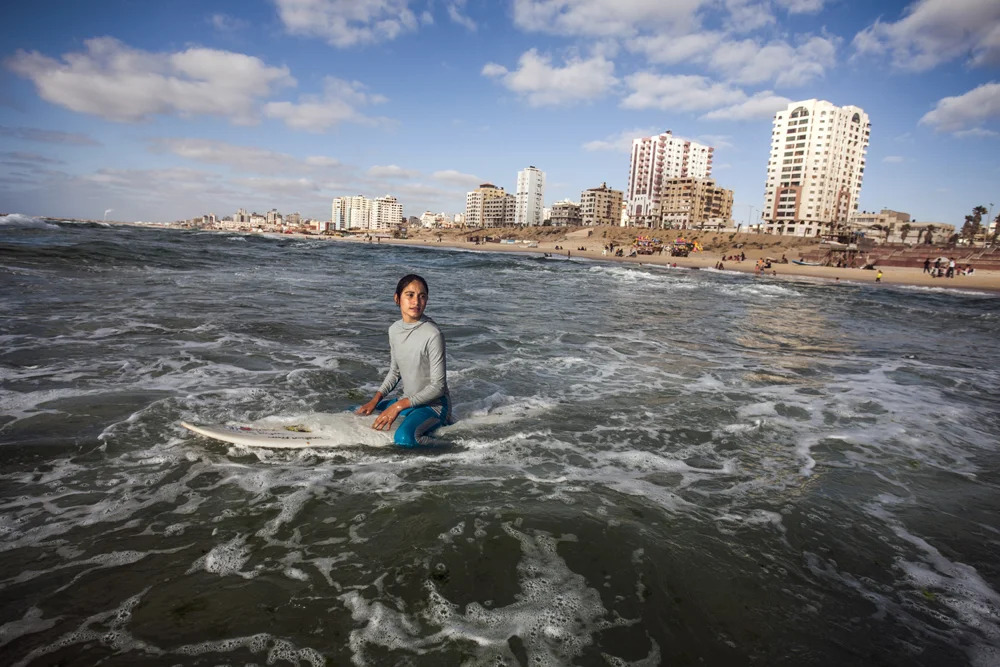
Within carnival, joy becomes one such act of defiance, disrupting colonial logic that equates order with domination. Festivity enabled oppressed communities to reclaim bodily autonomy, ancestral memory, and spiritual continuity, generating counter-worlds in which survival is not defined by endurance and steadfastness but by creativity and collective presence. Joy, in this context, is not escapism but a political and cosmological act, one that insists on life, relationality, and dignity in the face of colonial violence. This specifically resonates with Occupied Pleasures by Tanya Habjouqa, a photographic project that portrays humanity’s capacity to find joy within the difficult realities of Occupied Palestine. The body of work explores meanings of being occupied and occupying oneself through joyful acts of everyday life. For more than four million Palestinians, where movement is restricted and violence always remains as a constant threat by occupying soldiers and settlers, pleasures like yoga, swimming, playing and family gatherings become meaningful gestures of resilience, showcasing how joy persists within constraint.
From my graduation stage, leaping in yellow with the kuffiyeh alongside judgement, to ancestral carnivals, occupied pleasures, and decolonial dances that weave sorrow into celebration, joy refuses the colonizer’s script of despair.
Drawing on insights from Generation Palestine, we create futures unbound by coloniality through ritual, movement and community. Joy in itself embodies the sacred art of living fully amid pain, it enables us to embrace our struggles without allowing them to take away the right to celebrate and to love. In this duality of light and shadow, resilience is embodied, not by erasing struggle, but by actively choosing joy as a response, and by choosing presence over erasure, affirming the right to connect and imagine beyond oppression.