

On Oct. 29, at the East End of Long Island, where on one side of Shinnecock Bay trees rise like mountains and on the other, empty multimillion-dollar beach houses stretch along the shore, a bald eagle flies through the gray sky, moving as it has for centuries.
Shane Weeks, also known by his traditional name Bizhiki Nibauit, a member of the Shinnecock Indian Nation, watches it from the sandy shore. “Whenever we see an eagle,” he said, shaking tobacco onto his hands, “we put tobacco down. We thank that eagle for what it did - for helping us, and for reminding us that we still remember.”
The Shinnecock and Unkechaug Indian Nations artists are using art, including dance, photography, craft, and language, to teach others, to hold onto their culture, and to make their presence known.
By the time Weeks was born, it had been a decade since First Nations in the U.S. were legally allowed to fully practice their religion and culture under the American Indian Religious Freedom Act of 1978”. I’m first-generation, being born freely into a world where I can be who I am as an Indigenous person,” Weeks said, recounting his experience and comparing it with the past generations who were forced underground or prohibited from speaking their language and practicing their culture.
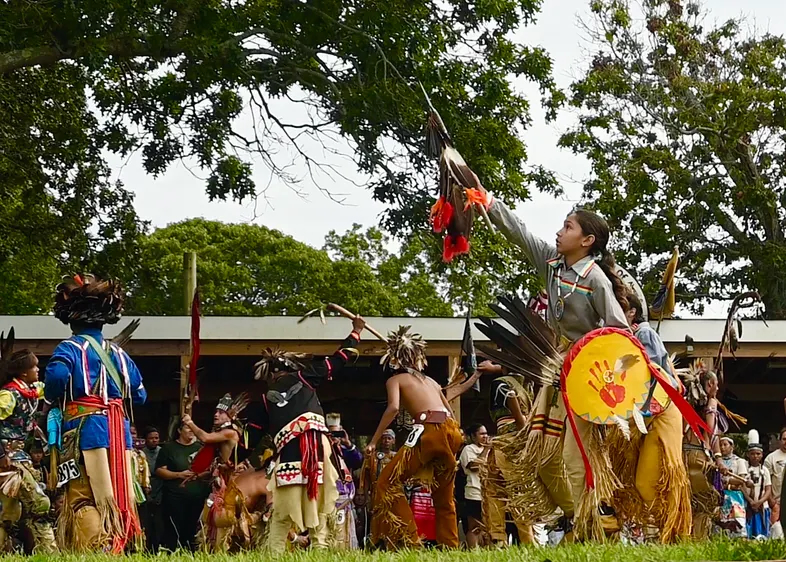
Weeks is a traditional singer and dancer, but his work extends beyond performance. He is also an author and cultural consultant who helped give insights on authentic Shinnecock history and culture for a new pre-K through 12 Indigenous curriculum, introduced last year into the Southampton School District. “My work is about reviving our language and finding our history,” he said. “To help us reconnect with the truth of who we are as Shinnecock People.”
The curriculum aims to replace outdated narratives with lessons centered on Shinnecock history, culture, and Algonquian language.
The neighborhoods near Shinnecock Bay are renovated houses fenced with square-like trees forming the illusion of walls. This is land where Indigenous communities lived for generations before the ongoing colonization, though most Long Islanders drive through the area without knowing its history.
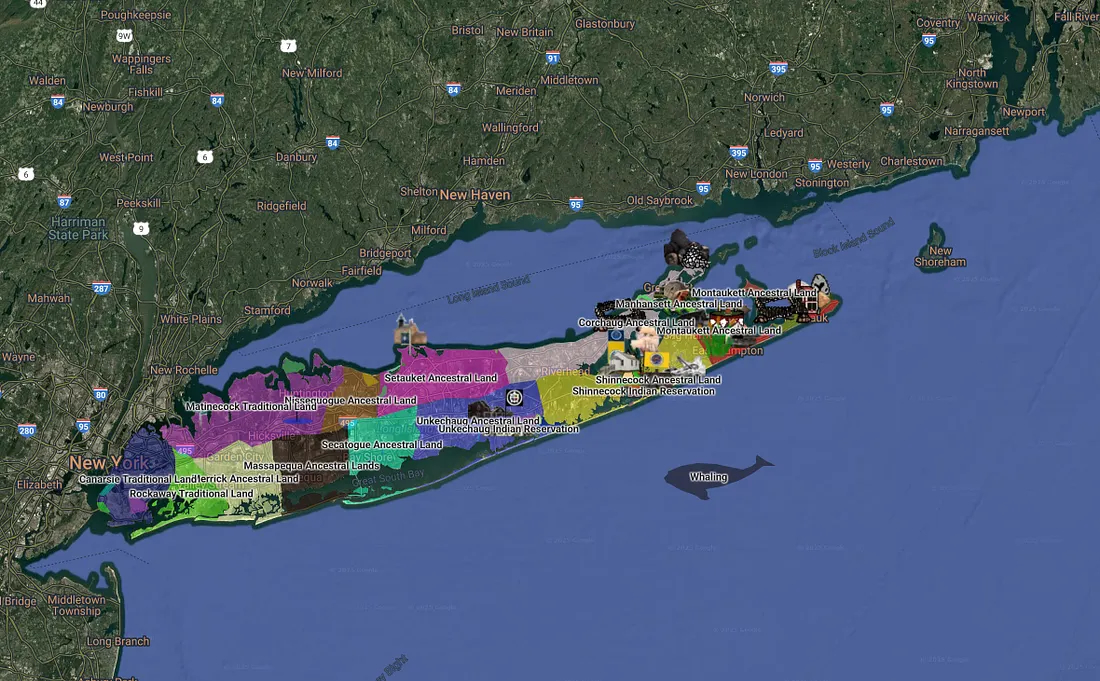
“Some people build without knowing. They just think it’s a bare hill, or they don’t think Native people are still here,” said Jeremy Dennis, Shinnecock photographer and founder of Ma’s House & BIPOC - an art space residency for Black, Indigenous, and people of color artists. For him, these overlooked lands became the foundation of On This Site, a long-term art and research project that archives Indigenous history through photography, mapping, location-based storytelling, and archival images.
“This project is all about leaving the boundaries of the reservation,” he said. “And seeing all these places that we still have connections to.”
Since 2016, Dennis has mapped sites connected to Indigenous life, displacement, and survival from Brooklyn to Montauk - spanning the past 10,000 years - by researching archaeological records.
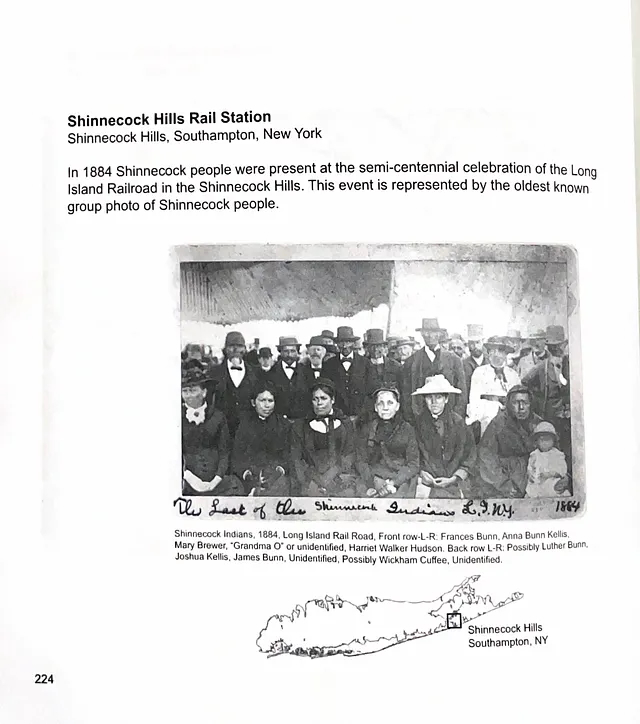
On a rainy November Sunday afternoon, at Ma’s House, Dennis opened his book [On This Site Native Long Island: Edition 2] to a page showing an 1884 image with the caption “the last of the Shinnecock Indian.” A phrase he described as part of a long history of false narratives surrounding Indigenous disappearance. “But we never left,” he said.
Today, the Shinnecock Nation is currently engaged in legal battles over control of tribal land in the region. A year ago, the Nation finalized the purchase of an eight-acre parcel, lost in the late 1890s in Hampton Bays. This one is the first private land purchase in 400 years.
Weeks described the purchase as deeply tied to Shinnecock history, spirituality, and practices. The parcel is part of a larger ancestral landscape encompassing sacred sites, burial grounds, and waterways essential to the community.
“Reclaiming land is more than a property purchase,” Weeks explained. “It’s restoring our connection to the land, protecting it from development, and ensuring our cultural continuity.”
This is the same land where Weeks ran around as a child, and where his father taught him to hunt and fish before the age of ten. The phrase “We are Still Here” echoes each summer at the Shinnecock Nation’s annual powwow. From the age of one, Weeks has represented his culture through traditional dance at powwows and other ceremonies.
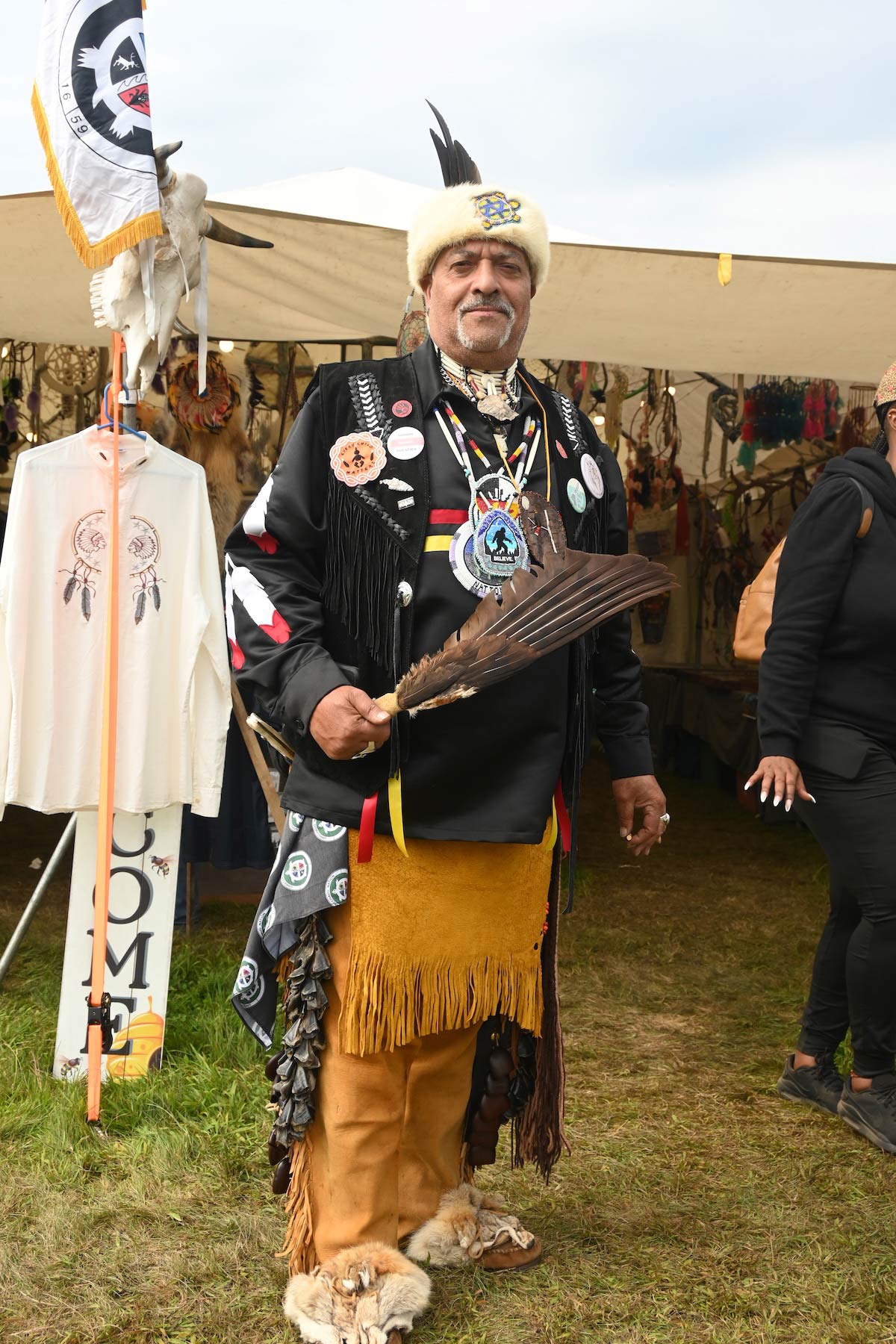
At the 79th powwow, on a concrete stage, men and women in bright regalia moved across the stage to the sounds of drums and bells. Not too far from the stage, dozens of canopies sheltered Indigenous vendors from different Nations. On one white canopy, a sign reads: Turtle 2 Turtle, Unkechaug Indian Nation. Tony Moon Hawk - an instructor and artisan - stands wearing a hat with a few eagle feathers tucked into the band. A cigarette burns between his lips, hidden under the gray mustache.
Once, Moon Hawk was among the dancers on the stage, but a tractor-trailer accident ended that part of his life. His legs, once the anchor of his dancing, could no longer keep the beat. But it didn’t end his connection to culture.
He returns to the powwow each year, not to dance, but to share what his mother taught him - their craft: dreamcatchers braided from grapevines, hats stitched with feathers, art shaped entirely by what the land provides.
“My mother kept me in the loop. We’ve been doing it all our lives,” he said. “[At the powwows] you get to see other Natives, other reservations, other people. And the public comes. That’s good, because they can learn the real things, not just what’s on TV. They can see the real people who hold things on.”
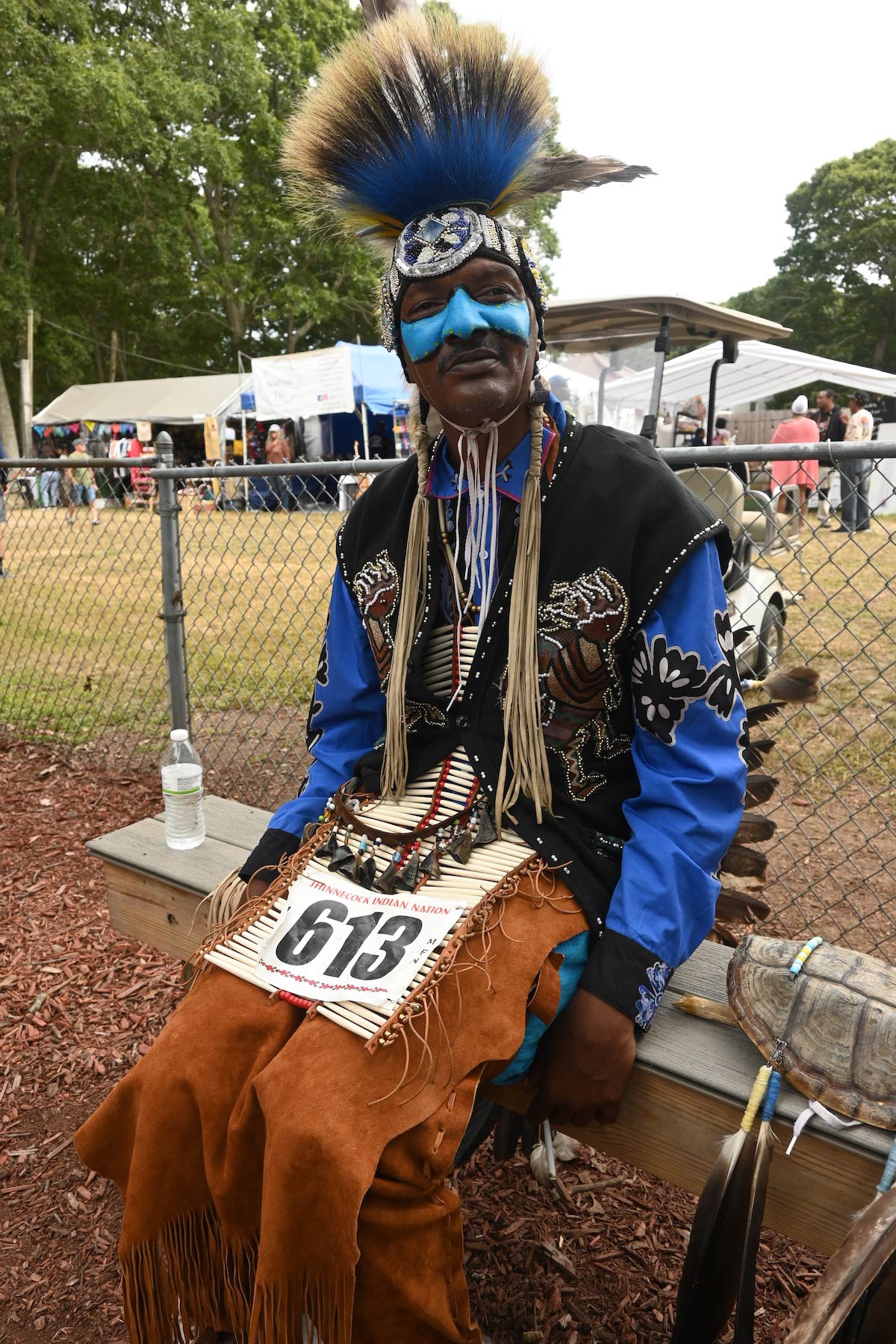
Moon Hawk said someone could walk past him in the street and never know he is Indigenous - yet he is Unkechaug. “We don’t wear a sign on our backs saying Native American. But we’re here,” he said. “When you go to schools, to colleges, people think you’re an actor; you have to tell them - no, I’m real [Indigenous], and the first thing they say is, we didn’t know there were any left.”
Moon Hawk’s craft illustrates how art carries memory, knowledge, and connection to the land. That continuity extends beyond individual practice into broader conversations about Indigenous art today.
Inside Ma’s House, the living room is a gallery. The walls hold art: sometimes paintings, drawings, or photography. Through the residency program for BIPOC artists, more than seventy artists of color have slept on the third floor. “It’s the first time for many artists of color that they’ve been recognized and valued,” Dennis said. “That’s what’s most powerful.”
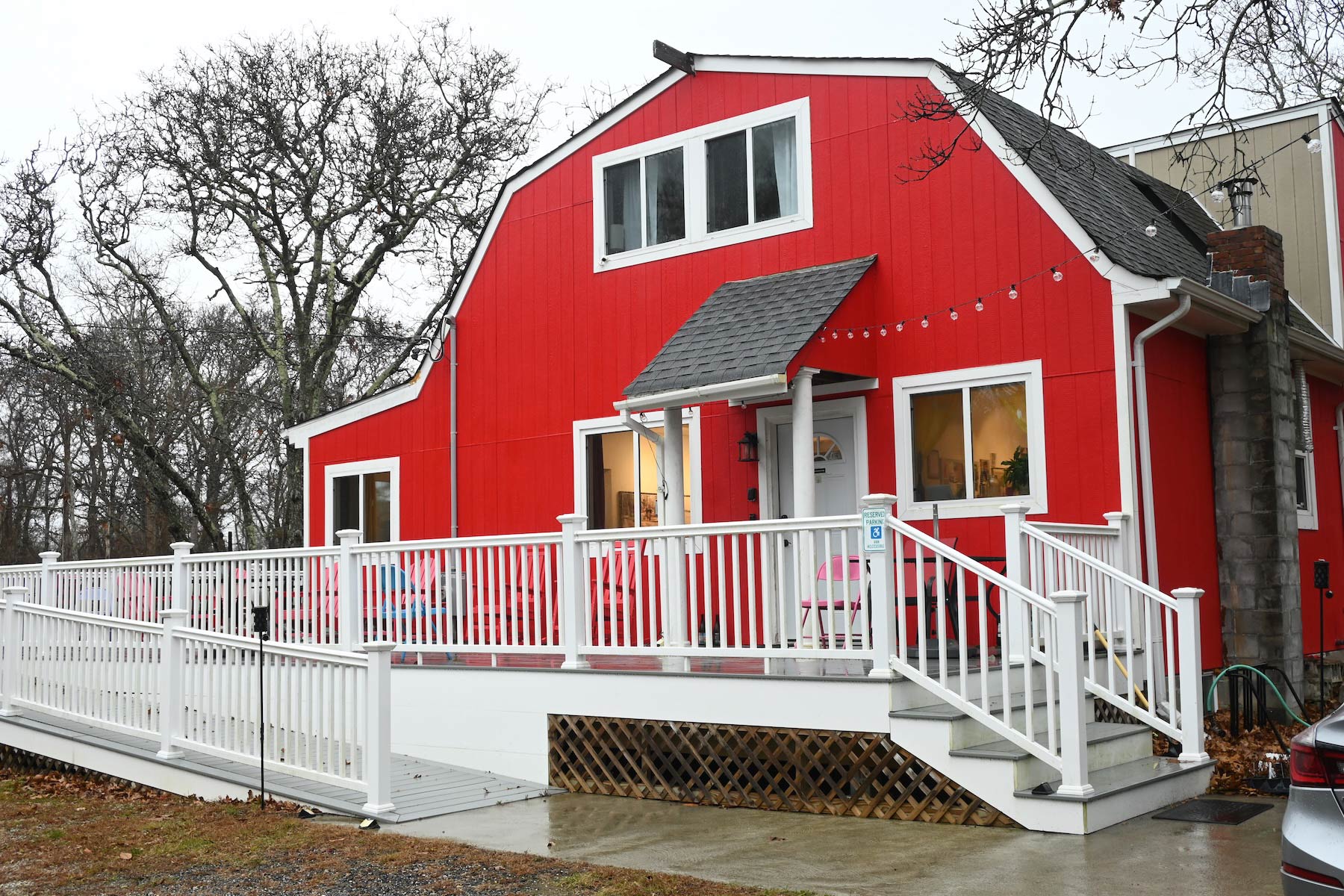
For Zakariya Abdul-Qadir, a residency artist and a painter whose work records everyday life while staying connected to the social, political, and historical forces that have shaped modern America, Ma’s House underscores why art matters.
“Art is inherent to communities that have experienced oppression,” he said. “It’s how you articulate your existence: ‘This is where I am, this is what’s happening around me.’ You can’t really silence that voice.”
For Yanyan Huang, who was among the first residency artists to stay at Ma’s House in 2021, Ma’s becomes “a refuge, a site of belonging,” that “gives visibility for underrepresented artists, creating a space where they can be seen and heard, underscoring the idea that culture thrives through openness and exchange.”
Others, like Pamella Allen, another residency artist, describe Ma’s House as a space for unlearning and reflection, where art becomes a way to challenge inherited colonial narratives.
“People for the most part know that everything they’ve been told is a lie,” she said. “I want people to deslave their minds about it.”
Ma’s House sits on the Shinnecock Bay without house insurance - like many Native Americans’ houses there. After being pushed off the most vulnerable side of their territory, insurance and mortgages are difficult to get. As Weeks explained, insurers and banks rarely lend on sovereign land because they can’t repossess it. Reports have traced how Indigenous nations on Long Island were pushed onto marginal lands - marshes, floodplains - and then denied the basic infrastructure and protections that surround them.
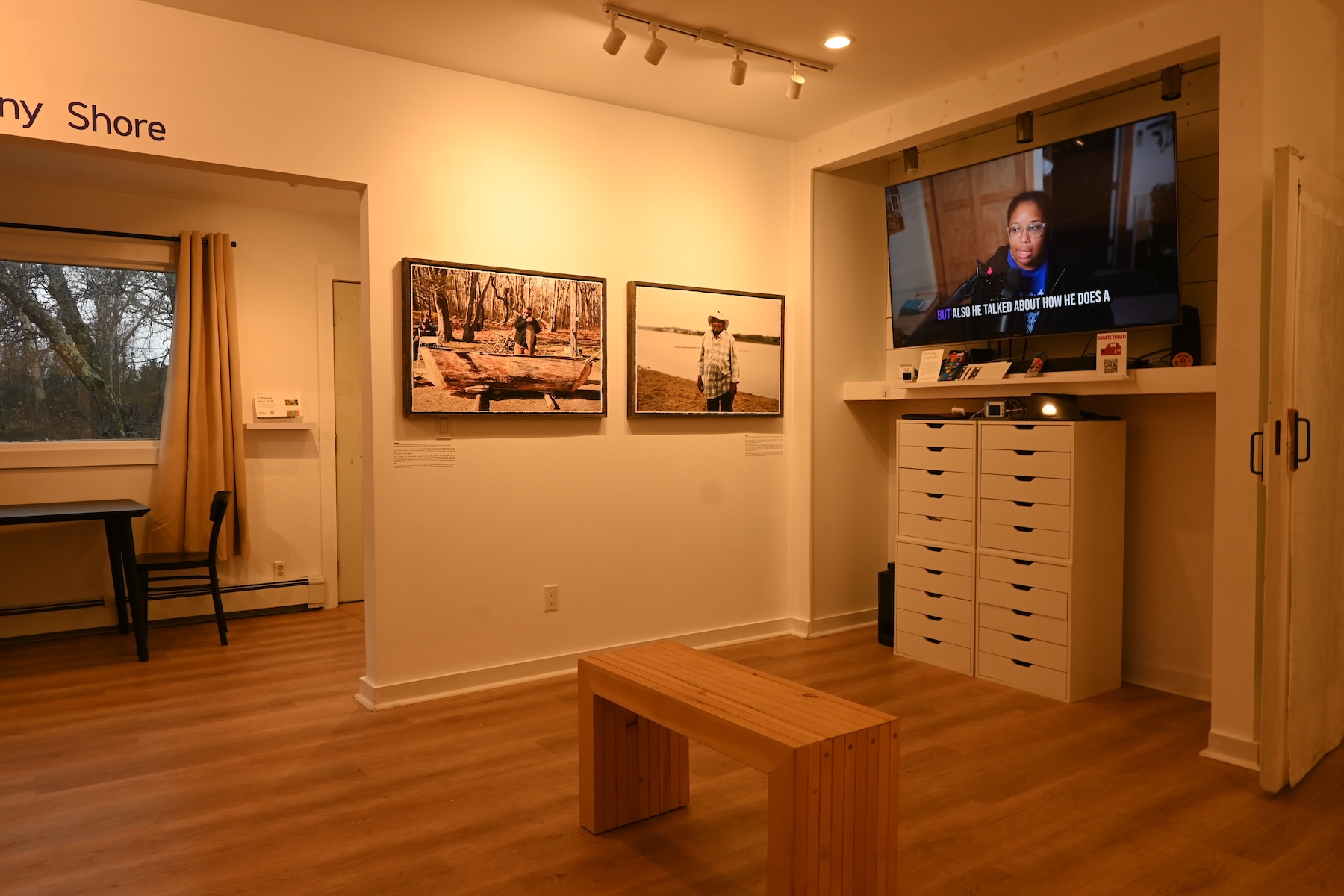
Still, the work at Ma’s House continues, carried by the community and the residency program. “Even though we’re in the Hamptons, a lot of the art we show challenges wealth, privilege, and development,” Jeremy said. “Finding local funding is always difficult. But we keep going.”
As of today, it has raised around $43,007 out of $50,000 goal on GoFundMe. Ma’s House continues through collective effort, built by the community.
On the East Side of Long Island, everything is still being sold as light. Light for painters. Light for buyers. Light for people who think land is empty unless it is photographed. But the land is not empty. It never agreed to that.
”[The] first step is to teach people who we are and our history ,” Weeks said as he finished putting the tobacco down. “Whether it’s through different types of art, which is why I don’t stick to just one. I try to reach people in as many ways as possible to show the fights we’ve endured and the history we carry today.”
The wind carries the tobacco over the Shinnecock Bay, while the bald eagle keeps moving through the gray sky.