

Photo by Megan Keiko Naito
I grew up with remnants of war around me.
Bombings, town takeovers, kidnappings - they were everyday news. It was normal to me to hear how conflict and war was impacting Colombians. I did not have the analysis yet, but as an adult I see how all that violence was mainly perpetrated in rural areas with Afro-Colombian, Indigenous and peasant communities affected the most. It was a strange feeling because the war seemed close yet so far, and my kid brain never thought that I would be directly impacted by it. It was something I saw on TV.
Yet, I was twelve years old when war arrived in Villarrica. Every month or so, there were rumors that the town would be taken over by armed forces, but that became normalized too - and it never happened until it happened.
For fourteen hours, bullets and rockets pierced our town and our lives. They tore through walls, through bodies, through families and communities. I remember the relentless echo of gunfire, the way silence never quite returned the same after that night. I remember knowing, even then, that the bullets did not come from just one side. While armed forces were shooting through the town, military helicopters were shooting down anything that moved. I lost neighbours, classmates and friends. Families lost daughters, sons, sisters, brothers, mothers and aunts.
I lost my privileged sense of innocence that night, the kind of childhood that many kids who grow up midst genocide or directly impacted by war, like Palestinian kids in Gaza, are not afforded.
Although we survived, survival was no longer enough. In the days that followed, new threats circulated - whispers of massacres, of return attacks. Staying meant risking our lives. So, we left quickly, without ceremony, goodbyes, or closure. We left behind our home, my Salserin poster, our dear neighbors, our bakery, which was the only source of income we had. We fled to the capital with some of our belongings, mattresses, blankets, pots and pans, the photo albums my mom refused to leave behind, and 200,000 Colombian pesos (about $30 USD) in my dad’s pocket. We had to give that money to a police officer upon entering the city as a bribe since we did not have an intercity moving permit, because how does one plan for a permit in the middle of war and displacement?
Soon after, we fled the country for Canada. My dad had been interviewed about our displacement, and he accused both the armed forces and military actions that worsened the impact of the attack. Canada was supposed to be safe, that is what we were told, we were lucky refugees - but before we could understand the place we had arrived in, before we could even speak the language, a bill arrived.
Ten thousand dollars.
A transportation loan from the government that had brought us there, including a landing fee paid to the Canadian government. It accumulated interest while we tried to learn how to survive. Being a lucky refuge turned out to come with a debt to the government we were supposed to be thankful to.
As an adult now, I do understand the privilege that comes with resettling to a country like Canada, but even as a child I understood that safety from war also came with new forms of violence - quieter, more insidious - racism, bullying, labour exploitation, constant reminders that we did not belong.
In high school, I did not speak English, and I wore donated clothes, so I learned quickly what it meant to be seen as less than. I worked in the school cafeteria so I could eat, and after school, I worked under the table for miserable wages. My mother worked tirelessly, carrying the weight of our survival and the debt we had inherited simply by escaping violence. Together, we did the jobs that others refused, that were ‘beneath’ most, even beneath my own father.
This is what refuge looked like for us.
For a long time, I called myself a refugee. It was the language that was available to me. The category that made my story legible to the state, but over time, that word began to feel too small. Refuge was never a destination or a final state of safety or belonging, it was a process, an uneven one at that, a contradictory one shaped by systems that often cause the refuge in the first place. Although war crossed our lives, our lives are not defined by war.
Refuge was never something I arrived at. It was something I kept losing, something I kept negotiating, something shaped by forces far beyond my control, war, borders, empire, colonialism.
Then slowly, I began to understand something else.
The refuge I found in Canada existed because of someone else’s dispossession, the Musqueam, Squamish, and Tsleil-Waututh Nations and lands, the Halkomelem languages I was not learning to speak, the protocols and traditions I was not learning to follow.
Through community work, through relationships with Indigenous peoples, I began to learn about histories that were not taught in schools, histories of genocide, land theft, and ongoing colonial violence. I began to see how the state that had offered me refuge was built on the displacement of others, and was positioning me and my family to continue that displacement.
I began to ask myself questions that did not have easy answers.
What does it mean to seek safety on stolen land?
What does it mean to rebuild a life in a place where Indigenous sovereignty continues to be denied?
What does it mean to be both displaced and implicated?
These questions unsettled everything I thought I knew about my own story. For years, I carried a promise, a quiet one made to myself in that flight we took when we left Colombia, not knowing what to expect ahead of us or if we would ever be able to return.
In 2020, I returned. I returned as someone willing to confront what it means to go back to a place that is both home and foreign. The signing of the peace agreement in 2016 opened in my heart and mind that possibility - fragile, incomplete, contested but still a possibility.
I returned to Colombia not because the violence had ended, because it never has, but because I could no longer remain distant from it.
I learned that Return is not a resolution, but yet another beginning.
As part of that return, I shared my testimony with the Truth Commission. I spoke about displacement, survival, about what that night in Villarica had taken from us and what it had forced us to become. I believed in the process. I believed in the possibility of truth as a pathway to healing. However, when the report was published, I found only fragments of my testimony included, edited, selected, reduced, violated.
Who gets to decide what parts of our stories matter?
What does it mean to have your memory extracted, curated, and returned to you incomplete?
It is another kind of institutional violence, a quieter one.
Memory does not live in one place, it moves between bodies, generations, silences.
For instance, my mother remembers very little from the night of the attack, but I remember many details, maybe too many. For my mother, forgetting is part of her survival and for me, remembering is part of mine. It is my responsibility.
Since there is no right way to heal, then there is only the ongoing work of living with what remains.
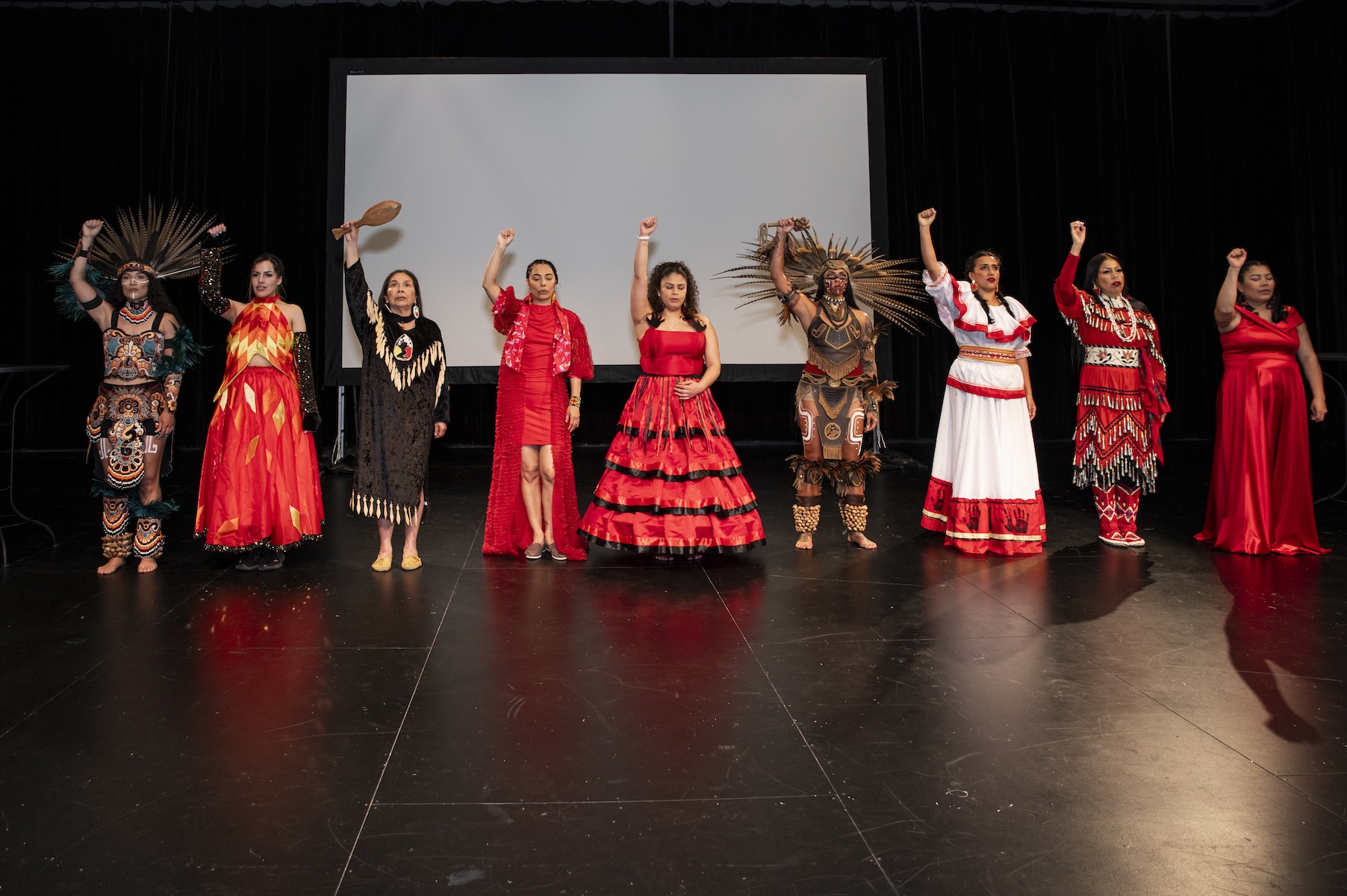
In the years that followed my return, I found myself moving across territories in new ways, not as a refugee or as someone seeking refuge - I found myself in the extremely privileged situation of someone wanting, needing and being able to build relationships. Through community organizing, solidarity work, and gathering with women across Abya Yala and Turtle Island (the Americas), I began to understand something that had always been present but not yet named.
We are not alone in these histories, across borders, languages, and different experiences of violence and resistance. There are shared patterns of dispossession, survival, resurgence and shared commitments to land, community, to each other.
I have witnessed what becomes possible when these relationships are nurtured, when women from different territories come together not as victims, but as knowledge holders, as organizers, as people carrying forward ancestral teachings and histories in contemporary struggles.
I have witnessed how stories travel, how collective resistance takes shape, how new forms of belonging emerge rooted in relationality.
There is a prophecy shared by elders across many Indigenous Nations, the coming together of the Eagle, the Condor, and the Quetzal. Different regions, different knowledge systems, different ways of understanding the world - meeting again after long periods of separation. I believe in it. It does not feel radical, but it does feel transformational. It requires for us to re-learn how to be in relationship with one another, not through the logics of states and systems, but through the responsibility of reciprocity and care.
It will not be perfect, it will be messy, it might even be painful at times, but choosing community and each other’s well being across borders, histories, and wounds feels closer to refuge than anything a state or system has ever offered before.