

My little ones, Choose the kite you like, take it to one of the hills, and fly it. And sing with Fairuz: Fly, oh kite, fly Oh paper and string Rise high above faraway rooftops, on the gentle breeze.
This is a letter left at a supermarket, written and signed by Hanna Farah, one of the last remaining kite makers in Lebanon.
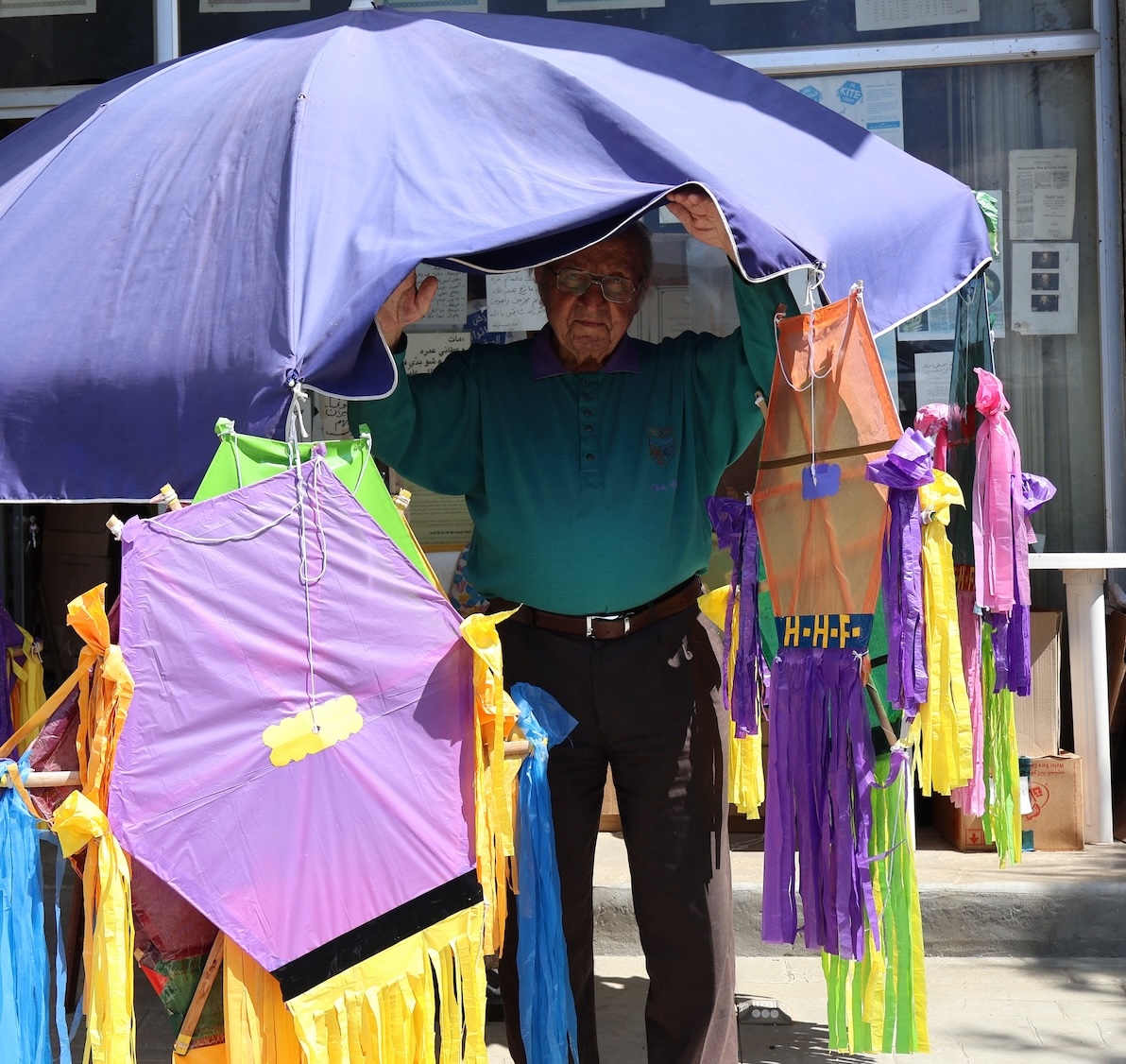
“No one visits my shop anymore,” he tells me with a wistful smile, sitting alone in his book-crammed shop, surrounded by colorful kites. “I made all these by hand,” he says, pointing to them with pride in his craftsmanship.
Hanna was born in 1938 in the southern town of Marjayoun, but his Hourani accent reveals his roots in Houran, southern Syria. His childhood, spent between Marjayoun and Quneitra, Syria, is filled with memories of playing outdoors, in alleys and gardens, inventing games from whatever his surroundings made available. Kite-making and kite-flying were among the village children’s favorite pastimes.

Hanna would gather paper, reeds, string, and pieces of wood with his siblings from his father’s land. They would then borrow flour from their mother’s kitchen, mix it with water, and use the paste as glue. Once assembled, the kites were ready to be taken outside and flown. These simple forms of play, requiring nothing more than what nature offered freely, are increasingly being overshadowed by modern-day gadgets.
“It is not that children are losing interest in kites; many no longer know they exist,” he says. “Parents and schools are to blame. Neither invested enough effort to keep such forms of play alive.” But as I listen to him reflect on how difficult it has become to sustain these traditions, I cannot help but connect their disappearance to the forces of capitalism and mass consumption.
Mass-manufactured, identical toys are bought and discarded at an ever-faster pace, only to be replaced by the next new craze. These standardized forms of entertainment have become a homogenizing force, reaching far beyond major cities and permeating villages. Ever-expanding supply chains have turned parents and children into hyper-consumers, stripping away much of what makes locally rooted and rural forms of play unique.
Perhaps the most unsettling part of this shift is what it does to the imagination. Instead of consuming a finished object, designed elsewhere and produced by a machine, children once looked around them and imagined what the ordinary elements of the natural world could become. Hanna still carries within him the imagination of the child who created from whatever the land offered.
He invites me to step outside his shop and tries to fly one of his kites, but it cannot catch the air. There is barely any wind on this scorching day in Metn, Mount Lebanon, where Hanna now lives. He hardly ever visits the places tied to his childhood memories anymore: southern Lebanon and southern Syria, but also northern Palestine.
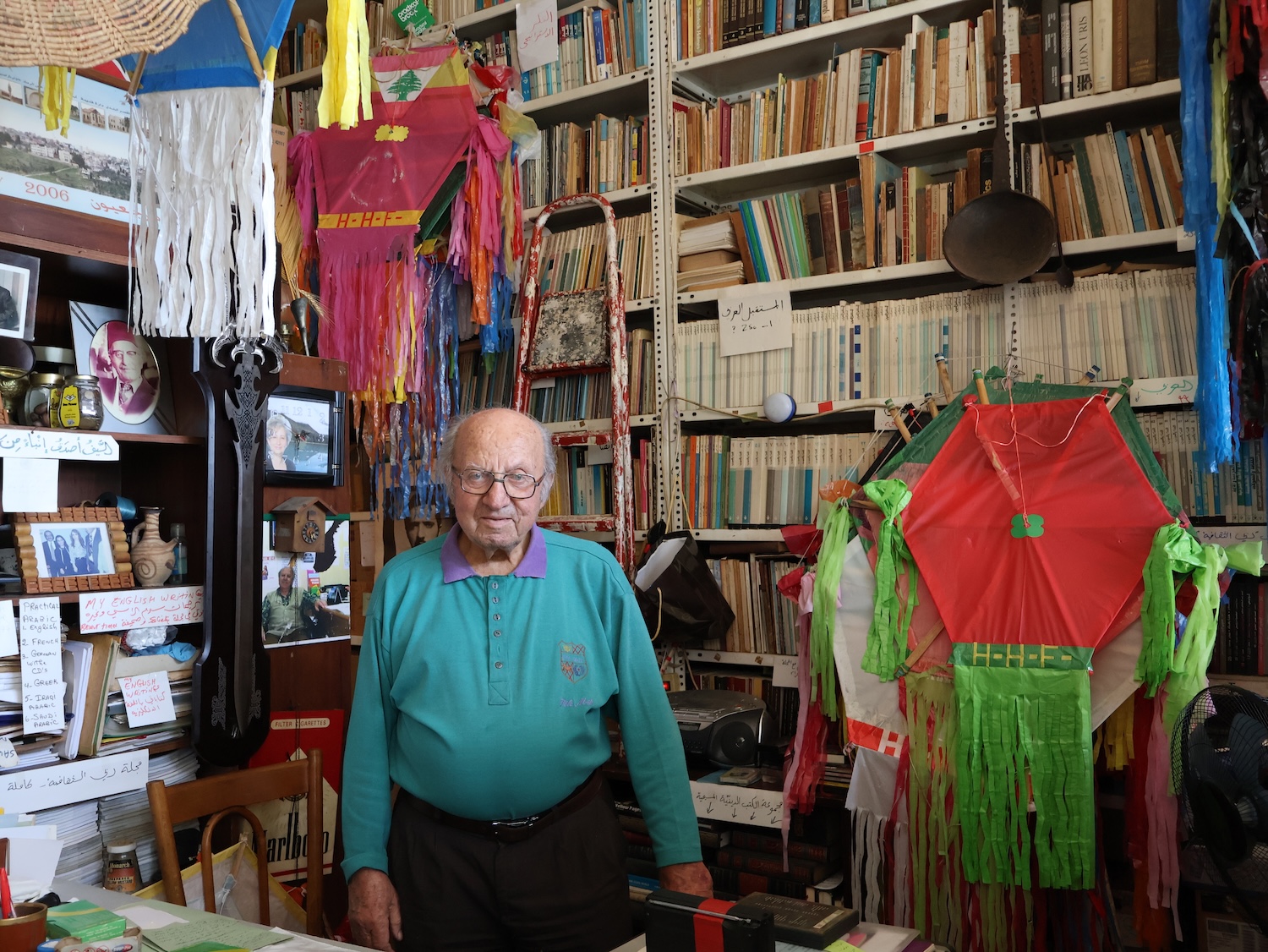
We go back inside and sit in the shade to cool down. As we do, he shows me an old black-and-white photograph of his father standing alongside fellow farmers in Palestine, where he owned agricultural land that was stolen from him in 1948. The loss plunged the family into economic hardship, eventually forcing Hanna to leave his village. Today, hundreds of thousands of families across southern Lebanon are experiencing dispossession of their own.
A couple of days ago, a kite festival was held on the southern Lebanese coast of Al-Zahrani, bringing together participants from more than 50 southern towns and villages currently under occupation, or, more precisely, devastated by it. Held under the slogan “The Land Is Ours, and So Is Our Space,” the festival carried a message of steadfastness and attachment to the land.
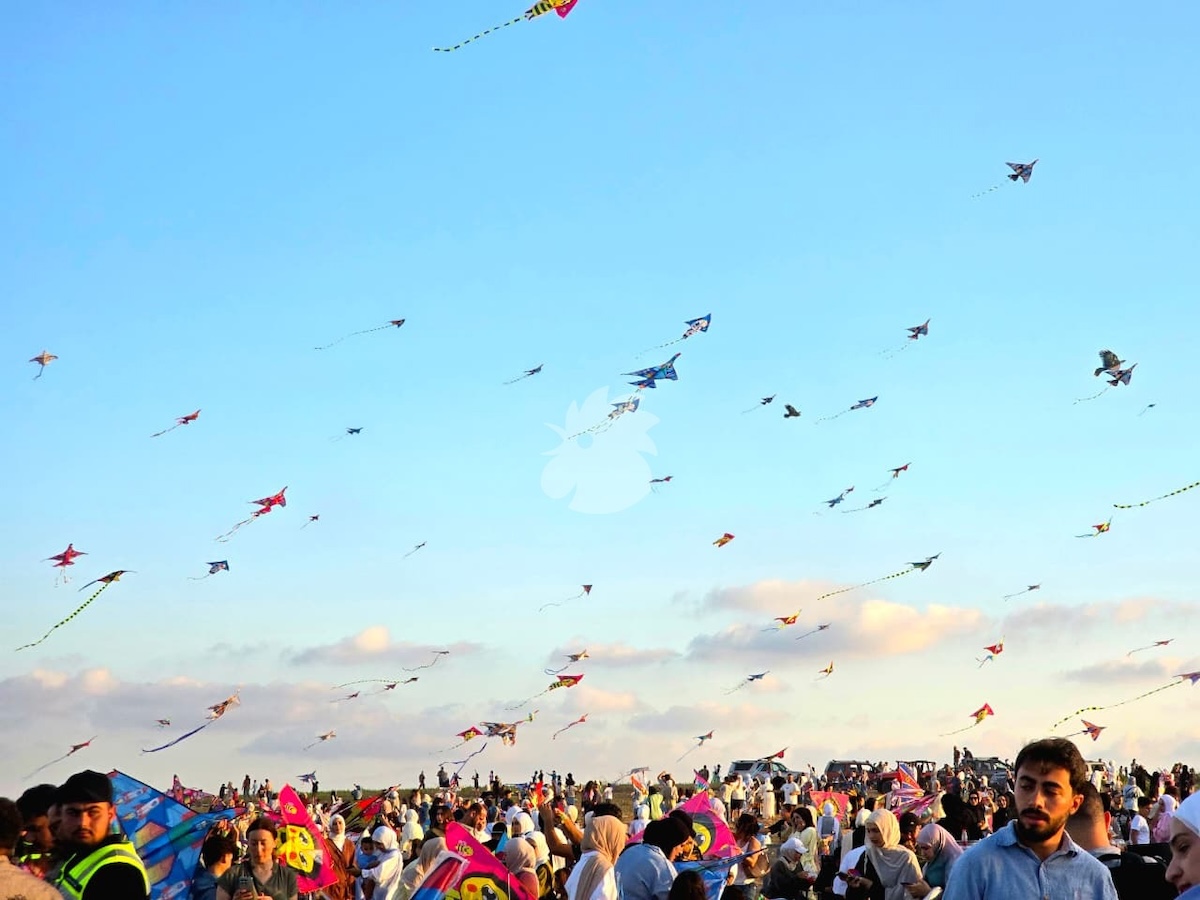
There is something very profound and whimsical in the ability to continue playing amid such harsh circumstances. Carried wherever the winds take them, kites offer a fantastical metaphor for everything that is free and unburdened by colonial partitions. This brings to mind Randa Chahhal’s film The Kite, in which the kite becomes a central motif, mocking and exposing the absurdity of divisions and artificial borders imposed on a land whose communities had long lived and moved across it. Much like the kites themselves, children’s imaginations transcend imposed fences, mines, watchtowers, and military surveillance, refusing to let their worlds end where a line of barbed wire has been erected.
For Palestinian children, however, this object of wonder takes on an entirely different dimension. Last month, Israel declared kites “hostile” and prohibited children from flying them. Israeli Prime Minister Benjamin Netanyahu and Defense Minister Israel Katz threatened to intensify the bombing of Gaza in response to children flying kites; yet another pretext for further attacks on the besieged enclave.
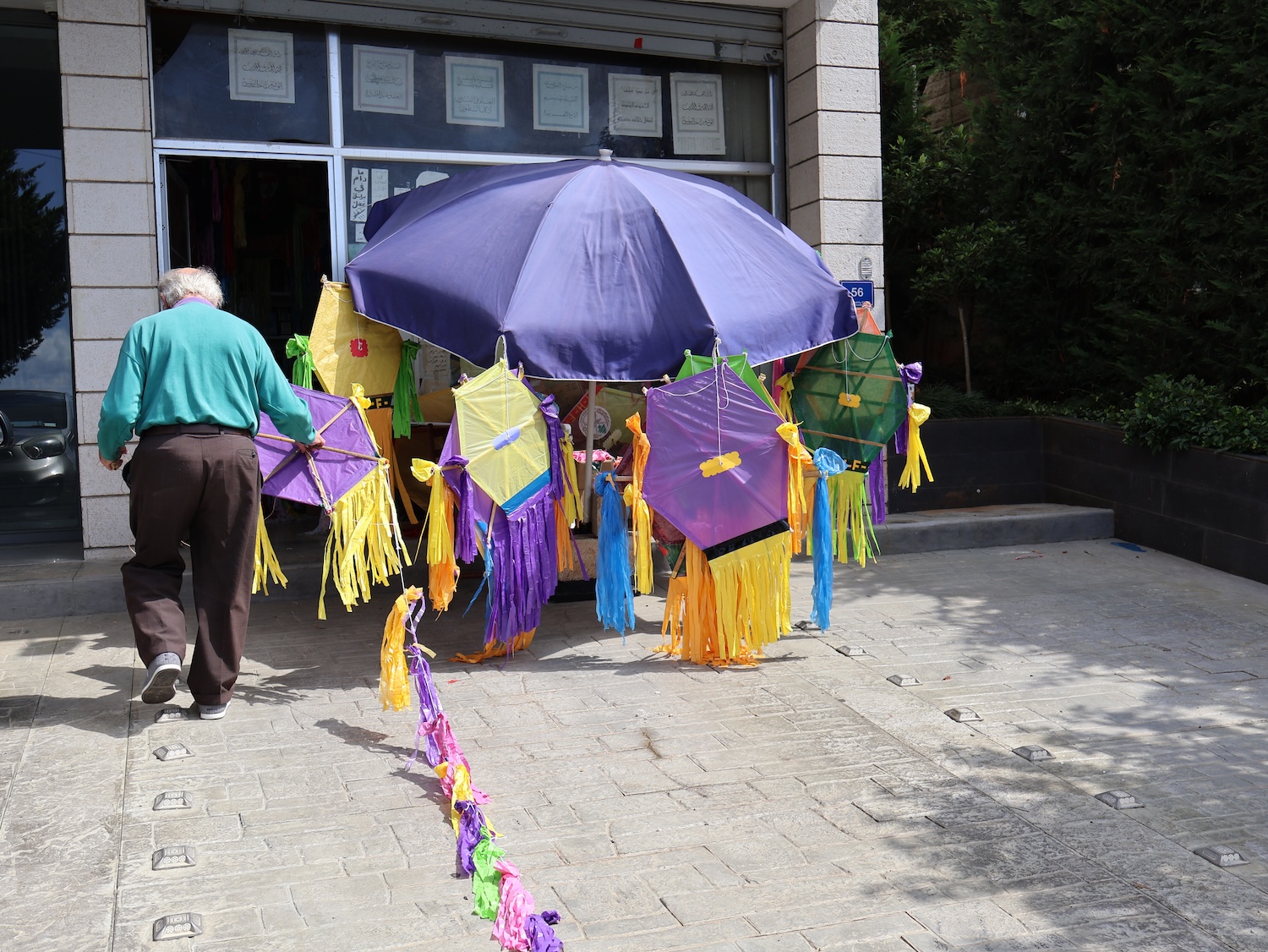
“Next time, we meet in Marjayoun,” he says.
As I leave, I hear him singing:
Fly, oh kite, fly… Oh pomegranate blossom, lean into this garden, So the children of the earth can play, And time can become sweeter…