

Paid Leave for All founder Dawn Huckelbridge on the possibilities for and challenges of rallying for a more equitable way of raising families.
Ken is a firefighter in Cleveland. He adopted his grandson two years ago, in a difficult moment for his family. He hadn’t planned to change diapers at the age of 61. When he realized the City would offer him paid leave during those early months of transition, he was shocked and grateful. Ken shows us pictures of his little boy. He lights up with pride and love. He says, I don’t know what I would have done without it — I had time to become his Tata. Today, he says, his grandson is doing incredibly well, a joy.
Jasmine was a chef in Harrisburg with a soul food restaurant. When she broke her leg, there was no paid leave, no way to take time off and pay the bills. She shut her doors. Eventually, she pivoted to catering and pop-ups to keep cooking. She brings us fall-off-the-bone chicken and greens in her own pots. But, she tells me, what she missed most was her community, people who came in her doors and filled her cup and sustained her.
What does it mean when our choices and trajectories are determined by a roll of the dice, our zip codes, or where we happen to work?
This is political — the politics of time through our lives. Our time is one of the most intimate, powerful things we have. It has been the subject of strikes and disputes, from rail workers to flight attendants.
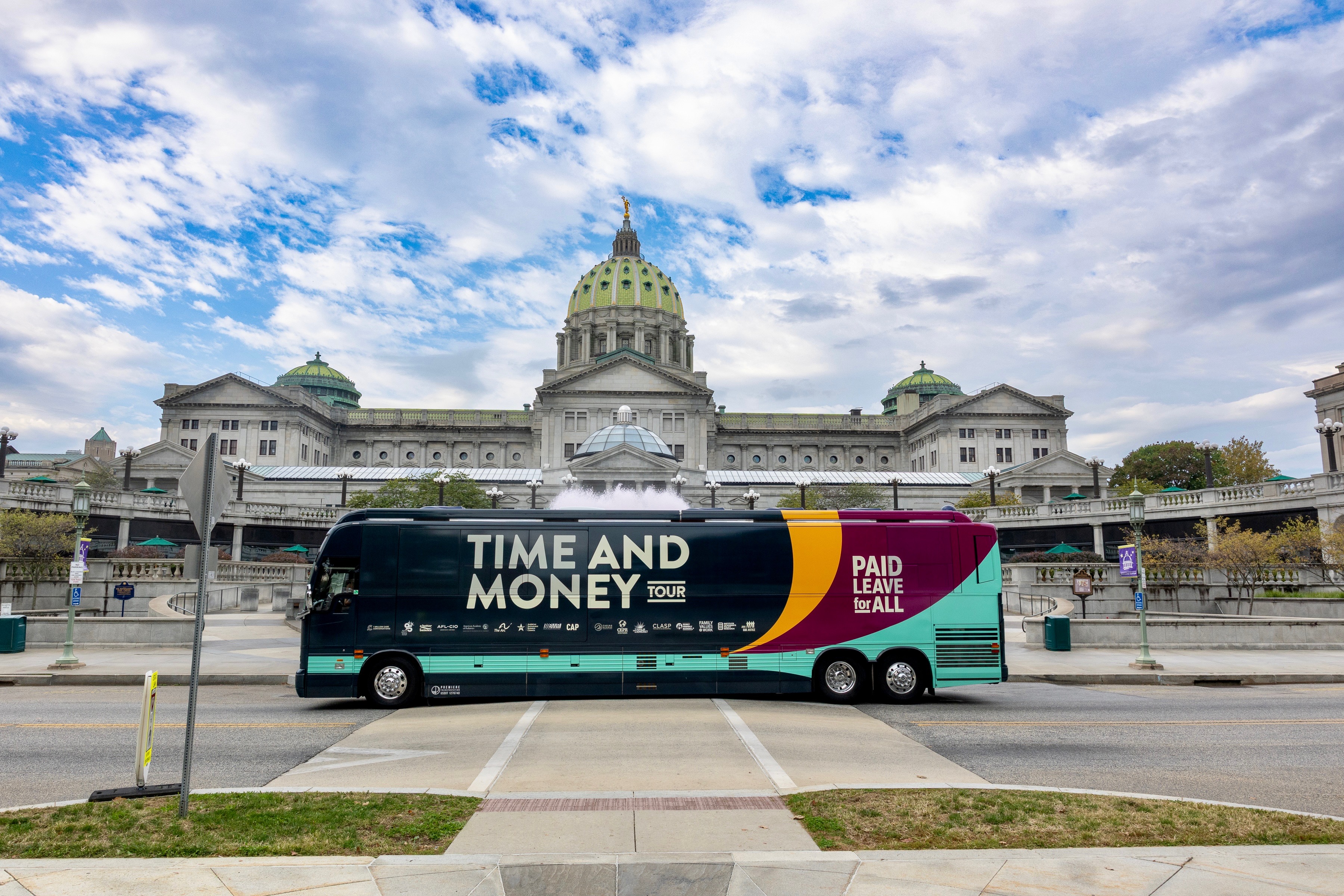
Recently, Paid Leave for All traveled across Pennsylvania, Ohio, and Michigan, a road trip we called the “Time and Money Tour.” As the national conversation about affordability focuses on costs from child care to groceries, we wanted to explore another kind of poverty we hear about again and again: the lack of time, and the lack of control over how we spend it.
When we talk about paid leave, we often focus on lost paychecks — the difference between putting food on the table or going hungry, keeping the lights on or going dark. Without a national paid leave program, we lose tens of billions in wages a year. But the costs don’t end there.
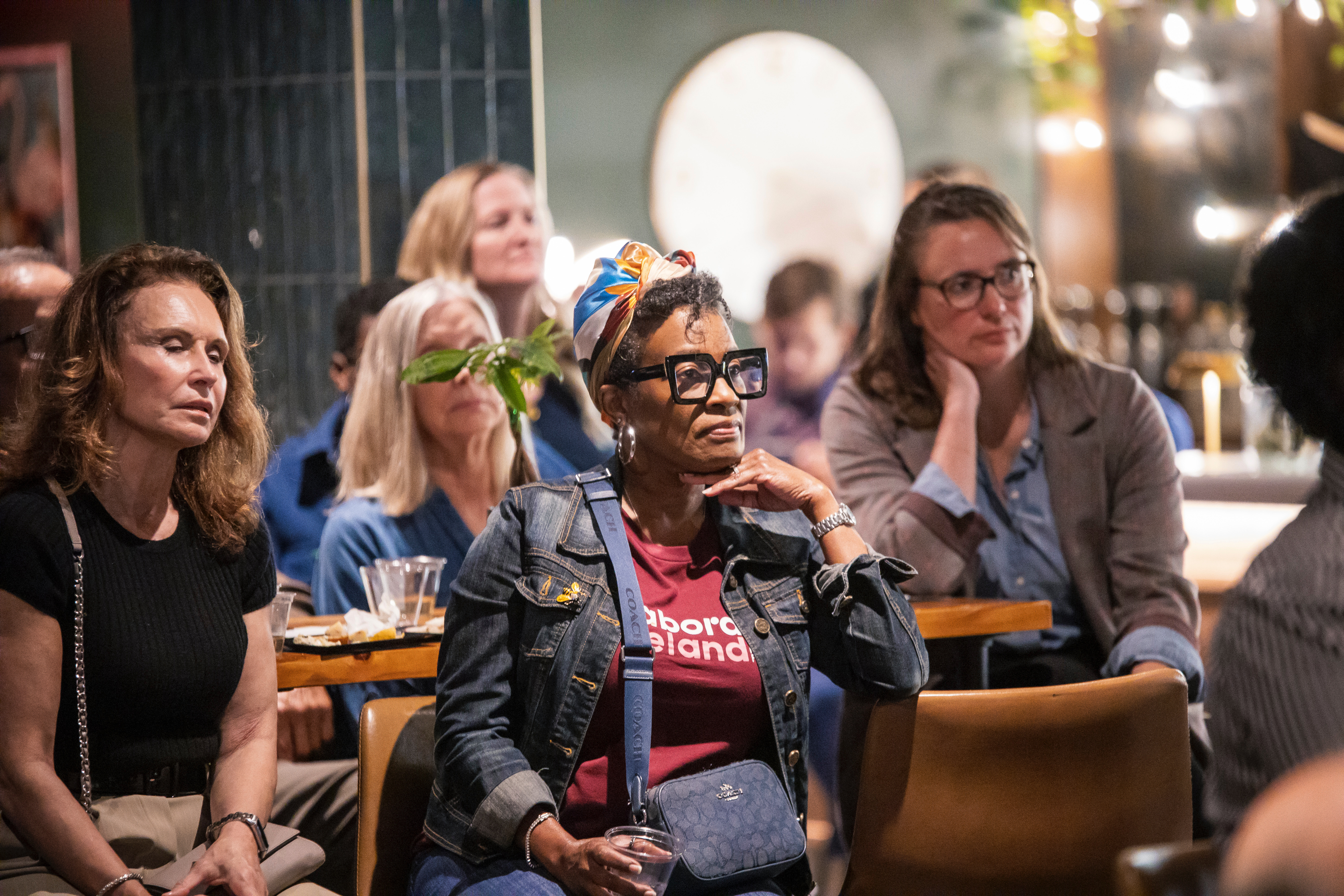
On the road, I was struck by how many people had been forced to learn to survive without the time they needed. They found ways to keep going, to rebuild their lives. But when we asked what that survival had cost, their voices caught and the tears came. Behind the stories of resilience were devastating losses that lingered years later: relationships strained or broken, opportunities and dreams lost, debts that continued to mount, and time with their loved ones they could never get back.
We have become so accustomed to celebrating resilience that we rarely ask why so much of it was necessary in the first place.
Access to paid leave profoundly shapes what is possible in people’s lives. Neither Ken nor Jasmine chose the circumstances that required them to step away from work. But the protections available to them helped determine what came next.
In a country that prizes freedom and individual choice, how much control do we really have when our ability to care for ourselves or someone we love depends on where we work and what we can afford?
I think about when I was pregnant, and an employer told me that my timing was “inconvenient.” I was flabbergasted. I’d already timed it around an election calendar. The anxiety began immediately, grew over the months, and exploded postpartum. I remember running everywhere, always feeling out of time. After piecing together every paid vacation and sick day I had, I still went back before I’d healed, before I was ready. So I ran. I ran to work, carrying breast pumps and parts and coolers in my arms, hearing my newborn screaming for me, racked with guilt. I ran home, trying not to waste a second that I could have been holding him through his colic, nursing him through his cries.
This is political — the politics of time through our lives. Our time is one of the most intimate, powerful things we have. It has been the subject of strikes and disputes, from rail workers to flight attendants. Some of us can work remotely, take a child to the doctor, or rearrange our schedules when life demands it. Others are on demand, at the mercy of our employers, unable to take time to care, rest, or determine the rhythm of our days. The United States is one of the only countries in the world that does not guarantee any form of paid leave: no paid family leave; no paid medical leave; no paid holidays; not a single paid sick day.
I hear stories every day of parents working from the NICU, grown children having to take a parent off life support over the phone. This, among other indignities, fuels division and anger in America. It can lead to desperation and bitter ideology. What if instead we just afforded everyone this security and grace?
A national paid family and medical leave program could do that. It could provide up to 12 weeks of paid leave through an insurance system that doesn’t leave employers shouldering the entire cost out of pocket. It would cover self-employed workers and small business owners like Jasmine. It would cover injury, illness, adoption, birth — the inevitable life events we all face.
On our bus tour, we asked people what they could have done with more time for what mattered most. Their answers stayed with me:
“I would have been there for my son’s first smile or first steps.”
“I would have been able to keep my restaurant’s doors open while giving myself the time I needed to heal.”
“I would have gone to therapy for my postpartum depression and thought about the care I needed to be well.”
“I would have made certain they knew I loved them.”
These are things that people take for granted the world over, and we go without. We talk about freedom as a defining American value, but what does freedom mean if we cannot afford the time to care for ourselves or the people we love?
Because ultimately, this isn’t just about time or money.
It’s about life.
Editor’s note: Since 1993, the Family and Medical Leave Act has guaranteed eligible workers at larger employers 12 weeks of unpaid leave for a new child, with a 2019 law adding 12 weeks of paid parental leave for federal employees. Congress came closest to guaranteeing paid leave for all workers in 2021, when the House approved four weeks of it in Build Back Better. Senator Joe Manchin refused to vote for the bill, leaving the Democratic caucus one vote short in a Senate split 50-50. The leading paid leave bills in Congress today range from the FAMILY Act, a version of the national program Huckelbridge describes, to the bipartisan More Paid Leave for More Americans Act, a plan to give states grants for paid leave programs of at least six weeks. Fourteen states, plus Washington, D.C., have enacted paid leave programs, though Pennsylvania, Ohio, and Michigan–the three states on the Paid Leave for All tour–have no program. Of the three tour states, Pennsylvania has gone furthest, with a paid leave bill that passed the state House in March, though this has not yet come to a vote in the state Senate.
-Jill Damatac, Senior Editor
Dawn Huckelbridge is the founding director of Paid Leave for All, a position she has held since 2019. With a career spanning gender policy, political organizing, and communications, she has successfully built and led campaigns to advance paid leave and gender equity across the country. is the founding director of Paid Leave for All, a position she has held since 2019. With a career spanning gender policy, political organizing, and communications, she has successfully built and led campaigns to advance paid leave and gender equity across the country.