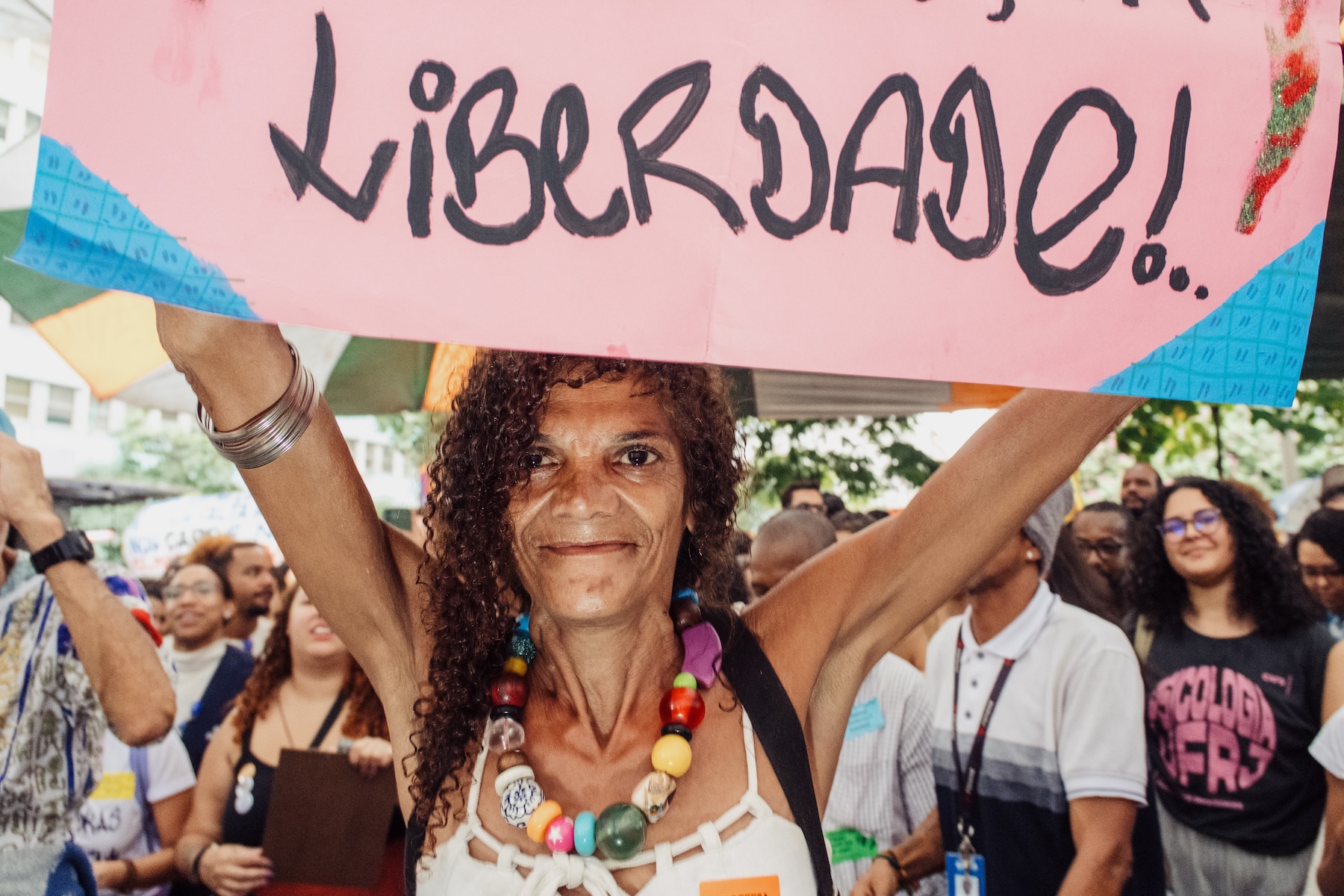

In Brazil, mental health has long been understood as more than an individual matter. Since the late 1970s, the country’s psychiatric reform challenged the idea that the psychological and emotional impacts on mental health could be separated from the social and political conditions in which people live, and that care could be reduced to individual treatment. This placed questions of freedom, citizenship and participation at the centre of mental health care.
Every year on May 18, Brazil marks the Day of the Anti-Asylum Struggle (O Dia da Luta Antimanicomial), when thousands of people take to the streets. They march for a society without asylums, for care to be delivered in freedom rather than confinement, and for a public mental-health system that does not remove people from their families and social lives.
During this year’s demonstration in Rio de Janeiro, those demands were even more tightly connected with other political struggles. There were samba and circus performances, as well as a large blue horse covered in colourful fitas do Bonfim ribbons, associated with Salvador, Bahia. This horse, known as Marco Cavallo, originated in the psychiatric hospital of Trieste (Italy) in 1973, when patients and artists created a papier-mâché sculpture and paraded it through the hospital gates into the city, just before the closing of the first asylum.
While signs defending the SUS (Brazil’s universal public health system) and protesting against feminicides highlighted some of the challenges the country is going through at the moment, an enormous Palestinian flag added to the sense of unity and solidarity with struggles on the other side of the world.
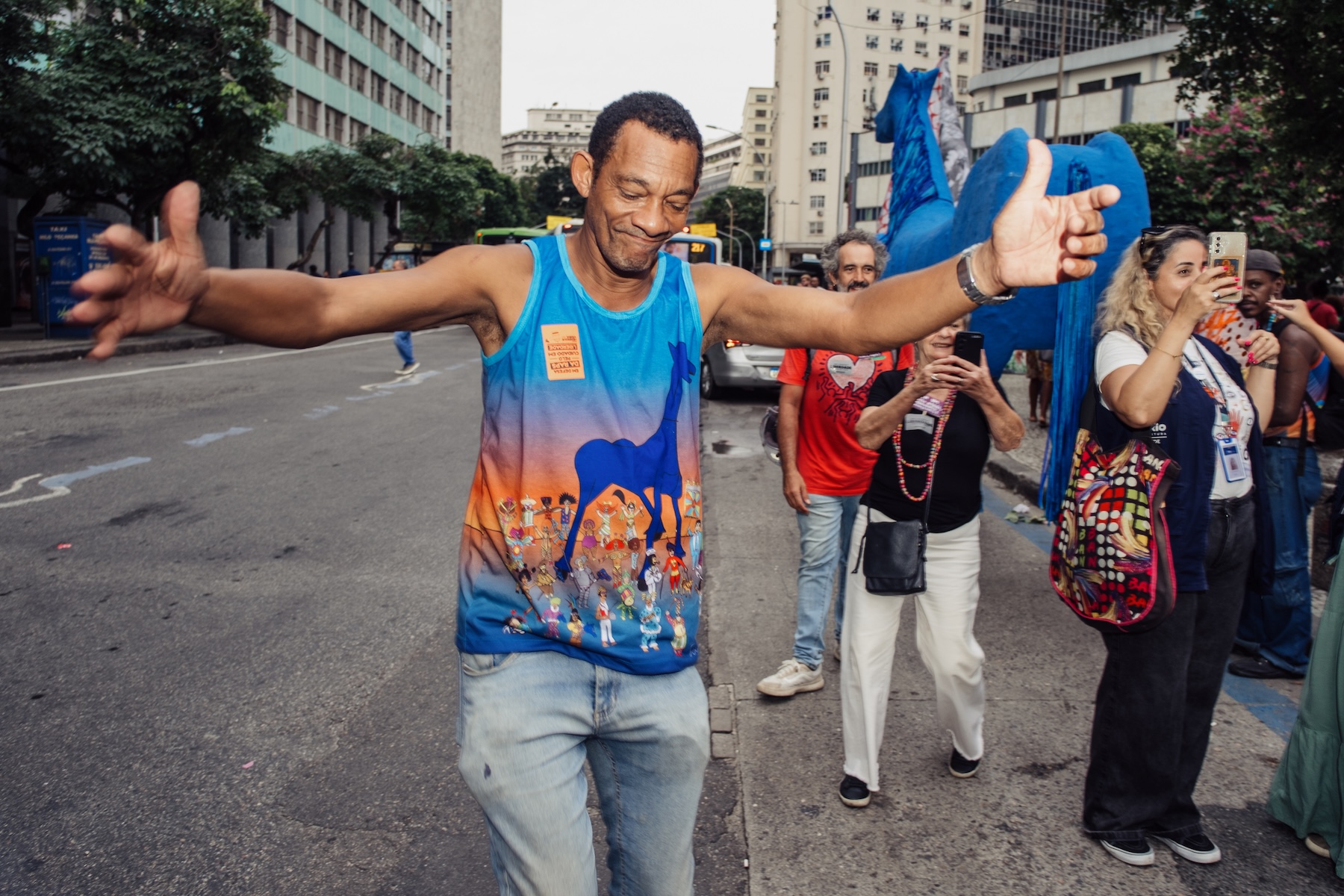
As groups from various community mental health centres arrived in the heart of the city, people with experience of mental distress sold crocheted items, badges and soaps. Meanwhile, Monique Mattos and Hamilton de Jesus Assunção, one of the singers of “Harmonia Enlouquece” (Harmony Goes Crazy - a musical group formed by people with lived experience of mental health services users and professionals) and the “Bloco Ta Pirando, Pirado, Pirou” (Losing its Mind, Crazy, Completely Lost it Block - a street carnival group) tuned their instruments and started singing “…Louco é quem me diz que não é Feliz…” (The crazy one is the one who tells me they aren’t happy) - the Madman’s Ballad originally composed by Arnaldo Baptista and Rita Lee.
Born in a climate of dictatorship, the movement of the Luta Antimanicomial doesn’t only critique what happened inside the asylum, but what made the asylum possible in the first place. The social and political order that viewed the confinement, segregation, and removal of certain individuals from public life as a legitimate form of care. In this way, the asylum was not just a failed institution - it represented a specific approach to determining who belonged in society and who should be excluded from it.
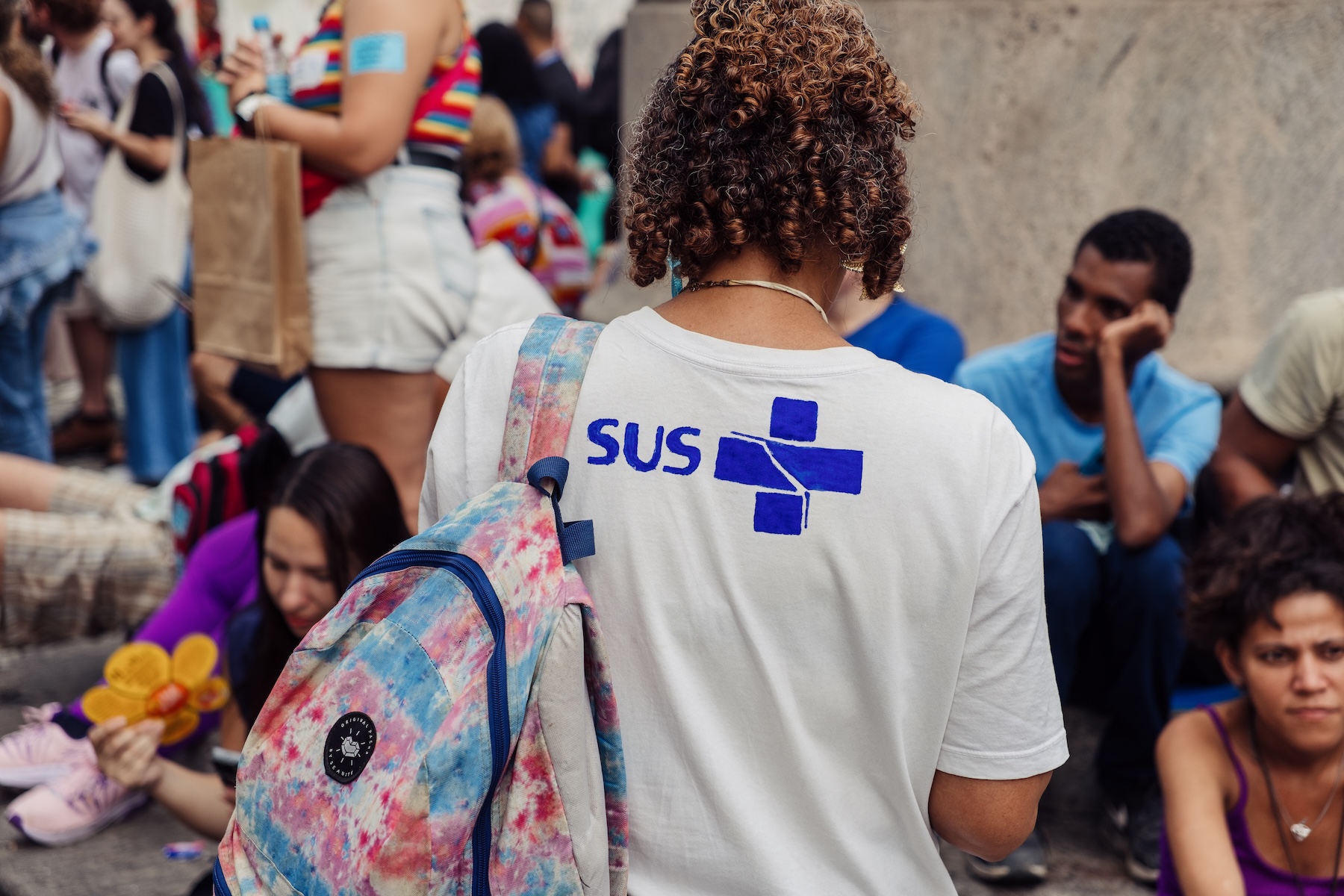
Therefore, Brazil’s psychiatric reform, born within the context of democratisation, enshrined another principle: cuidado em liberdade (care in freedom). The 2001 Psychiatric Reform Law accelerated the transition from long-term institutionalisation to community-based mental health services.
Twenty-five years later, however, this transformation remains incomplete and politically contested. Right-wing governments have systematically tried to destroy the community mental healthcare system. Meanwhile, religious residential centres organised around confinement, discipline and moral correction, known as comunidades terapêuticas, are financed by the state and still operating.
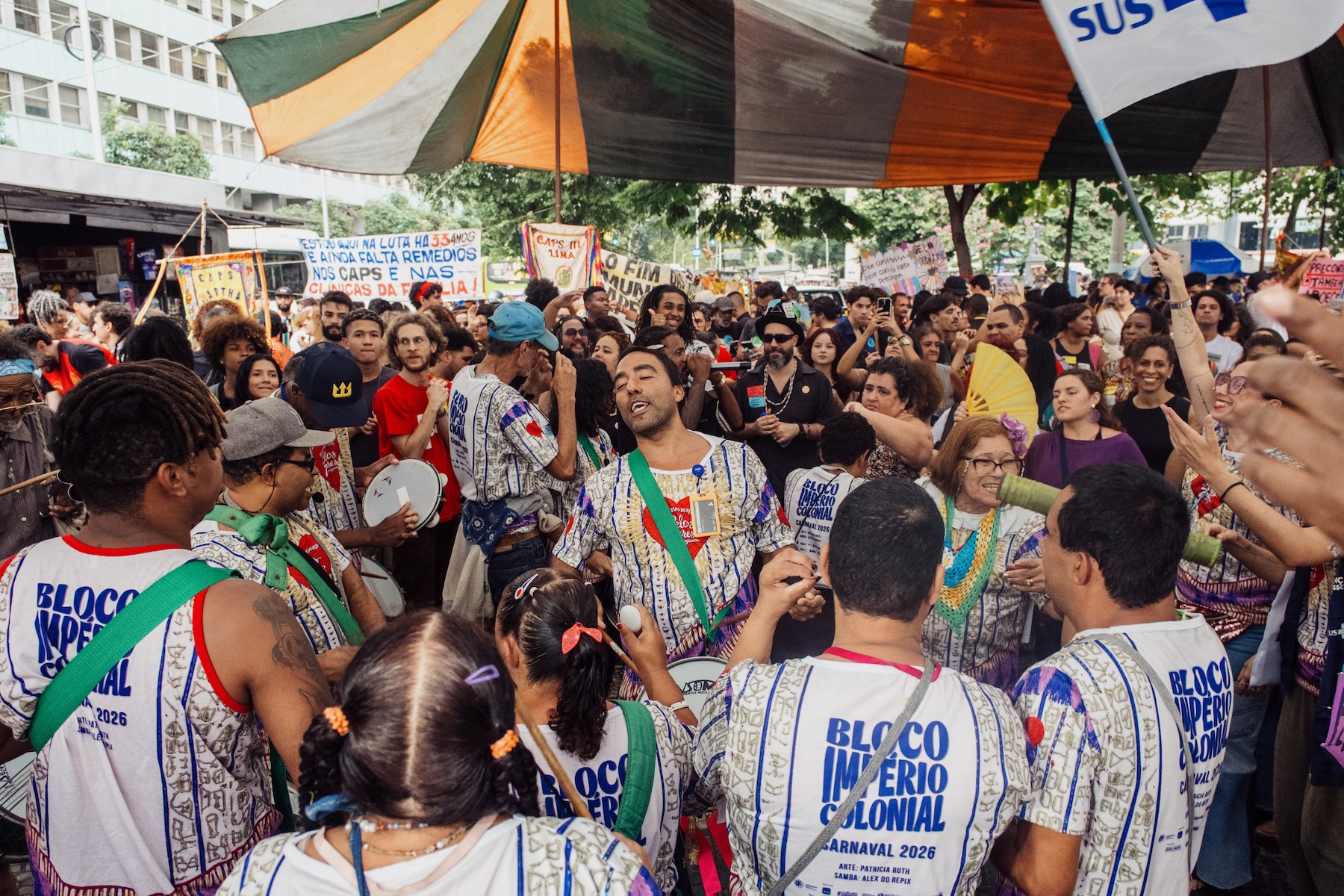
At the Rio march, this issue appeared to lead to a broader question. After speeches from activists and representatives of the anti-asylum movement, a woman took the microphone and asked the crowd:
“If a mother develops depression after her son is killed by a police officer, where does her mental health problem stem from? With the onset of depression? With bereavement? Or with the killing itself? Or does it begin with the policing of the neighbourhood in which the killing occurred?”
Her name is Ana Paula Oliveira. She is a Black woman from Manguinhos, a favela in Rio’s north zone, and the founder/coordinator of the mothers’ group, Mães de Manguinhos - which marched in the parade of the Luta anti-manicomial carrying photographs of their children. Her nineteen-year-old son, Jonathan de Oliveira Lima, was fatally shot in the back by a military police officer in 2014. Since then, she has spent over a decade arguing that any account of her suffering must consider the changes to the neighbourhood that preceded her son’s death.
The Police Pacification Unit arrived in Manguinhos in 2012. The programme was presented as an attempt to establish state control in favelas dominated by armed groups. In Ana Paula’s account, the arrival of heavily armed police was also bound up with transformations in the neighbourhood and the displacement of residents. The police, she says, have historically been organised around “protecting property, and not lives”.
Soon there were deaths. In 2013, a sixteen-year-old boy was killed, and later that year another young man died. Johnatha became the third young person Ana associates with this period of intensified police presence. She describes the pattern in explicitly racial terms: “the extermination of young people from the favelas and peripheries of Black youth.”
But for Ana Paula, the violence does not end when someone is killed. “It is not enough just to exterminate,” she says. “The victims have to be criminalised too.”
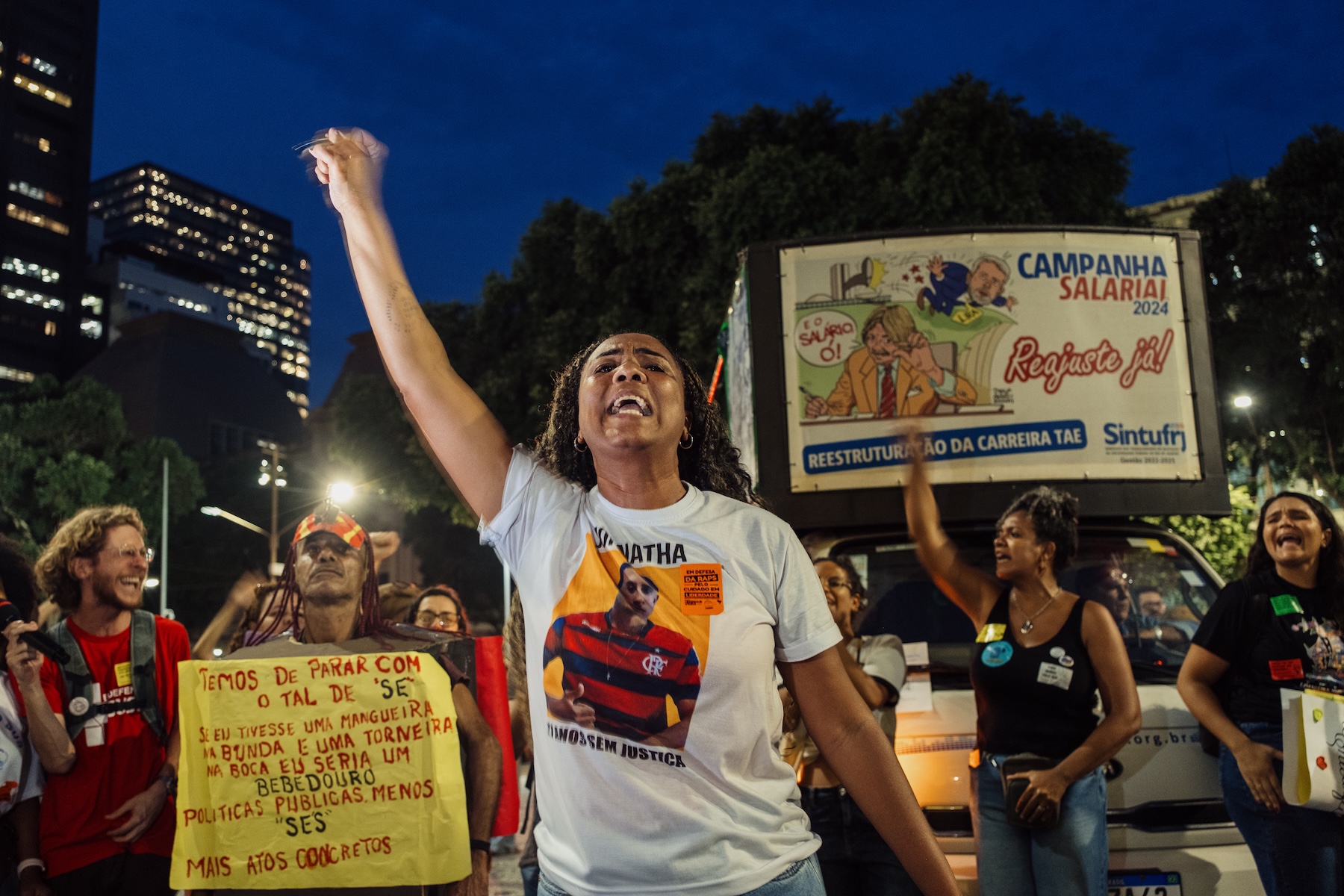
The families of people killed by the police often find themselves having to prove that their loved ones were students or workers, and that they were sons or brothers. They also have to fight for an investigation into the killing and defend the memory of the deceased.
Ana Paula says that this process also has an impact on people’s mental health. “There is a whole process of becoming ill in this search for truth and justice, in this search for memory.” The Portuguese word she uses adoecimento describes not simply illness as a state, but the process of becoming ill. A woman experiencing insomnia, panic attacks or depression may be treated for these symptoms. Psychological support may be essential, however, when the suffering is caused by police violence and prolonged by impunity, public suspicion, and the possibility of further violence - treatment alone can only address part of the problem.
Ana Paula does not dismiss therapy as a supportive practice. Instead, she highlights that when suffering is viewed through a medical lens, racism and police violence can be recast as individual trauma while the structures producing the suffering go unchallenged.
“You cannot think about practices of care, without thinking about the whole, the entire family structure,” she says. “It is necessary to recognise this pain, to recognise what causes this pain, these forms of suffering… so that we can develop strategies of care that can really produce some result. It’s not just therapy. It’s also political organising.”
This is where the work of Mães de Manguinhos becomes crucial. They accompany families, join demonstrations, demand investigations and build campaigns around memory, justice and reparation.
“We end up acting as health agents,” she says, “as promoters of health and resistance.”
In 2022, Ana Paula joined the Rede de Atenção a Pessoas Afetadas pela Violência de Estado, a project involving people affected by state violence. One hundred mothers took part, not simply as beneficiaries, but as researchers. “The mothers were also producing knowledge,” Ana Paula says, describing an effort to take them “out of the place of objects of research.” They were researching while doing what they already did: “caring for others, while at the same time being cared for.”
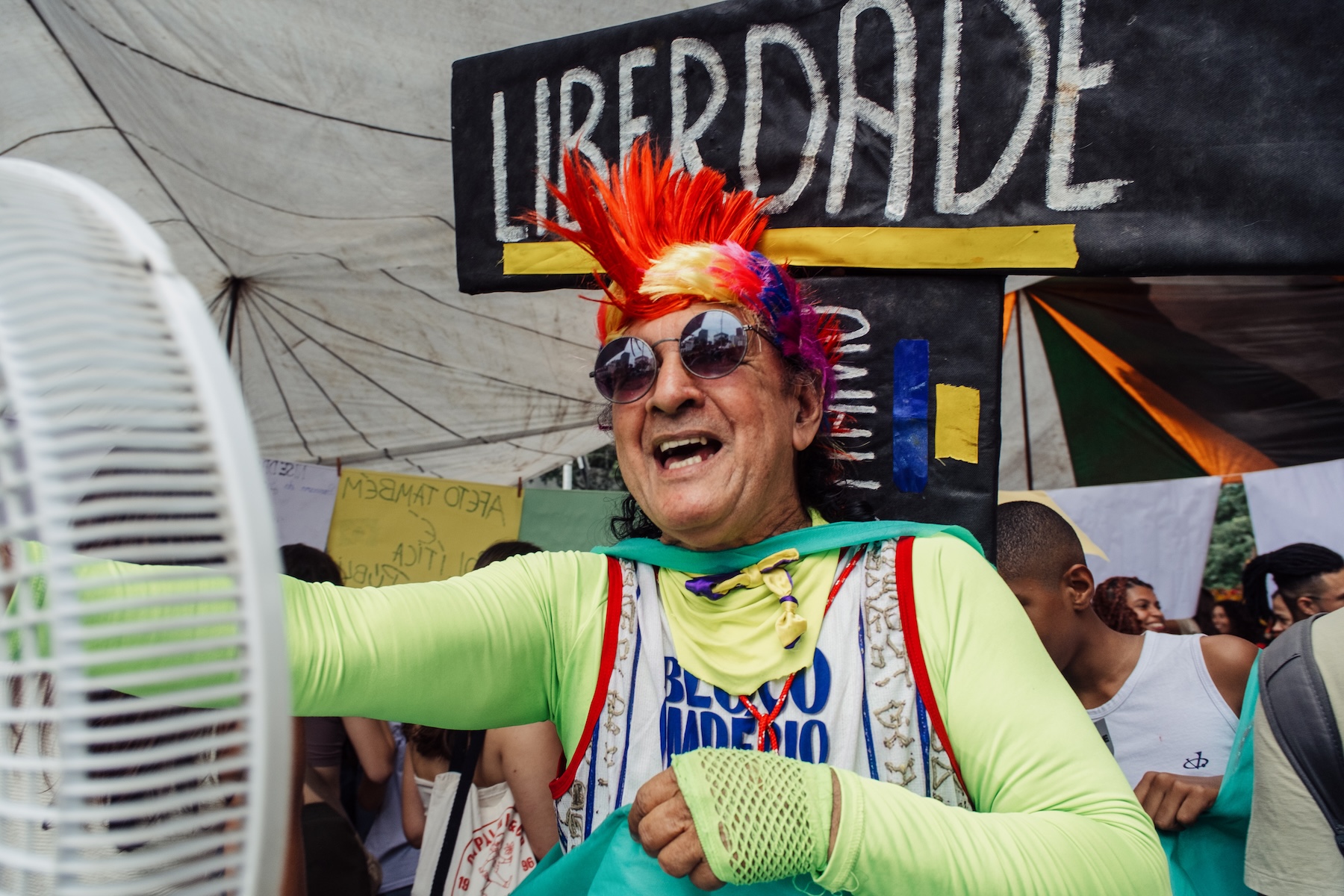
The Mães de Manguinhos also try to represent the favela differently: through dance, poetry, music, and books produced inside the favela - remembering the dead whilst affirming the life of the place from which they came. “When we produce memory, when we produce ways of seeking justice, that is the production of health,” says Ana Paula.
This understanding is also beginning to enter the public mental-healthcare network. Ana Paula is involved in research at the Federal University of Rio de Janeiro, where the project Luta Antimanicomial e Feminismos has been developing anti-racist approaches within Rio’s Psychosocial Care Network (RAPS). One result has been a practical guide bringing Black and Afro-diasporic knowledge into psychosocial care, and asking services to confront racism not as background context, but as something that shapes both suffering and the possibilities of care. Mental health centres are invited to think beyond psychotherapy and medication, to organize community gardens, groups for Black women, Afro-referenced artistic activities and other grassroots forms of collective care, while promoting the incorporation of anti-racist training into everyday practice.
Both therapy and medication may be necessary. Public and universally accessible services are fundamental, as well as being a human right. However, neither can respond to the issues arising from grief tied to state violence, the continued presence of armed police renewing fear, or families having to fight for years simply to establish what happened to their loved ones.
This is where Ana Paula’s insistence on memory, justice and political organising matters. It does not turn activism into treatment, nor does it suggest that collective struggle can compensate for the absence of adequate services. Rather, it unsettles the assumption that care begins in professionalised settings only after violence has already been translated into symptoms.
Care may also mean accompanying another family to a hearing, preserving the name of a child criminalised after death, creating spaces where grief can be shared, or demanding accountability from the institutions responsible for harm.
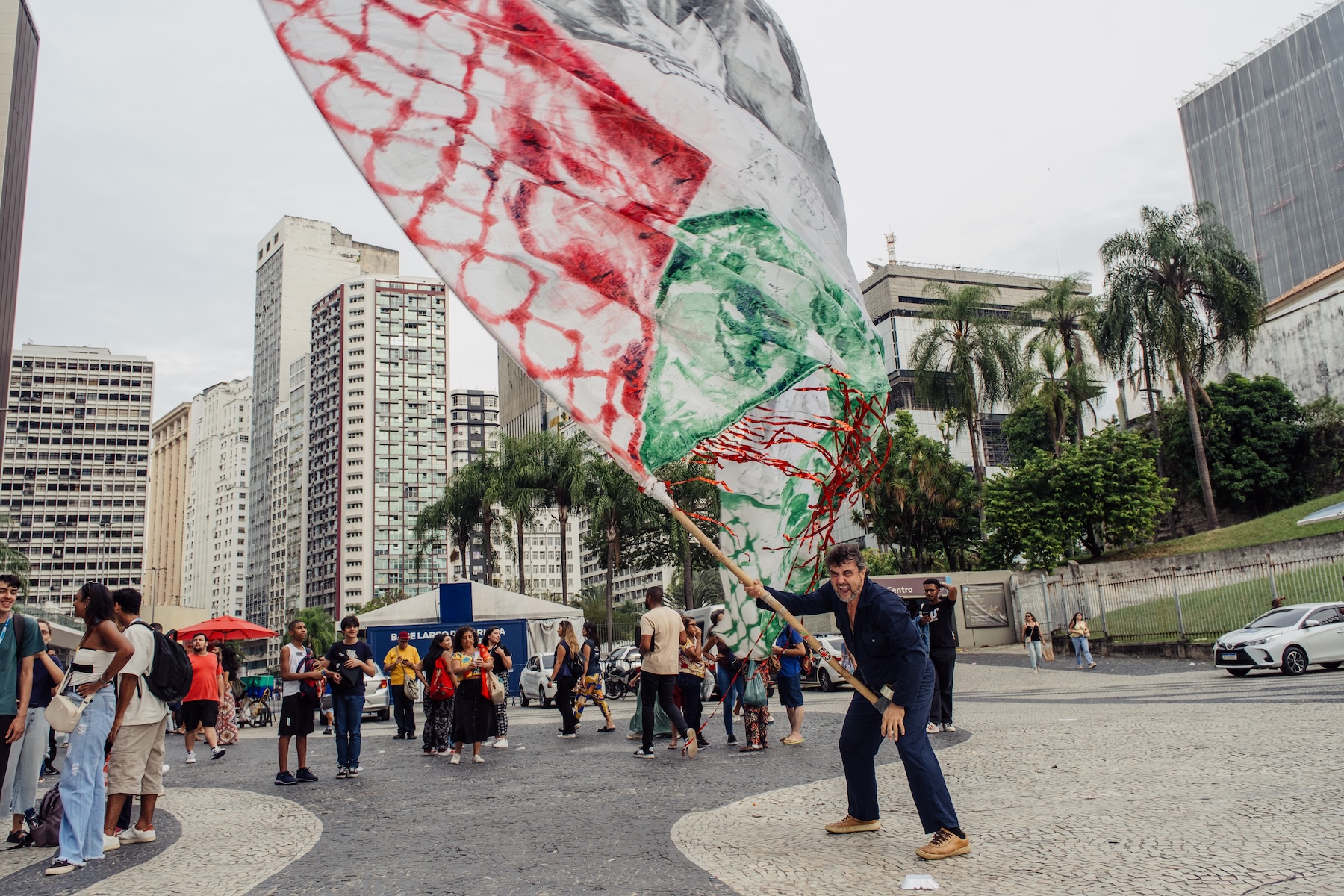
These struggles are not interchangeable. A favela in Rio is not Gaza, and police violence, feminicide and psychiatric institutionalisation have distinct histories and political conditions. However, their togetherness refused another kind of separation: the idea that mental health can be discussed while leaving untouched the forms of violence that determine whose life is protected, whose suffering is recognised and whose death is made ordinary.
That brings the argument back to cuidado em liberdade. Care in freedom cannot mean only closing the asylum door and moving treatment elsewhere. It requires asking what kind of freedom exists outside that door, and for whom.
Mental health is not only about how people endure suffering, it is also about the conditions that produce it and about the collective struggles to change them.