

Digital & Print Membership
Yearly + Receive 8 free printed back issues
$420 Annually
Monthly + Receive 3 free printed back issues
$40 Monthly
A Call to Arms
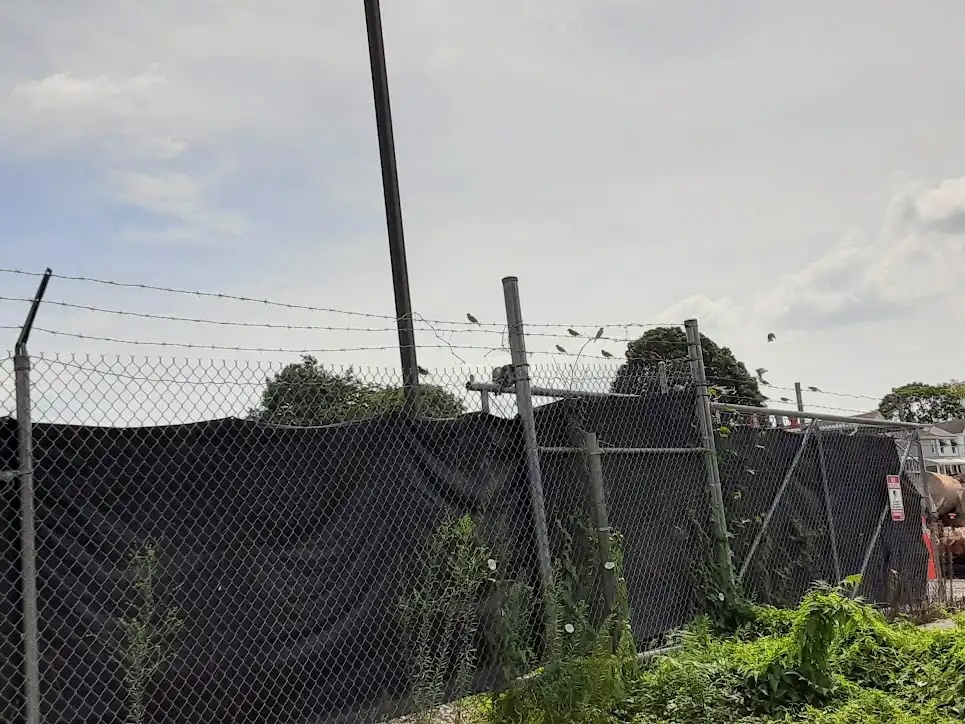
Birds perch on the gaps in barbed wire
Beckoning us to join them
Water trickles through the obstruction in its path as if it were nonexistent
We have forgotten that we are water
Vines weave a tapestry through metal
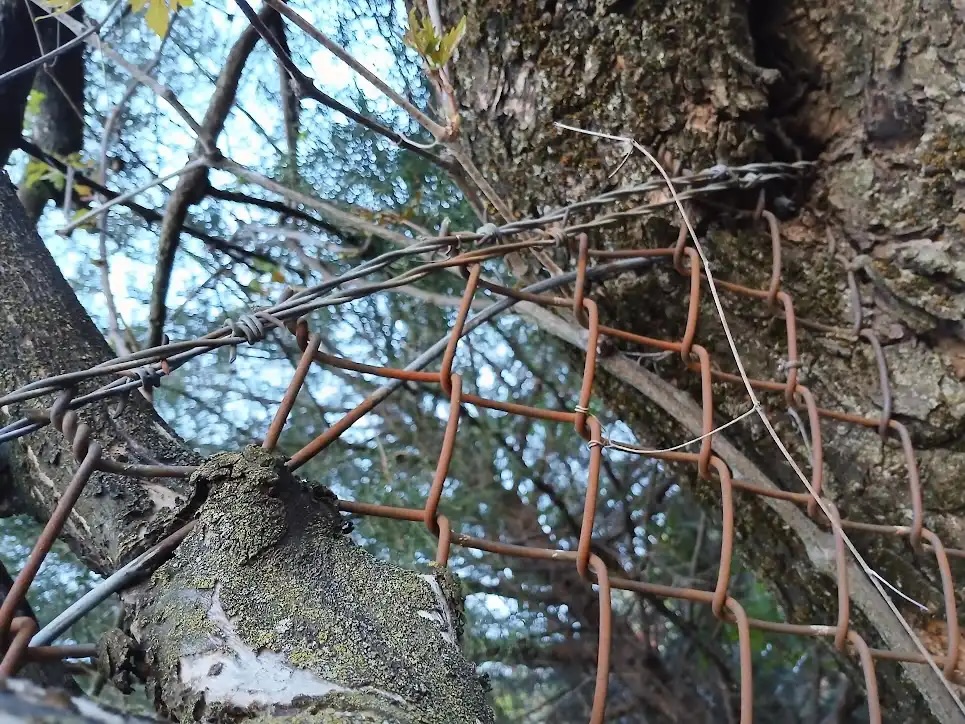
If trees cannot find a gap in the fence they will squeeze their way through,
engulf it,
absorb the border within themselves
This is a call to arms
LOVE
I want my love to break through glass
I want it to uproot the weeds that have grown in my heart as it picks through yours
I want it to burn through every piece of fabric stained with blood
Love was never a pacifist
Where there is evil there will also be two kinds of joy
One that revels in the misery,
grinning faces posing with dead bodies
while others look on in silence growing numb
But love is the joy of resilience
The joy of knowing we will always need eachother enough
to tear down the walls and reach out our hands
in spite of everything, even death
To grab at the roots of ourselves
and plant flowers in place of the hate that’s been sown,
though the stems may have thorns
This love will be the callouses born from fighting our way
through rough brick and sharp glass edges,
but they’ll just make it that much softer when palm meets palm
This love will be the fertilizer for a garden of scar tissue,
never again to be buried under earth and thick skin
This love will be the seeds taking root
after a long cold winter,
sprouting from our chests and cracks in the pavement
to greet a long-awaited spring
A NURTURING DEATH
Shot-gun wedding
Drive-by baby shower
Close-range baptism
Burn down the forest,
the church and the steeple
The baby’s gender is Destruction,
Death, and
Primordial Chaos
We are unlocking the worlds they shut away,
beyond the talons of textbook definitions,
worlds they swore could never exist
worlds they swore to destroy
We’re pulling out fragments
through the cracked open door
to fill the potholes and cracked cement
of our bodymindsouls,
to make salve for the wounds
The ones they claimed were pre-existing
and unfillable
and unfixable
and “who’s going to pay for that?”
We are toppling immovable fortresses
limb by limb,
peeling off skin and tearing through tendon
to reveal the brittle forgeries of bone
We are de-manufacturing wilderness
Not just free reign for the trees
or even all the life they hold,
but regrowth for the village of Ahwahnee,
birds pecking out the eyes of campers at Yosemite
What remains will be fed back into the ecosystem,
into the bellies of bears and mountain lions,
swallowed by insects and earth
until it’s decayed enough to fertilize the soil
and grow food
medicine
life
A rebirth
A nurturing death
{
"article":
{
"title" : "A Call to Arms",
"author" : "Jeremiah Zaeske",
"category" : "essays",
"url" : "https://everythingispolitical.com/readings/a-call-to-arms",
"date" : "2026-02-03 11:17:00 -0500",
"img" : "https://everythingispolitical.com/uploads/1000013371.jpeg",
"excerpt" : "Birds perch on the gaps in barbed wire",
"content" : "Birds perch on the gaps in barbed wireBeckoning us to join themWater trickles through the obstruction in its path as if it were nonexistentWe have forgotten that we are waterVines weave a tapestry through metalIf trees cannot find a gap in the fence they will squeeze their way through,engulf it,absorb the border within themselvesThis is a call to armsLOVEI want my love to break through glassI want it to uproot the weeds that have grown in my heart as it picks through yoursI want it to burn through every piece of fabric stained with bloodLove was never a pacifistWhere there is evil there will also be two kinds of joyOne that revels in the misery,grinning faces posing with dead bodieswhile others look on in silence growing numbBut love is the joy of resilienceThe joy of knowing we will always need eachother enoughto tear down the walls and reach out our handsin spite of everything, even deathTo grab at the roots of ourselvesand plant flowers in place of the hate that’s been sown,though the stems may have thornsThis love will be the callouses born from fighting our waythrough rough brick and sharp glass edges,but they’ll just make it that much softer when palm meets palmThis love will be the fertilizer for a garden of scar tissue,never again to be buried under earth and thick skinThis love will be the seeds taking rootafter a long cold winter,sprouting from our chests and cracks in the pavementto greet a long-awaited springA NURTURING DEATHShot-gun weddingDrive-by baby showerClose-range baptismBurn down the forest,the church and the steepleThe baby’s gender is Destruction,Death, andPrimordial ChaosWe are unlocking the worlds they shut away,beyond the talons of textbook definitions,worlds they swore could never existworlds they swore to destroyWe’re pulling out fragmentsthrough the cracked open doorto fill the potholes and cracked cementof our bodymindsouls,to make salve for the woundsThe ones they claimed were pre-existingand unfillableand unfixableand “who’s going to pay for that?”We are toppling immovable fortresseslimb by limb,peeling off skin and tearing through tendonto reveal the brittle forgeries of boneWe are de-manufacturing wildernessNot just free reign for the treesor even all the life they hold,but regrowth for the village of Ahwahnee,birds pecking out the eyes of campers at YosemiteWhat remains will be fed back into the ecosystem,into the bellies of bears and mountain lions,swallowed by insects and earthuntil it’s decayed enough to fertilize the soiland grow foodmedicinelifeA rebirthA nurturing death"
}
,
"relatedposts": [
{
"title" : "Nature As the Battlefield: Ecocide in Lebanon and Corporate Empire",
"author" : "Sarah Sinno",
"category" : "essays",
"url" : "https://everythingispolitical.com/readings/ecocide-lebanon-chemical-warfare",
"date" : "2026-02-25 15:16:00 -0500",
"img" : "https://everythingispolitical.com/uploads/PHOTO-2026-02-25-13-34-24%202.jpg",
"excerpt" : "",
"content" : "Photo Credit: Sarah SinnoOn February 2, the United Nations Interim Force in Lebanon (UNIFIL)issued a statement announcing that Israeli occupation forces had instructed their personnel to remain under cover near the border between south Lebanon and occupied Palestine. They were ordered to keep their distance because the IOF had planned aerial activity involving the release of a “non-toxic substance.” Samples collected and analyzed by Lebanon’s Ministries of Agriculture and Environment, in coordination with the Lebanese Army and UNIFIL, confirmed that the substance sprayed by Israel was the herbicide, glyphosate. Laboratory results showed that, in some locations, concentration levels were 20 to 30 times higher than normal. Not to mention, this is not the first instance of herbicide spraying over southern Lebanon, nor is the practice confined to Lebanon. Similar tactics have been documented in Gaza, the West Bank, and Quneitra in Syria.While the IOF didn’t provide further explanation as to its purpose, these operations are part of a broader Israeli strategy to establish so-called “buffer zones” by dismantling the ecological foundations upon which communities depend. The deployment of chemical agents kills vegetation, producing de facto “security” no-go areas that empty entire regions of their Indigenous inhabitants. Cultivated fields are deliberately destroyed, soil fertility declines, and water systems become polluted. Farmers lose their livelihoods, and communities are forcibly uprooted. Demographic realities are reshaped, and space is incrementally cleared for future settlers. Simply put, these tactics function as a mechanism of displacement, dispossession, and elimination—and are importantly part of a long history of this kind of colonial territorial engineering.Glyphosate and Ecological HarmFor decades, glyphosate has been marketed as a formulation designed to kill weeds only and increase crop yields. But the consequences of its use on humans and the environment cannot be ignored: In 2015, Glyphosate was classified by the International Agency for Research on Cancer (IARC) as “probably carcinogenic to humans,” and it has been associated with a range of additional health risks, including endocrine disruption, potential harm to reproductive health, as well as liver and kidney damage. In November of last year, the scientific journal Regulatory Toxicology and Pharmacology formally withdrew a study published in 2000 that had asserted the chemical’s safety.Beyond its human health implications, glyphosate is ecologically harmful. Studies have shown that it degrades soil microorganisms; others have linked it to increased plant vulnerability to disease. It can also leach into water systems, contaminating surface and groundwater sources. Exposure may be lethal to certain species like bees. Even when it does not cause immediate mortality, glyphosate eliminates vegetation that provides habitat and shelter for bees, birds, and other animals, disrupting food webs and ecological balance. What’s more, research indicates that glyphosate can alter animal behavior, affecting foraging and feeding patterns, anti-predator responses, reproduction, learning and memory, and social interactions.Despite a growing body of scientific literature highlighting its risks to both human health and the environment, and bearing in mind that corporate giants manufacturing such products have been known to fund and even ghostwrite research to promote the opposite, glyphosate remains the most widely used herbicide globally.The Monsanto ModelTo understand how it became so deeply entrenched, normalized within agriculture systems in some contexts, and used as a weapon of war in others, it is necessary to look more closely at the corporation responsible for its global expansion: Monsanto.Founded in 1901, Monsanto’s corporate history reflects a longstanding pattern of chemical production linked to environmental devastation. Over the past century, the corporation has manufactured products later proven harmful and has faced tens of thousands of lawsuits, resulting in billions of dollars in settlements.Among the products it manufactured were polychlorinated biphenyls (PCBs), synthetic industrial chemicals that were eventually banned worldwide due to their toxicity. Through their production and disposal, including the discharge of millions of pounds of PCBs into waterways and landfills, Monsanto contributed to some of the most enduring chemical contamination crises in modern history, the consequences of which continue to reverberate today.One of the most notorious cases unfolded in Anniston, Ala., where Monsanto’s chemical factory polluted the entire town from 1935 through the 1970s, causing widespread harm to the community. Despite being fully aware of the toxic effects of PCBs, the company concealed evidence, according to internal documents, a conduct that reflects a longstanding pattern of disregard for both environmental care and human health. Whether in the case of PCBs or glyphosate, the underlying logic remains consistent: ecological systems and communities are harmed in order to prioritize profit and, at times, territorial expansion.Monsanto also became the world’s largest seed company. Through the enforcement of restrictive patents on genetically modified seeds, the corporation consolidated unprecedented control over global food systems. By prohibiting seed saving, a practice upheld by farmers and Indigenous communities for millennia, it undermined seed sovereignty and compelled farmers to purchase new seeds each season rather than replanting from their own harvests. What had long functioned as part of the commons since the origins of human civilization, the foundational basis of food and life itself, was privatized. Monsanto transferred control over seeds from cultivators to corporations, further creating systems of structural dependency.What was once embedded in reciprocal relationships between land, seed, and cultivator is now controlled by the same chemical-producing corporations implicated in the degradation of land—as is the case of what is unfolding in southern Lebanon. Power is thus consolidated within an industrial architecture that, at times, prohibits the exchange and regeneration of seeds and, at other times, renders the land uninhabitable. In both cases, it undermines the ability to grow food and remain rooted in the land, thereby threatening the conditions necessary for survival.Chemical WarfareAlongside its record of manufacturing carcinogenic products, dumping hazardous chemicals into the environment, and contributing to the destruction of agricultural systems, Monsanto has also been linked to chemical warfare. During the Vietnam War (1962–1971), it was among the U.S. military contractors that manufactured Agent Orange, a defoliant used to strip forests and destroy crops that provided cover and food to Vietnamese communities.The chemical contained dioxin, one of the most toxic compounds known, contributing to the defoliation of millions of acres of forest and farmland. It has been associated with hundreds of thousands of deaths and long-term illnesses, including cancers and birth defects.Although acts of ecocide long predated this period, well before the term itself was coined, it was in the aftermath of Agent Orange that the word “ecocide” was first used to describe the deliberate destruction of ecosystems and began to enter political and legal discourse.The Vietnam War exposed a structural link between chemical production, corporate power, and a military doctrine in which ecosystems and farmlands are targeted precisely because they sustain human life. Nature, because it nourished, protected, and anchored Indigenous communities, was treated as an obstacle to military and imperial control. As a result, it became a battlefield in its own right.Capital and RuinThis historical precedent continues to reverberate today in Lebanon, Palestine, and Syria. Decades apart, these are not isolated acts of ecological destruction but part of a continuous trajectory carried out by the same imperial, corporate, and financial machinery.In 2018, Monsanto was acquired by Bayer. Bayer’s largest institutional shareholders include BlackRock and Vanguard, the world’s two largest asset management firms.Both firms have been identified in reports, including those by UN Special Rapporteur Francesca Albanese, as major investors in corporations linked to Israel’s occupation apparatus, military industry, and surveillance infrastructure. These include Palantir Technologies, Lockheed Martin, Caterpillar Inc., Microsoft, Amazon, and Elbit Systems.Mapping these financial linkages reveals how ecocide is structurally embedded within broader systems of violence that are deeply entrenched and mutually reinforcing. Ecocide and genocide are financed through overlapping capital networks that connect chemical production, militarization, and territorial control.The spraying of glyphosate over agricultural land in southern Lebanon must therefore be situated within this historical continuum. The same corporate-financial structure that profits from destructive chemicals and agricultural control is interwoven with the industries that maintain a settler-colonial stronghold."
}
,
{
"title" : "Nothing Is ”Apolitical”: Why I Refused to Exhibit at the Venice Biennale",
"author" : "Céline Semaan",
"category" : "",
"url" : "https://everythingispolitical.com/readings/nothing-is-apolitical",
"date" : "2026-02-24 15:51:00 -0500",
"img" : "https://everythingispolitical.com/uploads/Cover_EIP_Apolitical_Venice_Biennale-19ed6f.jpg",
"excerpt" : "After October 2023, the art world felt comfortable discriminating against Arab artists and dehumanizing us when Israel began carpet bombing Gaza leading to a genocide . For a few years since that moment, many Arab artists saw their work rejected, refused, or cancelled from shows, publications, and galleries. But in 2025, the propaganda against Arabs began to be debunked and the world recognized that Israel was in fact a colonial military occupation decimating Indigenous people, and curiously, we started receiving invitations to participate in the art world again.",
"content" : "After October 2023, the art world felt comfortable discriminating against Arab artists and dehumanizing us when Israel began carpet bombing Gaza leading to a genocide . For a few years since that moment, many Arab artists saw their work rejected, refused, or cancelled from shows, publications, and galleries. But in 2025, the propaganda against Arabs began to be debunked and the world recognized that Israel was in fact a colonial military occupation decimating Indigenous people, and curiously, we started receiving invitations to participate in the art world again.In the middle of last year, I was invited to exhibit my work at the Venice Biennale as part of their Personal Structures art exhibition. But unfortunately, I found myself needing to decline the invitation due to their separation between artistic practice and political reality: An expectation, stated and implied, that the work remain “apolitical.”For many artists, this is understood as an important recognition in one’s art career, a symbolic entrance into contemporary art history. Venice confers legitimacy, visibility, and, for many of us, validation from a historically extractive, colonial arts system. It also functions, like all major biennials, as an instrument of cultural diplomacy, soft power, and geopolitical storytelling. So a representation at the Venice Biennale as a Lebanese artist means a lot on a political scale.The word “apolitical” was used as part of a response that the Venice Biennale curator sent to justify their position regarding centering Israeli artists. It was an attempt to make explicit that engaging with the ongoing violence shaping the present moment, including the mass killing and destruction in Gaza, is a personal choice. That art exists without consequence, an elevated ideal that has the privilege of existing outside reality.I couldn’t tolerate pretending art was separated from politics, when Israel continues to bomb Lebanon daily, erase and sell Gaza, and murders Palestinians almost on a daily basis. Not when, just this February, Israel proposed to install a death penalty for the abducted Palestinians in Israeli jails with complete immunity. We are living through a time in which bombardment, starvation, displacement, and civilian death are documented in real time. Images circulate instantly; testimony is archived before bodies are buried. The evidence is not obscured by distance or ambiguity, but rather, is immediate, relentless, and impossible to ignore. Yet cultural institutions claim ignorance or worse, voluntary exclusion. In such a context, neutrality is not a passive stance but an alignment with injustice.Moral clarity is non-negotiable for me. It is my anchor in a time where global forces are unveiling their corruption for the world to see. In shock and despair, overwhelmed by the intensity of the crimes, many remain silent. Motionless. Like deers in the headlights. Hence, the safe label of remaining apolitical.But the myth of the apolitical artist has always depended on their proximity to power. It is a luxury position historically afforded to those whose bodies are not directly threatened by the carceral order. For many artists—particularly those shaped by colonization, occupation, exile, or racial violence—the political is not a thematic choice. It is the ground of existence itself.Arab women artists have shown me the path to moral clarity, integrity, and honor. The Palestinian American painter Samia Halaby has long argued that all art is political in its relation to society, whether acknowledged or not. For instance, Mona Hatoum’s sculptural language, often read through the lens of minimalism, is inseparable from histories of displacement and surveillance. The body remains present even when absent, reminding viewers that aesthetics do not transcend geopolitics.The Egyptian feminist writer Nawal El Saadawi warned with unmistakable clarity: “Neutrality in situations of injustice is siding with the oppressor.” Her words emerged from lived confrontation with imprisonment, censorship, and patriarchal state violence. Neutrality was never theoretical to her, it was lethal.Black feminist artists and thinkers have articulated the same truth. Audre Lorde’s assertion—“Your silence will not protect you”—dismantles the illusion that withholding speech preserves safety. Silence is participation in the maintenance of power. Lorraine O’Grady’s performances exposed how cultural institutions erase entire populations while claiming universality, revealing that visibility itself can be a political rupture. These perspectives converge on a single recognition: Art does not exist outside power structures. It either interrogates them or reinforces them.We remember artists who refused neutrality because their work altered the moral imagination of their time. Artists like Ai Weiwei, whose work centers politics and identity, go as far as putting their own bodies in danger. We remember the cultural boycott of apartheid South Africa, when artists refused lucrative opportunities rather than legitimize a racist regime. We remember Nina Simone transforming grief and rage into sonic resistance. We remember the Black Arts Movement insisting that aesthetics could not be detached from liberation.We also remember the artists who accommodated power. History is rarely generous toward them. The contemporary art world often performs political engagement while it structurally protects capital, donors, and institutional relationships behind closed doors. Calls for “complexity” or “nuance” frequently operate as ways to avoid taking positions that might threaten funding streams or geopolitical alliances. Requests for artists to remain apolitical are risk-management strategies that prioritize donors’ comfort.The insistence that artists claim they “do not know enough” to speak while mass civilian death unfolds is abdication. It mirrors political rhetoric that justifies violence through ideology, nationalism, or divine authority. Both rely on belief systems that absolve responsibility. The role of the artist is not to decorate power. It is to feel reality—to alchemize collective experiences into forms that expand perception rather than sterilize it.Art is essential precisely because we are living through rupture. But essential art is not decorative. It is not institutional ornamentation detached from consequence. It does not require erasing humanity in exchange for belonging to elite cultural circuits. Refusing the Biennale was not a heroic gesture. In fact, I had no desire to write this piece to begin with. It was just a form of moral clarity. Moral clarity some can live without, but unlike them, I refuse to become numb. I want to exist with a deep connection to my own humanity, and to feel it all.Including this moment that forces us to reckon with our own privileges and position. No exhibition, no platform, no symbolic prestige outweighs the responsibility of responding honestly to the conditions shaping our world. Participation under forced neutrality in accepting the presence of genocidal entities such as Israel would have required fragmentation — an agreement to pretend that art exists outside the systems producing suffering, including settler colonial violence and military occupation.It does not. And I cannot fake it."
}
,
{
"title" : "ICE Attacks Are a Food Sovereignty Issue",
"author" : "Jill Damatac",
"category" : "essay",
"url" : "https://everythingispolitical.com/readings/ice-interference-is-a-food-sovereignty-issue",
"date" : "2026-02-24 11:26:00 -0500",
"img" : "https://everythingispolitical.com/uploads/ice_food_soveriegnty.jpg",
"excerpt" : "Food inequality, like the carceral state, is not a bug, but a feature.",
"content" : "Food inequality, like the carceral state, is not a bug, but a feature.California National Guard troops face off with protestors during a federal immigration raid on Glass House Farms in Camarillo, Calif. on July 10, 2025. Photo Credit: Blake Fagan via AFPIn June 2025, ICE agents walked into Glenn Valley Foods, a meat plant in Omaha, Neb. and detained roughly half the workforce. Production sagged to a fraction of normal: Producers were already strained by drought, thinned herds, and high cattle prices. On paper and in headlines, the Trump administration claimed an enforcement success; on the plant floor, workers stayed home, choosing to lose wages rather than risk returning. Beef processors warned that if raids became routine, they would buy fewer animals, and bottlenecks would pinch slaughterhouses and feedlots. The systemic shock emerged in the price of ground beef, which edged, at one point, towards seven dollars a pound. Still, raids were sold to voters as proof of control, even as they paid more for food and meals.ICE actions against food workers, already exhausted and criminally underpaid, have a demonstrable effect on sky-high food prices and our tax dollars: Raids further strain an already fragile, extractive food production and service system by not only further funding violent carceral systems, but also our fiscal ability to put food on the table. And while it’s clear that much needs to be changed when it comes to how we treat food workers–from livable wages and health insurance to legal protections and affordable housing –one thing has not been properly acknowledged. ICE interference shapes how we eat and our ability to have food sovereignty.By definition, food sovereignty is, first and foremost, a claim to power. It is the right of communities, including immigrant food workers, to decide how food is grown, who profits from it, and what it costs. True self-determination means the land and our labor serve everyone, rather than corporations or government agencies. It means the price of food stays low and steady enough that working-class households eat well, that profits are shared so that small farmers, migrant workers, and food workers can live with dignity and comfort. But this is far from the reality we face today: with grocery and restaurant bills rising and food workers one threat away from deportation, what we are left with is a food system benefiting corporate interests, flanked by a carceral force wearing a false claim to justice as a mask.Immigrant food workers carry the nation’s appetite on their shoulders: According to a 2020 study by the American Immigrant Council, over 20% of food industry workers are immigrants. Within agriculture, 40-50% of workers are undocumented on any given year, while in the restaurant industry, undocumented immigrants are 10-15% of the workforce. Their work is in our carts, fridges, and pantries, on our restaurant tables, takeout counters, and drive-throughs. Workers are keenly aware that ICE knows exactly where to detainthem to hit their arrest quota: in fruit orchards and vegetable farms, meat processing plants, egg barns, dairy plants, grocery stores, restaurant kitchens, and even the parking lots where they gather at dawn, hoping to find work for the day. With agents detaining and deporting workers regardless of immigration status or criminal record, workers are scared into staying home, giving up precious income just to live another day. Meanwhile, fields go unpicked, stores scramble to cover shifts, and kitchens stall. Crews thin out rather than risk being taken, or, as in the case of Jaime Alanís García, are killed while fleeing an ICE farm raid.These calculations between fear and courage in the face of aggression are not abstract to me; they’re personal. My father was an undocumented immigrant who worked nights stocking a cereal aisle. He was given thirty-two hours a week, just shy of full-time, so the grocery store could avoid providing health insurance. When a new manager began to ask employees for identification, my dad and other undocumented co-workers quit, leaving the store scrambling to find people willing to work for minimum wage, nearly full-time, with no healthcare. These violent acts move through the food chain under the guise of “rising prices,” a surcharge in our grocery carts and restaurant bills.The U.S. government has played with the lives of immigrant food workers many times before. Under President Herbert Hoover during the Great Depression, “Mexican repatriation” campaigns deported hundreds of thousands of Mexicans and Mexican Americans, many of them farmworkers recruited in boom years, as officials caved to white workers, who were both unwilling to cede the work to immigrants or to take on the low-paying farm jobs themselves. Filipino farmworkers, known as the Manongs, were treated similarly: in the 1920s and 30s, Filipino workers slept in crowded bunkhouses, were paid low wages, worked through illnesses such as tuberculosis, and were given no path to citizenship, even though the Philippines was then a U.S. territory. In January 1930, white mobs in Watsonville, Calif. hunted Filipino men, beat them, threw them off bridges, and shot and lynched them. Soon after, California banned marriage between Filipinos and white people, and Congress slashed Filipino immigration to a token quota. The food industry has long built itself on brown people’s labor while the law denied them basic human rights. At the root of it all is a sinister plantation logic: a nation’s wealth and abundance built on enslaved Black people’s labor and deprivation. It’s just new bodies in the fields, now.Today’s arrests and deportations are a continuation of this very logic: exploited migrant workers are still denied basic rights and protections while the food industry that employs them grows, year on year. Many lack legal status; many more live in mixed-status families. Using the excuse of “border security,” ICE and DHS agents press on that vulnerability by design. As a result, fear of ICE enforcement becomes a cost itself, narrowing what people can afford and where they can eat. These enforcements, carried out without input the food industry or local communities, and often against their will, directly impact our food sovereignty—how people determine the way food is grown, distributed, made, and served, as well as how workers within the food industry are paid and treated.Take summer 2025 as an example: ICE raids swept through produce fields around Oxnard in California’s Ventura County, arriving in unmarked vehicles (and sometimes helicopters) at the height of harvest. The raids spread, so crews went into hiding: one Ventura County grower estimated that roughly 70% of workers vanished from the rows almost overnight, leaving farms heavy with rotting produce and no one to pick it. Economists modeling removals of migrant farmworkers from California estimate that growers could lose up to 40% of their workforce, wiping out billions of dollars in crop value and raising produce prices by as much as 10%.These losses are passed on to communities and households, obfuscating why and how the increases happened in the first place. The American consumer is consequently exploited, too, absorbing the real labor cost of detentions and deportations. In Los Angeles, immigration sweeps in June 2025 hit downtown produce markets and surrounding eateries; vendors called business “worse than COVID” as customers vanished and supplies wasted away in storage. In January 2026, along Lake Street in south Minneapolis, immigrant-run spots like Lito’s Burritos and stalls at Midtown Global Market, a popular food hall in downtown Minneapolis, saw revenue plunge due to ICE enforcement, forcing them to cut hours, or close altogether. In nearby St. Paul, Minn., El Burrito Mercado shut down after its owner watched agents circle the building “like a hunting ground.” Meanwhile, four ICE agents ate at El Tapatio, a restaurant in Willmar, Mn. Hours later, they returned after closing time to arrest the owners and a dishwasher. Hmong restaurants and Mexican groceries across the Twin Cities have gone dark for days or weeks at a time, suffocating the local economy, leaving consumers with shrinking access to food, and small business owners with no revenue while their employees go unpaid.If food sovereignty means real control over how food is grown, distributed, and accessed, it must begin with the safety of the workers holding the system up. Workers’ wellbeing is not ornamental: it is the precondition for steady harvests, stable prices, and an affordable Main Street. Federal and state legislation must build strict firewalls between labor and immigration enforcement so that workers can file complaints, call inspectors, or take a sick day without fear. Laws can enforce and extend safety protections, wage standards, and the right to unionize. This can only happen with comprehensive immigration reform: A durable legal status and a path to citizenship for food and farmworkers would help immigrant families break the old pattern of being extracted for labor while being denied the basic right to stability.There are also infrastructures that must be abolished to truly achieve food sovereignty: specifically, the burgeoning immigration detention industrial complex. The Big Beautiful Bill allocated $75 billion dollars, spread over four years, to ICE, funding the expansion of private prison facilities. Alongside the nation’s existing prison industrial complex, the immigration detention industrial complex has become a key economic driver, albeit one that benefits only a few, such as shareholders in CoreCivic and Geo Group, two of the nation’s biggest private prison companies.Food inequality and lack of food sovereignty, like the carceral state, are not bugs, but features: soaring food, housing, and healthcare costs, voter discontent, and public unrest form a feedback loop, reinforcing the manufactured narrative scapegoating immigrant and migrant workers. If enough Americans believe that immigrants are to blame for the high prices in grocery stores and restaurants, no one will pause long enough to scrutinize the corporations (and owners) who stand to profit.Should legislators have the courage to change the infrastructure that allows these inequities to occur, the hands that harvest, pack, cook, serve, and wash would be fairly recognized as part of the nation they feed. Because fear and imprisonment should never be priced into the dinner table. Everyone can—and should be able to—eat."
}
]
}