
Each Pride season, queer and trans people around the globe are asked to use their identity in service of an often shallow idea of representation and equality. It doesn’t have to be this way. Pride is a portal for us to dig deeper into our collective values as a queer and trans diaspora, to remember that the American empire lures us away from seeing the humanity of other people like us.
Dominant media outlets and powers invested in colonization disrupt our communities and families, working overtime to suppress our stories and sow distrust among us. Queer and trans people are a part of the communities brutalized by the police, detained by ICE, and targeted by the U.S. military. The gender non-conforming Palestinian child being starved. The queer Lebanese mother blocked from reproductive healthcare. Iranian parents of an intersex kid wondering how they can safeguard their family from bombardment. They are all our family, and their survival is our responsibility. Anytime we refuse to name war, militarism, and genocide as the evils they are, we co-sign the deaths of people who are simply demanding to exist.
Our fight for queer and trans liberation has always intersected with broader struggles against state violence and occupation. Long before Israel’s U.S.-funded genocide in Gaza, our communities have been fighting for justice and survival. Ancestors and transcestors like Leslie Feinberg understood what’s at stake. They were anti-militarist, refusing to be seduced by visibility or the promise of inclusion at the expense of vitality.
“I do not believe that our sexuality, gender expression, and bodies can be liberated without making a ferocious mobilization against imperialist war and racism an integral part of our struggle,” Feinberg said at Al-Fatiha International Retreat in 2002.
Feinberg understood our experiences are shaped by our struggle to survive in our own bodies with our rights intact, while also organizing to protect those harmed by the state and destructive narratives. They knew all too well that the only way we get free is together.
Throughout history, community organizers have sustained a campaign to demand that larger LGBTQIA+ institutions divorce from the military-industrial complex. That fight continues—and we know there are many inside those spaces who have been holding the line from within. But there should be no question that this work is necessary.
When parades and national organizations pride themselves on corporate sponsorships from weapons manufacturers and tech companies developing AI systems tested in Gaza, designed to target, surveil, and massacre, we rise with a principled refusal to be complicit. By rejecting these sponsors, we confront the intertwined forces of capitalism and militarism that seek to control our bodies, movements, and futures. Queer and trans liberation requires refusing partial victories within structures that perpetuate harm. Our freedom cannot be outsourced to those who profit from oppression.
Since the genocide in Gaza began in 2023, our commitment has only intensified, strengthened by the knowledge that crimes against humanity anywhere are attacks on all of us. Due to pressure from organizers and groups across the country, the Human Rights Campaign (HRC) announced divestment from its corporate sponsorships with Raytheon and Northrop Grumman last year. This showed us what’s possible when we are vigilant about preserving a true anti-imperialist, anti-militarist stance within our movements.
In the face of efforts to pit our communities against one another, we have gathered testimonies from activists here and across the globe to declare a simple truth: There is no pride in militarism, Zionism, and colonization. These testimonies serve as a nod to the efforts against the death machine everywhere. From the streets of Palestine to communities resisting militarized policing in the United States, our liberation is inseparable from anti-militarist and anti-colonial struggles. By centering voices historically erased, we illuminate the connections between systemic oppression abroad and at home, demonstrating that solidarity is not optional; it is survival.
Above all, these testimonies aren’t only reflections, but calls to solidarity. We invite readers to join in dismantling oppressive systems, amplifying marginalized voices, and creating spaces where justice, equity, and joy are not conditional. Liberation is possible, but only if we recognize that our struggles are shared and our futures are bound together.
In the words of the late and beloved Miss Major, “Free that motherfuckin’ place [Palestine]!… Make sure you do something: Give something to them, help them fight this fight.” — Rand J and Raquel Willis
This feature is presented in partnership with Adalah Justice Project and Gender Liberation Movement.
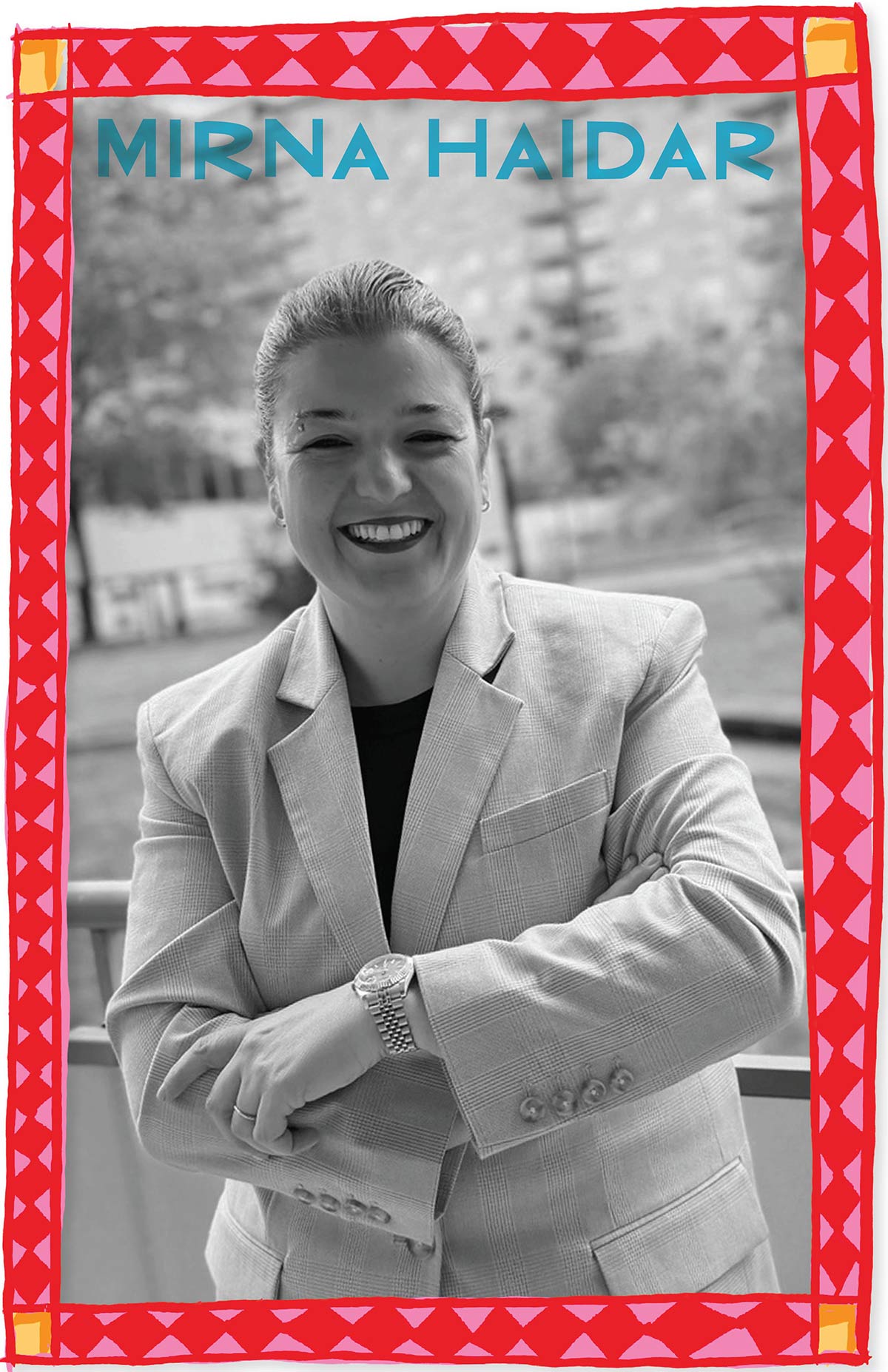
Mirna Haidar
they/she
Southern Lebanese community organizer, movement lawyer & abolitionist
Why is fighting militarism important for queer liberation?
As a queer Muslim mama of twins, I have never seen queer liberation as separate from anti-militarism. I survived the 2006 Israeli bombing in Lebanon and navigated the immigration system in the United States. Those experiences taught me that states justify violence by deciding whose lives are worth protecting and whose suffering is acceptable collateral damage.
Queer and trans people know what it feels like to have our bodies politicized and surveilled. We know that bombs don’t discriminate. This logic does not begin or end with war; it appears in prisons, detention centers, anti-trans legislation, surveillance technologies, and occupations sold to the public as “security.” Militarism is not just bombs and soldiers; it is a worldview rooted in control, punishment, and disposability. For me, queer liberation can mean any effort short of assimilating into a system built by and for colonial dominance.
Years ago, during the trans military ban, I spoke about how inclusion in violent institutions is not liberation. It is complicity. A bomb dropped by a queer or trans soldier still destroys families, including queer people. Representation within systems built on violence does not transform the violence itself; it justifies it.
My work across criminal defense, immigration law, and abolitionist organizing has only deepened my belief that there is no queer liberation built through occupation, surveillance, borders, or genocide. Our liberation is bound together outside them, or it is not liberation at all.
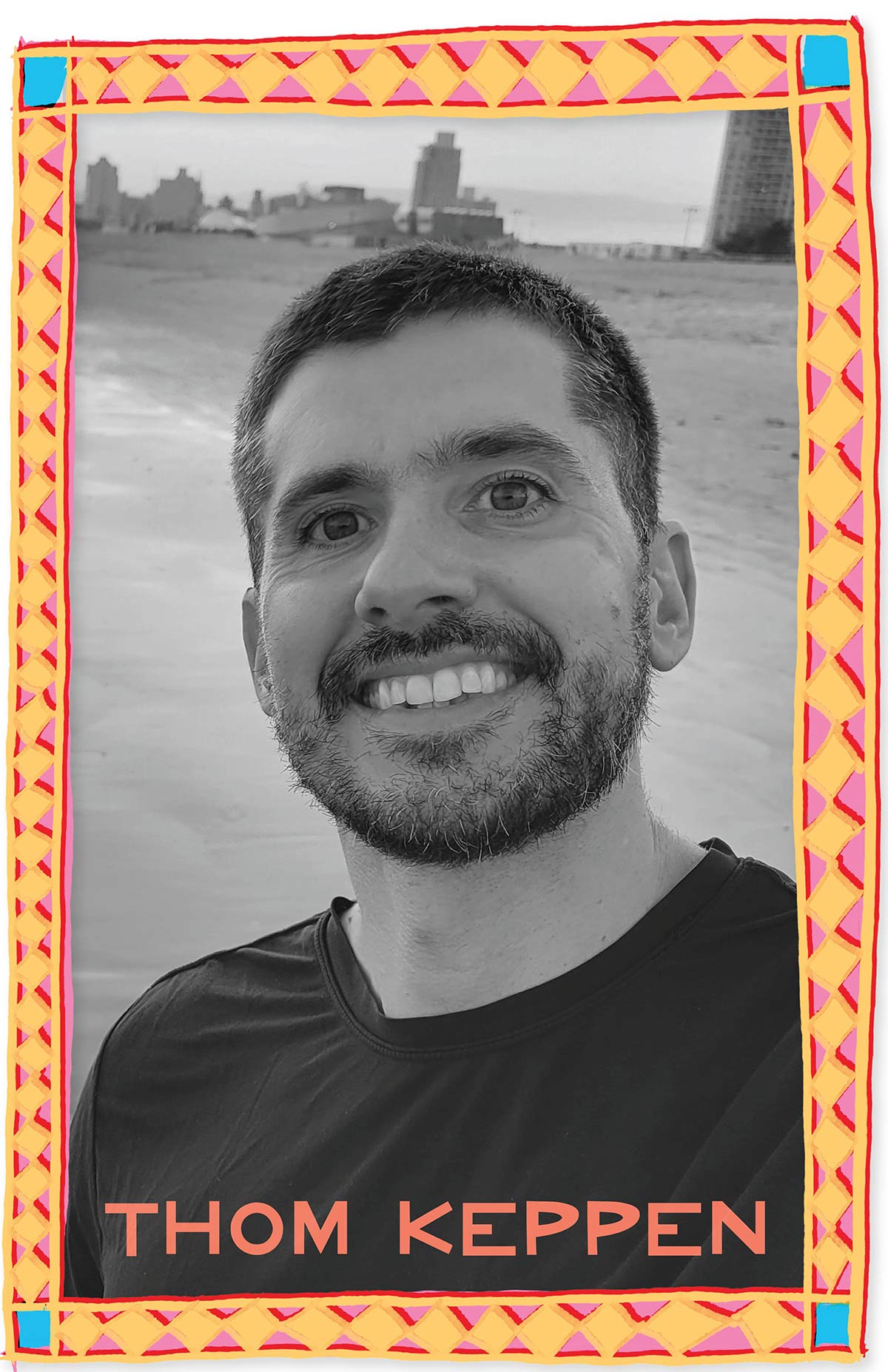
Thom Keppen
he/him
Army veteran and anti-imperialist organizer
Why is fighting militarism important for queer liberation?
While it’s comical that homophobes describe queerness as destabilizing to the world order, I actually welcome the aberrant designation. In a country that funds and enables a genocide, we should strive to be deviant.
When I joined the Army, I had something to prove. Even though my family accepted me, I had internalized feelings of inadequacy as a man. Any doubt about my masculinity would now be moot because becoming a soldier was peak manhood.
My grandfathers were soldiers—one spent 7 months as a POW at Stalag VIIA and the other was sent to Korea where he was shot in the head. Those experiences made the Army sacrosanct. However, what I witnessed in Afghanistan made that inviolability untenable. Institutionalized dehumanization of Afghans. Officers so eager to “go kinetic”—call in an airstrike for lethal active combat—that they disregarded civilian life.
After the Army, I avoided veterans, only mentioning my service to be upfront about my complicity in a war on a vulnerable, impoverished country. This changed in November 2023, when I saw members of About Face: Veterans Against the War getting arrested in DC while protesting the unfolding genocide in Palestine. These were veterans who recognized the parallels between US and Israeli atrocities.
I discovered that About Face had a large number of queer and trans members. As my comrades and I organize the military community against militarism—whether it’s US-made bombs dropped in Lebanon or ICE raids—we are dismantling this world and building a better one.
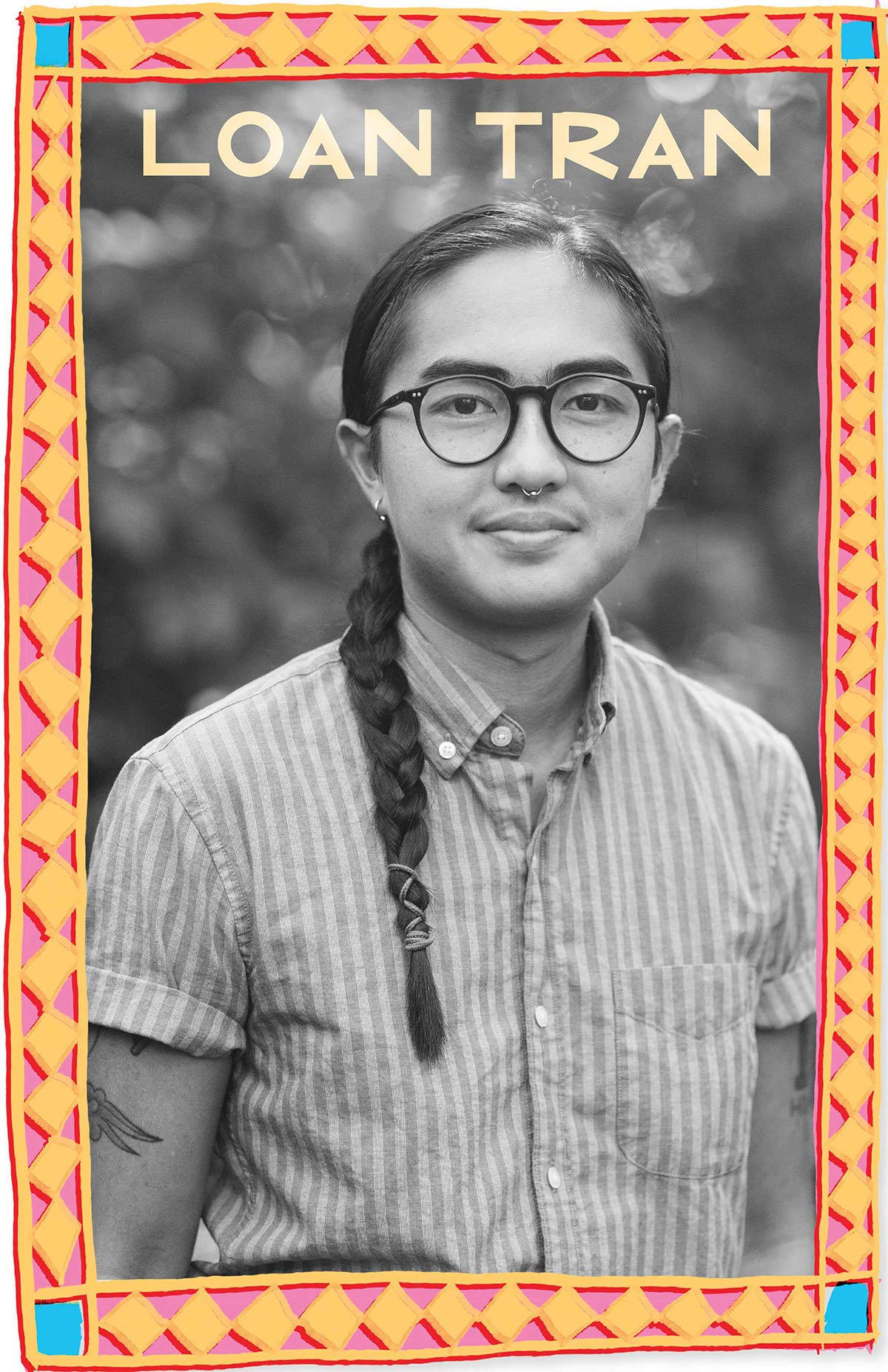
Loan Tran
they/them
Vietnamese organizer, writer, and co-director of Rising Majority
Why is fighting militarism important for queer liberation?
Yes, militarism is a system of domination that promotes a false story that the ability to dole out destruction and violence is the ultimate display of power. Militarism steals from us our sense of genuine safety. It makes us enemies of each other instead of the war economy and obscures justice through weapons industries and military contracts. It is a system that demands sameness and assimilation. It kills at scale and most insidiously, it separates us from our own humanity, numbs us to the possibility of anything ever changing, and sets the standard at death.
But! Queerness and transness are about becoming more human. They are about getting free. There is nothing inherently radical about how I love or my gender. But there is something radical about building a queer and trans life on the rejection of militarism and the full embrace that another world is possible. A world in which all people can come and go as we so choose, to be with those who love us and those we love. To become precisely who we are at any given moment. To experience belonging, and to have the right to change our minds. To be part of a society where the systems that exist are built in our collective image, not for the selfish few.
We won’t build our liberation on the lies of militarism—and it’s a good thing we don’t have to. Free Palestine. End all wars. And f*ck the pol/ice.”
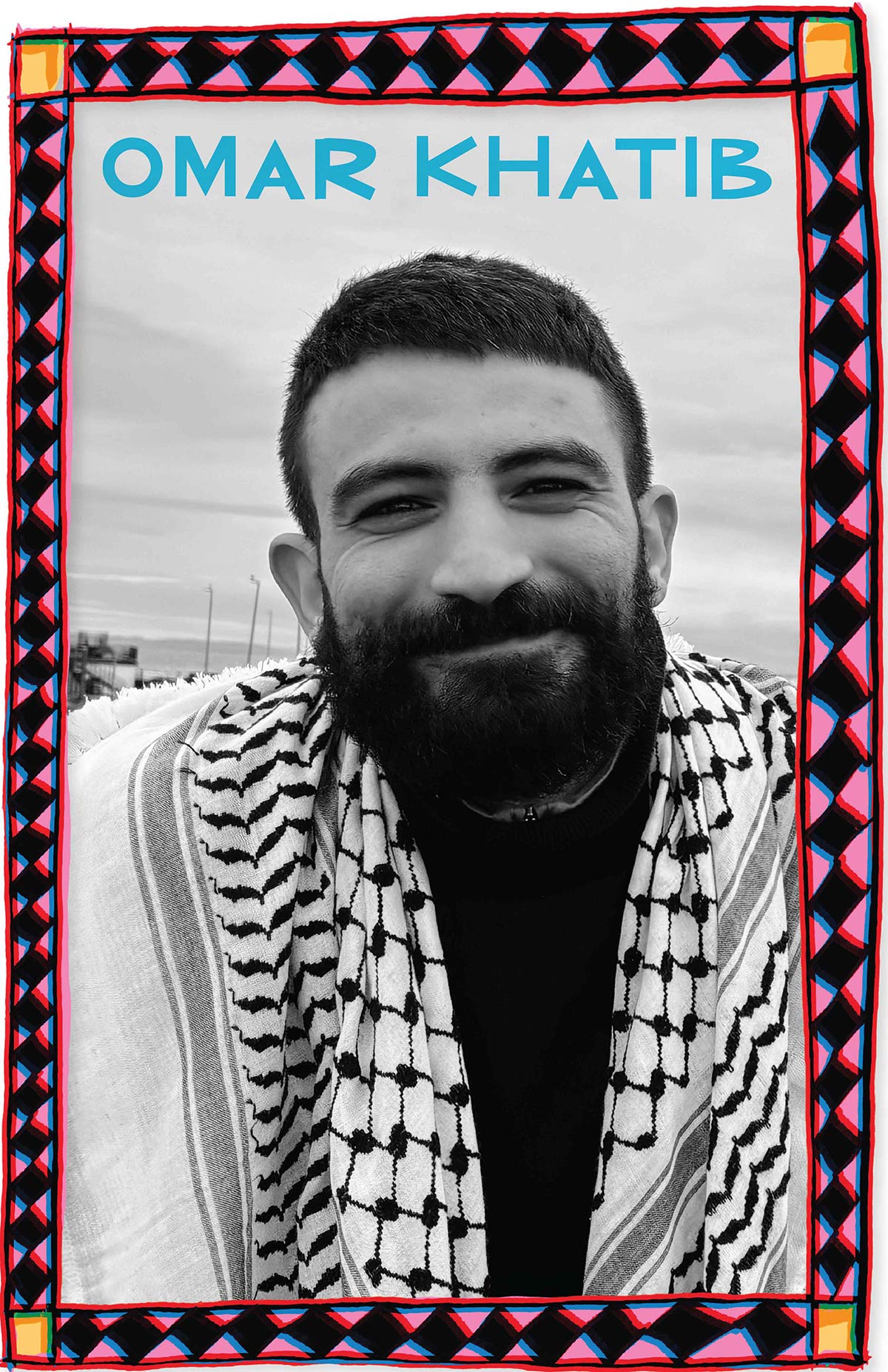
Omar Khatib
he/him
Palestinian queer writer
Why is fighting militarism important for queer liberation?
As a queer Palestinian, this question is not theoretical for me. Queer life in Palestine exists within an extremely militarized reality shaped by Israeli settler colonialism. This reality intensified over the last two and a half years during the genocide, when the violence of the Zionist settler-colonial project became completely bare. I witnessed this very closely for my whole life in Jerusalem, and in prison, where I spent one year and four months during the genocide.
It is important to move beyond anti-militarism as a moral position that rejects all forms of armed struggle. The question is not simply whether force exists, but who monopolizes it and for what purpose. For example, armed factions in Palestine are part of what protects us and keeps us alive, whether queer or not.
Honestly, I do not care much about gay marriage while houses are demolished every day. There is no home to live in with the person I married. And how are we supposed to meaningfully talk about healthcare or hormonal therapy within a health system that has been systematically destroyed, where hospitals themselves have become targets, as we have witnessed since the beginning of the genocide?
Militarization also creates a reactionary culture: hyper-masculinity, authoritarianism, and social violence. This is exactly how Israel reproduces and deepens homophobia and transphobia within Palestinian society itself.
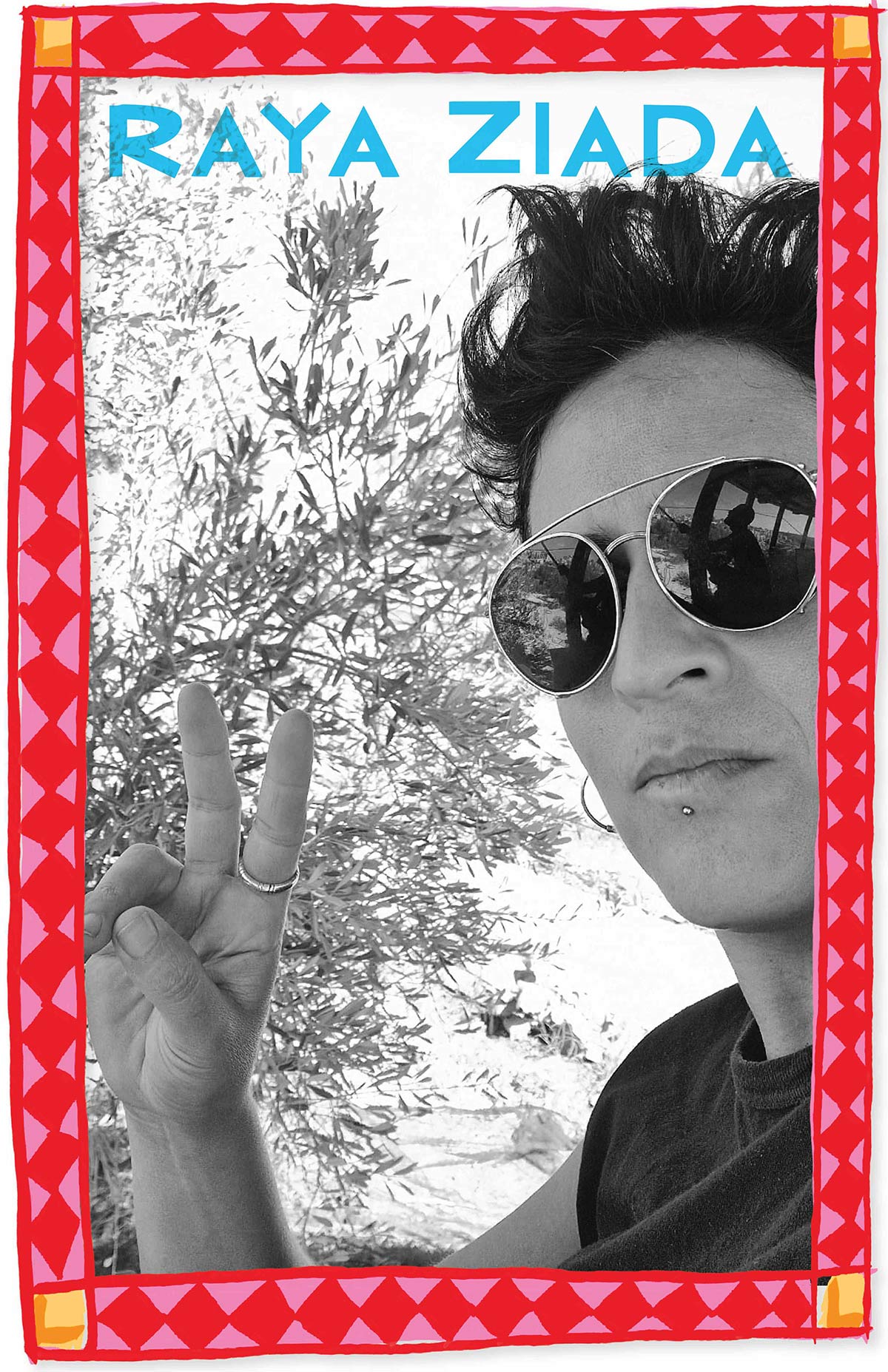
Raya Ziada
she/her
Palestinian political organizer and researcher
Why is fighting militarism important for queer liberation?
I think, in order to answer this question, we first have to consider: “What does it mean when a colonial state no longer needs pinkwashing?”
The shift we are witnessing is not the disappearance of pinkwashing, but a transformation in its political function. For years, Israel invested heavily in presenting itself as “the only democracy in the Middle East,” using LGBTQ rights, feminism, environmentalism, and liberal discourse to produce moral legitimacy in the eyes of the West. Pinkwashing functioned as a colonial tactic: a way to frame the state as modern and civilized while constructing Palestinians and the broader Arab region as inherently backward, violent, and sexually repressive.
But the current stage of genocidal violence marks a shift from legitimacy through performance toward legitimacy through impunity and complicity. The message is no longer simply: “We are democratic.” Increasingly, it is: “We can commit a genocide and systematic sexual violence without consequences.”
This is visible in the circulation of images produced by Israeli soldiers themselves: posing in destroyed Palestinian homes, displaying Palestinian women’s underwear, filming humiliation, destruction, and mockery as spectacle. These are not isolated acts of individual cruelty. They reflect a deeper colonial logic in which domination becomes performative, sexualized, and publicly consumable.
What has shifted is not the colonial violence itself, but the degree to which liberal masking is still considered necessary. Pinkwashing was never evidence of freedom. It was evidence of how colonial power adapts its language in order to survive.
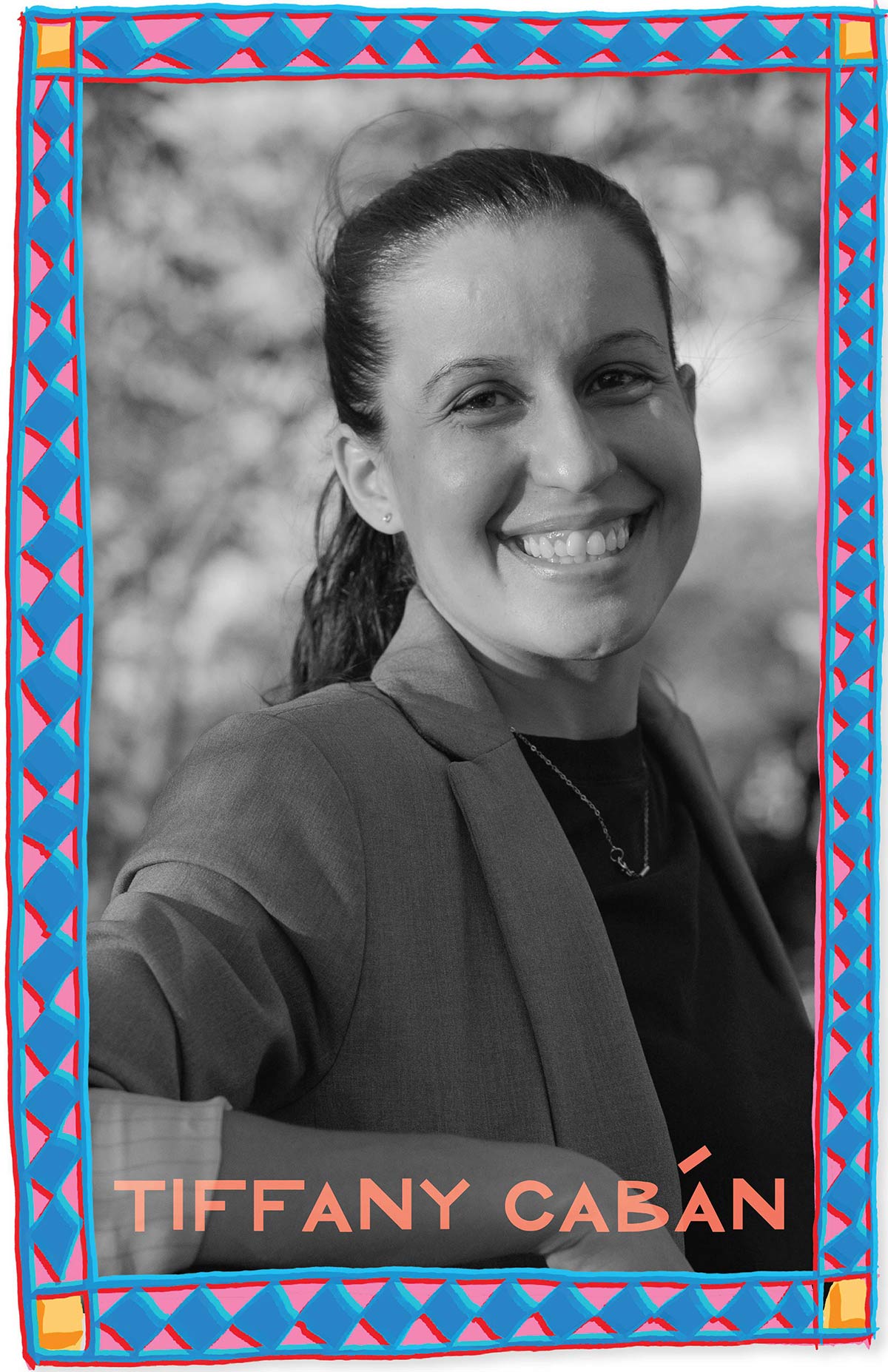
Tiffany Cabán
she/her
New York City Council Member representing the 22nd District in Queens
Photo by Corey Torpie
Why is fighting militarism important for queer liberation?
In the face of militarism, occupation, and genocide, our peoples face oppression. That is doubly true for queer folks who must struggle for justice and freedom on two or more axes: to be free of homophobia, transphobia, gender-based discrimination, and violence, and to defeat militarism.
I see that with my own people in Puerto Rico, where we have to fight to have our space and to find joy and livelihoods within our own society at the same time that we resist US colonialism on the island. The crisis over self-determination is happening alongside a crisis of femicide and violence against trans women.
You cannot bomb, bulldoze, or displace your way to queer liberation. Whether it’s in Puerto Rico, Palestine, or Iran, militarism and war make it harder for our queer communities to survive and thrive.
I long for a day when our queer siblings around the world can live in joy, free from the fear of violence both from their neighbors and from the threats of militarism and colonization. That is why my fight for queer liberation will always be inextricably intertwined with my fight to end militarism.
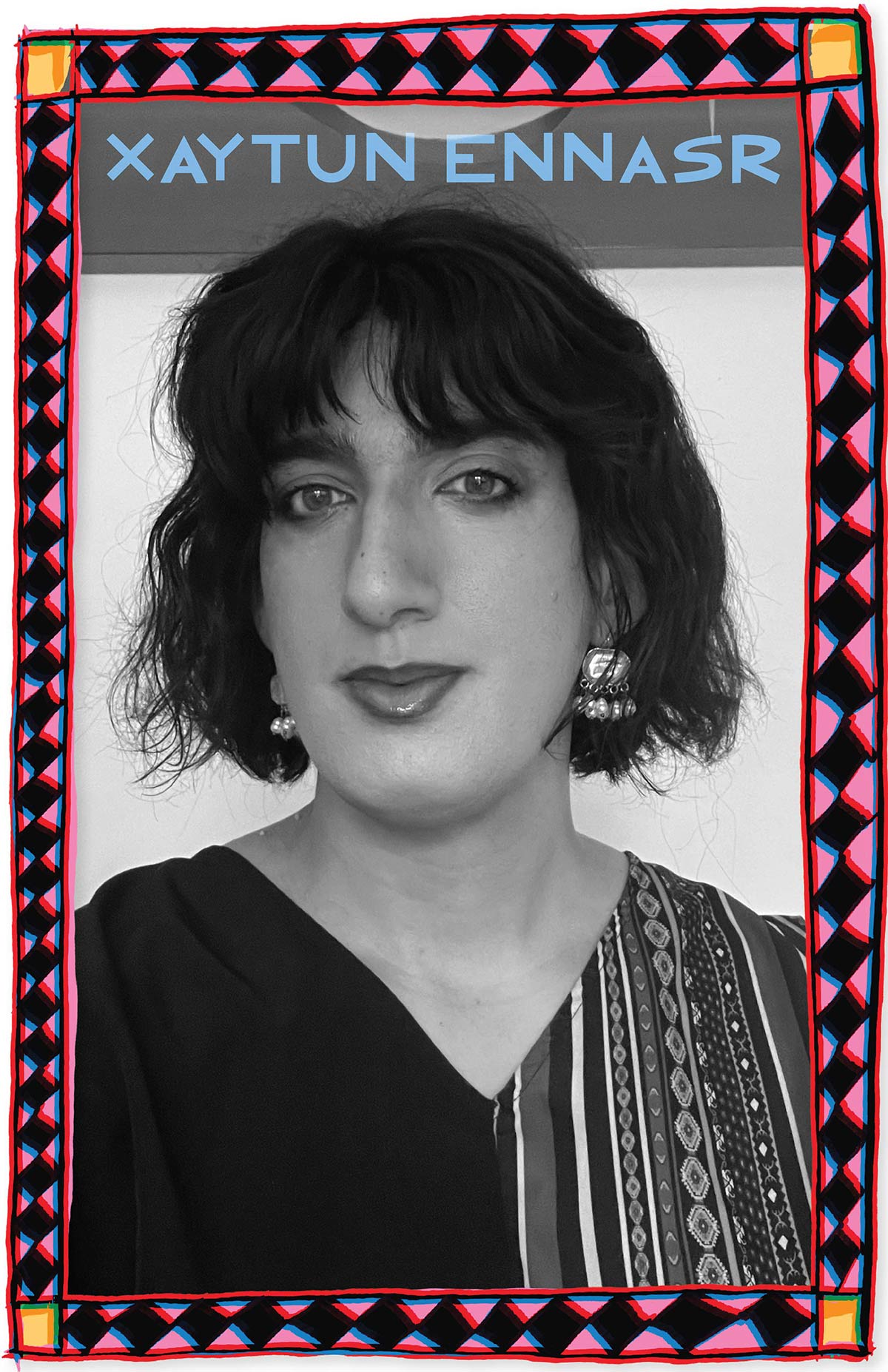
Xaytun Ennasr
she/her
Trans Palestinian artist and community organizer
Why is fighting militarism important for queer liberation?
I begin this paragraph with a simple argument: The term “Queer” is not a synonym for LGBT+, nor is it an umbrella term for all sexual and gender variant people. Queerness is a political project of emancipation, which utilizes sexual and gender variance to dismantle imperialism, capitalism, and misogyny (including homophobia and transmisogyny). Therefore, there is no such thing as a queer cop or a queer arms manufacturer, regardless of how many gay cops march at Pride events or how many trans women work at Lockheed Martin. Beyond theory, we see this manifest materially in many ways. For example, the involvement of queer Palestinian organizers in the 2021 May uprising in Palestine and the diaspora, or the visible presence of queer folks and organizations in countless international mobilizations since October 2023. We also know that the genocidal Zionist entity is growing more anxious with this new political and cultural power we are yielding as queers committed to Palestinian liberation. So when Netanyahu addresses U.S. Congress and compares “gays for Gaza” to “chicken for KFC”, or when the official state account of Israel on X posts about “Pride Land” in yet another attempt to pinkwash genocide, it is impossible not to see them as reactions to our power, in a cultural war that they have clearly lost. Now is the time for continued organizing, discipline, and commitment—for the world to be gained, and the chains to be lost.
Photo design by Sheyam Ghieth