

“The people are saving the people.” In Argentine Patagonia, this phrase returns whenever a wildfire threatens our homes and forests. People say it with pride and gratitude, and sometimes with the exhaustion of knowing they may have to organize all over again when the next wildfire comes.
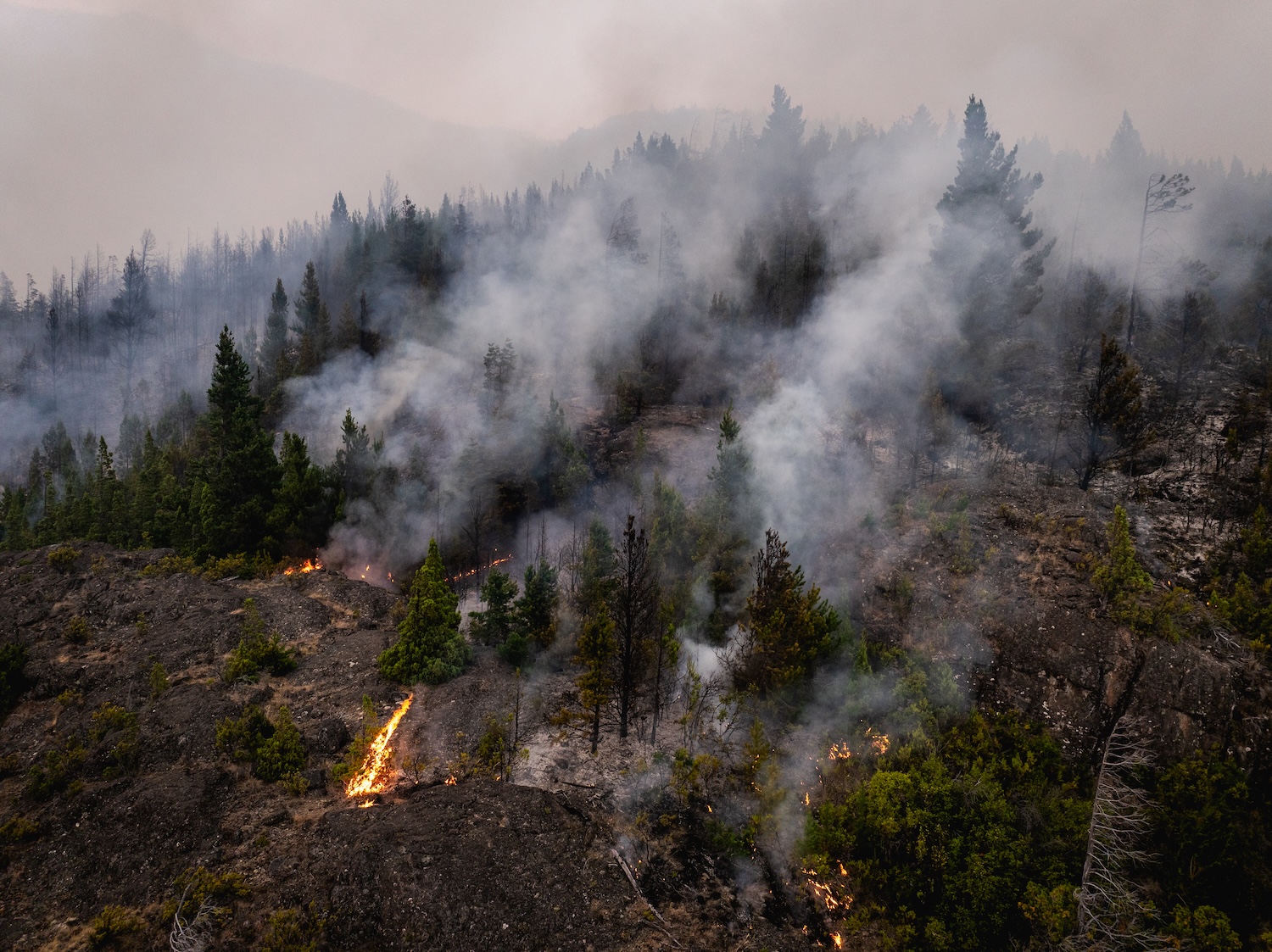
Image by Joel Reyero @naturalflash
In the Comarca Andina, a group of mountain towns and rural communities in northwestern Patagonia, near the border between Río Negro and Chubut provinces, the phrase describes something very concrete. Someone offers a truck. Others bring water, food, fuel, or tools. Neighbors help coordinate evacuations, open their homes to displaced families, circulate information through local networks, and organize supplies for those fighting the flames. In a matter of hours, ordinary life becomes a collective effort to protect what people have spent years building together.
I take part in community wildfire-prevention initiatives in Patagonia, and I have always admired this capacity to organize. I am a graphic designer, a communicator, and a student of Integrated Wildfire Management.
It is a powerful thing to watch people recognize a shared threat and respond to it together. But the longer I participate, the harder it becomes to ignore a contradiction. There is nothing wrong with communities taking care of themselves. The question is how long we can keep directing so much of our energy toward demanding the conditions that would allow us to do that work in the first place.
.jpg)
Image by Joel Reyero @naturalflash
Every fire season brings familiar demands: budgets, equipment, decent working conditions, prevention. Every political cycle raises new questions about which programs and commitments will continue. Fire does not follow an electoral calendar. Neither do ecological processes or the needs of people living in fire-prone places. Yet much of our effort goes into arguing, again and again, for work that should be supported by lasting public policy.
Solidarity also has material limits. Someone spending Sunday clearing vegetation around a neighbor’s home is giving up time they might need for paid work, rest, or family. Someone lending a vehicle, a tool, or money is using resources of their own. Amid Argentina’s economic crisis, not everyone can afford to contribute in the same way, or indefinitely. I am not interested in putting a price on every act of care. I do think we should ask what happens when the willingness to help becomes something everyone quietly assumes will always be there.
Solidarity can save lives in an emergency. But it should not have to carry the entire burden of disaster response alone. And that burden does not begin when flames appear, or end when they are extinguished. It includes the long, less visible work of prevention, recovery, and making a place safer to live.
A wildfire does not begin when we first see flames. Long before smoke rises above the mountains, choices have been made about where houses can be built, which economic activities are encouraged, how vegetation is managed, where roads go, and how much money is devoted to prevention. Some of those decisions belong to municipal, provincial, or national governments; others involve private landowners and developers, or productive policies established decades ago. Their effects differ, as does the power people have to influence them.
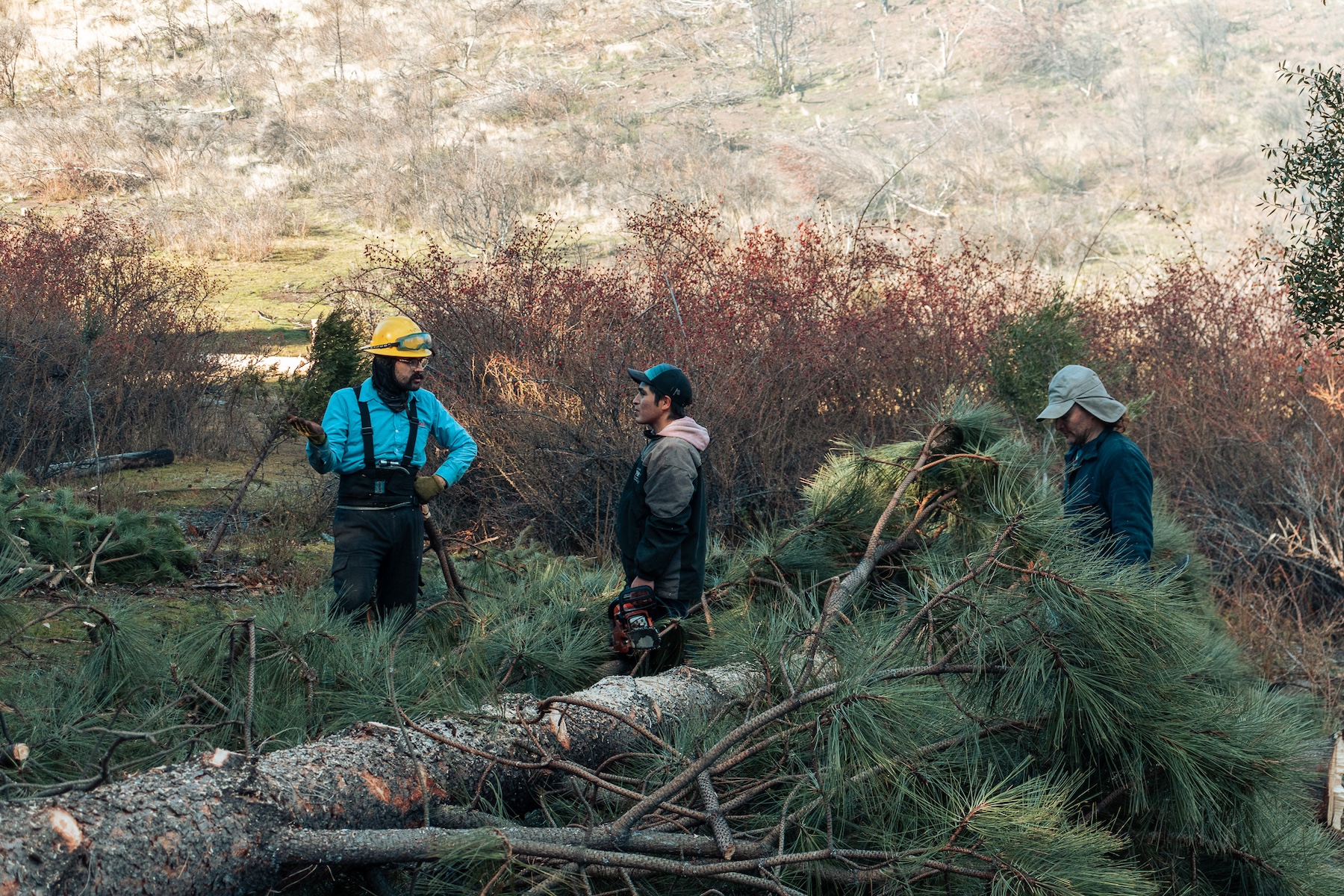
Image by Lucio di Nardo
Consider the history of introduced pine plantations in Patagonia. Conifers were planted for productive purposes through different periods of the twentieth century. In some landscapes, pine regeneration beyond the original plantations now poses ecological challenges and complicates fuel management. Not every pine species or plantation behaves in the same way, and understanding those differences matters. What interests me here is that a landscape we may think of as simply natural also carries the consequences of earlier economic and political choices.
That history is not separate from contemporary debates about land use. As towns expand and real-estate development reshapes parts of Patagonia, neighbors continue to question how growth is planned, what environmental information is considered, and who gets to take part in those decisions. These developments cannot all be treated as equivalent, nor can they automatically be blamed for wildfires. But they raise a related question: why are people often expected to help manage the risks of living in a place while having so little influence over the decisions that reshape it?
The same gap between what we value and what we sustain appears in the treatment of wildfire workers. During emergencies, forest firefighters and brigadistas are called heroes. I understand why: their work is dangerous, physically demanding, and highly skilled. But I have also seen firefighters repairing worn uniforms during a fire, working with damaged clothing, and receiving food portions that were not enough for the demands of long shifts. Those scenes are hard to reconcile with the public tributes that follow.
Across Argentina, wildfire workers have demanded fair pay, adequate equipment, stable employment, and recognition of occupational risks. In late December 2024, as crews fought the Los Manzanos wildfire in Nahuel Huapi National Park, union representatives reported uncertainty over the renewal of some firefighters’ contracts. Their employment was in question while the fire was still burning. That does not mean every worker was dismissed; it means the uncertainty itself was present in the middle of an emergency.
I keep returning to the distance between what a society says it values and what it is prepared to support materially. Training an experienced firefighter takes years. When jobs and teams become unstable, the consequences extend beyond individual contracts: institutions risk losing knowledge and operational capacity that cannot be recreated overnight. Praising someone’s courage is not the same as making their work sustainable.
Prevention cannot begin only when an emergency alert is issued. It has to happen all year: in town planning, the management of vegetation near homes, community preparedness, the resources available to trained crews, and the relationships public institutions build with local residents.
.png)
Image by Ana Escobar
In North Patagonia, much of that work is already happening. Since the devastating fires of 2021, community brigades have strengthened their training, raised funds for equipment, and built relationships with neighbors and public agencies. The brigades I have worked alongside or come to know do not seek to replace specialized firefighting services. They want to contribute to a system that needs different skills, resources, and responsibilities to work together.
Living in a place can reveal things that are difficult to see from an office or a map: which older residents might need help, which access roads could make evacuation harder, and which families cannot afford to clear vegetation around their homes. Local knowledge is valuable, but it cannot replace technical expertise, trained crews, or public responsibility. It should have a place alongside them.
Some of this prevention work takes place in low-income neighborhoods and informal settlements, where unresolved questions of land tenure can make coordination more difficult. Fire does not distinguish between a house with a registered title and one built on land whose legal status remains disputed. Nor can every family pay someone to reduce hazardous vegetation or carry out demanding work themselves. Community brigades help address some of those gaps, but they cannot resolve the deeper inequalities behind them on their own.
The work continues after the flames are gone. In Epuyén, families affected by the 2025 fires are still receiving help from Reconstruyendo Epuyén, a volunteer organization, and other neighbors through “mingas”: collective workdays devoted to rebuilding houses, repairing fences, gathering materials, and offering companionship. A home is not only walls and a roof. It holds routines, memories, and relationships. Rebuilding those things does not fit neatly into an emergency timeline.
This part rarely gets photographed. There is no smoke rising behind the mountains, no fire advancing toward a house. There are neighbors walking properties to identify risks, families spending Saturdays clearing brush, maps left open on tables after meetings, and people returning on Sundays to help someone rebuild. I wonder why it is easier to recognize a community’s work when it is responding to disaster than when it is trying to prevent one, or living through its aftermath. Perhaps flames are easier to turn into a story than the slow work of care.
In recent years I have been trying to understand the intersection of design, politics, territory, and community organizing. That search has changed how I think about communication. Explaining how fire behaves is important, but giving someone information about risk does not necessarily give them the means to act on it. We can tell a family how to prepare their home; what if they cannot afford the work? We can call for year-round prevention; who will sustain it when public attention moves elsewhere?
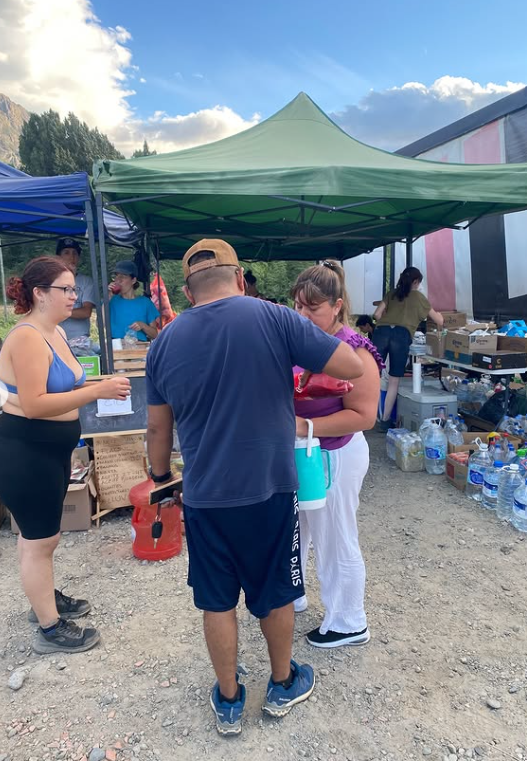
Image by Ana Escobar
I do not believe communities should step aside, or that local knowledge should stand in for science and public institutions. I want institutions to work with the organization that already exists, to support it with resources and continuity, and to give residents a meaningful role in decisions about the places where they live. That requires more than inviting people to meetings. It requires taking their experience seriously without asking them to shoulder yet another unpaid responsibility.
Preparing for wildfires should not mean living in anticipation of the next catastrophe. It should mean building the conditions to reduce risk, allowing firefighters to work with dignity, and making sure communities do not have to fight for the same basic protections every season.
I think of the brigades preparing through winter, the families still rebuilding their homes, and all the people giving part of their lives to caring for a place they call their own. I do not wonder whether they will be able to organize when the fire returns. I know they will. What I still wonder is how much longer we will have to prove that we can care for this territory before their knowledge and experience shape decisions about its future.