

Ever since I can remember, my father Paul has been on the ground - protesting and fighting for environmental justice in Lebanon.
He has been doing so since 1988, when he quit law school, baffled by how little attention Lebanese society gave to the environment. In 1995, he founded TERRE Liban, a grassroots organization dedicated to environmental protection, and he has never stopped. In the process, he raised my sister and I with the same deep love for nature that drives him.
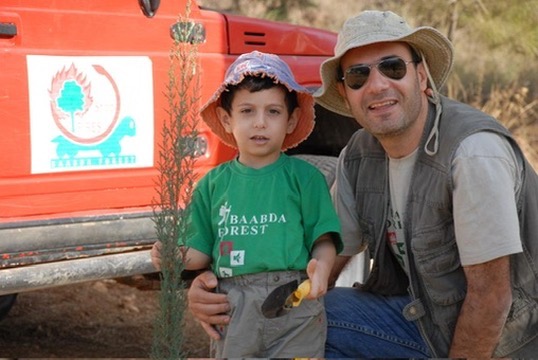
*They say the apple doesn’t fall far from the tree. I’m 18 now, with that same drive for environmental justice - but instead of law, I’m studying political science. *
I remember asking him to take me to the book launch of A Woman is a School by Céline Semaan at the Beirut Art Center. He showed up wearing a T-shirt with a monk seal on it. I was embarrassed. I told him so - like any teenager would.
He just said, “I’ll keep wearing it and fighting for the fokma (seal in Arabic) until it’s safe.”
At the time, I didn’t understand.
TERRE Liban began raising awareness about the Amchit seal cave around five years ago, after a local activist, Farid Abi Younes, noticed construction starting above it. Around the same time, the seal began appearing more frequently in the area. My father saw it as a sign - that they were asking for our attention.
I was 16 then. Every evening, from the moment he got home until I went to sleep, my father was on the phone - calling people and explaining what was happening in Amchit. It drove me crazy. I couldn’t understand why he kept repeating himself, over and over again, about the fokma.
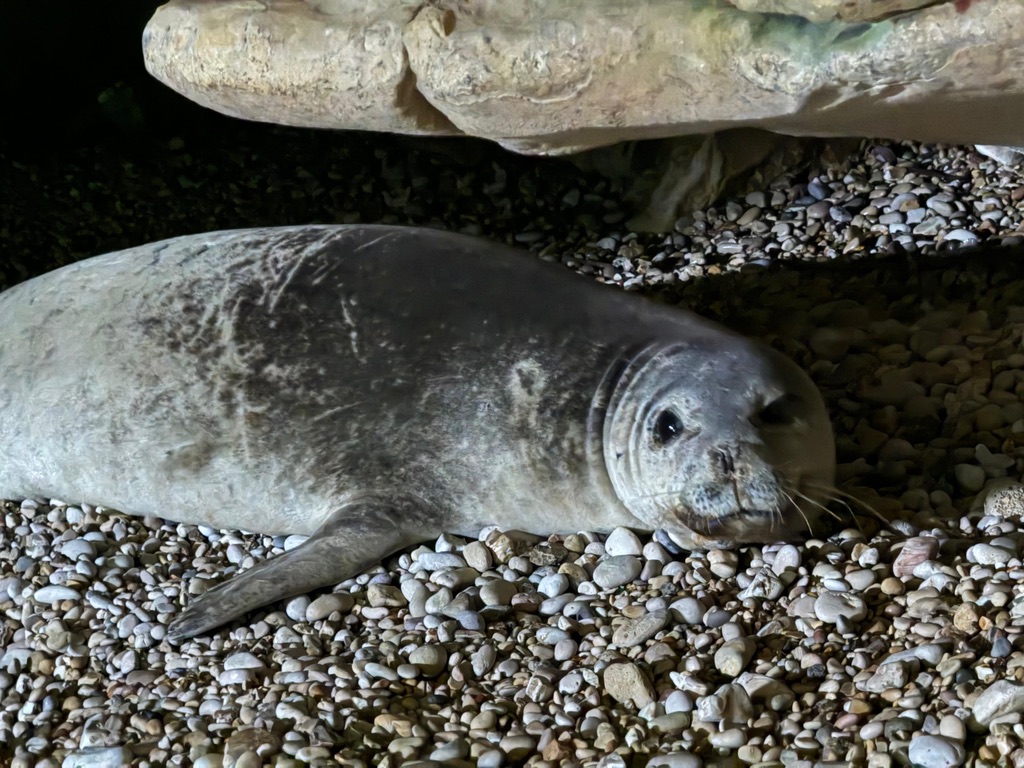
Until one day, I asked him directly: what is it with you and these seals?
We had what I would call “the talk.” My father spoke with a kind of urgency I had never fully registered before. A well-known media figure had purchased the land and was planning to build a villa on top of the cave - an all-too-familiar fate for Lebanon’s coastline, where approximately 80% has already been privatized or destroyed, according to the NGO Nahnoo.
But this wasn’t just any piece of land. It is a sanctuary for an endangered species: the Mediterranean monk seal, with only around 600 of them remaining worldwide, as reported by the IUCN.
I remember feeling a surge of anger - but also clarity. For the first time, I understood my father. I understood why he had spent decades fighting. My admiration for him, and for his 38 years of activism, deepened profoundly.
From then on, I began asking him for updates on his activism.
The Ministry of Culture acknowledged the site’s importance, yet construction resumed in 2023. After pressure from environmental groups, the Ministry of Environment requested only an Environmental Management Plan - rather than the full Environmental Impact Assessment required by law. It became impossible to ignore how deeply corruption runs, and how complicit the state can be.
In 2024, TERRE Liban filed a legal complaint and managed to halt construction for over a year. Then, suddenly, it resumed again.
By then, I had started university. I found myself telling everyone I knew about the Amchit cave - and realizing that almost no one had heard about it. I began to understand what my father must have felt all those years ago: speaking to indifference while watching something irreplaceable disappear.
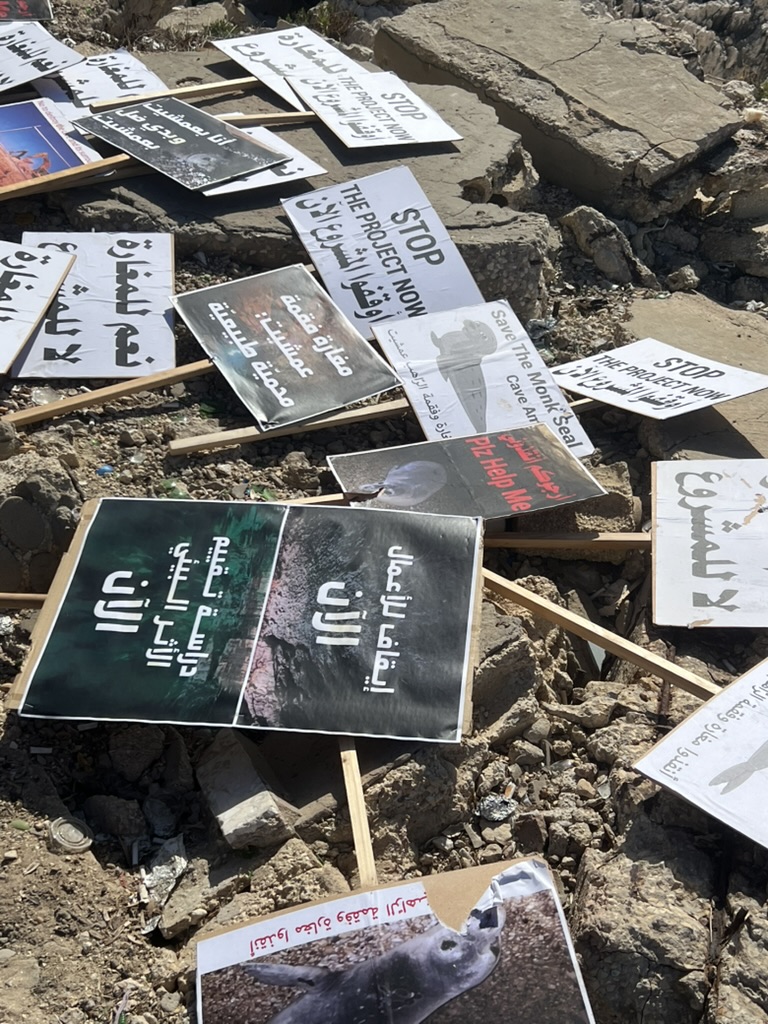
In October 2025, a social media campaign gained traction, leading to a call for protest.
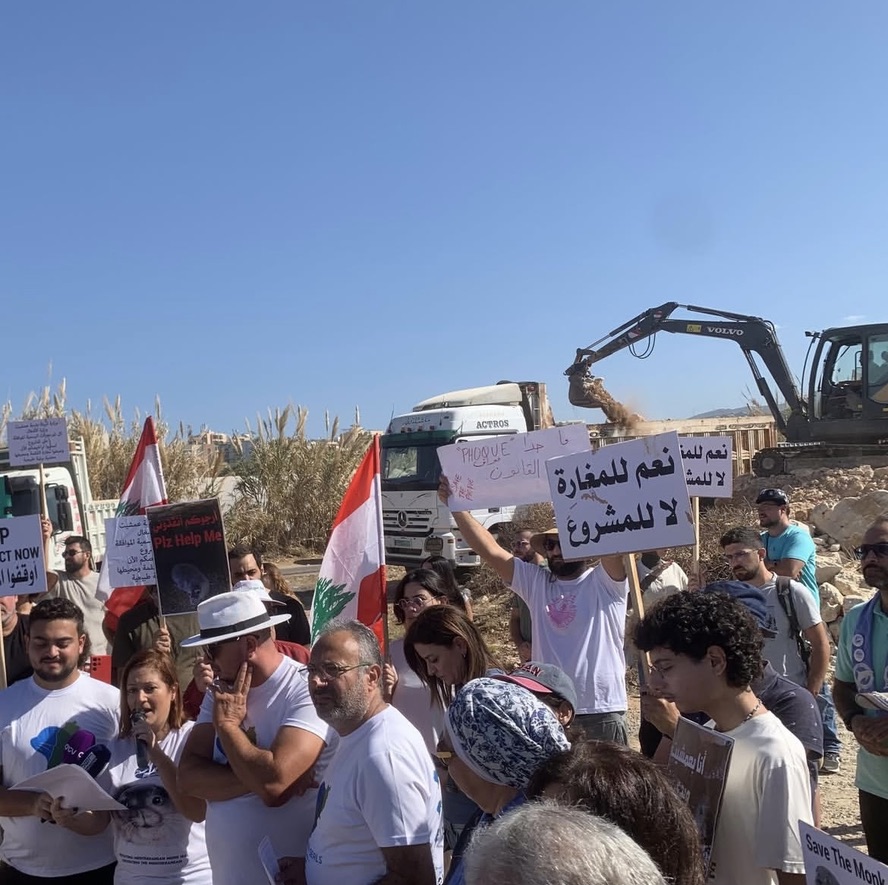
I remember that day clearly. My whole family went to Amchit early in the morning, and for the first time, I saw a large crowd gathered for this cause. People were chanting, giving speeches, standing together. Something shifted. I could feel in my body, the weight of all the years my father had spent fighting for the fokma.
Then something unexpected happened.
A large flock of migrating birds began circling above us. It felt like a sign - like the land itself was responding, bearing witness.
The story of the Amchit cave is one of corruption and loss, but also of resistance. The fate of this cave reflects the fate of Lebanon’s coastline. And yet, through collective action and legal resistance, it also shows that not everything is lost.
Just this week, as our country is being ruthlessly bombed and occupied, construction above the cave has not stopped. The Lebanese government is complicit, and has done absolutely nothing to stop them. They have already managed to build three floors on top of the cave, using the war as a distraction.
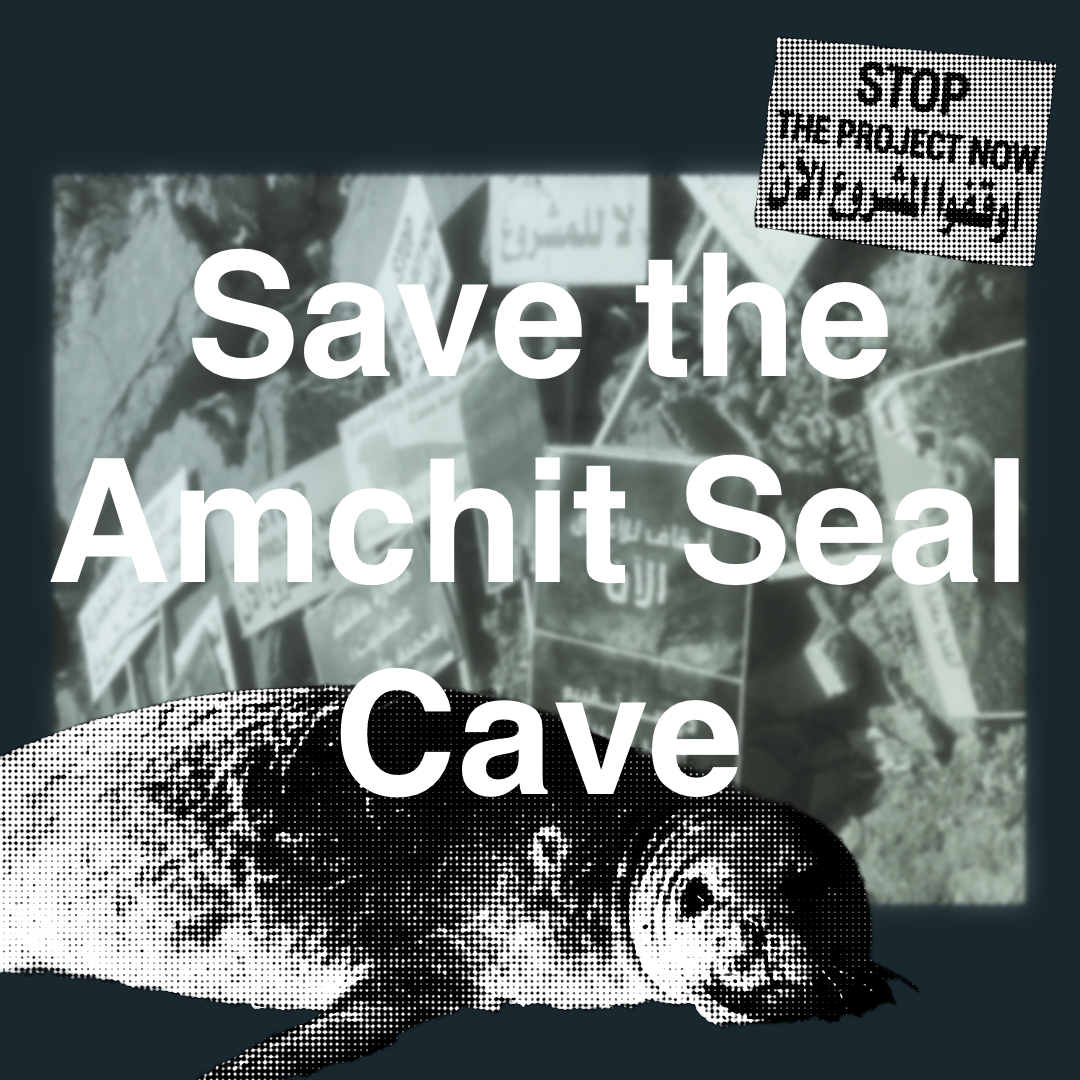
We call upon all local authorities, from municipalities to deputies and relevant ministries, who have the legal capacity to put a stop to the construction.
To anyone reading this, please support local environmental organizations, like TERRE Liban who are paying legal fees and going to the courts. Sign petitions. We have seen how effective even just sharing a post on your stories is. Our voices are way more powerful than we think.
I’ve learned so much from my father. Writing this is, in some small way, my way of continuing his fight - for the protection of this endangered species, and for the preservation of what remains.