
“KEMERDEKAAN ITU NASI. DIMAKAN JADI TAI.”
-Wiji Thukul (1982)
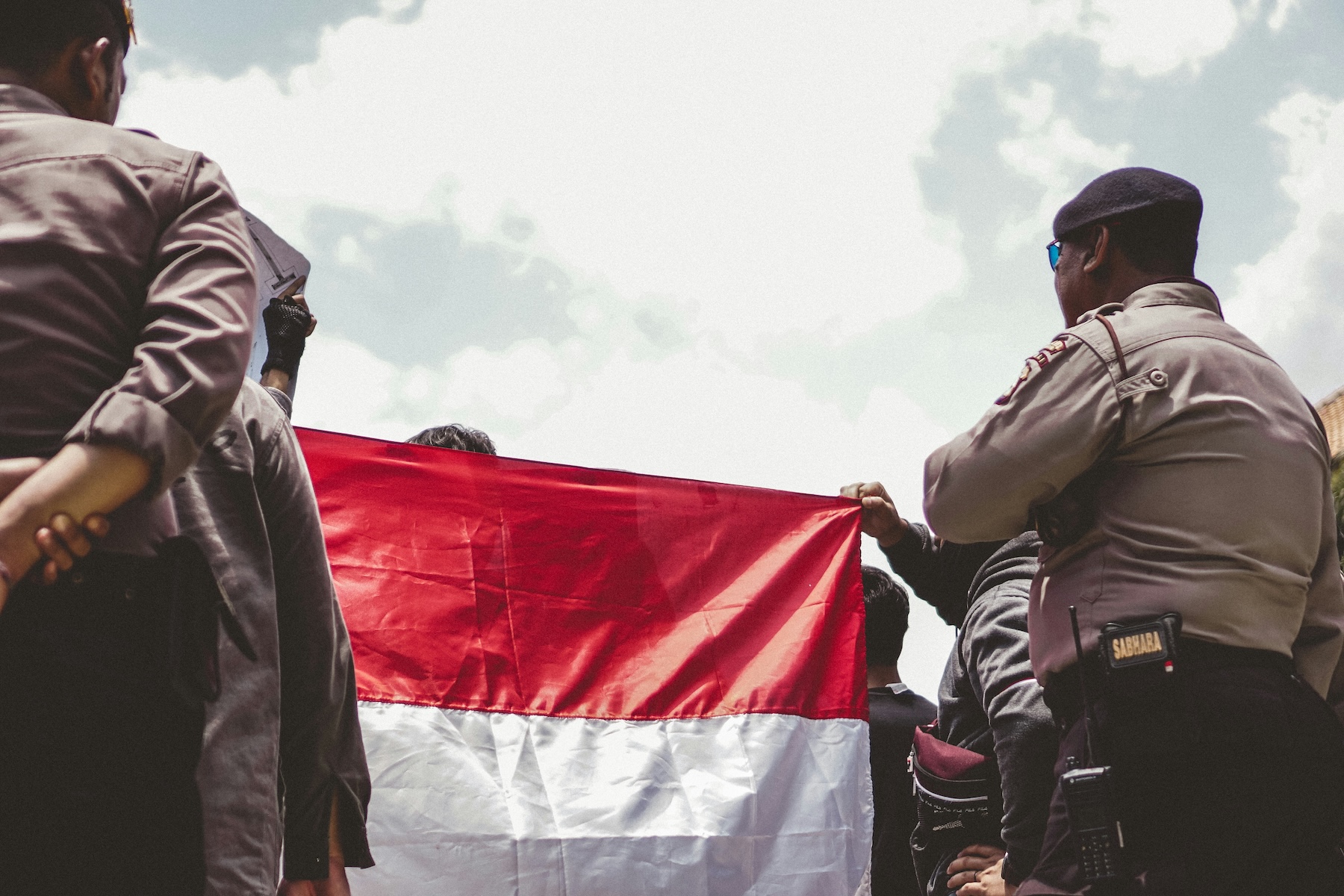
CREDIT: Fajar Grinanda
Cirebon, August 15, 1945. A group of underground youth in Alun-Alun Kejaksan proclaimed Indonesian independence two days before it was proclaimed in Jakarta. Yet this event has never occupied an equal place in the visual archives and official narratives of the modern nation-state. Today, it survives only as a weathered monument.
Jakarta, August 17, 1945. Before the sun had risen too high, a hand-sewn red-and-white cotton flag was hoisted on a bamboo pole in the yard of a house at Jalan Pegangsaan Timur No.56. Hundreds of people gathered to watch the flag rise and flutter in the breeze, occasionally glancing away with apprehension. Outside, heavily armed Japanese soldiers patrolled the city streets, ensuring power remained bound to the steel of their samurai swords. Amid that siege, the red-and-white cloth seized its own historical destiny from colonial rule. It became a kind of visual proclamation of sovereignty.
The events of that day marked just how important the flag would become to the formation of a nation, the claim of Indonesia as a sovereign state.
Eighty-one years have passed, and the same flag design continues to be mass-produced, unfurled across every corner of Indonesia when Independence Day arrives. It is honored by hundreds of millions of citizens, even as the state it represents has repeatedly inflicted other forms of oppression upon them. It is carried through the streets in patriotic and heroic Independence Day parades under the midday sun. This brings to mind what John Berger wrote in Ways of Seeing (1990): “The relation between what we see and what we know is never settled.” We see red-and-white (as well as the flags of other nations) as symbols of resistance and natural expressions of national identity. However, this bicolor, geometric format actually adopts the visual blueprint inherited from the modern European nation-state, which carries its own myths. It makes a nation’s independence contingent on how it is recognized, named, and drawn into the oppressive vortex of the global economy.
A national flag is a form of visual language that silently limits our political imagination. It is a modern myth shaped by an often-imposed desire for unity. It seems to sever the history of oppression by colonial political power, or to demonstrate the strength of a nation’s political dominance. Yet, on the other hand, it also helps determine and confine how we enact independence on the global political stage. At this point, the way we look at the flag becomes crucial.
For Berger, the way we see the world is never separate from cultural conventions and relations of power. The gap between ‘sight’ and ‘knowledge’ arises when a visual image begins to supplant its own material history through a prolonged process of mystification. When we gaze at a fluttering flag, our attention instinctively turns toward narratives of patriotism, sacrifice, and the bloody history of its formation. The historical knowledge embedded in its geometric form, symmetrical proportions, and distinct lines, as part of visual conventions born from the history of maritime invasions, military heraldry, and modern European international law all remains largely unseen
The erasure of this historical knowledge is rooted, in part, in the history of European intervention from the 16th to the 18th centuries, when practices of maritime navigation, warfare, and trade helped drive the standardization of the flag’s form and function as a marker of identity and power. Imperialist naval fleets and trading companies, such as the Dutch East India Company, used flags to make their ships and authority recognizable from a distance. Rectangular cloth, geometric shapes, two- or three-color patterns, and contrasting colors became part of a visual grammar through which power could be made visible, while symbols from heraldic traditions further reinforced the idea that sovereignty could only be articulated through military strength.
When colonialism took hold across Asia and Africa, these tactical instruments of war were planted in colonized lands as markers of sovereignty and power. Like a trap designed from the beginning, this visual instrument was transformed into the sole visual language deemed legitimate for postcolonial nations to celebrate their freedom. Even today, nations whose flags bear similar forms, such as Palestine and West Papua, continue to struggle for an independence they have yet to fully attain.
Surabaya, September 19, 1945. Amid the tensions following the proclamation of independence, young men climbed the tower of the Yamato Hotel, seized the Dutch tricolor that had been raised unilaterally, and forcibly tore off its blue section. They hoisted the remaining red-and-white cloth back to the peak, punctuated by cries of “Merdeka!”. The tearing of the flag became one of the most radical acts of heroism in the narrative of Indonesia’s independence. Both physically and politically, the act can be understood as a direct act of decolonization: a physical rejection of the symbol of imperialist supremacy seeking to reassert its power across the archipelago.
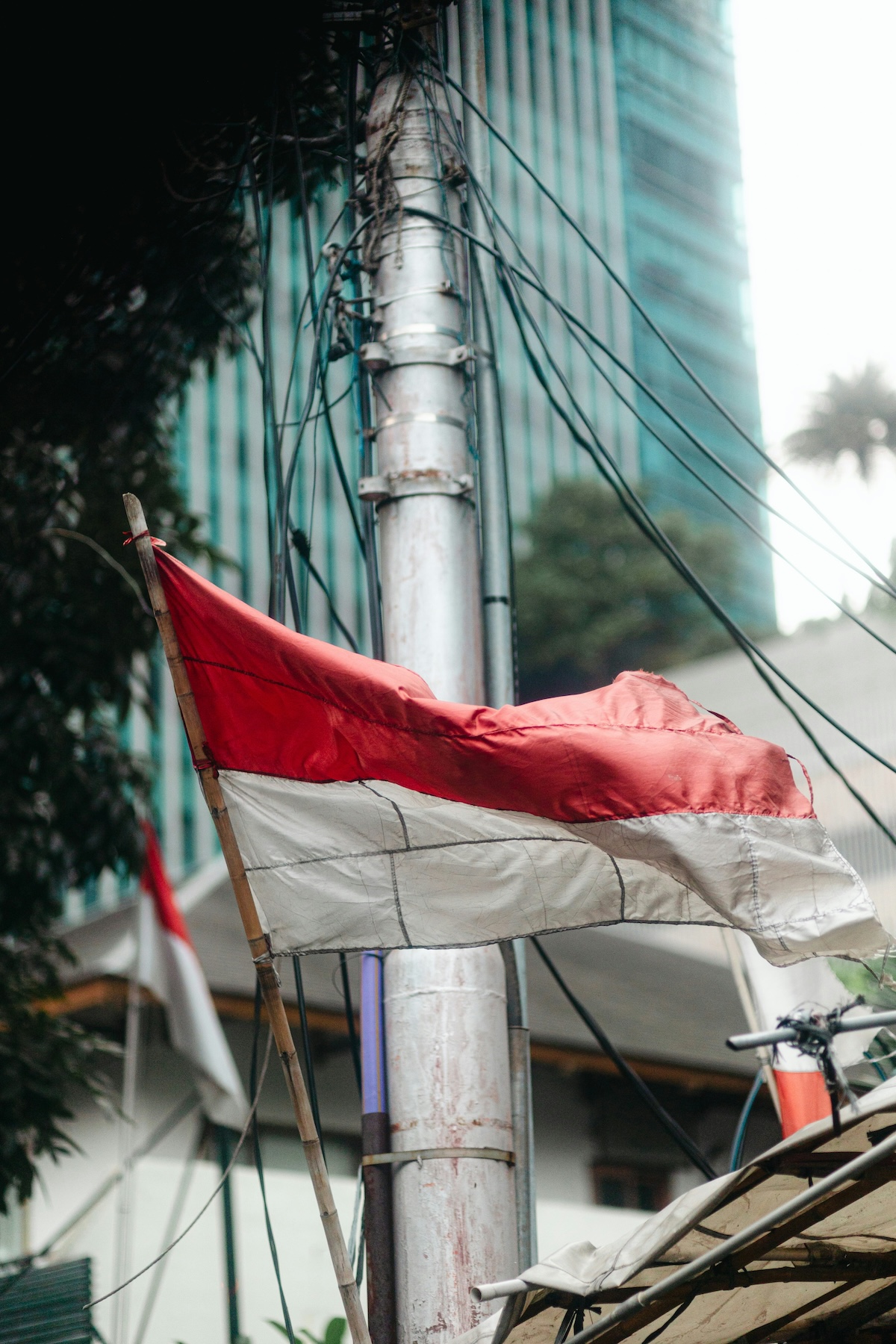
CREDIT: Edward Lawrence
However, viewed through the lens of political aesthetics, the event actually reveals a profound performative paradox. The removal of the blue from the flag, which was part of the symbol of Dutch imperial authority, functioned as a direct political act, stripping away the symbol of colonialism. What remained of the torn flag, once raised again to the tower’s peak, inadvertently formed a horizontal geometric bicolor pattern, a rationalist format whose structure remained entirely compliant with the visual grammar of European nations. The young people, who initially intended to remove the colonizer’s symbol, ended up re-enacting the remaining piece of cloth within a representational framework already employed by modern nations. The victory over the colonial symbol was simultaneously expressed through a visual language already recognized as the language of sovereignty.
This is where the trap of representation operates silently. Adherence to colonial visual grammar locks postcolonial sovereignty into a conditional state, a form of recognition deemed legitimate only when conforming to Western diplomatic standards. Domestically, this rigid visual instrument is turned inward by postcolonial states to demand absolute loyalty, discipline ethnic differences, and stifle criticism in the name of forced unity. A symbol born to resist foreign domination has thus been turned into a tool for legitimizing power and oppressing a nation’s own people.
The need for an alternative political imagination has become urgent in the face of state repression that operates according to colonial logic.
Domestic appliances, community kitchens, food sovereignty, rivers, land, mountains, the sea, care work borne by women and Indigenous communities, and even collective-egalitarian practices like gotong royong - none of these has ever been included in this representational space. All these symbolic aspects of daily life are deemed too simple, ordinary, or even insufficiently ‘rational’ to represent and embody national sovereignty.
They are excluded from the political arena in which sovereignty is represented, which recognizes only the language of power.
To dismantle this limited political imagination, the insights of Elizabeth (Dori) Tunstall offer a vital counterpoint. In an interview, she argues, “The biggest difference between what we are articulating and what is now a hegemonic point of view regarding ‘human-centered design’ is de-centering the human to introduce a relational model where the human is just part of the wider ecosystem.” Reading political symbols through Tunstall’s decolonial design lens reveals how national flags operate as technologies of separation. Applied to political aesthetics, her critique exposes the national flag as the pinnacle of anthropocentric and egocentric representations of power, an abstract authority that separates people from the land, water, and living systems that sustain their daily lives.
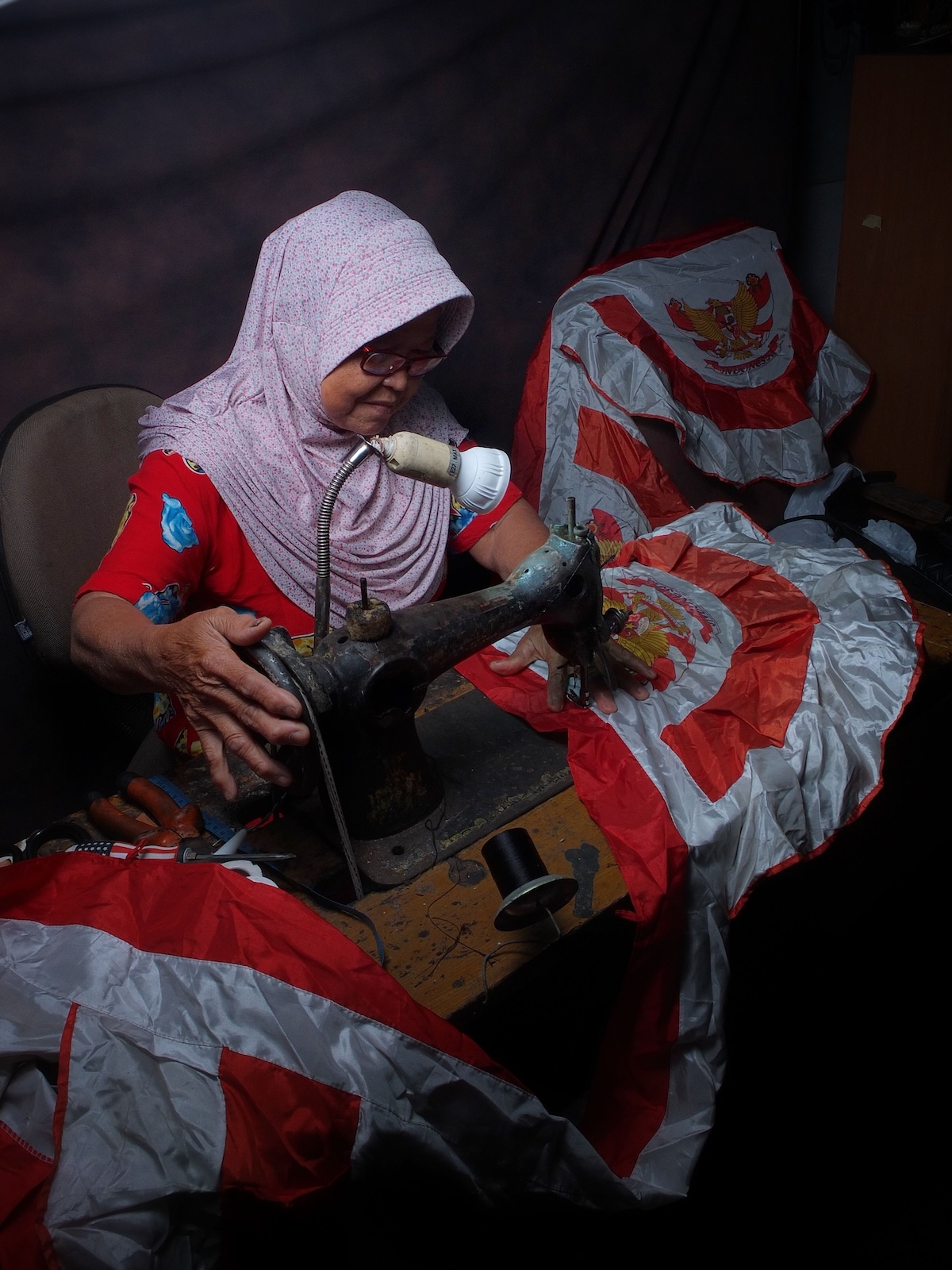
CREDIT: Hendi
Envisioning relational sovereignty leads us toward a more radical political imagination that dismantles the foundations of colonial logic ingrained in institutionalized state power. When we dismantle this logic, territorial borders strictly guarded by weapons and rigid symbolic banners lose their sacred status. Ecological crises, the flow of rivers, and deep-rooted land conflicts never obey administrative map lines drawn by state administrations. They demand an urgent shift from nationalist chauvinism toward genuine cross-border ecological solidarity. Furthermore, when sovereignty is imagined through the resilience of the land and the physical safety of communities living upon it, the state’s monopoly over defining what independence means begins to crumble. Extractive projects, environmental destruction, and resource appropriation carried out in the name of ‘national development’ can finally be named plainly as new forms of colonization, even when conducted beneath the full, proud display of the national flag.