

“And once remembered, will we return to that first water, and in doing so return to ourselves, to each other? Do you think the water will forget what we have done, what we continue to do?”
— Natalie Diaz, Postcolonial Love Poem (Faber & Faber, 2020)

Natalie Diaz believes her body is a river. The Colorado River that is dying — both inside and outside the poem. A river stretching 1,450 miles across the American Southwest, flowing and rippling through her body and her identity as ‘Aha Makav. In their tradition, the words for body and land are distinguished by only one small sound, ‘ii and ‘a. Without context, an outsider would not know whether what is wounded is the body or the land: because both are the same thing.
When the Colorado River was renamed, dammed, dried up, and aridly translated by colonialism, the drought did not merely fall upon the river and the land, but also upon their bodies, their language, and their collective identity — all of it cracking apart. Ecological destruction is the destruction of identity within its circle. No matter how aesthetic that destruction may appear.
“The First Water is the Body” — the poem Diaz wrote in Post Colonial Love Poem (Faber & Faber, 2020) — moves from personal reflection toward a widening ecological and political critique. From the crisis of contemporary care work to the extractive logic nailed onto the bodies of women, indigenous peoples, and even the environment throughout the long history of colonialism. It presses certain ethical questions, such as:
If a person (or community) is always caring for something outside themselves, who cares for them? If a person (or community) continues to care for the river — cleaning it, guarding it, defending it from destruction — who cares for it when the river itself is extinguished? If the body is a river that keeps flowing and giving, who ensures it does not run dry?
The answer to these questions does not end with the bitterness that those who care are left to care for themselves alone, as though forcing those who need it most to fend for themselves. The complexity of this problem lies precisely in the unequal distribution of care infrastructure, alongside the possibility of its circulation flickering dimly in and out of life.
Like a river flowing, care work has long irrigated human life, even as its practice is exhausted extractively, because it is loaded only onto certain bodies: women, indigenous peoples, and nature itself. Through this logic, colonialism/capitalism/modernism has spun those bodies inch by inch to weave the oppressive center of their machine civilization. Care work is invisible labor capable of turning the wheels of the economic system, yet crushed by the very machine that runs on its energy.
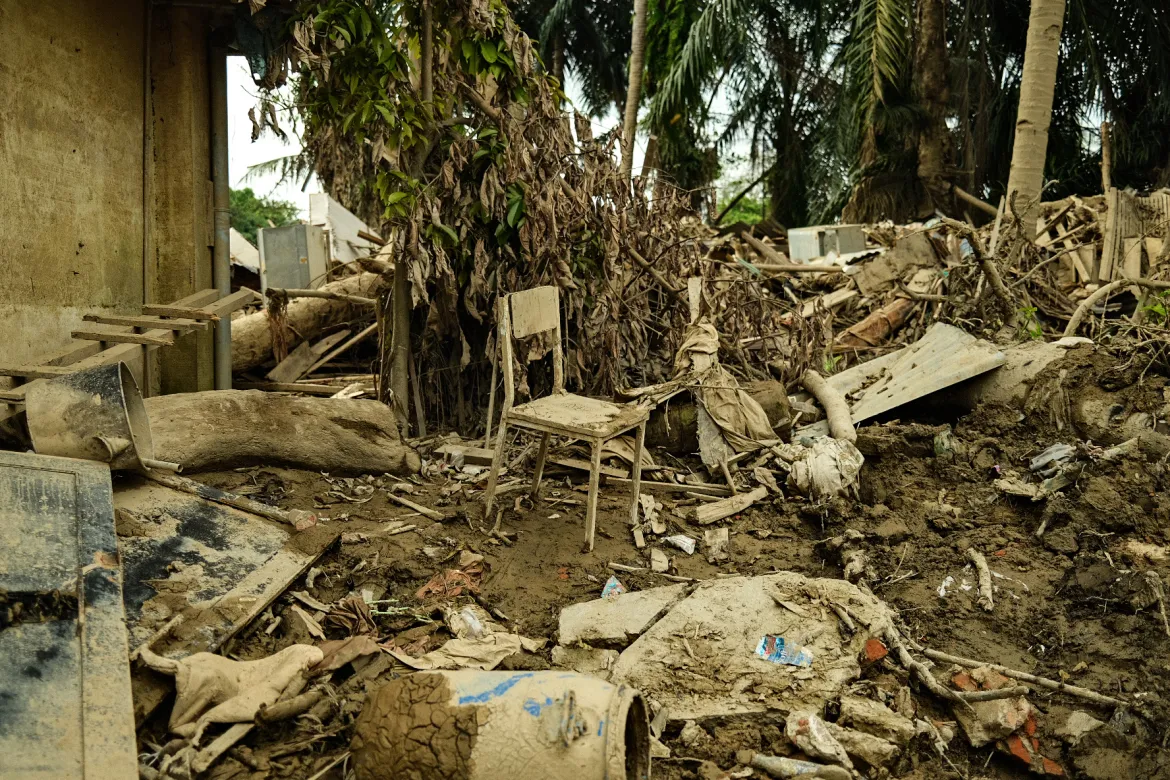
Women are compelled to ensure the spatial and emotional stability of their surroundings: cleaning, cooking, raising children, caring for the elderly and the sick, even when formal care infrastructure has collapsed due to war, economic crisis, or broken state policy. Their bodies are the last buffer when the system truly fails. Indigenous peoples carry out care work by tending to the nature around them, inheriting language and cosmology so that the community remains whole, and defending ancestral land from dispossession even as their territories are extracted by the state and corporations in the name of development. Nature, too, performs care work by maintaining a rhythm greater than humanity: ensuring air remains breathable, water drinkable, soil fertile even as it is daily measured, sawed apart, drained, and whipped by the logics of capitalism.
Yet none of this labor — which sustains the continuation of life — has ever been valued equally with production in capitalist society. It is considered natural, automatic, and available without limit. It does not enter the calculations of growth or the figures of gross domestic product. As though life could proceed without the labor that makes it possible.
Each of us will inevitably need care work at the most radical and sorrowful points of our lives. Drawing the shadow of COVID-19 and concern for the most vulnerable having been displaced by the obsession with profit and productivity, Emma Dowling concludes that the current care system is in crisis. In The Care Crisis: What It Caused It and How Can We End It? (Verso Books, 2022), Dowling describes the crisis as a condition where more and more people are unable to perform care work or receive the help they need, and those who do provide care cannot do so satisfactorily or under dignified conditions. She maps the variety of care crises: from privatization to budget cuts to the weakening of care infrastructure distribution.
Through efficiency measures and budget cuts, the state weakens care infrastructure because it is deemed unproductive, successfully dragging it into its most domestic domain: the household. Where care is transferred, privatized, and normalized, and largely loaded onto the bodies of women. Without being ‘counted.’ As though the structural dimensions of this problem must be borne personally, without anyone’s support. The care crisis is entirely a structural failure.
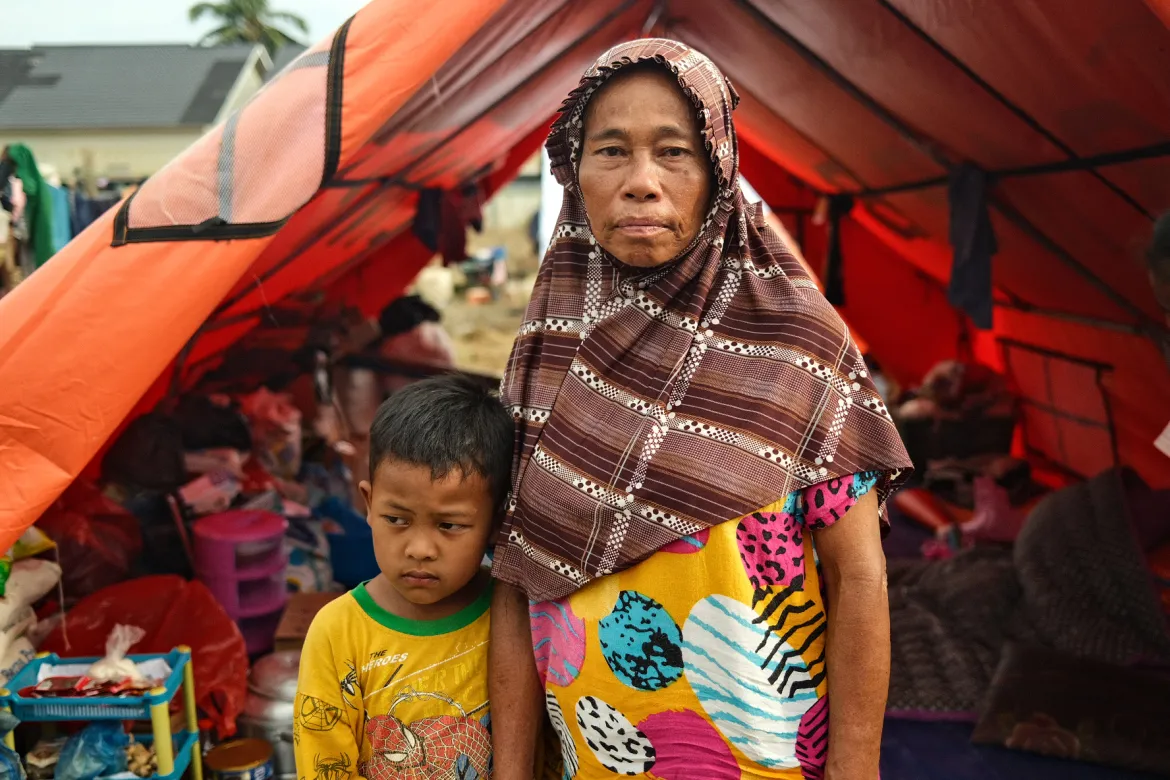
In Indonesia, amid floods and landslides in Aceh and Sumatra, women continue performing care work even after living space collapses. In evacuation camps, they ensure children keep eating despite the absence of kitchens, queue for clean water, care for the sick, and soothe families fractured by trauma. Indigenous communities lose forests that once functioned as homes, pharmacies, kitchens, and cosmological archives. Care work intensifies precisely when the world sustaining life begins to disappear. Certain bodies remain the final buffer during crisis. Care becomes permanent emergency work, displaced into the quietest rivers and lands.
This ultimately causes many families to live in a mode of extreme survival. Women perform unceasing emotional overtime. Double burdens move across their bodies without wages or calculators. Families survive through informal solidarity among neighbors and kin, without any structural support. The point is not that they don’t need the state, it is how care work is exploited to fatten the state while history records them through the language of extraction.
Care work continues in a circling exhaustion. Like a river, it is forced to keep flowing even while being dammed and drained. The bodies that sustain and care for the system are never cared for by the system itself. They see the body only as an invulnerable field of extraction.
If colonialism extracts land as in Diaz’s poetry, then capitalism also extracts care work in our daily lives forced into modernity. Women’s bodies are made into buffers for domestic stability while the bodies of indigenous peoples guard land, language, and cosmology from ongoing dispossession. And the natural world continues sustaining the rhythm of the broader ecosystem. Yet all three are treated as inexhaustible resources, never consumed by time or the greed of the machines of destruction. Care work, which should be active, conscious, and reciprocal is repurposed into something passive, an object of extraction, without allowing time for recovery.
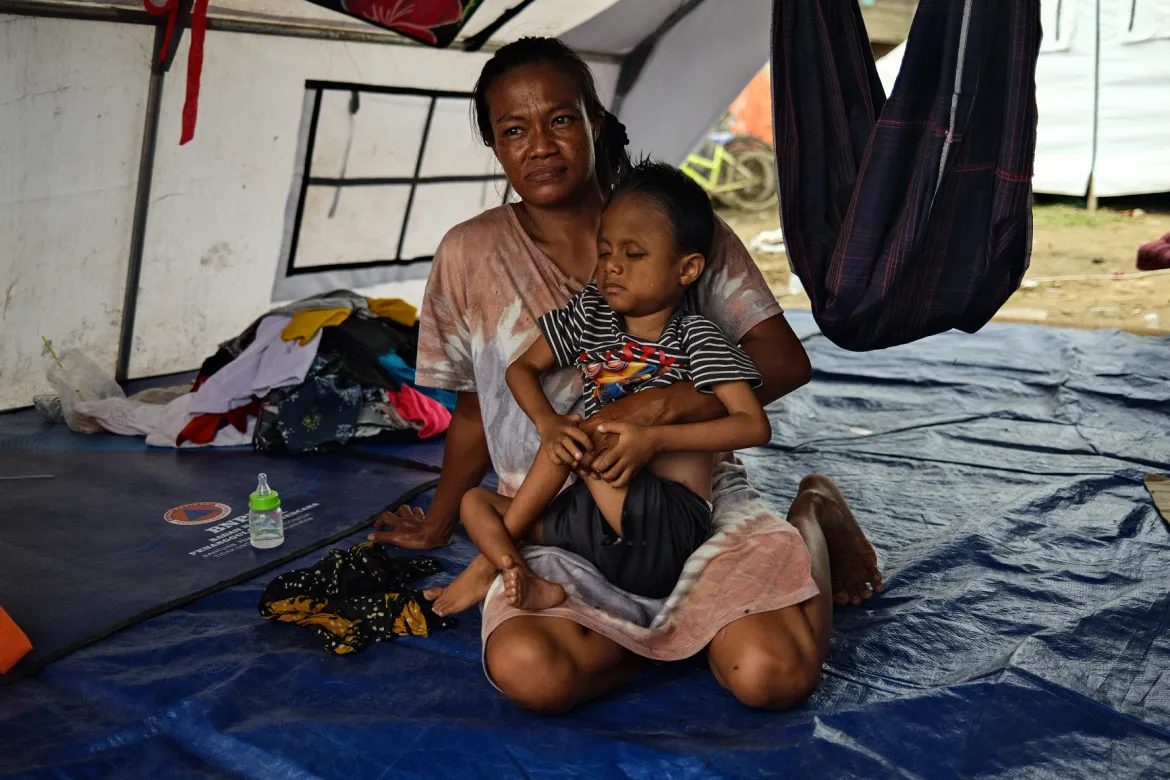
The question then expands: what happens when the capacity to care is itself turned into an object of extraction? Care work is not something that exists only within ethical questions. It is a political terrain that must be struggled over. Even International Women’s Day is often absorbed into the language of liberal empowerment, reducing structural exhaustion into narratives of individual resilience and success. The unequal distribution of care work remains hidden beneath celebrations of strength, while the bodies sustaining everyday life continue carrying burdens the system refuses to share.
In recent years, the care crisis has often been answered with one pockmarked word: self-care, as though the answer to structural crisis is internalized into the individual self. Historically, self-care was a practice of survival within a system hostile to certain bodies. A political act that went beyond mere lifestyle. But within contemporary capitalism, it has been shifted into an individual solution to a structurally occurring crisis. When working hours lengthen, public infrastructure weakens, and domestic labor grows more unequal, what is offered is not a redistribution of burdens — but advice to take better care of oneself. Mental exhaustion is treated as personal failure.

In Diaz’s understanding, the body is a river. And a river does not live by resilience alone, but by circulation. It flows, receives, evaporates, and returns as rain. It does not survive by sacrificing itself endlessly. When dammed and drained without recovery, it does not become resilient, it dries up, withers, and turns barren. So too with care work. It cannot keep flowing from one body without another current flowing back to restore it. Care must circulate back rather than disappear into extraction. Care work must be understood as a circulation: women care for the community and the community cares for women; indigenous peoples tend the forests and the state protects their ancestral territories; nature gives life to humans and humans give life to nature, and so on, and so on.
If the body is the first water, as Diaz writes, then the care crisis has the right to demand remembrance. The memory that life is only possible because something cares for it. Water that is continually drained without being returned ultimately loses its life-sustaining force. “And once remembered, will we return to that first water, and in doing so return to ourselves, to each other? Do you think the water will forget what we have done, what we continue to do?” The question is not only about the Colorado River. It is a question about bodies that are cracking apart. The question is not whether the water will remember. But whether we will stop forgetting.