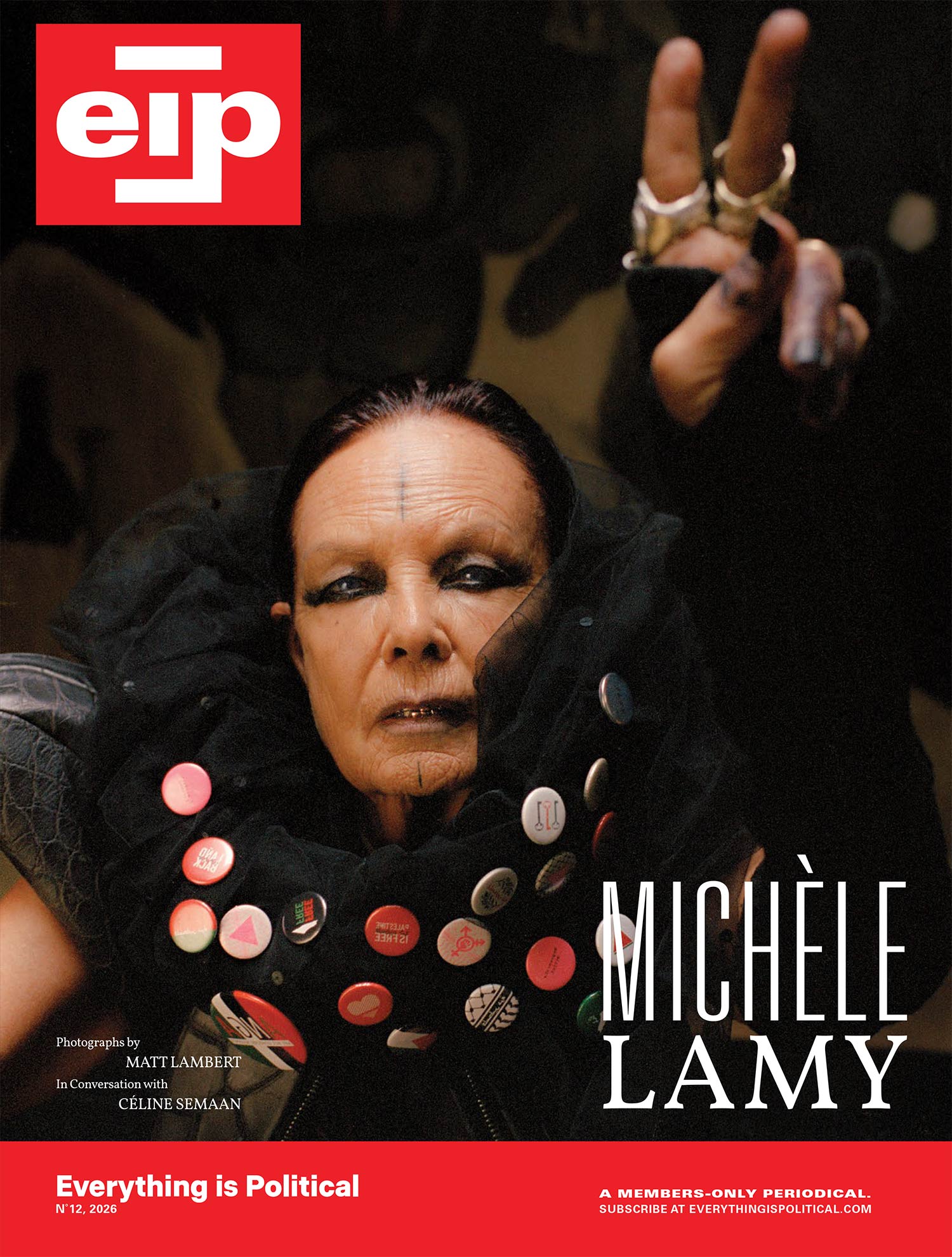


jackie sumell and jasmine in Houston, Texas. Photo Credit: Aidi Kansas
From his cell on death row in Texas, Obie Weathers III grows a garden. As he considers what to plant, he thinks about his lost molar, about how most of the men he sees don’t have a full grill when they smile, about how dental care in prison is abhorrent. He doesn’t know plants at all, but that’s where he starts. The artist visiting him, jackie sumell, makes mental notes. This is what she does: She builds gardens on the outside that emerge from the imaginations and designs of those incarcerated in solitary confinement. Spilanthes, yarrow, and mint. This is what she grows and, with time, sells; the proceeds go directly to Obie’s life fund. Meanwhile, Obie requests books on plant dyes, dreaming up how to use them to paint.
Hours away, Warren finds a pawpaw tree while working in the fields at Louisiana State Penitentiary, aka Angola. He had been working with sumell, studying plants, and knew that pawpaws were used as medicine for grief. He makes a secret stash of leaves for tea, which he leans on when his mother passes. “Plants are part of these stories of resistance,” jackie reflects. “They provide the blueprint for liberation and have held people throughout time—from the Underground Railroad on up.”
Mentored by Herman Wallace, Albert Woodfox, and Robert King—known as the Angola 3 for their 100 combined years in solitary confinement—sumell began planting gardens in collaboration with people in solitary 25 years ago, where it very quickly emerged as a healing ritual for all parties. “I began to see how people were feeling better; not only folks who were designing them, but also those who were engaging with and eating from the gardens,” she says. With time, this project evolved into Freedom to Grow, her nonprofit sitting at the intersection of abolition, land-based practices, and community empowerment.
From a sliding-scale, Abolitionist Apothecary and gardens nationwide to an organizing lab in New Orleans, Freedom to Grow projects employ plants and art as a mirror into the structural and interpersonal practices of abolition. In its next iteration, the nonprofit will open The Museum for Abolition and Beyond, a space that will center the organizing legacies of people confined and enslaved on the 18,000 acres now known as Angola prison, once a plantation named for the African country from which enslaved people were forcibly taken.
Writer Abigail Glasgow sat down with sumell to discuss her vision for the museum, what histories and relationships she holds dear in this work, and why we need an abolitionist space like this today.
This interview has been edited for length and clarity.
ABIGAIL GLASGOW: Why are gardens core to your practice?
jackie sumell: In his 29th year of solitary, I asked Herman [Wallace] what kind of house he dreamt of. The first thing he said was, “I can clearly see the gardens full of gloxinias, delphiniums, and roses. I wish for guests to be able to smile and walk through gardens all year round.” This is a man who had spent decades in a six-by-nine-foot concrete cell, had not had access to gardens, to plants, to even the forced labor practices of Angola. His commitment to gardens signaled to me that they’re powerful. There’s something revolutionary there.
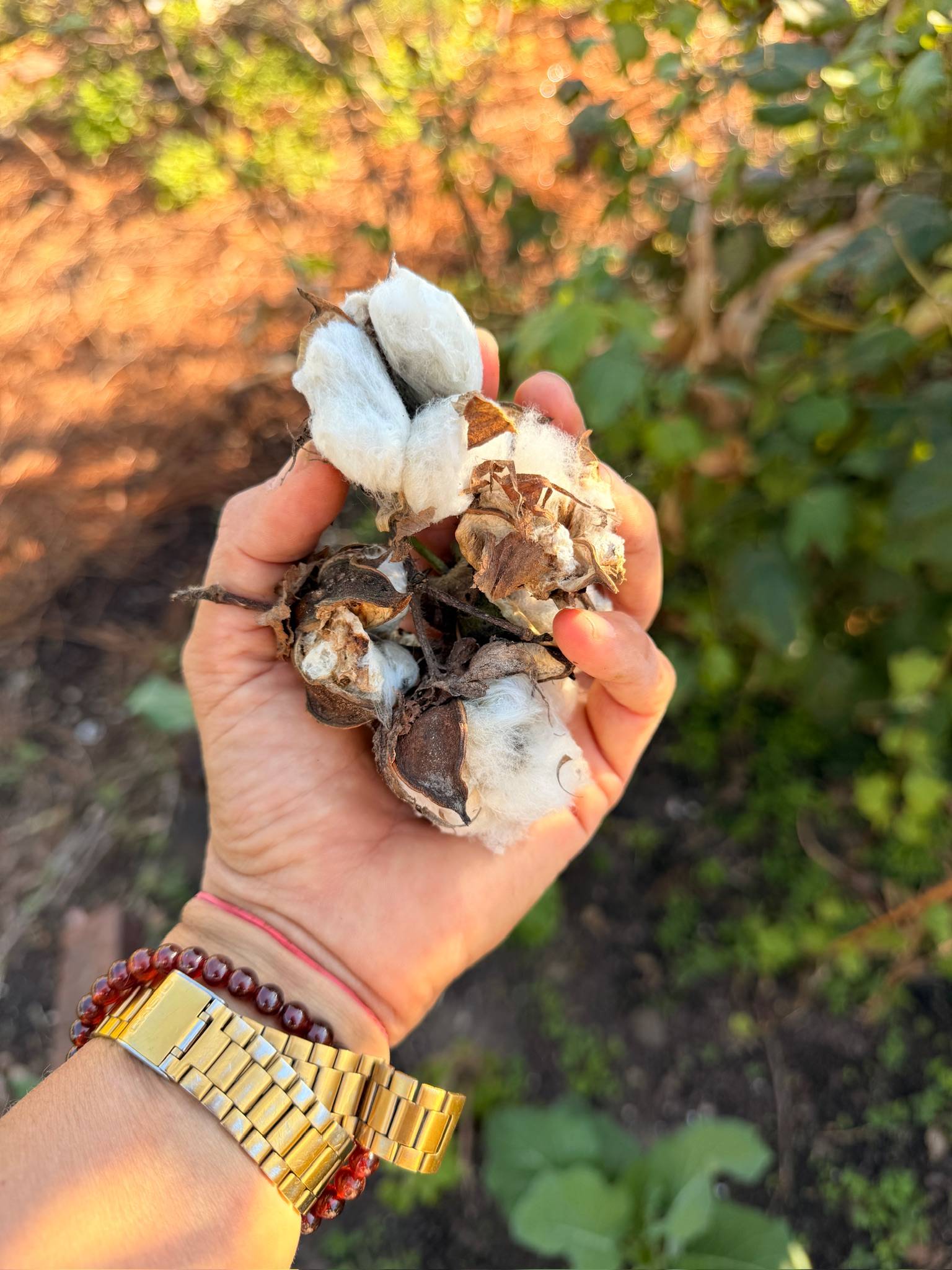
jackie sumell with cotton grown at Solitary Gardens in 2026. Photo Credit: jackie sumell
ABIGAIL: And when did the idea for the museum come about?
jackie: We want to make sure we’re all pointing at the same moon. Over the course of my work, I’ve collected experience and ephemera—garden [designs], letters—and it’s like, where will this eventually live? How can it be a tool for teaching future generations of organizers and positioning this idea that art is the most powerful vehicle to carry abolitionist ideas?
Storytelling is under attack, especially stories of resistance and survival. Our idea is to create a digital archive of incarcerated or enslaved organizers, exploring how they were able to experience liberation on land where these egregious forced labor practices have long existed. This will be paired with a tributary, including one-off pieces created by artists responding to the archives, an evolving organizing lab, and two legacy gardens—all of which will tell the story of resistance on the land now occupied by Angola prison.
ABIGAIL: What are some of these strategies, both studied and currently emerging, that stand out to you?
jackie: The amount of care that happens in Angola is astounding. The first chapter of the Black Panther Party was organized [there], and, for most of their legacy, they weren’t allowed to congregate, kept in cells a minimum of 23 hours a day. They would take turns running up and down the tier, organizing teachings of Mao’s Little Red Book or Soul on Ice [by Eldridge Cleaver].
Then there’s when I’m in the visiting room and whoever I am visiting will ask me to buy a fish plate. It won’t come to the table. It’ll go to someone who didn’t get a visitor that day. And there are correctional officers who have a pulse and a heart. I got phone calls from [COs saying], “I will lose my job if you say my name, but this is what’s happening to Herman. You need to call his attorney.” The goal is to tell these stories.
ABIGAIL: Past, present, and future informing one another are at play here. Can you talk about how that shapes the museum?
jackie: The past is the archives. We have someone inside leading our archival research, tracing the history of Angola’s Black Panther Party, strategies from the prison’s Law Clinic and the Law Library, and ways throughout history that folks have taken care of each other under these oppressive conditions.
The present is the organizing lab. We’re currently in the John Thompson Legacy Center (JTLC), opened by John Thompson, who spent 14 of his 18 years wrongfully incarcerated on death row. He opened it as a flex space for anyone from the community [with] an idea. It was everything: a print shop, an after-school learning space, a spoken word venue, and, after he passed, a critical space for mutual aid distribution in the wake of Hurricane Ida. It was always changing shape. We are taking from those lessons to make both a preventative and responsive space.
The future is what the museum becomes. The lab will be hugged by the artwork produced in the museum. We will retrofit JTLC with a neighboring building and then bring in two adjacent lots for the legacy gardens, where plants with medicinal, historical, and personal significance to figures in the museum will preserve collective memory.
ABIGAIL: I love the various entry points for passersby. You could be activated by the gardens and start coming to the lab, or experience the artwork and turn to inspiration in the archives. You’re acknowledging that every single person comes to this space with a different relationship to the criminal legal system, to abolition, and to Louisiana.
jackie: I think that’s a through line of my work: How do I create work that is inviting to folks who are terrified to use the word abolition? A self-critique of our movement is that we’re not addressing the grief that comes with letting go of these systems. When we dismantle the prison industrial complex, there will be an experience of grief because this is all people have known—even if they don’t like it. It’s like the complicated relationships we have with people we don’t necessarily like; when they pass, we’re like, “Oh shit, my dad’s dead.” That’s a part of abolition we have to be ready for, which informs our thinking about this museum.
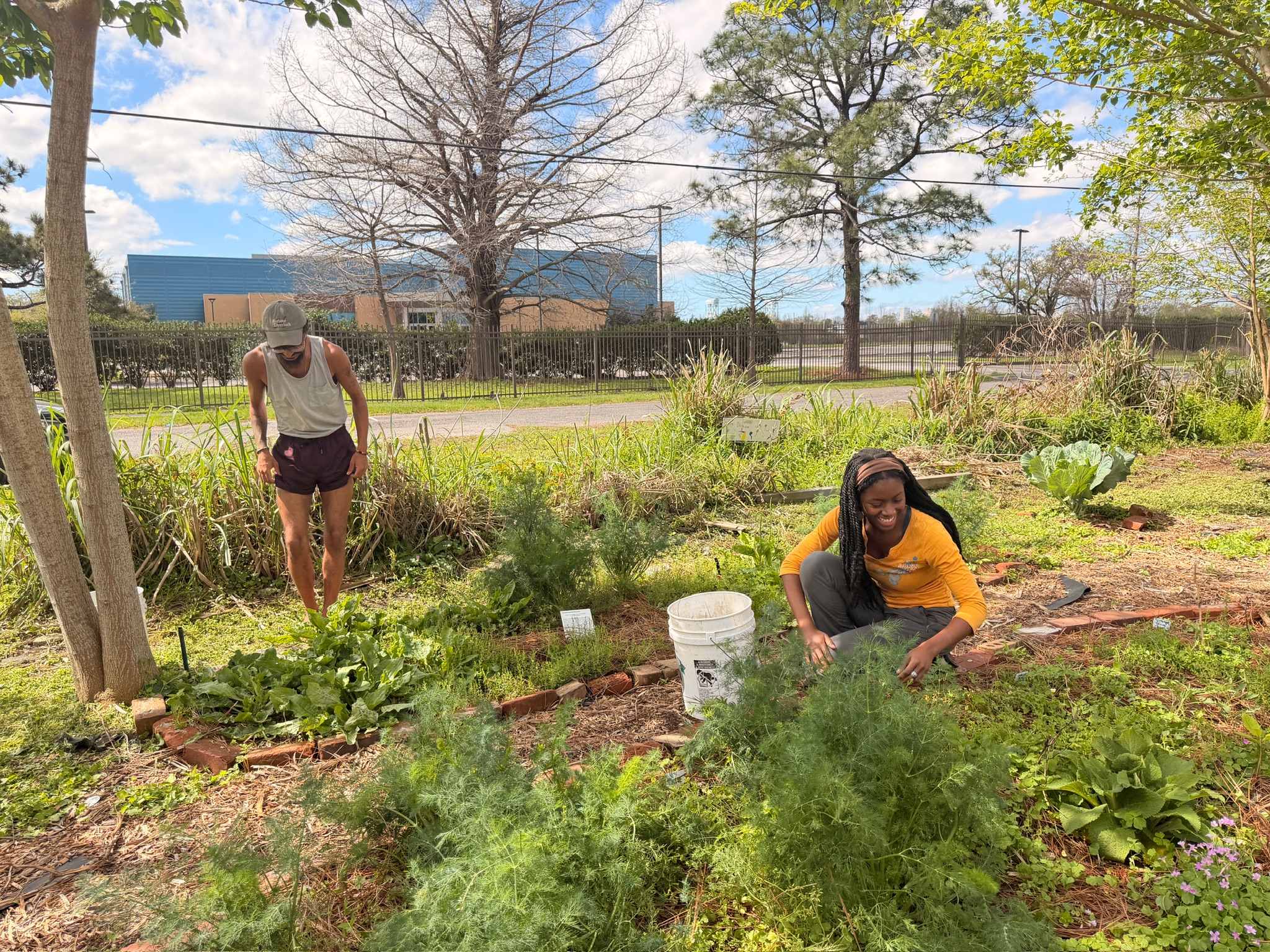
Cha Cha and Kanyinsola volunteering at Solitary Gardens in 2026. Photo Credit: jackie sumell
ABIGAIL: Your work is both a place for people who are new to the conversation and for those most impacted by it. That duality is difficult to achieve.
jackie: This is what Herman did for me; [he] met me where I was. This is the legacy of his patience, tenacity, and commitment to making sure I did not get left behind. That’s all part of the strategy. I know that sometimes I’m alone in the room when I say correctional officers or my racist neighbors are going to have to be part of this, but I do think that’s where the work is. It’s not for everybody, and that’s okay also. Part of the legacy of the work I hope I leave behind is a cultural shift in the way we view formerly incarcerated people—starting to see them as veterans who sacrifice in an egregious, torturous system. And within that, allowing folks who are part of that system to recognize the ways that they’ve been harmed by it.
My relationships [with people inside] changed me deeply. How do we outwardly share that kind of magic, the spell casting, the experience, the proximity, with folks who aren’t choosing the same path? We want every single high school in New Orleans to be like, “Let’s schedule a visit to the Museum for Abolition and Beyond,” and then learn the names of John Thompson, Herman Wallace, Albert Woodfox, Robert King, Mwalimu, Glenn Ford, Calvin Duncan, Gary Tyler, and Norris Henderson. Very few of us know what they sacrificed for others to survive.
ABIGAIL: What makes it different from other abolitionist-forward institutions, and why do we need it?
jackie: Its focus on the history of resistance. There are projects that look at, say, how prisons in Louisiana torture people. It’s critical that people learn this history, and then they need to know what else to do. Part of what we’re trying to do with the museum is to answer the question, “What do we do next?” by presenting strategies that you would have never heard of because they happened inside Angola, and not enough people have been archiving or documenting them.
I think if imagination wasn’t the most powerful tool we have in the fight against fascism, white supremacy, heteropatriarchy, it wouldn’t be the first thing on the chopping blocks of school budgets. All of our humanities are the first thing cut when there’s “not enough money.” This museum will create a space that incubates the imagination, where it’s safe, not only to dream together, but to get it wrong. It’s a space, as Mariame [Kaba] says, to fumble. That’s why it’s necessary. Abolition is not a singular destination. We’re incubating its multitude of practices.
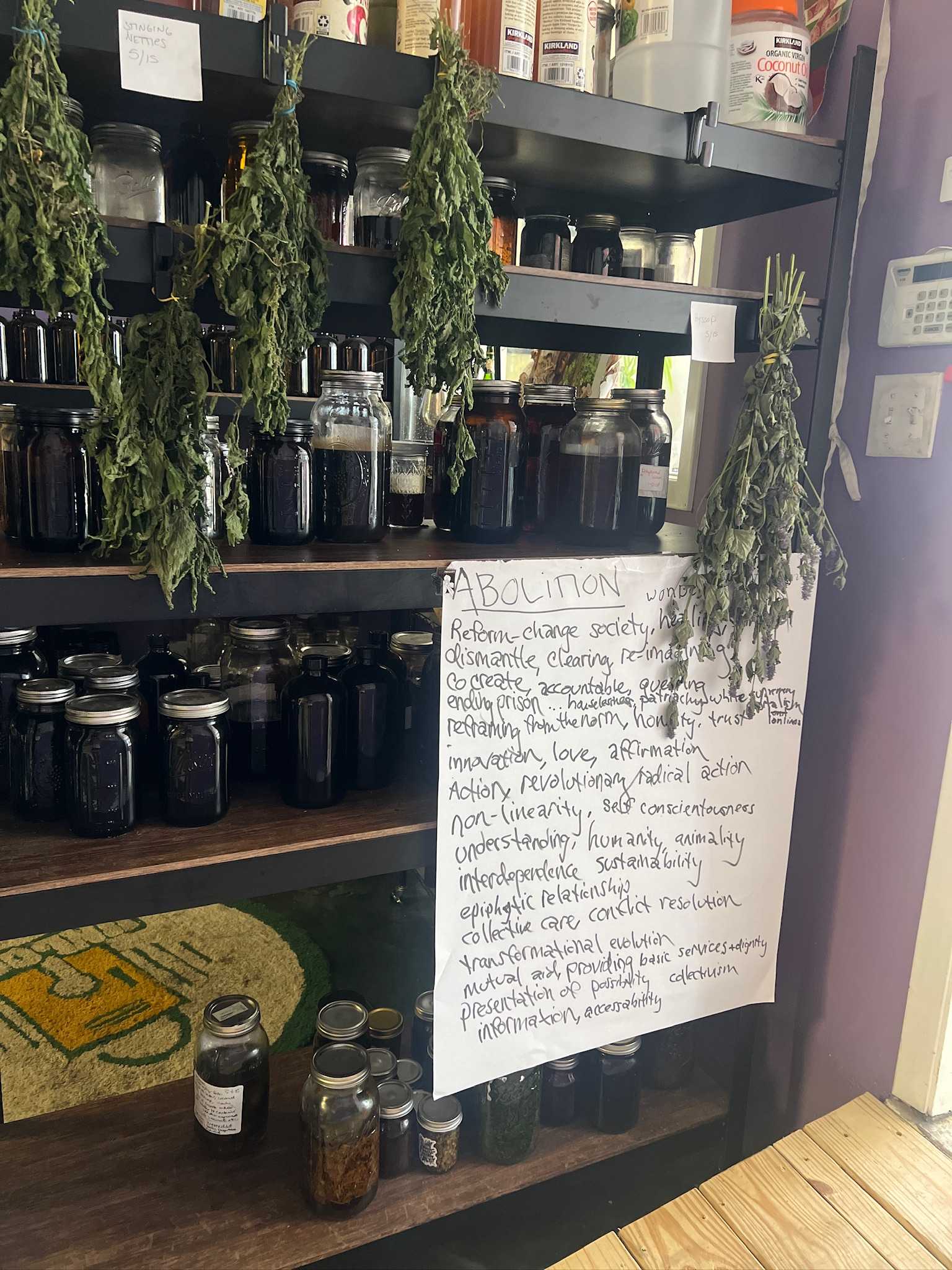
The Abolitionist’s Apothecary Photo Credit: jackie sumell