

On Friday, January 23rd, Wael Tarabishi, a 30-year-old Texas man with Pompe disease, died after his father and primary caregiver, Maher Tarabishi, was detained by Immigration and Customs Enforcement (ICE) in October. Pompe disease is a rare chronic muscular condition that requires breathing support and daily care. After his father Maher Tarabishi was detained, following a routine immigration appointment in October, Wael’s health rapidly declined and led to his death in the hospital this month.
According to the Tarabishi family, Wael died because authorities separated the father and son. “I blame ICE. Maybe they did not kill Wael with a bullet, but they killed him when they took his father away,” said Shahd Arnaout, Maher’s daughter-in-law.
Maher had turned his home into a mini hospital to care for his son and had gone rounds with their insurance company to get Wael’s infusions, so by separating Maher from his son - the one person with the most intimate knowledge of his treatments and medical histories - ICE essentially removed a vital lifeline. “Wael is a U.S. citizen, and he was asking for his dad to be next to him while he’s dying. His country failed him,” Arnaout continued.
Wael’s death is indicative of the ableism implicit not only in ICE violence but also in the Trump administration’s anti-immigration tactics. Just earlier this month, US citizen Aliya Rahman was dragged from her car and detained by ICE while on her way to a medical appointment in Minneapolis. According to Rahman, she was brought to a detention center, denied medical care and lost consciousness. As she was being dragged from her car, she shouted “I’m disabled trying to go to the doctor up there, that’s why I didn’t move.”
People are dying in ICE custody.
While the video showing Rahman being dragged went viral, many other deaths in ICE detention centers - some which may be due to the denial of medical care - are not being investigated or receiving media attention. In 2025, deaths in ICE detention facilities were the highest they have been since the year after ICE was founded. One of these people was Luis Beltran Yanez-Cruz, who had been in the US for more than 20 years when he was arrested and moved to a detention center in November. He died earlier this month of “heart-related health issues” after he was moved to a hospital, but his family said despite being ill for weeks, he was only given pain medication.
After another man - Luis Gustavo Nunez Caceres, died on January 5th after being brought to a hospital for “chronic-heart related health conditions” (he was detained over two months earlier), ICE claims that “comprehensive medical care is provided from the moment individuals arrive and throughout the entirety of their stay” but external journalists and officials have not been able to verify this. ICE facilities are shrouded in secrecy; people are dying in adult detention centers; and more than likely, these are deaths directly caused by ICE.
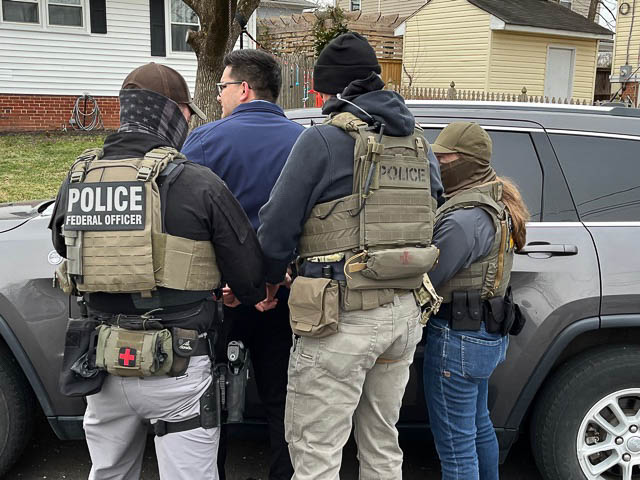
If these deaths are the result of lack of medical care, this is a war crime.
According to the Geneva Conventions (GCIII Art. 13 & 15; GCIV Art. 147), any “unlawful act or omission” by a detaining power that causes someone’s death or risks their health is a war crime. Similarly, the Customary International Humanitarian Law’s Rule 156 classifies failure to provide necessary medical care to persons currently held by the adversary as a war crime. Although international law does not guarantee journalists the right to enter detention facilities without state consent, journalists have a crucial role in monitoring and ensuring that people who are detained are treated humanely, according to international humanitarian law.
This past September, journalists were arguing that despite Freedom of Information Act requests and requests to enter and report on detention centers, they are being “stonewalled.” While media can be legally restricted from non-public areas like detention centers, ICE cannot legally (according to recent federal law and court rulings) deny members of Congress and their staff oversight visits - but this has happened. So whether or not people who are detained are receiving medical care cannot be verified. This itself raises serious concerns for disabled people who are detained. For example, Liam Conejo Ramos, the 5-year-old who was detained outside his home when he arrived home from school, became ill shortly after he arrived at a detention center over a thousand miles from his home.
ICE denying access to medical treatment and safe living conditions is an escalation of the Trump administration’s already ableist anti-immigrant campaign. Secretary of State Marco Rubio is instructing visa officers to consider chronic health conditions as reasoning to deny people visas to the United States. The guidance reeks of the “public charge” rule in the late 19th and 20th centuries when people could be denied entry to the United States on the grounds that they could become a “public charge,” or someone that might use social welfare programs, including healthcare or institutionalization.

Map of all ICE detention centers in California
What can we do to fight back against not just this ableism but also violence and abuse of people in ICE custody?
1. The best thing that you can do is to locate people using the Online Detainee Locator System and track their whereabouts.
As abuses are committed behind closed doors, tracking people in ICE custody is vital to keep people safe and flag potential abuses. Another great option is to submit Freedom of Information Act requests, including health and sanitation audits, detainee complaints, and internal emails or memos discussing living conditions. For more information on how to submit FOIA requests, learn more from the League of United Latin American Citizens here.
2. Donate to the Freedom for Immigrants Commissary Fund or directly to the facility’s commissary, allowing people to access phone calls, food, and toiletries.
People can also help to coordinate legal support and representation for members of their communities that have been detained and total strangers - everyone has a constitutional right to legal representation.
3. Report abuses!
The Department of Homeland Security’s Office for Civil Rights and Civil Liberties (OCRCL) reviews violations of detainee’s rights while in immigration detention or custody. You can then write a letter without providing your name but giving your name makes it easier for OCRCL to conduct an investigation. You should not experience any retaliation for submitting this complaint. If someone does retaliate against you, call 1- 866-644-8369. Complaints can be sent to CRCLCompliance@hq.dhs.gov or reported via phone to 866-644-8360. Learn more about how to submit a complaint here.
To report sexual abuse, physical assault or abuse, medical neglect, or other serious issues within the detention facility, or to inform of serious medical or mental health conditions or disorders, call the ICE ERO Detention and Reporting Line at 888-351-4024.
4. If you hear from someone who has been detained that they are facing abuse, medical neglect, or any other crime, contact the ICE Detention, Removals, and Informational Line at (888) 351-4024.
This is the Department of Homeland Security’s Office of the Inspector General. If you know that a detainee is in need of immediate medical care, call 911.
5. Call your representatives and the US Senate Committee on Homeland Security & Governmental Affairs at (202) 224-4751.
Back in 2022, the Permanent Subcommittee on Investigations held a panel on the medical mistreatment of women in ICE detention, so there is precedence. Contact the Permanent Subcommittee on Investigations and voice your concerns and demand an investigation.
6. Donate to organizations like Freedom for Immigrants, a non-governmental, independent oversight organization monitoring the immigration detention facilities.
This organization has been critical in documenting not just medical neglect but also sexual assault, hate crimes, torture and deportation. You can support this organization not just by donating your money but also your time by operating the National Immigration Detention Hotline.
7. One of the most important ways to help is to volunteer on the Detention Hotline, answering calls directly from people currently detained in ICE custody who are reporting abuse and neglect. Find out how you can volunteer and apply here.
8. Volunteer to be a Community Accompaniment Volunteer, offering vital post-release community care to immigrants who have been released from ICE custody.
This can look like providing or helping to coordinate food, shelter, healthcare, transportation, legal representation, communication, and social support. You can find your local group in the Accompaniment Network here.

Rally Outside Feinstein’s SF Office Over ICE Detention Center Conditions