
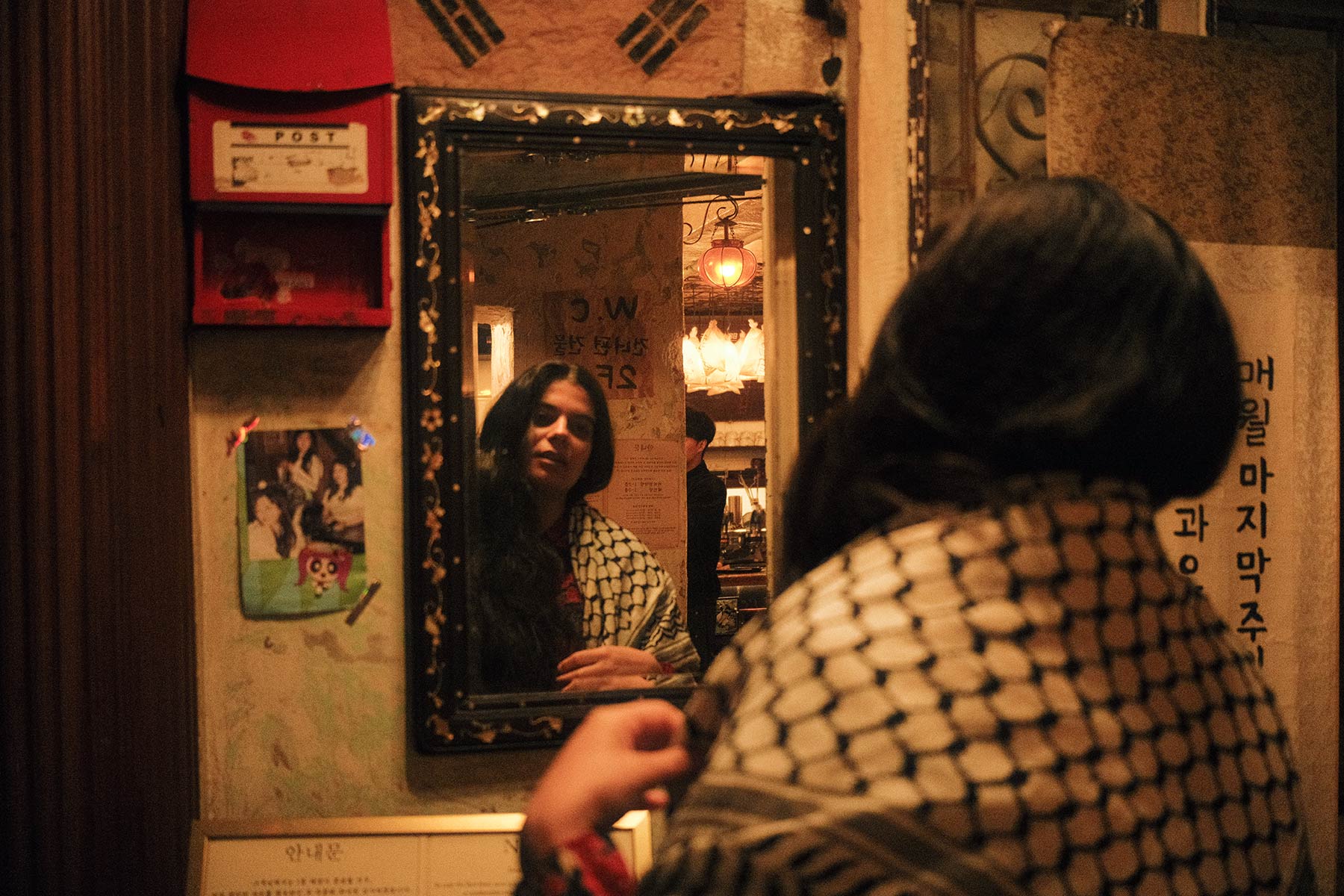
Korea is not a country known for its multiculturalism. But the Palestinian movement is rewriting what solidarity looks like here.
Most Koreans didn’t know much about Palestine when Nareman moved from Bethlehem to Seoul in August 2023.
“Oh, you’re from Pakistan?” Koreans used to ask, brows furrowed. It was not a question designed to offend, but instead reflected a deeper reality: South Korea’s distance from the Middle East, geographically, politically, and imaginatively.
“No, from Palestine,” She would repeatedly correct. It wasn’t long before she grew resigned to the fact that her homeland barely existed in Korean public consciousness.
Then came October 7. And suddenly, everyone had an opinion.
Overnight, the anonymity that had once alienated her – but also shielded her – evaporated. Now, her homeland was thrust into the spotlight, but she felt more misrepresented than ever. Instead of “Pakistan,” the new response she heard was, often tinged with fear or distrust: “Hamas.”
Like much global media coverage since October 7, Korean news substituted “Palestinian” with “Hamas,” collapsing a people into a faction. An early survey in November 2023 showed that the Korean public was more than twice as likely to blame ‘Hamas’ for the war.
Alone in a foreign country, disconnected from other Palestinians, she felt alone and terrified.
Now, she hesitated before answering the question, Where are you from? One day, out of panic, she answered, “Egypt!”
But just a week later, something shifted. She found herself standing at one of Seoul’s first pro-Palestinian solidarity marches after October 7. There, in the streets, she saw other Palestinians and Arabs – students, workers, families – many meeting one another for the first time. She felt something she hadn’t felt since leaving Bethlehem: she wasn’t alone.
That protest would become the seed of a movement.
A Country Not Known for Multiculturalism
South Korea is one of the most ethnically homogenous societies in the world. Koreans routinely call their country danil minjok – one people, one ethnicity. While that identity has shifted in recent years, the myth still shapes social attitudes, particularly toward Muslims, Arabs, refugees, and migrants.
Public discourse is dominated by anxieties about multiculturalism, demographic decline, and cultural purity. Islamophobia remains widespread, reinforced by sensationalist news coverage and limited exposure to Muslim or Arab communities.
Before October 7, Palestine was barely part of Korean political vocabulary. As activist Irang Bak recalled, previous “one-off” mobilizations were often symbolic gestures, often organized by Koreans, in which Palestinians were invited only briefly to speak.
The events of 2023 changed that.
The birth of a coalition
What began as a handful of scattered activists – Korean leftists, Egyptian refugees, a few Palestinian students – grew into what is now called the People in Solidarity with Palestine, a coalition of over forty-five organizations.
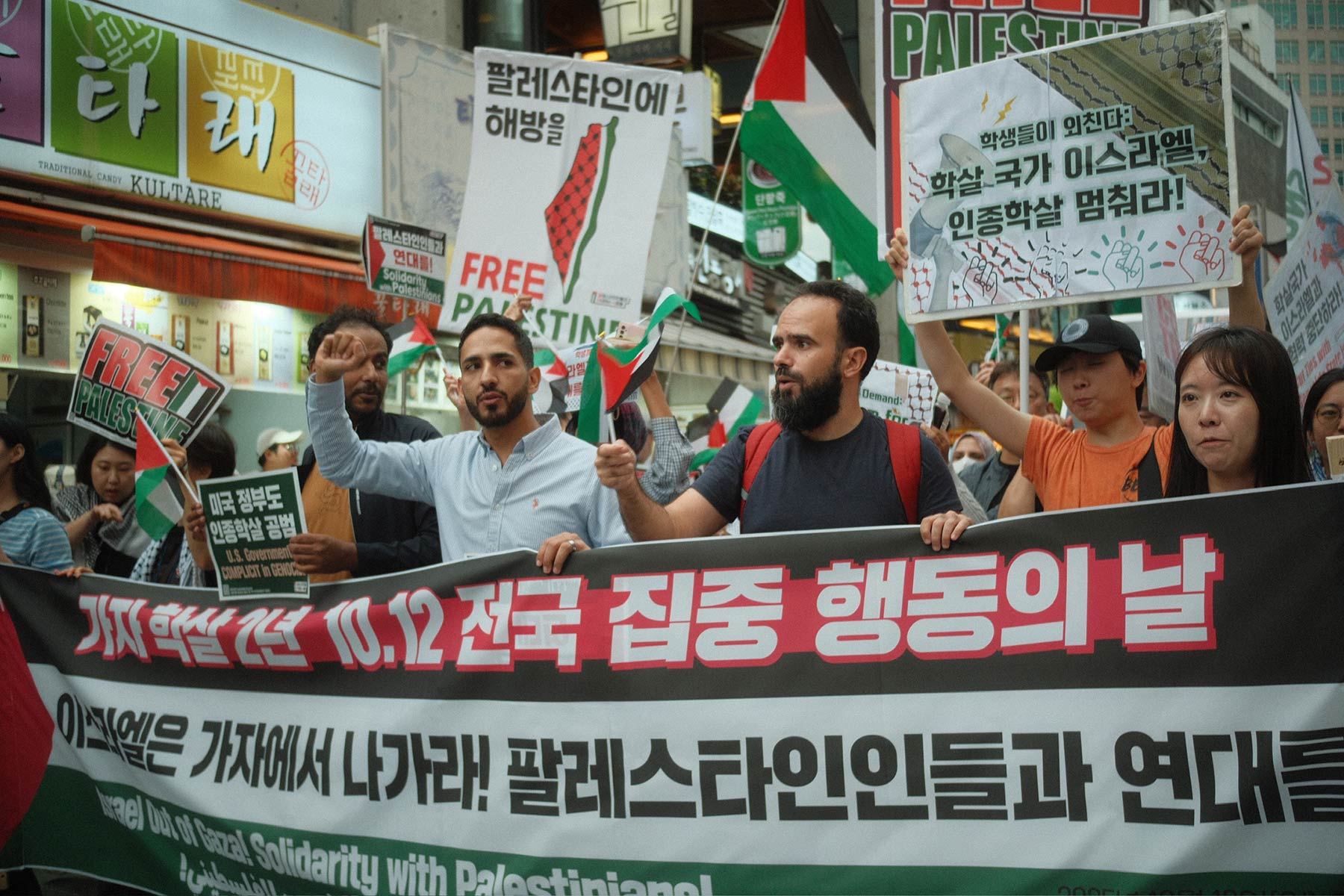
In the earliest days after October 7, two communities were already mobilizing: the Egyptian community in Seoul, many of whom had fled persecution under the Sisi regime, and Korean activists long rooted in anti-imperialist and labor struggles, especially members of the Workers Solidarity Movement (WSM).
Irang Bak, a member of WSM and one of the coalition’s core organizers, said that previous campaigning created the common ground to come together. “We had already organised with the Egyptian community before around refugee and migrant rights – so when October 7 happened, we called them and they called us.”
On October 11, just four days after the attack, they held their first march, a modest but defiant gathering on a tense political landscape. Korean media accused them of “supporting Hamas,” an accusation that revealed the public discourse in the country.
But something happened that day that changed the direction of the movement entirely.
During that march, a small group of Palestinian students approached the organizers.
“We want to organize the next protest together,” they said. And so, Palestinians joined the coalition alongside the Egyptian and Korean activists.
This shift, from having Palestinians as symbolic presences to having them as co-organizers, became foundational.
Irang remembers that moment clearly. “Before, Koreans organized and Palestinians came as guests to speak. But now it was a movement we were building together. We were learning in real time.”
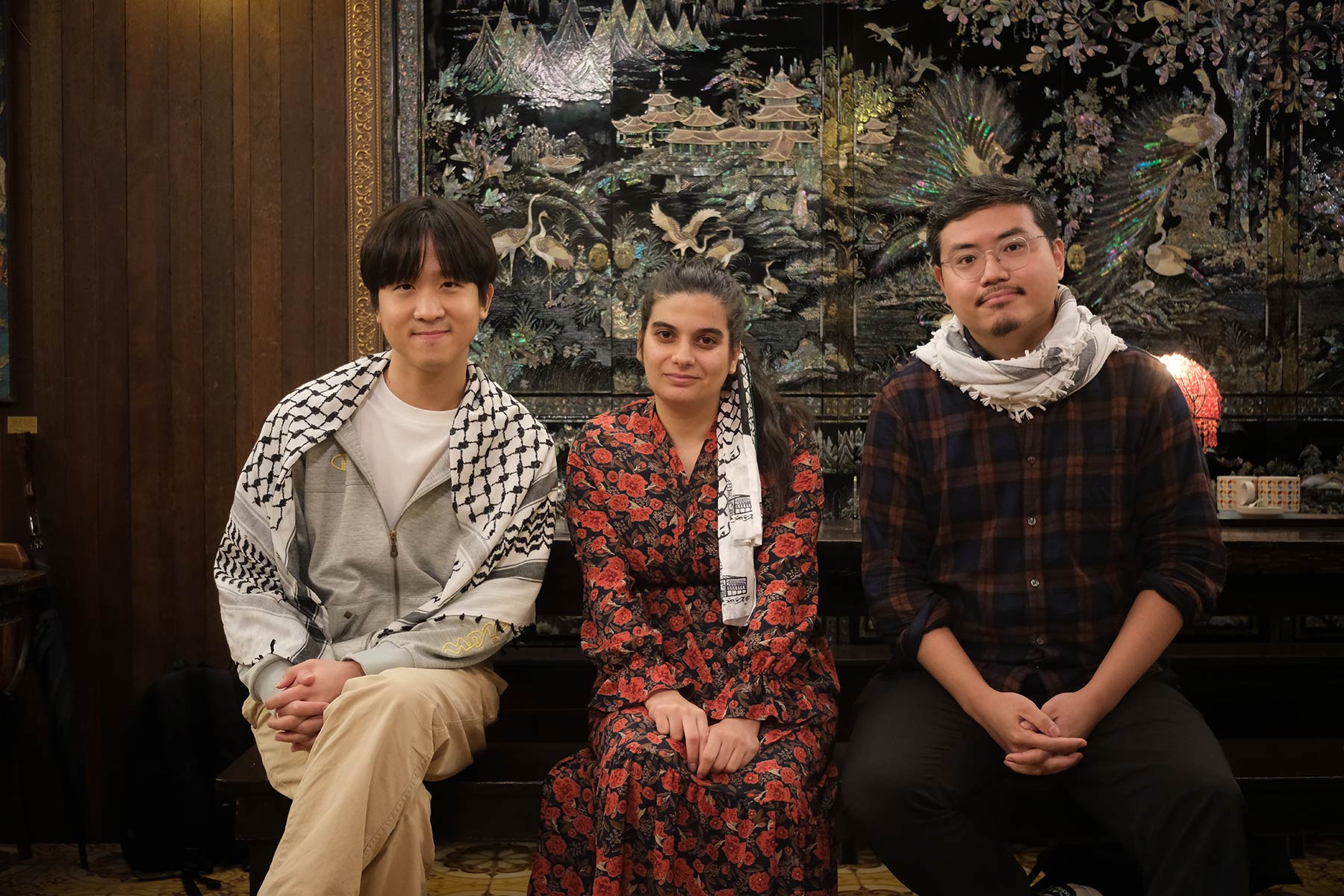
Left to right: Sihun Lee, co-founder of Subak Student Group at Seoul National University, Nareman Samir, Palestinian organizer, and Irang Bak, Korean organizer.
Centering Palestinian Voices
Centering Palestinians became a core part of what set the coalition apart.
Sihun, another key organizer of People in Solidarity with Palestine and co-founder of the Subak (Watermelon) Student Group at Seoul National University, explained it this way:
“Having Palestinians as agents, not guests, changed everything. We support Palestinian resistance because resisting colonization is a universal right.”
In a society that often valorizes Korean perspectives above all else, this approach was radical. Many organizations, Sihun noted, feel pressure to frame issues in “Korean terms” to attract media coverage or political attention. But the coalition rejected that.
“We try to avoid making Korea the center,” he said. “This movement is not about us.”
For Palestinian members like Nareman, this was transformative. “People in Solidarity with Palestine trusted our voices, and supported our narrative – which has historically been overlooked. That’s why I’m still with them,” she told me.
Within a month of attending her first protest, she was invited to become a representative. In the process, she met other Palestinians. “It became a community for us,” she said. “A place to find other Palestinians, to organize, to breathe.”
This may seem small, but for a diaspora as dispersed and fragmented as Palestine’s – especially in a country with a tiny Palestinian population – it meant everything. The movement created an infrastructure of belonging.
A Different Kind of Solidarity
In the time since October 7, People in Solidarity with Palestine organized teach-ins, marches, vigils, art builds, public discussions, film screenings, and student actions across Seoul. At first, the crowds were small but they were consistent, and the crowds began to grow and relationships started to deepen.
Today, they have organised over 110+ marches in Seoul, nearly every single week since October 7, helping raise visibility on Palestinian issues. Now, they are one of several different coalitions and organising blocks in the wider Korean Palestinian movement, such as Urgent Action by Korean Civil Society in Solidarity with Palestine and BDS Korea.
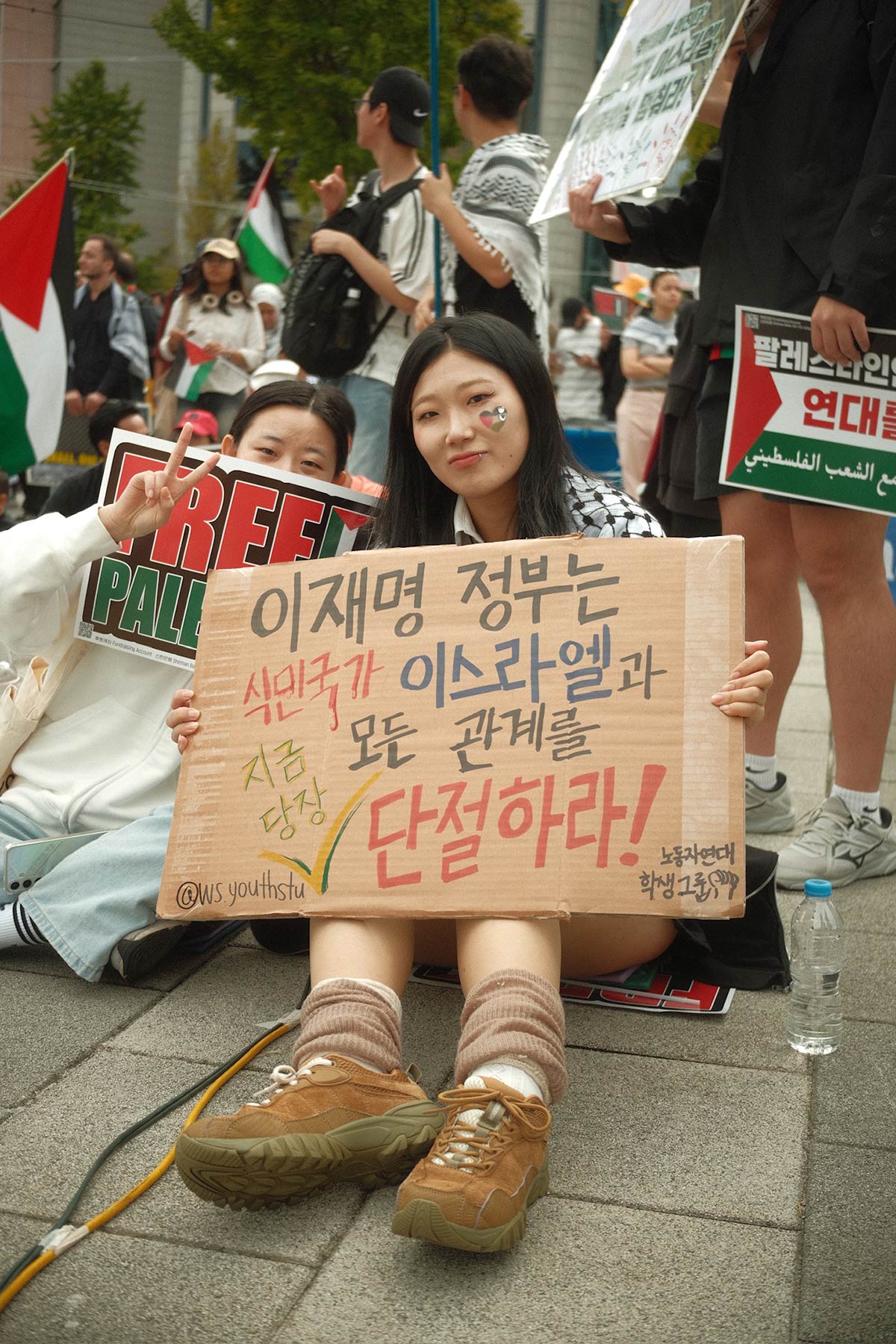
Activism was also being revived on university campuses. At the second protest, Sihun met a fellow student at Seoul National University, a third generation Palestinian. “Let’s start a club,” she said. And so they did, naming it Subak, which is Korean for watermelon.
By spring 2024, the ripple effects of U.S. campus encampments were spreading globally. When students at Columbia University erected tents demanding divestment, Korean students watched closely. Sihun and his co-organizers decided: If they can do it, so can we.
At Seoul National University, South Korea’s most prestigious campus, they launched a solidarity encampment that lasted six weeks. It was the first of its kind in the country.
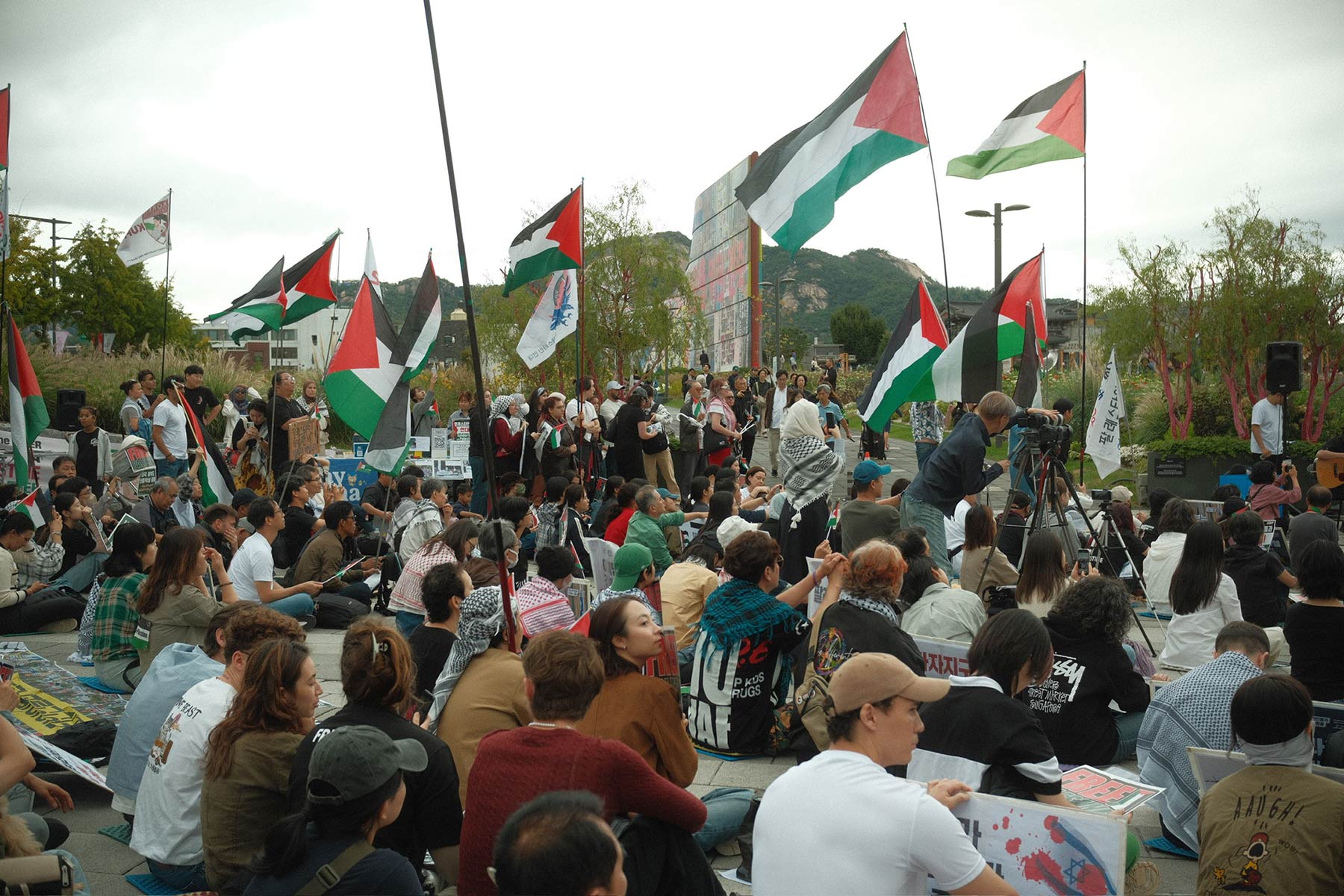
“At first it was mostly international students,” Sihun said.
“But then more Koreans began joining too.”
Tents multiplied. Discussions grew deeper. Faculty began stopping by. Students who had never attended a protest found themselves sleeping on the ground for Gaza. Soon, other universities also started following suit – with encampments popping up in other top tier institutions Korea University and Yonsei University.
What emerged was not just solidarity with Palestinians, but a reawakening of Korean student activism itself, something many organizers hadn’t seen since before COVID times.
Whether in the campuses or on the streets of Seoul, for many Koreans, it was the first time they had encountered Palestinians not as headlines on the news, but as classmates, neighbors, and fellow organizers.
For many Palestinians, it was the first time they felt seen without having to justify their existence, or explain their grief, or sanitize their political demands.
The People in Solidarity with Palestine coalition’s intentionally Palestinian-centered approach became a quiet form of political education. Koreans learned to follow rather than lead.
A Cultural Shift in Public Opinion
Even as the Korean government maintained close military ties with Israel, public sentiment has shifted dramatically. A 2024 survey showed a steep decline in Korean favorability toward Israel, moving from slightly negative to overwhelmingly negative – a bigger drop than in many wealthy countries.
This wasn’t only due to global media coverage. It was also the product of grassroots education. Korean organizers translated Palestinian testimonies into Korean. They held weekly street marches. They brought Palestinian speakers into classrooms and union halls.
For the first time, Palestine became part of Korean political consciousness.
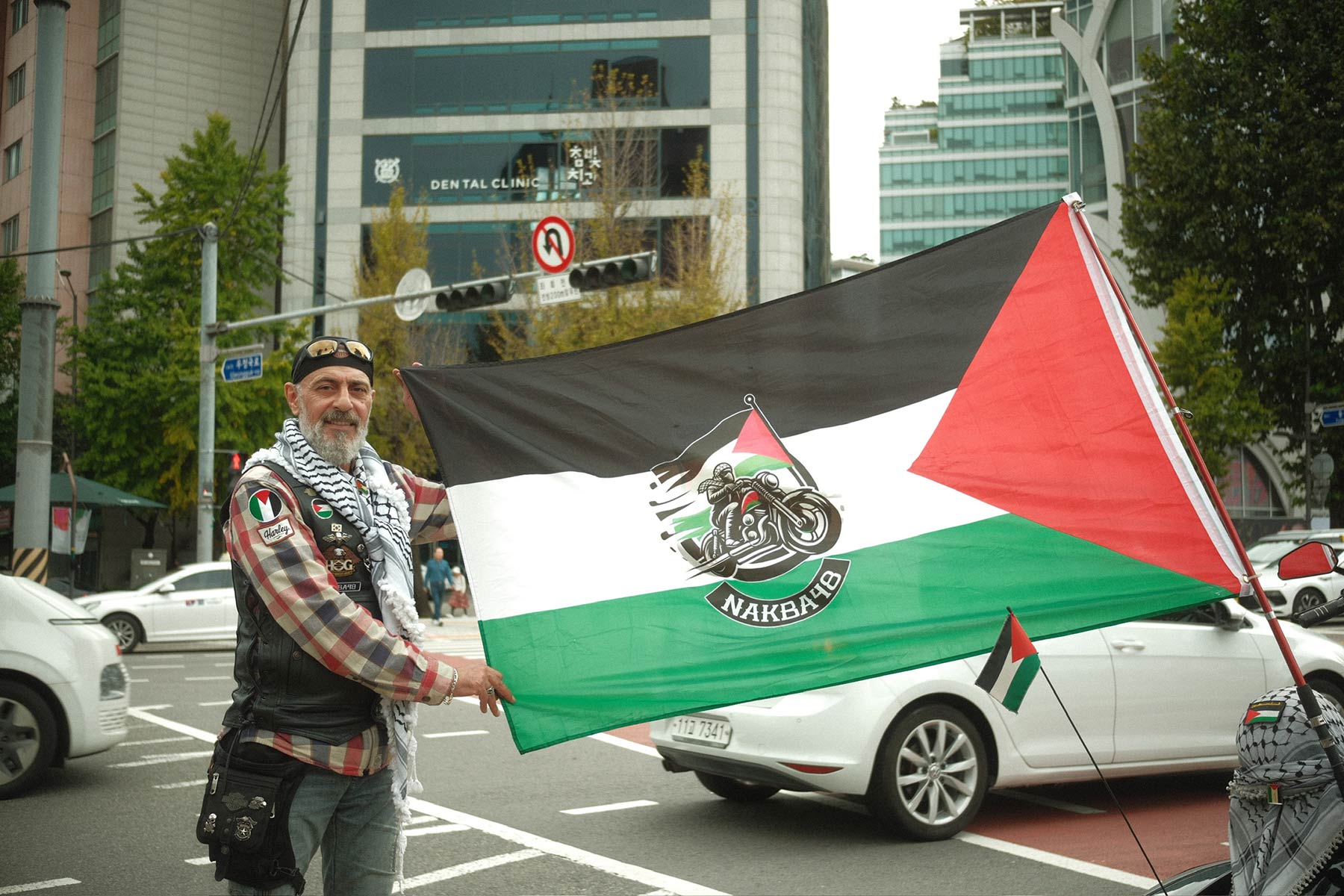
But what’s happening in Seoul is not just about Palestine. It’s about the possibility of building movements that are transnational, multilingual, multiethnic, and deeply collaborative even in a society that is not known for multiculturalism.
And it’s about recognizing that communities living far from each other can still shape each other’s survival.
Coalitions like People in Solidarity with Palestine are far from mainstream. But its impact, and its approach, offers a model for what solidarity can look like in countries where diaspora communities are small, where misinformation is widespread, and where geopolitical narratives feel distant.
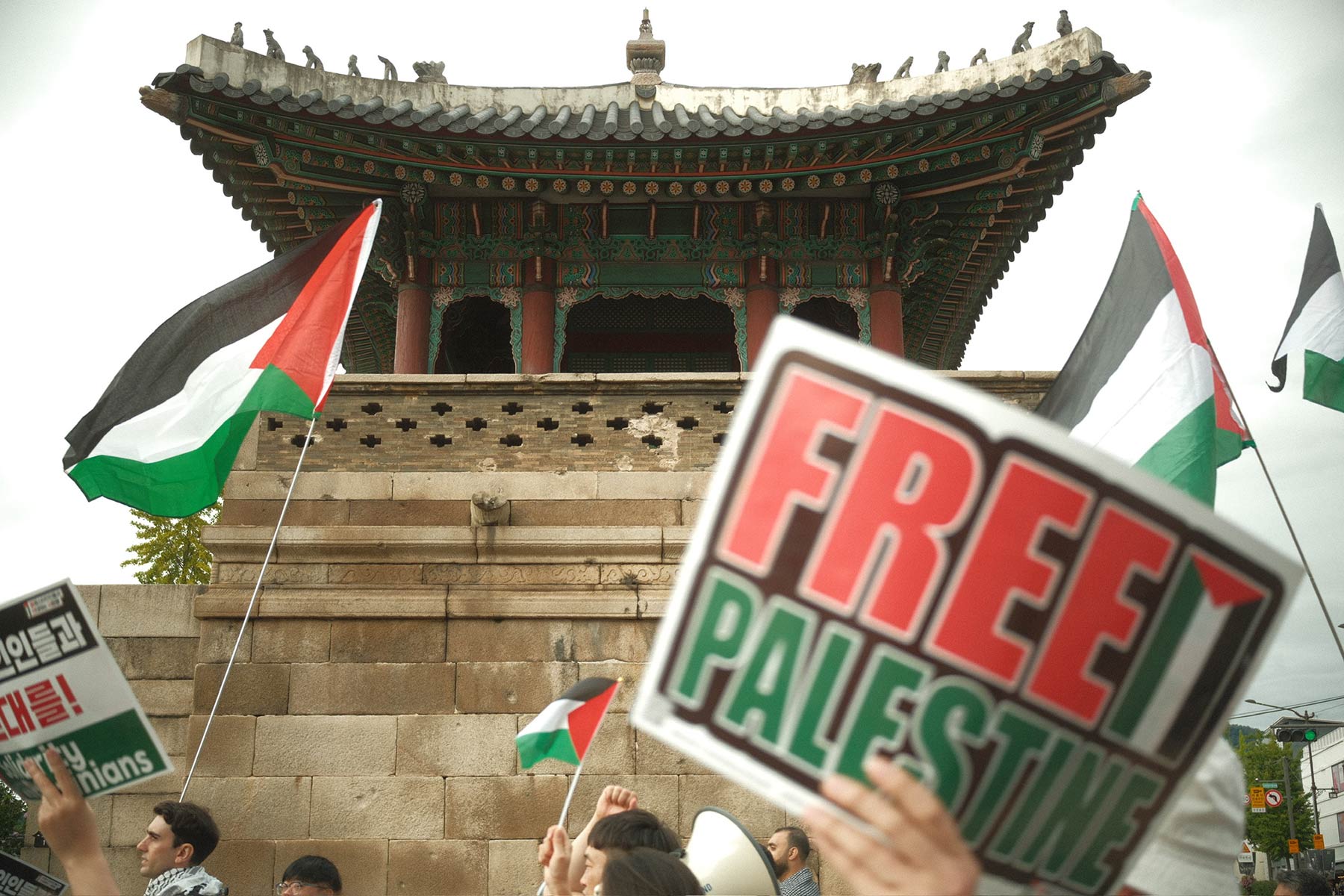
A year after arriving in Seoul, Nareman can answer the question “Where are you from?” without hesitation. She now says “Palestine” with the confidence of someone who knows she has a community behind her.
She is one of the coalition’s most active organizers, helping shape actions, messaging, and marches. The movement has not erased her grief, nothing could, but it has given her belonging.
“We need Palestinian voices,” she told me. “And here, we’re leading the movement.”
That is the quiet revolution unfolding in Seoul.
In a city thousands of miles from Gaza, activists are building a new politics of solidarity, one rooted in trust, relationship, and collective liberation. One where Koreans, Egyptians, and Palestinians fight not just for each other, but with each other.
And in that world, Palestine is not far away at all.