

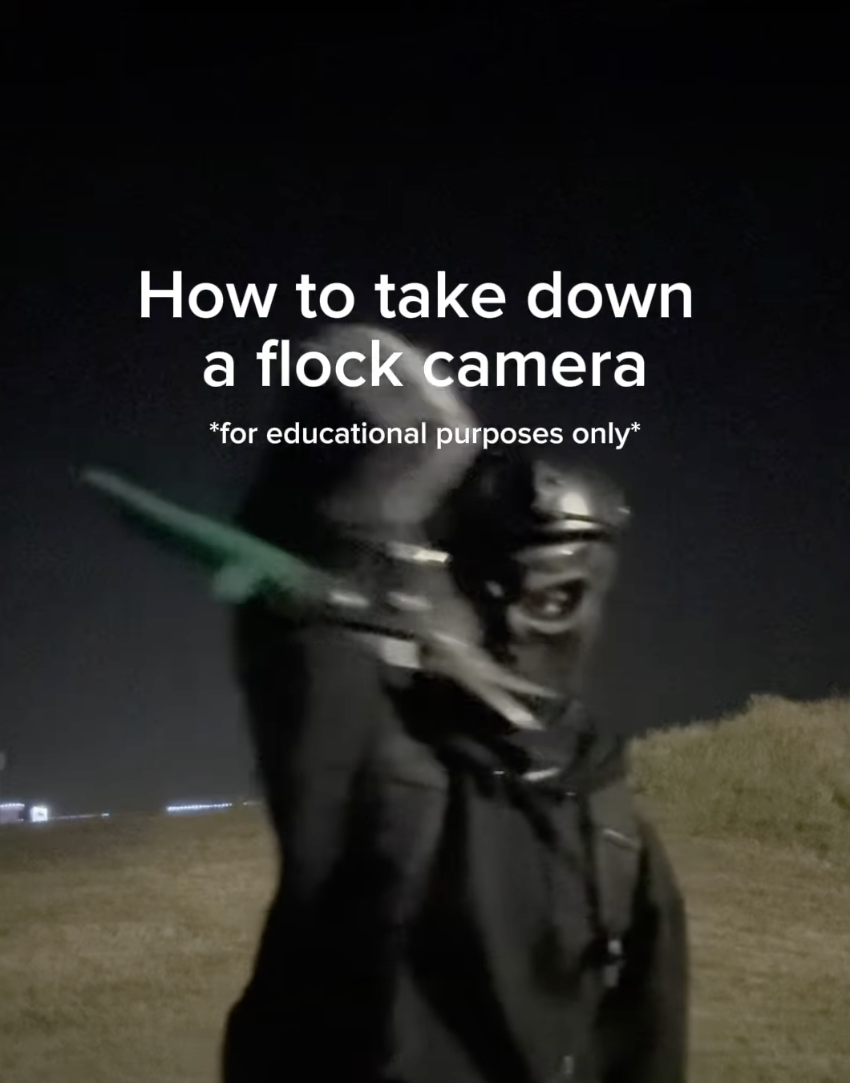
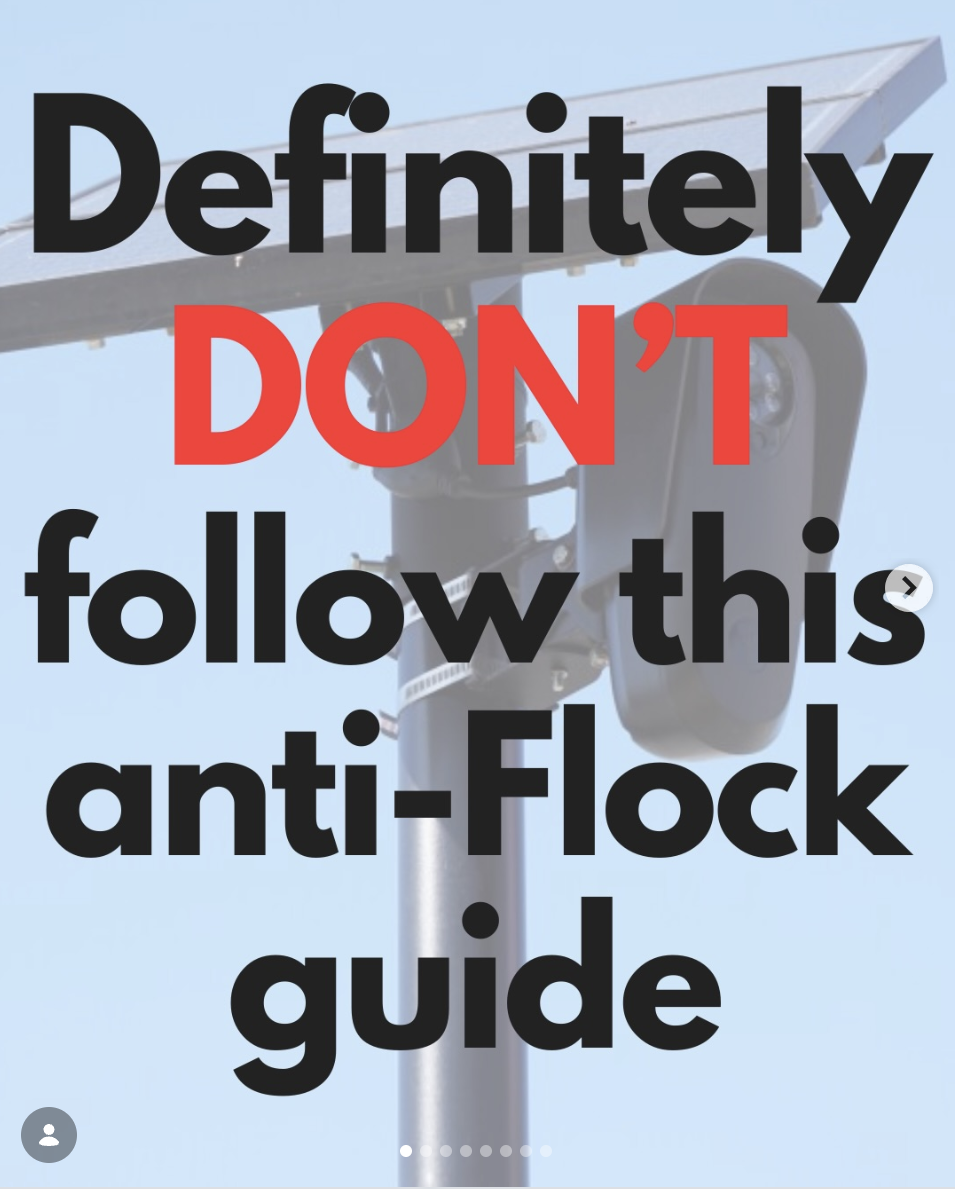
This month, the Internet has been abuzz with calls to “De-Flock America” on Halloween. People are being encouraged to wear costumes that cover their face, leave their debit and credit cards at home, and destroy or at least decommission Flock cameras and automated license plate readers created by Flock Safety in their neighborhood. These roadside cameras capture more than just license plates, but vital vehicle details as well, including vehicle make, model, color, and unique identification features like stickers and dents. These are then uploaded to a searchable cloud database for use by law enforcement, businesses, and housing associations.
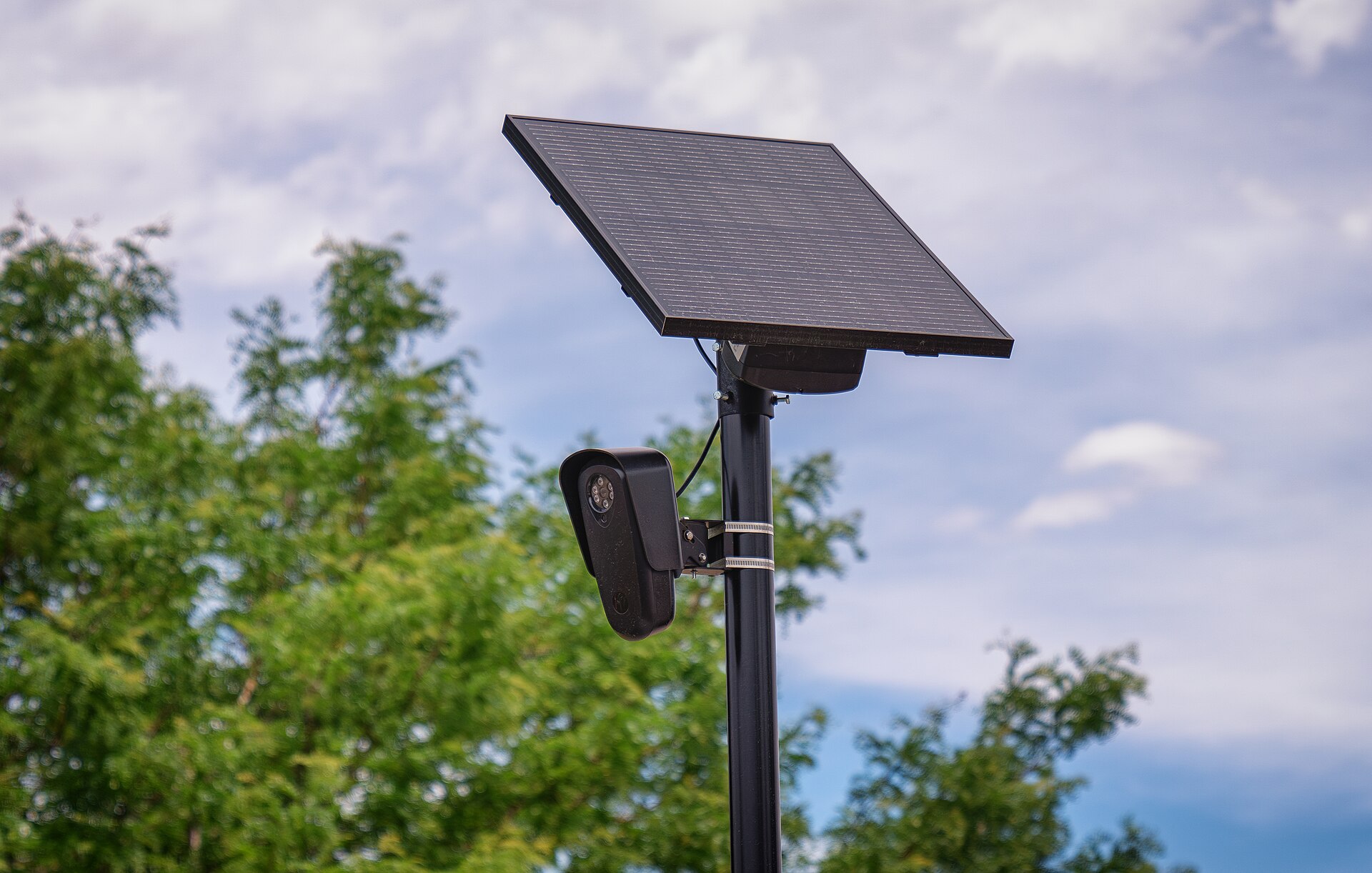
In the past year, civil liberties groups are flagging that this is creating searchable logs of civilian’s travel patterns without judge-signed warrants. This information has been used not just for monitoring traffic infractions but also to stalk and deport people. ICE has been given access to some of Flock’s data through collaborations with local and state police departments. As a result, members of the public have already begun destroying these cameras, either by spraying foam sealant on the lens, painting over the lens, ramming them with trucks, physically tearing them down, cutting them down, or just obstructing their view.
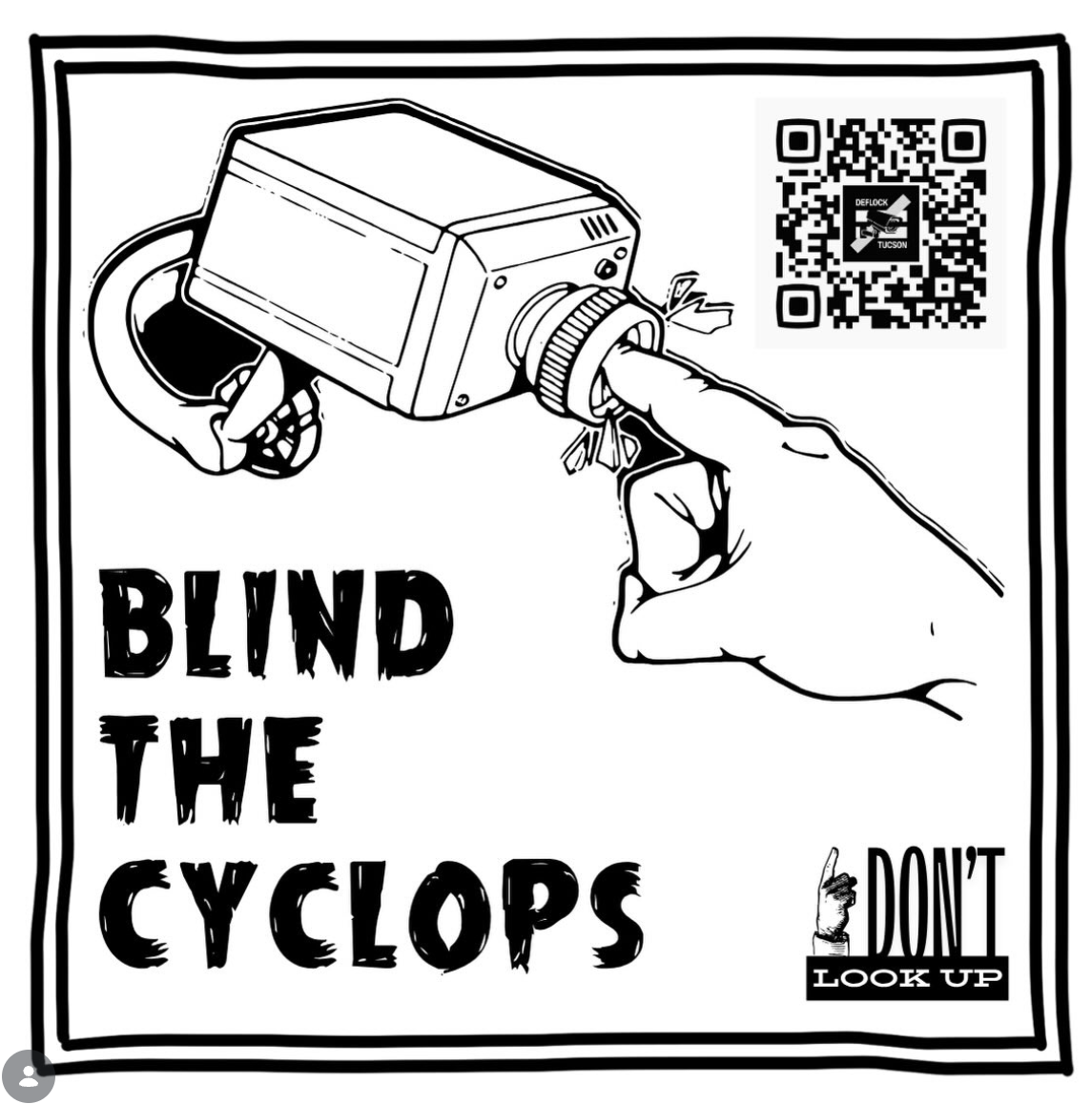
Courtesy of @desertrisingtucson and @deflocktucson
Armed with increasingly creative ways to disarm Flock cameras, resistance groups are calling on civilians to enact their own justice this upcoming Halloween - which offers the perfect cover for anonymity. Looking back to the folkloric history of Halloween, this movement is grounded in the age-old traditions and ethics of the holiday.
Most people trace Halloween’s roots back to the Celtic festival of Samhain - which is still celebrated today by pagan, Wiccan, and nature-based faithful. Although the festival of Samhain has its roots in Ireland and Scotland, many cultures have harvest festivals that honor the changing of the seasons and ancestors - from Chuseok in Korea to Green Corn ceremonies in North America and Day of the Dead in Central America. When celebrating ancestors, many of these communities recognize this time when the veil, or the mythic boundary between the land of the living and the dead, is said to be the most permeable.
Different communities have different names for this divide (if one exists at all), including All Hallow’ Eve, the first day of a three-start observance in the Christian tradition called Allhallowtide, which includes All Hallows’ Day (or All Saints’ Day) and All Souls’ Day.
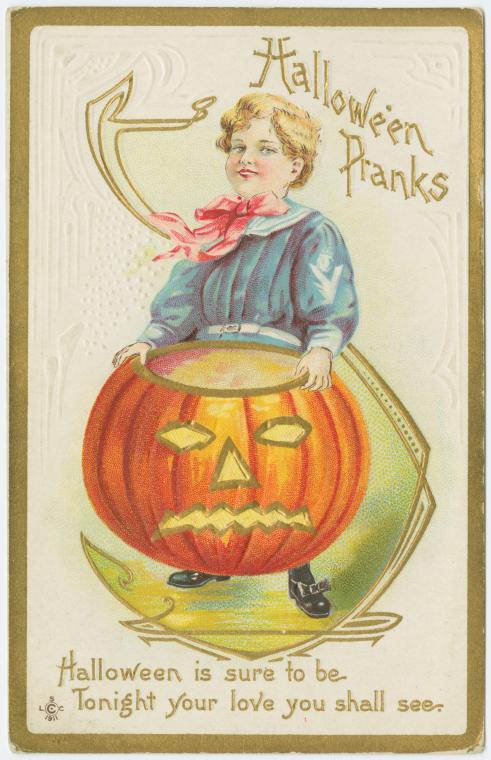
During the Middle Ages, people dressed up as saints (common today among traditionalist Catholic communities) and performed the Danse Macabre in local religious pageants dressing, as corpses as part of memento mori, or remembering and reckoning with our unifying mortality. Some people would wear disguises while souling, when people living in poverty went door-to-door asking for food or “soul cakes” in exchange for songs or praying for the honored ancestors of the people who lived there. While folk beliefs about hiding from wandering spirits remained common, they were largely folded in Christian traditions through the act of syncretism, or the fusion of different religious traditions, as part of religious colonialism.
For people based in Pennsylvania or with ancestry in Europe, Medieval Allhallowtide traditions appear largely connected to another tradition - mummering - where people don heavy disguises and visit neighboring houses in the period between Christmas and the start of Lent. Most people in the United States are familiar with the Mummer’s Day Parade (with its own complicated and problematic history) held on New Year’s Day in Philadelphia or Mardi Gras, also known as Fat Tuesday, when krewes, or small social groups or clubs, put on parades, masked balls, and other festive celebrations. As part of these traditions, people dressed as mummers participate in the larger global tradition of Carnival, when a “topsy-turvy world” takes over.
According to tradition, Carnival was a time when social rules and stations were flipped upside down, when people could mock and challenge authority, indulge and celebrate and reverse social, political, and even religious hierarchies. Throughout history, people have commonly cross-dressed at carnivals and festive masquerades, providing a brief sense and space of safety for trans, intersex, and gender expansive people to express who they were without fears of arrest or prosecution of what was considered a crime. Back in ancient Rome, the celebration of Saturnalia invited enslaved people to dress up as the people they worked for, an exercise of abolition and open defiance in honor of the festivities.
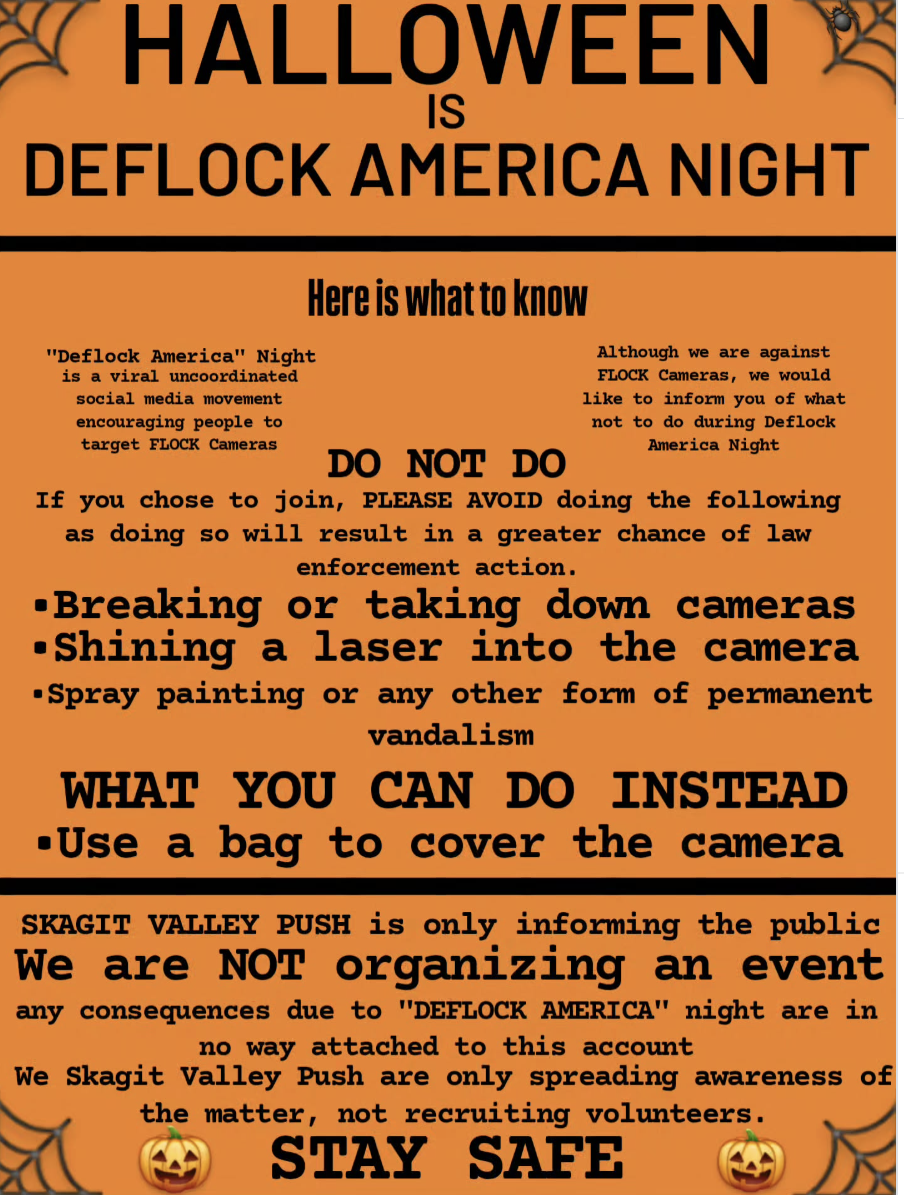
Courtesy of @skagit_valley_push
As we approach Halloween, the call to “De-Flock America” is strikingly in line with the rich history of Samhaim, Allhallowtide, and Carnival. Traditionally during Samhain, people disguise themselves with animal skins, furs, and masks to confuse wandering spirits. The goal was to convince roaming spirits that they were part of their groups so that they would not be abducted or attacked. Amid the collection and misuse of personal data, both for the disappearance and deportation of people, as well as the arrest and prosecution of people on the grounds of healthcare data, the strategy of wearing costumes to avoid detection and violence through disguise, is strikingly similar to the modern call to fight mass surveillance.
During a time of facial recognition, Halloween invites people not just to cover their faces when it’s often illegal to do so any other time of year, but also to openly challenge systems and people in places of authority. Halloween disguises, and acts of resistance feel more appropriate than ever - as do efforts to anonymously resist systems of oppression and authoritarianism.
Courtesy of @nomark.project
Remembering and mourning the people who have died because of ICE violence, at least partially because of the surveillance systems like the Flock cameras, is also in line with the tradition of the holiday. As communities believe that ancestors return to the land of the living to connect with their loved ones, we are reminded of the lives that are lost to violence aided and abetted by mass surveillance systems like Flock cameras.
So the call to “De-Flock America” for Halloween is actually part of a much older tradition of causing havoc and enacting justice and a spectacular example of how remembering and recalling folk customs and histories can be one of the best ways to fight back.
Courtesy of @i_hate_bangor @collective_liberation_club @blackcatmaine