
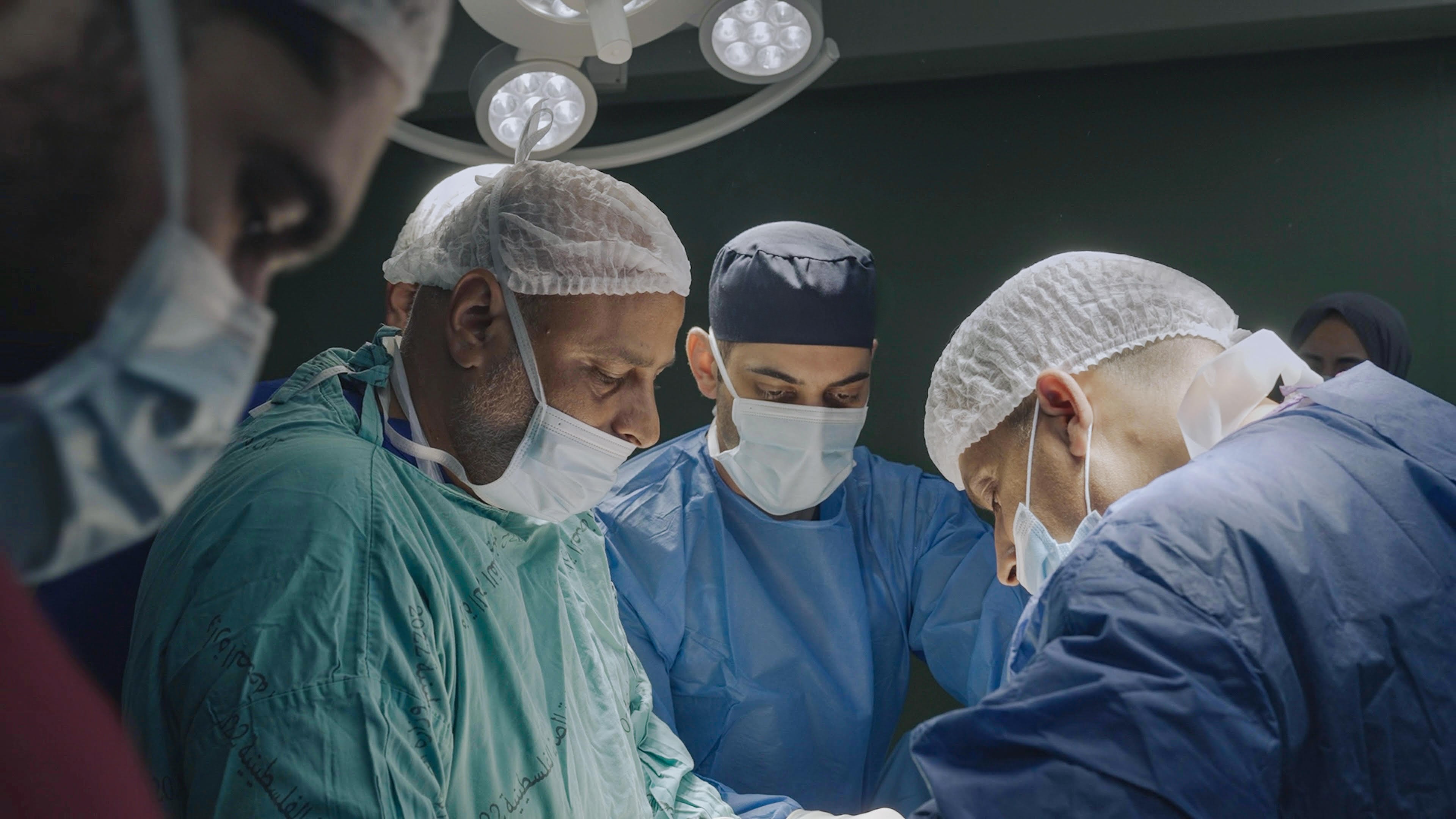
Poh Si Teng’s American Doctor, which premiered at Sundance in January, is 93 minutes of vérité filmmaking about three physicians who volunteer at a besieged hospital in Gaza. It is also a film about determination, of materialist courage—to heal, to do no harm—persisting under the relentlessness of genocide and occupation.
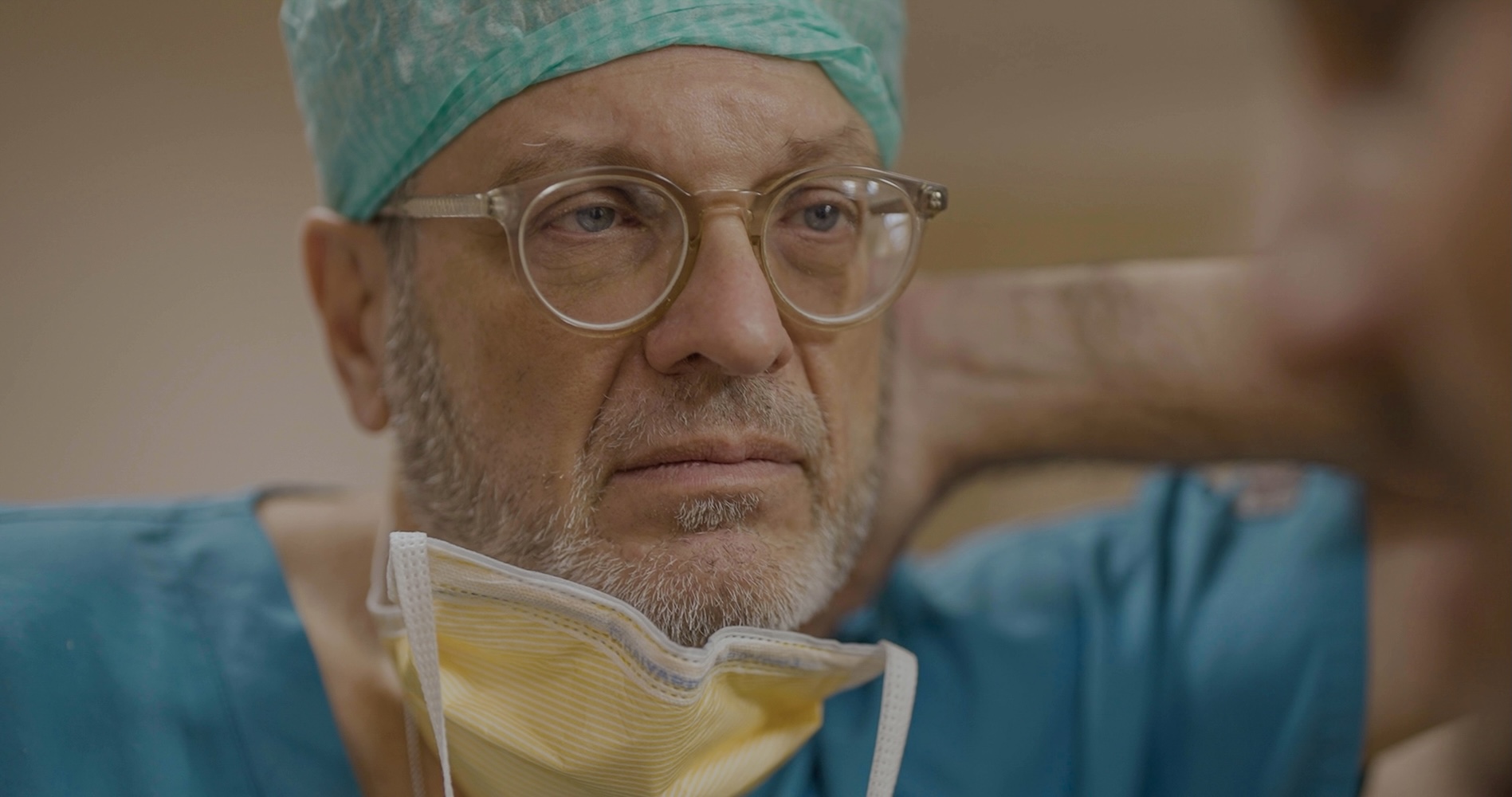
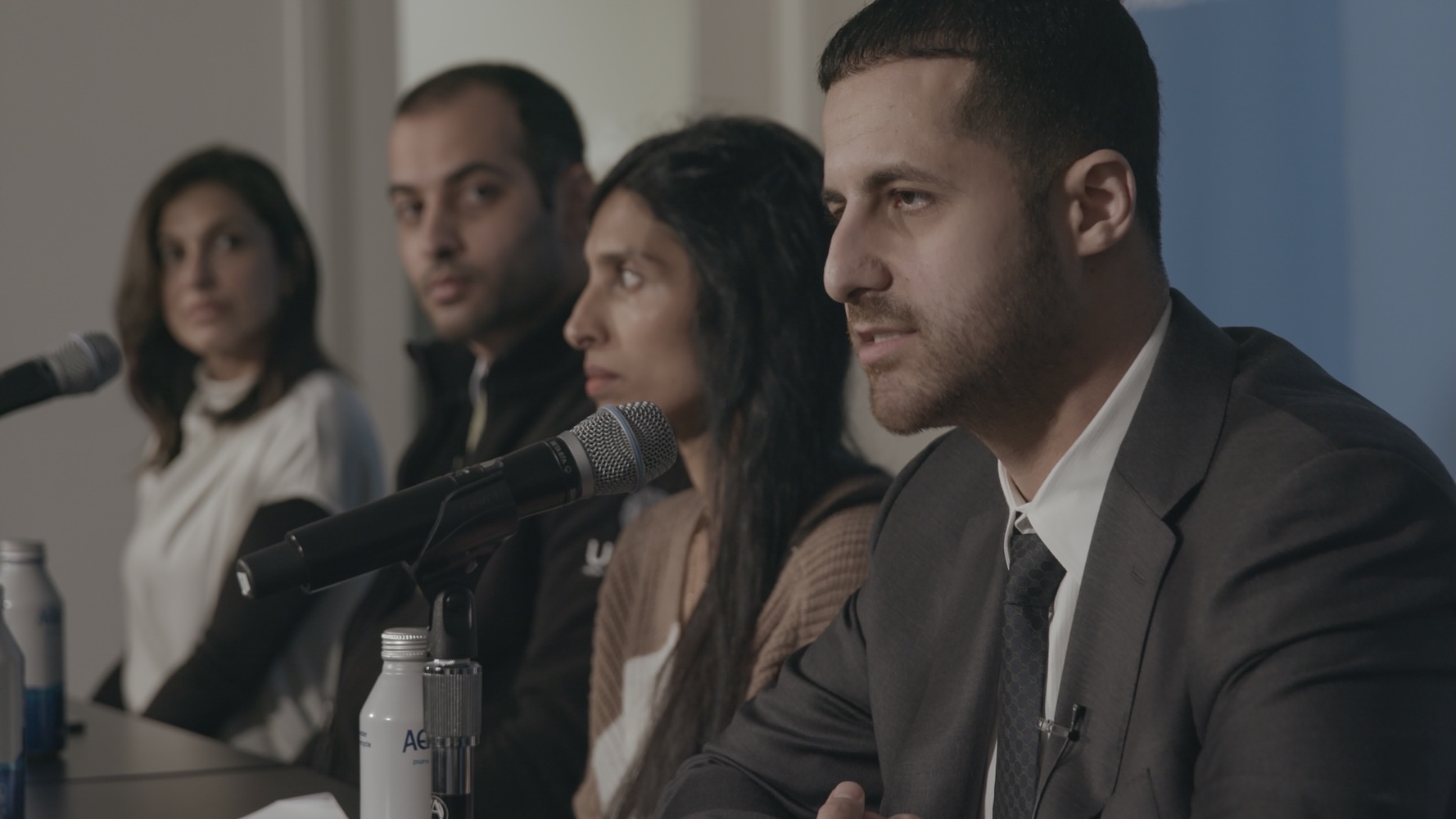
The titular American doctors are Dr. Mark Perlmutter, a Jewish orthopedic surgeon from North Carolina whose father cared for Holocaust survivors in liberated concentration camps, smuggles medical supplies into Gaza in his personal luggage. Dr. Feroze Sidhwa, a trauma surgeon of from California, Zoroastrian, of Parsi heritage, takes video calls from journalists between operations while bombs explode in the not-distant horizon. Dr. Thaer Ahmad, a Palestinian American emergency physician from Chicago, first entered Gaza in 2009, becoming, as he puts it, the first in his family to return. He is undaunted by the chill on freedom of speech in the United States, leading rallies, going to Capitol Hill, and providing testimony at the United Nations, all while American hospitals were disciplining—and in at least one case firing—doctors for talking about Gaza and Palestine.
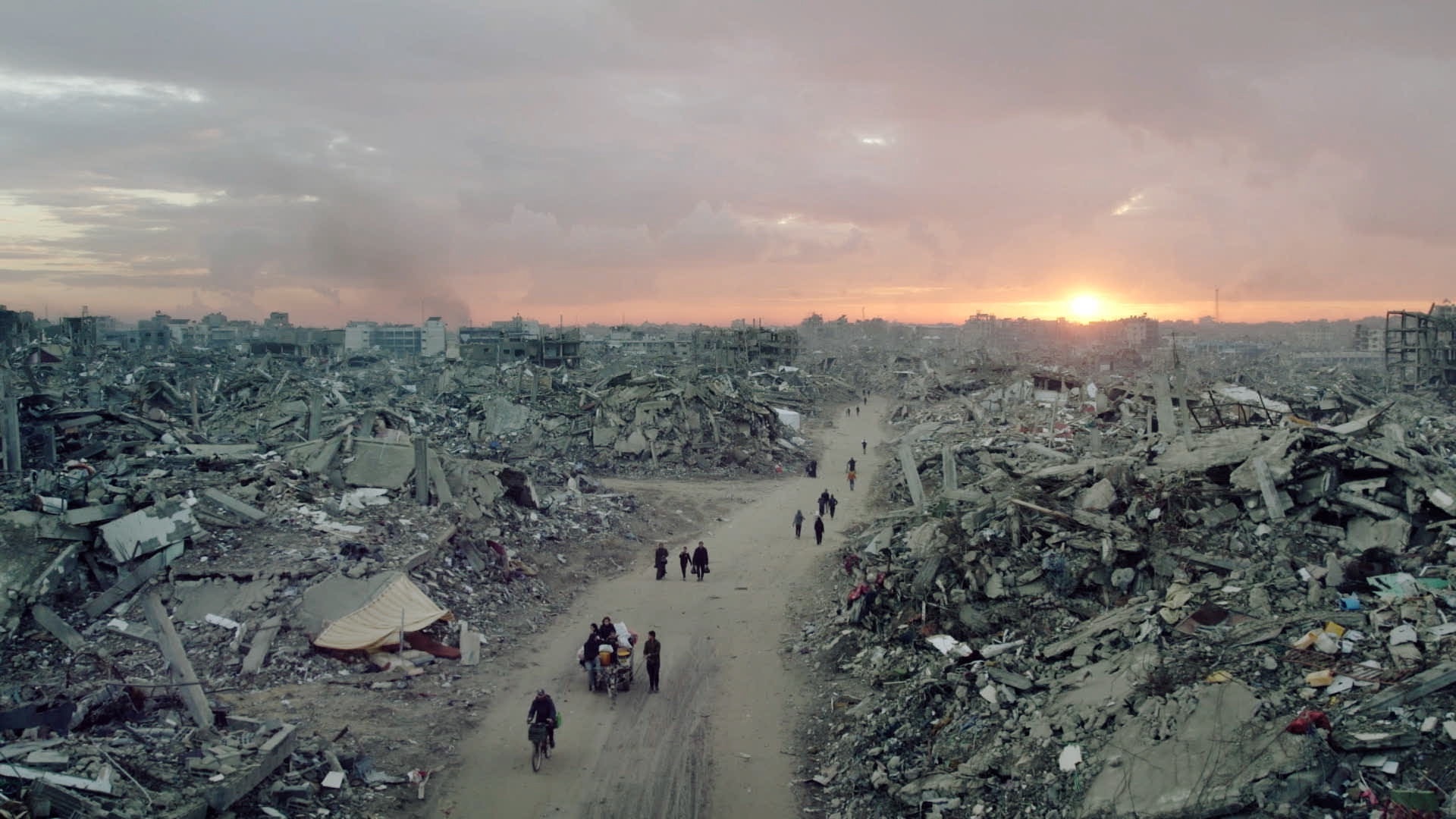
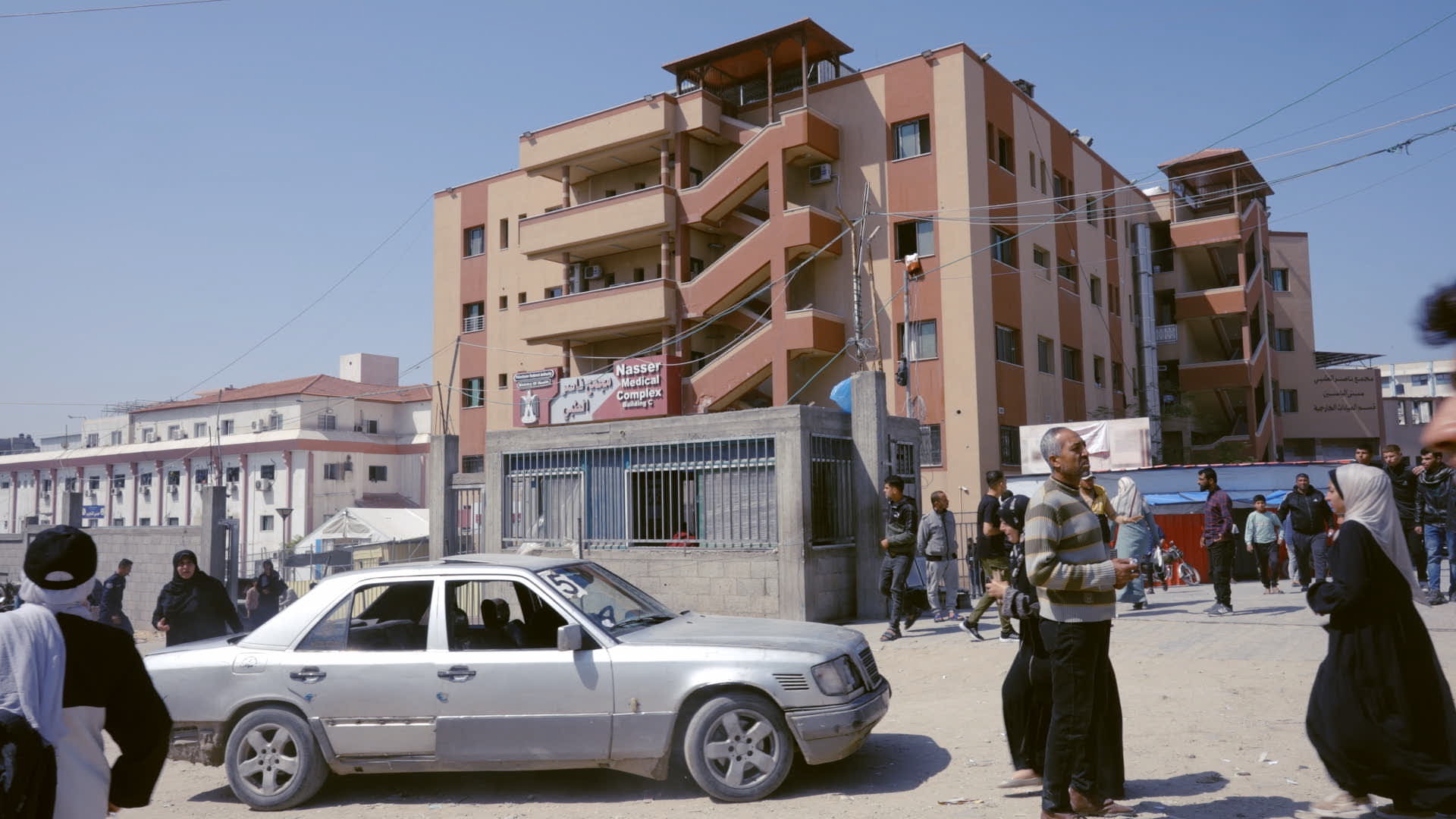
Since October 2023, Israel has barred international journalists from entering Gaza. It has also, according to the Committee to Protect Journalists, killed more than two hundred Palestinian journalists and media workers, the deadliest three years for the press on record. Those conditions left Teng with no choice but to direct from New York while two cinematographers, Ibrahim Al Otla and Christopher Renteria, filmed from inside the siege, sometimes unable to reach her. By the time the cameras began rolling at Nasser hospital during a 2025 ceasefire, the building—stormed by Israeli forces in February of 2024, driving a military bulldozer through the hospital gate, shelling the orthopedic department, cutting power to the intensive care unit, and detaining seventy health workers—had partially reopened and stripped of most of its supplies, staffed by exhausted Palestinian medical workers doing their best with very little.
Determination permeates the film’s atmosphere: forthright and gritty, Teng is careful to never romanticize the strength and resilience unjustly required of its subjects to survive; always clear about its core mission of illuminating the harms inflicted by American imperial and Israeli military power on civilians. Perlmutter, in one scene, relays a personal revelation from a Palestinian colleague; Sidhwa walks the hallways of Nasser greeting doctors, patients, nurses who clearly know him by name. American doctors rotate in, operate under harrowing conditions, go home, come back, and go home again; Palestinian doctors do not, cannot. They live in the same violence and devastation as their patients and take their fears, anxieties, and losses to work every morning. They work with whatever supplies they have, due to the Israeli blockade. Teng does not have to editorialize this: she lets the film linger, with attention and care, on the Palestinian medical staff. On camera, Dr. Sidhwa talks onscreen about a sense of survivor’s guilt after he leaves Gaza; in one particularly affecting scene, Dr. Ahmed watches the Palestinian horizon at sunset while he waits for a decision on his entry visa. On a video call, he tries to show his young daughter—back home in Chicago—the land from which her ancestors came. Dr. Perlmutter, in a tone-setting opening scene, half-admonishes Teng on an editorial decision: she must show a photograph, he says. Otherwise, he insists, it’s journalistic malpractice.
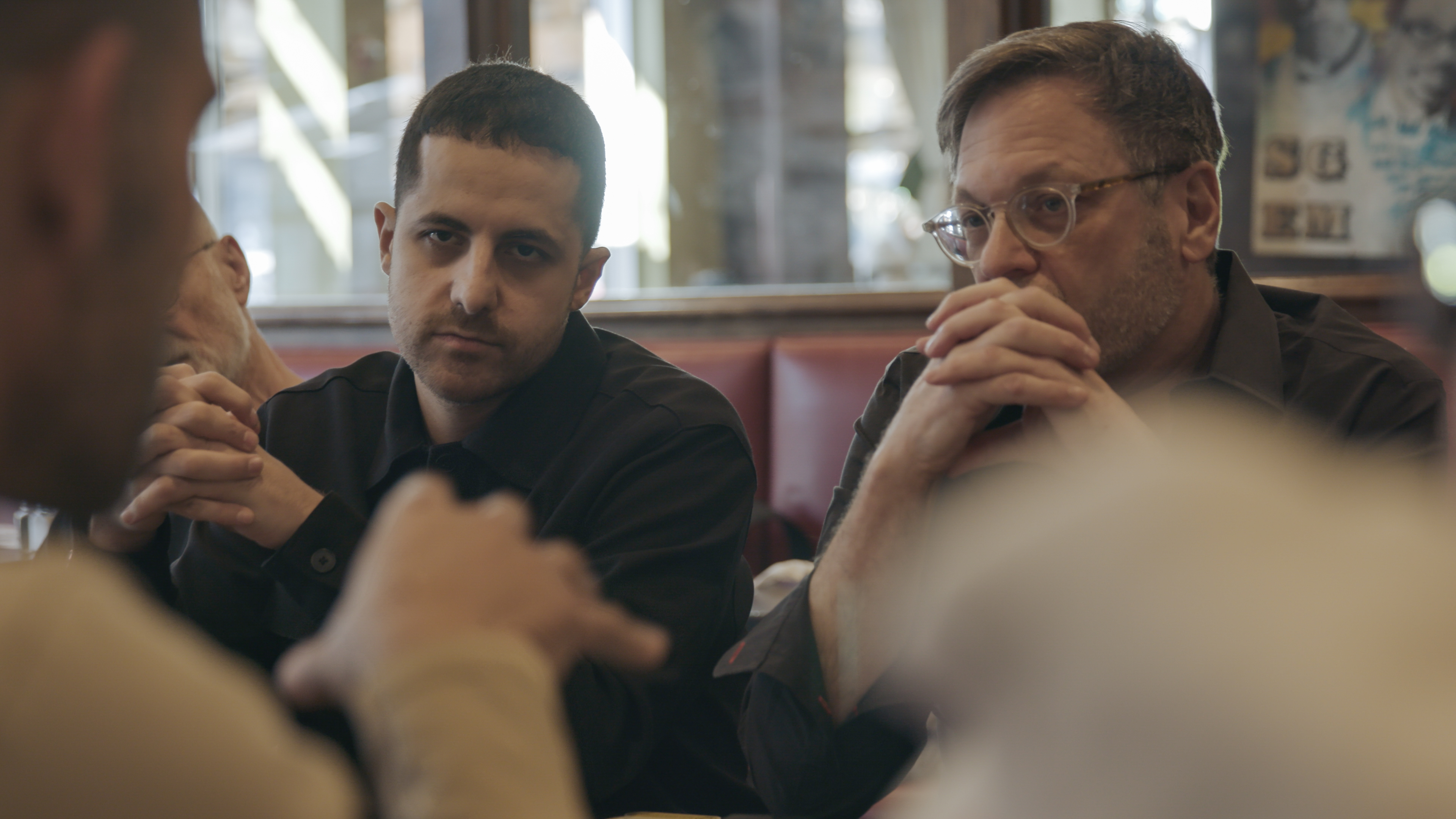
American Doctor was made in a single year, between Christmas of 2024 and Christmas of 2025, no small feat in a documentary landscape where most films take five years to finish. In just the year this film was made, Israeli forces raided Nasser Hospital. The January ceasefire—“never a ceasefire”, Perlmutter declares in a TV interview—collapsed by March, and Israel imposed a total humanitarian blockade on the Strip. The International Court of Justice issued orders demanding humanitarian access, and Palestinian deaths in that year surpassed an estimate of 50,000.
Since its premiere, the film has played more than 150 theaters in the United States, earned a New York Times Critics’ Pick (which, given the paper’s editorial record on Palestine, surprised even the film’s subjects), and, at one point, screened in six countries in a single week. As of this writing, American Doctor is playing in theaters across the United States. It is urgent, harrowing, tender, and fierce: a film to be watched for both the humanity of its subjects and the humanity we must all find within.
- Jill Damatac, Senior Editor
The director of American Doctor, Poh Si Teng, and one of its featured doctors, Dr. Feroze Sidhwa, were interviewed by 2025 Academy Award- and BAFTA-nominated documentary film producer Hanna Aqvilin (Black Box Diaries), with Teng dialing in from New York, Sidhwa from Ethiopia, and Aqvilin from Sweden. They were joined by Everything Is Political senior editor Jill Damatac, also in New York.\ \ This interview has been edited for length and clarity.
Hanna: Poh, how did you find the structure for this film?
Poh: Western audiences understand medical dramas very well — there are one or two every single year without fail on streaming platforms. So why not make a medical drama? That’s how we can bring Palestine back into the American conversation. Once I thought of that, the question became: who should the doctors be? And lo and behold, someone presented himself — the Jewish American doctor, Dr. Mark Perlmutter. He was out there in the news a lot, very vocal, didn’t mince words. He also wanted a film to be made about what he was doing. So when I approached him, he said, “Yes, make a film about me, and also make a film about my friends.” And his friends were Dr. Feroze Sidhwa and Dr. Thaer Ahmad.
When you have these three doctors, you look at them and think: they couldn’t be more different. I bet they disagree with each other. I bet they fight. That’s drama. There was enough yarn there. But more than that, it felt like I could learn from Feroze, from Mark, from Thaer. How to be in this time. How to speak clearly and also be effective. How to follow your heart, how to be a true leader.\
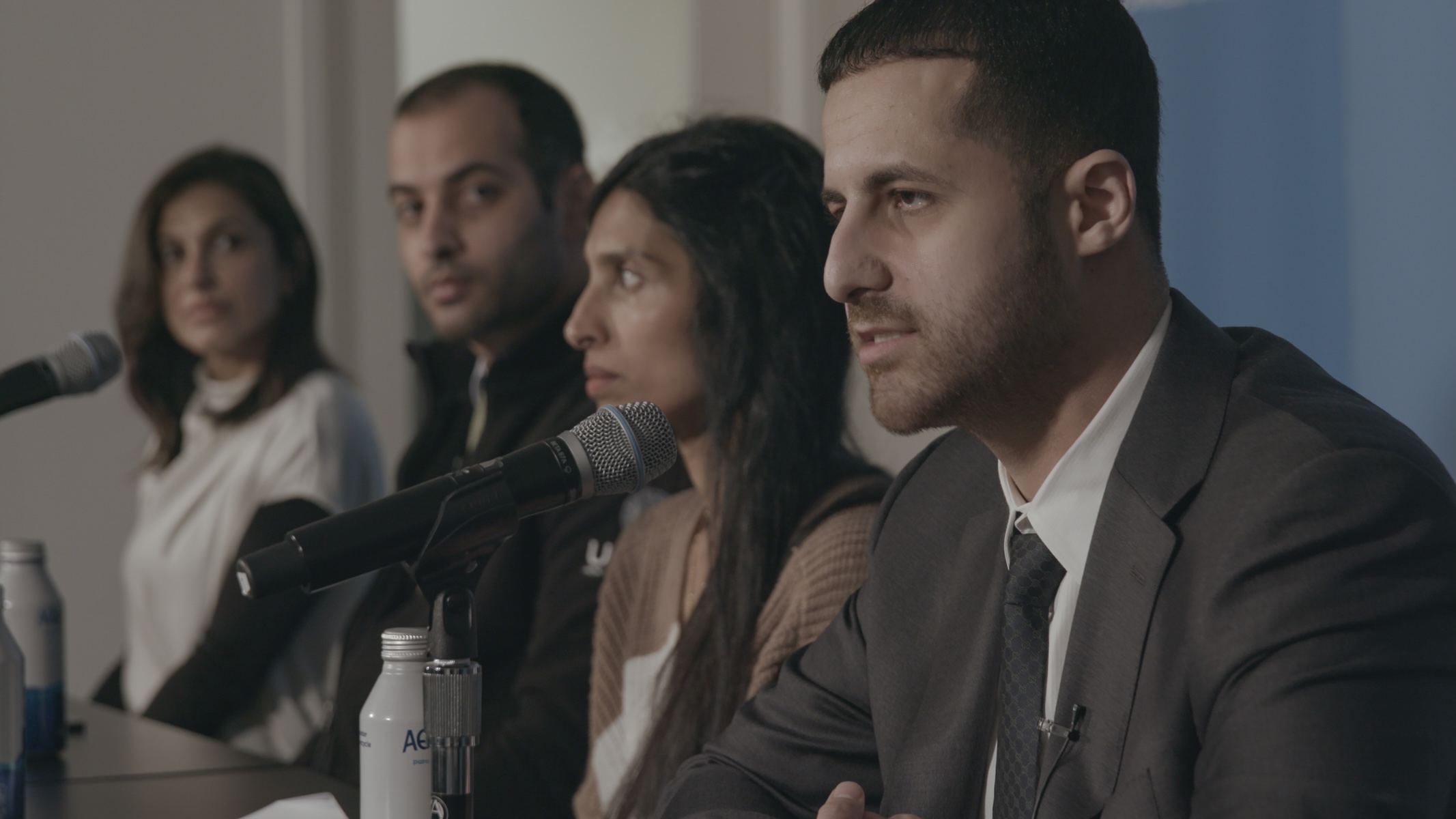
Hanna: When you talked to me about the project quite early on, I was really curious about how to finance this kind of film. That’s always hard, especially something this political. How did you work around that?
Poh: Tell me about it. It is hard for any film, and it’s part of the reason why so many documentaries take an average of five years to make. How long did Black Box Diaries take to make? It takes a long time. I was lucky in the sense that I had some savings, but I knew early on — I think even when we talked — in those first early months, I was like, “I’ll make a short,” because I had money for a short. But then as I got into the weeks of filming, I realized, okay, this is definitely a feature.
I put in $150,000 of my savings, and I knew that was going to go fast. But I thought to myself, I was a grants director for IDA, an executive for ABC Disney — I had raised money before. I can do it. No problem. But Palestine? People run the other way.
It was halfway into production — because we wanted to finish it in a year — so six months in, we said let’s pivot. If we can’t find money through traditional grants and the same old equity financiers, we need to find new funds and people who are courageous and brave. I went back to Malaysia, and within two trips, within eight to ten days, they gave another $180,000 cash. “Here you go. We are proud of you. You’ve taken a big risk and we’re going to fund you.”
Then I came back, and Watermelon Pictures came in as an “in association with.” Hamza Ali, one of the co-founders, came in as an executive producer and helped us raise more money. That’s when grants started opening up. I remember the first major grant we got — I called the executive director and asked him, “Is this real? Because I cannot take it right now. If this is not real, I’m going to have a breakdown.” He said, “It is real, and it’s $100,000, unrestricted, from the Center for Asian American Media, backed by the Doris Duke Foundation.” And then he said, “You can be public about it.” That was when I realized things were changing. Once the first grant was public, we weren’t hiding anymore. Then the rest followed.
Hanna: But you also took an amazing risk as a filmmaker, investing in your own work. I remember how hard it was.
Poh: It was so hard for journalists to even write about Palestine. People lost their jobs for saying anything pro-Palestine on public television. People weren’t supposed to take any positions.
Hanna: And I can just imagine the risk you were taking as well, especially during that time.
Poh: Money, prestige, jobs — at least for me, I feel you get them, you lose them, you get them again. But here’s something bigger than all of us, and yet at the same time, your European government, American government, is 1,000% responsible for what is going on. If anything was going to be worth it, this is worth it.
Hanna: Feroze, I’m a little curious — how did Poh approach you? And what was your first impression of her?
**Feroze: **I have to be honest, I don’t distinctly remember the first time I met Poh. She met Mark, and then Mark put her in touch with me and Thaer. I remember Mark said, “Hey, I’m going to put this person in touch with you.” And I thought to myself — how am I going to vet this person?
When we spoke, the main question I asked her was, “Why do you want to make this movie?” Her answer was something along the lines of, “Because the American people need to know what’s going on.” She didn’t say, “Because we need to stop those dastardly Israelis.” It’s true, they’re doing awful things. But she was really focused on her own country, on my country — because we’re so deeply involved in this. That was when I thought, well, maybe this is a serious person that I can actually work with and trust to tell this story from a sensible but also effective standpoint.
**Hanna: **How important was it that it was all three of them?
**Poh: **Hannah, you’re a filmmaker. When you meet somebody who is so inspiring, so charismatic — you’re so lucky. Now, three? Three is something else. Three means it’s a great privilege and you should not waste it. They were so different. As a vérité filmmaker, it was very interesting to see them work with each other. So it was without question that all three of them would always be in.
What was also great for production was that they were all planning to go into Gaza at the same time. They already knew each other. They were already friends. So it was very organic — it wasn’t forced. They were already together, so it was like, well, let’s go on a journey together. You could see the three doctors had very different backgrounds, communities, potential challenges. You’re mapping it out in your mind — what would the potential arc be for each of them? There could be multiple parts. You map out their entire lives.
But of course, in the story, one of the three doctors couldn’t get in. And that was just part of the story. When things don’t work out, that is the story.
Hanna: Feroze, you’re in Ethiopia now, I understand. Why did you decide to go to Gaza in the first place?
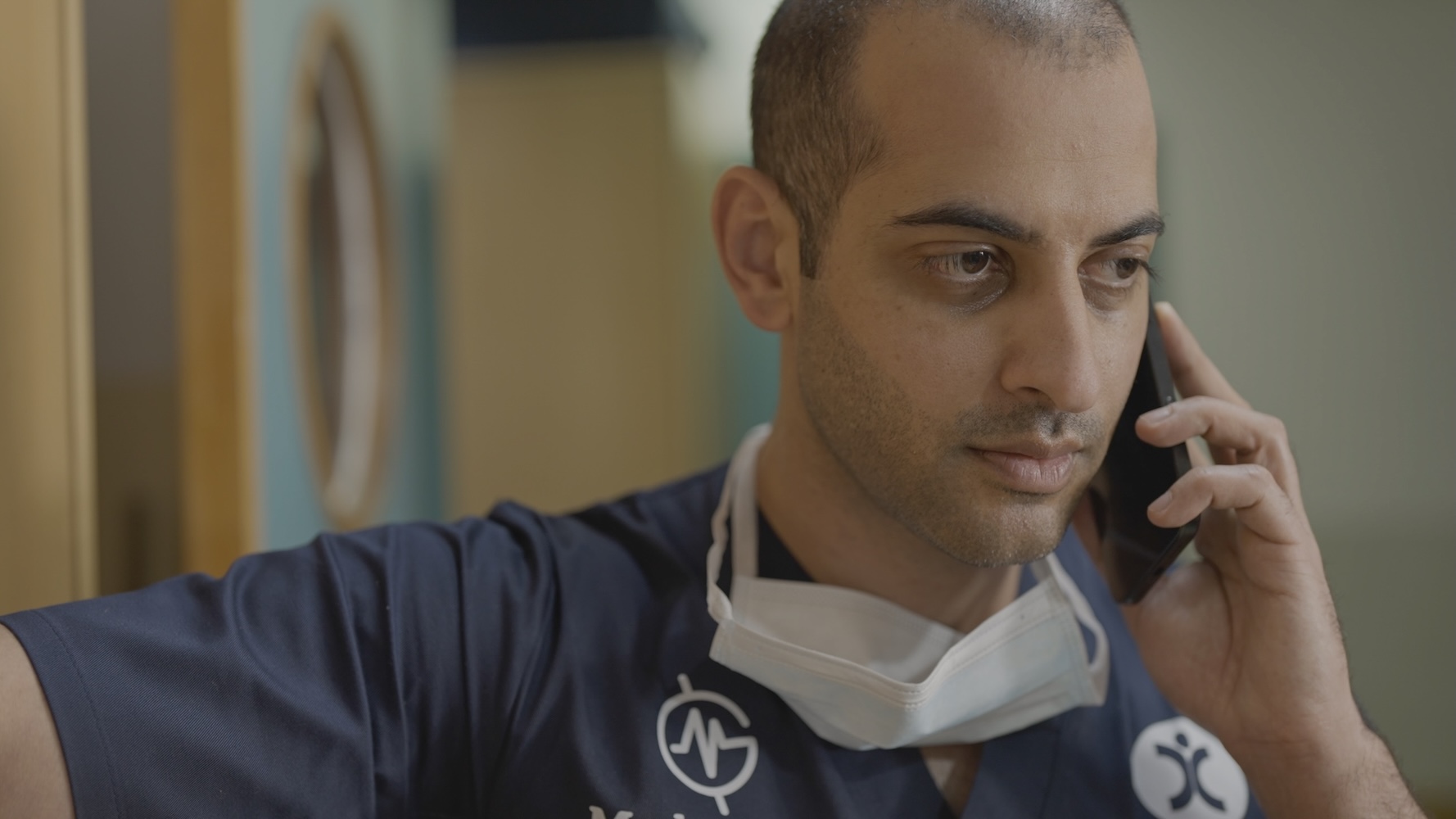
Feroze: I’ve been working with Palestinians and on the issue of Palestine since I was eighteen, when the Second Intifada broke out during my freshman year of college. My parents’ ethnic group — they’re from a small ethnic and religious minority in Pakistan and India — doesn’t have anything to do with the Middle East. But college is a time when you’re exploring things. The Second Intifada broke out, and I’d never heard of this place before — Israel, Palestine. I couldn’t understand why this one conflict was so important to people.
I’d gone to college thinking I was going to be a physician, just because my dad’s a doctor, and I’d never really thought about any other profession. But with all this going on — 9/11 happened the next year, we invaded Afghanistan, we invaded Iraq — I thought maybe medicine isn’t the best way to make a difference. Maybe I should be a lawyer or a journalist.
I lived in Israel for a year, volunteering with a Palestinian-Jewish cooperative in Haifa. I’d tour around the West Bank on weekends, and the people I gravitated towards were the Palestinian physicians and also the Israeli physicians volunteering with them — mostly from Physicians for Human Rights Israel.
One day, one of these Israeli doctors took me aside and said, “They say you want to go to med school. If you’d be a doctor but still have to live like these Palestinians do — meaning you don’t get any special privileges for being a doctor, you’re just as poor and vulnerable as everybody else — then go ahead. But otherwise, don’t.”
I got what he was saying. Being a physician should be a selfless pursuit. But I realized I’m much more like this Israeli guy, who is choosing to act. He could sit in his apartment in Tel Aviv and criticize the occupation and nobody would care — he could have whatever job he wants, be the head of a department. But going into the territories and standing with people, insisting these are people, insisting the occupation is wrong and actually doing something about it — that’s a very different matter. I don’t even remember the guy’s name, but I can guarantee it lost him friends, lost him jobs, lost him money, lost him social prestige. And he did it anyway, in a society that is much harsher on dissidents than the United States.
So I said, okay, I think I can be a physician and still make a difference. Like this guy is trying to, but my impact might be magnified because my state is just so much more powerful.
I’ve been back and forth to Palestine many times. I’ve worked in Ukraine, Zimbabwe, Burkina Faso, Haiti, all sorts of conflict areas. But Palestine is the one I keep going back to because I decided to be a doctor in Palestine. It feels natural to go back there.
In December 2023 or maybe January 2024, I got an email from the Society for Critical Care Medicine advertising the volunteer position in Gaza with the Palestinian American Medical Association. I signed up right away. I had just become the program director of the residency program at my hospital, so it was hard to take that much time off, but I insisted on it. And I’m glad I did.
Hanna: What are the doctors inside telling you about the situation at the moment?
Feroze: It depends what you mean. The bombing is certainly less than it was before — it’s certainly not absent, but it’s far less. I think ten children have been killed in the last ten days in Gaza, including one pregnant woman.
But they all say that even though the burden of trauma in the hospitals is significantly less, now they’re realizing how sick the population has been left. You can’t take a population that already lives in a concentration camp — a heavily urbanized place where 70% of the population is refugees and half the population is children — you can’t take that place and smash it to pieces without creating a laboratory for death and disease. And that’s what’s been done.
Right now, rats are attacking small children at night when they’re asleep and there’s no lights. These tents aren’t like what you’d buy at a nice camping store. They’re improvised structures with tarping and wood and sticks. There are rats everywhere, rodents everywhere, vermin everywhere. Now that they’ve probably consumed most of the trash and solid waste, they’re moving into people’s tents, literally gnawing on kids’ faces at night.
Imagine being a mother or a father in that situation, or even an older sibling. You wake up in this sweltering, miserable environment that’s completely pitch dark to a baby screaming, and you can’t even find the child. You don’t know what’s going on. That’s the mental burden the healthcare workers deal with at home. Then they go into the hospital, and they know that even three years ago — before October 2023 — the healthcare system in Gaza was already a disaster, but there were at least the most basic medicines. Now those are totally absent.
Largely because the Israelis, backed by the U.S., are basically not allowing anything to go to the Ministry of Health hospitals. They’re only allowing resupply of NGOs and hospitals not under Palestinian control. That’s better than nothing, but this is just another way of undermining Palestinian sovereignty and control over their own lives.
In the film, you can get the impression of what these hospitals are — incredibly overcrowded, incredibly deprived places. But in terms of the deprivation of the hospitals’ ability to provide care, it’s actually worse now than it was during the worst of the bombing.
Hanna: What can the Americans, or the rest of the world, do? Because this film has real potential and I know what you’re all working on right now. What’s the message?
Poh: The intent of this film has always been impact, first and foremost. That is the reason we finished it in one year. We started Christmas 2024, we finished Christmas 2025. If this film was going to be of any use to anybody, especially in the United States, it had to be ready for the midterm elections. Everybody on this team gave so much to make that happen.
The intention for impact is twofold. One: people need to be informed about what’s going on in Palestine — not only Gaza, but now expanding into the West Bank. If this film can illuminate that and show people what they have either not known, because the entire picture has not been shown on legacy media, or they have been shying away from because they’re too scared — then hopefully it will make it very real. And then people will be informed about how they want to vote this coming election season in November.
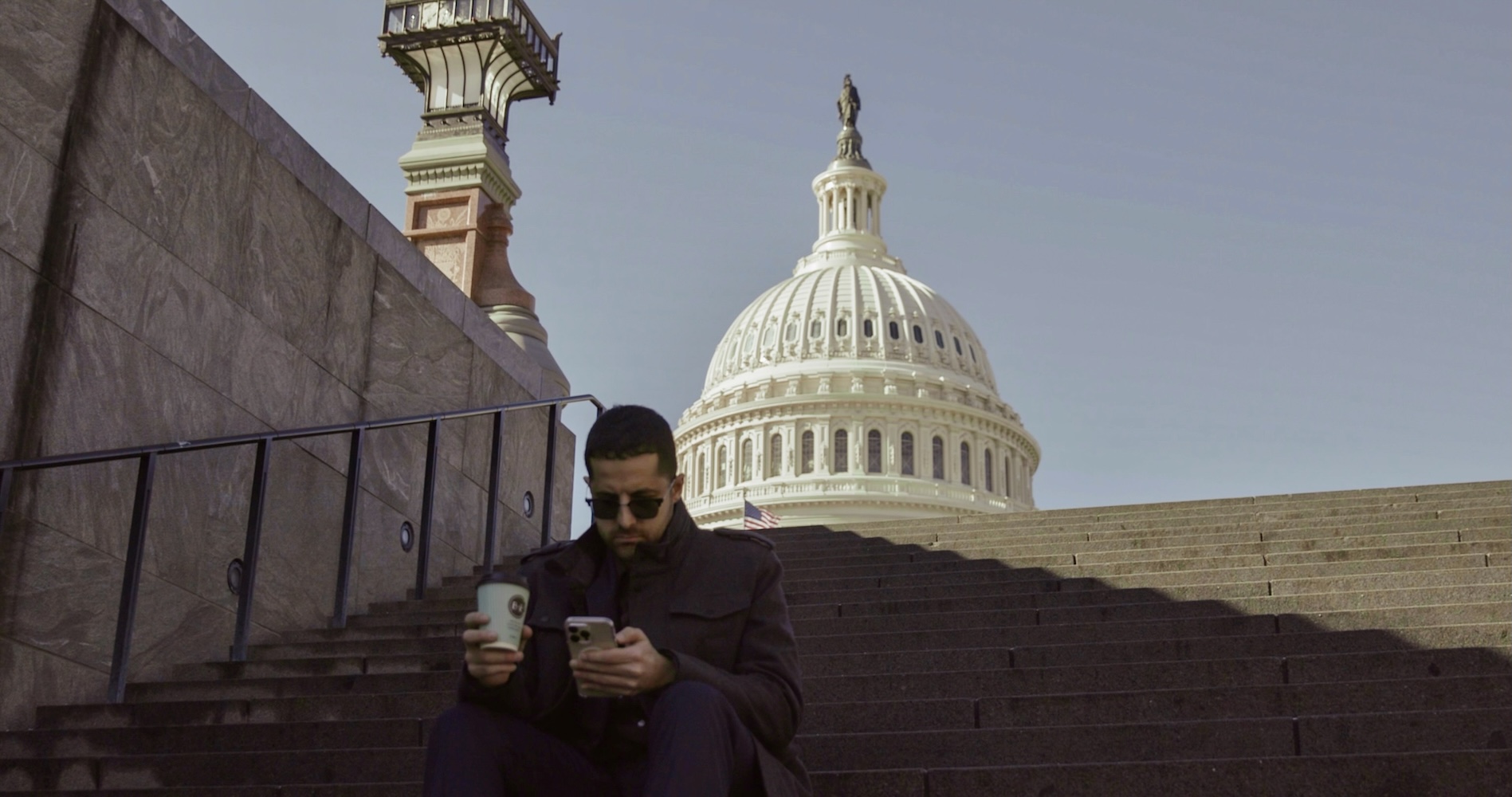
Two: if this film can go far and do well theatrically, it will open doors for so many other narratives on Palestine, for Muslims, for Arabs, in the United States and beyond. We understand the power of narrative in Hollywood. It’s part of the reason we’ve come down this path. Even Dr. Thaer always says Palestinians have been so dehumanized. And if you stop and think back, it’s not just the past two-plus years of the genocide — you go back decades when you look at mainstream media and at films that have been in the ether reinforcing certain stereotypes. So if this film can do well on both fronts — Washington, D.C. and Hollywood — that is everything for us. And hopefully these two combine to be part of a larger fabric of films that are out there now, with everybody trying to do their part in stopping what we all clearly see is a genocide.
Jill: I would love your thoughts on what this film can do to redirect the distraction in US culture, where everyone lives on social media now and the focus is so often on celebrity culture — what this celebrity thinks of that, who’s getting canceled for whom.
Poh: I’ll say two things. When we think about social media and platforms — it’s interesting how even I make this mistake of thinking I have so much agency. But our technological devices and these platforms are designed to make us think a certain way, to move us a certain way. In actual fact, we don’t always have that much agency. We’re addicted to polarized conversations because those are the things that get more likes, more hearts, that move up our algorithm.
And life is really hard in the US. There’s so many terrible things happening domestically — immigration, unemployment — and globally with AI. The mind can’t even comprehend the badness that keeps compiling and compounding. So how does the mind focus on Gaza?
The only way — and I’m privileged in the sense that I can wear different hats: I was a journalist with the New York Times, a documentary commissioner for Al Jazeera, a former executive for ABC Disney — so I can navigate and see different things. And when I put on my cap as an executive: how do you get people to care about things? You serve it in the language they understand. There is no surprise we made a medical drama, because medical dramas are something Americans, the West, and the whole world understand. There’s something about human mortality and doctors — we all find ourselves in that position some way or another, so we love watching.
It’s also very important to understand how social media works and who supports what moves things up the algorithm. We’ve been very privileged to have so much support from people of standing and celebrities who see the genocide for what it is — Susan Sarandon, Miss Rachel, Mark Ruffalo. That helps the conversation, helps put the film into the ether. Not that the film can’t stand on its own, but we know how all of this works. It’s a very concerted effort from every different sector, from people who also understand how technology works, saying we’re going to push together and we have to do it right now because what’s happening in Gaza still continues to unfold day to day.
Hanna: Obviously you had no idea how big this film would become. Maybe you knew, maybe you didn’t. But what’s your feeling at the moment? The film is terribly good — it’s horrific but amazingly done. From Europe it’s huge. How do you feel now that it’s premiered, now that it’s on this important campaign?
Feroze: I told Poh that she was wasting her time making this movie. And I’m just glad she didn’t listen to me. I don’t know how far the film goes, but I think it does help people see what we saw in Gaza in a way they can tolerate. There are very hard images to see, but it’s not a horror show. It’s not the Texas Chainsaw Massacre.
I think it helps people see what we saw, not from a blood-and-guts trauma surgery standpoint, but from a moral standpoint. From the standpoint of the guilt that Americans ought to feel about what we’ve done to these people — because it’s not just the Israelis doing it, it’s us doing it. That’s true of Europeans as well. It’s much more true of the United States, but it’s also true of Europeans.
If the movie can help people see what we saw in Gaza and why we had to do something about it when we got back, then I think it’s a big success.
Macklemore put out quite a nice statement, saying, “I’m not the victim here. I’ve got plenty of money. I’ve got plenty of people who love me.” The victim is twofold. Number one, the Palestinians, who are being subjected to genocide — and apparently Robert Kraft doesn’t like that, for some reason, as if anybody cares. Number two, this is an assault on freedom of speech in the United States. The US has a tradition of freedom of speech that goes way beyond any other country — it’s really quite radical — and it’s being radically undermined in the past three years, largely by people like Kraft, Bill Ackman, and others, with pretty robust cooperation from both Republicans and Democrats under both the Biden and Trump administrations.
When people move beyond “I’m in Ed Sheeran’s camp” or “I’m anti-Ed Sheeran,” and they say, “This illustrates something meaningful about our own society and what it means to be a victimizer of people” — I think people can learn a lot from that
You can’t ignore what is being done to the Palestinian people, and you can’t pretend we have nothing to do with it. You can’t get away with it by just saying, “I’m not political.”
And this is, just to bring it back to my own profession — this is what American medical associations do. Russia invades Ukraine and everybody loses their mind, which they should. It’s a crime. Every major American medical society put out statements: “We stand with the people of Ukraine. We stand against Russian aggression.” Those are political judgments. Fine. But when it comes to an official enemy like Russia, it’s “not political, just humanitarian” — even though they’re blatantly making political statements. When it comes to the Palestinians, there’s really literally one significant statement from an American medical association — a single letter that was somehow leaked from the president of the American Academy of Pediatrics to Anthony Blinken, simply inquiring about the whereabouts of Dr. Hussam Abu Safiya, who had been kidnapped by the Israelis. Just asking where this human being is. That’s it.
And they were ripped over the coals. Commentary magazine said this was horrible and the AAP is so terrible. The Anti-Defamation League put out a statement saying Jewish parents now have to worry that their pediatrician is an anti-Semite when they go to get their kids vaccinated. And a magazine called Mosaic Magazine — I’ll never forget the headline — “Pediatricians Against the Jews.” Absolutely outrageous behavior.
This is what these different episodes can tell us about our own society. When it comes to filmmaking, or any kind of journalistic or artistic endeavor, sometimes that’s the last refuge for people who want to make a statement. And when even somebody like Ed Sheeran — who from what I understand is very popular — when even he can have his whole tour fall apart and people walk away from their dreams, like this Irish band, because they cannot countenance what is being done to these people? That’s quite a thing.
And because you asked about what physicians in Gaza say — some of them have texted me and asked, “Who is this Ed Sheeran? Why will he not stand up for us? And who is this Macklemore? Tell him we appreciate him.” I’m like, “Yes, I’ll let him know. I’m sure he cares what I think.” So I did. I sent him an Instagram message that I’m sure he won’t read. But they see these things, and they appreciate the people who stand in solidarity and refuse to accept what their governments are doing to other people.
Poh: When we started the film, of course we had all these big dreams — okay, hopefully we’ll premiere here, this is what we’re going to do. But you can only plan for it. How the art is actually received by the public — you can strategize on marketing and promotion, but the art is out there, it’s not in your hands, and you have to accept it.
I prepared the team as we were finishing — a lot of things hadn’t changed in society yet, maybe they weren’t going to be ready. Fast forward to today: in January, we premiered and world-debuted at Sundance. Now, nine months later in September, we have been in movie theaters for over a month, in more than 150 theaters across the US and Canada. We’re coming across the pond — UK and Ireland starting November 20th.
And as a filmmaker, your dream is that the film can speak to different people. When we landed in Copenhagen, the conversation after the film was about the lawsuit that Oxfam, Al-Haq, and Amnesty International had launched against the Danish government for allowing a Danish manufacturing company to sell parts for the F-35 fighter jets being used by Israel to bomb Gaza. That was the conversation.
A few days later, we opened in The Hague at Movies That Matter. That week, Germany had pulled out of one of the courts from defending Israel. So in the Netherlands, after watching the film, that was what they wanted to talk about.
When we moved to Sheffield DocFest in the UK, after watching the film, the Q&A was about the anti-terrorism laws used to go after people standing up against genocide in the streets — elderly people, young people, all people.
It’s almost like we made this film and it’s taken on a life of its own. In the US, every group — Jewish Voice for Peace, Palestine Youth Movement, veterans groups, “Republicans Against War” (I didn’t even realize that was a group) — I was told on public radio in Tampa that they are carpooling an hour away to watch the film. And that kept the theater going for another five weeks. It’s out of our hands. People everywhere are people of conscience, and they will not stand for this if they know, and now they know, what is happening and how it involves them.
Jill: That says so much, doesn’t it? Because if you think of the trouble *No Other Land *had just getting screened two years ago versus this — it says a lot about the change in public opinion. It’s quite late, but better than nothing.
Poh: In the early days — November 2023, December 2023, when we started — it was not like that. Feroze also said the same thing to his mother. I was filming a scene with him and his mother, and he said, “Nobody cares, only our community cares.” And I did tell him — I said, even if nobody cares, we do it for us. We do it for our children. And I care. I want people to know who was there when it was so hard. When Feroze, Thaer, and Mark started, it was so hard. And now we know who was there when it was so hard.
Jill: Feroze, are you or the other doctors thinking of going back to Gaza? Is that a possibility?
Feroze: I tried to go back in November of last year and the Israelis blocked me, like they blocked Thaer. I’m part of a petition to the Israeli High Court of Justice about that. There should be at least a hearing in December — the 21st or 27th, something like that.
The government’s response to the petition was so transparently stupid that even the Israeli High Court of Justice had to say, “This is absurd, and we have to have a hearing.” Doesn’t mean they’ll rule in our favor in December and say all healthcare workers have to be let into Gaza, but we’ll see.
I was supposed to be in the West Bank in April, with the same program I’m doing in Ethiopia right now — teaching surgeons and emergency docs about trauma care. Thaer and I were going to be there at the same time, but then the Iran situation started and they canceled it. They said, “Can you go to Ethiopia instead?” That’s how I ended up here.
But I hope I can get back to Gaza as soon as possible.
I have a sense — and I know Mark and Thaer feel the same way — that even before the film, we had some rapport with the American media. But now after it, we probably have more. Even the New York Times reviewed the film positively, which is quite surprising. The LA Times was very laudatory, but the New York Times is really an ideological gatekeeper. The fact that they gave it not just a positive review but a Critics’ Pick — I was genuinely shocked.
I still think it was an error on their part.
Poh: (laughs) Oh, stop it.
Feroze: (laughs) No, you’re completely misunderstanding me. If the New York Times is praising something, that probably means it’s not what I would have wanted to be involved in.
Jill: They haven’t exactly been stellar in terms of their coverage.
Feroze: There is only one significant American newspaper I know of that has never mentioned Dr. Hussam Abu Safiya in its news section. That’s the New York Times — which is also the newspaper he has written op-eds for. It’s absolutely insane. You just can’t make this up.
So honestly, the fact that the Times reviewed it positively is either indicative of what Poh often says — that institutions are made of people, and people are changing, so institutions are changing — or they made a mistake. It’s one of the two. I hope it’s the first one.
Poh: I will say about legacy media institutions, having worked for so many of them: there are a lot of good people in there, and they are pushing and they are trying. It’s hard when you’re inside those institutions. I have been. And for those who are continuing to do the good work, we commend them.
Something has changed in me since the film has been in theaters for a month, and I can see it in Feroze and Thaer and Mark as well. There is a certain confidence we have now, because we know we are going in the right direction. So many journalists — my colleagues, former colleagues, New York Times, across the board, everywhere I’ve worked — I invited them to come watch the film. And they have loved it. They’ve said there have been challenges, but people are starting to wake up within institutions. So we welcome all, and let’s go forward together.\
Hanna Aqvilin is the Academy Award- and BAFTA-nominated and Peabody award-winning producer for the film Black Box Diaries (2025), which premiered at Sundance 2024. Originally from Sweden, she spent several years at the British BAFTA-winning production company Archer’s Mark, serving as a producer on numerous award-winning films, including BEING A HUMAN PERSON and HOLD YOUR BREATH: THE ICE DIVE, which is currently streaming on Netflix. Her producer credits include the BBC, Al Jazeera, Nat Geo, and Netflix. Hanna’s work often focuses on portraits, social justice issues, women’s empowerment, and mental health.
Film stills courtesy of Watermelon Pictures