
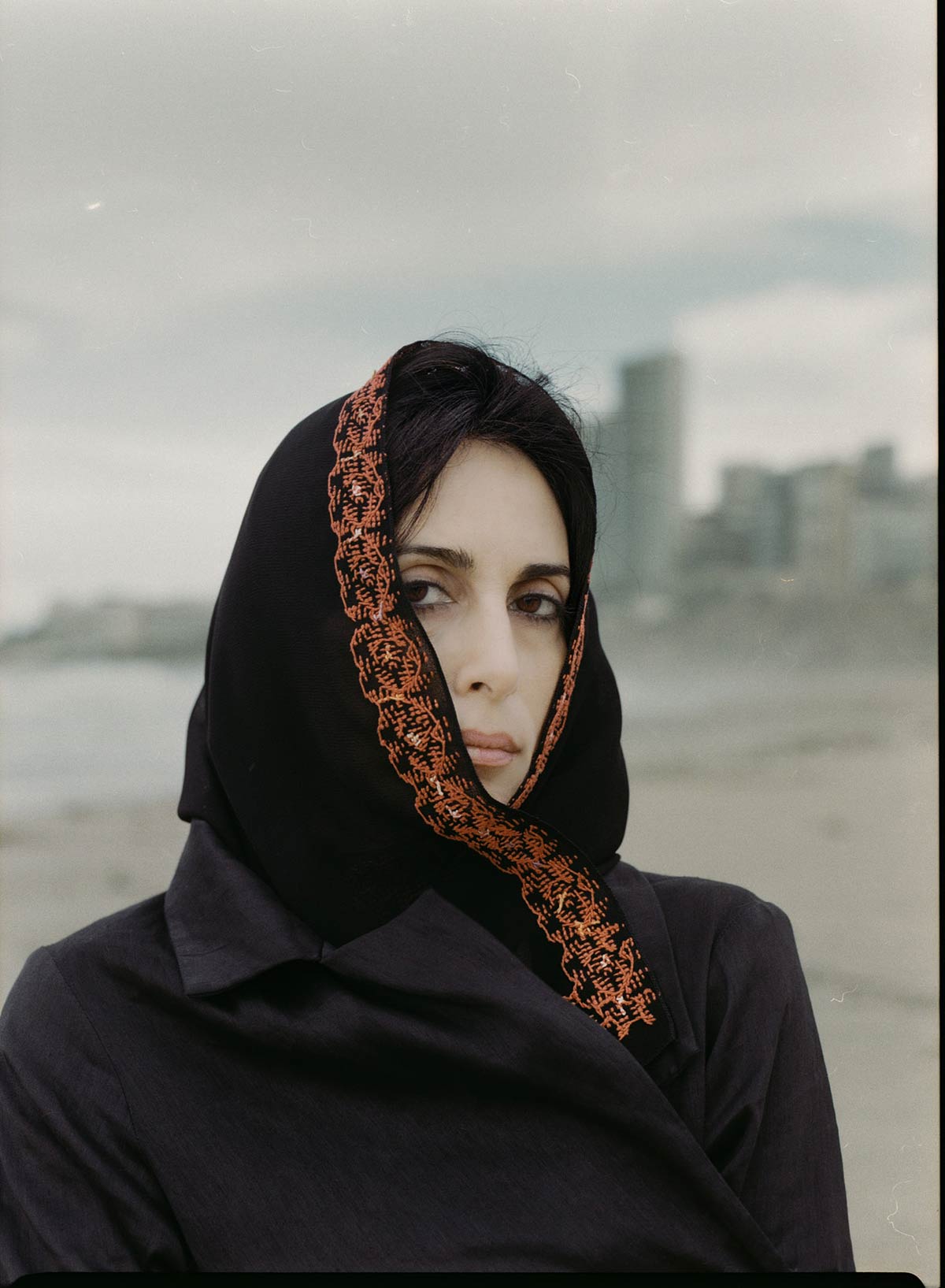
CÉLINE: I’ve been such a fan of yours since I was a teenager. I saw you one time singing in bare feet. It was the Soap Kills [Lebanese band fronted by Hamdan] era, and it was in Beirut. I remember my mind being blown. Your music blends the traditional and the contemporary. How do you see this as a form of political resistance in a world that tries to flatten Arab identity?
YASMINE: There was never a strategy, but there was a necessity for me to do something that resembles me. I’m inspired by Arabic music from the past. I compose based on what inspires me, what I’m in touch with. And of course, the political came with the choice of singing in Arabic. When I started singing in Arabic, it was not at all a trend. In the beginning, with Soap Kills, when I was not involved in writing the songs, everybody liked us because we sang in English. The minute I started singing in Arabic, we got mixed reactions. Of course, there was an underground energy to it. And there were a lot of people interested in us because they felt that this was echoing something interesting for them, but radio and newspapers were not interested or unnerved by us.
I had the desire to re-appropriate the language. I needed to be sincere with it, but I didn’t know the codes, and I was not ready to learn any rules. I wanted to be extremely free to present something vulnerable or mixed, not pure. I was in the middle of an identity crisis, and it was my own journey that I was exploring through music. Maybe this is what spoke to a lot of people…
CÉLINE: It spoke to me, for sure. And the fact that it was in Arabic, also for me, was very powerful.
YASMINE: This is when I decided to sing professionally, when I felt there was something political behind singing in Arabic. I was rejecting the rules, the formatting, and the codes. I wanted to experiment with something different. And the fact that I was a woman… I was finding a place for me. I didn’t feel that I belonged to one place. I didn’t feel at home in Lebanon, but I didn’t feel at home anywhere else. I didn’t know what home was, but at the same time, I had emotions I was trying to express. In Europe, to sing in Arabic was subversive because the audiences wanted you to stick to the image they had of an Arabic woman singing in Arabic.
CÉLINE: You broke the mold and spoke to a generation that, like you, did not feel at home in Lebanon, did not feel at home outside of Lebanon, and had a mix of emotions. Do you think that because you’re an Arab woman, everything you do is political, whether you sing in English, French, or Arabic?
YASMINE: I don’t know. I think you are political when you make choices, when you are in your kitchen, and you decide not to waste water or food. It’s a choice to live artistically, and art is political in general. I see the world through particular lenses, and it’s important to make choices that are aligned with who you want to be, with your desires and ethical views.
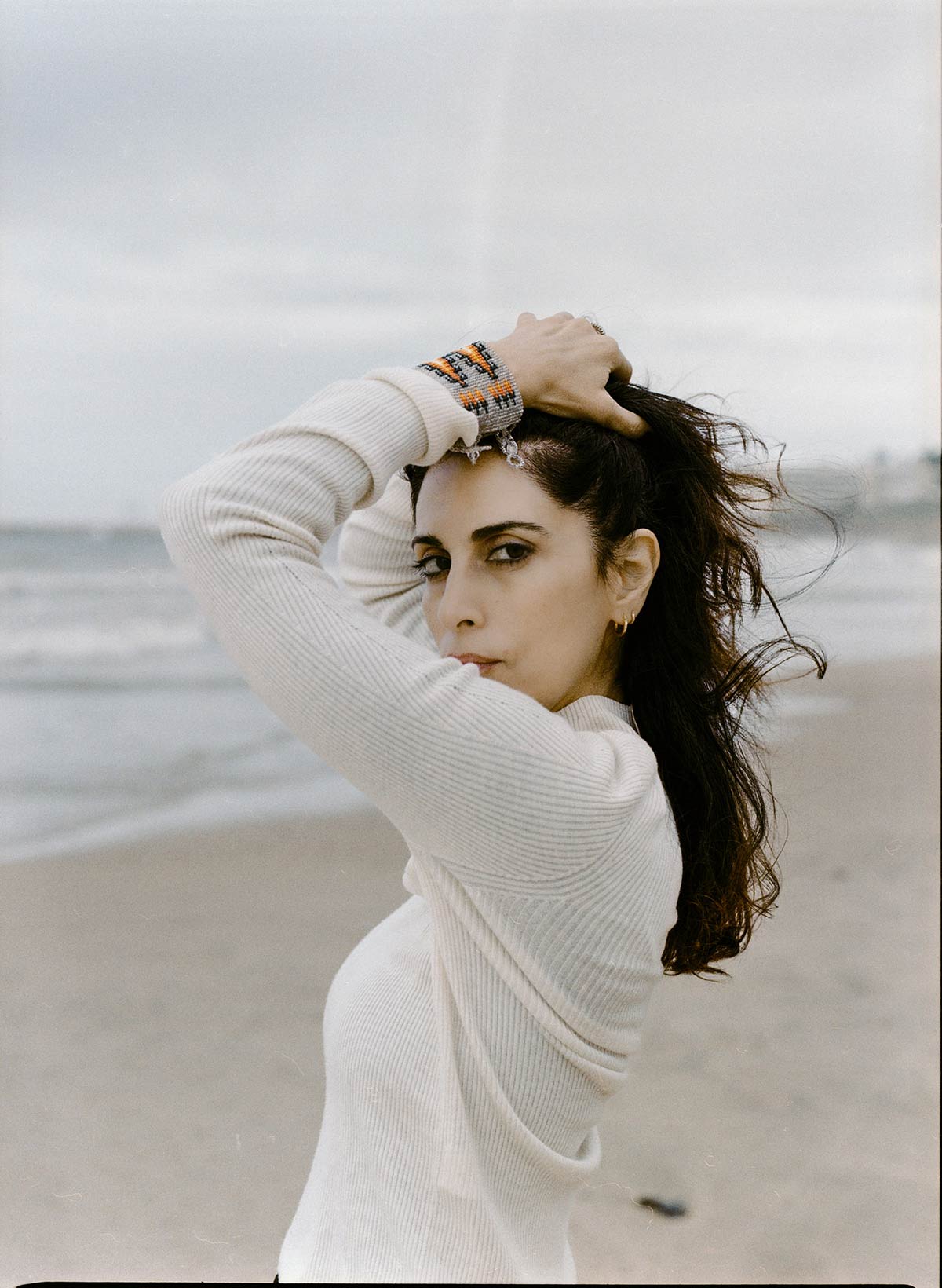
CÉLINE: Your 2025 album, I remember I forget, seems to be a culmination of all your other albums. When I’m in New York, I forget myself, forget where I come from. I have to work hard to remember and struggle with feeling lost. So I listen to music, I listen to Arabic, I listen to things that are from my culture. And then when I go to Lebanon, everything comes back to me, but the sense of running never leaves me. In the video for the title track, “I remember I forget,” your character is constantly running. It really resonated with me. Tell me more about it.
YASMINE: This song was difficult for me to write. I was obsessing about it for two years. When I say songs, I’m talking about the music; the lyrics come after. Then one day, I had the opportunity to record some Tuareg musicians (the Tuareg people inhabit a vast area in the Sahara – Wikipedia), and they did something completely different on another song. I took some of what they did and mixed, looped, cut, and reversed, and then the lyrics came. We all struggle with the world, with what we see, and what to do with that. What do you do with violence? Do you let it infiltrate you, and does it transform into inner violence? How do you keep yourself? How do you protect yourself and your soul?
Coming from Lebanon… it’s been quite difficult. And then you see Palestine. It’s brutal. I wanted to talk about it, my feelings of alienation and despair, but also… hope. There’s something playful about the music, and I had a lot of fun working on it. I wanted to find a counter-balance to the normalization of violence we see today. In the video, I imagined a character who would be running from obstacles. I wanted to talk about this survival mechanism. I also wanted to have something playful in the video, a character who echoed Super Mario. I ultimately wrote and directed the video myself. My partner, Elia Suleiman (Palestinian film director and actor, best known for the film Divine Intervention, which won the Jury Prize at Cannes in 2002 – Wikipedia), would offer two or three words of feedback and put me on the right track. I wanted to talk about things that burden my eyes and heart, but I wanted to keep it comic. I wanted to talk about the militarization of the world… and the climate crisis.
I also wanted to talk about what we have been living through recently, with us witnessing these wars in our homeland and globally, with the fact that I sometimes feel a bit schizophrenic. I live a nice life in Paris, but I also feel like I’m living in a time of war. It’s very confusing.
Every time I think I’m stronger, I collapse. And then every time, I collapse, I forget that I collapsed the last time and the time before, and that I managed to rise up and continue.
CÉLINE: You’re literally narrating my life. You don’t feel at home in Lebanon. You don’t feel at home anywhere else. I also don’t feel at home. How does displacement and the idea of “home” inform your music and performance? How do you find home?
YASMINE: I’ve been living in Paris in the same apartment for about 20 years, so I can say that this is my bed, my room, my partner, my cat, my books, my instruments, my couch. This is home for me because I have a relationship with the space. But at the same time, I find myself in many places. Also, music is home, a beautiful book that inspires me, that opens my heart, is home… It depends on how you want to define home. I go to Mexico City, and I start wishing that I could live there forever. Then, when I leave, I’m so happy to go back home. I have this romantic idea of myself living in nature somewhere with the animals. And then when COVID happened, I felt that I could be in many places. I could travel a lot… I’m very privileged in reality. And this is what I need to always remember, because when we see the world the way it is, when you see the suffering… it’s inconceivable. It’s not even possible to imagine it. We are very lucky. I don’t try to find home… it’s not important.
CÉLINE: You’re literally singing my life with your words! You feel very deeply. You’re very aware. You are seeing it all. You are witnessing it. You are living it in your bones. But you are not there. You are not in Gaza. You are not in Lebanon back in the day. But you are processing all this… Tell me a little bit about that processing…
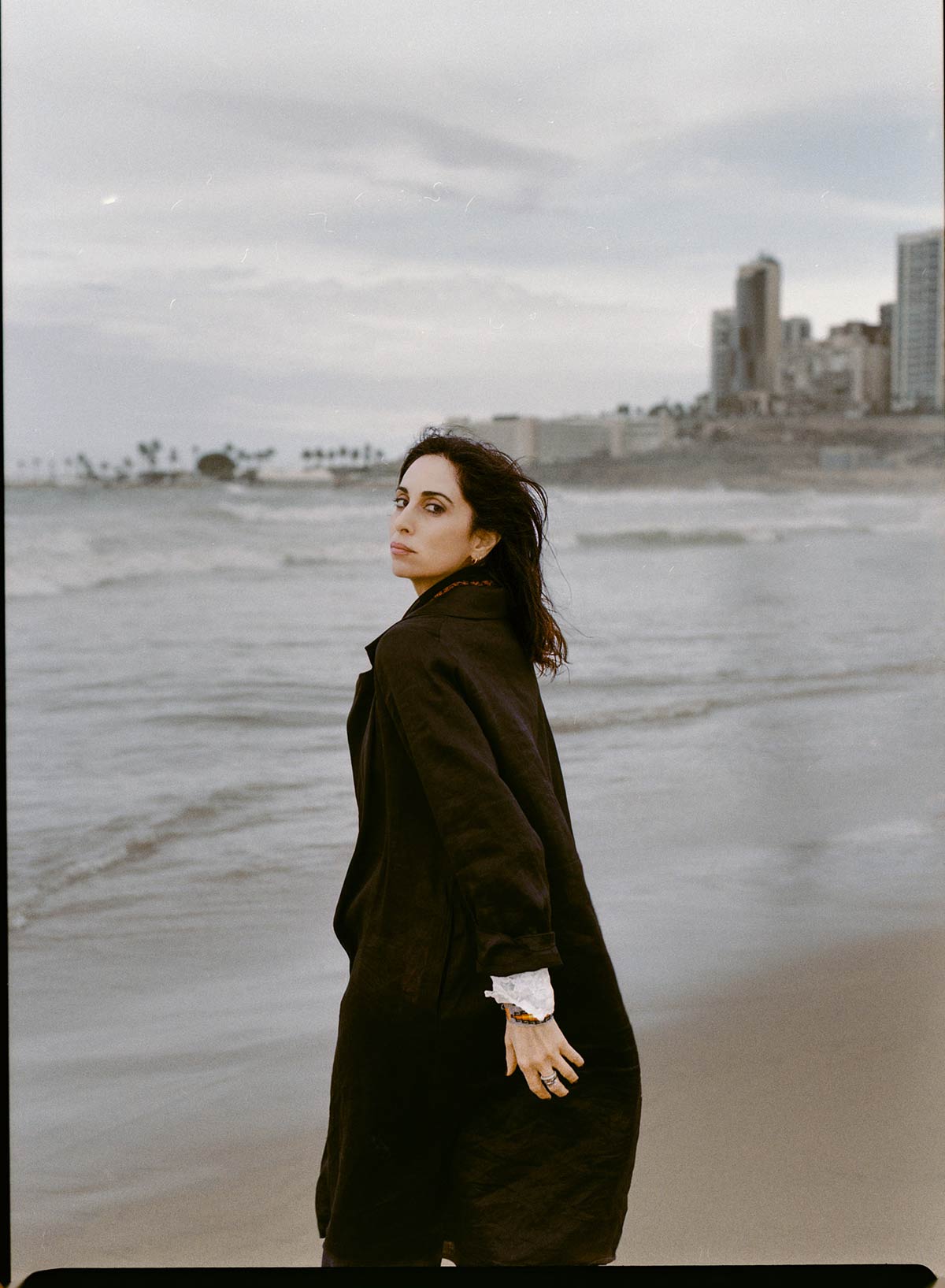
YASMINE: I’m very sensitive to people’s energy, and this is a problem sometimes, because you cannot live your life this way. I’ve been trying to work on this, but at the same time, I have access to a lot of emotions. I also try to improve the way I interact with these emotions. I do a lot of work on myself on many levels. I also feel very grateful that I have music. I have this tool, and I can transform experiences.
The Port of Beirut explosion on August 4, 2020 [triggered by the ignition of 2,750 tons of ammonium nitrate, resulting in hundreds of fatalities, 7,000 injuries, and approximately 300,000 displaced individuals, alongside property damage estimated at US$15 billion], was very painful… I had never experienced that kind of grief. My reaction was an accumulation of experiences, and I’m grateful that I was able to transform that experience, that I was able to work with people in a creative way, to transcend it, and to present it to the world. I was able to transform it into something that I felt could be beautiful.
I think we all suffer. We all have periods when we deal better with suffering. We all have periods when we’re completely lost, and that’s okay. I was lost, and I accepted it. I had no idea what I wanted, honestly, and when I started working on the (latest) record, I didn’t want to have any strategy. I disappeared from social media for five years. I needed to reconnect, to rewire things… it’s okay to stop sometimes, and it’s okay not to be productive, and it’s okay to be vulnerable.
CÉLINE: As you know, we work for collective liberation. How do you imagine the role of Arab art and music in movements for collective liberation?
YASMINE: I don’t know because I’ve always felt like I live on the margins. It has to do with my childhood. I had a ruptured childhood; we lived off and on in Lebanon and other cities. I never lived in a community. I was never aware of social codes, and my parents didn’t teach me. So, when I arrived in Lebanon in the beginning, I suffered a lot because I felt that I was either rejected or seen as a bit exotic because I had no idea how things should function. I always felt a bit like an outsider. I’m really interested in collectives, in the energy of communicating and bringing things together. But I’ve never really understood how it works.
When I perform, the energy I get from the audience and that I give is real. It’s a relationship. I find my influences in many places; I don’t necessarily find them only in Arabic music. But I do think that we need to get organized. It’s a learning process, to gather, to organize… so for me, it’s important, and especially today, when you look at the world, and you see how scary it is. It’s terrifying because so much evil is organizing and I feel that. I don’t know how to do it yet.
I finished a big part of the album before October 7, 2023, and when October 7 happened, when everything we are seeing in Palestine started, I felt like I was breaking once again. I felt like the experience of the Beirut explosion was happening again. I lost interest in this record, and I didn’t work on it for a few months. The first time I listened to it again, I was scared that it would not echo what we are living today, because there’s a before and an after, for sure. Time is important when you are working on something, because when you give it the time it needs, when you are not forcing, when you are respecting the movement, it can take many shapes.
I was repairing myself. I was taking care of myself. What I cared for was to be aligned. I hope it will touch people and that it will give back. I wanted to do something that I would be proud of. I didn’t want to rush things. I didn’t want to make compromises. I didn’t want to scare myself with the thought of failing or of being disappointed. When you present a work to the outside world, you have all these fears.
CÉLINE: The world has been transformed by Palestine… the world has undergone a rapid change, a rapid transformation. People think it’s not fast enough. We should be ending this genocide once and for all. There has been a change, though, there has been a massive change on a global level that is going to take time for people to process. And I think that this album is helping us process…
I want to add something about Lebanon. Now, we are an invisible cause, because it’s not clear to the public what Lebanon went through. It’s not even clear to us. There’s so much murkiness around the Civil War… In the West, people don’t understand. There is censorship when it comes to the region overall. How do you navigate censorship?
YASMINE: When I do interviews with French journalists, I see what they project on me… Sometimes, when they are not political enough, I’m ashamed because I don’t recognize this portrayal of who I am. This is one of the reasons I wanted to stop music at one point… the way journalists portray me in Western media. I sometimes I feel totally reduced, like it harms my soul. I see the censorship. I see the fear in the journalists. I see how most of it is crystallized around Palestine and around Israel and Lebanon and the region.
I went to one demonstration, and they caught us. Then I had a fine. I found a way not to pay the fine, but I was very angry… and it was an accumulation of anger. Angry for Lebanon, angry for my parents, for all my friends, and some of my family who were exploded in the Port of Beirut incident. And I’m angry about this, and I’m angry with Lebanese people, and I’m angry that nobody unites…
When I was a teenager, I was full of dreams, and I was also full of insecurities and doubts. And when I started, people were really brutal. There were people who came to the concerts, and the energy was huge, but there were a lot of people who resisted. I always felt somehow marginalized… stigmatized. When I started doing music, I felt there was a lot of resistance. I carried this with me throughout my journey. I do have a relationship to Lebanon through this. I had to fight for myself. I had to fight to not abide by the rules and not do it the traditional way… So I felt that there was something bitter for me there, even though Lebanon gave me so much, and the people there gave me so much. And my inspiration in everything I do comes from Lebanon.
I was in Lebanon the summer of 2021, and I came back to Paris after a month and a half there… I was destroyed, but then I was able to write my first words for the song and for this album… it opened a door for me. Lebanon, whatever happens, has something to give you. So yes, we have a very complex relationship to Lebanon, to Lebanese people. I hear there’s so much racism, so much manipulation… politicians condoning Marine Le Pen [president of the far-right French National Rally party from 2011 to 2021, daughter of its founder under the name National Front]. They manage to separate people, separate the struggles… We don’t have one enemy, one precise enemy, like the Palestinians. We are very complex. We have the same enemy, but we also have other enemies. They have one enemy. We have hundreds of enemies.
CÉLINE: I always say Palestine and Lebanon are sister nations. We share one enemy. But Lebanon has its own enemies and problems. I talk a lot about that in my book, A Woman Is a School, about the internalized colonialism that Lebanese people face. Colonialism in Lebanon has been rejected because there was an illusion of independence. We were never sovereign. Yes, we had a flag, we had a song, but no, we were not sovereign. We host one of the largest US Embassies in the world, in Lebanon. We are under US imperial control.