

Essay by Jwan Zreiq, Images by Kamee Abrahamian
The movement for the liberation of Palestine, in its spatial, political, material, and imaginative dimensions, is already inscribed in how it is named. Invoked in the spatial claim like من النهر الى البحر - from the river to the sea, water functions as a territorial and political organizer, marking the horizon of what must be reclaimed and freed.
But can liberation ever be achieved with the insistence on liberating the ard-األارض, the ground between sea and river alone, when water teaches us otherwise?
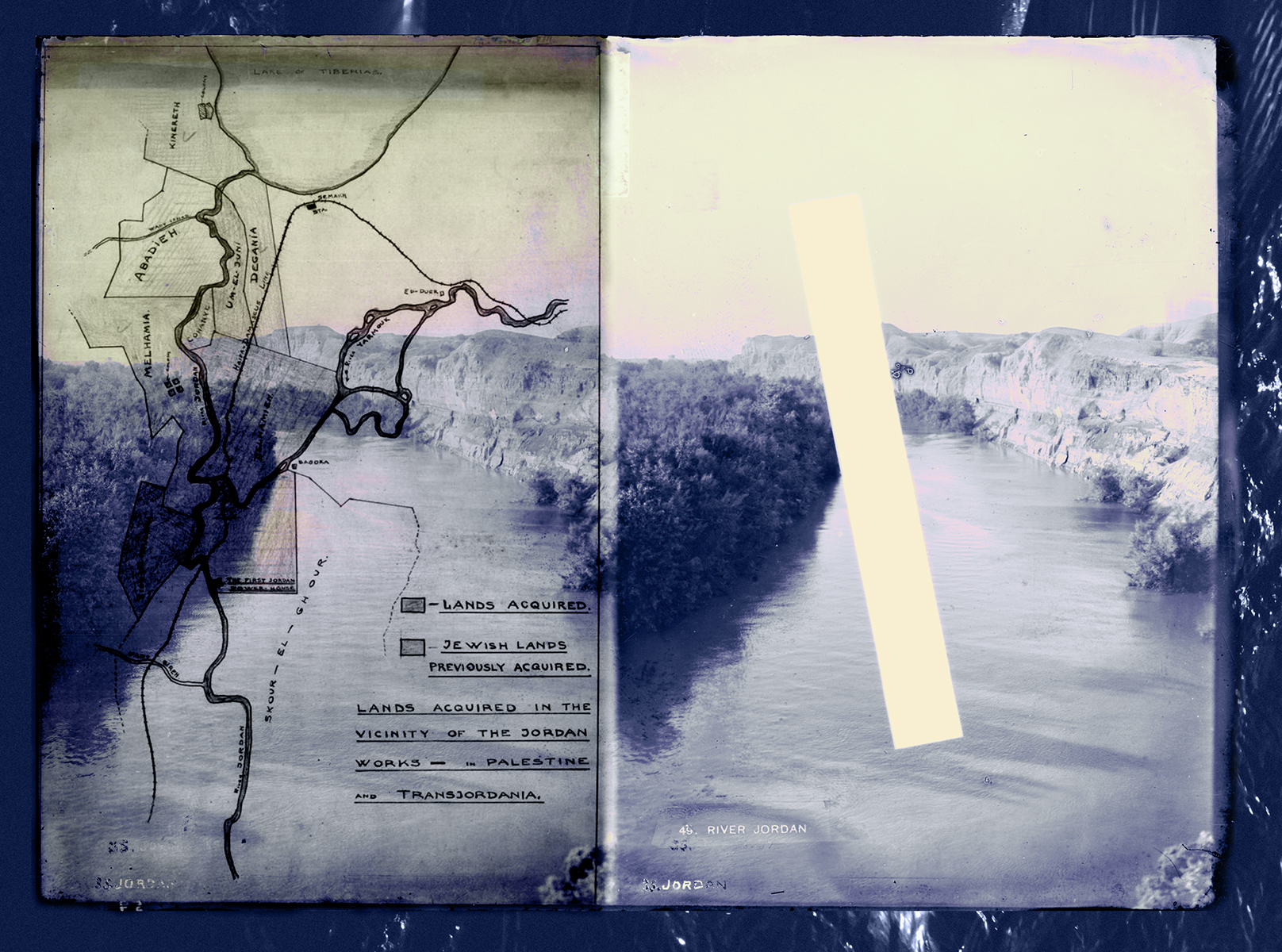
Water’s truth lies in its refusal of fixity, in the gap between what is seen and what is not. What appears one way from above, bounded blue on a map, is something else entirely below the surface. It erodes as it moves, contradicting the premise of borders drawn by Sykes-Picot and the fragmentation of Bilad al-Sham into nation-states and containable pieces, going under and through, moving through soil and reappearing on the other side, taking its own paths regardless of what is ratified to dictate otherwise.
Water in this refusal is fugitive.
And fugitivity, as a concept, is the refusal to seek recognition from colonial institutions for the dispossession they authored and continue to deny. In other words, it is a refusal to wait for the structures that produced the wound to acknowledge it, and instead to move outside their terms entirely. As Halberstam writes of Moten and Harney’s project of the undercommons, “we refuse to ask for recognition and instead we want to take apart, dismantle, tear down the structure that, right now, limits our ability to find each other, to see beyond it and to access the places that we know lie outside its walls.”
To follow water in a borderless way of living and being. To move below the surface through drawn borders is to practice a different epistemology, ways of knowing where liberation is not only the recovery of land but a transformation of how freedom itself is understood. This understanding recognizes how inherited ways of seeing, sensing, and imagining freedom are shaped by the very structures they seek to undo.
Starting with the water as an element and how became the medium of displacement, with the focus on the Jordan River as a site as it became a border during the Nakba. The crossing marked the moment Palestinians were forced to the other bank, into exile, with the loss of the lands. tThe river materially is the threshold beyond which return was refused. To wade through it was to be remade by it.
It is in this sense that water of the river becomes the cause: to liberate Palestine, its grounds, and everything in between the blues of the skies and the waters. The cause is the violence of the crossing, and the cause is in the insistence on the right of return, to cross back to Palestine.
If the river continues its movement despite the border, then the insistence on return continues despite what the colonial Israeli regime declares impossible. The body knows it is possible. With recurring sensations and imagery flowing through memory, those who crossed remember the cold, and the weight of water against legs. In the residue of crossing, with its sensations, and fugitive knowledge held within the diasporic bodies, water became an affect too, registering as sensations and inherited intensities rather than articulated feelings. In this way, struggle and loss are carried forward across generations as a living inheritance. The body that crossed the river kept a register, circulating between diasporic bodies through repetition: the crossing re-told by grandparents becoming the crossing re-felt by grandchildren, accumulating as sensation before it settles as memory, if it settles at all.
Even for those born into the third or fourth generation of الشتات - diaspora, who have never stood at the edge of the Mediterranean, never met their grandparents as fishers on that sea, nor crossed the Jordan River themselves, a quiet pull toward water remains. A familiarity that does not quite count as memory, yet has passed down as such. And so water is not only what was lost or divided. It becomes a way of sensing otherwise, a quiet orientation toward continuity where the fragmentation of borders is enforced, and what Palestinians come to believe about liberation.How liberation is shaped extends far beyond the surface of language or politics, carried in the body’s insistence on movement, on return, on the wholeness of Palestine, and lastly, on the impossibility of remaining contained.
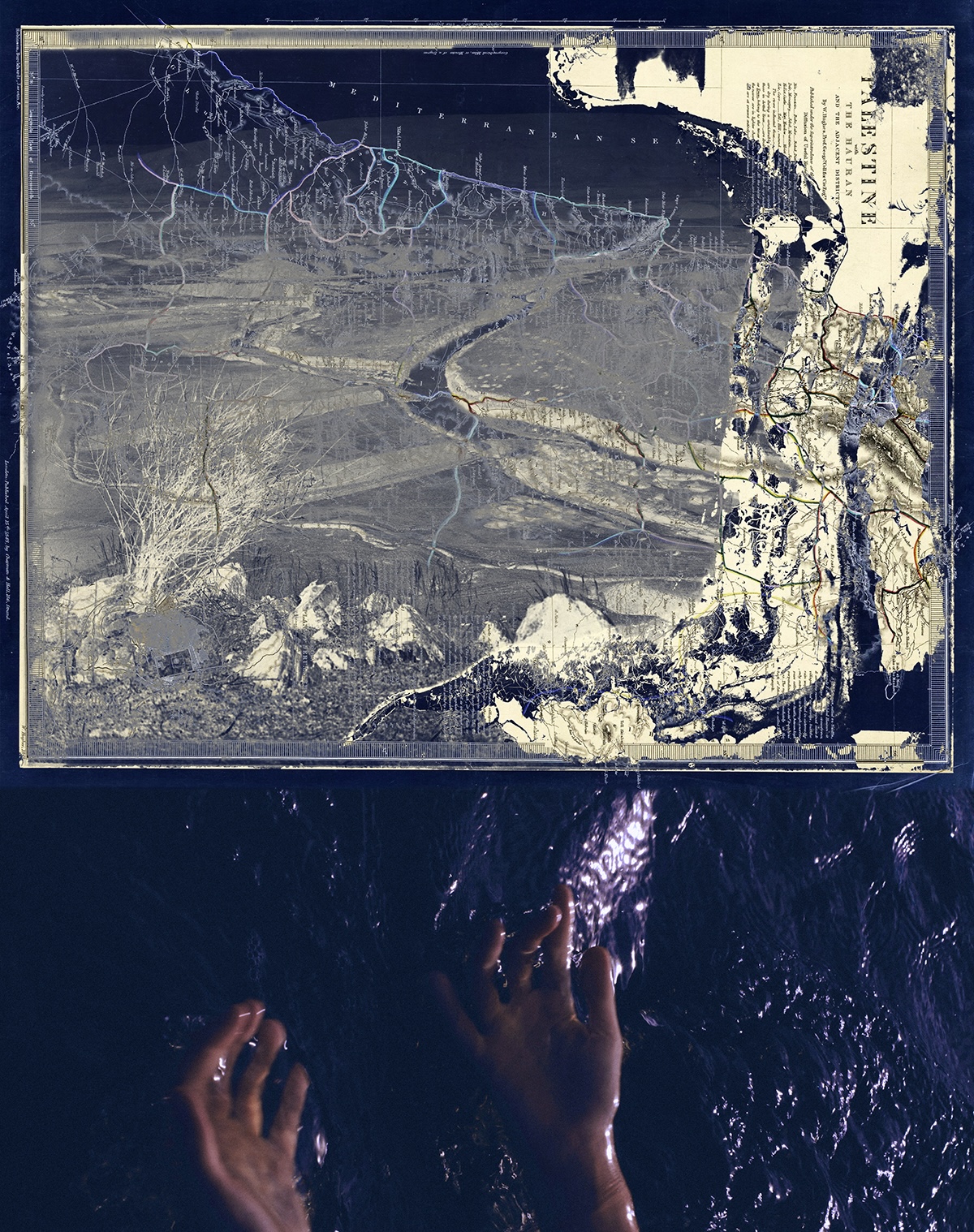
Yet this refusal to be contained, this fugitive insistence, extends beyond the bodies of the diaspora into nature’s own way of being, interrupted by the same colonizer. Israel’s 1964 National Water Carrier diverts freshwater from the Sea of Tiberias, which is the Jordan River’s source of water, deep into Israel, initiating a process of depletion that has reduced the river to just 2% of its natural flow.
Water, too, is displaced.
The instrument of dispossession becomes subject to it. What the people were forced to cross, Israel has been emptying ever since.
And this logic did not end with the river’s diversion. It persists in contemporary regional arrangements that exchange energy for water, where access to life-sustaining resources is negotiated across asymmetries of power. In the case of the UAE–Israel–Jordan agreement, this asymmetry becomes materially stark: the deal would have placed “close to 20% of Jordan’s freshwater under Israeli control,” deepening dependence while offering comparatively limited returns.
What is framed as cooperation thus often reproduces the same colonial power dynamics, where water is severed from those to whom it belongs and recast as a commodity to be exchanged across the very structures that dispossessed it. These arrangements continue to exclude Palestinians altogether - “a party on whom the terms of all three deals would have direct consequence.” This renders them absent from negotiations over resources that are fundamentally theirs.
What does the water hold of all of this, the crossing, the emptying, the bodies that carried it forward, if not the very insistence it was meant to extinguish? In its fugitivity, and as a cause and an affect, water collapses into the full understanding of the struggle for liberation with all its dimensions.
The grandchildren of that crossing answer in chants of الدم ما بيصير مي - blood does not become water. In response to Israel’s genocide in Gaza, as it intensified in late 2023, these protesters gathered outside the Jordanian Ministry of Water carrying exactly that refusal. That the water can be reclassified as a shared regional resource, traded and managed across colonial borders, dissolving the relationship between Palestinian life and Palestinian water into neutral administrative flow. So it insists on the indissolubility of blood and water, life and land, people and the element that moves between them.
The simultaneous cause and affect here, each initiating and reflecting the other, is ever so evident in connecting water’s material behavior to internal perception: what Palestinians believe about liberation, about themselves, their memories, collective fears, the right of return as a possibility, and by extension, about the belief of liberating all of Palestine.
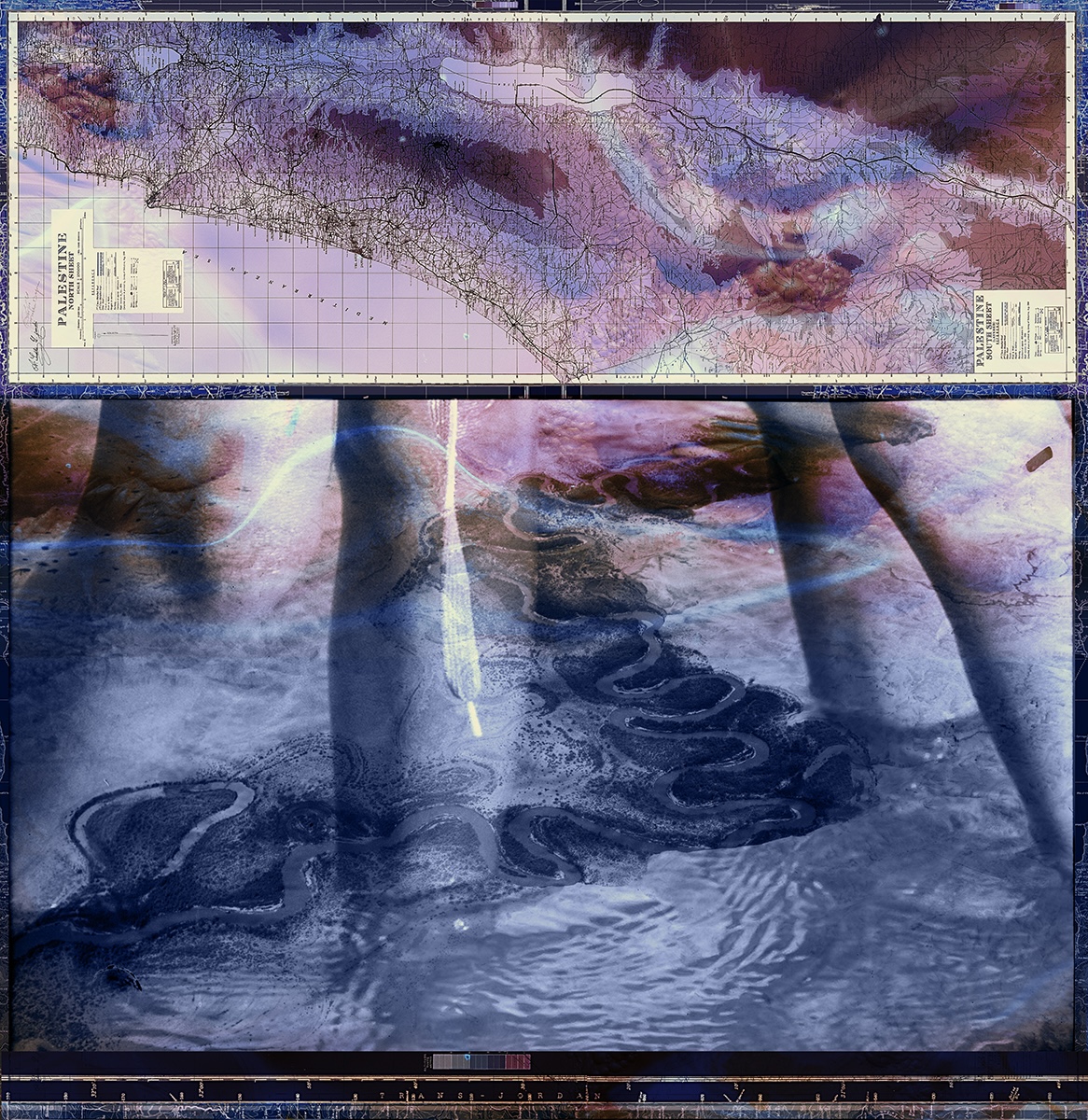
To learn from water is to learn belonging over ownership. Palestinian ancestors acknowledged the land and water as a blessing and a responsibility, tended to it, lived within it. So liberation demands a return to that relation, to a borderless Bilad al-Sham where the fragmented are made whole again, where freedom belongs to the marginalized and the poor, not to the elites who sell patriotism at the cost of their own people’s freedom. It is liberation from the river to the sea, and it is much more, from the capitalist premise of owning the land and owning the waters, as opposed to belonging to them.