

There is an old Bedouin saying that three things make the desert habitable: The Bedouin, the camel and the date palm. According to a Bedouin creation story, when god created humankind from clay, two lumps slipped from his hands. From them came the date palm and the camel.
The story places the camel alongside human life and the vegetation that sustains it - not as an outsider to the desert, but as one of the beings through which the desert becomes inhabitable. It is precisely this ability to live where other livestock struggle that could make the camel relevant in an increasingly hotter world.
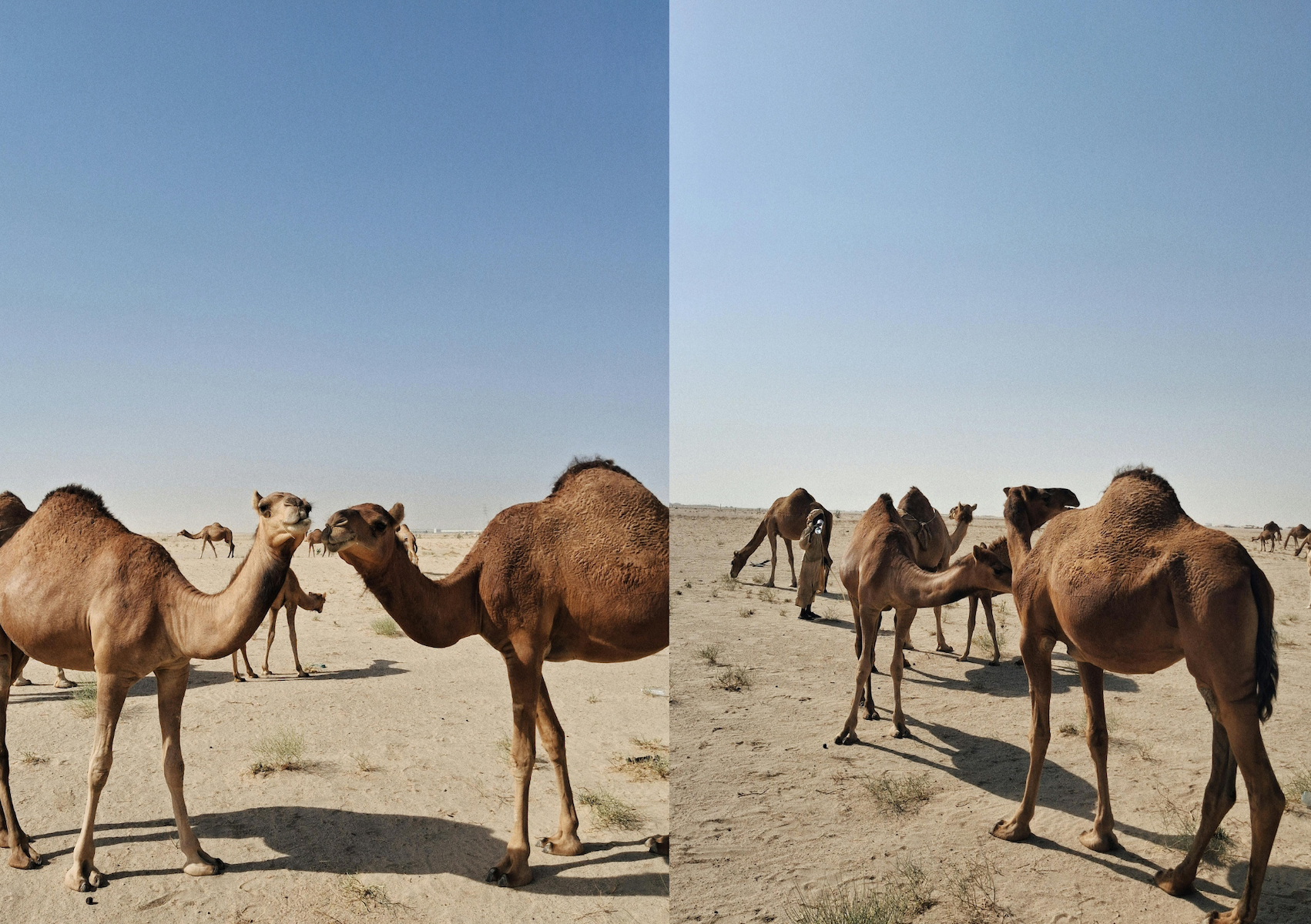
For centuries, the camel has been associated with an environment many people imagine as hostile to life: the desert. Yet the camel does not merely survive there. It has evolved to live with heat, water scarcity and sparse vegetation in ways that most domesticated livestock cannot. Camels can tolerate substantial dehydration, make use of sparse and often low-quality vegetation, and maintain physiological functions under heat and water stress that would severely affect other livestock.
Their ability to produce milk under harsh conditions is also particularly striking. While cattle can experience significant declines in milk production during drought and heat stress, camels are able to continue producing milk even when water and food are scarce. Dromedaries, the one-humped camels found especially across the Middle East and other arid regions, produce milk with a higher water content - for communities living in arid regions, this makes the dromedary more than a means of transport or a source of meat: it can function as a mobile source of both nourishment and hydration.
As climate change intensifies drought and aridity, conventional livestock farming faces growing pressures and the camels’ abilities to adapt to these harsh conditions are attracting new attention. The camel, an animal long considered peripheral to industrial agriculture, is beginning to look like a possible model for a changing climate. Camel farming is beginning to appear in places far from its traditional environments, including Europe, where the first commercial camel farms have emerged.
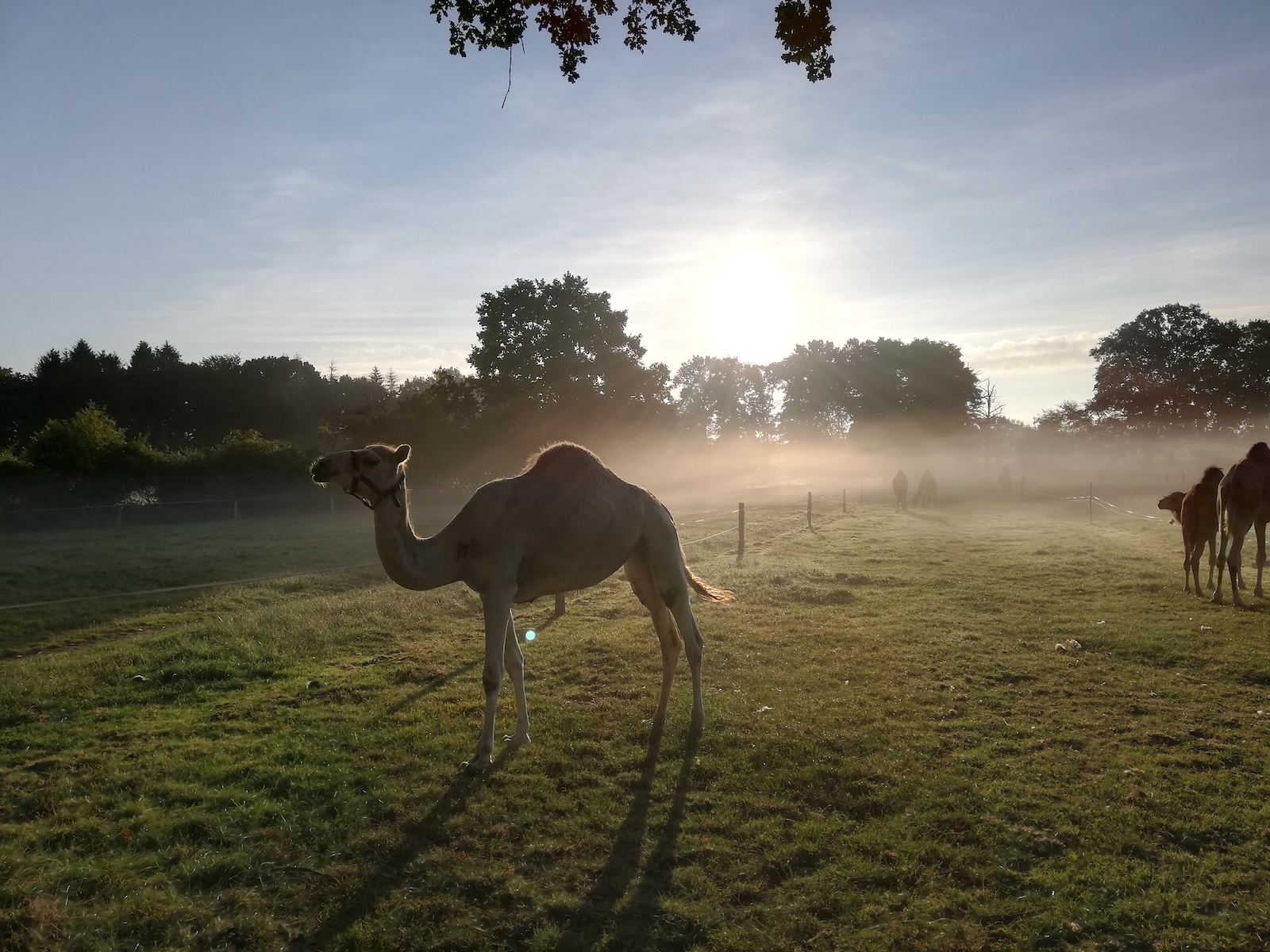
Kamelfarm Marquard (a camel farm in Lower Saxony, Germany)
But of course the answer to a warming world is not to simply replace other livestock with camels. Instead of asking how efficiently we can make use of the camel and its resilience, perhaps we should ask a different question:
What can we learn from the camel? What might the camel teach us about resilience? About living with scarcity, adapting to heat, and inhabiting an increasingly harsh environment? What does it mean to inhabit an environment without demanding that it change for us?
Perhaps learning from the camel means looking beyond its usefulness to us - and towards a different way of understanding adaptation and resilience itself. This is what makes the camel politically interesting.
The camel is an animal humankind has looked up to for centuries. The Koran itself says: “Do they not look at the camels, how they were created?” (Sura 88 Vers 17). The camel has long been admired for its frugality, its hardiness and its ability to endure what would be difficult conditions for humans and other animals. In Arab literature and culture, the camel is often associated with the Arabic word sabr - patience, endurance, and the strength to endure hardship.
Resilience is not necessarily about overcoming hardship quickly. Sometimes it means having the patience and endurance to move through it. Camels teach us that you survive a difficult landscape not by mastering it, but by learning to read it. The camel reminds us that humankind is not the measure of all things. We call the desert harsh because it is harsh for us. But what makes an environment hostile? And for whom? We need to relearn humility towards nature, relearn how to read nature instead of building systems that help us survive harsh conditions while separating us from the environment more and more. This also means paying attention to nature’s limits and rhythms: understanding what a landscape can provide, when it can provide it, and what it asks of those who inhabit it.
Resilience especially begins with knowing what we truly need in an environment and learning to live with less. The camel and its frugality challenge our idea of consumption. Rather than depending on constant abundance, its body has evolved around scarcity. It makes use of what is available rather than demanding that its environment provide more. Perhaps this is another lesson for a warming world: resilience begins not only with finding new sources of abundance, but with questioning how much we believe we need. Applied to agriculture, this could mean choosing what to grow or raise according to what the landscape can actually support — rather than forcing the landscape to meet the demands of our agricultural systems. Nevertheless, resilience can also become a dangerous expectation. If we simply ask people, animals and ecosystems to become more resilient, we risk accepting the conditions that made resilience necessary in the first place.
The idea of learning from other species is not new. The field of biomimicry is built around the premise that nature has already solved problems that humans are still trying to solve. Engineers have studied termite mounds to develop passive cooling systems, while the structure of gecko feet has inspired new forms of adhesion. These examples do not simply imitate nature’s appearance. They study how living beings function within particular conditions.
The camel offers a similar lesson. Its coat, for example, has inspired research into passive cooling systems. The dense layer of camel hair helps insulate the animal from the heat outside while limiting the amount of water it needs to lose through cooling. Researchers have translated this principle into materials that combine insulation with evaporative cooling, creating systems that can keep objects cool without relying on conventional air conditioning.
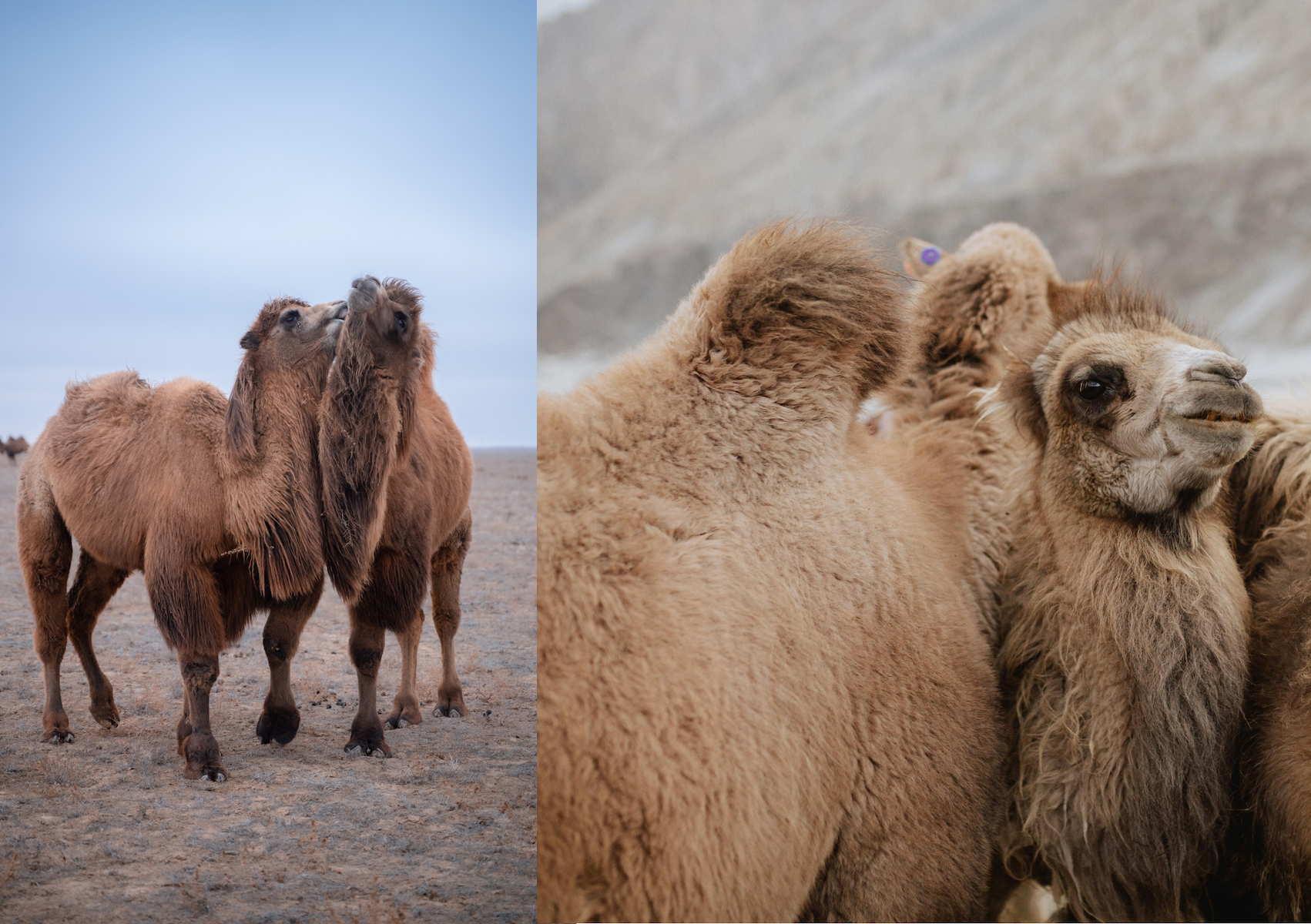
The lesson is not simply to imitate nature’s appearance and copy the camel. It is to study how living beings function within particular conditions and to ask what their adaptation reveals: how can we keep cool without demanding ever more water and energy from our environment? How do we design systems that acknowledge the limits of the environments we inhabit? In agriculture, this could mean choosing livestock and crops according to the water availability of a landscape, rather than trying to make a landscape meet the water demands of the animals and crops we have chosen. In a drought-prone region, the question would not only be how much milk or meat an animal can produce under ideal conditions, but how much it can produce without exceeding the ecological limits of its environment.
Coming back to the saying we stated in the beginning, the Bedouin, the camel and the date palm show that inhabiting a harsh environment is not about conquering it or overcoming its limits. Living in the desert does not mean winning against it. It means sustaining a relationship with it. And perhaps that is exactly what we need to relearn.