

Political theater will always be the catalyst for change. Protest is a form of public demonstration that allows people to assert their voice and value. Inevitably, action will trump power and we can see this in history but also in the present day.
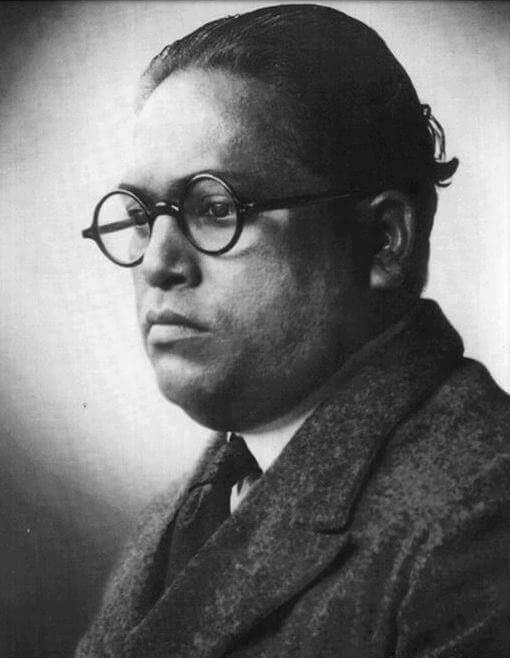
Nearly 100 years ago, on March 20, 1927, B.R. Ambedkar led a demonstration. He led thousands of Dalits into the town of Mahad where they marched towards a water tank. Dalits were banned from drinking this water, not legally, but through custom. Dalits, informally and crudely known as untouchables, are the “lowest” in the hierarchy of caste. The simple gesture of taking a sip of water showcased the injustice of caste and the absence of equality, issues that are still relevant to this day. This defiant incident is known as the Mahad Satyagraha.
In India, a new movement has begun, and it draws parallels to the Mahad Satyagraha. The backdrop begins with education. Culturally, it is known that education is prioritized for most Indians. It is synonymous with opportunity. For the youth in India, aspiring to have a specific career is heavily dependent on where you go to college. If you want to be a doctor, you go to medical school. Simple enough? Not entirely. Where you go to college is often dependent on a single examination. Think of the SATs on steroids. Those students that have the ability to pay for tutoring, that have the time to dedicate to studying, and those that have an already solid educational foundation - they are more likely to succeed.
It’s important to note, India emphasizes the collective rather than the individual. Therefore, many aspirations are motivated by the chance to better not only their lives but their families as well. This is the context and reason why one exam is so ruthless and cut throat. It seems to be more of a competition than a test, and year after year, as wealth inequality increases, AI begins to take its reins, and capitalism enters its late stage, the stakes of an examination seemingly has the weight of the world. There is a ripple effect from one exam; the exam determines a student’s education, which determines their career and their career determines their ability to make a living.
In May 2026, it came to light that the National Eligibility Entrance Test (NEET), India’s undergraduate medical school entrance exam, had been leaked online. The questions were being sold for large amounts of money and the extent of the corruption is still unknown. However, what is known is the results had to be scrapped because of the tainted exam. Two million students who had sat for the exam had to watch years of preparation and hard work go to vain. The grim realization that deep rooted corruption would always hinder any chance of financial or social progress, and an uncertain future, led many students to suicide.
Simultaneously, the education minister, Dharmendra Pradhan, who is part of the right wing Indian government, specifically the Bharatiya Janata Party (BJP), sparked outrage when he compared unemployed youth to cockroaches. An insult that dehumanized and was found to be particularly callous when news of students suicides was making headlines.
.jpg)
In response, Abhijeet Dipke, a Dalit, formed the satirical Cockroach Janta Party (CJP) to be a voice for the marginalized youth, and to address systemic classism and inequality. Although initially a parody, the anger was anything but. Instead, it was channeled through, of all things, memes on social media.
Soon, CJP went viral and attracted the attention of millions whilst also slowly finding legitimacy. What began as an online movement turned into a political demonstration at Jantar Mantar in Delhi. Here, they made their presence known. There was a physical representation of their plight with unemployment and the education system. Very quickly, demonstrations were being held nationwide and gathered global attention. Sonam Wangchuk, a prominent activist, joined the movement to showcase solidarity as he vowed a hunger strike which lasted 26 days.
The CJP made valid demands: education reform, compensation for the money wasted as a result of the scrapped exam, and the resignation of Pradhan. A manifesto was written to clearly lay out their goals and by July 20, they took it to parliament. Thousands of students marched in what is now called the Chalo Sansad. They were confronted by police who sprayed tear gas and inflicted beatings upon them. And yet, they persisted, showcasing the purpose of a democracy.
Without any dissent, India will slowly delve into fascism, which it has dangerously teetered on with the rise of India’s Prime Minister and leader of the BJP, Narendra Modi. Modi has been spreading Hindu nationalist (Hindutva) beliefs ever since he began his career in politics. In 2008, he published a collection of essays titled Jyotipunj, where he highlights leaders that have inspired him and lays out his vision for India. He openly admired the racial policies of Nazi Germany and agreed with the notion of cultural purity. Earlier this year, as I was walking through a book shop in Bangalore, I was shocked to see Mein Kampf displayed for sale.

However, as I further understood Modi’s views and how it is now being collectively shared by millions of Indians, it doesn’t seem as shocking. In 2014, as Modi became the Prime Minister, he began implementing Hindutva policies through his governance and concurrently began undermining the press.
Without the press, there can be no room for dissent.
Censorship, intimidation of journalists, and the concentrated wealth owning the majority of the media has led to the dissolution of the freedom of speech: the backbone of democracy. Modi has introduced prejudiced immigration policies that benefits Hindus, revoked Article 370 which previously allowed Jammu and Kashmir autonomy, built a temple on the ruins of a Mosque, and has increased anti-muslim rhetoric.
Perhaps the reason Hindu nationalism is not as feared as Muslim nationalism, is because there is the stereotype of peace, yoga, and spirituality that is often associated with Hinduism. As a result, Modi’s actions are seemingly overlooked by many outside of India. He has been slowly turning India into a nationalist state, until now.
The rise of these student protests is a result of the tension that has been building over the years. They are showcasing how political theater allows for effective dissent even in the midst of fascism.
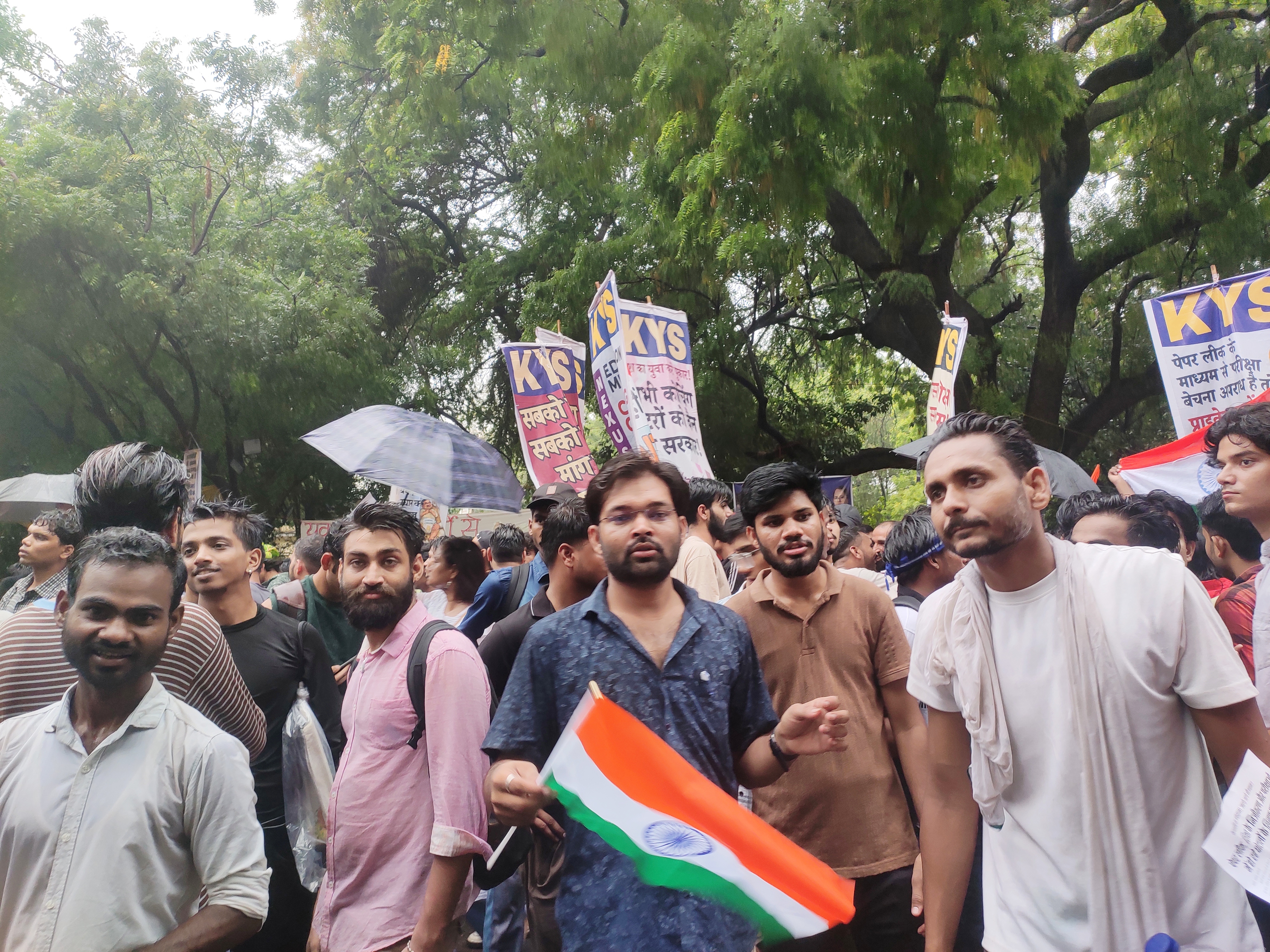
But the CJP is not yet finished, but it has been successful thus far. Pradhan, the education minister, announced his resignation, there have been government concessions, and most importantly, there is a campaign now to begin fixing the infrastructure of the educational system.
Ambedkar, through his leadership, demonstrated that water belongs equally to everyone. But his protest wasn’t just about the water tank. It was about equal access. The CJP has demonstrated the same. An exam should be an equalizer. Privilege, in theory, should not prevail. Fundamentally, the parallel between the Mahad Satyagraha demonstration and the Cockroach protests come down to human dignity. The way I see it, there really is no distinction between the notion of access to water and access to education.