
Earlier this year, as anyone fashion-obsessed would, I went to see The Devil Wears Prada 2 hoping to see the glitz I can only fantasize about - fabulous designer clothes, a messy but entertaining fashion chaos, and reference after reference to luxury labels that make every fashionista swoon. What I got instead was the most honest film about journalism in years. In the middle of Succession-esque boardroom maneuvering, something dreamy happened. Lucy Liu, gorgeous and improbably benevolent, plays a billionaire philanthropist who swoops in, writes a check, and saves the magazine from her ex (in an alleged satire to billionaire Jeff Bezos). In the film, the Runway masthead survives and all is well. I left the cinema slightly dazed, and feeling more romantic about my profession than I had any right to be.
Because here is what I knew walking out, and couldn’t quite shake: billionaire owners currently seem to be the only hope for magazines and newspapers. And the ones we’ve actually been given - Bezos gutting the Washington Post down to its bones, Marc Benioff laying off Time journalists days after announcing AI could replace them, and Murdoch being Murdoch - are nothing like Liu’s character.
So the film left me with a question I can’t stop pulling at: is journalism now entirely dependent on the existence of a ‘‘good billionaire’’? And most importantly, how would we even recognize one if they even existed?
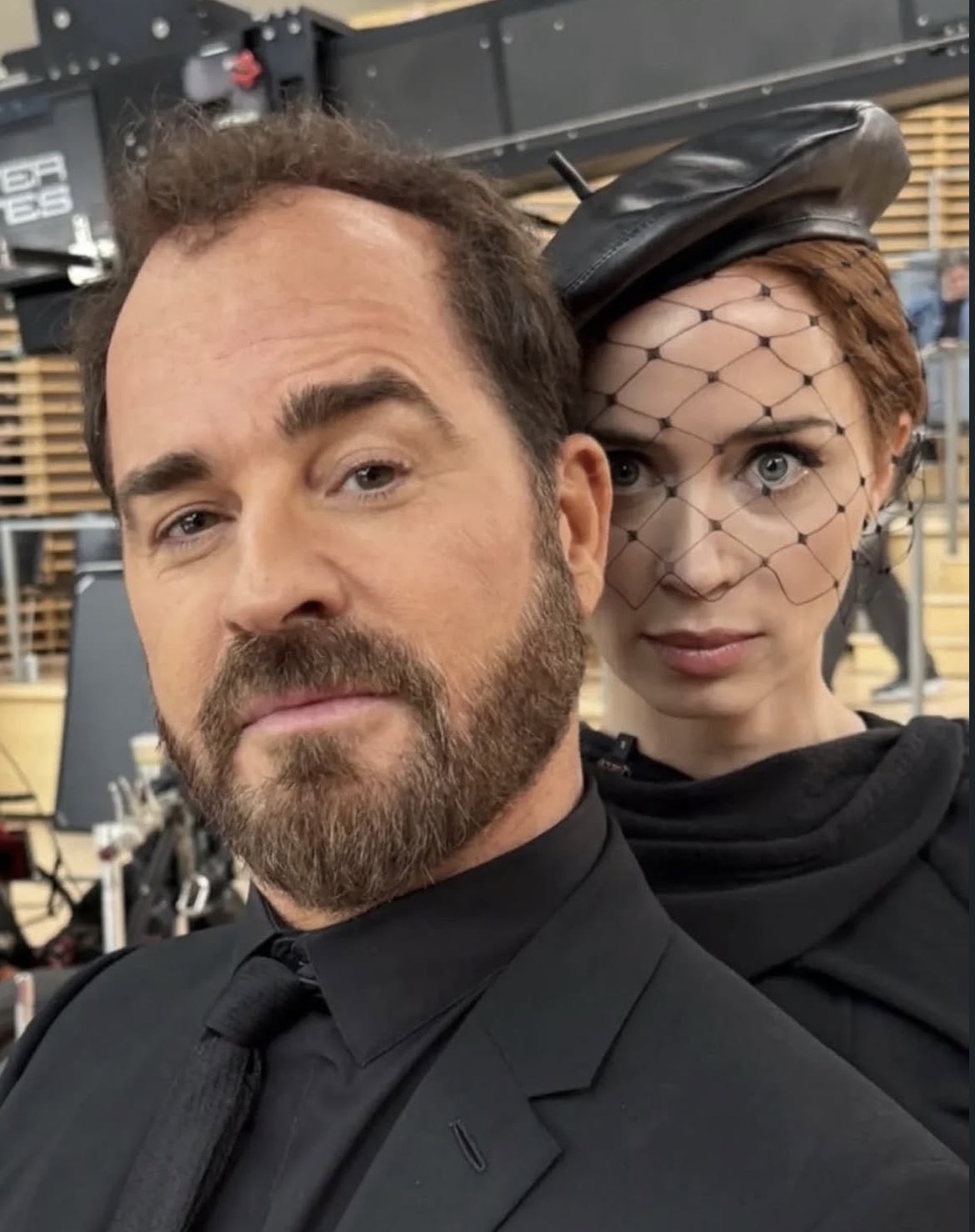
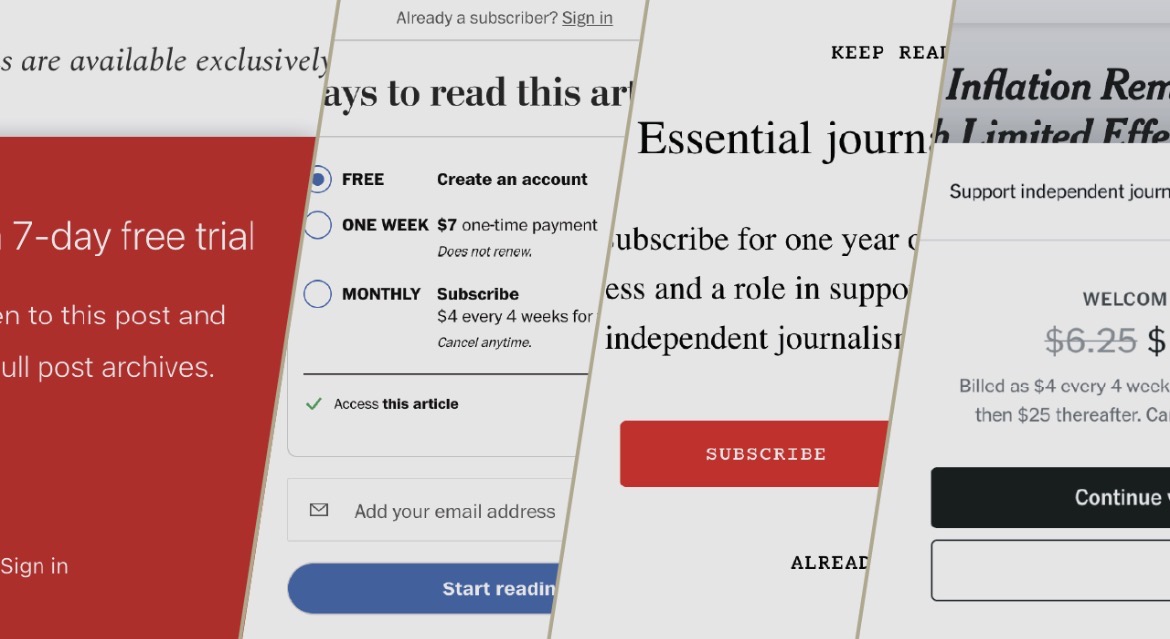
The journalism industry has long struggled to find a new funding model after the rise of social media, which came to steal away its ad revenue. Paywalls and subscription models rarely scale beyond a handful of national outlets. So between the two, in came the billionaires: knights in shining armor, rushing in, all too eager to spend their money, invest, whatever it takes, in the name of public interest, but beneath the surface lay their own agendas.
According to Rodney Benson, sociologist, media, culture, and communication professor at New York University (NYU) and one of the authors of ‘‘How Media Ownership Matters,’’ he’s seen this ‘dream’ before: an owner swoops in, initially welcomed as a savior, and years or months later, turns sour. So how do we tell the good from the bad?
Benson breaks it down into three key criteria: public service; economic instrumentalism; and political partisanship.
For his 2025 book, the sociologist and his colleagues conducted extensive research in the U.S., Sweden, and France - speaking with executives, editors, and reporters, while analyzing news content at more than fifty outlets across the three countries. While their research focused on news media, the professor believes the same criteria could apply to any type of media that produces politically relevant texts, images, or videos.
As a first step in assessing a billionaire owner’s character, public service rests on journalism’s core principles: its role as democracy’s watchdog keeping the public informed about powerful institutions and providing a pluralistic forum for a wide range of voices. As Benson puts it, ‘‘the question is always whether the owner is doing enough to support it,’’ noting that this support spans across everything from investing in reporting that’s vital for democracy to standing behind press freedom even under the threat of a lawsuit.
The tension between ownership and public service has played out in real time at one of America’s most storied newsrooms. In February 2026, Bezos’ The Washington Post carried out excessive layoffs, firing more than 300 journalists, dismantling the sports desk, closing the books section, and heavily scaling back international coverage in places like Ukraine and the Middle East. On a Democracy Now! feature that aired that month, Nilo Tabrizy, an investigative reporter who closely covers Iran, shared his views on the dismantlement of the Middle East team he worked for, along with other international bureaus, calling it ‘‘a loss for our readers, a loss for everyone.’’
'‘We do this job because we want to be in service to the public,’’ Tabrizy told host Amy Goodman. Karen Attiah, the former Global Opinions editor at the paper, who was fired last fall, put it more bluntly: ‘‘Now to see him [Jeff Bezos] butchering the Post…at a time when America desperately needs to know what’s going on in its own neighborhood and in the world, it’s unconscionable.’’
Beyond the question of public service, Benson points to a second point: economic instrumentalism, which refers to when an owner uses their media properties to promote their own business interests.
'‘Not surprisingly, this tends to come up most often when an owner has significant non-media business holdings,’’ the NYU professor says, explaining that this can look like ‘‘news’’ that just happens to promote the owner’s businesses, or, the suppression of negative coverage about them.
That’s because there’s ‘‘a basic conflict of interest built into the arrangement from the start,’’ regardless of what a billionaire owner says at the outset about doing the right thing or defending press freedom. Cases like Bezos and Amazon, Larry Ellison and Oracle at CBS - and potentially soon CNN - or Patrick Soon-Shiong’s ImmunityBio and NantWorks at the LA Times, underscore how outside business interests function either as a temptation or a vulnerability. ‘‘If the owner has these conflicts of interest baked into the deal from the start,’’ Benson adds, ‘‘it’s only a matter of time before those interests become a problem and compromise the journalism.’’
But it doesn’t stop there. As Benson explains, economic instrumentalism can also tangle with politics, making ‘‘explicit or implicit quid pro quo deals with politicians to ensure they get lucrative government contracts or favorable regulatory rulings.’’
The reason media moguls venture into media in the first place is rather simple: not public service, but access: owning a media outlet grants access to policymakers that their other businesses can’t secure on their own. However, as Benson puts it, ‘‘owning companies that require government regulatory approval makes it more likely that the owner - subtly or not so subtly, and almost always through subordinates that they hire - will change editorial policies to be more favorable or less critical of the government.’’
In practice, this means that even if the owner never applies direct pressure on journalists’ coverage, a degree of caution and self-censorship is likely to creep inside the newsroom regardless.
Although Ann Telnaes worked remotely throughout her entire tenure at the Washington Post from 2008 to January 2025, she began to sense something was off during the 2024 presidential election. ‘‘An editor suggested not doing so many Trump cartoons,’’ she tells Everything is Political. It wasn’t framed as an order, but paired with the paper’s non-endorsement of a presidential candidate, it struck her as a clear warning sign. She had grown convinced that a second Trump presidency would be ‘‘dangerous for our democracy and country’’ and carried on with her critical cartoons anyway.
While Telnaes was allowed to draw a cartoon criticizing Bezos’ decision to make a donation to Trump’s campaign under Amazon, getting it approved, in her words, always took ‘‘a couple of hours.’’
Then came the killing of her cartoon depicting tech oligarchs and billionaire newspaper owners currying favor with the newly elected Trump and that was when she decided to quit.
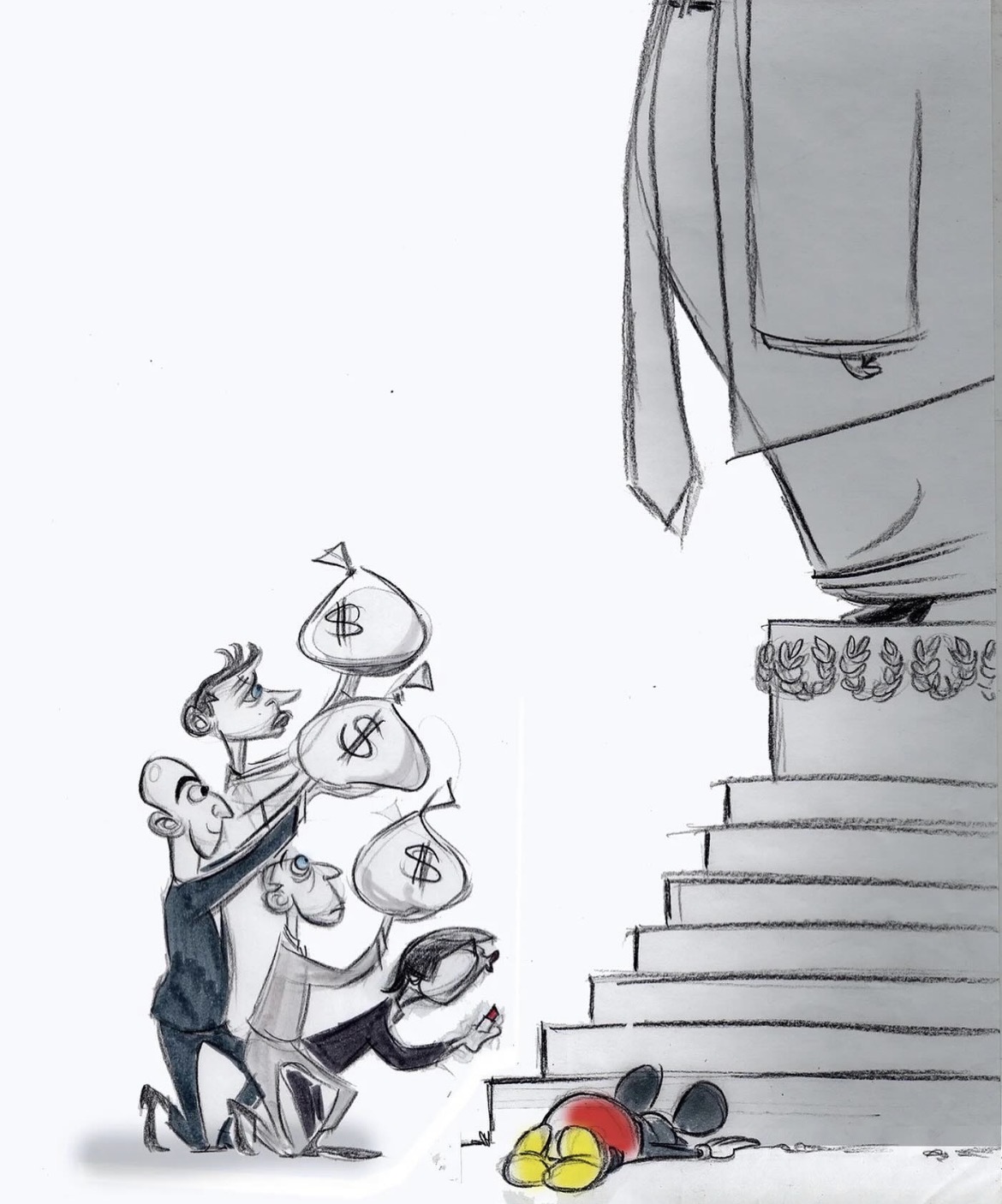
Photo credit: Ann Telnaes
'‘One should always consider who is funding a news organization,’’ she says. ‘‘When I taught a college level editorial cartooning class, I told my students to always check the ‘who we are’ tab on an organization’s website before reading articles.’’ The same applies to journalists, who are increasingly distancing themselves from newspapers and magazines that are now under the belt of billionaires, and moving closer to independent publications or websites like Substack. ‘‘It’s early days, and subscription models depend on readers, but it’s an important development,’’ Telnaes adds.
Although economic instrumentalism sometimes coincides with the political, the latter does not necessarily imply the former.
The third criteria, according to Benson, leads back to pure political partisanship. ‘‘We might notice a one-sided partisan slant in an outlet’s coverage, and wonder if that’s related to the owner’s ideology.’’ Whether that concern lands, he says, depends largely on whether people agree with the ideology in question, and ‘‘maybe that’s fine, as long as we have plenty of media owners representing a range of opinions.’’
But what we’re seeing now is far more different: major publications are drifting right under sustained political pressure from Trump’s administration, leaving coverage thin and at times repetitive.
Amid political partisanship, the NYU professor observes, one can witness a systematic trade in lies and half-truths, the demonization of political opponents, and the scapegoating of vulnerable populations. Whatever the owner’s motive - ideological, economic, or some mix of both - the outcome is the same. ‘‘It’s a serious problem, and the owner bears a significant share of the responsibility,’’ Benson observes.
Responsibility seems to be a defining feature of the ‘‘good’’ billionaire. When asked who are good stewards of journalism, the sociologist instantly recalls the Sulzberger family, which owns The New York Times - which is, however, marked by Zionist coverage -; the Graham family, which long held The Washington Post (until threw in the towel and sold it to Bezos in 2013); the Newhouse family, which owns Advance Publications (including The New Yorker); and even the descendants of William Randolph Hearst, who have been investing in local newspapers across U.S. at a time when most owners are cutting back. In these cases, he notes, while very wealthy, these media owners are not billionaires, and that makes a real difference.
Ultimately, for the sociologist, the real dividing line isn’t between good and bad billionaires, having less to do with individuals and their commercial interests, and more with whether ownership sits with civil-society organizations or public media outlets instead. Across his work, Benson points to standouts in quality reporting, spanning from the U.S.’s ProPublica and the Center for Investigative Reporting to France’s La Croix (owned by the Catholic Assumptionist order) and the journalist-controlled, entirely reader-funded Mediapart.
While these constitute good examples, independence in the media will always be relative. ‘‘Whether it’s a single individual or a stock market–traded company or a nonprofit, and whether the funding comes from advertising, subscribers, large or small donors, or public money, there’s never going to be complete independence,’’ Benson says.