

July 2006, in a school cafeteria. I was a film student in Los Angeles, writing a time travel script about a dystopian Beirut in 2050, a city fractured into contaminated zones, divided by invisible borders. I thought I was inventing a future, holding on to the only two things I trusted—my body and my camera.
A friend approached me, and in a measured tone, asked if I had seen the news. I hadn’t. Back then, news didn’t live in our pockets. I opened my laptop and watched the screen load. The headline appeared: Lebanon under siege. I read it once. Then again.
My body traveled faster than time, returning me to the wars that raised me. Four wars folded into one body: the civil war, the shelter; the occupied South, our land; the Grapes of Wrath, the massacre; the liberation of the South, resistance, as if liberation was ever a clean ending.
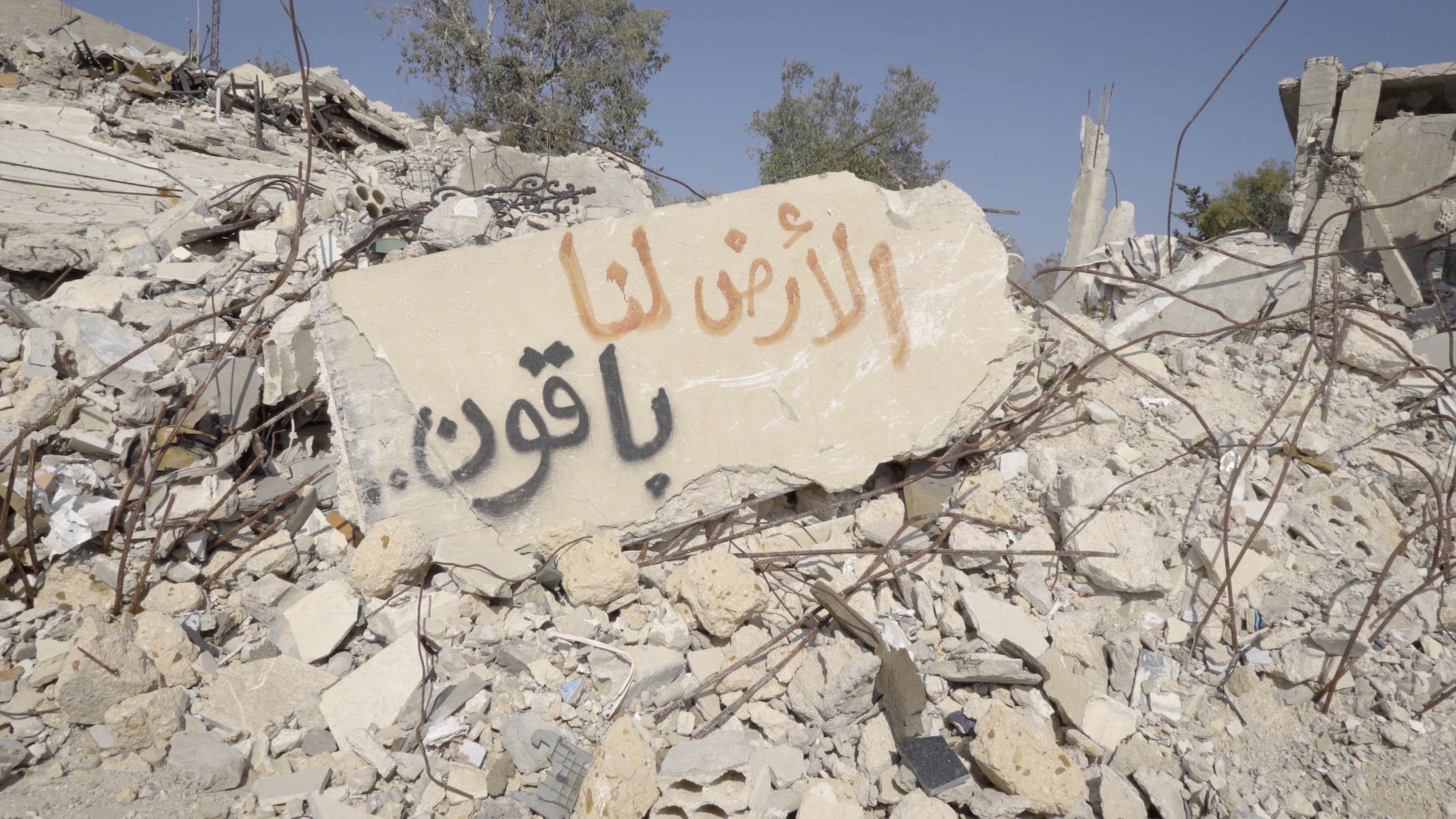
Photo by Iyad Abou Ghaida, Courtesy of EcoRove
For thirty-three days, I moved through hallways as a ghost rehearsing normalcy. My body was in Los Angeles, but everything else had already returned home. I was living in two realities. I attended classes, nodded at conversations, and interrupted them when they turned into lies. I watched the room shift around me. I heard voices trying to reduce me. “Lebanon is a baby country,” they said.
My mother, my brother, and my father were in my “baby” country, and it was being erased in real time. Distance suspended me between memory and dread. I remembered the way bombs arrive first as vibration. I imagined my mother running to the hallway, the safe place that is never safe, the place every home learns to designate when the sky could open without warning. I lived inside the unknown and carried fear like a second spine.
When the ceasefire was announced, I searched obsessively until I found the first flight scheduled to land in Beirut. I booked it without thinking. The plane was filled with people like me, suspended between elsewhere and home. No one spoke. When the mountains of Lebanon began to appear through the window, the silence broke. Around me, people cried, including a flight attendant who had left her newborn in Beirut for what was supposed to be a one-night trip to Paris and found herself stranded there for thirty-three nights. From above, Beirut looked impossibly beautiful and unmistakably wounded. It was the sight of a land that holds you, even when broken. When we landed, the airport was quiet. Welcome home.
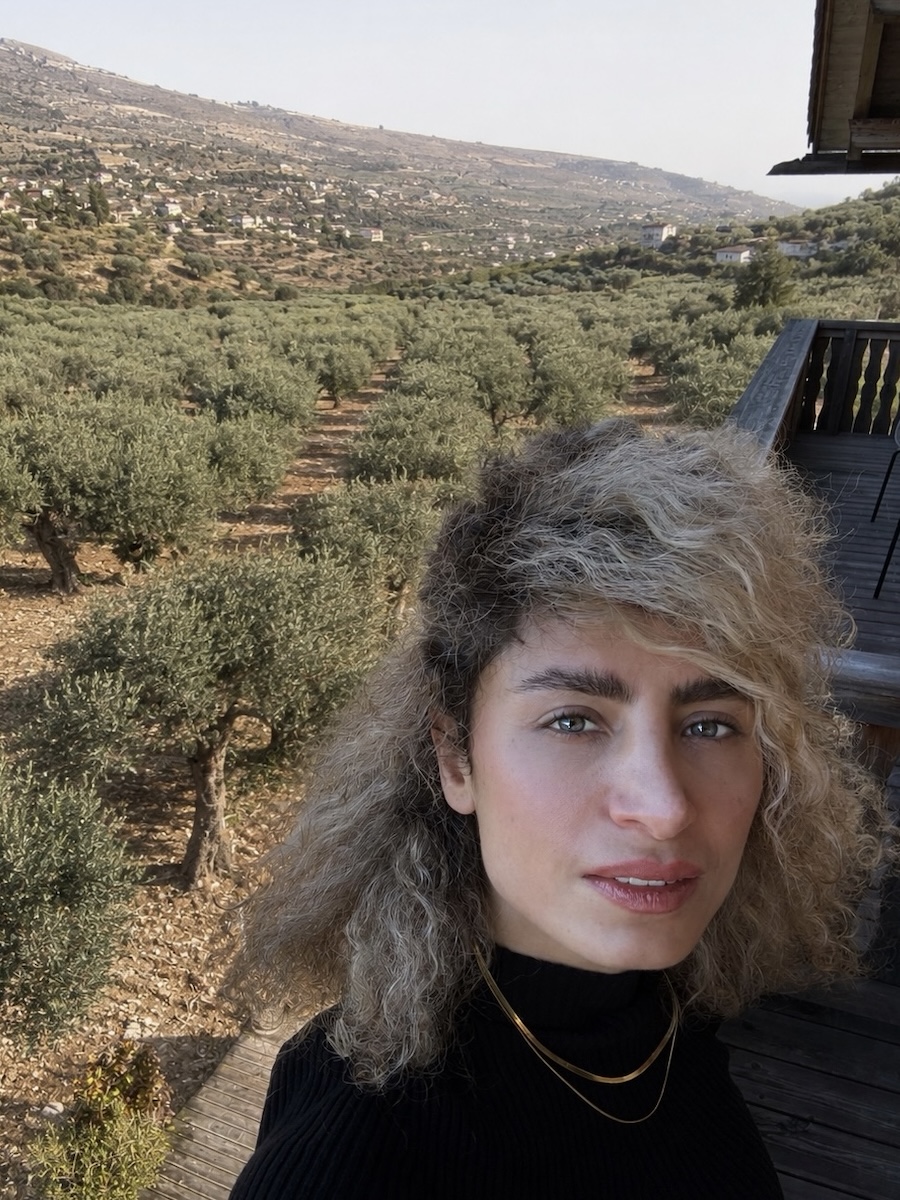
Grandma’s olive grove, courtesy of author
I did not go home. I went to the sea, the way I always did. I stood there looking out when a military vessel appeared, stationed to intimidate Beirut, as if it could make itself larger than the sea. It carried that certainty that forgets the sea cannot be conquered.
After the sea, I called a family friend and asked him to take me to the South, where I had planned to film. I was no longer interested in science fiction. I wanted the matter of fact. His name was Abdallah. He arrived on a motorbike. I got on behind him, and we drove toward a landscape that had been deliberately undone.
Villages I had known since childhood - Bint Jbeil, Khiam, Odeisseh, Nabatiyeh - were reduced to outlines, homes opened like broken shells, walls collapsed inward, tobacco fields burned into rows of ash. This was erasure, intent on removing what stood and any trace that it ever existed. The ground itself could not be trusted. Every step carried the possibility of mines. People searched for memories in ruins. Children played where no child should be.
A villager approached and asked me where I was from. I said Doueir, and that I lived abroad. His face softened as if I had earned my return. He placed a labne sandwich in my hands, wrapped in thin paper. The labne was alive on my tongue, olive oil seeping through the warm bread. I ate it without thinking.
That is when I noticed the balloons. They carried the colors of celebration, bright against ash and dust. They looked playful, but out of place, as if they had arrived from another world. They did not belong there. I put down my camera and reached out to touch a yellow balloon. I held it briefly against my chest. I was wondering what kind of celebration could survive here.
By the time I returned to Beirut, my body had already begun to turn against itself.
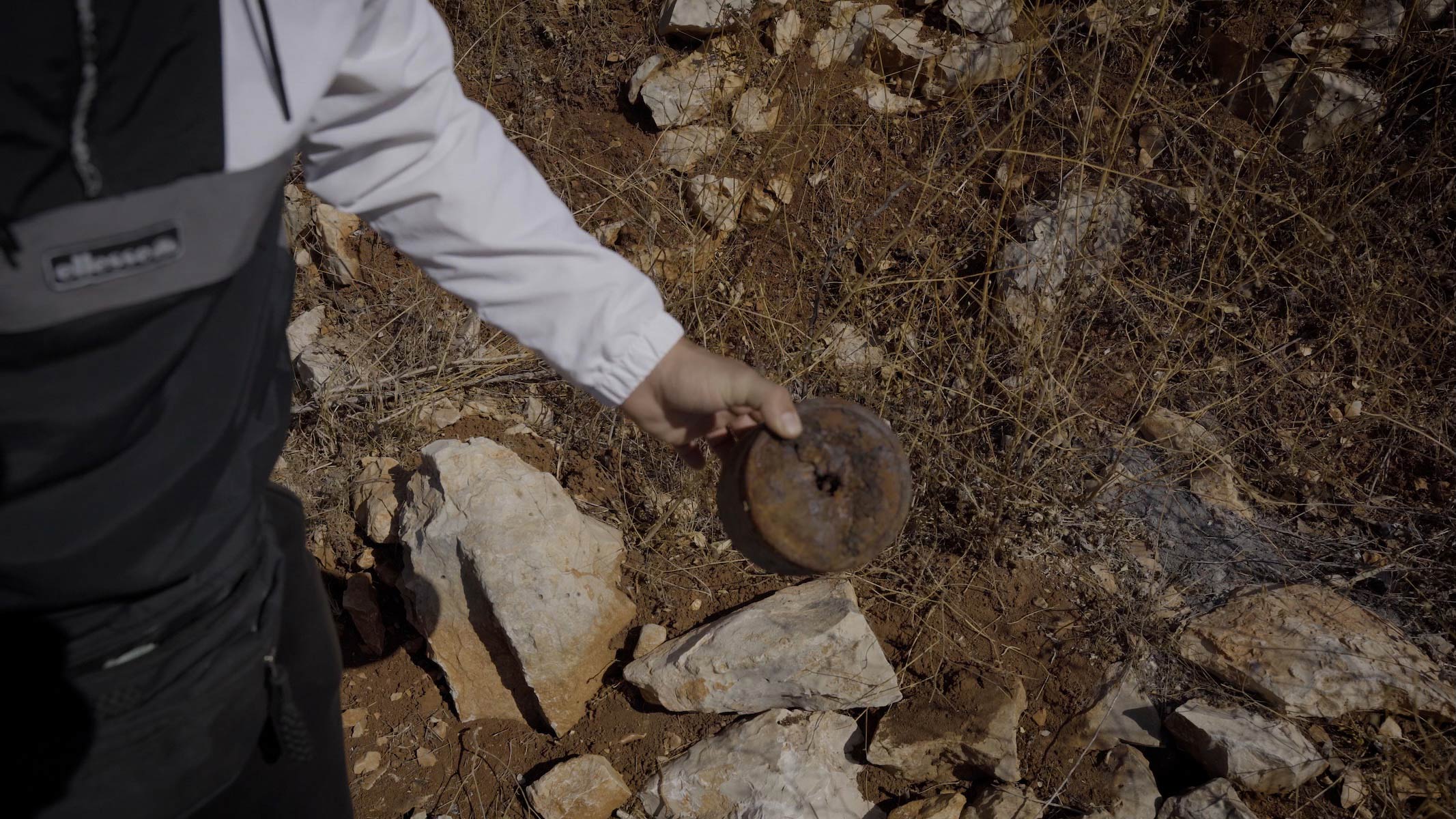
Photo by Iyad Abou Ghaida, Courtesy of EcoRove
It started with nausea, then fever, then something like a collapse that had already crossed a border. My organs withdrew in ways I could not control. They said it might be food poisoning. The suggestion felt insulting, almost absurd. As if my body, raised on this land, shaped by its water, its air, its contradictions, and its wars, could be undone by something so mundane.
This was not mundane. This was foreign. This was colonial. Something had entered my body without permission and was attempting to reorganize it from within.
Days were no longer measured in hours, but by whether I was still alive in the morning. You made it to today, the doctors would say, every morning. My digestive system was failing. At some point, a doctor stood at the edge of my bed and said it plainly: There is nothing more we can do. This is between you and your body now.
*Between you and your body. *That sentence settled into my breath. I was no longer in a hospital. I was in a battlefield, and I was fighting alone.
Every morning and every night, I woke up to the figure of Jesus nailed to the white hospital wall. I had always thought we shared something small, a birthday month. But lying there, I began to understand that we shared something else. His body remained suspended. I studied his wounds, the torn skin, the stretched limbs, and the stillness. Pain had settled into his body, and he was alone, held between life and death. There was nothing more to be done. It was between him and his body.
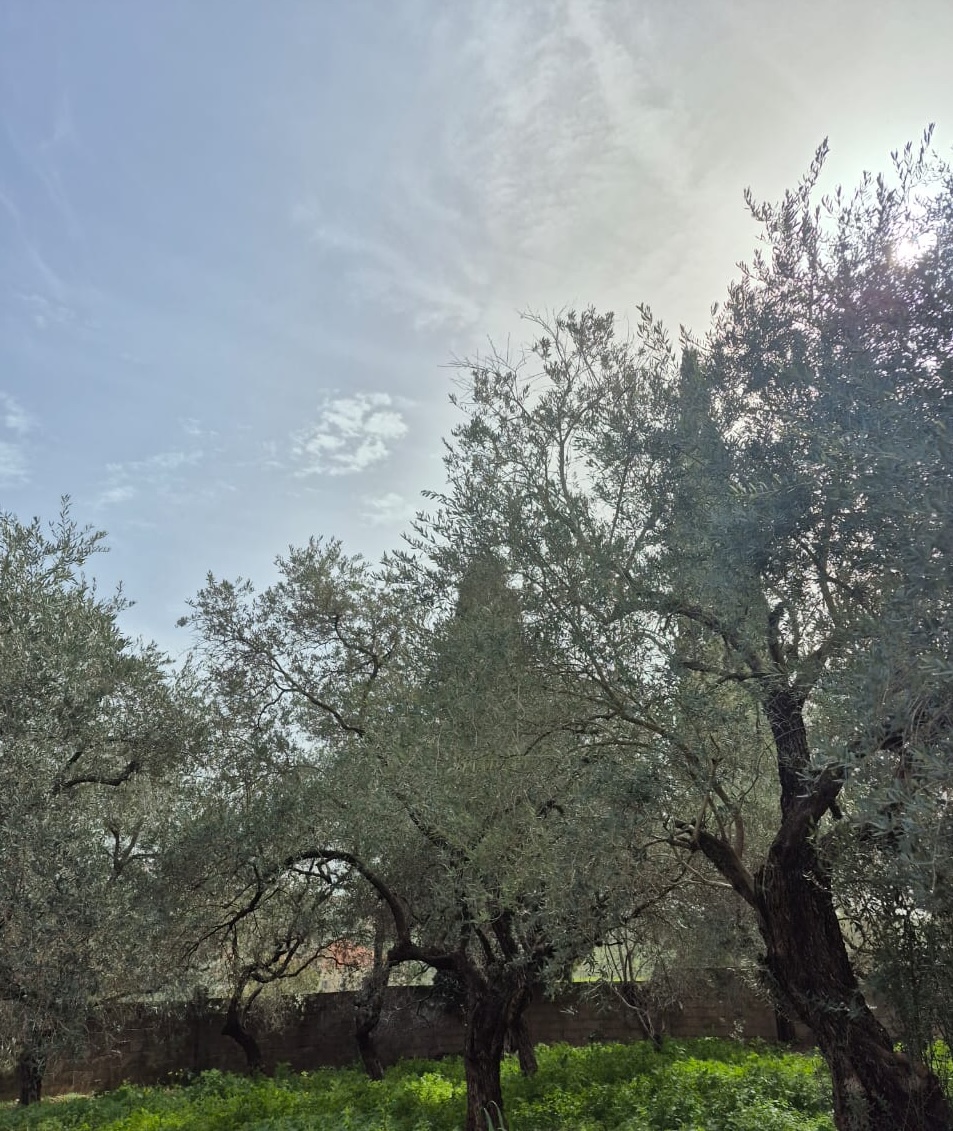
Grandma’s trees, courtesy of author
My Southern grandmother used to say there comes a moment when each of us is called to stand alone, like Imam Husayn on the battlefield. No one arrives to save you, no state, no army, no intervention, no international law, no condemnation. You stand, and you decide. She said it so factually, like a weather forecast. The South endured because of those who stood alone.
Something violent had entered me and began to move through me, touching organs I could feel but could not control. It expected surrender. I was not supposed to survive. But something in me refused. If it had entered, it would not have stayed. If it tried to reorganize me, I would dismantle myself before allowing it to take hold. If survival required shutting down and rebuilding from nothing, then I would begin again. I refused to let the colonizer become fluent in my body or make a home inside it.
There were moments when I could not distinguish pain from memory. The doctors would ask me to locate it. For a dancer who was trained to know her body intimately, I was devastated by that loss. The pain would not stay still. It moved through me like shrapnel that never left the body. I could feel the land inside me replaying itself through my organs. All the burned fields, collapsed homes, and contaminated air. Everything that had been done to it was now unfolding within me.
My organs burned, tightened, resisted, as if they no longer recognized the body they belonged to. Breathing required effort. Swallowing became negotiation. Even stillness felt unstable. My body could not agree with itself on how to continue. I had arrived with two possessions—my body and my camera—but only one could turn against me. Colonization was no longer political; it had become cellular. It moved through me with the same certainty as the vessel at sea, convinced it could hold what it could not contain. It was happening inside me, and around me, other bodies were losing.
In the bed next to mine lay a child whose stomach had swollen beyond what a body should hold. He did not cry much, because crying required more strength than he had left. He died quietly, and nothing in the room shifted to mark that a body had just ended.
In that moment, there was Jesus on the cross, held in suspended suffering. There was Imam Husayn on the battlefield, standing without rescue. And there was me in a hospital bed, fighting a war that no one else could see.
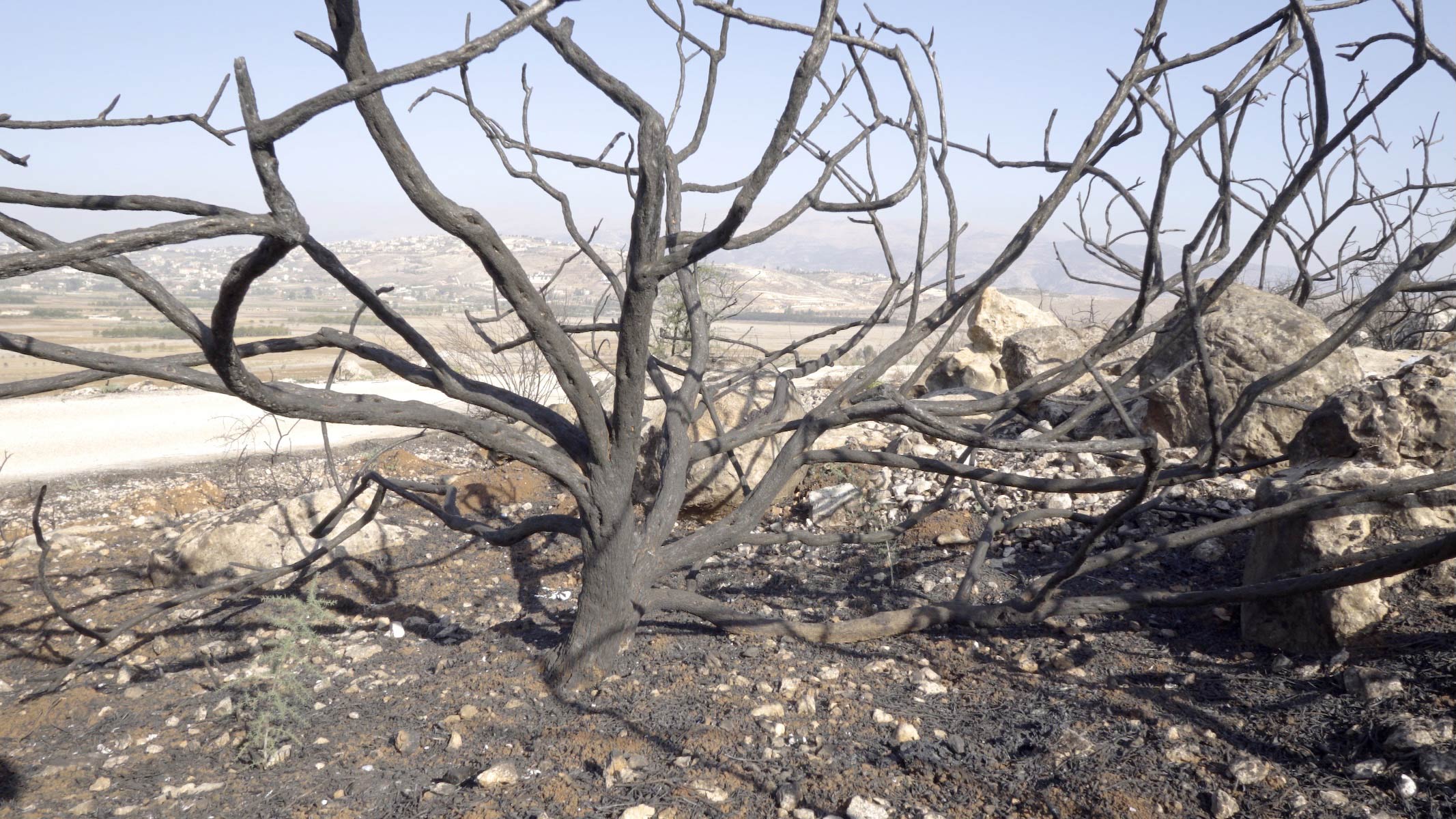
Photo by Iyad Abou Ghaida, Courtesy of EcoRove
Later, I would learn about the balloons from a villager who came to visit his sick child. His face felt familiar. I never knew if it was the same man who offered me the warm labne sandwich. He spoke quietly as if saying it louder would make them more real. They had found them scattered across the fields, left behind by the occupying soldiers before they withdrew.
They were not balloons. They carried something invisible and lethal, filled with chemicals designed to continue the work of the war after the bombing stopped. There were few reports on them, little investigation, and even less certainty. Years later, human rights organizations would document toys, small balls, hazardous substances, and unexploded remnants that were intentionally left behind. The balloons disappeared into those broader categories, if they appeared at all.
They were meant to be found, to be noticed, to draw the body in before it could recognize danger. They turned color into bait, curiosity into exposure, touch into entry. Children saw them first, as children always do. They reached for them, drawn by brightness in a landscape stripped of everything else. They played with them. They popped them. And then their bodies began to fail.
The war did not end when the sky quieted. It settled into the ground and waited for the smallest hands. No one spoke about it publicly. It moved quietly, the way certain violences are allowed to move, extending the reach of war into the bodies of those who were never meant to survive it.
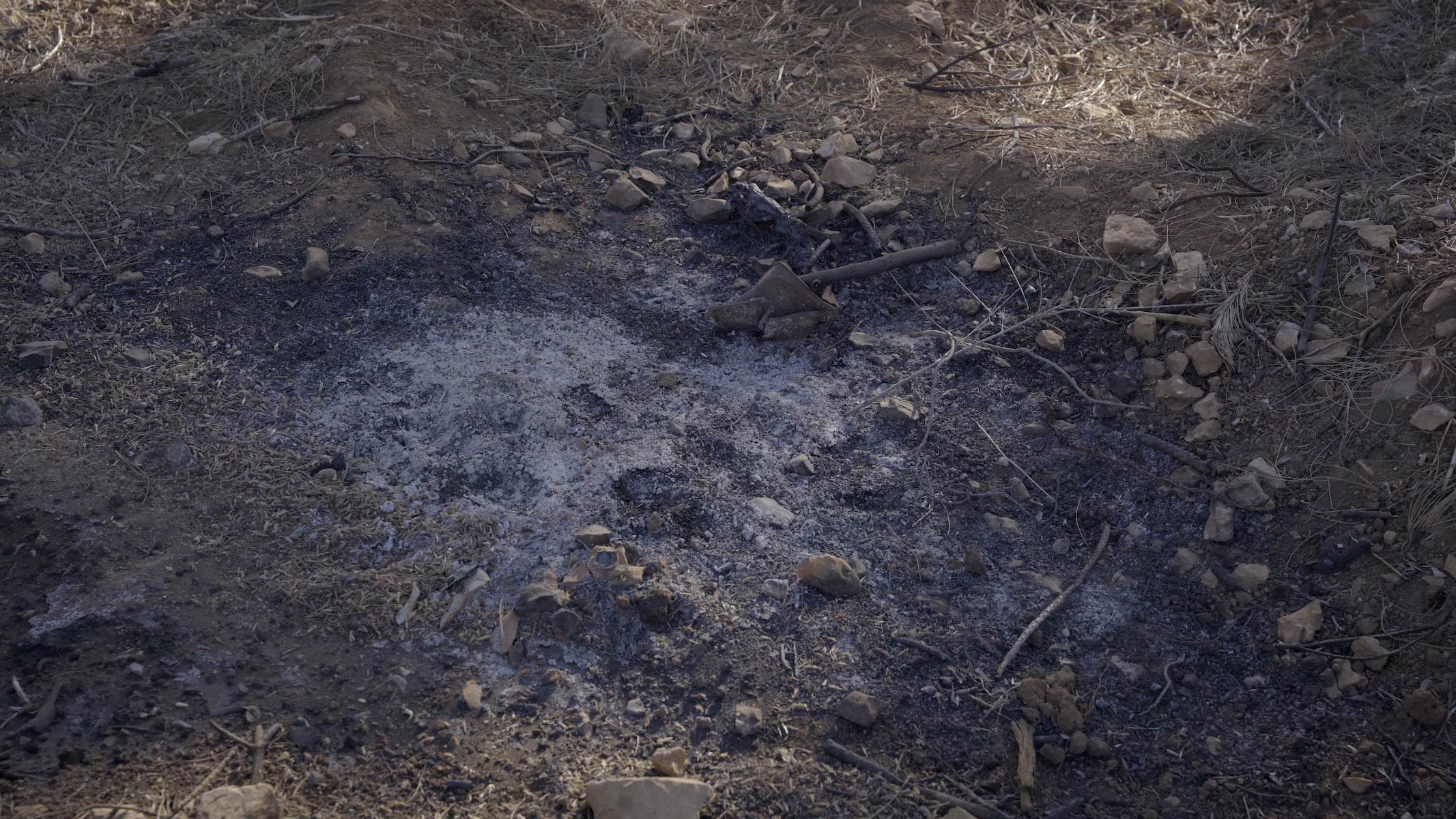
Photo by Iyad Abou Ghaida, Courtesy of EcoRove
Recovery was not a return. I had to relearn how to eat, how to swallow, how to trust my own organs again. Food became a negotiation between survival and rejection. My body no longer recognized the difference. Labne or a piece of chicken, it was all the same. It was all threat.
Everything had to be liquified and juiced. I hated juice. I hated this reduction of life into survival, food into strategy. But I understood that if I refused it, I would lose. So I chose to train myself into acceptance. I told myself I loved it. I adapted. I insisted on survival, even in forms that felt humiliating. I made a life out of juice.
Weeks passed, and the hospital filled with bodies like mine, carrying the same symptoms and the same invisible violence. Many did not leave, especially children. I began to understand that survival was not evenly distributed. Some bodies were allowed to recover. Others were not. I carried the knowledge that I had lived while others had not.
In the long months that followed, my body began to register small victories. I moved from juice to solids, learning how to swallow without fear. My body eased its immediate rejection, though I never understood what allowed it to begin. These moments were minor, but within this body, they marked a return of something that had nearly been lost.
My grandmother began to forget. Names, faces, time, even me. But she never forgot the South. She could still tell you which olive tree was sick, which one needed tending. Even as her memory dissolved, the land remained intact inside her. The body remembers what history tries to erase, the way land does.
Years passed, and then the war returned. Images of the South appear on my phone because now the news lives in my pocket.
It was 2024, and I was in Vienna. My body reacted before my thoughts could catch up. My organs tightened. My appetite disappeared. The same signals returned. The body does not forget. It stores trauma as possibility. I was no longer in Vienna. I was back in that hospital room, inside that body where survival had once been uncertain, where every morning arrived with a “You made it to today.”
I asked about Abdallah. They told me he had died of cancer. I thought of the balloons and what they carried, of how occupation does not always arrive all at once. Sometimes it waits. Sometimes it settles quietly inside the body and unfolds over years, like a delayed invasion, like a war that continues without witnesses, without headlines.
When the ceasefire was announced, I cried, not for the ceasefire itself, but for everything that had never truly ceased, for the violence that only changes form.
And then, I did something small. I ate. A burger. Fries. Ketchup. Lettuce. The smell rose first—grease. I paused and asked the waiter if there was dairy in the food. He wasn’t sure. I looked at the plate, at the uncertainty sitting in front of me. Food I had spent years negotiating, fearing, reintroducing to a body that no longer trusted easily. I did not take my digestive pills. I ate anyway, because I no longer trusted that knowing would protect me. I wanted my body to experience something without preparation, without defense. I wanted it to remember a different possibility, to act without anticipating collapse. I wanted to know that it was still mine.
In March 2026, I am in my home in New York City. War returns, as if it had ever left. The images of the South – Nabatiyeh, Sour, Doueir – appear, places that live in me as more than geography.
I vomit. I sit in front of a plate of food and cannot tell if I am hungry or afraid. I cry, and then I eat. I think of the labne sandwich in the South, the way some things never leave the body.
I think of the women who stayed, who cleaned the rubble, who cooked in kitchens that no longer held walls, who gathered children in rooms with no ceiling, and continued without waiting for permission. I think of the bodies that continue.
Every time my body eats, it does not eat out of hunger. It eats for refusal. I used to think that survival meant returning to who I was before the balloons. But there is no before. There is only what remains, and what insists on continuing.
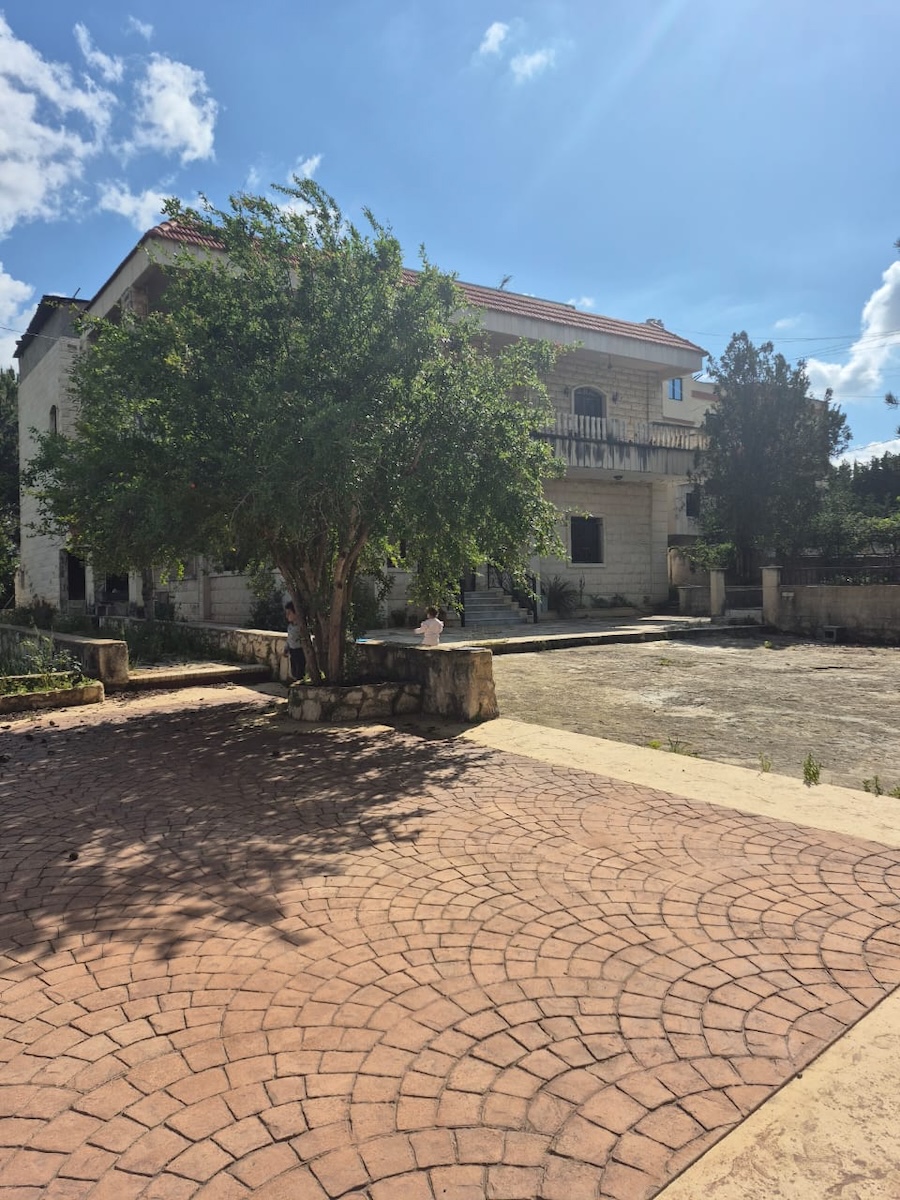
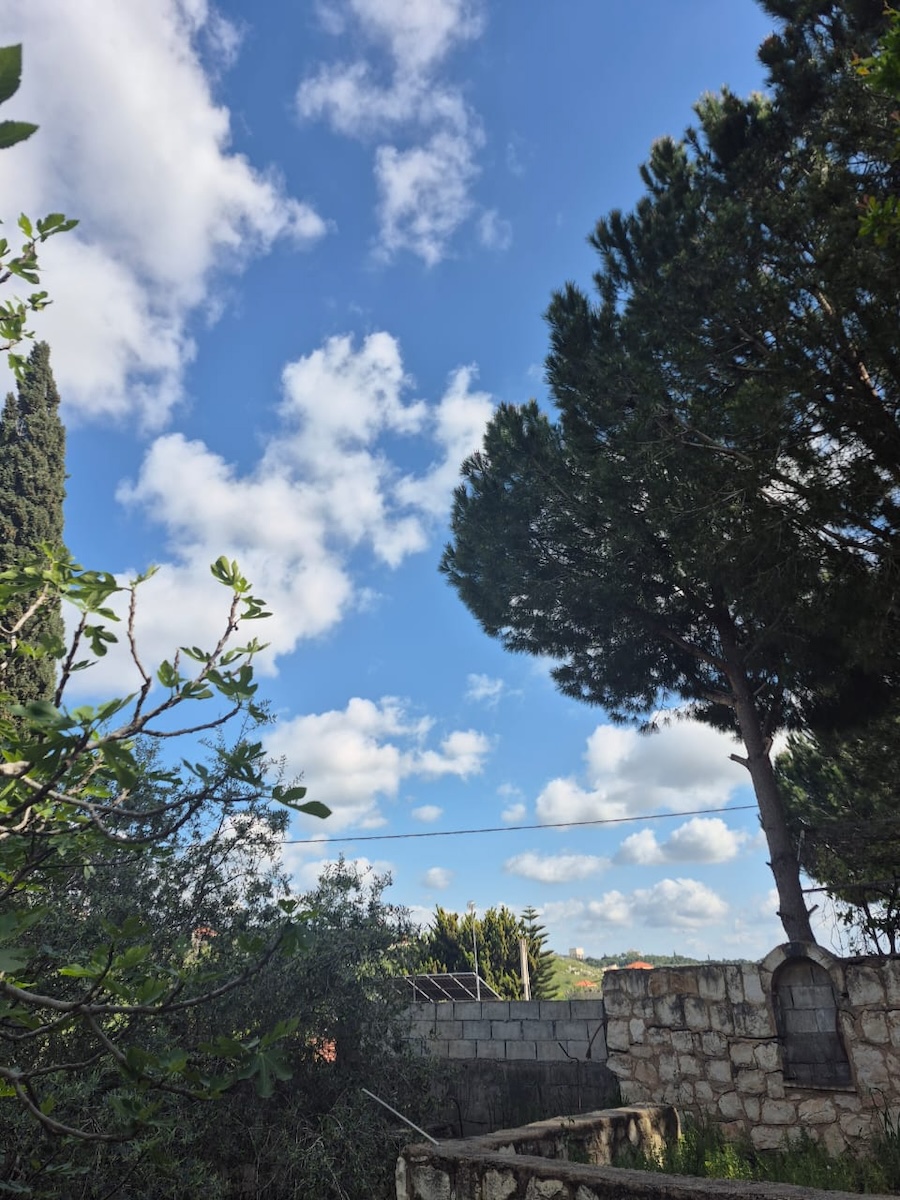
Grandma’s home in Doueir, courtesy of author
It is now June 2026. Doueir has been reduced to rubble. Martyrs carrying my last name are still being retrieved from beneath the wreckage. I call my father to ask if the home is still standing. He pauses. “The land is not what it was,” he says. My body is not what it was. Neither of us yields completely. We carry what has been done to us - we eat, we remember, we refuse, we tell, we continue.
Some things could be filmed. Others had to be carried. Some battles are fought in the open. Others are fought inside the body, where no one comes to witness. Somewhere beneath what has been poisoned, something is already growing back.