

On a rented two acres of tribal land in the broad-leaved forests of southern Odisha in India, agro-ecologist Dr. Debal Deb has created a living mosaic of rice.
This living mosaic is a conservation field and a treasure trove of biodiversity that inspires more than one thousand traditional farmers to leave the daily work of their farmsteads every spring and to travel across the Indian subcontinent to Vrihi: South Asia’s largest folk rice seed bank.
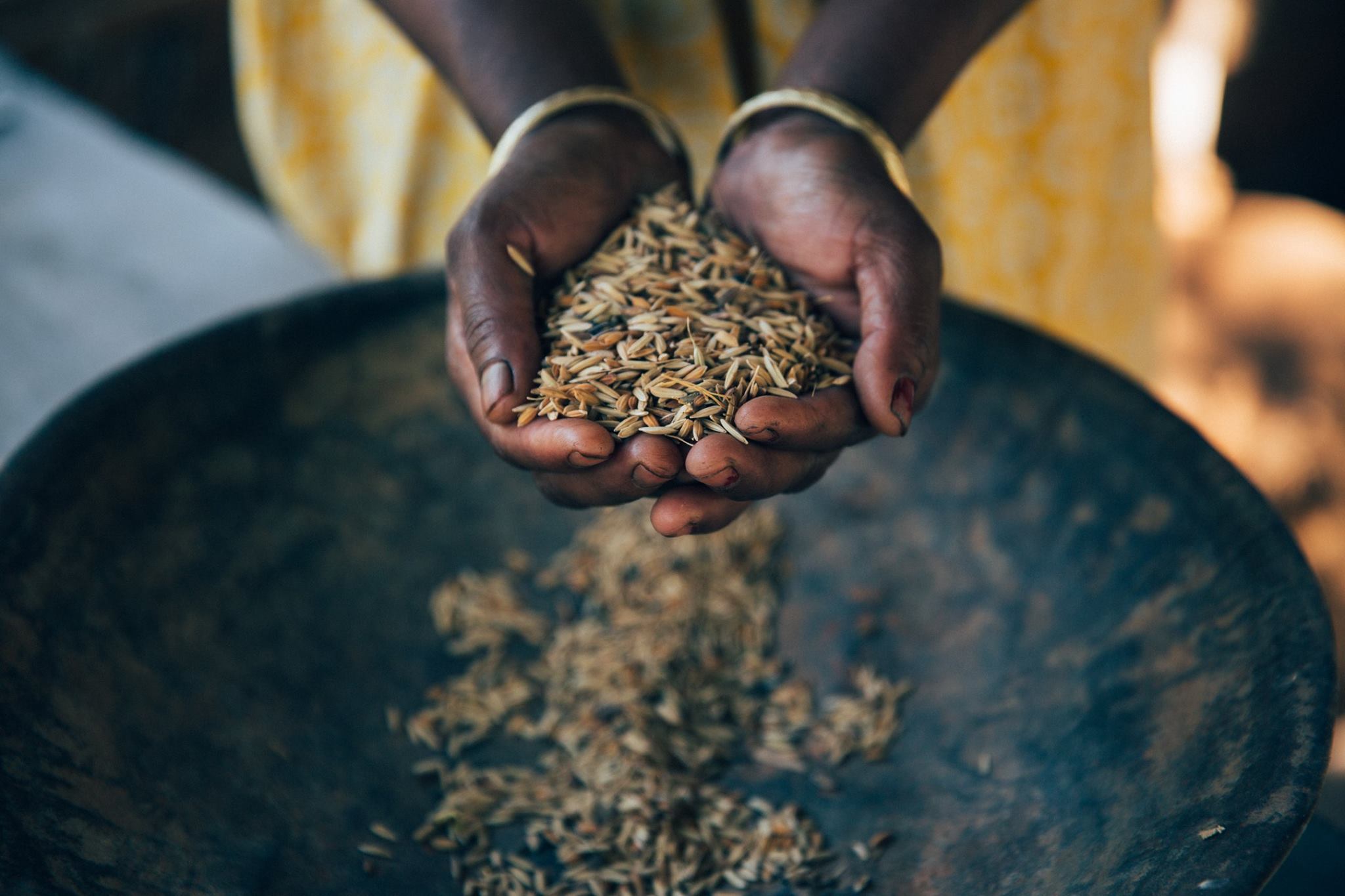
Photo by Zoe Savitz
When they arrive, they are ushered into a family home, made cool by mud walls. Here, Dr. Deb, alongside volunteers from the village and intrepid PhDs, ask these farmers: Who are you feeding? What does your land need? What are you trying to remember?
Because if your land floods, we will give you the rice called Lakshmi dighal, who knows deep waters, and will grow her stem by four meters to protect her grains. If your daughter’s periods take her strength, plant this bhutmuri rice. Wash it, and have her drink the red liquid that is left. Her blood will be restored. And take a few of our 200 aromatic rices, for when your village has a puja, the sweet cooking smell will bring even the youngsters out for worship.
These rice grains are not magic, but you wouldn’t be blamed if you thought as much. Each of Vrihi’s 1,492 rice varieties is one of India’s landraces - grains that have been ever so carefully cultivated across 9,000 years of farming, propagated with an eye for what their children, and their children’s children, will need. Gifts from the ancestors, from the soil of the ancestors.
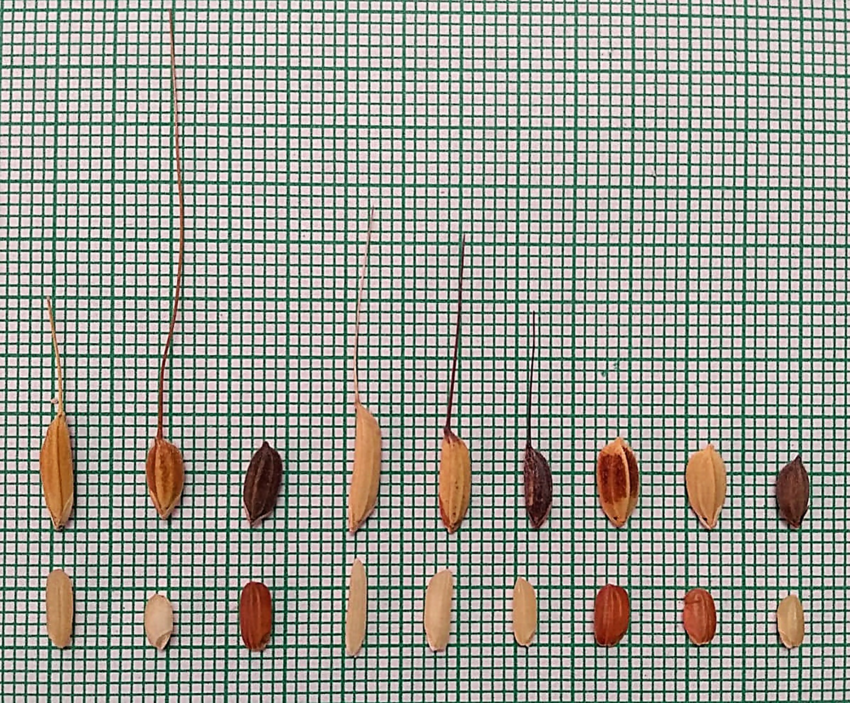
Bengali Rice Varieties Depicting Kernel and Color Variety
A short walk from the Vrihi storeroom is Basudha, Dr. Deb’s living library of paddy.
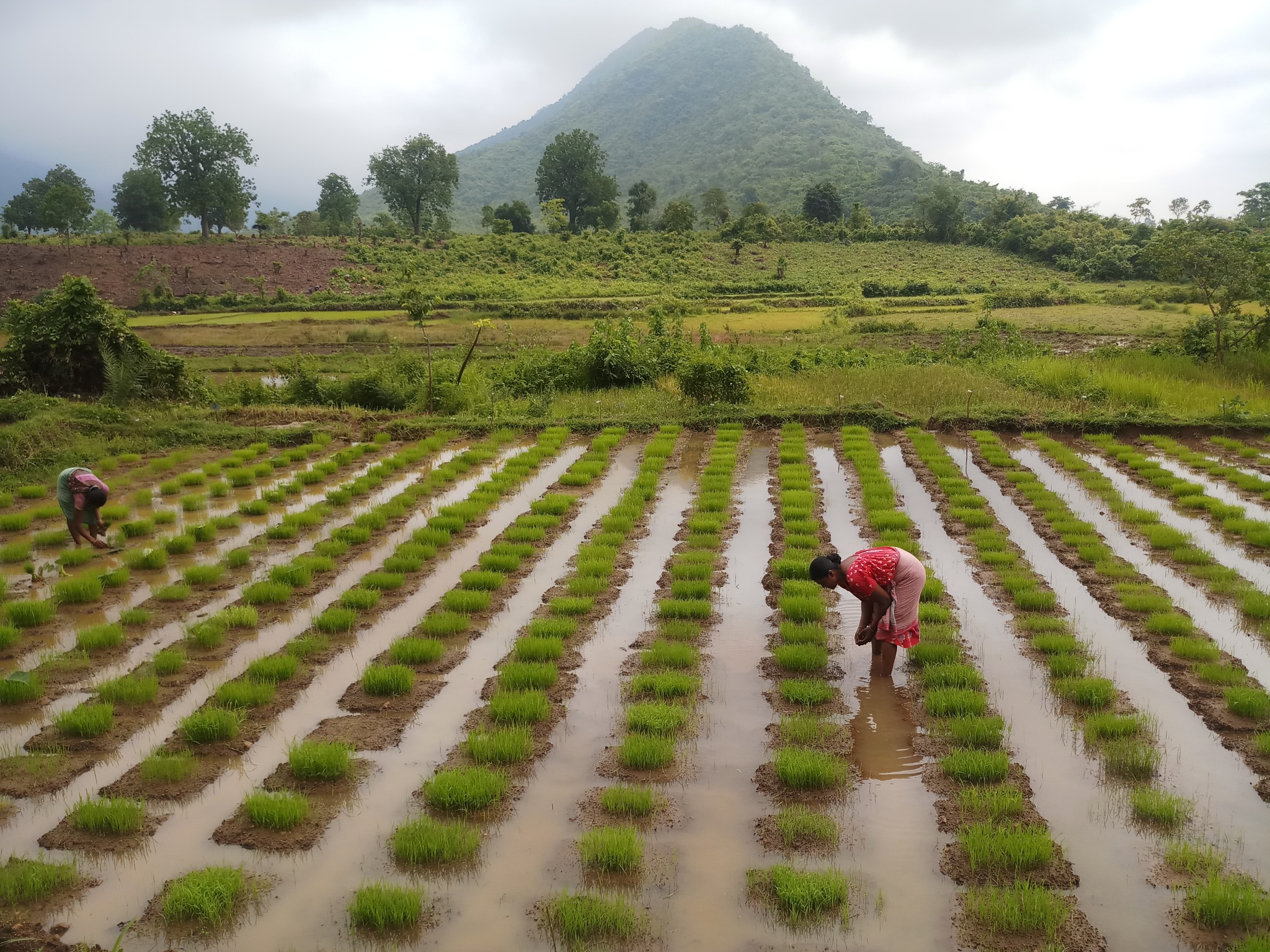
In Sanskrit, Basudha means mother earth, the giver of all things: Deb’s Basudha farm is nestled within the forest and sits on only 1.7 acres. Yet this land carries the entire tranche of Basudha’s landrace rices, and what is left to the subcontinent as an inheritance.
This inheritance is the indica rice, which grew out of the eastern Himalayas some 9,000 years ago, and unfurled its wet green carpet across the earth, from farmer’s plot to farmer’s plot, evolving to be as diverse as the people, lands, and customs that grew it.
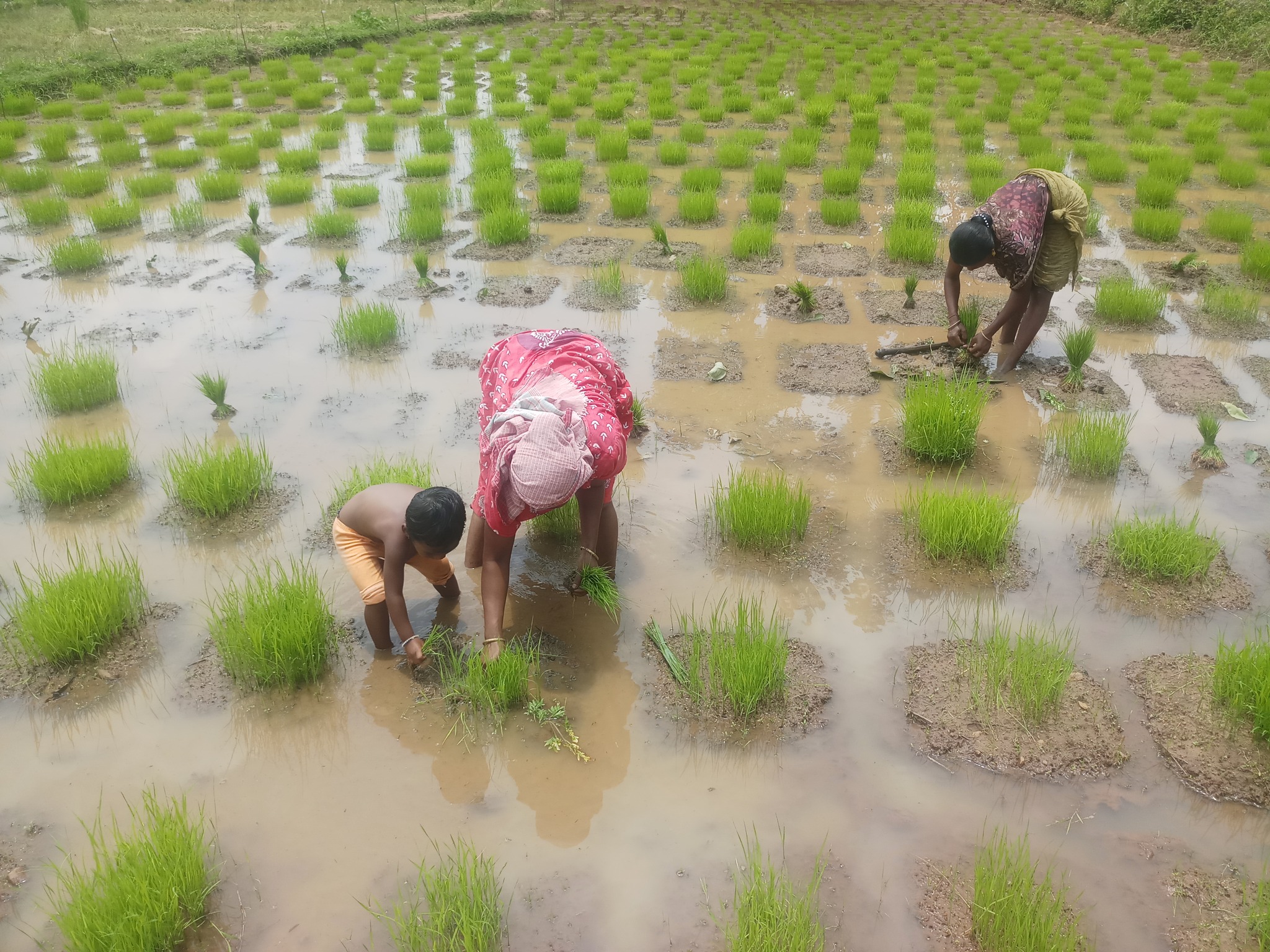
Basudha Conservation Fields
Now it feeds half the world.
“This is not something that can happen by accident,” Dr. Deb says, of the 110,000 indica varieties that flourished in South Asia. Some rices were chosen for food, of course, while others, like garib-sal, which contains silver and fights harmful gut microbes, were grown for their medicinal properties. Then there was rice to clean pearls, rice made into silken cloth, rice named after son-in-laws (jamai-sal) and wives (bourani) and fed to them lovingly during spring festivals, or rice grown simply because it was beautiful - its panicles undulating across the valleys in red, purple, and gold waves.
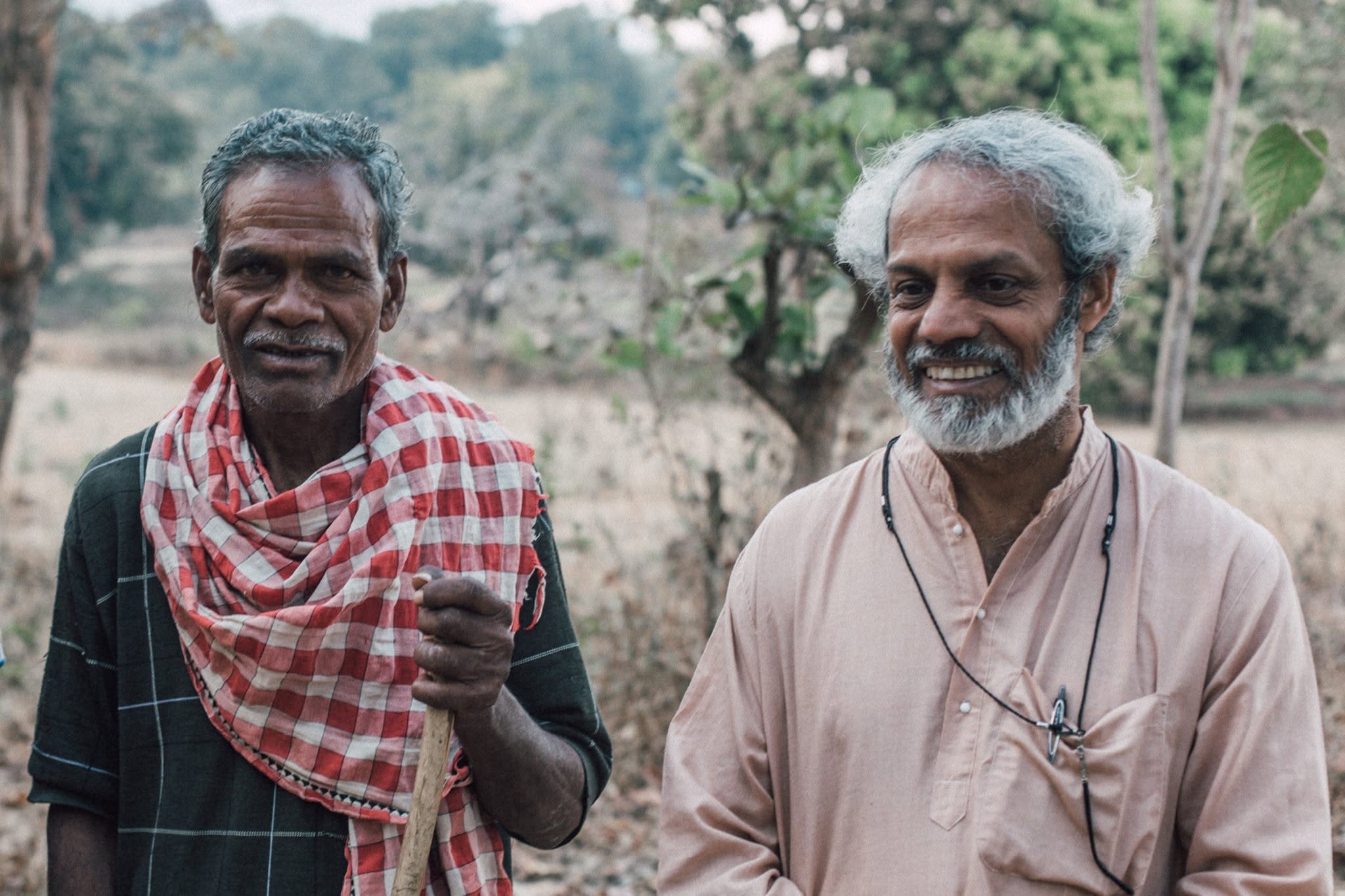
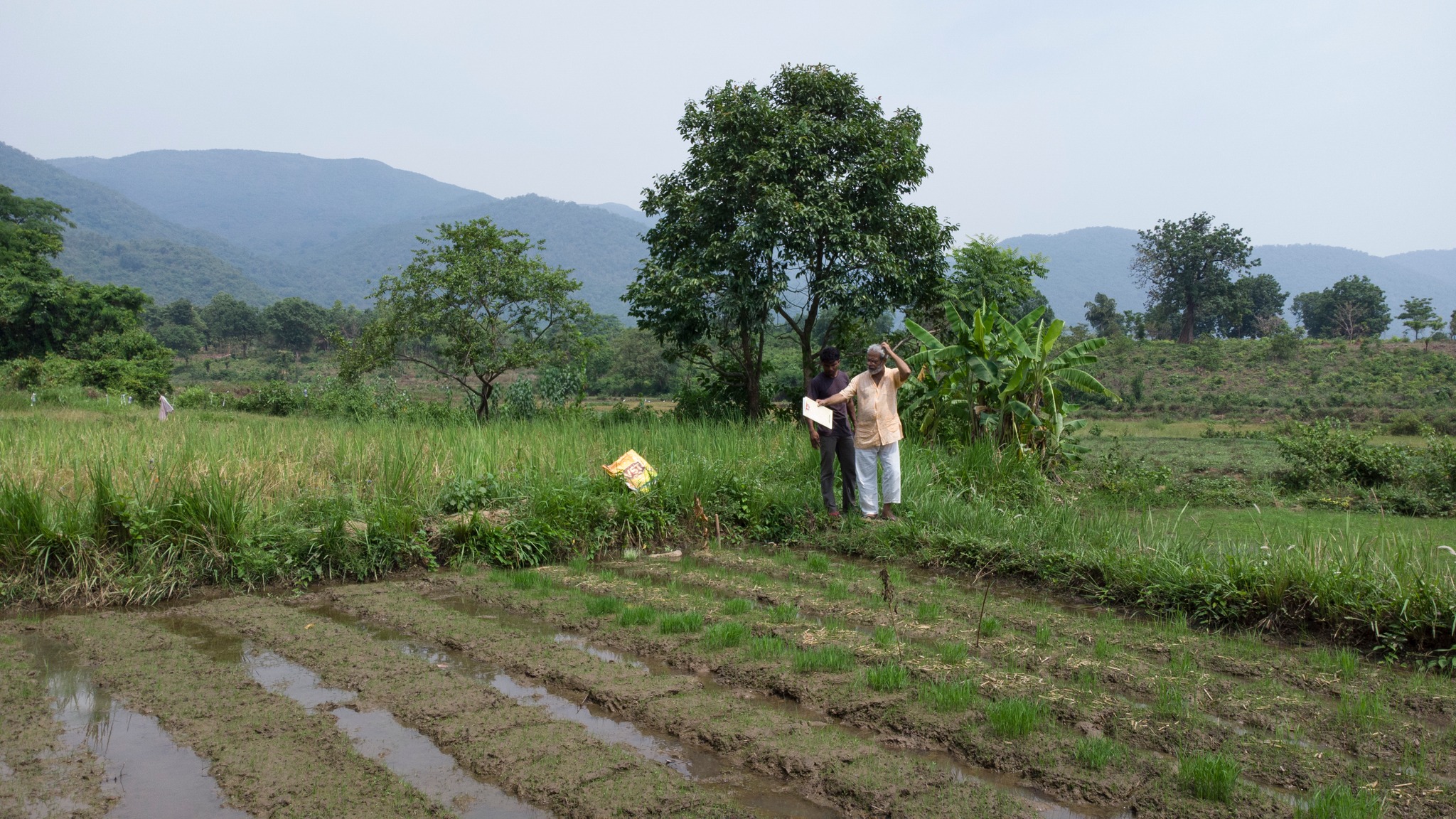
Dr. Deb with villager, photo by Zoe Savitz
Dr. Deb has spent the last thirty years collecting and conserving these grains. He’s traveled across South Asia by train, by motorcycle, and by foot, to the remotest parts of the country, to meet farmers in their homes and walk their lands and learn their histories. “I have collected rices and folklores,” he says.
Vrihi’s goals have been ambitious from the start. Global seed banks, like the moneyed Svalbard Seed Vault in Norway or the Millennium Seed Bank in the UK, have built underground storerooms for seeds in near-fortresses. Vrihi has pursued the more successful, but more intensive route: in situ conservation.
In-situ conservation enables rice to be conserved in the fields and forests it grows in. Thus, Vrihi’s seeds grow annually and retain their hardiness and pest-resistance. Ex situ conservation removes an organism from its environment. Because ex-situ conservation requires long-term storage at freezing temperatures, seeds weaken over time.
The farm and conservation work is difficult and back-breaking. On 1.7 acres, Basudha maintains the purity of 56 unique physical and genetic characteristics of grain, including grain color, awn type, drought and salinity resistance, as well as nutritive properties like iron or fatty acid content.
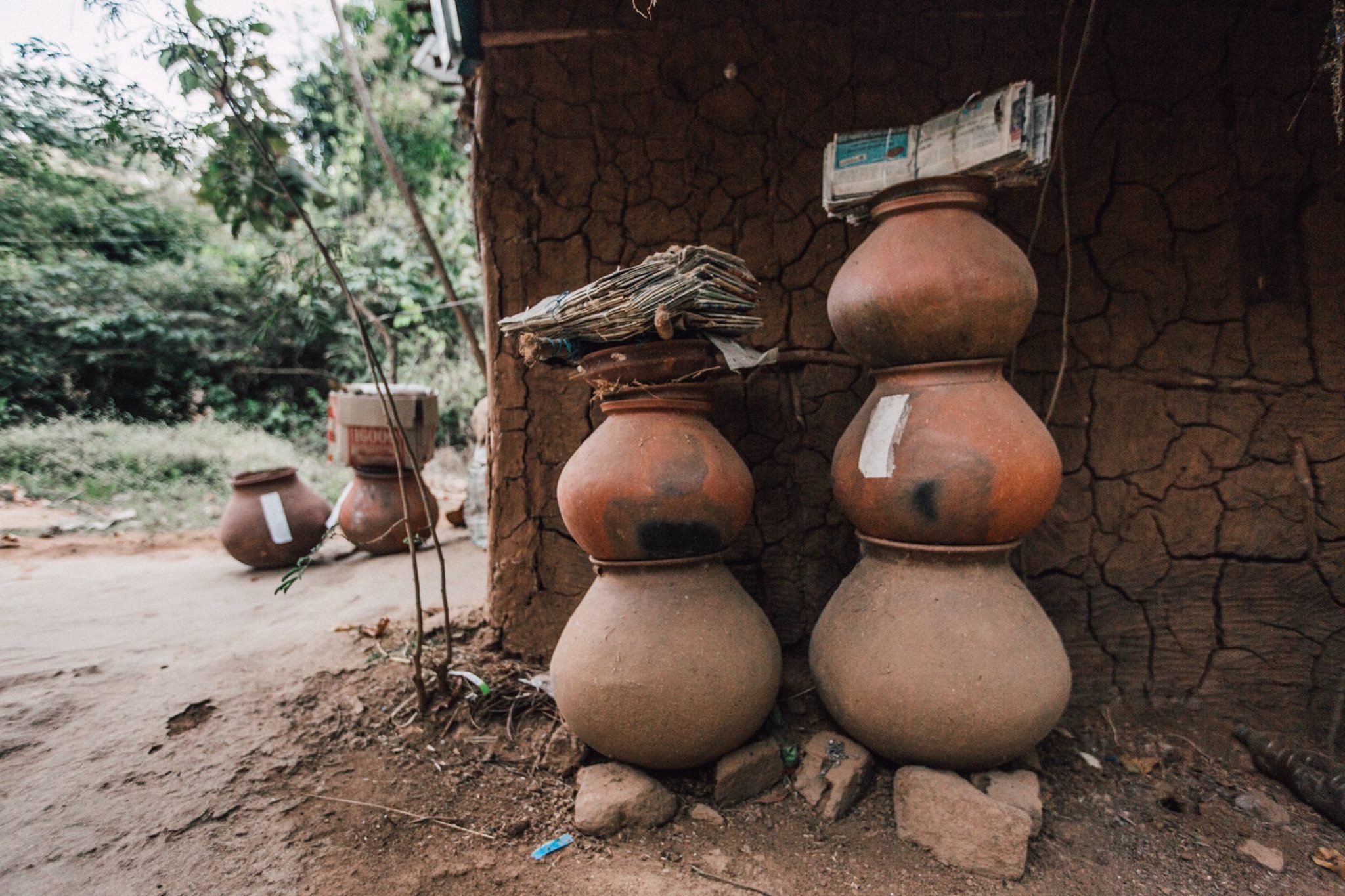
**Traditional Seed Storage: Cool clay pots with lids help maintain seed health, photo by **Zoe Savitz
“This should be the task of a big institution with multiple heads and hands,” Deb explains. “But so far, it has only been me and two assistants. I receive no funding from the government, corporations, or NGOs. It’s not just the cultivation, but also the characterization, analysis, distribution, and maintaining the genetic purity of the grains. It’s a huge task.”
Dr. Deb and I meet over a video call this past spring. He is in his Kolkata laboratory, while 900 miles away in Vrihi, farmers arrive for seed collections. Monthly, Deb spends a week in Kolkata conducting biochemical analyses of the rice varieties and writing research papers. The rest of the time he spends in the field.
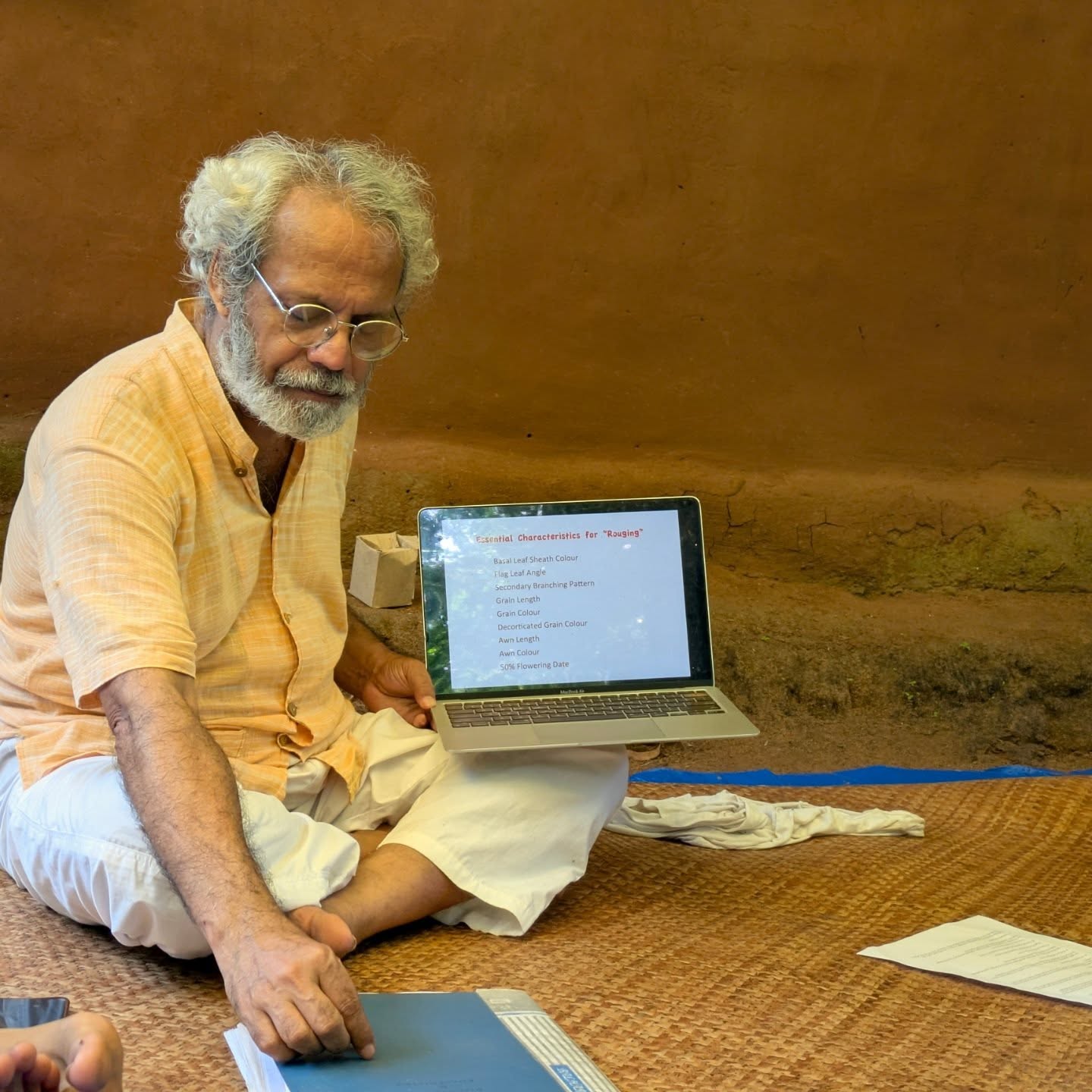
Roguing (‘rouging’), mixed polyculture farming, successive planting schedules - these are ancient techniques employed in Basudha’s fields, thanks to the thousands of farmers Deb has encountered. He attributes Basudha’s conservation successes to these folk scientists. When he collects rice grains, he records the plot of land it comes from, its characteristics, and the ways it is cultivated. Each grain’s cultivation and conservation process - and each folk scientist’s knowledge - is honored in the Basudha fields.
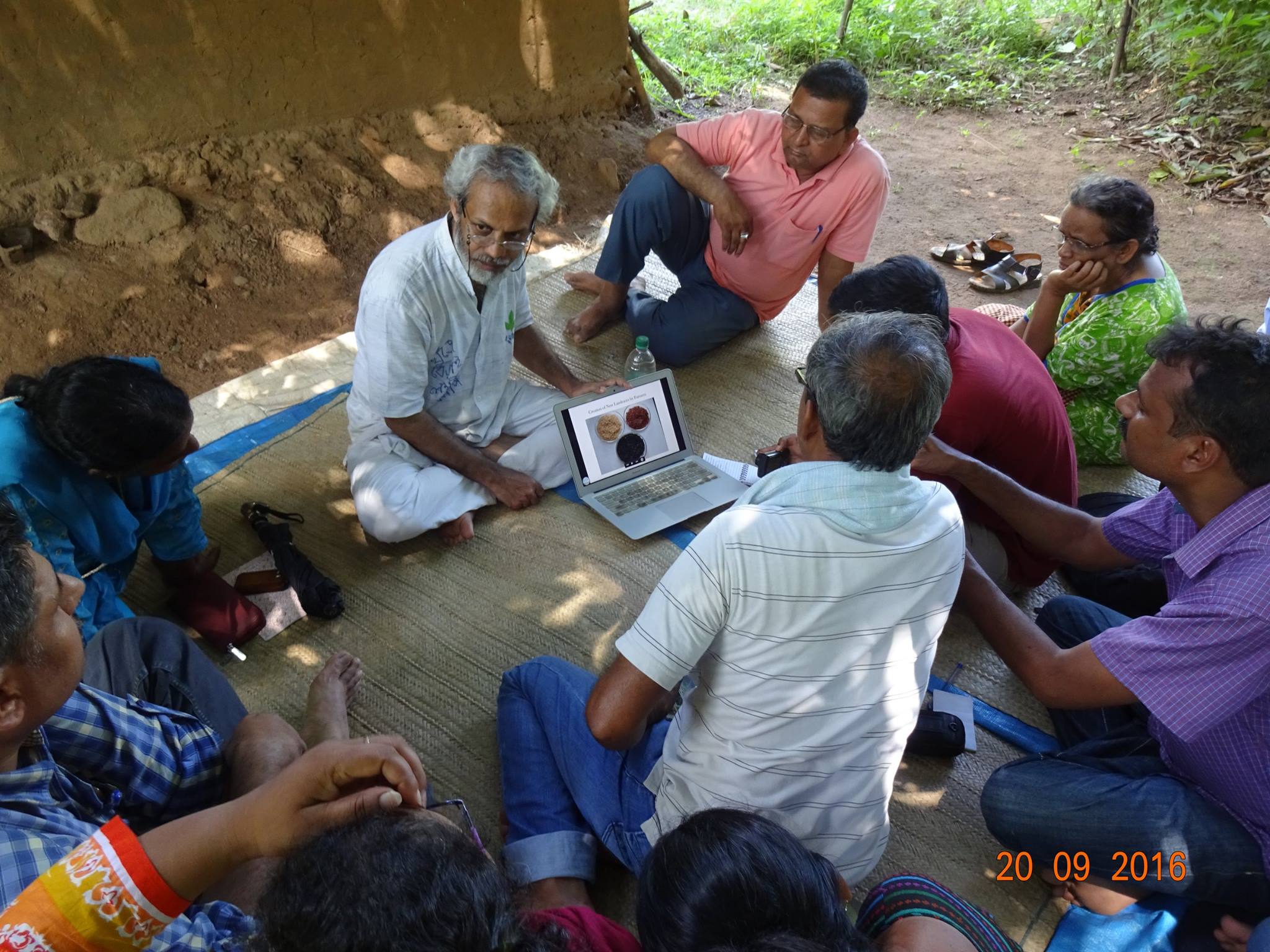
Deb Leading an Agroforestry Training for Activists
Basudha’s conservation experiments have been published in international journals - and Deb always takes his results back to the communities they came from.
“This is what you did,” he tells them. “This is what’s been published. And now the world’s scientific community has accepted the results of your cultivation, of your techniques, of multiple culture farming. They’ve accepted that it is better than monoculture farming.”
And yet, Deb asserts, the global seed banks that have been built on contributions from farmers don’t generally make their seeds available to farmers, but instead they provide access to seed companies developing GM plants for patenting.
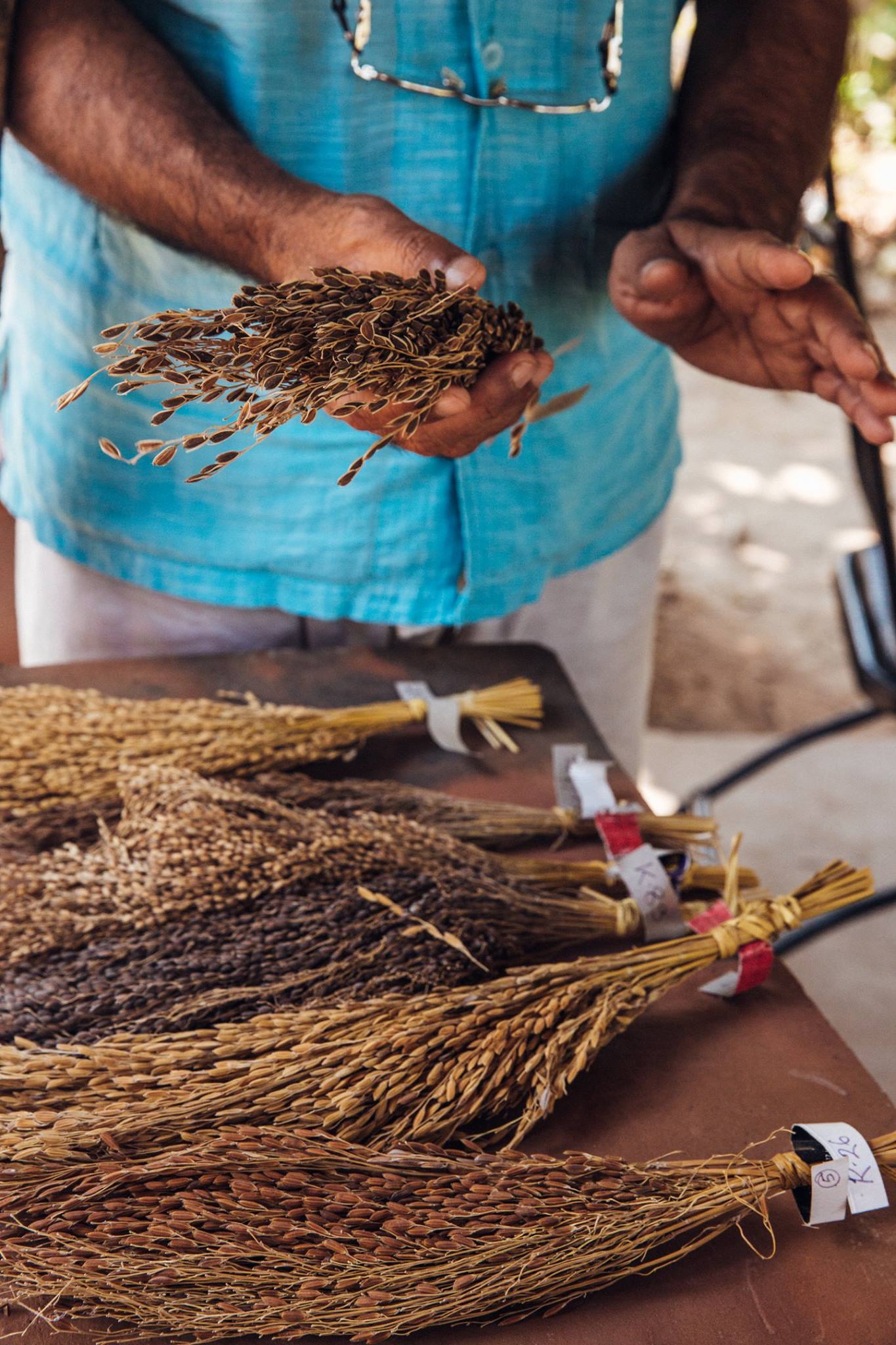
**Sorting Rice Panicles At Basudha, photo by **Zoe Savitz
That’s why Deb registers each rice variety under Vrihi, the consortium of farmers who grew it - so that no seed company can seek patents on it. This is one way his work confronts biopiracy and restores farmer sovereignty over seeds.
Indian farmers remember the travesty of Texmati. Basmati, translating to ‘ingrained fragrance’ in Sanskrit, is a rice indigenous to the soils and climes of North India. Yet somehow, in 1997, it was a Texas-based grain company, RiceTec, that received a patent for the basmati name and its two most unique characteristics: its nutty aroma and its elongation upon cooking. RiceTec received basmati grains from IRRI, a global seed bank in the Philippines. They cross-bred these grains with a US-rice variety to create a rice they now sell as ‘Texmati’.
Texmati is the offshoot of a modern practice: the isolation of ‘favorable’ genes from landrace rices via hybridization or cross-breeding, and the subsequent privatization of these grains, genes, and ancestral knowledge from indigenous farmers.
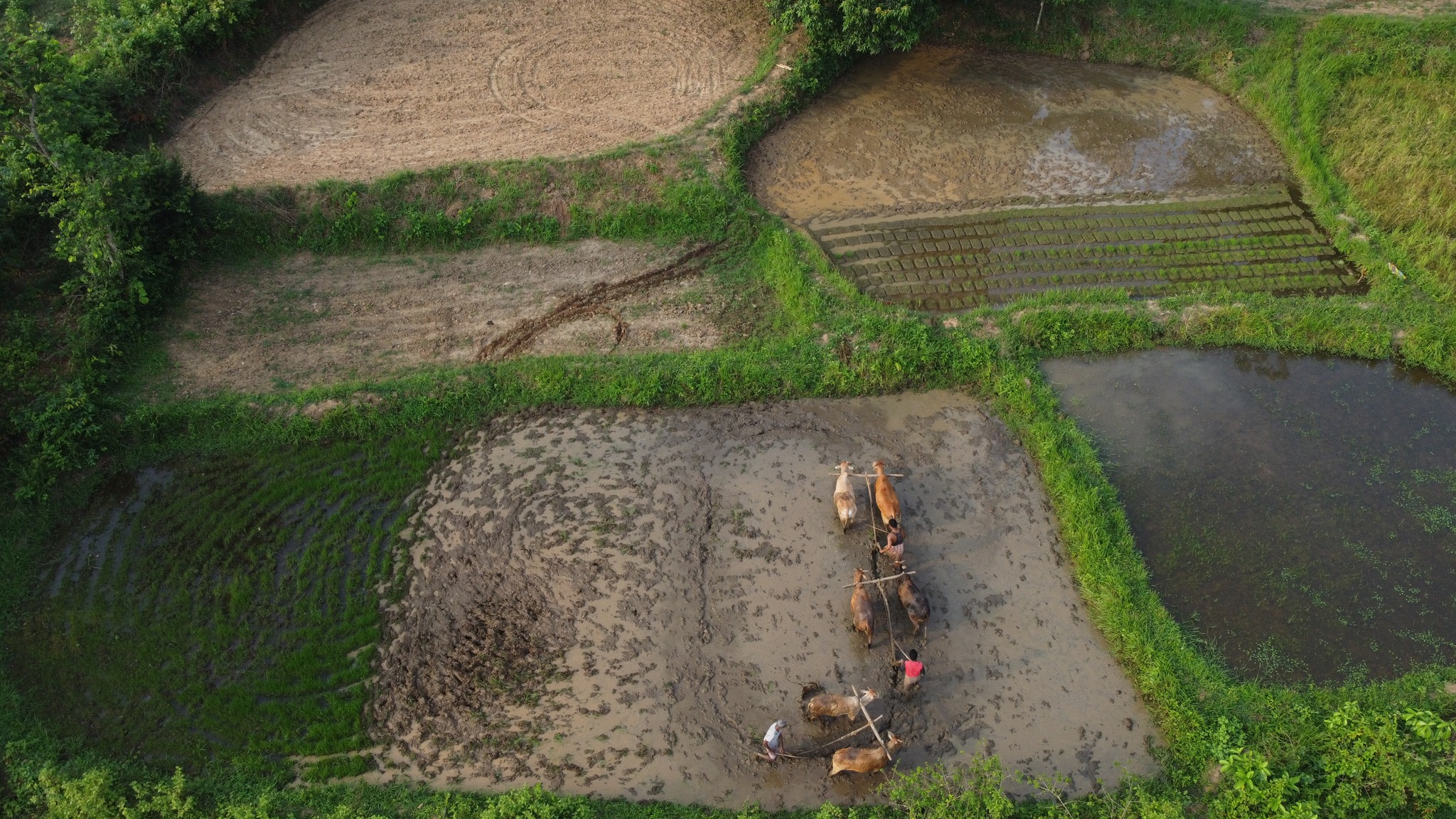
Plowing Basudha Rice Fields
The practice is modern: the history is not.
The subcontinent’s millennia of grain abundance was drained in mere centuries under British rule, from which South Asians emerged after hard-won independence in 1947, bleary eyed and traumatized. Decades of forced-famine left India susceptible to the fear and promise of the 1960s Green Revolution, architected by the Ford and Rockefeller Foundations: millions will starve, unless you use our ‘high-yielding’ rice. Thus, IR8, created in the laboratory from Asian grains, touted as “the miracle rice,” was introduced en masse to South Asia’s fields.
And while IR8 and its variants did increase rice output in the short-term, they also required more water and fertilizer than any landrace rice, causing severe water and soil depletion.
These modern varieties fall short of the diversity and hardiness of landrace grains: they’re also more susceptible to climate hazards and pests. It is these variants that now grow in most rice fields across the world.
Only 60 years later, 90% of the 110,000 indica varieties are extinct. And the ugliest of pyramid schemes: farmers, hoping to feed growing populations, have relinquished their landrace seeds to annually purchase from global seed conglomerates, who, in turn, prohibit them from seed saving. Now, indigenous farmers face shrinking yields, dead fields, and growing health issues (in Punjab, the No. 339 train shuttles farmers to a regional cancer center nightly).
And we continue to dance to the music of hegemony. What is indigenous is devalued until it is in the hands of the minority world, at which point, it becomes inaccessible to the original purveyors. It seems rather hopeless.
But there is Vrihi. Vrihi, which, in the beauty of Sanskrit, means both rice and broadcast. To Dr. Deb, his mosaic of rice is a message to the world.
“Vrihi has reinstated the traditional culture of moneyless seed exchange,” he states. “The arsenal for sovereignty is the seeds. The seeds and the knowledge. Indigenous knowledge protects biodiversity, and indigenous culture is sustained by native biodiversity.”
Dr Deb has spent many years doing this work. Last winter’s harvest was supposed to be his final, but he has chosen to continue for at least one more. “I know I’m becoming more incapacitated. My stamina is failing. There are not many people who want to take over.”
But Vrihi was never supposed to be the ultimate goal. It was just one unit of the goal. A tessera. A piece of the mosaic.
“Not the only one,” he claims. “My goal was to replicate the model. My dream was that on the subcontinent, every district should have a seed bank for the farmers. If not every village, which was once the case. That’s how we have 110,000 varieties of just rice.”
While global seed sales are locked by three main companies (Bayer-Monsanto, Cortevo, and Syngenta), Dr. Deb instead sees the beauty of a multiplicative effort: each farmer who comes to Vrihi receives the seeds and training to begin their own on-farm conservation efforts. For Vrihi, that has meant 8,000 farmers across India.
When there is much that is lost, what has been protected becomes all the more precious. A mosaic combines what is left - the pieces that have not been destroyed, to make something more beautiful and cohesive. It all started with a few grains and a few stories. What it became was the liberation of villages, through divestment from seed companies and the restitution of farmer seed sovereignty.
We have seen what is possible through Dr. Deb’s efforts, and he says it best: “with conscious human selection, imagination, and effort, from Vrihi to farmers, from Vrihi to citizens, it is the cultural need of exchange that will be the inroads to defeat Empire.”
Photographs care of Basudha unless otherwise indicated