
Renewed Israeli attacks on Lebanon have effectively dissolved access to menstrual pads, pain medicine and privacy for thousands of women and girls across the country.
On March 2, over 1 million people fled their homes following mass displacement orders from Israel, forcing them to seek shelter in stadiums, schools and public buildings. Many families resorted to sleeping in their cars or in tents on the streets of Beirut.
A subsequent UN report found that “IDP interview analysis notes that women and girls consistently identified menstrual products, hygiene kits and private space as critical needs.”
The UN’S ability to respond is hampered by a severely underfunded flash appeal, with thousands of women and girls in informal shelters left especially vulnerable as the UN says they are “harder to reach.”
But two grassroots organizations — Jeyetna and Wing Woman Lebanon — are reaching them.
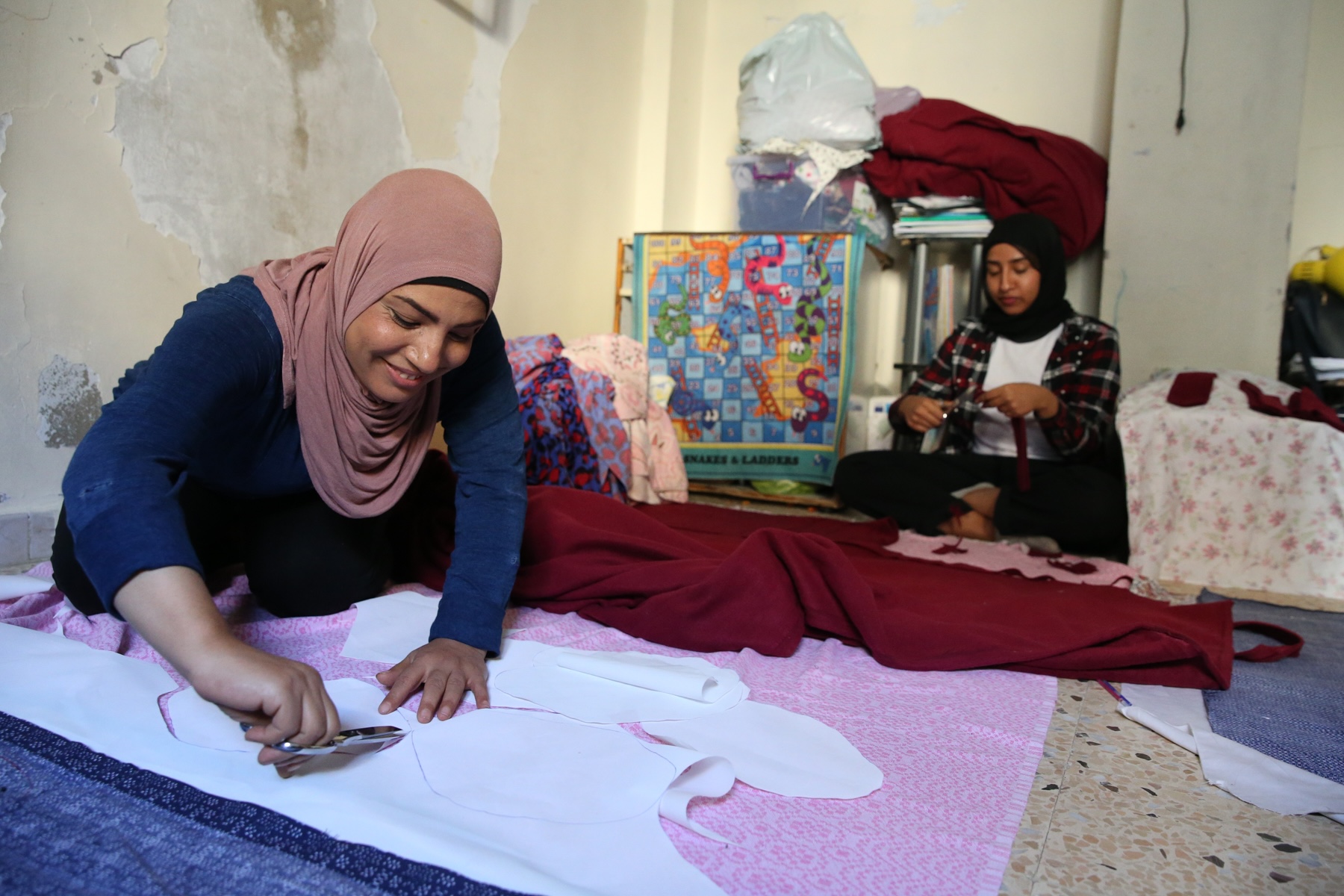
Photo courtesy of Wing Woman
These organizations have forged a path to support menstrual health during the aftermath of Lebanon’s 2019 economic crash, the Beirut port blast, Covid-19 pandemic, Israel’s 2024 war on Lebanon, and the current war. The groups, working independently but allied in their mission, both engage in distribution of free period products and educational outreach to combat menstrual injustice during peacetime and war. Their operations have become a lifeline for those impacted including refugees and migrant domestic workers.
“It’s really catastrophic,” said Ghewa Nasr, Sales and Fund Development Lead at Wing Woman Lebanon, describing the state of menstruation amid the current war.
“We’ve seen women that use napkins, not only cloth. We’ve seen women that combine the usage of reused nylon bags and cotton cloth to avoid leakage. We’ve seen women that use old clothing, like old underwear, old t-shirts.”
Because of this, “they have lots of issues when it comes to infections, rashes and other health issues that rise due to the use of these unsafe alternatives,” Nasr added. Lack of accessible health care for the displaced can leave many of these infections untreated.
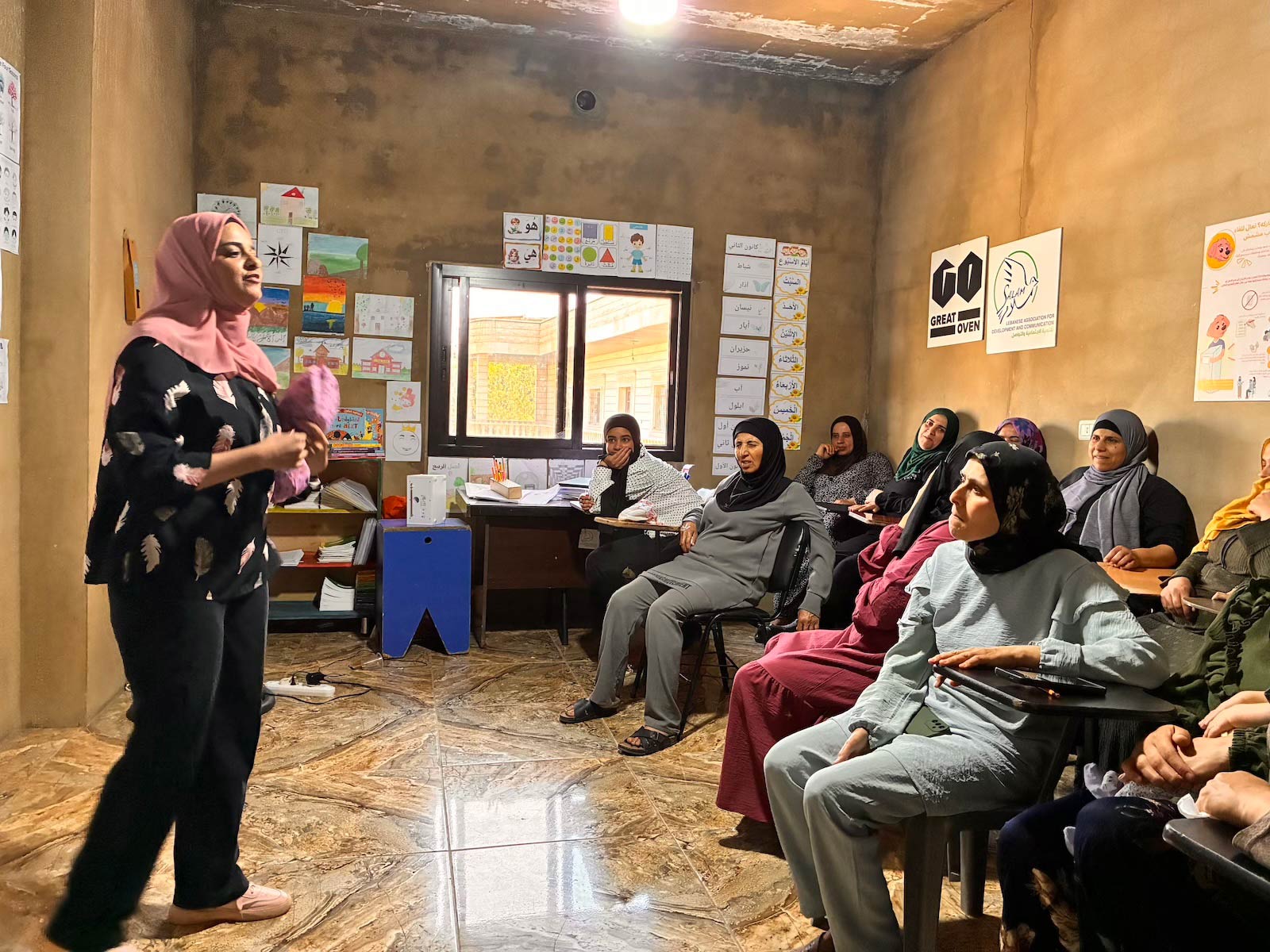
Photo courtesy of Wing Woman
In addition to personal health concerns, Ghiwa Abi Haidar, Senior Media and Communications Officer for Oxfam International, a humanitarian NGO working in Lebanon, highlights the war’s economic impact on menstruation:
“Rising inflation, coupled with the economic stress and loss of income generation due to the war, has meant that many women have been forced to deprioritize the purchase of menstrual management products, with households focusing on food and shelter needs. Simultaneously, markets have been impacted by the ongoing war with some contraception and pain killers running out, while Oxfam has noticed a considerable decrease in quality of available period products.”
Adding to the economic challenges, women and girls in collective shelters report bathrooms with no locks, no showers, no gender-separated stalls, poor or no lighting, overcrowding and long walking distances to the nearest facility, increasing risks of gender-based violence.
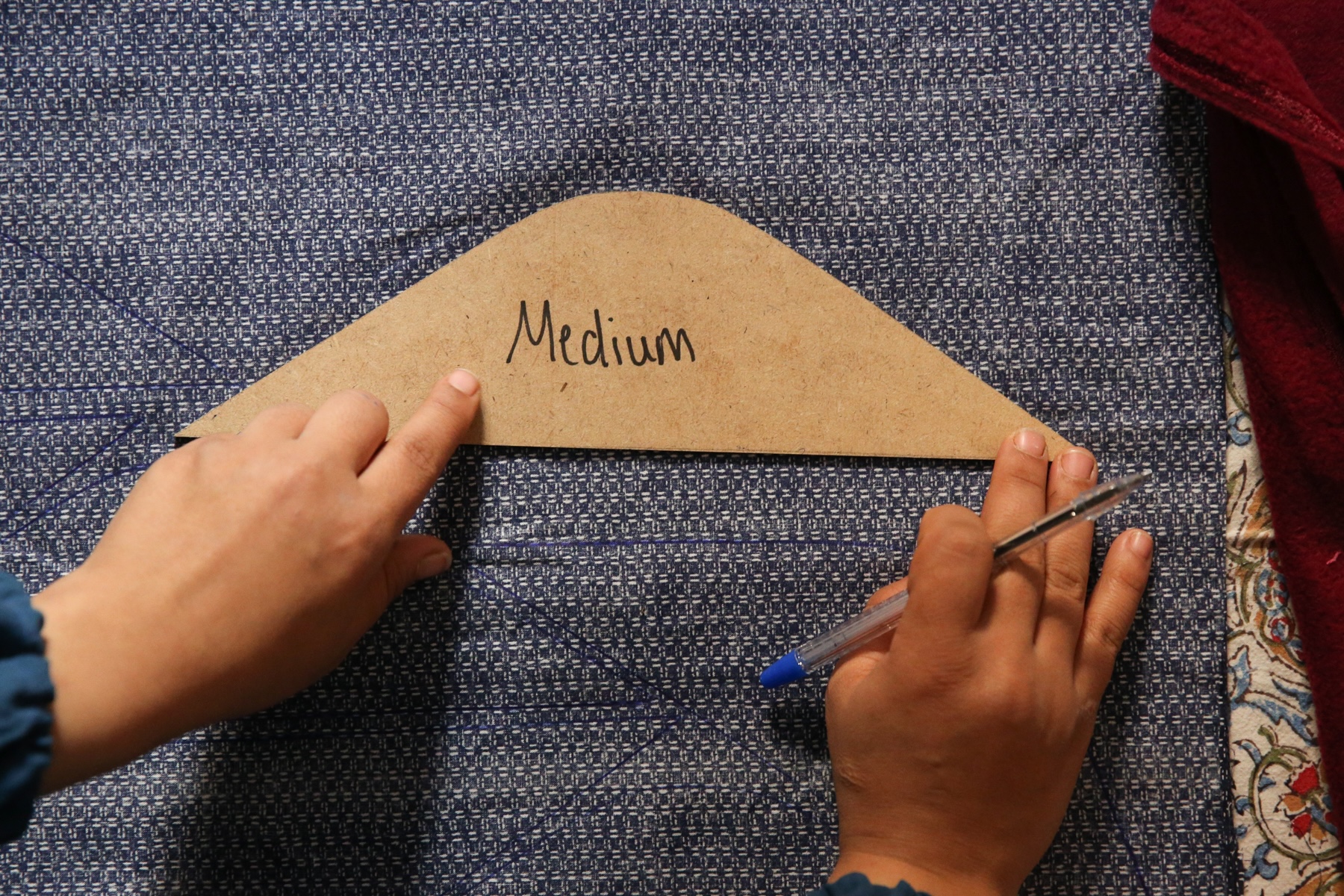
Photo courtesy of Wing Woman
The Wing Woman team is combating the immense need by training and employing local women to sew reusable menstrual pads made from absorbent fleece, nylon and cotton for direct distribution. Since the start of the current war, they have provided over 3,551 women and girls with reusable pads across 11 different shelters and counting. Wing Woman’s distribution events include educational seminars to engage with recipients about destigmatized perspectives on menstruation.
The reusable, washable nature of their products also results in critical monthly cost savings for displaced women and girls and the reassurance that they will have sustained access to period supplies as the war rages on.
Displaced women in a shelter in Zgharta, northern Lebanon, highlight the effectiveness of the products: “When we go back to our villages, the shops might be gone. This is something we can finally rely on.”
“Shared bathrooms in overcrowded shelters are overstretched. These reusable pads are also keeping our spaces cleaner and more dignified.”
Wing Woman was created in 2019 by cofounders Meelie Pemberton and Jade Van Huisseling in response to Lebanon’s historic economic collapse. Prices of pads and tampons skyrocketed over 100% following the Lebanese lira’s rapid depreciation. A 2021 survey conducted by humanitarian NGO, Plan International, found over 76% of women and girls struggled to access period products.
The deteriorating economy is also what gave rise to Jeyetna, later in 2021.
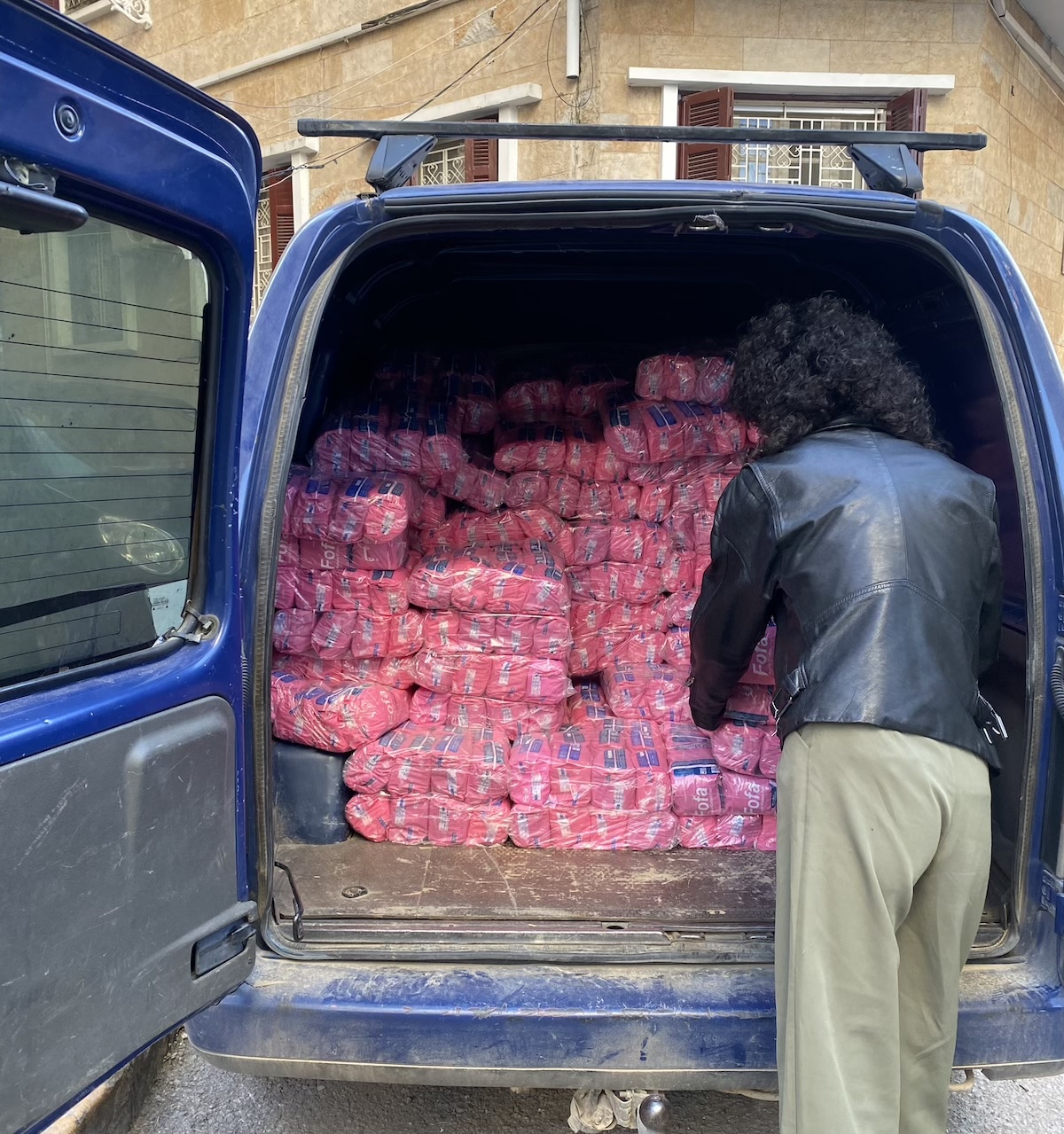
Photo courtesy of Jeyetna
“The government had done a list of essential products … to avoid hyperinflation and that list included essentials and razors but had excluded period products,” said Vanessa Zammar, cofounder and executive director of Jeyetna.
The list, released by Lebanon’s Ministry of Economy and Trade, served as an indicator of the lack of regard for women’s health among the government. Zammar, together with partners Evelina Llewellyn, Assil Khalife and Amanda Couzi, would challenge that regard with an intersectional, feminist approach through the formation of Jeyetna.
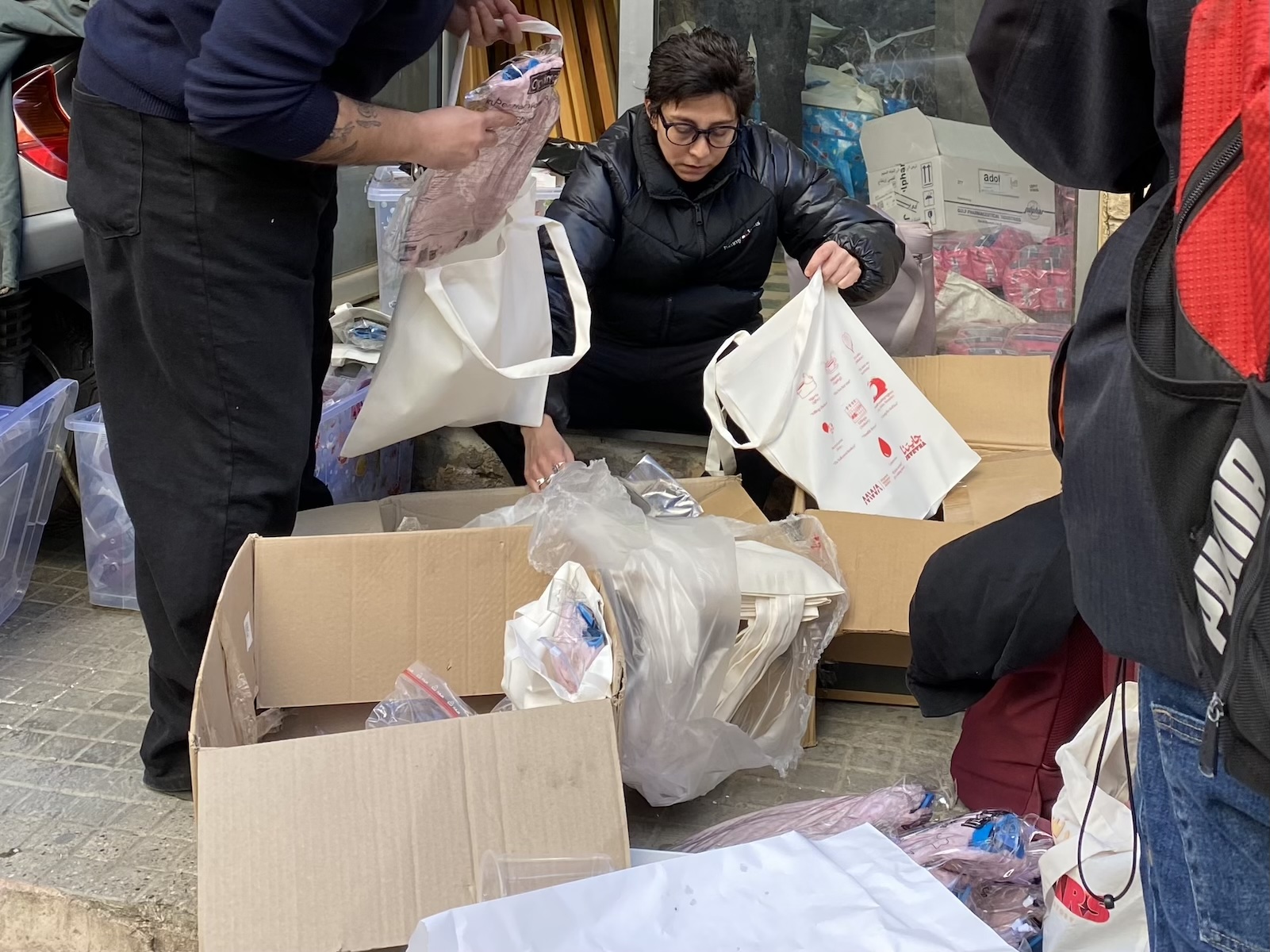
Photo courtesy of Jeyetna
A euphemism for menstruation, meaning, “it came,” Jeyetna focuses on distributing a variety of free disposable period products, reusable menstrual cups, hot water packs and pain killers to increase access to choice and alleviate menstrual inequities across the country. The group also hosts workshops to share menstruation experiences and decolonized information that challenges longstanding taboos about periods.
Zammar says: “In terms of war, we shouldn’t be the ones doing what we’re doing. We’re doing it because we have to.”
As ongoing Israeli strikes raze neighborhoods and kill over 4,000 people across Lebanon, the Jeyetna team continues to monitor incoming text messages to assess the needs of the day. The group will often distribute period products by motorbike or car, or people can pick up products at a small storage facility in Beirut.
Since the current war began, Jeyetna has provided over 17,700 women with menstrual care including: 37,257 period products such as pads, cups and underwear, 1700 pain killers, 750 hot water packs and 15 post-natal kits across 68 locations spanning each governorate of Lebanon, all through grassroots fundraising.
“The stress that comes with not knowing when you’re going to be able to change your product, not knowing when you’re going to be able to purchase your products, where you’re going to get one, if you leaked or not. It’s huge on top of everything else, and the smell. The discomfort is also not just a physical one, it’s also about the stress that comes with it,” Zammar added.
In Lebanon, the distress from collapsing menstruation routines affects one group of women more acutely than others: migrant domestic workers.
An estimated 150,000 migrant domestic workers in Lebanon are contracted under a legal framework known as “kafala,” or sponsorship, in Arabic. The arrangement inextricably links residency, employment and immigration status to the unregulated terms and conditions of one’s employer. Human Rights Watch describes the practice as “modern day slavery.”
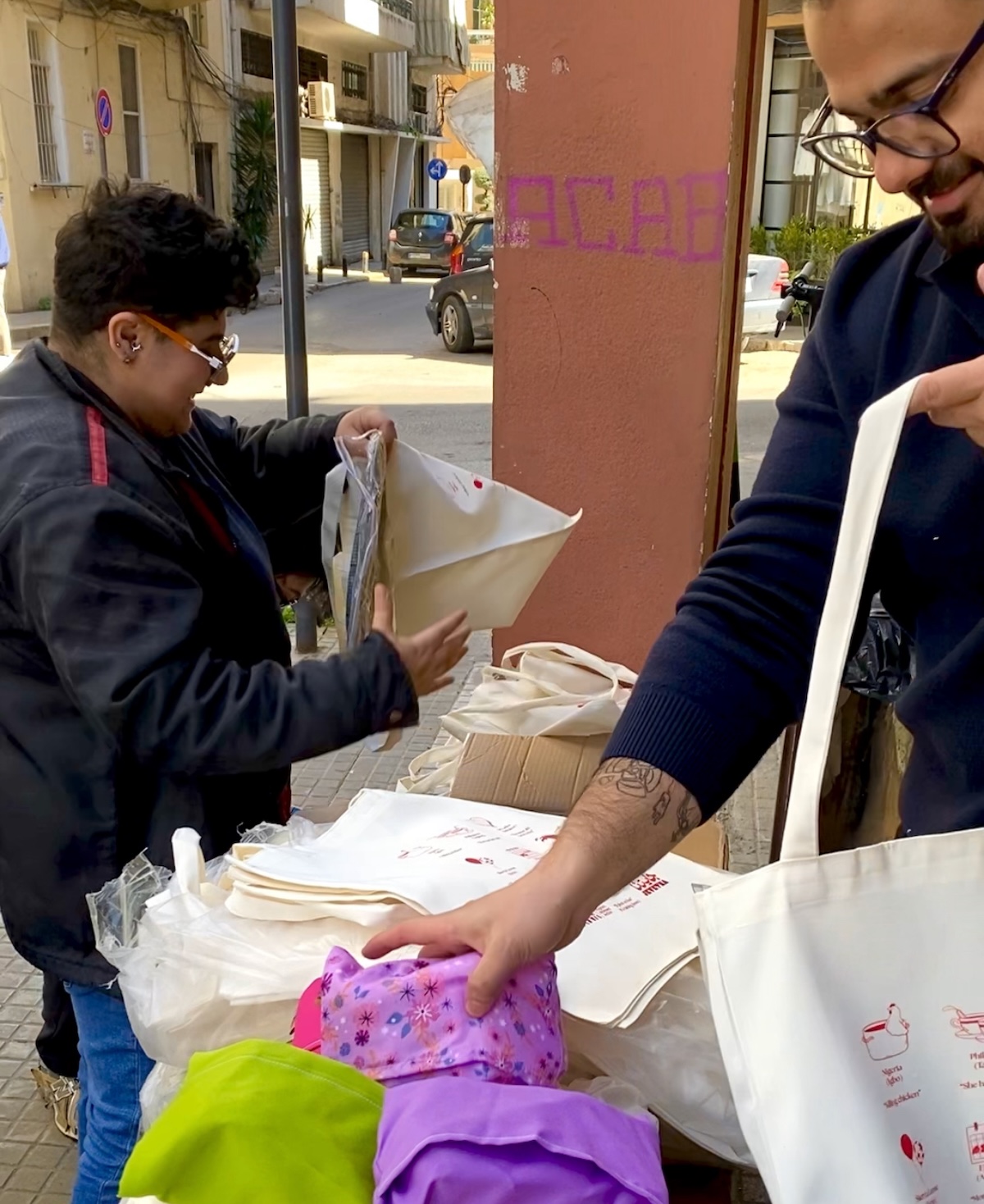
Photo courtesy of Jeyetna
In 2025, Jeyetna and Migrant Workers’ Action, a labor and immigrant rights NGO, generated a report that found many MDWs were denied period products, breaks to rest and opportunities to wash. Several women reported forced injections of drugs designed to stop their periods in efforts to maximize their productivity.
Dr. Jasmin Lilian Diab, director of the Institute for Migration Studies at Lebanese American University, further highlights how the sponsorship system impacts menstruation: “Under kafala, restricted mobility, dependency on employers, surveillance within the household, and barriers to seeking healthcare all shape access to menstrual care.”
And during war, these conditions are exacerbated.
Mariam, a Sierra Leonean migrant community leader and survivor of the kafala system, recounts employers abandoning migrant workers as Israeli attacks resumed in March:
“Most of them, the employers, didn’t pay them. So, when the war happened they would just say ‘go look for your community or embassy’ and they travel and they leave them and they have to figure out how to come to the city, to Beirut.”
Many migrant domestic workers were suddenly left without employment, housing or their legal paperwork. And the vulnerability of being undocumented can extend to obtaining period products from institutional NGOs during wartime:
“They make it conditional on data collection,” said Dara Eilo, policy and communications manager at Migrant Workers’ Action.
For community leaders sourcing period products to support migrant workers, having to collect statistics on women without their legal documents can create immense fear and yet another obstacle to facilitating menstrual care.
“Sometimes the community leaders don’t go to the shelters, they have the people come and pickup the boxes from the community centers, so, they’re not going to sit there and ask for half an hour, ‘how many people, what’s your age group, what nationality, which region, which neighborhood.’ So, this was really, really hard to deal with,” Eilo added.
Taking matters into their own hands, Migrant Workers’ Action, in partnership with Jeyetna and sexual and reproductive health and rights NGO, Marsa, distributed 600 menstrual care kits to displaced migrant workers in south Lebanon and the southern suburbs of Beirut containing pads, towels, clean underwear, soap, wipes, bags for disposal and wash buckets.