
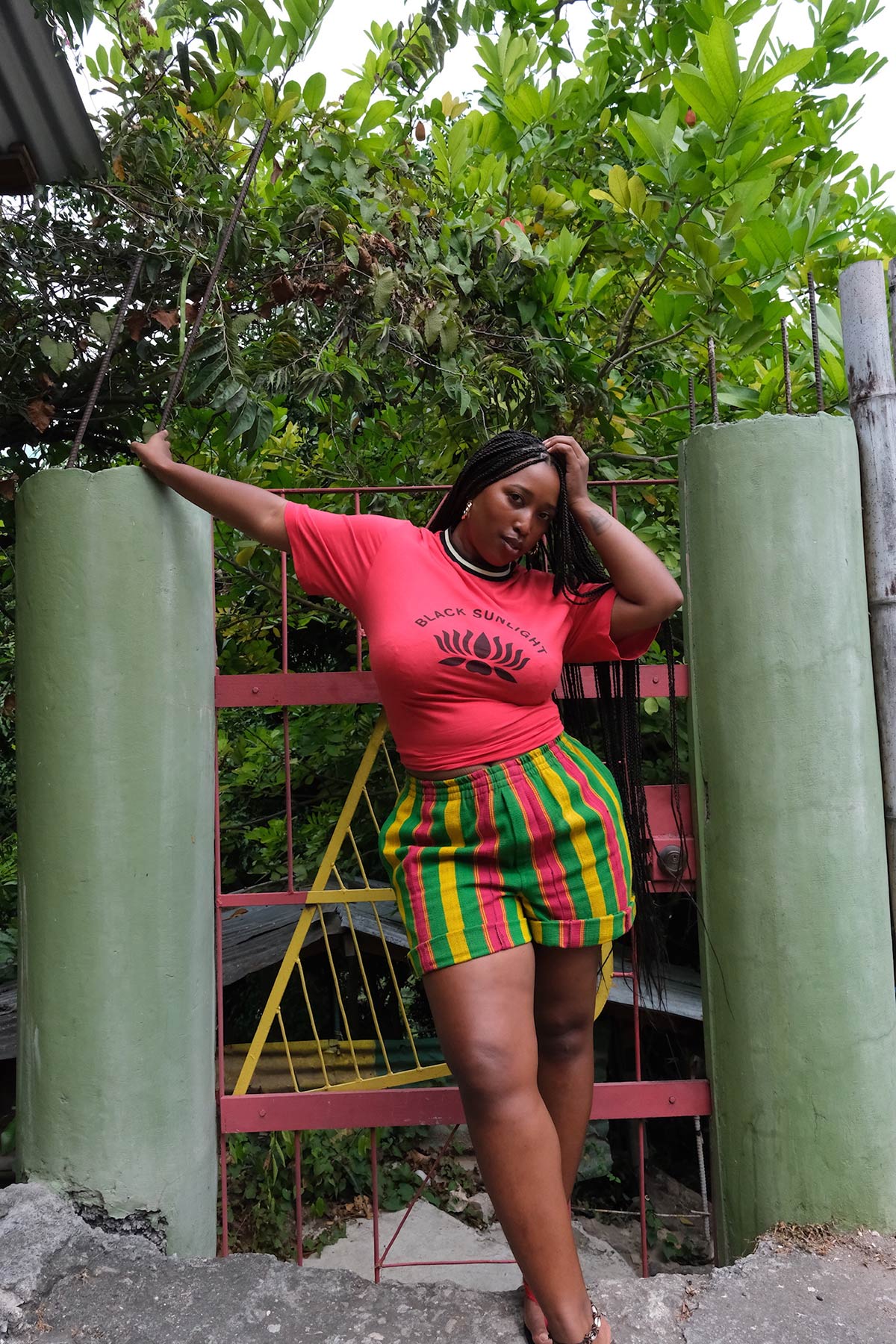
CÉLINE SEMAAN: First of all, congratulations on your new store, Sweet Like JAM.
MECCA JAMES-WILLIAMS: Thank you! I have had to alchemize a lot to get to where I am now… I have had to transmute a lot of dark moments, uncertainty, fear, and grief, and lots of unknown energy that was festering around me this year. Somehow, I alchemized it… and now we have a store at Skylark. We’ve gotten the press that makes the machine keep going. We’ve gotten notoriety in the ways that I’ve prayed for, so I can continue to grow a company in a different way than the industry I’ve grown up in. I definitely want to celebrate that.
CÉLINE: How has it been for you to evolve from an idea to the execution of that idea?
MECCA: We don’t give enough credit to the process of unlearning, releasing, and unbecoming that [grow a company] requires.
Not even four years ago, I was on the trajectory of being a very successful fashion editor in New York. I was shooting with publications like T Magazine and Cultured Magazine. I was on the trajectory of becoming a fashion director at a really big publication. Over the last four years, I have had to unlearn some of those ways, so I can relearn who I want to be as a woman, so I can relearn what liberation looks like. I had to unlearn the workaholic. I had to unlearn the fashion “it girl.” I had to sit with my ego. I had to sit with betrayal. I had to sit with grief.
I knew when I launched Sweet Like JAM that it was going to require me to become the next version of myself. Last year, we tried to do our pop-up, but I ran into pitfalls that stopped me and put me in some debt. It was especially difficult to go through those challenges after a year of everyone telling me Yes, everybody wanting me for their campaigns, and wanting me for their jobs. My failure of last year motivated me to push through fear, grief, doubt, and ego. I stand here today grateful. The accolades are starting to come in, and the ways that I can continue to grow my brand here in Jamaica, as well as globally, are emerging.
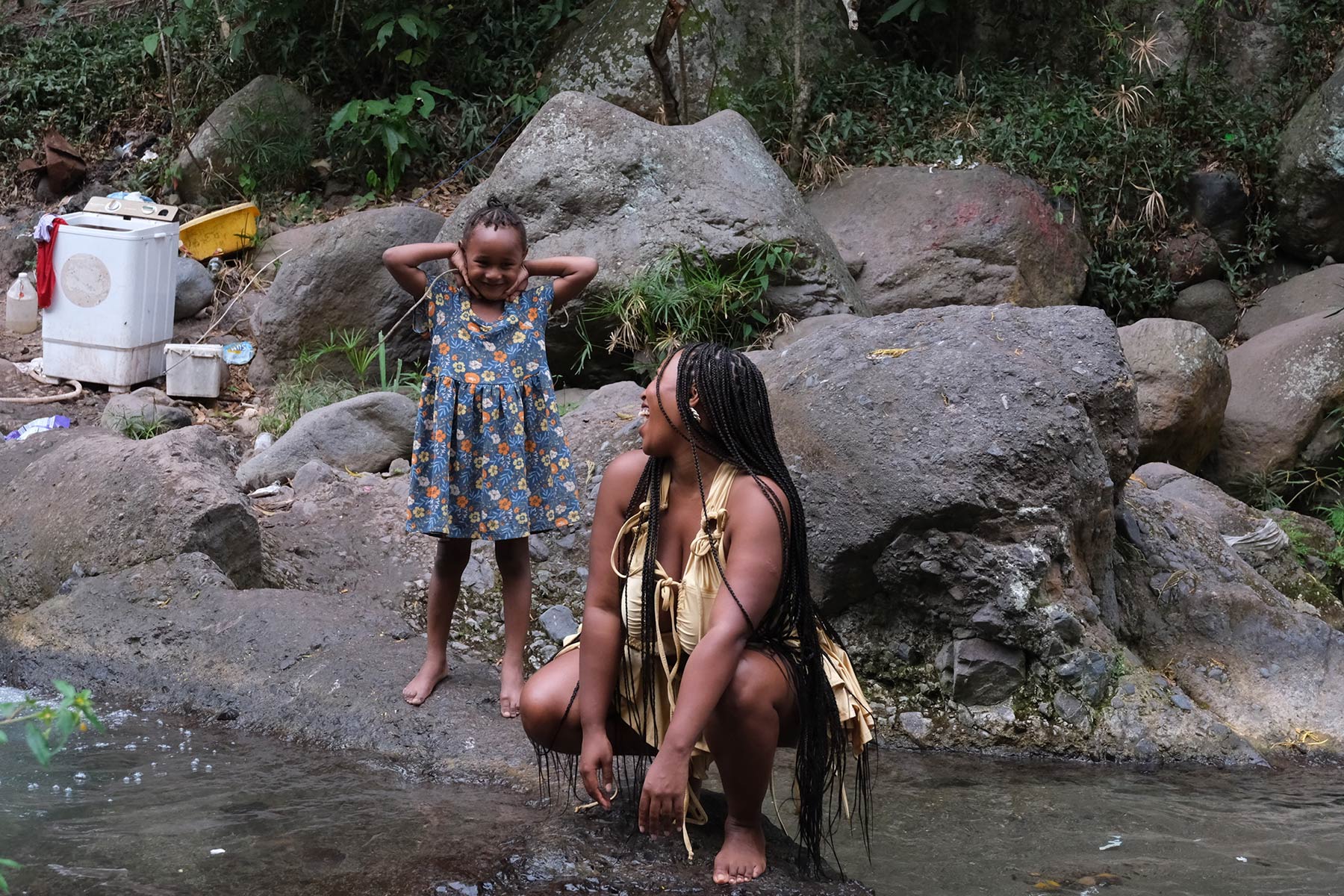
CÉLINE: I relate deeply to what you’re saying regarding unlearning, shedding, and recreating yourself to become the woman you want to be. I relate to stepping off the hamster wheel and building a world for yourself. When did you decide to go back to Jamaica? You were on a trajectory of realizing the New York dream. What happened that made you step out of that for real?
MECCA: The COVID-19 pandemic catapulted my name to the forefront of the industry. I was getting booked, and I was super busy. However, I remember sitting in my house, deeply sad about being in a pandemic. Honestly, I didn’t know if I loved what my industry was turning me into. You have to be a workaholic to be successful. But I was sitting in my house during the pandemic, after cycles of constant work, and experienced for the first time in my adult life, stillness. I realized that I didn’t know who Mecca was without all the things around her. I thought, I want more.
I booked a trip to Jamaica as soon as the borders opened. Everybody thought that was just so immature. And while I understood the judgment, I also felt the importance of finding another way. I’ve always been a person who goes against the grain. When I arrived there, I thought, I am moving here. This is where my spirit needs to be. This is what I need. That was in June 2020, and by November 2021, I already had a place here. It was an ancestral calling, for sure. My grandmother always wanted to live in Jamaica, and she was always on the quest to buy land out here, but she died before she was able to manifest that dream. My first trip to Jamaica was in 2016, and I knew then that I was going to live here. I just thought it would be when I retired, and then when 2020 came, and I was like, oh no, the time is now.
CÉLINE: There’s a belief that you have to be in New York to do your career, to be relevant, because as soon as you step out of the New York bubble, somehow you disappear. But that’s all an illusion. It’s false because you have stepped out of the New York scene, and you are building another scene somewhere else. I think that’s a very important example of decentralizing and divesting from being in the Global North, being addicted to being in the center of the New York bubble. Instead of disappearing, you alchemized, crystallized, and materialized Sweet Like JAM. Tell us a little bit about that world you built.
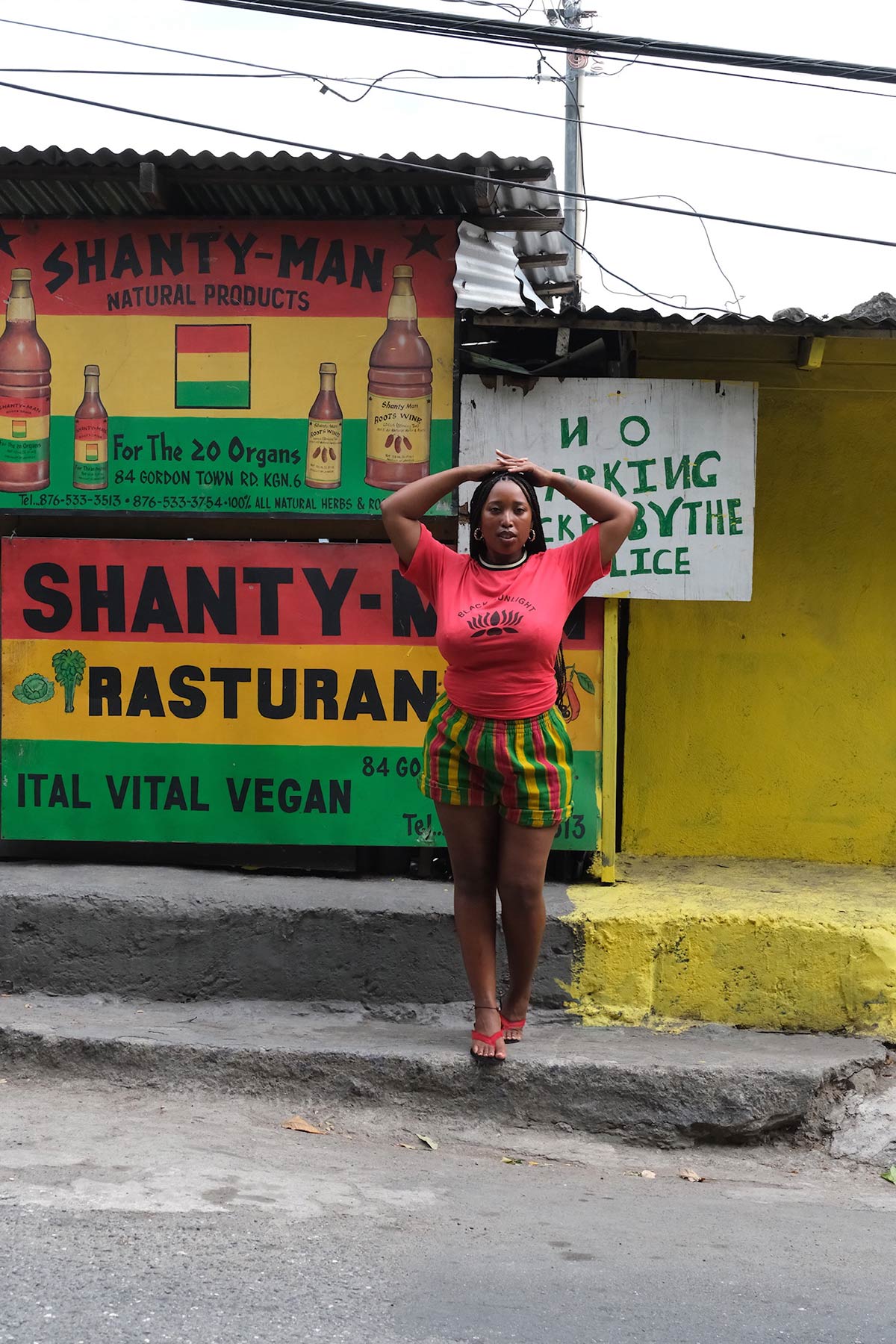
MECCA: I have an artist’s approach to the way I work. In some ways, it’s the best. In other ways, it’s so hard. But all of that did help me create Sweet Like JAM, which is a culture and commerce platform. We are also an institution that explores the intersections of culture, especially of Black culture, Indian culture, and sports culture. When I moved to Jamaica, I had so many questions: Can I take up space here? Being a Black American, am I allowed to take up space here? How do I take up space here? What are the ways in which we honor the culture that I’m walking into without losing the one I have? And through the experience of American Blackness, I had to figure out how to assimilate without losing myself. I was celebrating where I was, but also infusing where I was with who I am. I realized that we have lessons to teach each other, and so much to learn from one another.
When I first moved here, people I knew in America were projecting the illusion that I was going to do what the colonizer has done to us, to another place. And while that does happen in a lot of ways, when it comes to capitalism, there are so many other nuances that can be celebrated. I’m able to create an ecosystem that never really existed. I just launched a pop-up that showcases 35 global and local brands in one place. Now I’m establishing an ecosystem for creatives to bring their work back home and see that they can sell their craft at whatever price here, and it will sell, and that the stereotypes and the notions that people project onto collaborations amongst global Blackness is false.
CÉLINE: I’m surprised that you heard those types of criticism coming from people who were not in Jamaica, didn’t live in Jamaica, not from the Jamaican culture. I guess it’s part of moving in the online spaces where you’re vulnerable to anyone who wants to throw tomatoes at you whenever they feel like it, because it’s such an anonymous space. Did you personally know these people who were criticizing you?
MECCA: Personally, no. But I knew of these people, for sure. I think the pandemic created a sense of lostness. And for a lot of people, the easiest way to grapple with someone they perceive as unconventional is by tearing that person and what they’re doing down. We always get caught up on the negative before we sit in the positive. Sometimes there’s beauty in that because if I hadn’t been affected by the negative comments, I wouldn’t have been so intentional about what I created. JAM is the exploration of culture and an opportunity to bring commerce and dialogue to spaces that require nuance. There was no nuance in the dialogue we were having about how we migrate, how we integrate cultures, how we travel with intentionality and consciousness.
CÉLINE: There’s also a lot of ignorance about the lives and the realities of the Global South. There’s this idea that it’s poor and that you are going to be exploiting or hurting the community by being there. Because of this ignorance, there’s a lack of imagination about could happen if we did decentralize ourselves and relocate ourselves to the Global South. What kind of cultural momentum we can create that resonates with what you’re building?
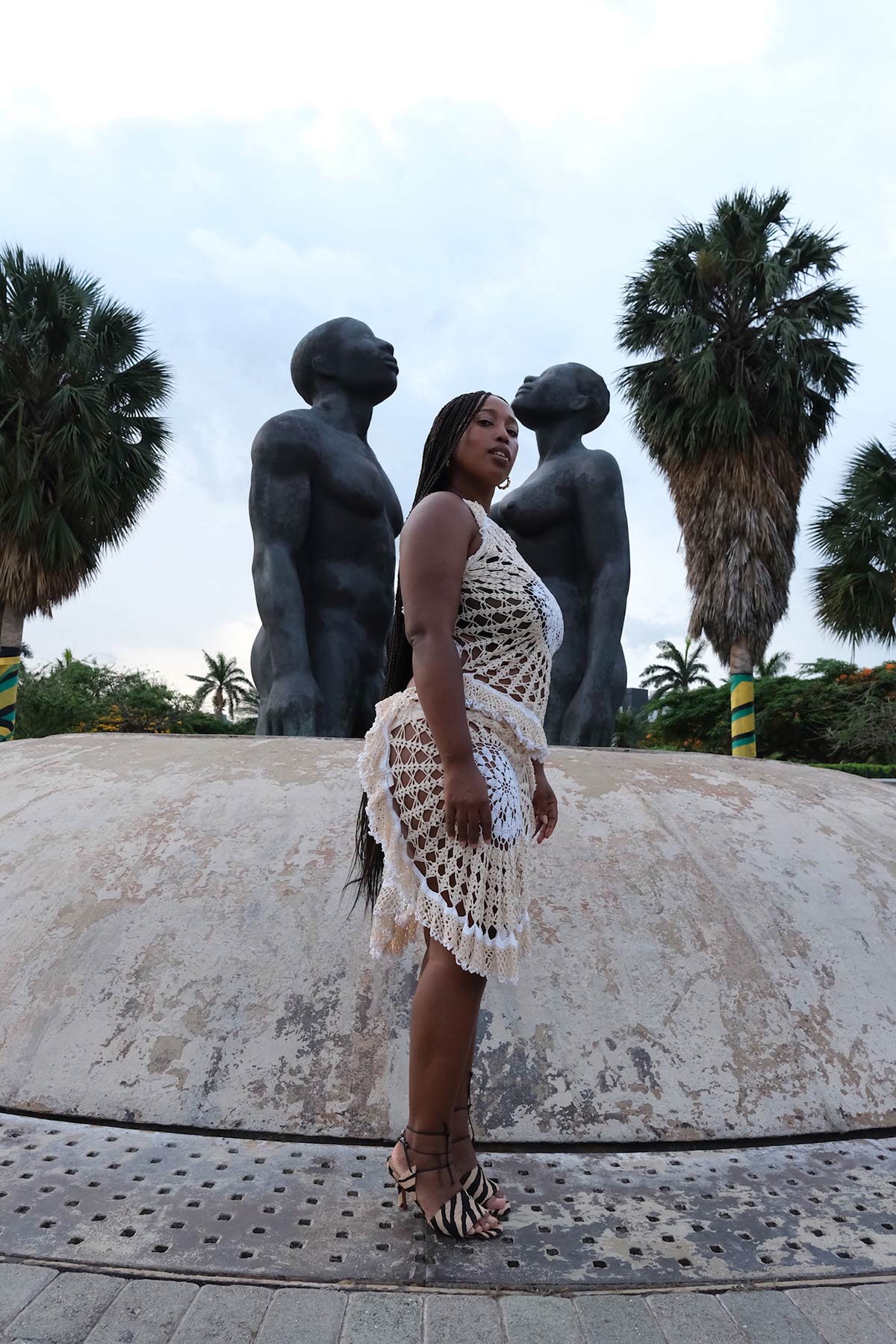
MECCA: When I first moved to Jamaica, it was made clear to me that I shouldn’t go to Kingston. I am a single Black woman who was traveling alone. I thought, let me just adhere to that. When I finally went to Kingston, I signed my lease there the same day. I’m so happy that I fought against people’s notions of what I should and shouldn’t do, because Kingston is one of the most beautiful places on Earth. It is a microcosm of all different cultures and beings creating their own world while one already exists. I’m very protective of Jamaica. As a woman who moved here from New York, I’ve had to be careful about oversharing and creating accessibility to a place that can be commodified in a very bad way. Jamaica has taught me privacy. It showed me how to be confident and not need to center my voice. It’s taught me confidence and not needing to be seen, heard or thought of. That propelled my creativity.
One of the challenges of being a creative in New York, is that you’re not allowed to make a mistake. God forbid you do something that is considered bad. You’re shunned. However, being shunned is actually the most alchemizing experience because you have to unlearn yourself and grieve the loss of a part of yourself.
That’s what happened after the first year; I felt so shunned because of the debt I incurred. I literally had to quiet the noise and say to myself, if Jamaica is your future, if Jamaica is your focal point, give it that focus.
CÉLINE: I relate in so many ways, being shunned by the fashion industry myself, having to reinvent myself while being mindful of not losing parts of myself. You’re now giving yourself a chance and building something new. That will create its own momentum. What are your plans for 2026? How are you utilizing the space in the next couple of months?
MECCA: 2026 is for exploration. Now that I’ve created a blueprint, now that we opened a store, I really want to explore. I want to travel more. I want to see if we can create a global pop-up. I want to see if we can get new hotel sponsors, or maybe there’s something we can do in New York. I’m open. I have such big dreams, but I am also letting God guide me as well. We have one more week on this pop-up, and then we’re going to put everything online so we will be accessible all around the world. I’m sure when this interview comes out, we’ll already be launched online. For me, it’s all about strengthening culture and the dialogues we have around art, music, and fashion through the lens of culture.
I am dreaming of collaborations, new partners, people who are looking to invest in this reality, and also just being a soft businesswoman, I want more softness. I want more opportunities to grow. I want to not need to be so rigid and structured and strict with how I move. I want things to just grow effortlessly. I want to slow down and listen to the land. I’ll sit in my garden and watch the ants crawl up the wall or crawl to their next meal. Going with the flow is so much more important than staying rigid and fixed to one idea. I had to learn what flow looked like. I had to learn what resilience is outside of rigidness. I’ve also had to honor who I am as a person before I honored who I am as anybody else, even as a friend, a professional, a creative, or a business owner. At the end of the day, I still have to be Mecca; so I honor her.