
It feels strange to be writing about fashion at a time like this. Lebanon is being invaded by Israel as we speak. The Gulf is witnessing unprecedented tensions. And worldwide, it feels as if we are entering a new world war.
Yet here we are, continuing to design and create fashion pieces. What for? Why? How?
In some ways, these questions have been with us from the very beginning of our fashion company, Vanina.
The brand itself started during a time of war. In 2006, as Lebanon was going through another devastating conflict, we found ourselves wanting to take action in whatever way we could. At the time, we had just finished school. During those weeks, we would gather in each other’s houses and start creating—crafting, designing, imagining, planning.
This is where the first ideas of Vanina began to take shape.
The project officially took off in 2007 with a collection of jewelry handcrafted from old Lebanese coins: one lira, 500 piastres, and 250 piastres.
Every household seemed to have a jar of these coins. They had lost their monetary value during the civil war and the inflation that followed. Yet for us, they carried another form of value.
They were a link to a country that knew how to keep going.
The cedar engraved on their back, the delicate details of their design — holding memories of a pre-war era we had not personally known, but had heard so much about.
Transforming these coins into jewelry felt meaningful. Something that had lost its official value could still hold beauty, memory, and significance.
And that is how Vanina began. At first, in our bedrooms. Then progressively it grew into the creation of a small atelier and the training of women in handicrafts to handle our manufacturing. We met these women through NGOs such as Service de l’Enfant au Foyer (SEF), which connected us with women facing challenging situations—women caring for their children and searching for opportunities to work. We began collaborating with them, and they soon became our master artisans.
Slowly, the local team grew as our international expansion also began to take shape. We started exhibiting our brand in Paris during fashion week, where we met agents and buyers and began receiving orders from retail stores around the world. One of our first resellers was Galeries Lafayette in Paris. At the time, it felt surreal. This international expansion also helped deepen our local roots and expand our manufacturing network in Lebanon, with many of the artisans who started with us still working alongside us today.
As our range of products grew, so did our network of artisans. We built it organically and in a decentralized manner. We began working with new NGOs such as La Voix de la Femme and Arcenciel, which introduced us to more women—each with fascinating stories, diverse backgrounds, and a strong drive to learn, work, create, and support their families.
We organized workshops where our master artisans trained new apprentices. Over time, these apprentices became master artisans themselves.
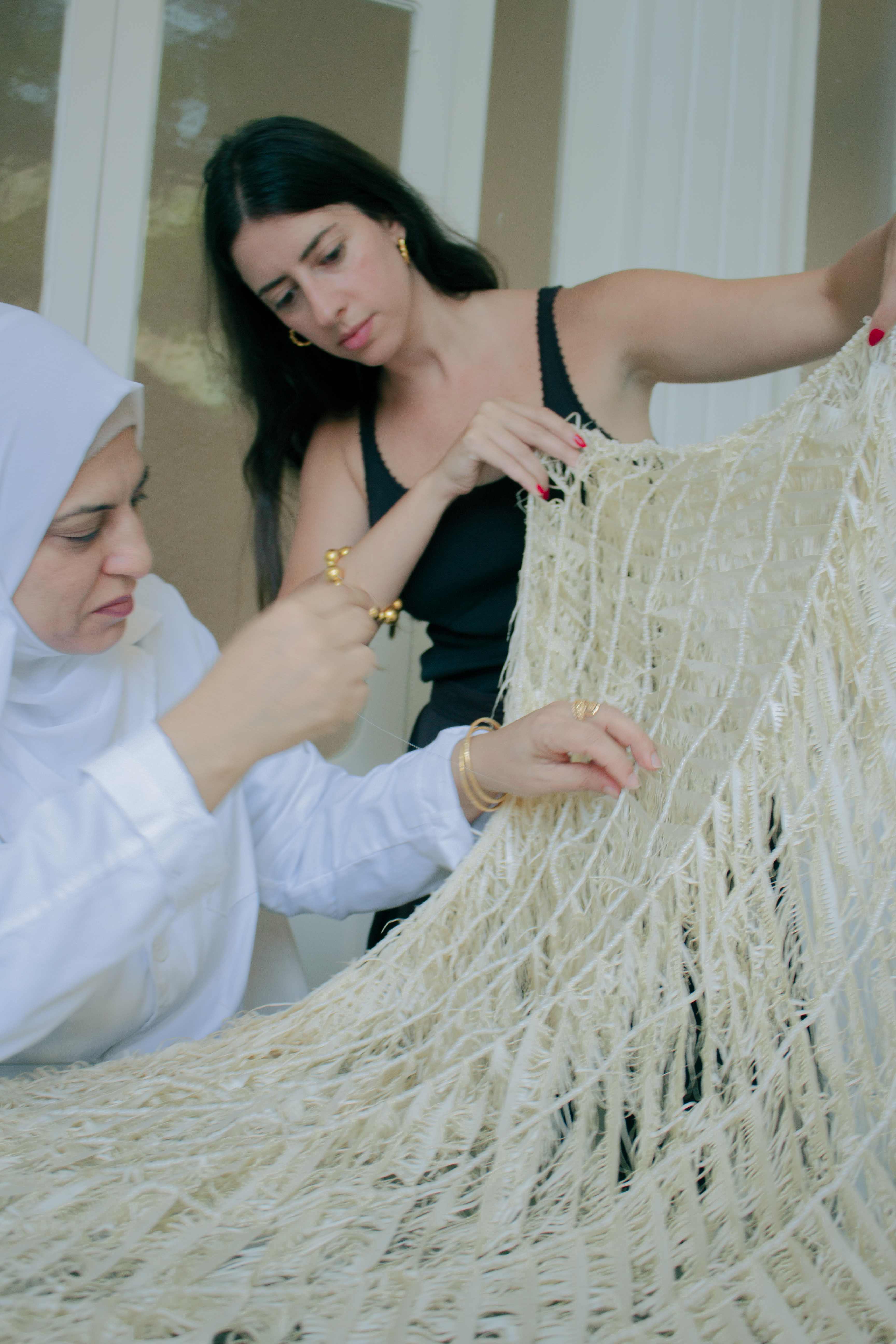
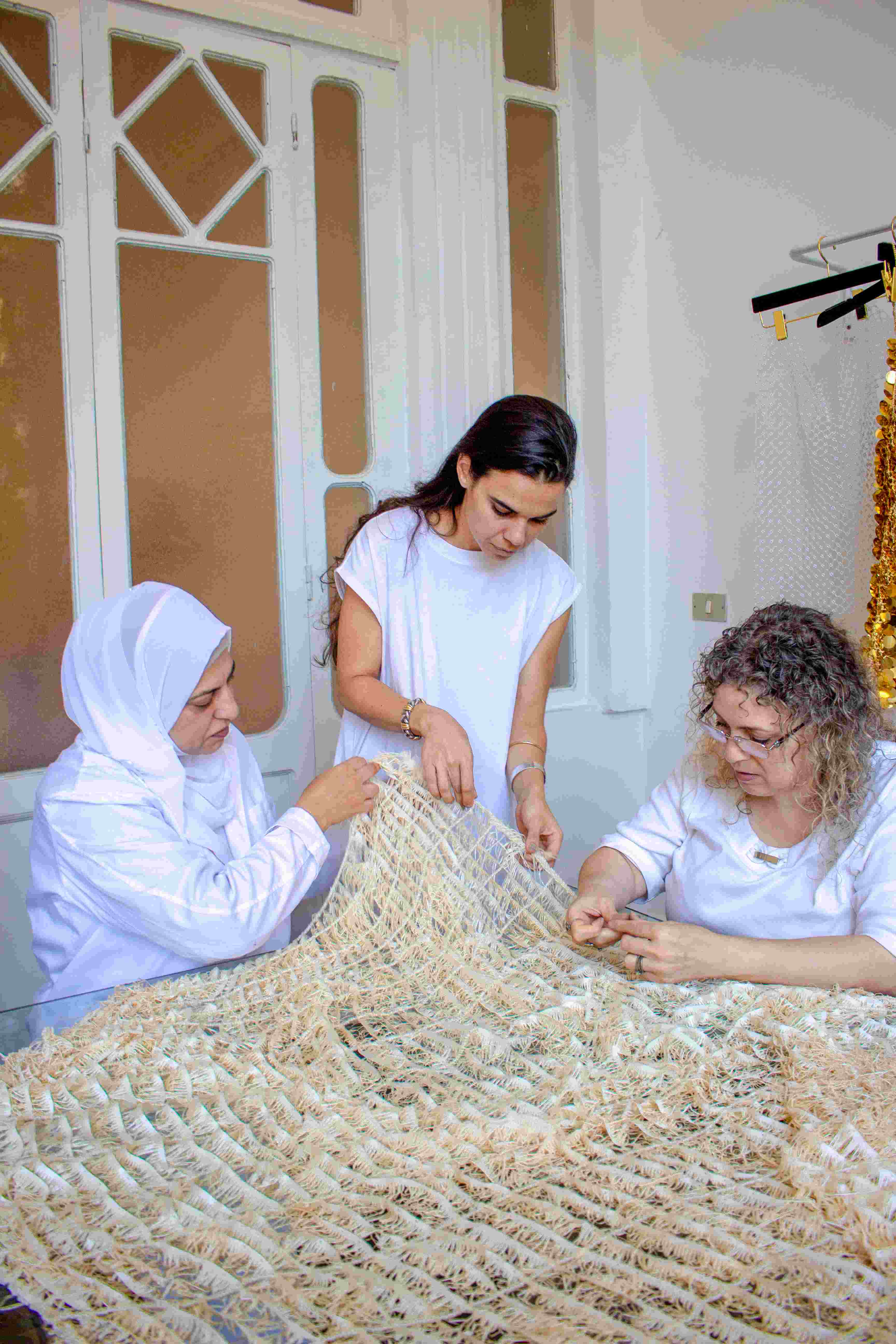
Gradually, production began to move from the atelier into their homes. Each woman sets up a craft line in her own house. We provide the raw materials, and she produces the pieces, often together with family members or friends in her neighborhood whom she chooses to involve.
Today, the network includes more than 70 artisans working from their homes, alongside more than 25 ateliers collaborating with the brand.
We also co-create with them. We revive traditional crafts such as crochet and macramieh techniques, but in many cases we also develop new techniques together. Much of this experimentation involves materials that are difficult or nearly impossible to recycle.
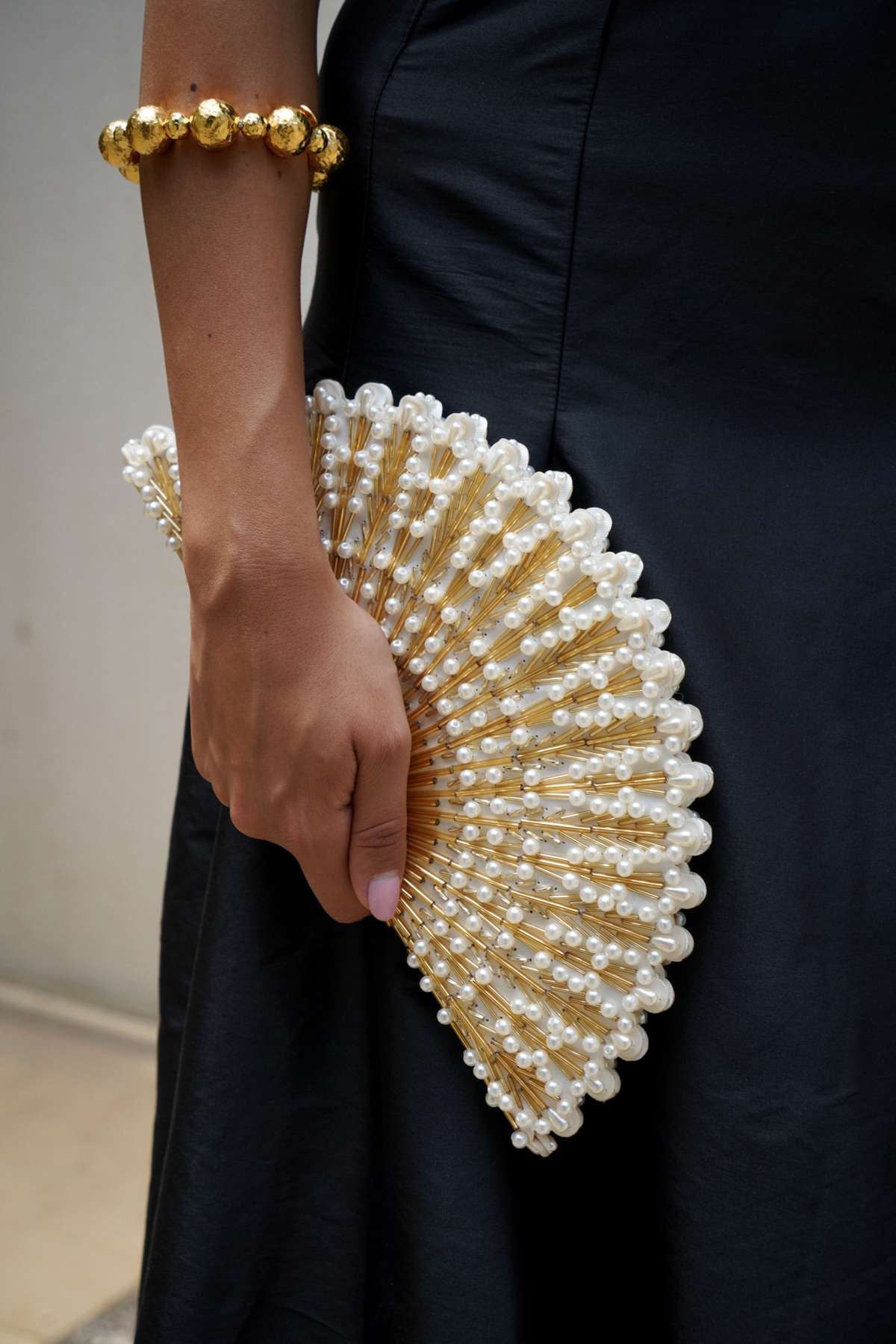
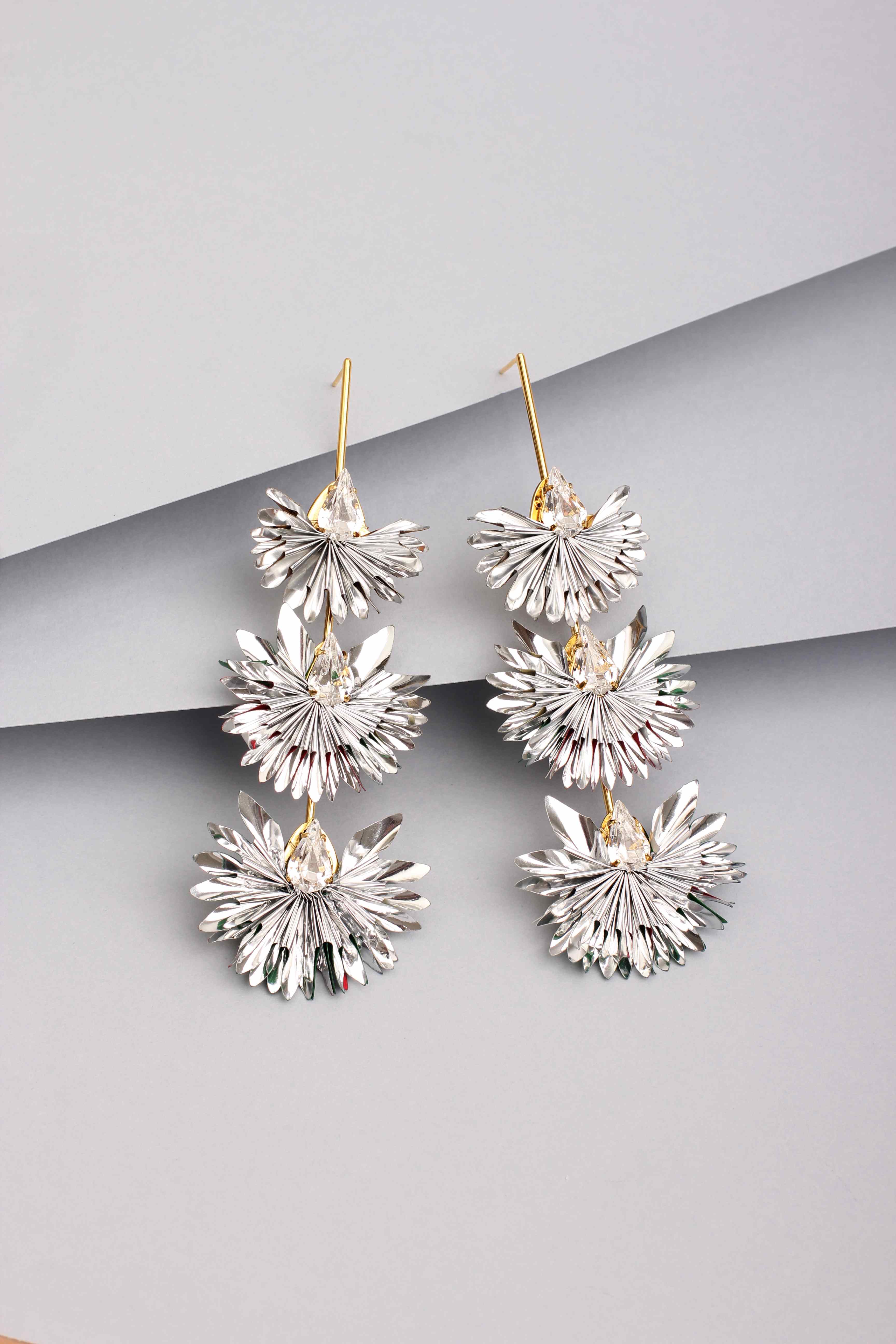
One example is Delicatesse, a line of evening bags we created for Net-a-Porter’s Net Sustain platform. The bags were produced using a parametric form of hand-woven origami. Each bag was patiently pleated by hand and upcycles between twelve and thirty-six chip packets. These single-use packets, composed of metallic and plastic layers, are extremely difficult to recycle through conventional systems. The discarded packets were collected with the help of NGOs, raising awareness about waste management challenges but also about broader issues related to processed food consumption and the need to rethink the way we produce and consume.
Over the years, we have worked with many materials that carry stories. Materials that hold memory or meaning.
We created a collection called Unlocked using old keys, inviting people to keep doors open at a time when cities and societies are increasingly defined by gates and silos. Another line, Ceasefire, used “disarmed matches”—matches that would never light a fire. The collection emerged during particularly violent moments in Beirut and quietly and colorfully called for a cessation of violence.
In August 2020, after the Beirut port explosion that devastated the city and deeply affected its people, another project emerged. Like much of Beirut, our store and atelier were heavily damaged. As we cleared the shattered glass, we decided to rebuild and keep going. The fragments became Light of Beirut, a capsule collection paying tribute to the city—its people, streets, houses, beauty, resilience, and hope. We chose not to commercialize the collection. It carried the trauma of that day but became our way to cope and move forward, inspired by the extraordinary coming together of people in the aftermath of the blast; a collective energy, rooted in the Thawra, through which we lifted each other up.
At the moment, we are working on a project called Rooted, which repurposes olive pomace into a new biomaterial inspired by our soil and land. The project reflects on the damage inflicted on ecosystems, flora, fauna, and the communities of southern Lebanon—populations that have repeatedly been uprooted and whose lands have been contaminated through successive Israeli invasions. Lebanon is a small country but an incredibly rich mosaic of religions, cultures, and backgrounds. We have had the opportunity to discover this richness up close. We have collaborated with Palestinian communities taking refuge in Lebanon, Syrian populations in the Beqaa Valley, and many neighborhoods across the country.
In our atelier, on any given day, one can witness a microcosm of this diversity. Women and men of different religions and backgrounds working side by side—exchanging, collaborating, laughing.
And resisting. Yes, resisting the madness the world is facing today. Through it, we choose to celebrate the beauty of our togetherness and the richness of our lands.