

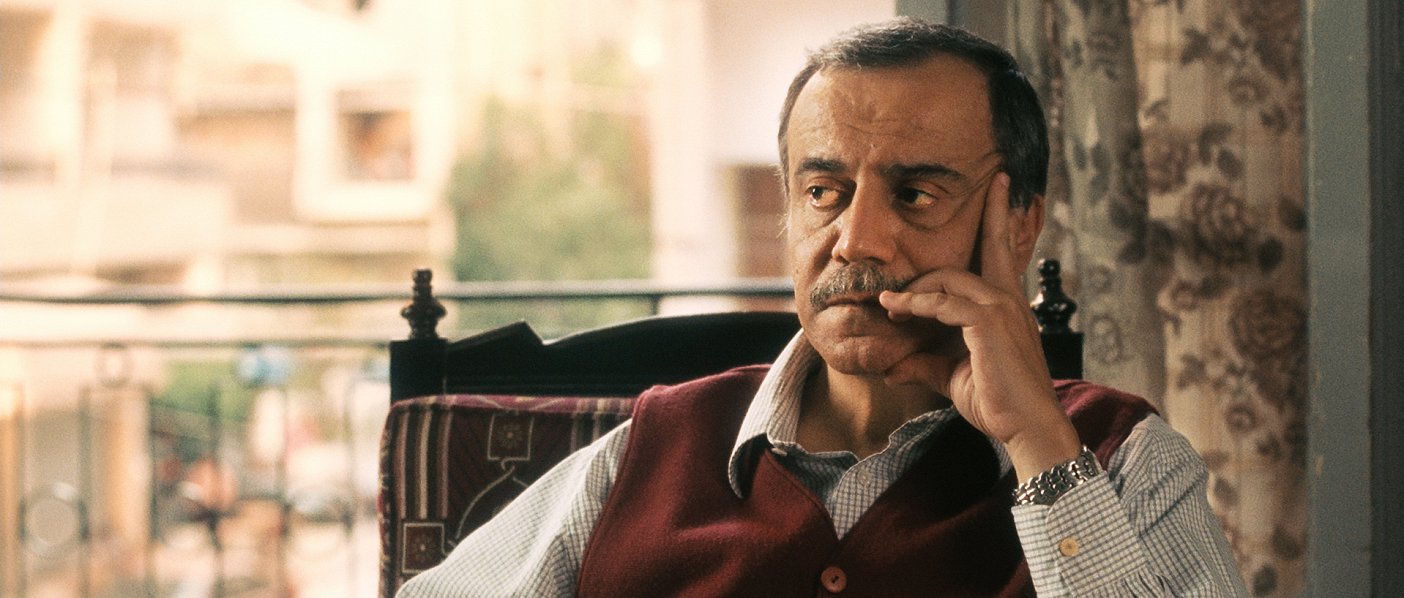
When we mourn an Arab artist such as Ahmad Kaabour, we are rarely permitted to mourn him alone.
The war that made his work necessary is still ongoing, and the obituary and the body count arrive together, inseparable, each demanding to be read in the light of the other. To grieve the loss of his voice is to grieve the conditions that called it into being, and to name those conditions is to understand that his death cannot be separated from the violence that shaped his life and work, his name among the thousand that accumulate while the world reaches for the right language to describe what is being done to Lebanon and to Palestine. In this, the mourning itself becomes political.
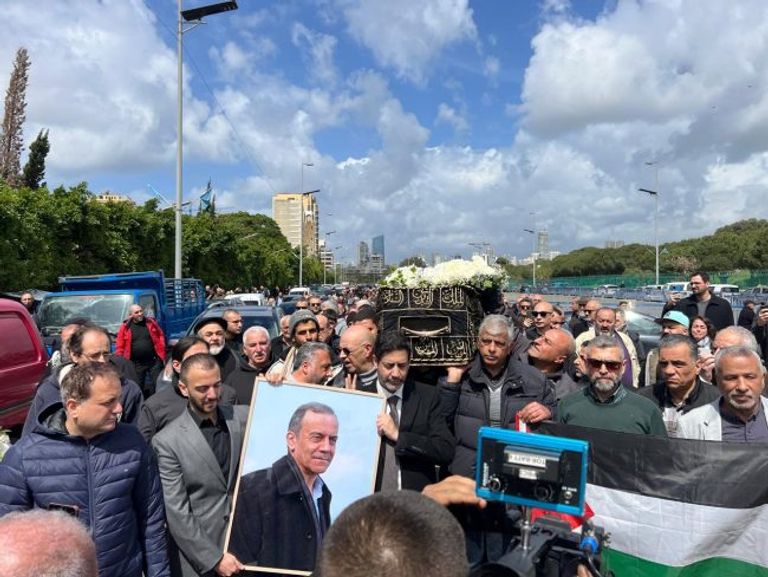
Kaabour died on March 26, 2026 at Al-Makassed Hospital in Beirut. He was 70 years old, and he died while Israel was again bombing Lebanon. According to Al Jazeera, more than 1,000 people have been killed and over 1 million displaced since March 2026 alone. Kaabour was buried at the Martyrs’ Cemetery. That is, if nothing else, the right place. He spent his life in the company of those who fell for what they loved. And long before he was gone, Beirut had heard him before, in another room of the wounded, the aggression the same, the loss as total, his voice the only thing that crossed the distance between then and now.
In a candlelit hospital in Beirut, June 1975, Ounadikom was sung for the first time, among the wounded and the devastated. Sung like a comrade sitting beside you, beside those who had lost everything, and yet carrying with it a dignity and a love so deep it asked: would you give yourself for the people?
There are songs you cannot locate a first hearing for, because they were already there when you arrived.
Ounadikom is one of those songs. It did not enter my life at a particular moment. It was already in the air, already in the body, already part of what it meant to be Arab and to know Palestine. Kaabour himself said it plainly, without ceremony: the song became more famous than I did. I never imagined that something written during a night of war, first sung in a field hospital, would later be taken up by people. That plainness was its own kind of testimony. He did not mythologize what he had made. He stepped aside and let it belong to whoever needed it.
Kaabour was a man who composed his most enduring work at nineteen, with no formal musical training, in the middle of shelling, and spent the rest of his life in genuine surprise that it had reached so far. A man who, when asked what his favorite song was, answered: the one I haven’t written yet. He died still reaching forward, and those songs will now go unwritten.
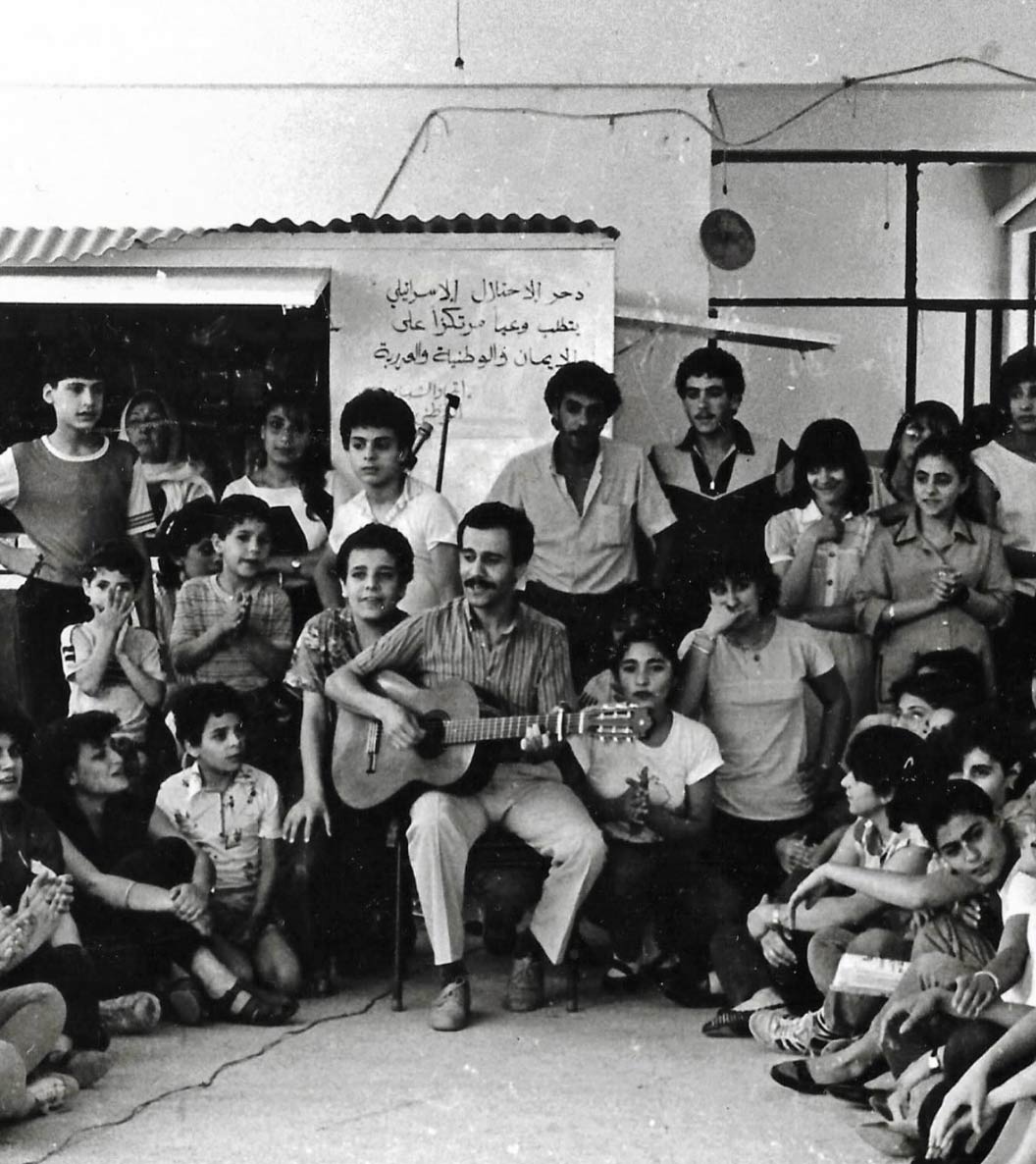
Ounadikom was the song that outlived him in name, but it was never the only thing he made. He sang Beirut ya Beirut with the same unguarded love he brought to Palestine, the city and the cause held in the same hands. He wrote for children’s theatre, composed lullabies and stories for young audiences, as if the work of building a dignified future and the work of resistance were not two projects but one. He made albums that moved between the intimate and the political without announcing the shift. Across all of it ran the same current: that a song is an act, that the people it is made for are the only audience that matters.
أناديكم… أشد على أياديكم… وأبوس الأرض من تحت نعالكم… وأقول أفديكم
I call for you… I clasp your hands… I kiss the ground beneath your feet… I say, I would sacrifice myself for you.
The song asks to be answered. To endure, to remember, to return, to organize, to mourn together and resist together, to stand in a solidarity so firm it becomes shared attention, refusing to let grief dissolve into nostalgic remembrance. This is solidarity as flesh and bone. And to risk myself for you and your freedom.
وأهديكم ضياء عيني ودفئ القلب أعطيكم… فمأساتي التي أحياها، نصيبي من مآسيكم
I give you the light of my eyes, the warmth of my heart… my tragedies that I live, my share of your tragedies.
This is an act of showing how he intertwined himself with the tragedies of the people. Dissolving any distance and the standpoints where he is an outsider observer extending a hand across a divide. He is not beside the people. He is of them, and they are of him, the grief moving in both directions until the directions collapse. His voice has already crossed with the message of shared grief, so completely that the crossing is made invisible. He did not see Lebanon and Palestine and essentially the wound of the Arab world as fragments calling on other fragments. He saw what ran beneath all of it, the same loss, the same body, the same people scattered by the same zionist colonial project, and he sang from inside that knowledge.
When Mahmoud Darwish met Kaabour, he asked him which Palestinian city he came from. Darwish had read it in him. The body knows what borders deny. Kaabour was Lebanese, born in Basta, raised in Beirut, shaped by the civil war that tore his own city open. And still. Darwish had read it in him. The bond between Lebanon and Palestine is not written in documents or declarations. It is passed through loss. Through music. Through the long memory of people who have been made to scatter. It lives in the chest. In the throat. In the way a voice carries grief it did not choose and cannot put down. Kaabour carried it that way. Lived it from the inside, freely, the way people carry each other across borders drawn to separate them.
Within hours of his death announcement, the song was everywhere again.
Not retrieved from an archive, not dusted off as memorial. Sung. Shared from Beirut and Gaza and Amman and the camps and every city in the shatat–diaspora that has ever reached for it in a moment of rupture. People who had grown up with it and people who were hearing it for the first time, all of them pulled toward the same lines, the same melody composed in a field hospital by a nineteen-year-old with no musical training and nowhere to put the weight of what was happening except into sound. The mourning and the refusal arrived together, indistinguishable, the way Kaabour always understood they would be. Grief does not wait. Neither does resistance. In the Arab world, they have always moved as one.
What the song never specifies is what it expects after the calling. I’m calling for you and then it leaves the answer open. That openness is a demand: that we answer in the ways we carry grief, resistance, and solidarity, in blood held in the palm, in flags not lowered, in grass tended on ancestral graves.
So we shall answer his calling, always, by remembering, by resisting, by living the dignity the song calls us to protect. By honoring those who sacrificed themselves, willingly, or simply by being Palestinian or Lebanese, or any people the world has tried to make disappear.
The song finds us still, in every city that carries the wound.
It will not stop calling. And somewhere in that, in the relentlessness of the song, in its refusal to be a period when it was always meant to be an opening, Ahmad Kaabour remains.