

Having grown up in Cyprus, I have seen what division and partition can do to a population. The island is no stranger to refugees, war, division and suffering. Watching the atrocities that have been going on for decades in a region just south of our shores has led me to question why our government has never stood up for people who face similar geopolitical situations, but to a much more inhumane extent.
Studying the history of the Middle East and subsequently working in Brussels, I cannot help but maintain the same moral question marks in my brain. Why are we so inactive at a time when genocide is committed in Gaza, horrendous human rights violations taking place in the West Bank, and war threatens our close neighbours in Lebanon?
More so, why are governments in Greece and Cyprus, both of which have suffered displacement in recent memory, acting as close allies to a regime that only seeks to expand, destroy, annihilate?
At a press conference in December, the Israeli Prime Minister said: “To those who fantasise they can-re-establish their empires and their dominion over our lands, I say: Forget it. It’s not going to happen. Don’t even think about it.”
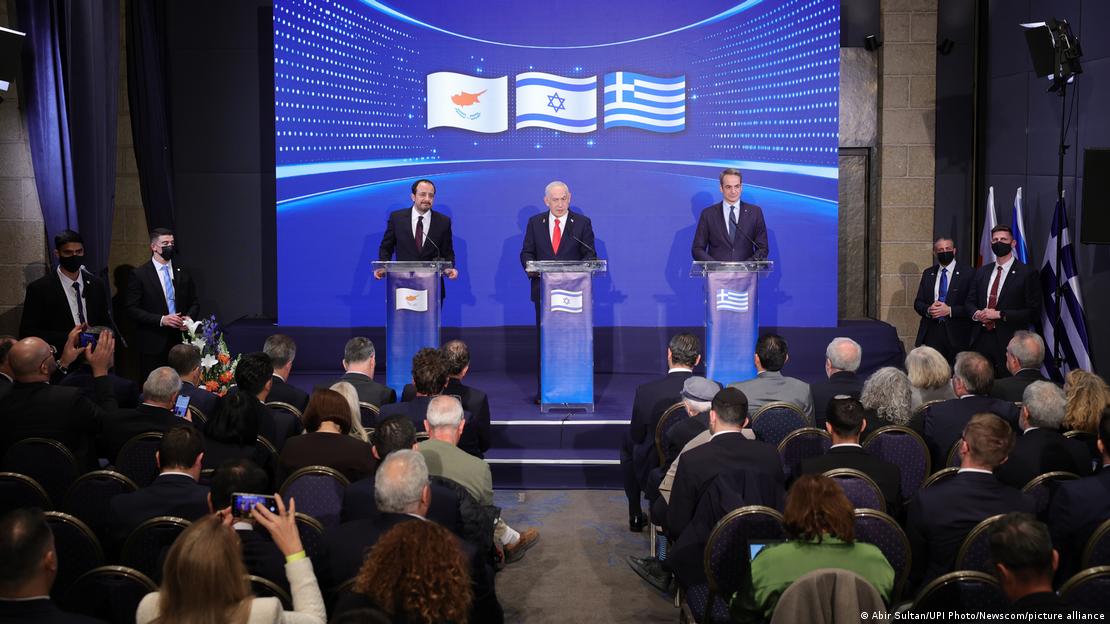
This was an apparent reference to Turkey. However, what is unfolding now in the region is evidently a Greater Israel, which sounds out empire. With Gaza, the West Bank, Lebanon, and Iran under attack by the Israeli Defence Forces, along with the pacification of Egypt, the Gulf States, the UAE and Jordan - all demonstrate that Israel is attempting to build itself an empire in one of modern history’s most contested regions.
Approximately 180 nautical miles north of Israel, the island of Cyprus has turned into one of Israel’s staunchest allies, even though Cyprus, ironically, remains partially militarily occupied by Turkish forces since 1974. The Israel-Greece-Cyprus alignment, which dates back to the early 2010s, includes cooperation on security and defence, such as joint military training and intelligence sharing. This draws Cyprus and Greece directly into the sphere of Israel’s expansionist policy.
As of mid-April, there is no other country in Europe that is taking this kind of step towards military cooperation and partnership. The Hungarian PM’s (Viktor Orban) recent exit strips Israel of one of its most dependable allies inside the European Union. Orban had repeatedly used his veto to shield Netanyahu’s government from international pressure, most prominently the vetoing of EU attempts to sanction Israeli settlers in the West Bank. Spain’s government, on the other hand, has been adamantly critical of Israeli policies, and many other European countries have been lethargically following suit.
In less than three months, the European Citizens’ Initiative Justice for Palestine, (which has been put forth by the European Left Alliance) has crossed the threshold of one million signatures demanding the suspension of the EU-Israel Association Agreement. Why then is Cyprus and Greece involving themselves with the expansionist Israeli policies, when the entire bloc is turning from ally to critic?
More specifically, shouldn’t Nicosia (the militarily divided capital of Cyprus) see the irony that lies within supporting the aggressive and expansionist policies of Israel?
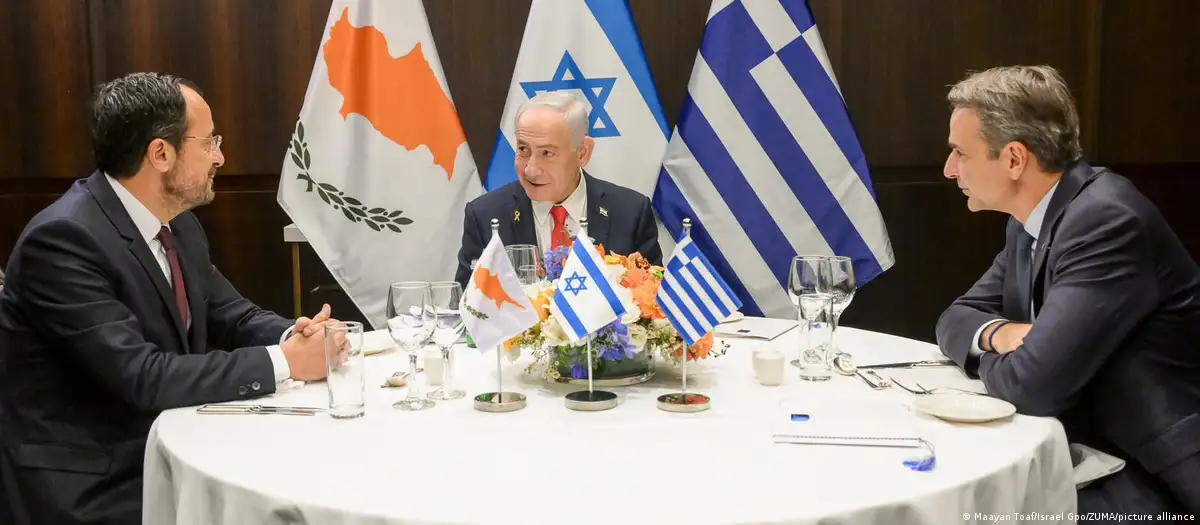
Supporters of this strategic alliance between Israel, Greece and Cyprus, will state the need for Cyprus to have powerful regional allies, something the right-wing cabinet of President Nikos Christodoulides has been quite active on. However, as part of the European Union, our close ties with Israel could face stern criticism, from an everchanging political outlook towards Israel’s atrocities in the region. Spain’s recent punitive actions of a permanent arms embargo (which sees the cancellation of around $1.1 billion in Israeli defence contracts) and Italy’s halting of the renewal of a defence deal between themselves and Israel, is demonstrative of these shifting attitudes.
The enthusiastic support for Israel, which is widely accused of violating international law in Gaza, the West Bank and Lebanon), should be seen as deeply problematic by EU countries, but most importantly by the citizens of Cyprus and Greece.
Most of all both governments should understand the irony of their actions. Greece and Cyprus have been in constant territorial disputes with Turkey as well as the illegal occupation of northern Cyprus.
Should Cyprus (or Greece for that matter) find themselves head-to-head with Turkey at the International Court of Justice over the Cypriot occupation or any territorial dispute between Greece and Turkey, their moral authority could be undercut. Inconsistency could weaken its legal case and embolden critics who argue that Greece and Cyprus selectively apply international norms when it suits their foreign policy objectives.
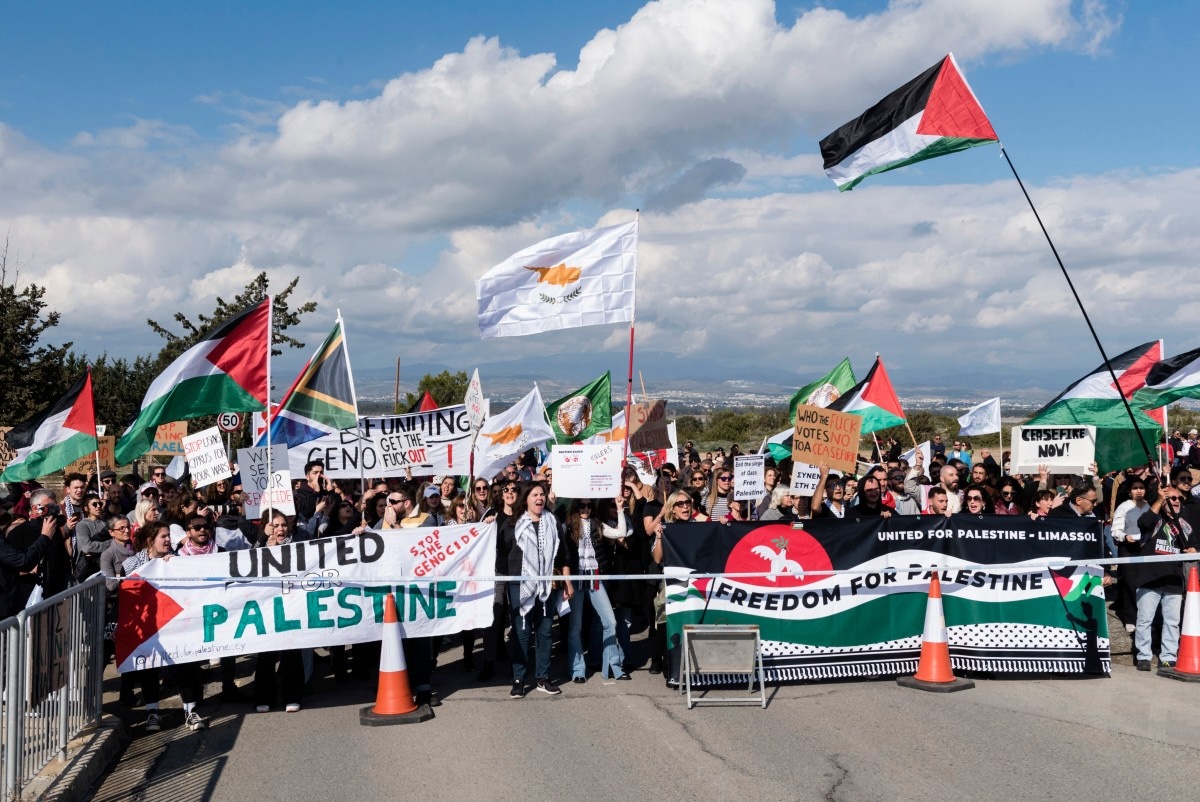
Furthermore, should the European Council finally decide to suspend the EU-Israel Association Agreement, both countries could find themselves paying a heavy diplomatic price for tightening relations with a third-party state, that is evidently conducting genocide of the Palestinian population in Gaza and beyond and has its eyes set on further expansion into Lebanon.
At times like these, Nicosia, more so than Athens, should focus their negotiations on promoting prosperity and peace in our neighbouring region, rather than ardently standing with Israel – no matter the cost – especially when the cost could be a heavy one in a shifting European outlook on Israel.