
There is a woman I know, and I will call her Mama Zawadi because she sells mitumba near the roundabout and she has seven children and the energy of a person who has decided, somewhere deep in the middle of her life, that exhaustion is for people with options, and last election season she woke up at four in the morning, stood in a queue for six hours in the kind of sun that doesn’t care about your schedule, and voted. She voted with the kind of seriousness that I reserve only for eating ugali when I am truly hungry. She told me afterwards, slightly sunburnt, slightly proud, “At least I did my part.”
Six months later the price of cooking gas had gone up. Twice. And the road that swallowed a boda-boda rider named Otieno in February was still swallowing people. Nobody had come to fill it.
I am not writing this to tell you not to vote. I am not that kind of person and this is not that kind of article. I am writing this because somewhere between election fever and the crushing disappointment that follows like a bad hangover, we have been slowly, quietly, sometimes without even realizing it, building something that doesn’t need a ballot to survive. Because the truth is, politics as we have been taught to understand it entails the campaigns, the manifestos, the men in suits and women in matching lesos who stand on trucks and make promises so large they should come with a structural engineer’s approval — has always been mostly a story we tell ourselves. The real power has always lived closer to the ground, not at the podium, but at the roadside market. At the savings group. At the WhatsApp group that started as a neighborhood gossip thread and somehow became a flood-response committee.
I grew up watching my mother’s chama. I didn’t understand it then, the merry go round savings, the contributions, the debates that were never just about money — but I understand it now. Those women were running a parallel economy. Not because they had read anything about collective action or liberation economics, but because the formal systems had made it abundantly clear they were not interested in being useful to them. So the women built their own.
That’s the part they don’t put in the civics textbook.
I digress. There is a ward in Nairobi — I won’t name it because the moment you name a ward in Nairobi, someone reads it and is immediately offended and I cannot afford enemies right now — where residents got tired of waiting for the government to address a flooding crisis that turned their streets into rivers every long rains season. And I mean actual rivers. The kind of flooding where children were swimming to school and it was not a metaphor and nobody thought it was charming. They held meetings. They mapped the drainage. They pooled labour and a modest amount of money and they fixed a significant stretch of it themselves, with the occasional begrudging support of a county official who showed up largely for the photo opportunity.
The photo op didn’t bother them. Let him have his photo. The road was fixed.
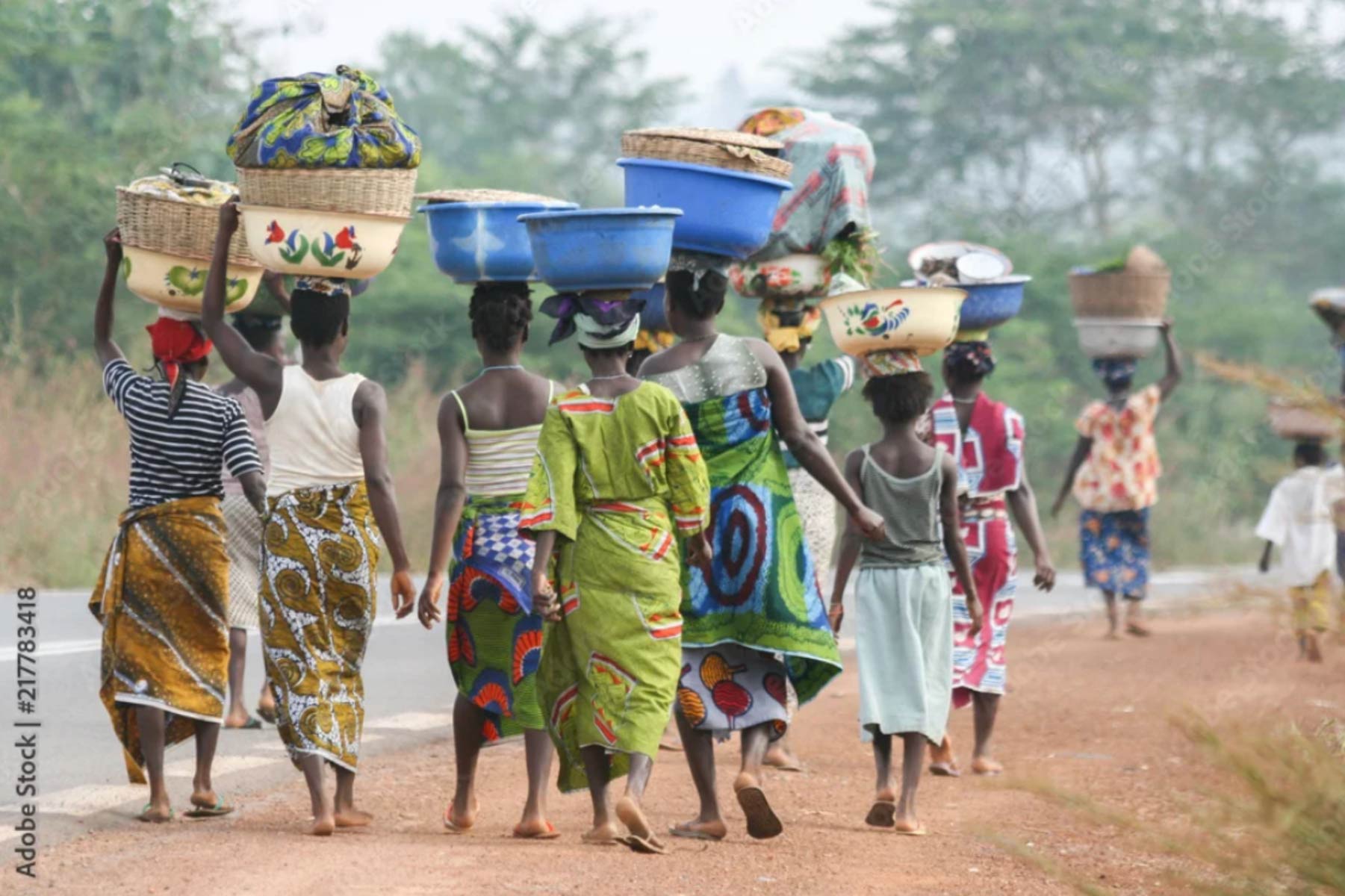
That is what organizing looks like when it has shed its idealism and kept only its stubbornness.
In other parts of East Africa, the conversation is happening differently, but the undercurrent is the same. In Uganda, young people who have watched every conventional political avenue slam shut in their faces have been building civic infrastructure from scratch — community radio stations that don’t wait for permission, legal literacy programs that run out of churches because the NGO funding dried up, mutual aid networks covering medical emergencies that a public health system held together with prayers, God Almighty and goodwill cannot reliably address. In Tanzania, women’ s land rights organizations have been doing something patient and radical: training women to document their own land, in their own handwriting, in records that exist outside the formal bureaucracy that has a habit of misplacing documents when it is convenient.
None of this is glamorous. None of it trends, and it doesn’t really have to trend. It doesn’t photograph well unless you are the kind of photographer who finds beauty in incremental, grinding, stubborn human effort. But it is accumulating. It is becoming infrastructure. And infrastructure, even the informal kind, is hard to dismantle.
Here is the thing about the ballot: it matters more when you already have power, and it matters less when the machine is designed to neutralize you before you arrive. This is not cynicism — or rather, it’s not only cynicism — it’s also just a reading of the historical evidence. The vote is a tool and tools work in context. A hammer is fine but if you are trying to tighten a screw you are going to have a bad time regardless of your sincerity.
But then there is community power — the kind Mama Zawadi has been building for fifteen years in the way she extends credit to people who need it and organizes the other market women when the county comes to harass them — that works even when the political climate is hostile. Especially then, actually. It has to.
I am not saying abandon formal politics. I am not saying burn the system down and replace it with a very enthusiastic WhatsApp group. What I am saying — and I am saying it in the clumsy, roundabout way that the local politico tends to say things because I am constitutionally incapable of a clean thesis statement — is that we have been spending enormous emotional energy waiting for the political cycle to save us. And that energy could be redistributed.
What if we treated the local savings group with the same urgency we treat the presidential campaign? What if the community land documentation project got the funding that currently goes into political consultancy? What if we organized around the school feeding program with the same intensity we organized around the last referendum?
These are not rhetorical questions. People are doing exactly this, quietly, in estates and shags and town centers where the government is a distant rumor and solidarity is a practical necessity. The question is whether the rest of us are paying attention.
Mama Zawadi, last I checked, had started a small fund for school supplies for children in her block whose parents couldn’t afford them at the beginning of the year. She collected from whoever could give. She distributed without fanfare. She kept a handwritten record in an exercise book with a green cover that she keeps under her counter between the piles of second-hand jeans.
She did not wait for a policy. She did not convene a taskforce. She did not submit a proposal to a funder in the Global North who would take nine months to respond and then send a consultant to assess her capacity.
She just did the thing.
And I think, honestly, that is where we are and where we need to be. Not instead of the marches and the movements and yes, even the elections — but underneath all of that, in the substrate, in the daily texture of how we take care of each other and build the world we say we want. Because if we do not build it ourselves, in those small, consistent, unglamorous, messy ways, we will keep waking up after every election season surprised that the road is still there, still swallowing people, still waiting for someone else to come fix it.
The someone else is us. It has always been us. We just keep forgetting.