

I left JFK for Budapest on April 7th with fifteen rolls of film and the intention to not photograph Hungary’s pivotal election, in which autocrat Viktor Orbán and his regime of two decades was set to lose (they did!), but to see for myself how a generation raised with no memory of otherwise greets the moment when democracy comes knocking at their door.
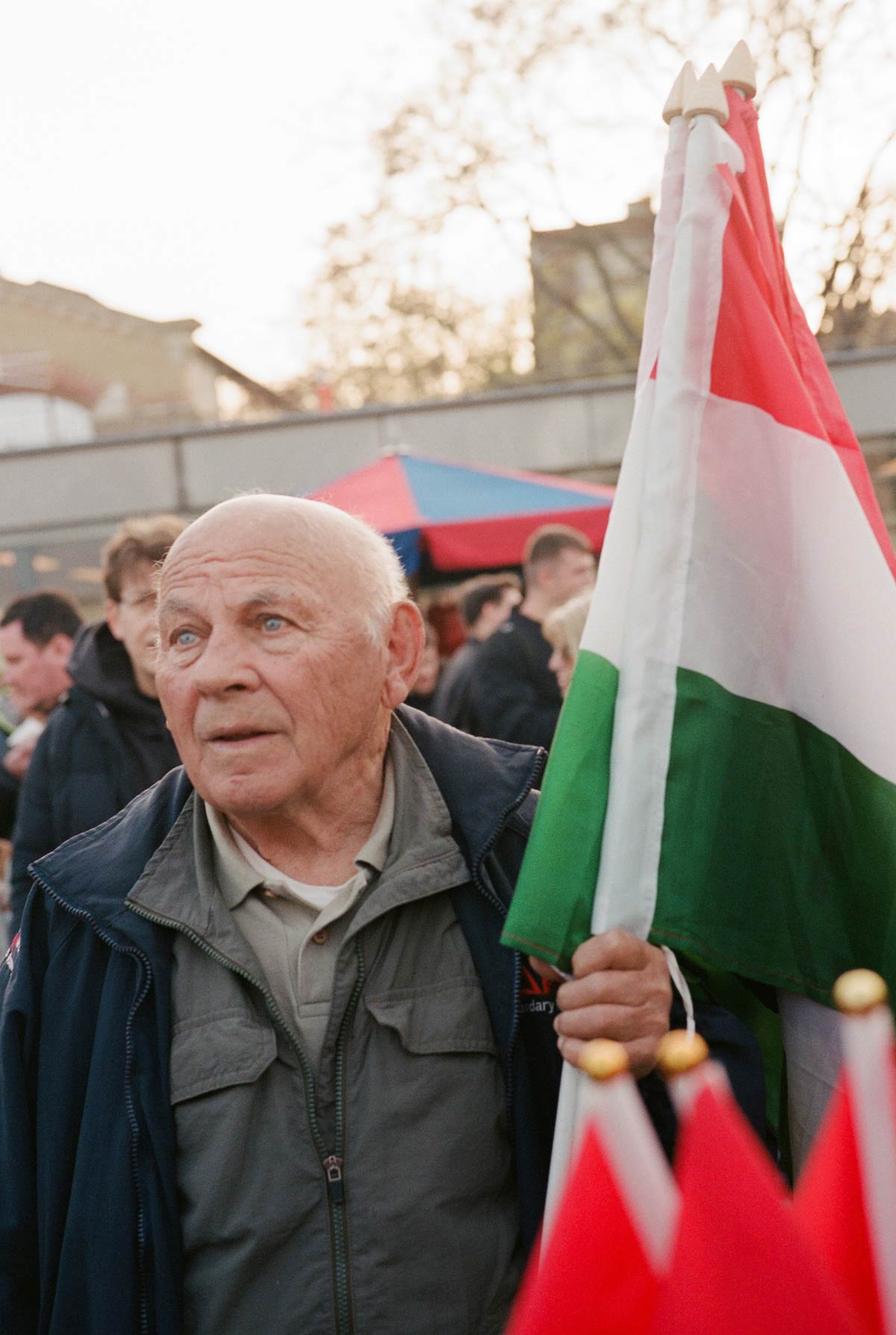
The first days in Hungary were defined by espressos, quadrupling my step count, and becoming the master at saying Szia (hi). As luck would have it, I was staying near a center commemorating Hungarian photojournalist Robert Capa, and on my first evening there was an opening event. Seizing the opportunity to connect with knowledgeable locals, what quickly became evident was the shared sense that Orbán’s days were numbered. That said, faith in the legitimacy of that process was a different story.
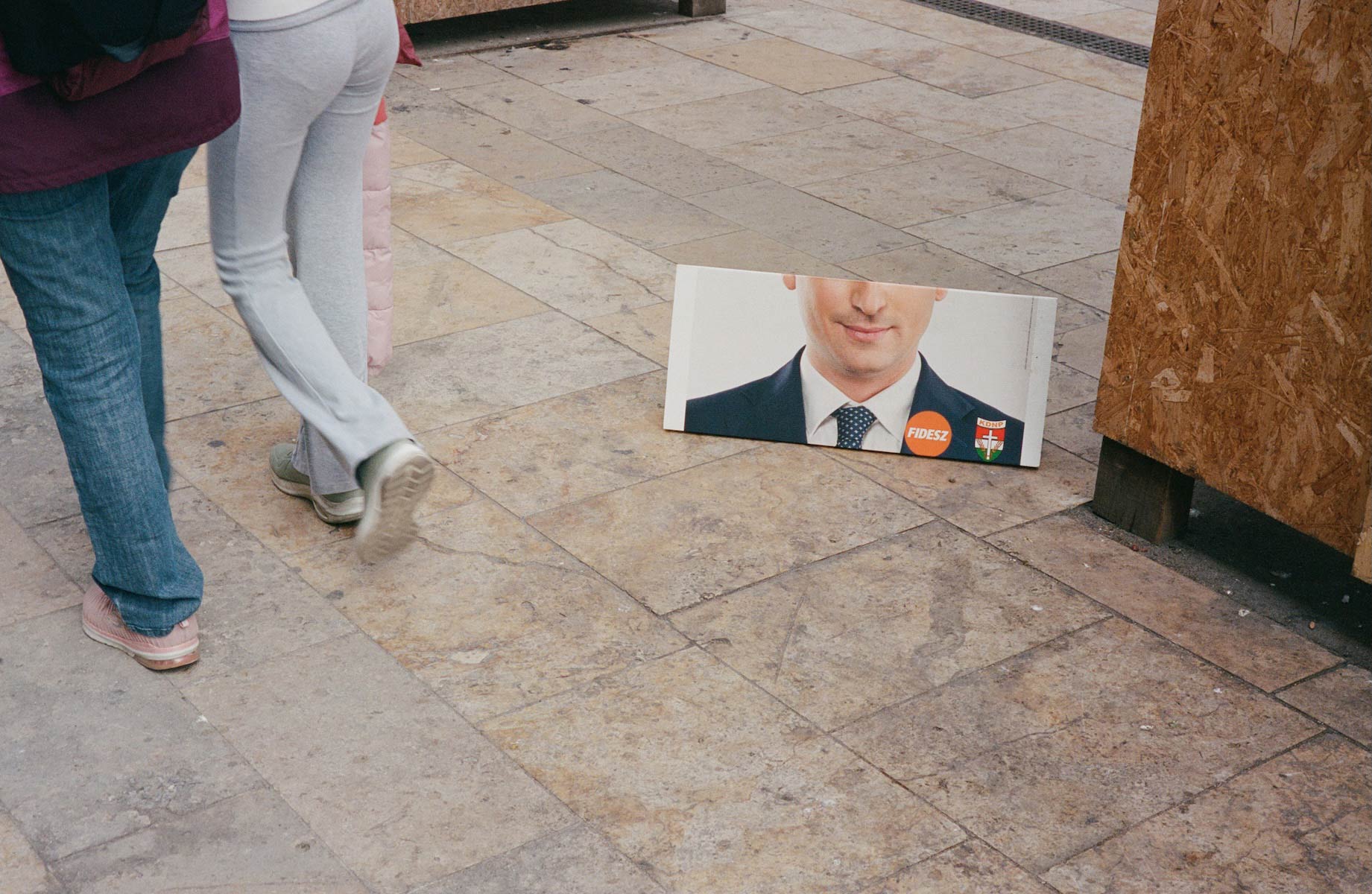
For the last twenty years, Viktor Orbán and his ruling Fidesz party have reshaped Hungary in their image. Crackdowns on media and campus freedoms, LGBTQ rights, and immigration have defined the country’s democratic backslide and lead to shared admiration from Russia and the United States. Domestic issues aside, Hungary’s stagnant economy and surging inflation deepened the existential crisis of those considering a future in Hungary.
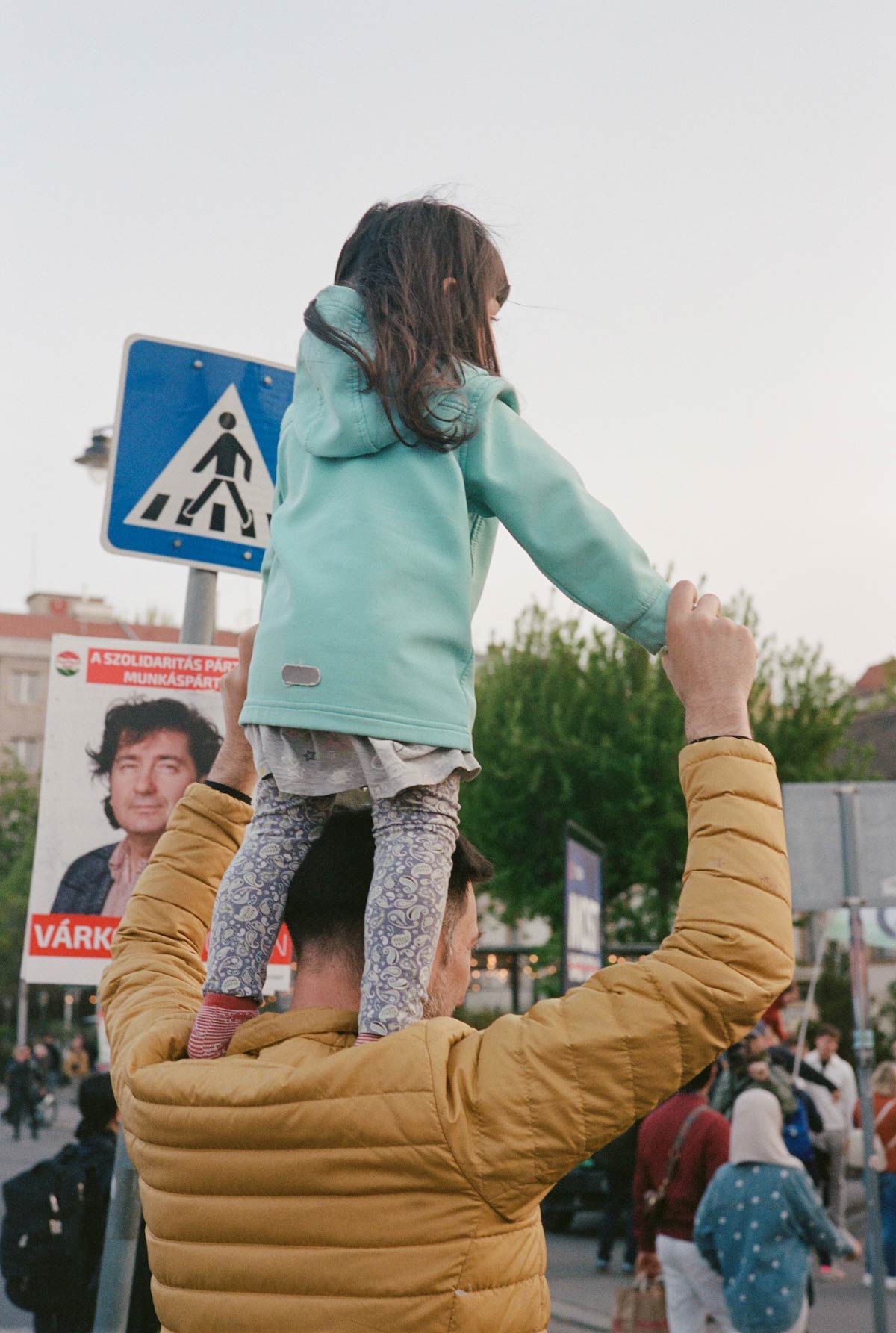
Opposition candidate Péter Magyar and his Tisza party came with a different vision. Forty-five and handsome, Magyar ran on a pro-EU, anti-corruption ticket that demanded accountability for the two decades of misanthropic governance.
Thoughtful remarks from Capa Center employee Bíborka captured the unmistakable hesitancy I grasped in my first days. She supported the opposition party, yet viewed starry-eyed worship as something to be skeptical of, particularly among the middle aged generation. In her view it had been that very age and class bracket that had elected Orbán in the first place, when his outward perception was eerily reminiscent of Magyar’s today. To complicate matters more was the reality that Magyar came from the Fidesz until a public break with the system in 2024 through specific accusations of corruption. The rupture cut to the heart of power and connected with the many Hungarians tired of their aging populist.
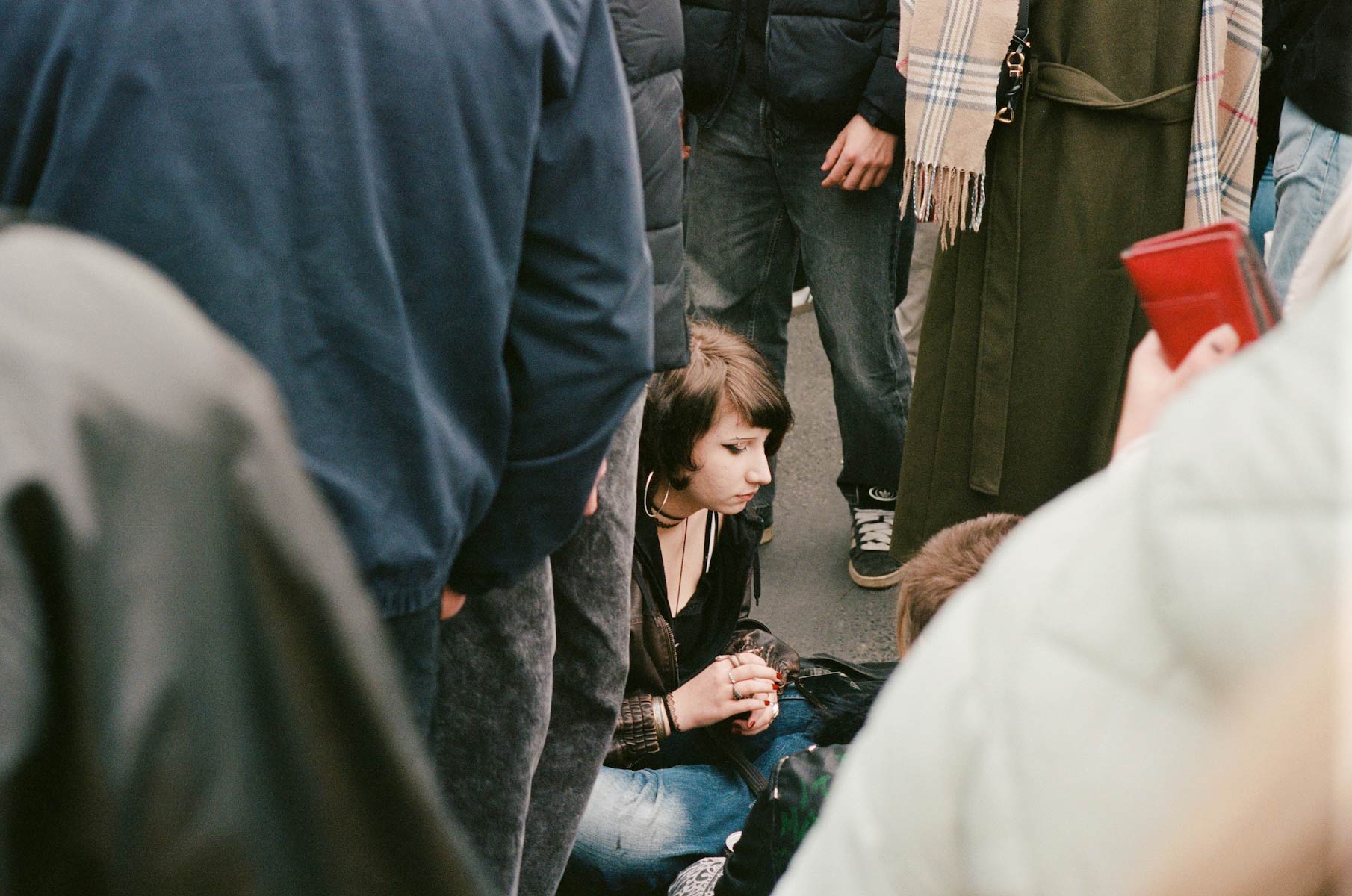
Day two. I set out to connect with university students in an effort to understand how Magyar’s establishment background was understood. It seemed that his borderline contradictory background gave him the credibility to rise above the one-sided political and media ecosystems that had refused to platform him, outsider defiance and insider fluency proving to be the greatest asset. In two years, Magyar and Tisza challenged not only Orbán but the inertia that had settled around him. The future felt less scripted.
The growing sense of revitalization was underscored by a hard-to-believe eagerness towards the possibility of real change. It brought to mind the lightning victory of Zohran Mamdani in New York. While Magyar is far from a Mamdani, himself a centrist, if one considers the hostile environment of Hungarian politics over the last twenty years, it may be argued that he represents something similar. Using clever social media strategy and near-constant hustle, his commitments to dismantle state media, re-strengthen institutional independence, and bring accountability back to governance have exchanged the political cynicism accrued by establishment let-downs for what Mamdani appealed to so eloquently: Hope (shoutout to my friends at Melted Solids who have been hard at work refining such messaging).
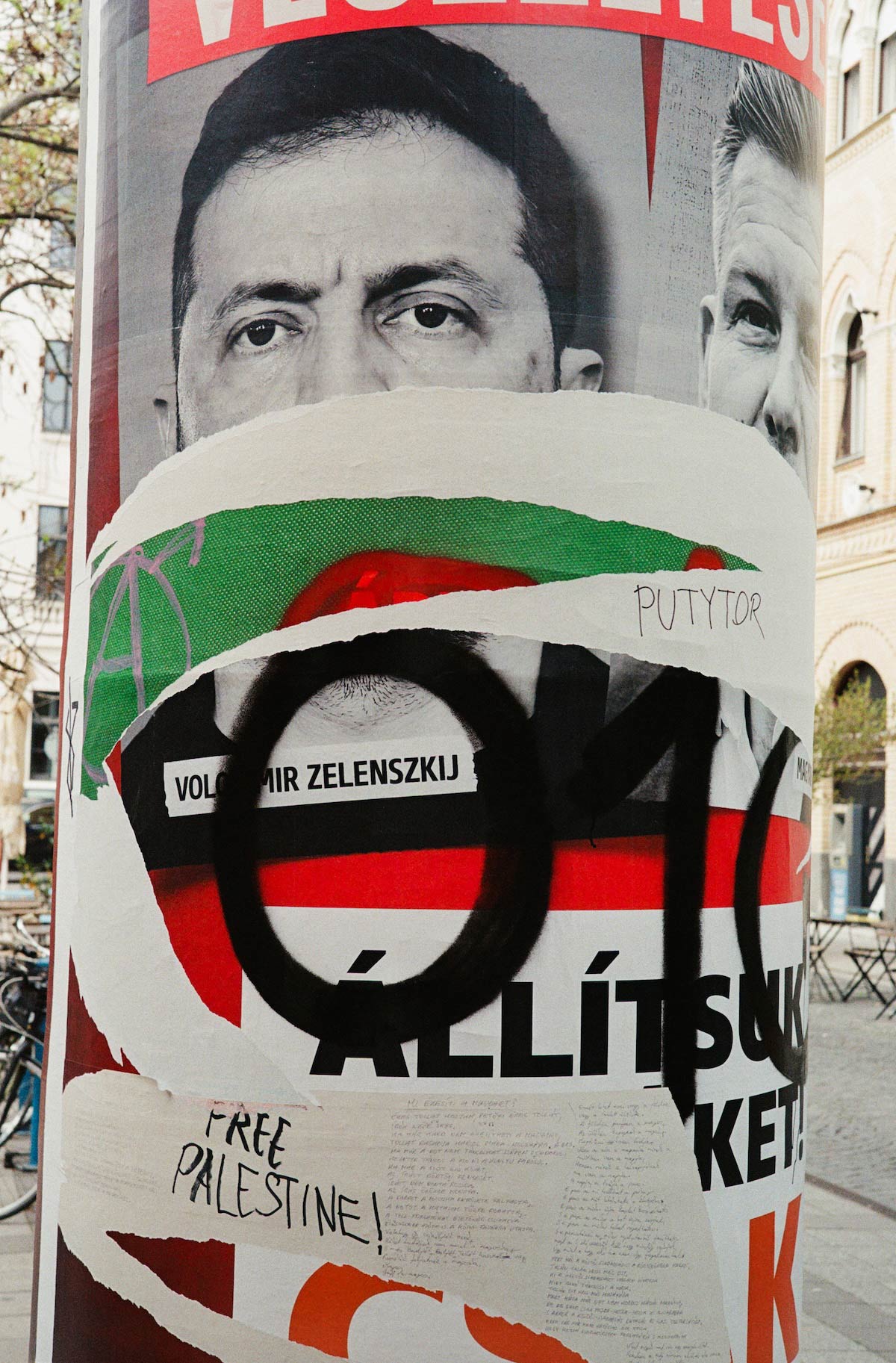
Propaganda was everywhere. Posters of a scowling Zelensky beside Magyar hung to bolster Orbán’s claims that if he were to lose, Zelensky would pull Hungary into war. The excesses of regime decoration hung up was rivaled only by how much of it had been torn, destroyed, and humorously vandalized. Heading for Heroes’ Square on my third day following an undersold tip from a Tisza activist that ‘something’s happening there’, I watched a four year old hopscotch across wrecked posters - her family laughing in the background. For both parties the posters had been sacked, yet as the streets suggested, it was Fidesz for whom the writing was on the wall.

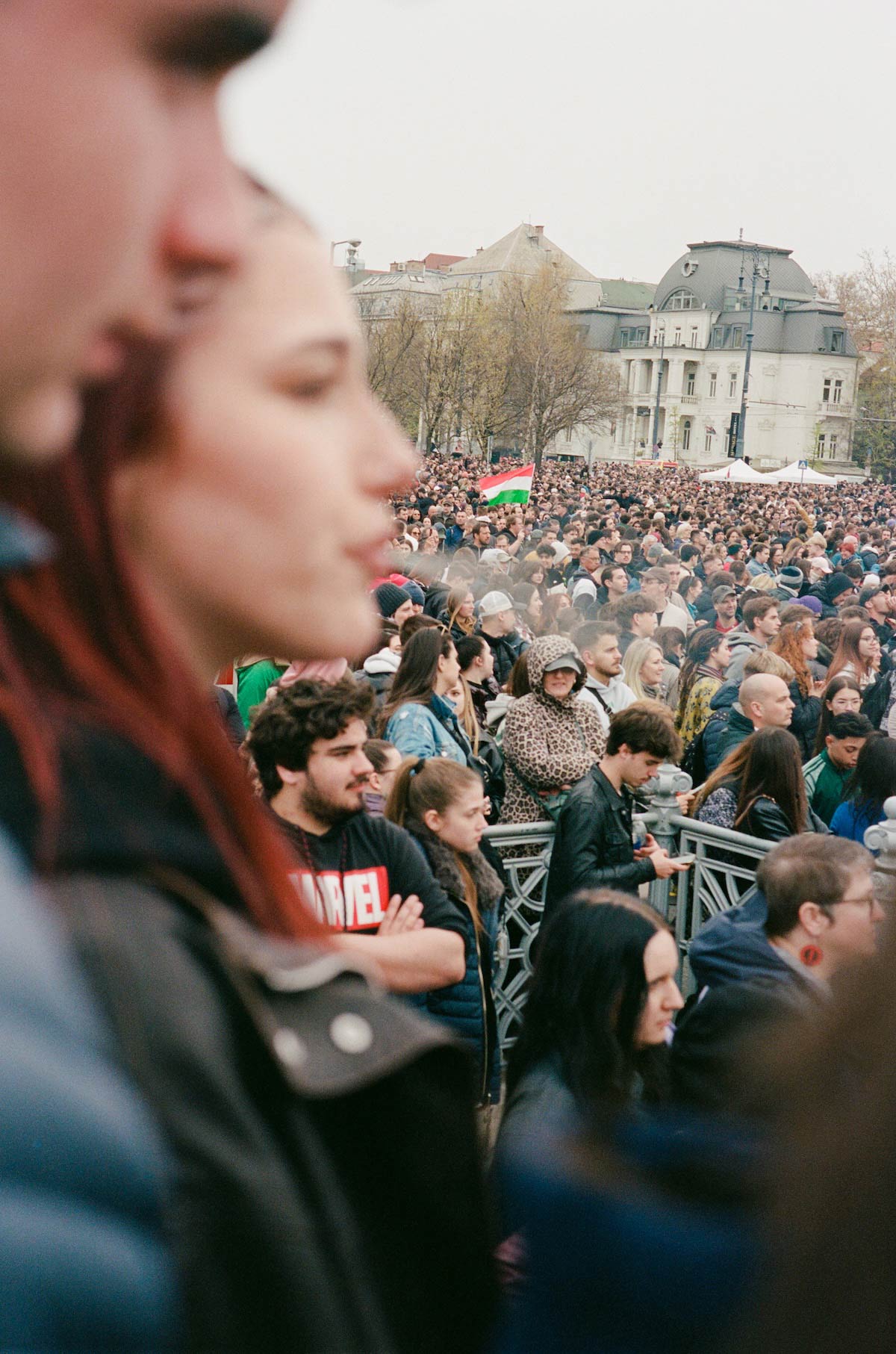
A hundred thousand people are said to have attended the rally in Heroes’ Square that day, a number I can attest to. The biggest crowd I’ve ever seen, enveloped in a joyous insurrectionary energy. Countrymen of all ages and backgrounds packed shoulder to shoulder, unified less by ideology than shared anguish with the status quo.
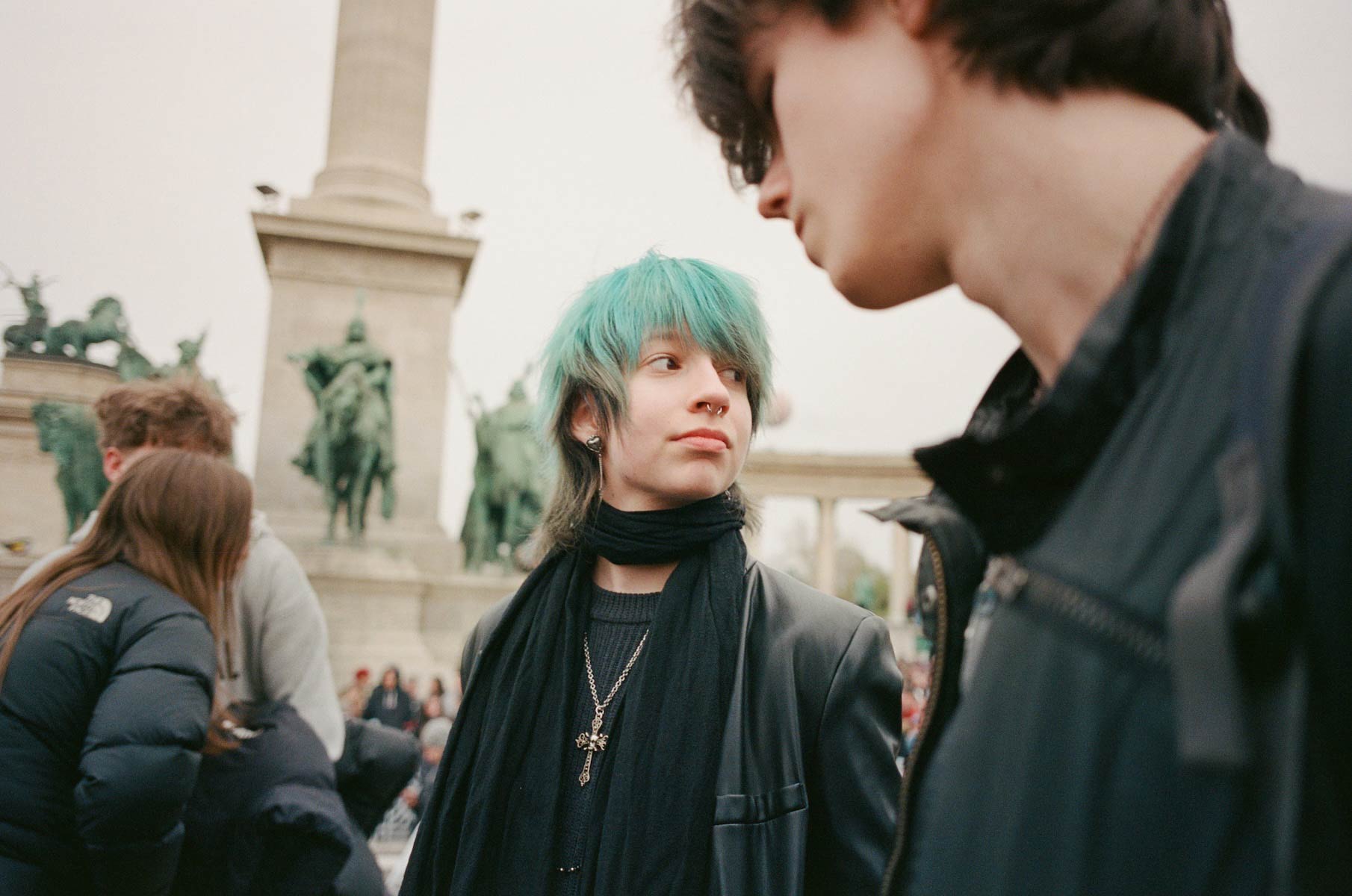
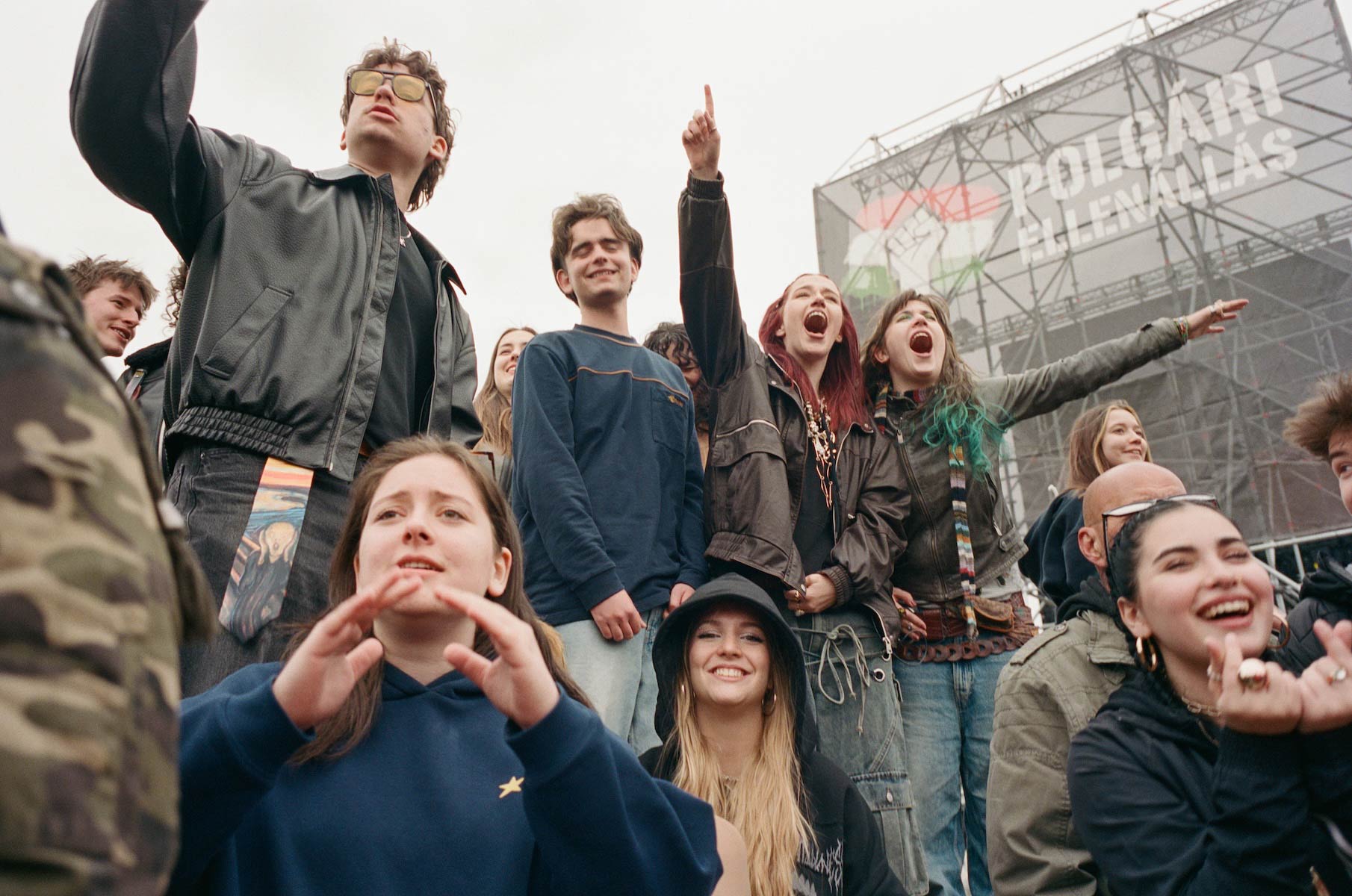
All were in attendance for an anti-establishment concert in favor of the new government. Each band was allowed to play only one song of their choosing. Impassioned Free Palestine *chants cut above it all. Contax and Leica, 28mm and 50mm, *Szia Szia Szia! I snapped my way to the center of the square where I met a group of ecstatic youths high upon a monument. Climbing up, I discovered friends, families, and lovers of all ages. Amused confusion as to WTF an American from New York was cheering alongside them for. It matched my hyped state, and we effortlessly locked in.

Appearances fell on a sliding scale between punk and Y2K. They were comfortable, inspired, and confident. Many were queer, with a specific few proudly kissing before my camera, a f*ck you to the oppressive LGBTQ+ laws in Hungary. A father behind the group who had watched me photographing approached me without words, merely holding his boy, no older than seven, high above his head. Everywhere there was ecstasy in being a witness.

None of the young wanted to leave Hungary, yet a future where Orbán clung to power skyrocketed the chances of just that. Emanating most admirably was their pragmatic, nuanced view of the situation: A Tisza victory would be far from an immediate fix to a system obliterated. What it was, is, exists as a commitment to not making it any worse.

I struggle to imagine a more grounded mindset in imagining the reconstruction of democracy following the reign of an Orbán, or a Trump.
To judge by the tender and inebriated movements of the crowd by the time I cut out late that night, one could have thought victory had been declared. On stage, a song struck up, that despite being sung in Hungarian I quickly recognized. The words caught as quick as their resonance:
I can’t see my reflection in the waters.\ I can’t speak the sounds to show no pain.\ I can’t hear the echo of my footsteps\ Or can’t remember the sound of my own name.
Bob Dylan’s Tomorrow is a Long Time.