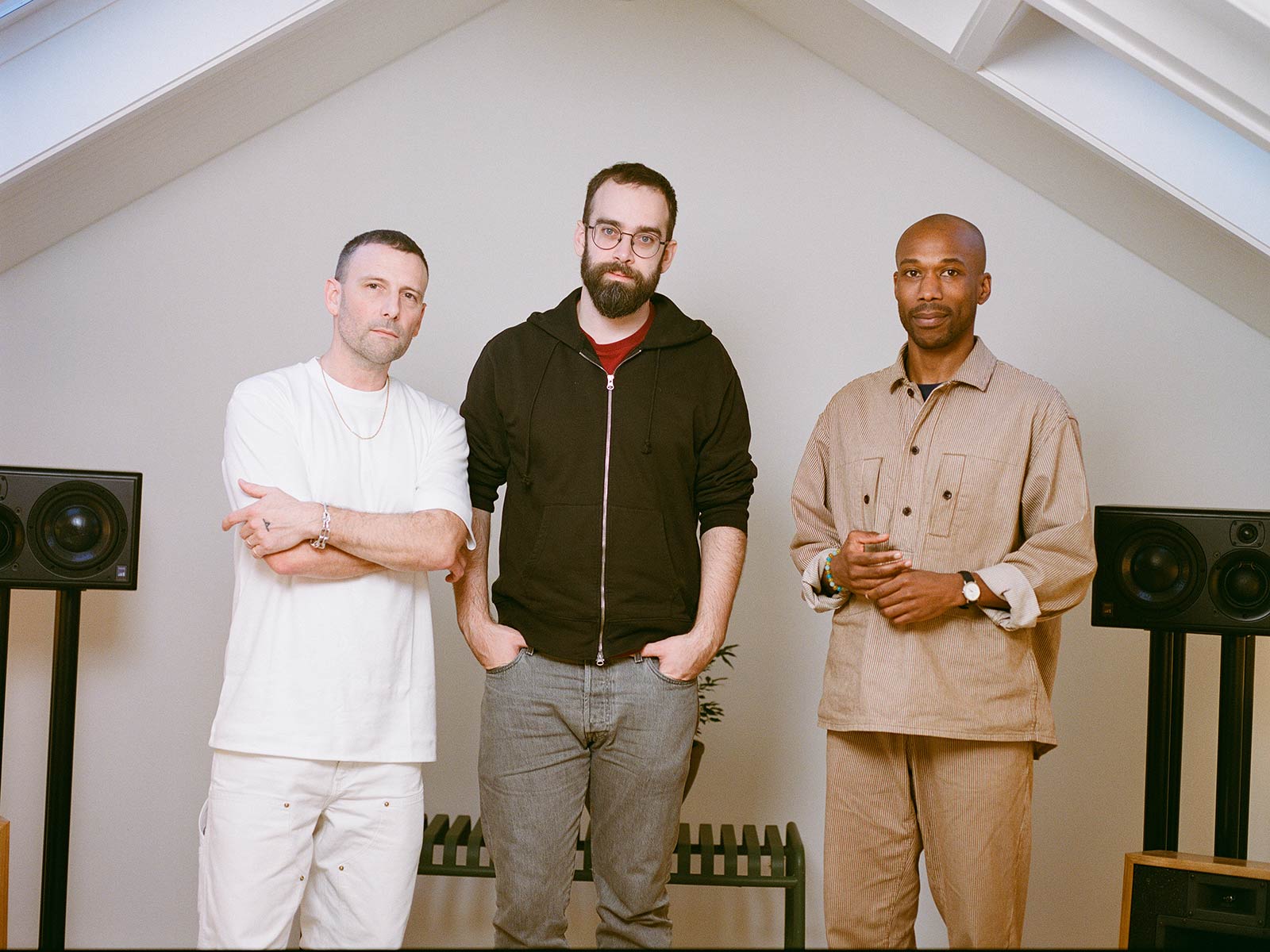

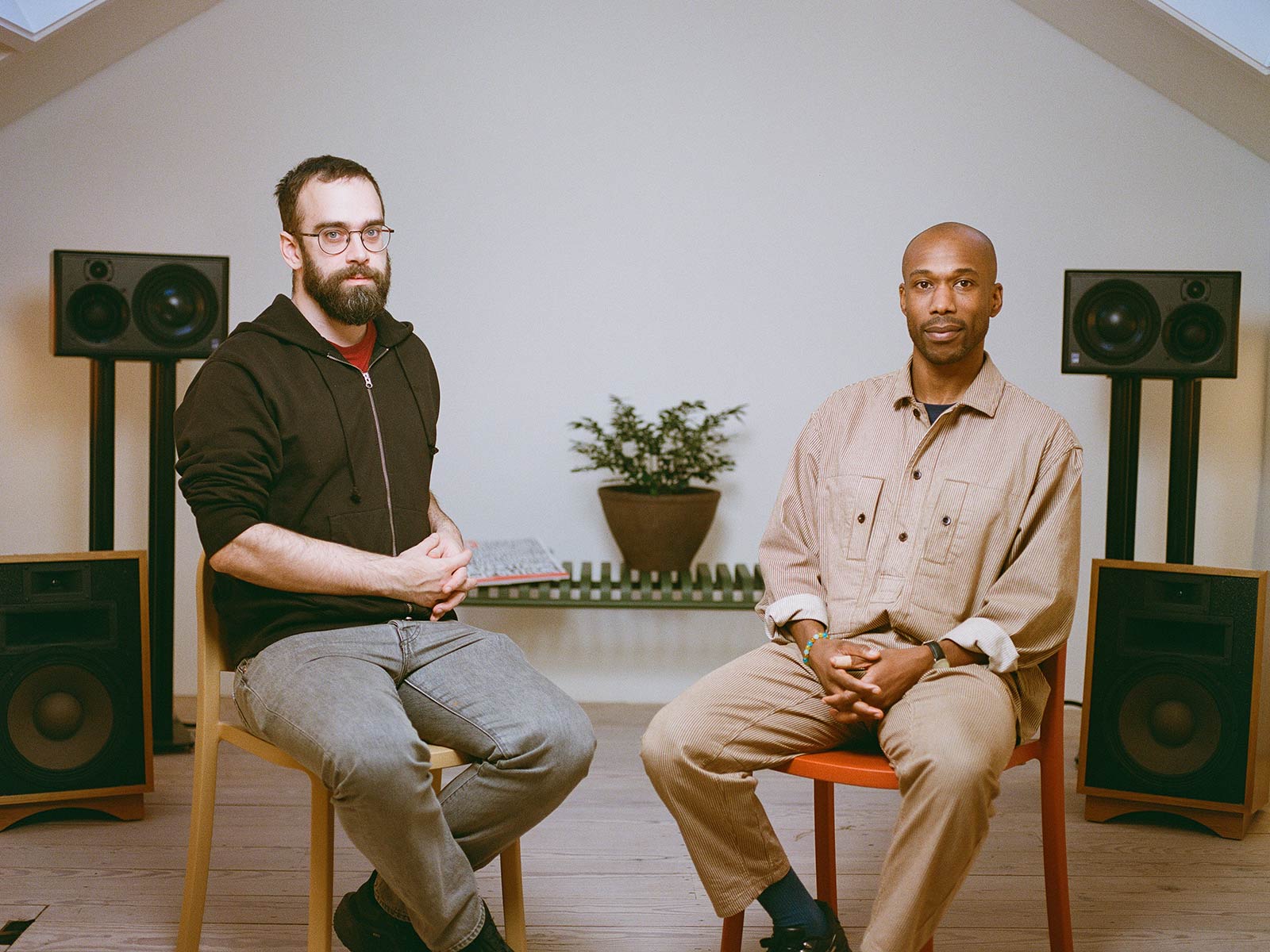
SULEY: My name is Suley Wellings-Longmore, and this is “The Law is Political.” Today we’re joined by Franck Magennis, a barrister in England and Wales since 2016, whose practice focuses on pro-Palestinian and anti-Zionist clients.
FRANCK MAGENNIS: My practice is informed by my politics. I am a Revolutionary Communist and an Anti-imperialist. I grew up in the North of Ireland, which gave me a personal and direct experience of colonialism—specifically with the British Empire. I try to stay connected to the anti-capitalist left, the trade union movement, and the anti-Zionist movement in this country, and then enter into a dialog with them about what their problems are. When those organizations or people have a problem, I try to be as responsive as possible. I’m often guided by where the movement takes me.
As a specific example: before October 2023, when the genocide escalated massively, I was representing a lot of clients from Gaza. We were talking about the way the siege of Gaza is a manifestation of the Israeli apartheid regime. It’s impossible to understand why the state could impose a siege in that way without understanding it as an extension of Israeli apartheid. With the massive escalation in violence, Palestinian asylum seekers started getting asylum, so my practice pivoted toward where the fight seemed to be. People were being fired from their jobs or dragged in front of professional regulators for criticizing Zionism, the apartheid state, or the genocide. That’s an example of how I try to keep my practice responsive.
SULEY: Have you seen spikes in employers cracking down on pro-Palestinian solidarity in the workplace?
FRANCK: Organizations like the European Legal Support Center have done good work mapping this. They have an “Index of Oppression.” They’re trying to arrive at a slightly more accurate, granular view of where the oppression is taking place.
SULEY: Say you’ve been unfairly dismissed from your workplace for anti-Zionist sentiment, for example. And the case has been finalized, and you can’t reopen it. Does that judgment apply retroactively?
FRANCK: A Court of Appeal judgment called Higgs v Farmor’s School (a UK case delivered on February 12, 2025 that dealt with the balance between an employee’s right to express religious or philosophical beliefs and an employer’s right to maintain a reputation and an inclusive environment) clearly sets out that there are circumstances in which a belief will qualify for protection. Furthermore, David Miller’s case (the former professor who won a landmark 2024 employment tribunal against the University of Bristol, which ruled that his anti-Zionist views were a “protected belief”) established that these principles should and could be applied to an anti-Zionist belief. A judge ruling for the first time that anti-Zionist philosophical beliefs were worthy of protection was taking a certain risk; now, other judges are going to be much more comfortable making similar findings.
As Zionist positions collapse worldwide, the International Holocaust Remembrance Alliance’s definition of antisemitism—which conflates antisemitism with legitimate criticism of the apartheid state of Israel and its fascist animating ideology—is increasingly coming under attack in court. With these philosophical belief claims, there is the “Five-Stage Grainger Test”: the belief must be deeply held; it must relate to a weighty and substantial matter; it must be a belief (not an opinion); it must attain a certain level of cogency, seriousness, cohesion, and importance; and it should be worthy of respect in a democratic society and not incompatible with the dignity and human rights of others. The last one is where employers, for the longest time, were trying to argue that anti-Zionist beliefs were antisemitic. That position has completely collapsed in court; anti-Zionism has now become normalized. You’ve got Zarah Sultana saying, “I’m an anti-Zionist” from the UK Parliament. You’ve got Zack Polanski, the leader of the Green Party in Britain, about to debate a motion on whether or not Zionism is racism. The Zionist positions are completely unraveling, and that extends to what happens in the courtroom whenever a company or an employer tries to argue that they are entitled to interfere with their workers’ expressions of anti-Zionist beliefs, because those beliefs are antisemitic.
SULEY: Do you have to show a history of solidarity for the resistance to fall under the protection of the law? I’m asking for those who may be new to demonstrating solidarity for the resistance, but still want to be protected, and need protection under this law.
Franck The first thing is that we should all be very wary about going to the law for protection. I think workers are powerful when we organize together, collectively, industrially, and politically. So, my starting point is: get involved in the trade union. That’s always the best defense in a workplace. Surround yourself with comrades, be organized in a union, and turn any individual dispute into a collective dispute. Your boss will always be much more terrified if you come at them as the union than if you come at them as an individual.
I’m representing someone… the case is about to become public. Some Zionists complained about my client’s Palestine badge, and he was made to remove it. That’s a detriment, for the purpose of the Equality Act. It has not been dismissed, but that is a detriment, being made to remove your badge. So, he is in the process of suing them, and we’re going to do a big public campaign about it to stop this symbolic ethnic cleansing of Palestinians. It’s not insignificant when Palestinians are facing genocidal violence, for a workplace in London to say that you need to remove this symbol of Palestinian national existence. It is a marginal contribution to that genocidal logic, and that’s what we will say to them in court. This is racist. You’re making yourself—whether you intend to or not—complicit in a genocide. If employers put a foot wrong in this area, if they harass you, if they engage in anti-Palestinian racism, in my opinion, get legal advice, go to your trade union and contemplate the possibility of taking some kind of legal action.
SULEY: What does it mean to have courage in the use of law to achieve your activist aims?
FRANCK: Fear is central to everything we have to deal with. It isn’t for me to tell anyone how they should feel. People feel how they feel. There is a slightly bizarre professional obligation imposed on barristers. We have a code of ethics, and we have to observe ten core duties… One of the core duties is that we’re supposed to be fearless in pursuit of our clients’ interests. That has always struck me as slightly odd, because it’s like telling me not to be afraid. And I think fearlessness and courage are different. There is a beautiful quote from Moby-Dick… Starbuck, Ahab’s righthand man, says, “An utterly fearless man is a far more dangerous comrade than a coward.” Fear was given to us for a reason. It’s potentially reckless to be fearless. That’s to be contrasted with courage.
Courage is something we cultivate collectively.
When I was saying, “if they come for you in your workplace, make sure you join the trade union,” it’s because you’re much more scary to your opponents if you’re acting collectively. As a movement, we have to find ways to collectively cultivate the courage necessary to confront the British state and the Zionist entity. That’s the stuff of courage. Some of my clients are incredibly courageous. They’ve taught me things about what it means to confront your enemies that I keep with me, and it gives me strength. I think we build this movement together, and we are winning, but it’s coming at horrifying cost to Palestinians.
Zionism is in a crisis, and I think if we get organized as a movement and continue escalating, we will witness within our lifetime, the collapse of the apartheid state of Israel and its replacement with a single democratic state of Palestine. That’s what’s got me feeling hopeful, but also what’s got me feeling a bit terrified. Again, we’re back to fear and how we have to try and cultivate collective courage. What’s happening in the US, the degradation, global capitalism, US hegemony, which registers in multiple different theaters. With this there is the growing fascist street movement in the form of ICE, and the way that Trump is presiding over this degradation of legal norms. This is the harbinger of a kind of contemporary 21st Century fascism. I don’t want to be alarmist, and I don’t have any answers for how we defeat that, but I think this is the challenge of our time. And it relates to broader challenges: climate change and ecological collapse…
On the Palestine front, notwithstanding the horrifying violence Palestinians continue to endure, it seems this is the price they are paying for what will hopefully be the complete collapse of the apartheid state of Israel—and the end of the failed experiment in Jewish nationalism known as Zionism. This is only one part of the global struggle against capitalism, which appears to be veering into an increasingly and openly fascist phase. We must all ask difficult questions about what it means to get organized within this urgent struggle. One avenue my clients have been exploring with me is a direct confrontation with Zionism in English courtrooms.
I believe it’s increasingly possible to call Zionism what it is: the official ideology in the apartheid state, genocidal in nature, colonial, and the foundation of an over half-century occupation based on codified racism.