
REBECCA NAGLE: My name is Rebecca Nagle. I’m a citizen of Cherokee Nation, and I live in Tahlequah, Oklahoma. I’m the writer and host of a new podcast called First America. The podcast talks about the true origin of the United States and how that ties into our current political moment.
July 4th is the 250th anniversary of the signing of the Declaration of Independence, the birth of the United States… Native people are left out of that story, and without us, the story is wrong.
The chief complaint in the Declaration of Independence is focused on Indigenous people. One of the main reasons the founders rebelled against the Crown was because they wanted more Native land, and the Crown was holding them back. When colonists stormed ships to throw tea in the Boston Harbor, they wore costumes to look like Native people, not for disguise, but because “playing Indian” represented freedom and liberty in the early republic. There were many Revolutionary War battles and scorched earth campaigns against Indigenous nations, but no one talks about that. It’s important for us to see how those injustices formed our country.
We’re having “no kings” protests to emphasize the fact that the United States has been a democracy for 250 years. The Founding Fathers were saying no to tyranny, and that’s what we’ve been taught about America’s origin. But that’s only half the story—they did build a democracy, but they built a democracy for themselves.
They built an empire that intended to conquer the lands inhabited by the Indigenous people. The way Indigenous nations were governed by the United States from the very beginning was not democratic; it was tyranny. Huge swaths of what were the territorial boundaries of the United States were governed by top-down military rule, not representative government.
People want to understand how we got here. Where the rise of fascism in America came from. A lot of people are looking in the wrong places. They’re looking to Nazi Germany or Russia to understand authoritarianism, when the root of authoritarianism in the United States is in our own history.
COLLIS BROWNE: There are people who get that when their kid comes home from Thanksgiving they have to tell the rest of the story. There are people who understand that this so-called democracy was always a democracy for the few. Then there is another group of people who believe the fundamental American mythologies, and for whom Indigenous people are a footnote. Are you trying to reach those people, and if so, how?
REBECCA: We get left out of American history… how could the greatest democracy in the world have committed genocide? It’s a contradiction that you can’t resolve. On the left, the story of America is that there were foundational flaws like slavery and lack of equal rights for women. But then every generation has worked to make the United States better. On the left, we tell this version of American history, which doesn’t jibe with Indigenous history.
We’ve never had a constitutional amendment that addresses and attempts to rectify the harms done to the Indigenous people. The U.S. had concentration camps. The military rounded up entire Indigenous populations and forced them on death marches. (Indigenous death marches in the United States were government-sanctioned, forced relocations during the 18th, 19th, and 20th centuries. Executed by the U.S. military and state militias, these expulsions systematically cleared Native nations from ancestral lands. The catastrophic journeys resulted in thousands of deaths from starvation, freezing temperatures, disease, and outright violence. – Google AI)
It’s critical for us to know this history at this moment, because what’s happening is that oppression, violence, and authoritarianism are coming back around. For a long time, we didn’t talk about our government’s authoritarian policies and actions. But now we’re seeing those types of things come to the center of our politics.
COLLIS: I’m Canadian originally… in Canada, there’s the Truth and Reconciliation Commission… it’s a complete sham, but the idea was that the government was going to officially acknowledge the atrocities committed against the Indigenous people across the centuries. But in the U.S., we’ve never even initiated this kind of reconciliation process.
REBECCA: This doesn’t just infect and affect Indigenous people. We built a government that could go out and commit those atrocities. It’s not just the idea of needing to acknowledge the things that our government has done that were harmful, but the idea of what we need to put in place so that our government doesn’t do that again. We’ve never done that.
The legacy of slavery lives within the United States. It’s baked into the system, and even though we abolished human enslavement, there are so many ways that we didn’t fundamentally restructure our society towards equity. Look at what happened during reconstruction. The thing with Indigenous history is that we committed genocide, and we never had that moment as a country to say whoa… we really shouldn’t do that again. You would think that, like most governments that have committed genocide, you would go back and make that edit.
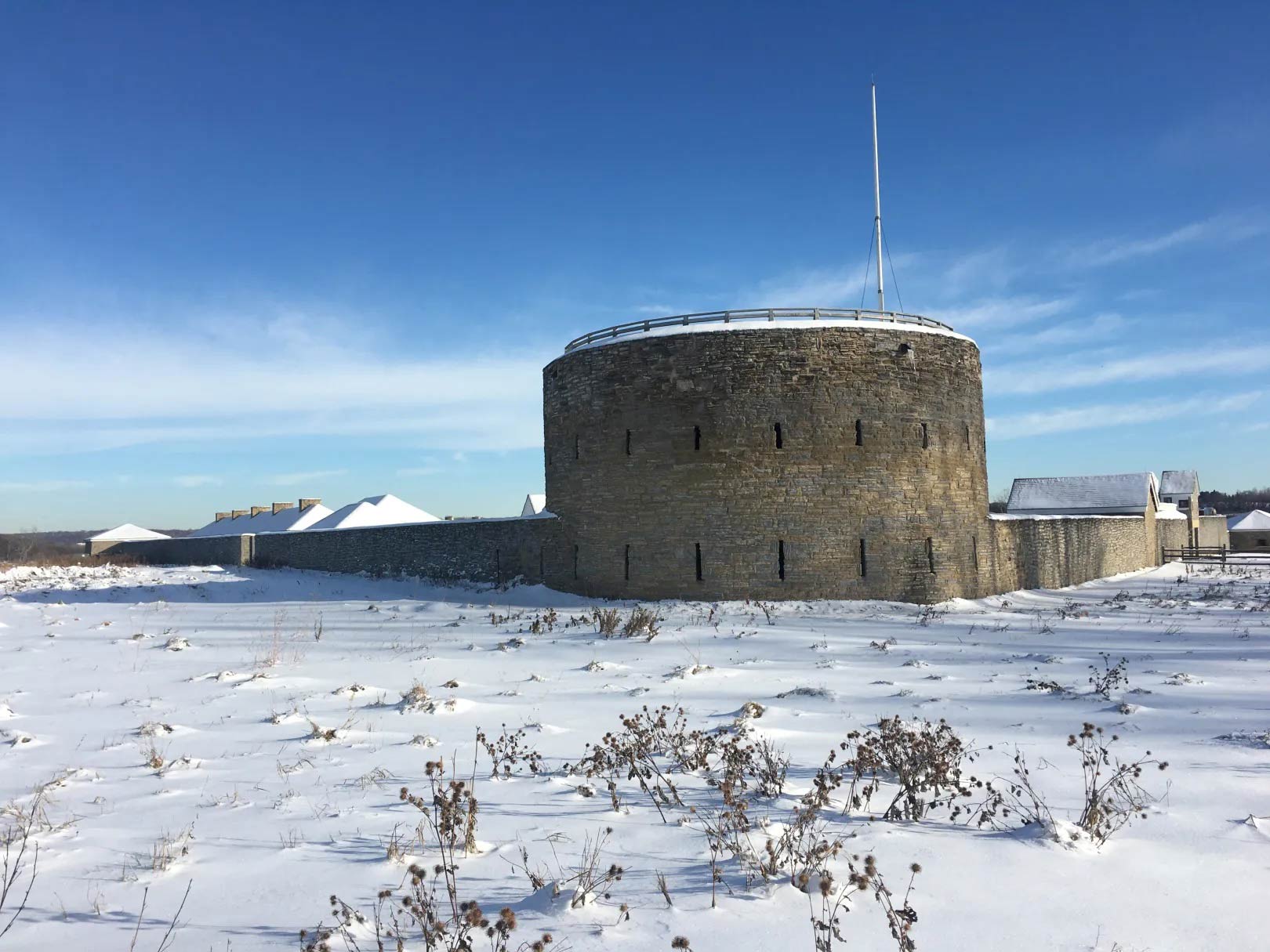
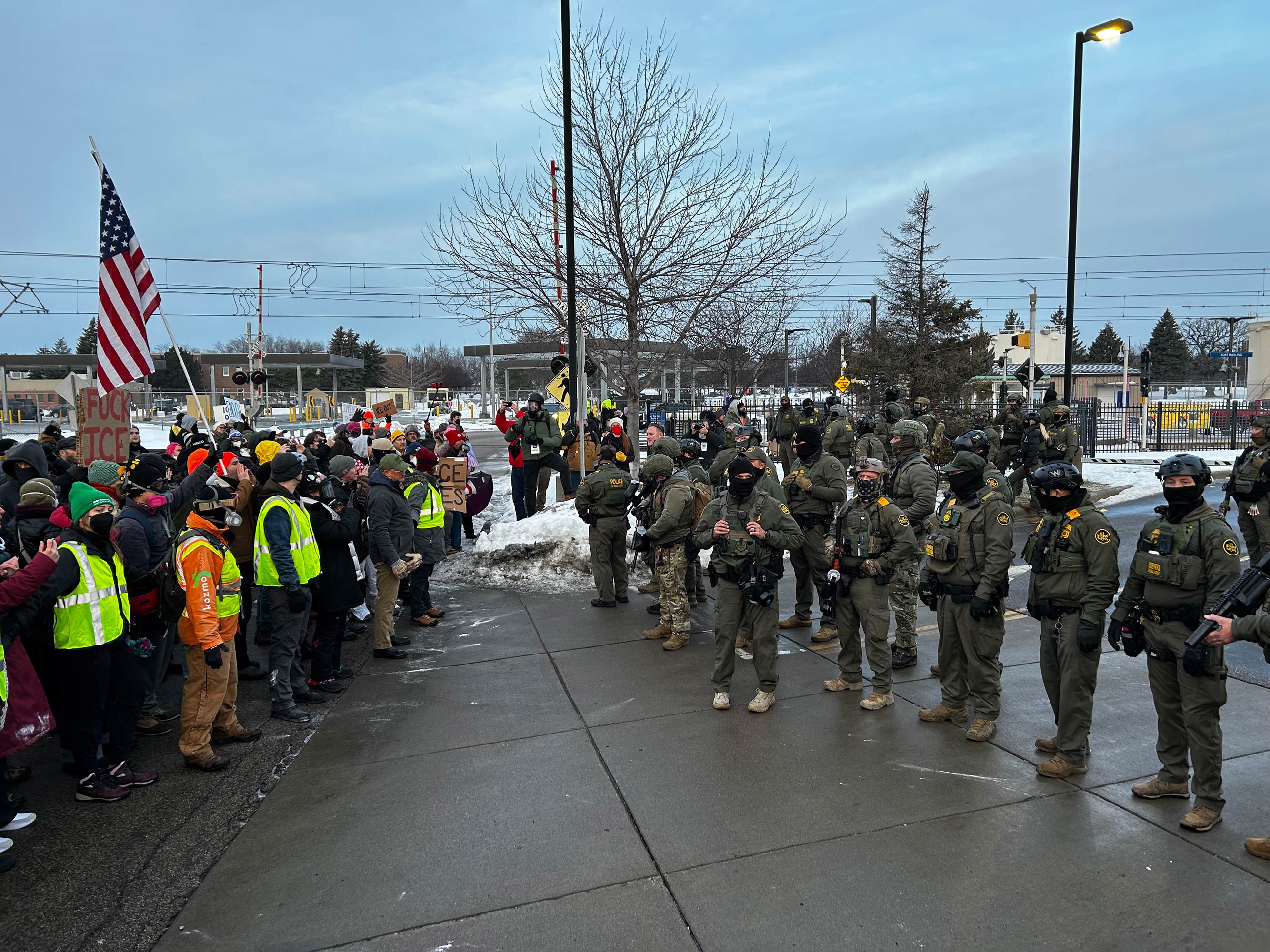
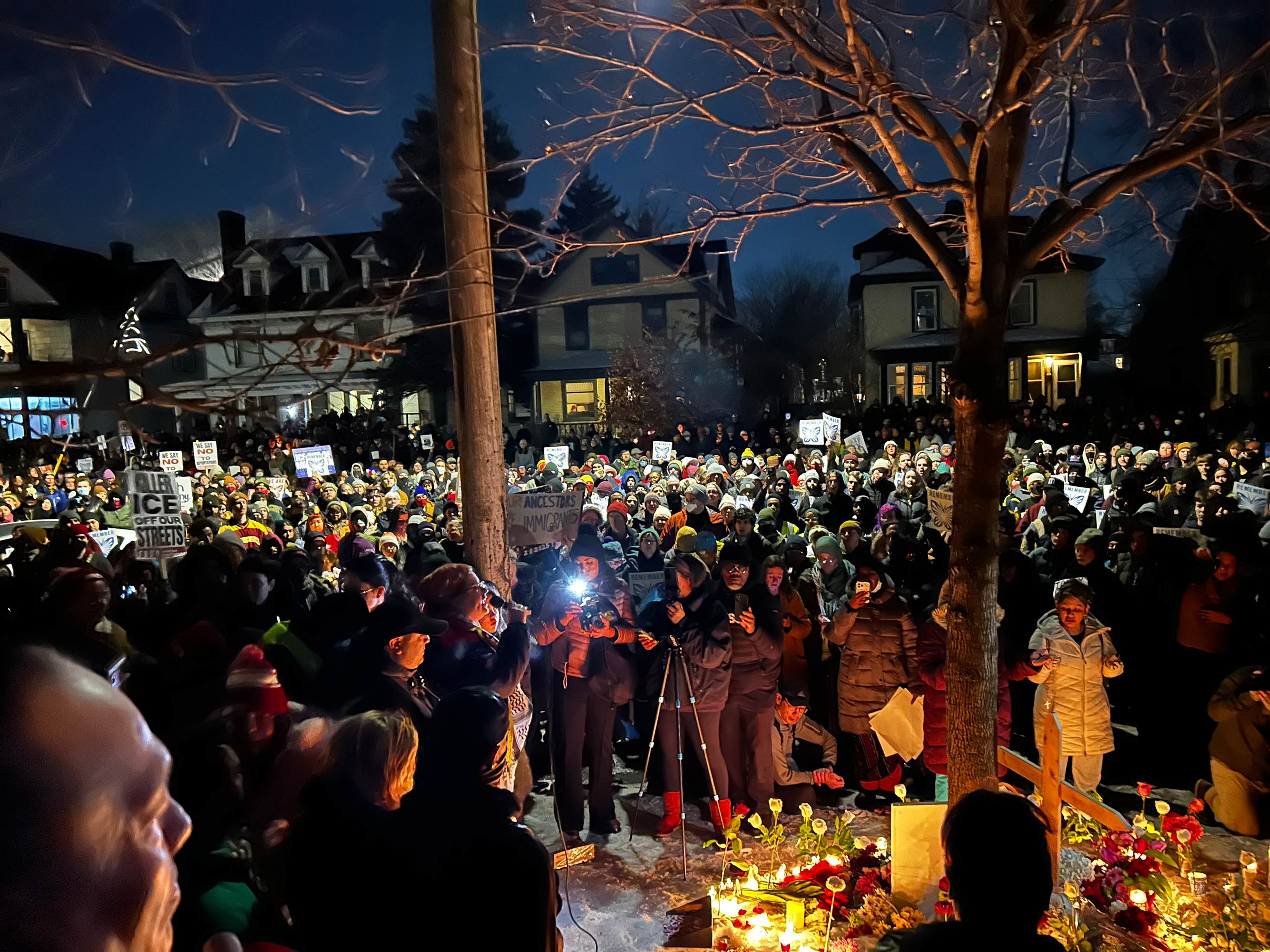
I was at Fort Snelling in Minnesota with historian Nick Estes, who’s a citizen of the Lower Brule Sioux Tribe and a professor at the University of Minnesota. He’s a big part of this project and helped conceive it… Fort Snelling was a concentration camp for Dakota people during the Dakota War of 1862 (a five-week conflict which can be viewed as one of the genocidal efforts to forcibly remove the Dakota from Minnesota)1. The U.S. government was trying to expel all Dakota people from the state of Minnesota, and it did a lot of terrible things. The day that Nick and I were there, he got a call from his wife that ICE had just shot and killed Renee Good in Minneapolis. The next day I went back to Fort Snelling to participate in a protest. The headquarters for ICE in Minneapolis is at Fort Snelling, across the highway from the historic fort because it’s still federal land.
Why do we have militarized borders? As the U.S. was expanding into Indigenous territory, the border of our country was a literal war zone for the first century of our existence. You can think of what happened to Indigenous people like the ground floor, and then we build all of this stuff on top of it… I think most Americans think that history doesn’t affect them. They think that it’s in the past. And that it’s something that was an injustice but isn’t something that affects their lives. That’s the main point of the podcast… this stuff is foundational to the United States. It shaped our country, not just the lives of Indigenous people. It shapes the lives of all Americans.
I can give one other example, and this example comes from another Indigenous scholar, who’s part of the podcast, an Ojibwe scholar named Maggie Blackhawk, who teaches at NYU. She did a deep dive into the history of Japanese internment camps during World War II. She found out that the first camps were placed on reservations because they are an area where state law doesn’t apply. It was easier for them to do what they wanted to do. They worked with officials from the Bureau of Indian Affairs to set up the camps because the Bureau of Indian Affairs had the institutional expertise to detain people. Maggie found that a lot of Japanese incarcerees were getting tuberculosis. It was also a big problem on reservations because of the way native people were detained. I think a lot of people don’t know this, but many reservations in the U.S. were actually originally open air prisons for native people. They were not allowed to leave. Because Native Americans and Japanese were being detained in the same way, they were getting the same kind of illnesses, they were getting tuberculosis. They used the same doctors from hospitals on the reservations to treat the Japanese incarcerees who had tuberculosis.
We have this idea in the United States, where if our government has done something before, there’s a way that it almost makes it legal. The president has done this before, so the president has the power to do this again. People say history repeats itself. It’s deeper than that; what should be illegal is made “legal” through precedent. This is why our government can do these things.
COLLIS: Genocide or the structural oppressive path becomes a map leading directly to what is happening right now.
REBECCA: Exactly. We have an episode about the U.S. military… One of the first big wars after the Revolutionary War that our country fought was with what some people call the Miami Confederacy—basically an alliance of different tribes led by the Myaamia (an Indigenous nation of the Great Lakes and Northeastern Woodlands). They were refusing to allow further expansion into their territory. They all banded together to hold the line against U.S. expansion. When the U.S. military fought them, the military was badly beaten. There’s a battle called St. Clair’s defeat or the Battle of the Wabash (a battle fought on 4 November 1791 in the Northwest Territory of the United States - Wikipedia). The U.S. Army faced the Northwestern Confederacy of Native Americans; over 80% of the Army forces were killed or wounded. The military at that time was really small, and the battle effectively wiped the U.S. military out.
Originally, our founders had been abused by the British military, and so they thought that a large military could lead to tyranny, to abuse of power. But they had to change their minds because a small army wasn’t big enough or strong enough to fight Indigenous nations. The Battle of the Wabash—fought during the George Washington administration—was never declared by Congress. It became and has stayed the precedent for U.S. presidents being able to fight wars without congressional approval. In the first Trump administration, when he bombed Syria, a lawyer for his administration went back to this war from the 1790s to find a precedent. We might think that what the U.S. military did to Indigenous people was wrong and tragic, but it was actually the reason so many things today are the way they are.
The word I keep hearing about my podcast is that it is un-American. What’s happening right now is fundamentally un-American. With the rise of authoritarianism in the United States, it’s really tempting to want to go back to a time before… if we could just erase the past decade we would be back to a stable democracy. I thought that for a long time. I was no different. I’ve learned that there’s no time before authoritarianism; it’s baked in at the beginning. The way I think about it goes back to what Maggie Blackhawk (professor of law at NYU and a prize-winning scholar and teacher of federal Indian law and member of the Fond du Lac Band of Lake Superior Ojibwe) teaches. Democracy is half the story. That’s how democracy is, how the founding fathers wanted to govern themselves. That center at first is really small; it’s only white men who own property. Expanding the center, making it include Black people, making it include women… that is the project of making our democracy real, and making this project of a multiracial democracy real. That’s important, but that vision leaves out the question of empire.
When your government is an invading army, whether or not you can vote is kind of immaterial. At the same time that the founders were excluding people from the center, they were building arms of the American government that were authoritarian, that were autocratic. The same summer our founders were drafting the Constitution in Philadelphia, Congress was meeting in New York City. This was before the modern version of Congress we have now. Some of the folks left the Constitutional Convention in Philadelphia to go to New York to pass a law called the Northwest Ordinance. The Northwest Ordinance set up how the area around the Great Lakes, basically Ohio to Minnesota, would become incorporated into the United States. What it set up was basically an autocratic military rule where the people who lived there, mostly Indigenous people, but also folks who were white or other races, weren’t going to have elected representatives. Everyone who oversaw that territory would be appointed by the congress. That’s how we still govern territories from Ohio to Oklahoma, and Guam to Puerto Rico. As the U.S. expanded they were setting up governments that were authoritarian. Top-down autocratic rule is something the United States has always used when needed.
How did we treat Indigenous people as we were expanding across the continent? How did we treat people living in the Philippines or Guam or Puerto Rico when we colonized those places? How do we treat immigrants today—people who are living under the power of the U.S. government but aren’t citizens? This part of our government has always been authoritarian. What Trump is doing isn’t new. He’s not doing things that are unprecedented, he’s not doing things that are un-American. What he’s doing is he’s taking this thing that we’ve been able to keep at the edge, keep at the margin, keep away from the center, and he’s just pulling it into the center. The vision of government he has, has always been there.
If we don’t understand what the root of authoritarianism is in the United States, we will not be able to get rid of it. I think of it kind of like a weed. If we think we can get rid of one leader or one administration or defeat it in one election; it’ll be like cutting the head off a weed. It will only grow back stronger. For people who don’t want authoritarianism, this project of understanding how it started is essential.
COLLIS: In the podcast, do you have a different guest for each episode?
REBECCA: It’s a documentary podcast, so it’s like storytelling. There are conversations with academics and experts. But we’re also out in the field. We go to the Boston Tea Party ships and museum, and talk with a historical re-enactor. We go to the sites of important battles and historic events. We’re in Minneapolis during the ICE search, talking to people at protests and talking to people who have been detained by ICE. We’re out with folks on the ground and tribal leaders, trying to bring these stories to life. We talk about the tradition of white folks dressing up like natives, and how that’s an important tradition in the United States. The idea for this project came from conversations with different Indigenous scholars who are frustrated with how native people are left out of these foundational stories about the United States. Those scholars include Ned Blackhawk, Maggie Blackhawk, Nick Estes, and Phil Deloria. We have a dream team of people who’ve literally written the book on this kind of stuff.
COLLIS: It’s hard to imagine that the government we have today is the same government that committed the atrocities against Indigenous people.
REBECCA: “Aimé Césaire’s ‘imperial boomerang’ describes how the brutal violence, racism, and repressive tactics that colonial powers use to subjugate populations abroad eventually migrate back to the homeland.” (rights-studio.org) Before Germany committed genocide in Europe, Germany committed genocide in Africa. The rise of fascism in Europe was really what these governments had done to the people they colonized, just coming back. And, I think that’s what’s happening in the United States right now. A lot of things our government did that we thought would stay over there, would only affect those people, are coming back to affect all of us. That’s not un-American. That’s not surprising or unprecedented, especially when you look at the history of authoritarian and fascism.
The goal isn’t for people to sit around and feel bad about the United States, or not like the United States. The point is to know who we are and how we got here. If we don’t understand how we got here, we will never find our way out. The Founding Fathers were not trying to hide the fact that they hated Indigenous people. They put it right there in the Declaration of Independence. They called us merciless Indian savages. Instead of grappling with that history as a country we just pretend like it doesn’t exist, so we have generations of Americans celebrating this violent history, and then generations of Americans forgetting that it happened. We don’t ever have a moment, as a country, where we actually really grapple with what it means.
COLLIS: We don’t have to be fragile about it. We can criticize that bad part of the history, and then go and build the good history, build the history that acknowledges and understands that the structure has to change, build a history to understand the American flag is a flag of international fascism and violent imperialism. You can be proud to be who you are, and where you’re from, and everything you’ve done, without having to be proud of a violent empire.
REBECCA: Most people think that this history doesn’t affect them, but it absolutely does. Something I’ve noticed on social media and in the news a lot in the past year is the fear that the military would be used against civilians, that Trump might use the military on U.S. soil. Do you know how many times the military has been used against civilians on U.S. soil? It was happening so often in the late 1800s that General Sherman complained about it. He said that his job was to fight battles, not contain and manage civilian populations. But that was what the military was doing. The worst case scenario of what an authoritarian leader could do in the United States is what our government has already done. This affects all of us. We’re all in this together.
COLLIS: When does the podcast drop?
REBECCA: The first episode is out June 22, and then it’ll come out once a week following that. It’s with Pushkin Industries, and you can find it on any app where you get your podcasts. You can also follow my Substack Native America.