
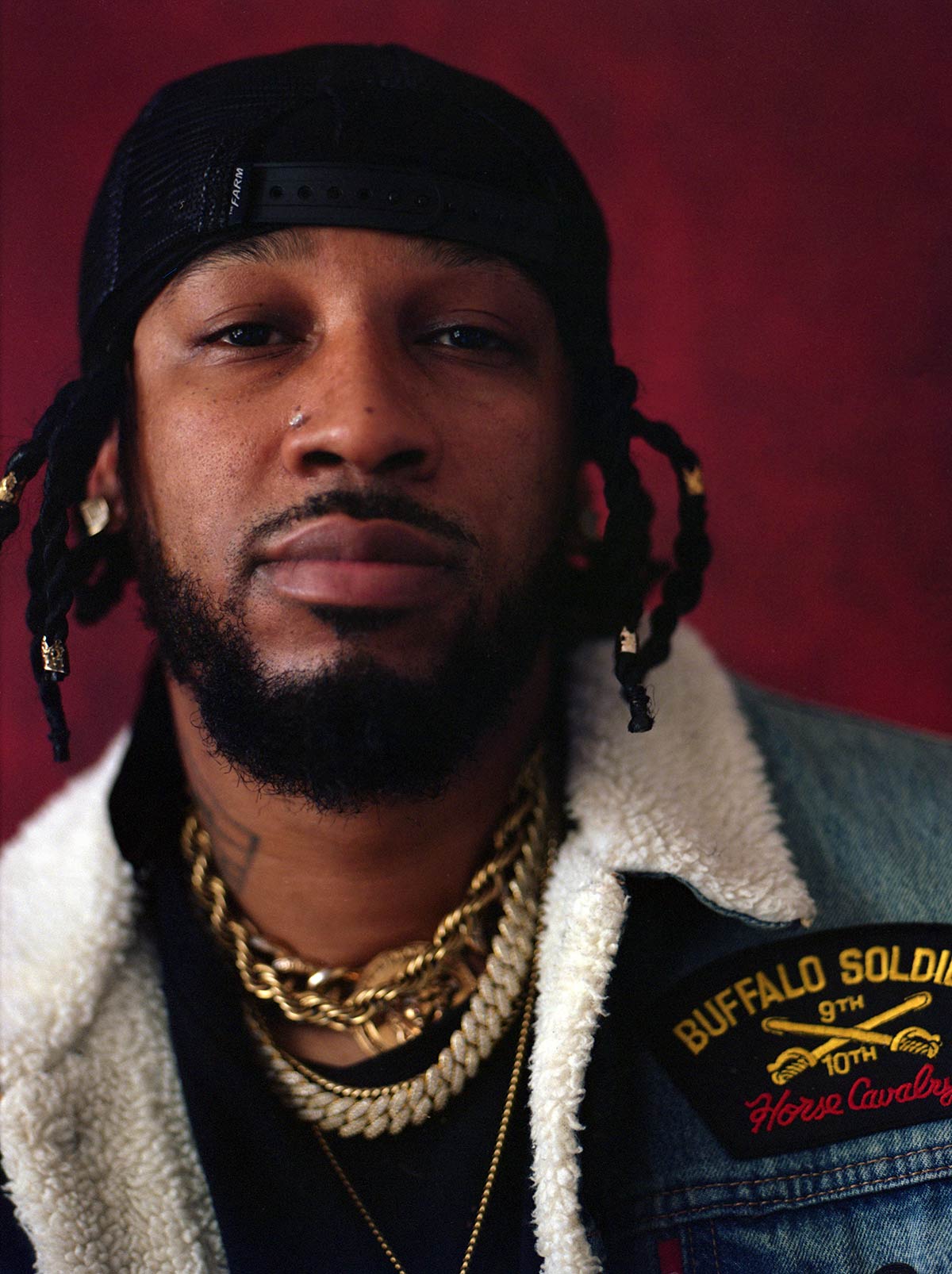
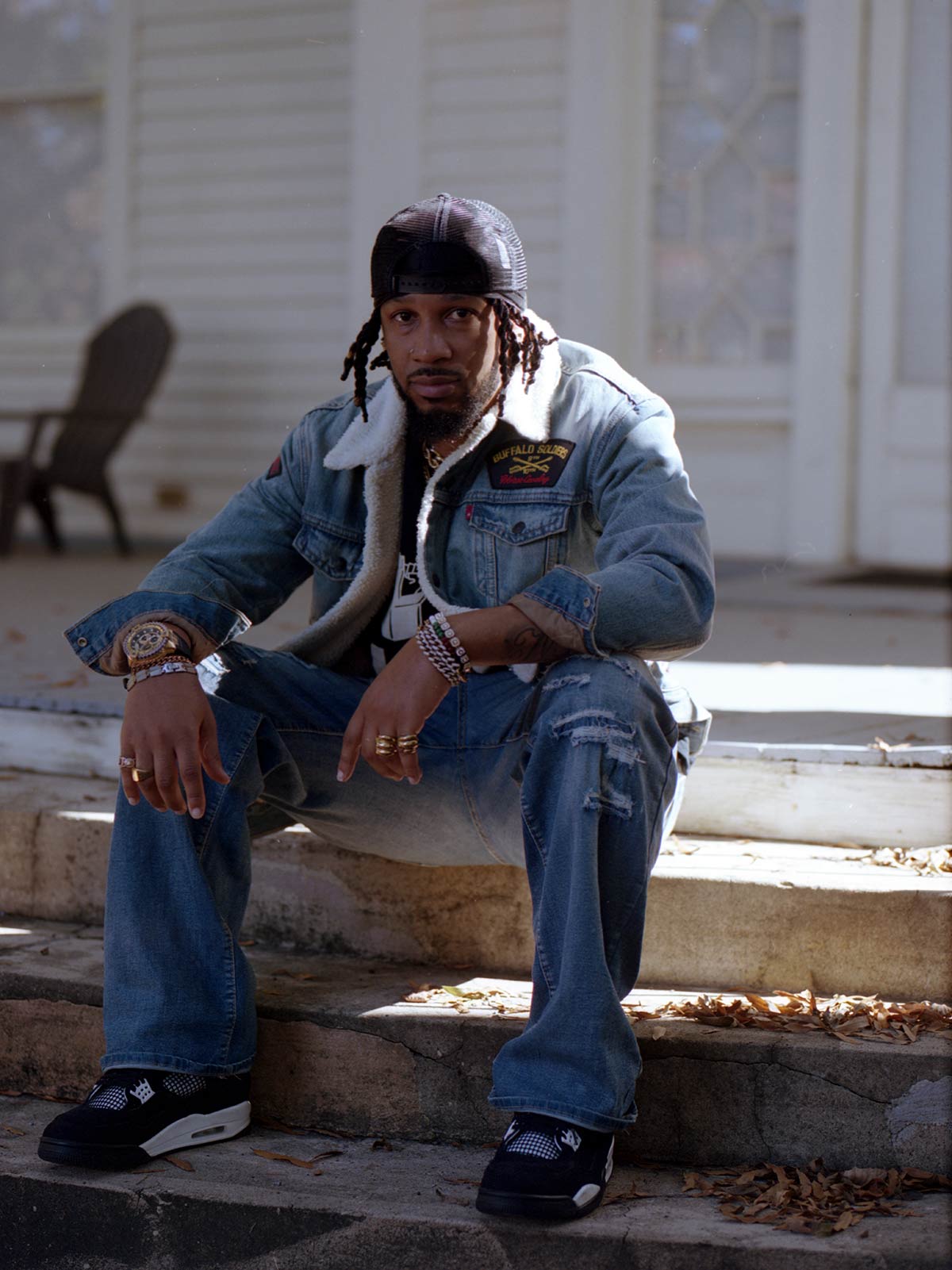
CHRIS SMALLS: My story is a wild roller coaster… During the peak of COVID, businesses were shut down, but not Amazon. We warehouse workers were deemed essential workers, which was ridiculous. We weren’t first responders, and we damn sure weren’t delivering essential items. At that time, I’d worked at the company for 5 years. I was an assistant manager for 4 and a half years, and spent 60-70 hours a week with thousands of Amazon workers every day. Everybody knew who I was. Even upper management praised me for my work. So, I thought I would be the right person to speak up on our behalf. Amazon thought otherwise. They tried to quarantine me—and only me out of the 8,300 people at our warehouse in Staten Island—to stop me from telling the rest of the workers the truth. They had informed me, as an assistant manager, that the virus was in our building but that we shouldn’t tell the workers because we didn’t want to cause panic. That’s what catapulted me into being the face of the whole Amazon unionization movement.
There was a lot of whistleblowing going on with other corporations, but when I went to the media, I was ignored. In 2020, Trump was still in office, and the media didn’t care about what was going on at Amazon, so I instigated a walkout on March 30, 2020. Two hours after the walkout, I was fired. I wasn’t an organizer; I was just trying to protect people. When they fired me, I was catapulted into the media spotlight. Jeff Bezos, who was the CEO and the richest man in the world at the time—making $13 billion a day—took it a step further. He signed off on a smear campaign and said that I was not smart or articulate, and ironically, made me the face of the unionizing efforts at Amazon. The company was planning a PR campaign to continue to smear me in the press, but somebody in that room leaked the conversation, and the PR campaign never happened. That leaked memo was all over the place, and it motivated me to continue being an advocate for workers. That’s when I started my non-profit, The Congress of Essential Workers. I protested at every Jeff Bezos mansion from the East Coast to the West Coast. I returned home to Staten Island in 2021, a year and a half later. That’s when I started campaigning to create the Amazon Labor Union. On April 1, 2022, we became the first union in American history for Amazon workers.
I was elected to be the president in November 2021 and was in that position until 2024. I didn’t run for election last year because I wanted to expand the movement, and didn’t need a title to do that. Under my leadership, we did some great things, historic things, and even got a bill passed in the State of New York called the Warehouse Protection Act, which protects all warehouses in the state. We provide services for our 8,000 members, and we’re still fighting to this day, 3 years later, to get our first contract. Unfortunately, even under the Biden administration, our government failed to protect workers’ rights. It failed to hold Amazon and other corporations accountable. So, we still fight every day.
Our victory inspired millions of workers around the world. By taking on one of the richest and most powerful companies in modern history and going against everybody who wrote us off, we proved everybody wrong with a group of grassroots organizers. I was able to travel to different countries and learn how different trade unions operated. This experience helped me connect the struggles of the working class abroad with the Amazon workers, and led me to do some panel discussions with prominent figures in different movements. In 2022, I was fortunate enough to do a panel discussion with Dr. Mustafa Barghouti [Palestinian physician, activist, and politician, and an advocate of the use of civil disobedience to confront Israel’s illegal occupation].
Dr. Barghouti invited me to go to Jerusalem to do some humanitarian work. Unfortunately was never able to go because of October 7. During the week of October 7, I happened to be in Berlin, Germany, which has one of the largest Palestinian diasporas in the world—about 30,000 to 40,000 Palestinians. I was in a Palestinian neighborhood when, with my own two eyes, I saw how agents of the German government were suppressing freedom of speech, how they were tearing down Palestinian flags and arresting children. They were zip-tying them and dragging them away from their parents. They were using the same tactics they used during the Holocaust. I recorded it and shared it on Instagram and lost 10,000 followers instantly. People flooded my DMs with messages like, “I supported you for Amazon, but this is where I draw the line.”
I thought, this is a familiar feeling. When we took on Amazon, we experienced the same type of hatred, the same type of division. I wanted to be on the right side of history. That’s what really got me involved with the Palestinian movement. Fast forward to Columbia University. Like a lot of activists, I joined the students at Columbia. That led me to being doxxed on Canary Mission (the doxing website that publishes the personal information of students, professors, and organizations that it describes as anti-Israel or antisemitic). I decided that if I was going to continue to advocate for Palestine, I was going to do it full on.
I knew they would come for me, and they did. After we won at Amazon, I had a $2 million Hollywood movie deal that I lost. I wasn’t booked for any speaking engagements for an entire year. I lost tens of thousands of dollars in speaking engagements, and I lost job opportunities. I lost everything, and it didn’t matter because I knew these sacrifices were minor setbacks. It was worth losing the deals and the opportunities, because I wanted to be on the right side of history. I was fortunate that my union supported every action.
CELINE SEMAAN: I’d like to go back to Amazon for a moment. There was a lot of press saying that warehouse workers were not afforded time to go to the bathroom, that they were literally peeing in bottles. I want to know what it’s like for an Amazon warehouse worker in the United States, so people can understand how bad it is.
CHRIS: Amazon employs 2.5 million workers worldwide, 1.5 million workers in the US. The warehouses are massive, especially the one I worked at. JFK8 is one of the biggest buildings in the entire Amazon network, over a million square feet. I used to tell my new hires, “If you have a gym membership, cancel it, because you’re gonna be doing 10 to 12 hours of calisthenics every single day.” Most of us Amazon workers didn’t have the means to have our own vehicles, so we took public transportation; my commute was 3-hours each way. I would get to work around 5 PM, work 12 hours, get off at 6 AM, and get home around 9-10 AM. I’d take a quick nap and get up around 2:30 PM just to get back to work on time. That’s the average life of an Amazon worker. Working 50, 60, 70 hours a week. I had a second job working at the MetLife Stadium every Sunday. I was a stand manager there for 5 years. A lot of Amazon workers are on government subsidies. They get food stamps. Some of them are homeless; they live in their cars or in shelters.
The average pay for Amazon workers is about $15 an hour. Because we’re in the New York area, our warehouse started at about $19 - $20 an hour. I was the highest-paid supervisor because I’d been there for 5 years. After 3 years, you get capped out. I was capped out at $28 an hour. And that still was not enough money to survive, especially in the New York City area. Health insurance comes out of your paycheck, and it’s not the greatest health insurance. Amazon is the number one company for injuries in our country, and it’s been that way for the last 5 years, or probably longer. We’re talking about a retail industry that has more injuries than the construction business. It’s diabolical when you think about it… this company that has all this money, all this power, all this technology, continues to exploit the working class. Even worse than that, workers have died working at Amazon. People just don’t hear about it. Every day, a worker is carried away in an ambulance. Nobody talks about it.
Most of the injuries are from doing repetitive motions. In my department, we were called pickers. We were required to pick over 400 items an hour for 10-12 hours a day. And when you’re doing the same motion, bending, stretching, pulling, reaching, for 10 to 12 hours, I don’t care how young or old you are, or how physically fit you are, after months and years, your body’s going to break down. The injuries come from strained muscles and dehydration. In the summertime, these warehouses get massively hot, so a lot of workers get heatstroke.
Amazon has an internal nurse’s office, called AmCare. The medical personnel are sometimes certified as EMTs, sometimes just people with a CPR certification. So they can give you the basics. Their job is to document the injury or issue and call the real professionals. You fill out a report, then they’ll give you some Tylenol, make you sit for 20 minutes, and send you back out into the warehouse. You are no good to Amazon if you’re disabled. They say they will, and they accommodate a handful of people, then they make the work as miserable as possible, so you either resign on your own or get fired because your injury exceeds the 2-week unpaid medical leave they offer.
CELINE: Labor unions are not easy to create, right? What were some of the uphill battles you had to fight?
CHRIS: Who the hell creates a union against a $2.2 trillion company nowadays? Nobody. I guess you have to be somewhat crazy. We didn’t know what the hell we were doing. We had to do a lot of research, because most unions in the US were established over 100 years ago.
We were doing something completely unprecedented, completely different: creating a worker-led union with no major backing. When we beat Amazon, we only had $2 in our bank account. The day I was fired from Amazon, I cost the company $4 billion. And that $4 billion went directly toward protecting workers. Amazon had to hand-deliver PPE (Personal Protective Equipment) to our warehouse workers.
I did seek justice for being fired, and Letitia James, the Attorney General of New York, took my case. But then she jumped ship to fight Trump, and my case got dismissed. Knowing that I wasn’t going to get legal support made me realize that forming a union was the only way. Amazon spent over $25 million trying to stop our campaign. They put our workers through hell every single day. Amazon used the NYPD to arrest me and throw me in prison, and they spewed all types of dirty, racist rhetoric. They hired union busters who were paid $10,000 a day. They were willing to spend millions of dollars rather than give the workers what they wanted. When we won our historical union victory, the first thing I did was offer a workers’ compensation program that’s much better than what Amazon offers. It provides a lawyer right away, medical attention right away, and you get your money right away.
I partnered with the Chair of the New York State Senate Labor Committee, Senator Jessica Ramos (who ultimately sold out when she endorsed Cuomo over Mamdani in the 2025 Mayoral campaign in New York City), along with other unions and other union members, to draft the Warehouse Protection Act. It took us a year and a half to get it passed by Governor Hochul. I went to Albany to protest a few times, and then we finally got it passed. It protects not just Amazon warehouses, but every single warehouse in New York State.
In my (former) warehouse, the rate system, which measures operational efficiency, is no longer used against the workers, and because the union provides legal representation, there have been approximately 200 lawsuits filed against Amazon. We provide job safety, job security, higher wages, and better medical leave options. Most unionized workers make roughly $12,000 to $15,000 a year more than non-unionized workers. Most unionized workers have a retirement package. They can become homeowners and afford their own vehicles. They have vacation time, sick leave, better medical options, and free college. We pay for college, not just for the workers, but for their spouses and children as well.
We don’t just say solidarity forever; we say, an injury to one is an injury to all.
A lot of labor unions were established over 100 years ago, and some of the biggest and most powerful unions in our country vote blue, no matter what. They are an extension of the Democratic Party, which I totally disagree with. My union does not endorse politicians. It’s in our Constitution that we do not endorse any politician, no matter how progressive they are. We do not endorse them because, for far too long, politicians show up at union rallies, say they stand with workers, and then we don’t hear from them for 3 or 4 years. I can give you plenty of examples, from AOC to Bernie, you name it. They all flocked to us when we won. I was invited to the White House by Joe Biden. I met with Kamala, I met with all the progressives in the Democratic Party. And I haven’t heard from any of them, especially since I started talking about Palestine.
It took me traveling abroad to understand that trade unions were a part of the resistance movement for Palestine since the first Nakba. Palestine is a working-class country and has plenty of trade unions. These are the type of things I didn’t know, even as a labor leader. When I traveled, I met some of the trade union presidents. I had discussions with them, and they taught me a lot about how the trade unions in the Middle East were the first humanitarian aid organizations before humanitarian aid organizations existed. When I returned to the US, I saw our labor movement being complicit. Being completely silent, actively fighting against resolutions for Palestine, actively ignoring what was going on, acting like it was not a working-class issue, and that really upset me. That led me to join the Freedom Flotilla. I wanted to apply pressure to our US labor movement, who are still turning a blind eye to this genocide.
CELINE: Let’s talk about the Flotilla. You got arrested and mistreated while in the custody of the Israelis. Could you say, from your lived experience, how racism is embedded in Israeli society? And, is there anything else you want to say about the experience of the Flotilla that has shaped the way you work and shaped the way you are?
CHRIS: I’m still dealing with PTSD. I can’t imagine how Palestinians, who experience the type of treatment I did for 5 days, endure and survive that treatment for years. When I think about it, it wakes me up out of my sleep. I’m now banned from Israel for 100 years. I’m on Canary Mission. And I’m on other terrorist lists, from traveling to Cuba to being invited to Venezuela.
I try to spread awareness; it comes with a price, and people don’t understand that sometimes that price can cost us activists our lives. Most Black leaders in our country, historically, get killed before the age of 40. I’m almost there, I’m creeping up to 40… This is something that weighs on me every day as I take on these dangerous, sometimes life-threatening, initiatives.
I don’t talk about the death threats I receive. Or the black cars that have followed me, the surveillance. I think about the ones who paved the way, from Malcolm X, who visited Gaza in 1964, to Nelson Mandela, whose grandson got on the Global Samud Flotilla.
CELINE: When is your book coming out?
CHRIS: My book will be out on June 2, 2026. It’s being published by Penguin Random House. I will be doing an 8-city tour in the US. I also have a UK book deal, so I’ll be doing a tour of the UK as well. That’ll be happening this summer. You can pre-order it right now. I encourage people to order it on the Penguin Random House website. You can find it everywhere, including Amazon.
CELINE: Do you ever shop on Amazon?
CHRIS: 1000%, no. The only thing I purchased from Amazon was a bullhorn, the day I was fired. Ironically, a powerful documentary about how we unionized is on Amazon Prime, as well as AppleTV and PBS. However, I encourage everyone to watch it on Unionthefilm.com. That’s the original version. Last year, it made the Oscar short list. It was one of the best films that came out last year that nobody knows about.