
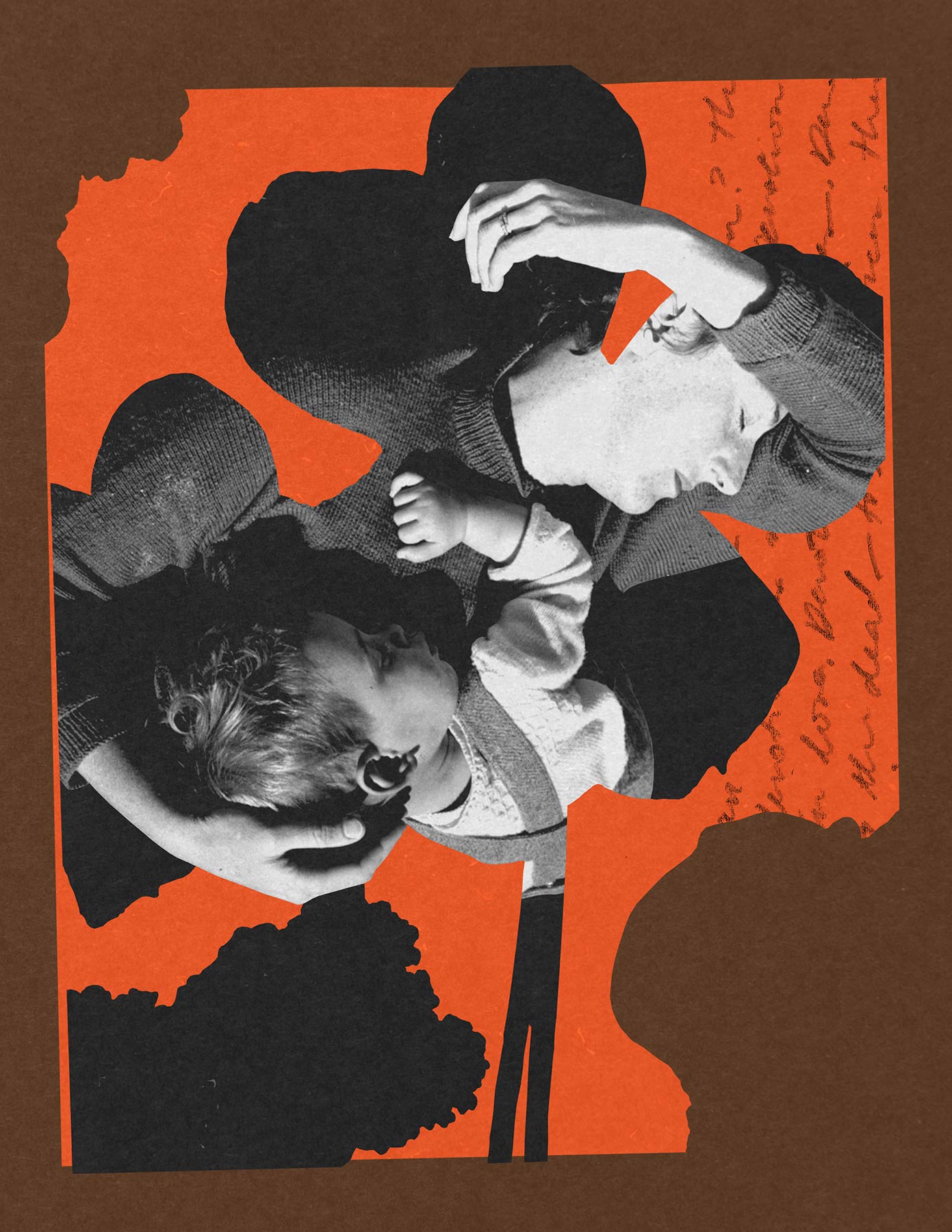
Illustration Credit: Chantal Jahchan
One of the most endearing things about being human is that when we have a pivotal experience, it becomes the benchmark and metaphor for everything that follows. Motherhood has given me a new lens, and I now, often tiresomely, see nearly everything through it.
Parenthood has made certain questions unavoidable. Teaching a small child that other beings have interior lives, emotional and physical, is intimate, tedious work. It happens in fragments: explaining why someone cried, why an animal recoiled, why harm does not disappear just because it wasn’t intended. It is a slow education, delivered through repetition rather than revelation. I am teaching empathy not as instinct, but as practice. And in doing so, I am relearning it myself—daily, imperfectly. Each explanation is an invitation to remember that the world is crowded with feeling.
Life is full of these bizarre invitations. The other day, my daughter called me over to her with great urgency. “Don’t be sad,” she told me. “You can blow my nose.” Bodies are nothing to my daughter. She is constantly leaning against me, touching me, inserting herself into my space. When we sleep in the same bed, we are a tangle of limbs, indistinguishable. So compelling was the entreaty to blow her nose that I obeyed.
I keep thinking about invitations, especially those issued under conditions that should never have existed. I’ve written elsewhere of the particularly devastating one issued by Palestinian children in a press conference held in late 2023.
Maybe it’s because a new year—constructed or not—is an invitation to take stock and try something different. One of the most devastating features of the last two years has been the unanswered invitations. Palestinian officials’ entreaties before the United Nations. Children explaining their amputations, screaming for mothers and the world to help them. The letters from doctors, the legal briefs from human rights organizations, testimonies smuggled out of siege, journalists speaking into cameras knowing they may not live to upload the footage, pleading for safety.
To ask for protection, for safety, for recognition is not a mark of fragility. It is an act that transfers responsibility outward. An invitation that creates obligation.
What is motherhood, for instance, if not an invitation—to proximity, to inconvenience, to being needed in absurd and total ways? What is living if not an invitation to submit to the mundane tasks that tether us to one another? To be willing to be marked by living. To be willing, sometimes, to be undone by it.
The last few years have sharpened my thinking about what kind of ally I want to be, which is inseparable from the kind of mother I want to be. What I am training for, ultimately, is the conversations I hope to spend the rest of my life having, especially with my daughter. Conversations about selective justice. About how true liberation does not arrive with conditions. Because when liberation means comfort for me, safety for me, resources for me, at the expense of others, what we are really talking about is supremacy. And I’m not interested in that. What I am interested in is a practice of living—of resolve—that invites us all to be bound to one another.
The truth is that, for people on the ground, Palestine is no more materially liberated today than it was before October 7, 2023, though it certainly is in many more people’s imaginations. Someday, in the not-too-far-off future, I’ll have to talk about Palestine with my daughter, about the Nakba, about both her history and the concerted efforts to distort and erase it. And when that day comes, that collective imagination is going to be a lifeline.
Of course, there is a temptation to protect tenderness by narrowing its scope, to reserve care for what is closest, most familiar, most legible. I feel that pull constantly. But my attachment to my child doesn’t render her more deserving of safety than children under rubble, or children sleeping in ICE detention centers, or children separated from their parents.
Accountability that does not alter behavior is ornamental. It soothes without disrupting. We see this constantly: officials who “acknowledge suffering” while authorizing weapons shipments; administrations fluent in the language of compassion while expanding detention and surveillance. These gestures rely on the assumption that memory is short. Resolve is what interrupts that assumption. It is the discipline of returning, again and again, to the same demand, the same unanswered invitation.
And what is resolve if not an invitation for devotion?
The devotion in mothering. Devotion in love. Devotion in causes. Devotion to the dead, to their voices, their stories, their unfinished sentences. For the onus is not on the dead to keep reminding us to return to the just. That responsibility belongs to the living.
In the end, we are marked by what we tether ourselves to—be it mothering, human solidarity, the values we refuse to abandon. By the calls we choose to heed. The true task of living is to allow oneself to be changed by it, to let it reorganize your time, your priorities, and what you owe. To have endless conversations with a toddler about why, yes, we have to wash our hands again, and why, yes, other people’s feelings matter, and why, absolutely, we are responsible for the ways we affect other people, even if we can’t see it.
This is the beautiful tedium which becomes practice. This is what accountability looks like when it is alive.