

Faisal Saleh’s resistance takes the form of a museum dedicated to Palestine – the first of its kind in the western hemisphere, opened in Connecticut and recently expanded to Edinburgh.
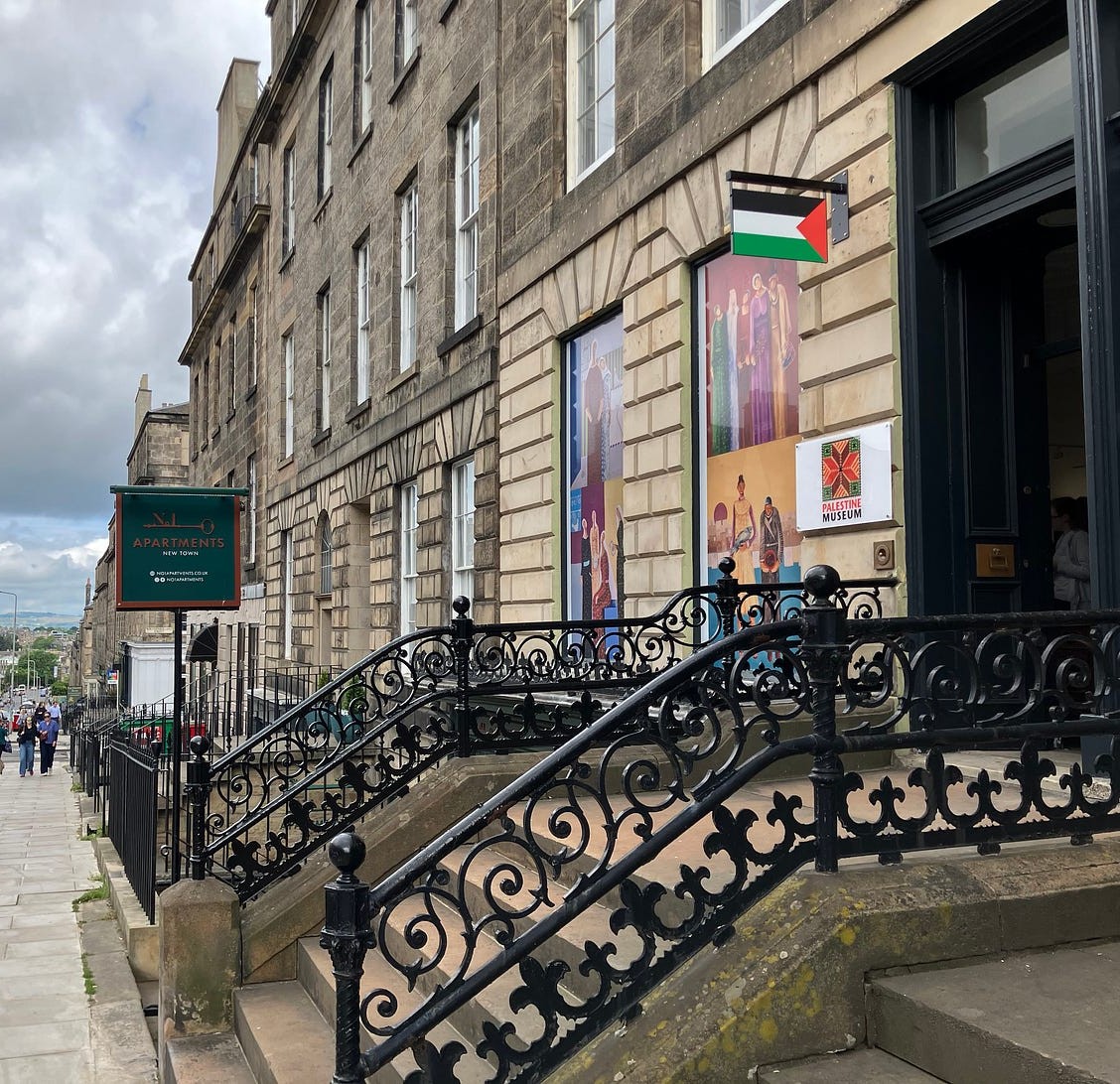
Outside view of the Palestine Museum in the New Town area in Edinburgh, Scotland
Born in the West Bank shortly after the Nakba, Faisal Saleh moved to the United States on a high school scholarship and spent decades as an entrepreneur before becoming what he now calls a “museum-maker”.
When asked what the biggest challenge was in founding the Palestine Museum in Connecticut, he says, “Apathy, and ignorance. A lot of people didn’t even know where Palestine is; they thought I was talking about a town in Texas. So, it was first about getting them interested in the subject.” (This namesake town does exist in Texas!) He goes on to name his second challenge “…trying to share that what the media was putting out in the US was not the truth about Palestine. So, the Museum acts as an educational institution”. These challenges were in 2018, five years before Israel’s ongoing genocide in Gaza began.
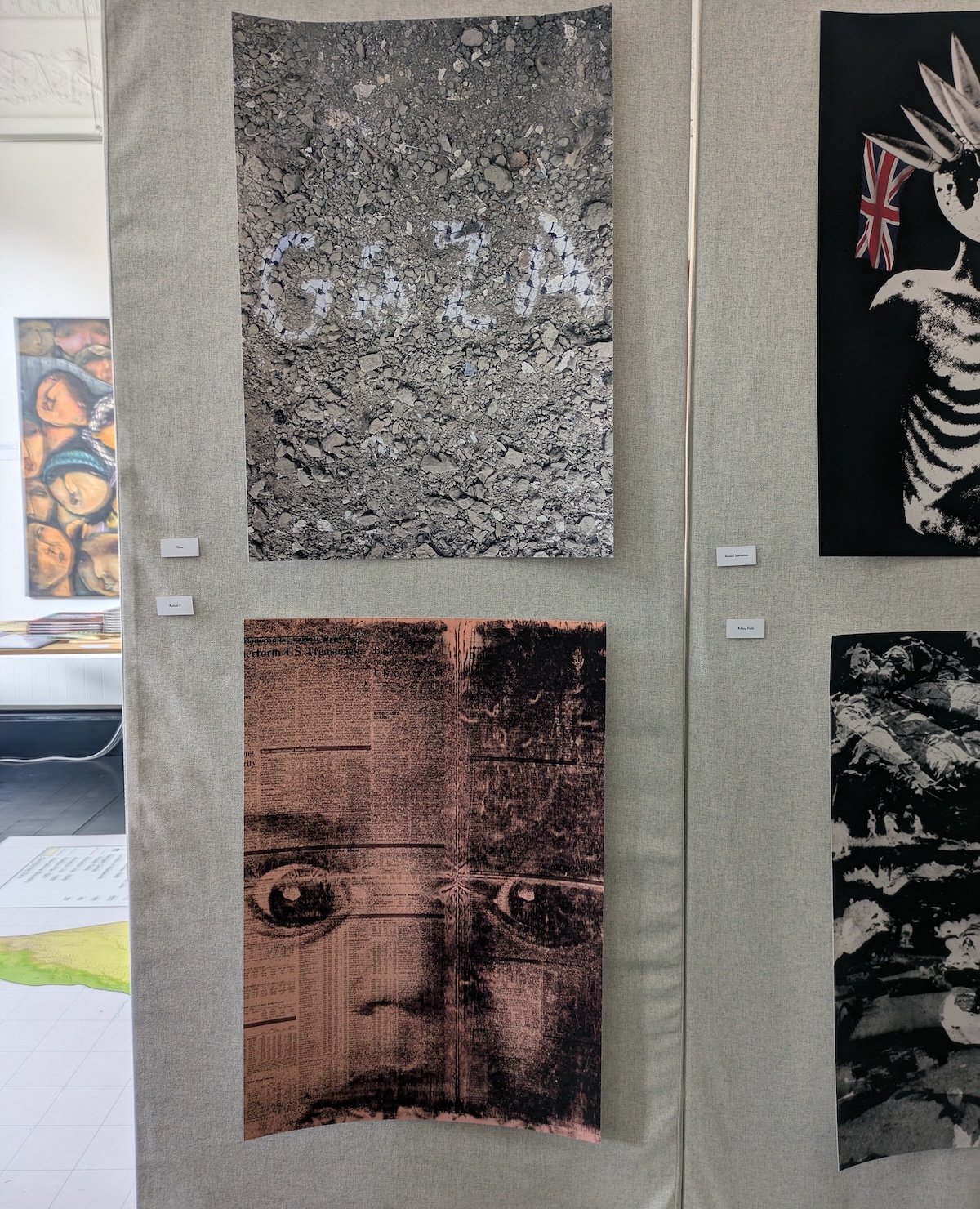
Peter Kennard series on Gaza
In May last year, the Museum expanded its presence to Scotland, and the reception has been different. “Because of the disturbing events in the past two and a half years, the whole world knows about Palestine now. People are interested in learning more about Palestinian art and culture.”
I discovered the Palestine Museum while strolling in the New Town area during my visit to Edinburgh. I was admiring the Georgian architecture, high ceilings, and the broad, symmetrical streets, and was planning to visit the ‘National Portrait Gallery’ when I came across the unassuming sign in red, black, green, and white — the colours of the Palestinian flag. While talking about what led them to expand specifically to Edinburgh, Faisal says, “There is a lot of support for Palestine in Scotland, and we were able to find this venue at the heart of the art district, also a UNESCO-registered area. Many important galleries are located there, and the Palestine Museum belongs there too”.
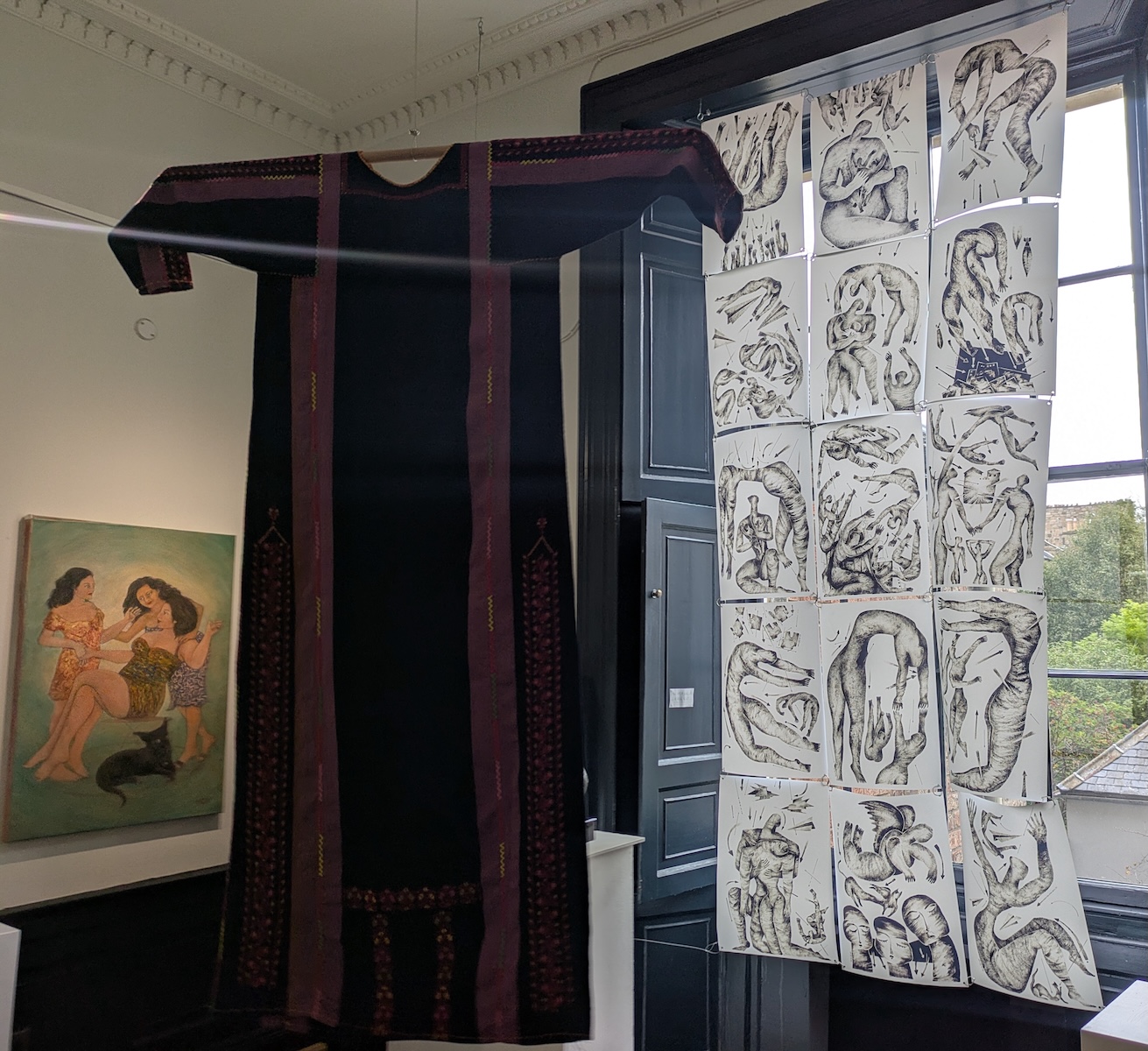
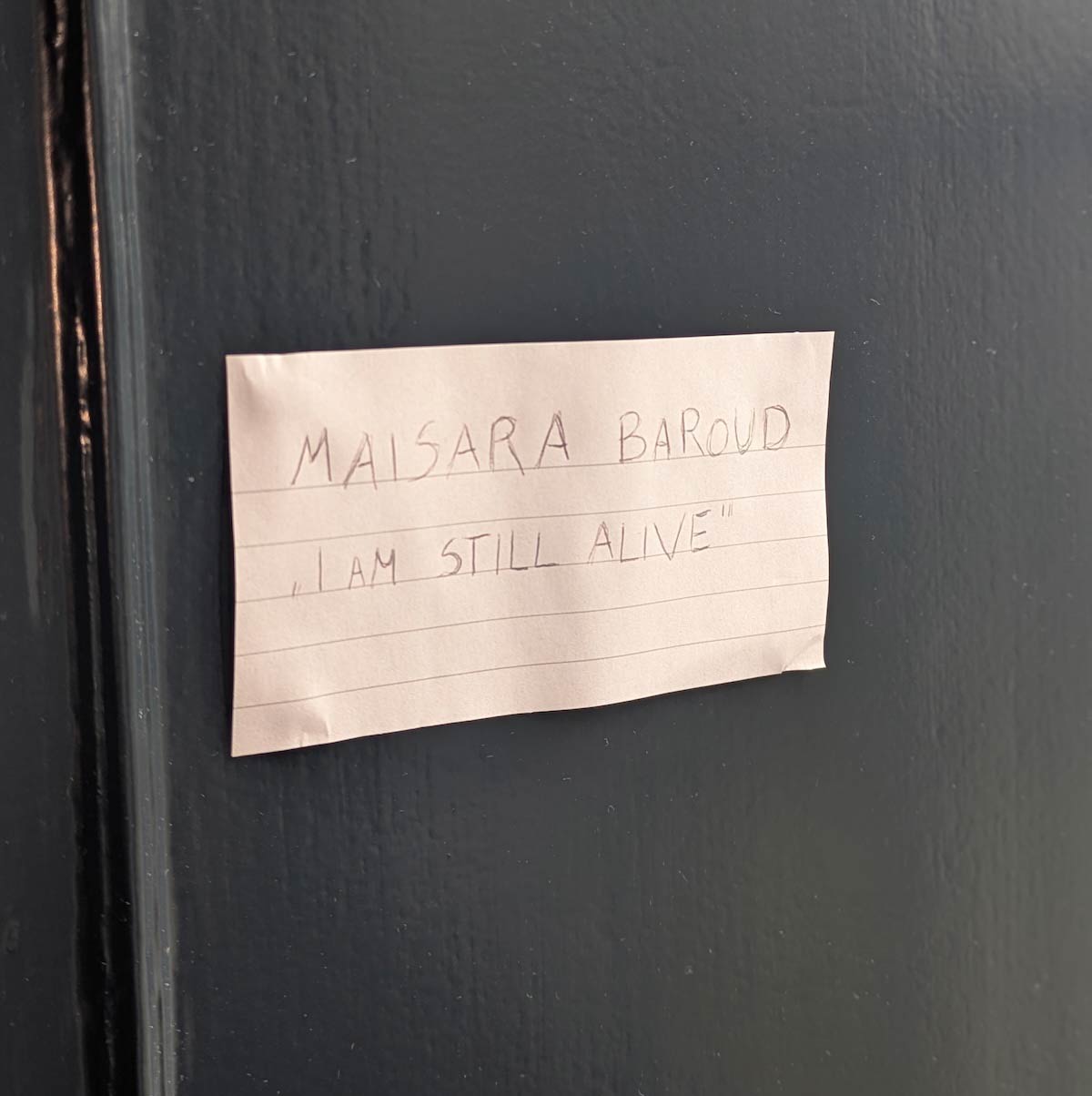
Maisara Baroud, I AM STILL ALIVE (on the right)
I instinctively decided to enter this museum, primarily to educate myself. For months, reading updates on the war in Gaza and the constantly increasing death toll of Palestinians (over 70,000 as of today) made me feel multiple things — shock, rage, grief, numbness, but mostly helplessness. If I, an Indian living in London, was feeling this way, how are Palestinians living in Gaza and elsewhere feeling?
Upon entering, I was greeted by two enthusiastic women, who briefed me on the recent opening and its artworks. I learned from Faisal later that the women who welcomed me were volunteers. “The Museum is self-sustaining. There are about 60 volunteers who organise themselves in WhatsApp groups. During the summer, when Edinburgh hosted many cultural festivals, we got around 250 visitors a day, and now we get around 30-100 visitors. It’s still significant to get that many people visiting a small museum that just opened a few months ago”. The museum is indeed small—three rooms. But it seems big enough for Edinburgh to emphatically say no to Gaza’s genocide.
The Museum has hosted all kinds of art — paintings, sculptures, films, textiles — by renowned Palestinian artists like Samia Halaby, Nabil Anani, and Sana Farah Bishara, as well as emerging Palestinian artists like Maisara Baroud and Mohammed Alhaj. In the first room, a formidable painting by the contemporary artist Peter Kennard stood out to me for stating a simple fact: the red from the American flag was bleeding onto and muddying the Palestinian flag.
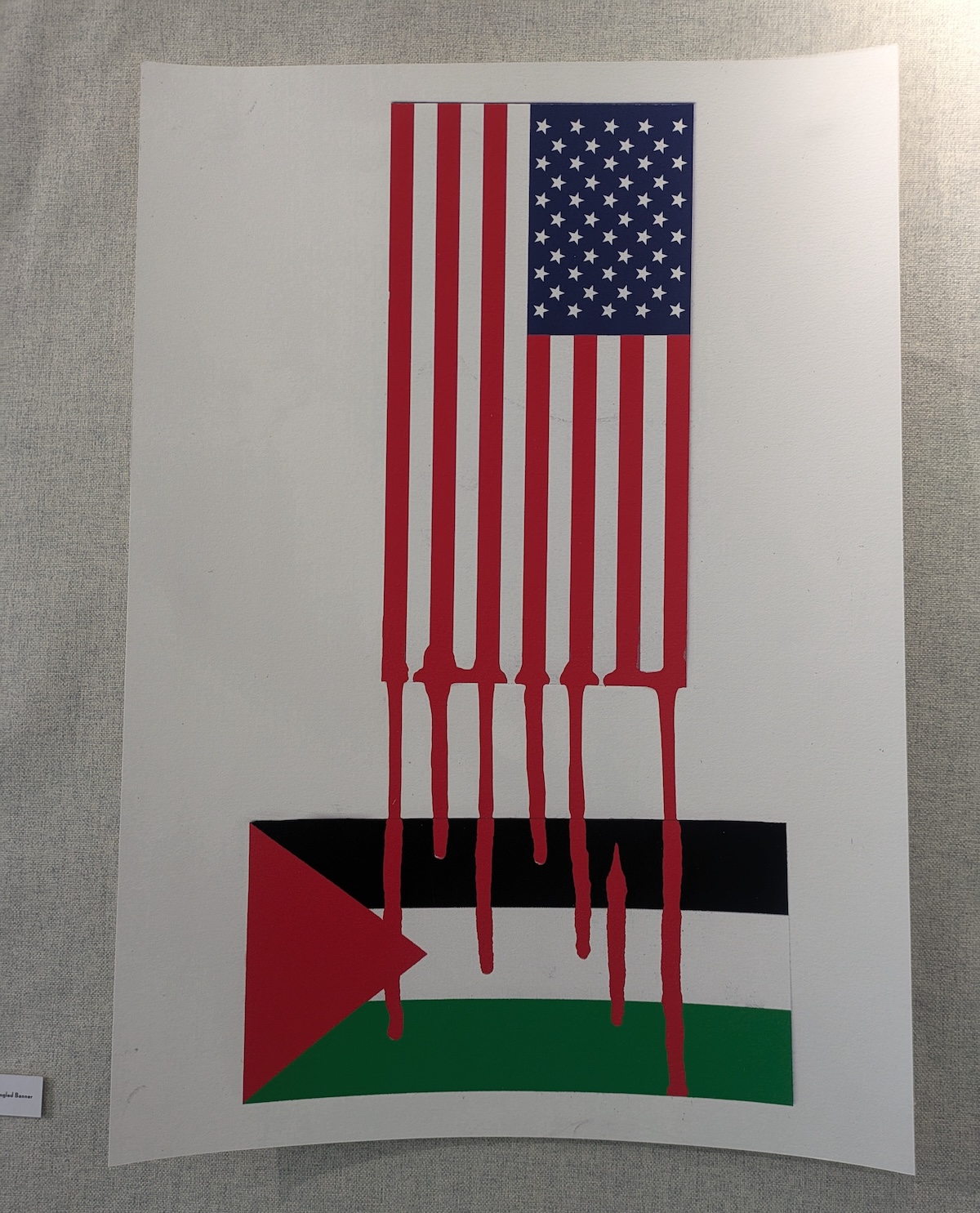
Peter Kennard, Star Spangled Banner
Maisara Baroud’s drawing series hangs in front of the large windows in the second room. Behind the drawings that capture the machinery of war, the exhibit’s name was written on a tiny piece of paper stuck to the window – “I AM STILL ALIVE”. Maisara, a Palestinian resident, has drawn daily for years. Despite a rocket falling on his studio and destroying it in early 2024, he has found ways to continue drawing (and posting when possible), so his friends would know he is still alive.
Faisal tells me that artists were more than willing to display their works at the Museum. “We’re not just looking for the top artists. We want to show a diversified collection. A lot of them are from the West Bank, but some are also from the Palestinian diaspora who live in Jordan, Lebanon, Cairo, Europe, or the US.”
The Museum rejects any hierarchy in its collection. That’s why you will see artworks by children in the third room. “Children from Gaza can’t not be traumatised by what’s going on. They say a four-year-old in Gaza is like a 19-year-old elsewhere. A six-year-old, for example, has seen war most of her life.” As part of a therapy programme, children were drawing what they saw during Israel’s attack. Looking at one child’s drawing — their school burning after a missile strike — I was teleported to their trauma and grief, but also to their resilience and unwillingness to disappear. Despite their world being burned down, children were still drawing to process the war and to survive.
As I walked out of the Museum, I couldn’t help but feel more encouraged. Encouraged because this Museum exists right now as an act of resistance against the atrocities happening in Gaza – about which I had felt far less hopeful before entering. Palestinians everywhere are refusing to bow down to the massive forces trying to erase them.
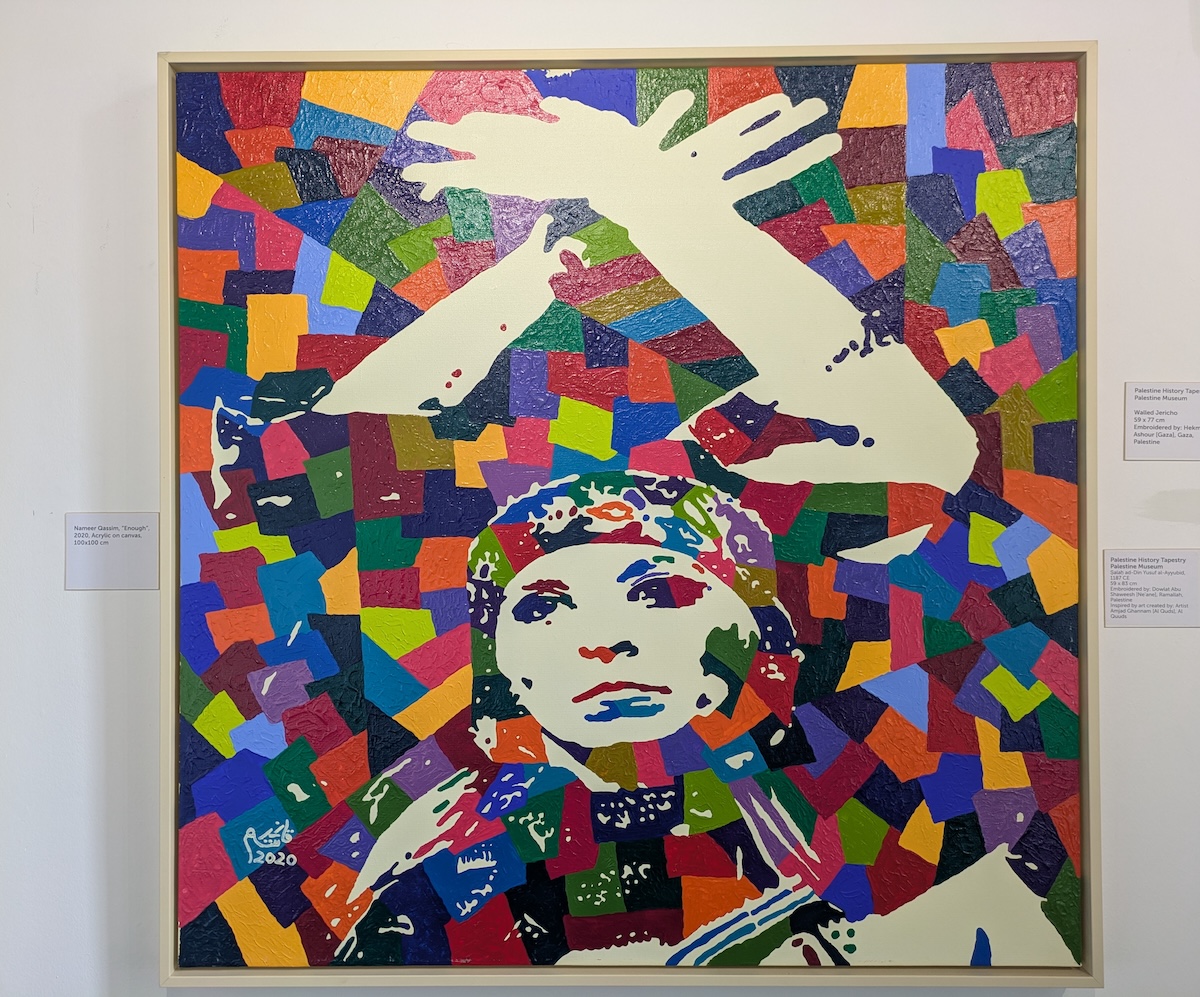
Nameer Qasim, Enough
For those still feeling apathy about Gaza’s genocide, Faisal says, “What’s really happening in Gaza is a test for humanity. If humanity allows that to happen, it will have a chilling effect on the world and will be a precedent. You cannot allow something like this to happen and not have a negative impact on the rest of the world.”
The artists are making art despite their circumstances and displaying it as an act of resistance. Faisal’s work on the Palestine Museum is another such act. Even the hundreds of people visiting, volunteering, or contributing are part of that defiance, too. As Ghassan Khanafani, a prominent Palestinian novelist assassinated by Mossad in 1972 at the age of 36, said, “The Palestinian cause is not a cause for Palestinians only, but a cause for every revolutionary, wherever he is, as a cause of the exploited and oppressed masses in our era.”
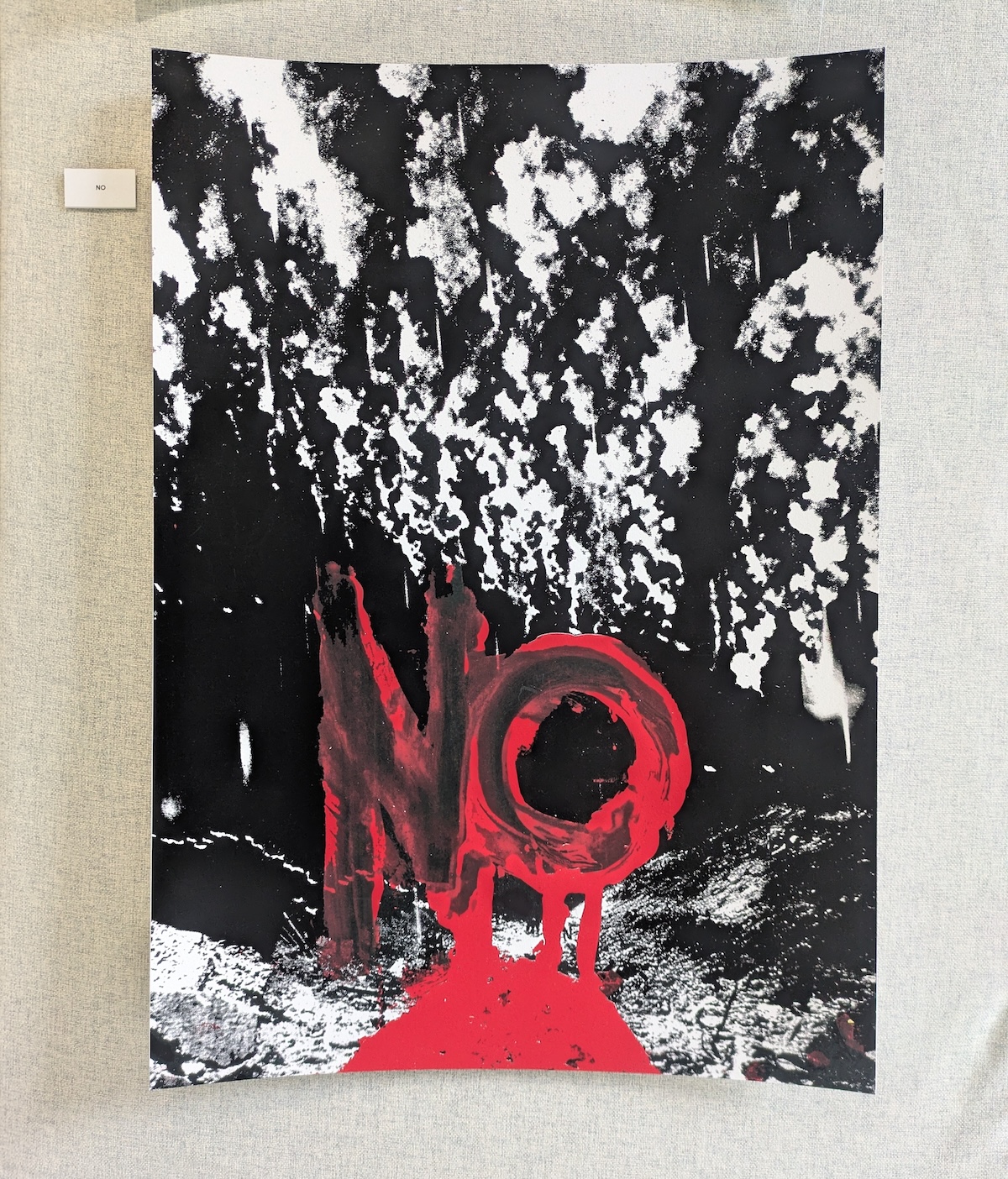
Peter Kennard, No