

Digital & Print Membership
Yearly + Receive 8 free printed back issues
$420 Annually
Monthly + Receive 3 free printed back issues
$40 Monthly
Argentina’s Migration “Security Turn”
How Javier Milei’s Migration Policies Are Reshaping Belonging in Argentina
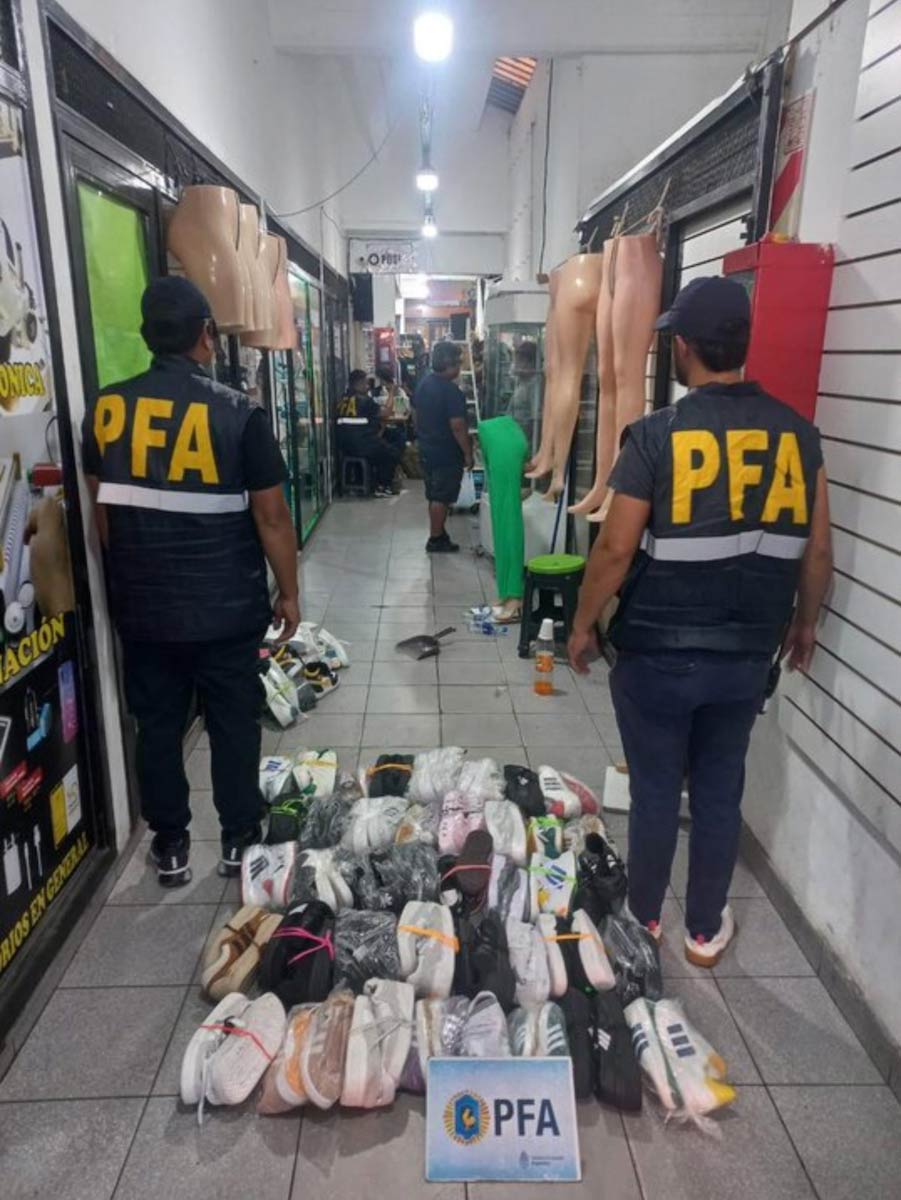
In late January, Argentina’s Ministry of Security published a video on Instagram showing federal forces conducting an operation in Villa Celina, a working-class neighborhood in La Matanza, reportedly searching for undocumented immigrants. Days earlier, a Colombian-born trans man who had requested asylum in Argentina, was detained at the airport for six days, unable to communicate with his family. According to La Izquierda Diario, his asylum claim was rejected, and he was placed on a flight to Porto Alegre, Brazil, under the classification of a “false tourist.” According to an X post by Alejandra Monteoliva, Argentina’s Minister of National Security, “in December and January, nearly 5,000 foreign nationals were either denied entry or expelled from the country”.
These episodes unfolded amid significant changes to Argentina’s immigration governance. Before Javier Milei took office in December 2023, immigration policy fell under the Ministry of the Interior, but former Minister Patricia Bullrich transferred oversight of immigration to the Ministry of National Security in November 2025, effectively redefining migration not as a matter of civil administration, but as an issue of national security.
There have been no large-scale arrests of undocumented migrants in Argentina. Yet the symbolic force of security operations in poor neighborhoods and the high-profile expulsion of an asylum seeker signals to a broader political narrative. Like Donald Trump’s “law and order” rhetoric in the United States, Milei’s discourse relies on nationalist appeals and moral distinctions between “decent Argentinians” and those portrayed as threats. Slogans such as “el que las hace las paga” (an idiom similar to “do the crime, do the time”) compress complex social realities into punitive certainties, repositioning immigrants, workers, and other vulnerable groups as subjects of suspicion rather than individuals with rights.
The correlation between Milei’s and Trump’s anti-immigrant policies is clear from the dates of implementation: Javier Milei took office in December 2023 and made no major changes to immigration policies until May 2025 (only five months after Trump took office) with the publication of the decree 366/2025 that announced modifications to the Migration Law, especially in article 114 where the creation of the “Auxiliary Migration Police” was announced.
Furthermore, the desire to emulate Trump’s ICE is explicit even from members of the Milei administration, as reflected in these statements published by La Nacion, by a source close to Patricia Bullrich’s office: “The ANM (National Migration Agency) will adopt a security-driven approach. It will be modeled on the United States Department of Homeland Security, including its Border Patrol and the TSA [Transportation Security Administration, which oversees airport screening]. We are working to establish a civilian-police force operating at all of Argentina’s border crossings — an agency that centralizes migration control and maintains comprehensive records of individuals with criminal backgrounds”.
Argentina’s Ambivalent Immigration Tradition
Argentina’s national mythology celebrates immigration more explicitly than that of most countries in the Americas—a tradition rooted not only in historical narrative but also in constitutional language, and linked to the country’s vast, sparsely populated territory. The 1853 Preamble famously commits the nation to “secure the blessings of liberty … for all men of the world who wish to dwell on Argentine soil,” embedding an explicit invitation to migrants within the country’s founding legal imagination and framing hospitality as a foundational principle rather than a contingent policy choice. Dominant narratives credit European migration in the late nineteenth and early twentieth centuries with shaping Argentina’s economic and cultural development, as well as its national identity—one that has often imagined Argentines as descendants of Europeans and, therefore, distinct from the rest of Latin America.
However, enthusiasm for immigration was never universal. In 1899, physician and intellectual José María Ramos Mejía wrote in Las multitudes Argentinas that immigration had “made Buenos Aires ill,” contaminating the traditions of established families. This anxiety reflected elite fears of demographic change, urban disorder, and political radicalism. In the context of the country’s expanding capitalist economy, these fears translated into hostility toward labor organizing, often portrayed as a foreign and subversive activity, as unions began to develop under the influence of anarchist and socialist ideas, including organizations such as the FORA, the country’s first major anarchist labor federation, as documented by Working Class History. The state also responded with legislation facilitating deportations, most notably the 1902 Ley de Residencia (Law 4144), which allowed the executive to expel foreigners deemed a threat to public order.
Today’s nostalgia for a “good immigration” rests on two fragile premises. First, European migration is interpreted through a contemporary lens that imagines Europe as inherently prosperous and orderly, projecting present-day “First World” status onto a past marked by poverty, instability, and social conflict. Second, that race did not matter. Yet Argentina’s self-image as a predominantly white nation emerged alongside the violent erasure of much of its Indigenous population, including state campaigns such as the Conquest of the Desert, and the marginalization of Afro-Argentine communities. The celebration of European immigration has always been intertwined with racial hierarchy, evident in the markedly different treatment given to European migrants compared to those from neighboring countries such as Paraguay and Bolivia, who were racialized in distinct ways. The distinction between “good” and “bad” immigrants persists, now recorded through the language of legality and security.
The False Security Argument
The Milei administration justifies its migration policies in the name of public safety. However, official data complicates that claim.
Administrative data from the National Registry of Persons (RENAPER) indicates that Argentina has roughly 2.3 million foreign-born residents, representing about 5 percent of the total population. Compared to countries where immigration dominates electoral politics, Argentina’s foreign-born population remains relatively small. According to 2023 national penitentiary statistics, foreigners account for roughly 6 percent of Argentina’s incarcerated population, approximately in line with their share of the country’s population. These figures suggest that migrants are not overrepresented within Argentina’s criminal justice system.
Essentially, migration has not been a central axis of political instability or social crisis in recent years.
Framing migration as a primary security concern appears disproportionate to the available evidence and contrasts with claims by President Javier Milei that migrants disproportionately benefit from public services such as health care and education or contribute significantly to Argentina’s economic crisis.
Emulation and Political Strategy
The parallels with Trump-era discourse are not accidental. Javier Milei has openly aligned himself rhetorically with global right-wing leaders who frame migration as both a cultural and criminal threat. The emphasis on border control, internal enforcement, and moral categorization mirrors strategies used by U.S. and European conservatives to consolidate political identity around fear and grievance, while also resonating with broader regional trends.
Argentina is not an isolated case in the adoption of restrictive migration policies; rather, it reflects a broader regional trend. In Chile, President-elect José Antonio Kast campaigned on proposals that included large-scale deportations of undocumented migrants. Similarly, in Costa Rica, President Rodrigo Chaves Robles declared a state of emergency in 2023 in response to migrants transiting the country en route to the United States, as reported by Reuters.
In a recent interview with Louis Sarkozy, son of former French president Nicolas Sarkozy, Milei argued that when a migrant “does not adapt to your culture,” it constitutes an “invasion” capable of “altering the cultural foundations” of a country.
Yet beneath this security narrative lies a broader political project. The administration’s economic agenda (including labor reforms framed as “modernization”) favors deregulation and business interests. In this context, anti-immigrant rhetoric functions less as a response to empirical conditions than as a symbolic instrument: it constructs an internal adversary while redirecting attention away from structural economic transformation. The coherence of this narrative is further complicated by reports, including those published by The New York Times, suggesting an alleged agreement between Trump and Milei for Argentina to receive deported migrants from the United States.
In this sense, security has become the language through which a deeper class realignment is articulated. Argentina’s history shows that debates over immigration have often reflected anxieties about identity, race, and labor control rather than measurable threats. The current turn toward securitization thus represents not merely a policy shift, but a transformation in democratic language itself.
The question, then, is not whether Argentina faces a migration crisis, the available data suggests it does not, but what political purpose is served by insisting that it does, and what this insistence reveals about the broader direction of governance under Milei.
By constructing an internal enemy embodied by vulnerable populations, the government seeks to redirect attention to politically expedient scapegoats. This logic is reflected not only in the immigration policies described here, but also in labor reforms that frame workers’ rights as a burden on public spending, the repression of retirees demanding improved pensions, and new restrictions on protest and the right to strike that limit collective organization.
Taken together, these measures suggest that immigration restrictions form part of a broader institutional reconfiguration, one that prioritizes the projection of authority over the resolution of concrete social and economic challenges. In doing so, the government reframes manageable social dynamics as existential threats, a shift that risks undermining the very constitutional principles it claims to defend, both domestically and in its international positioning.
{
"article":
{
"title" : "Argentina’s Migration “Security Turn”: How Javier Milei’s Migration Policies Are Reshaping Belonging in Argentina",
"author" : "Marina Simonet Hernandez Jurado",
"category" : "essays",
"url" : "https://everythingispolitical.com/readings/argentinas-migration-security-turn",
"date" : "2026-03-17 10:39:00 -0400",
"img" : "https://everythingispolitical.com/uploads/Screenshot%202026-03-12%20at%204.14.21%E2%80%AFPM.png",
"excerpt" : "In late January, Argentina’s Ministry of Security published a video on Instagram showing federal forces conducting an operation in Villa Celina, a working-class neighborhood in La Matanza, reportedly searching for undocumented immigrants. Days earlier, a Colombian-born trans man who had requested asylum in Argentina, was detained at the airport for six days, unable to communicate with his family. According to La Izquierda Diario, his asylum claim was rejected, and he was placed on a flight to Porto Alegre, Brazil, under the classification of a “false tourist.” According to an X post by Alejandra Monteoliva, Argentina’s Minister of National Security, “in December and January, nearly 5,000 foreign nationals were either denied entry or expelled from the country”.",
"content" : "In late January, Argentina’s Ministry of Security published a video on Instagram showing federal forces conducting an operation in Villa Celina, a working-class neighborhood in La Matanza, reportedly searching for undocumented immigrants. Days earlier, a Colombian-born trans man who had requested asylum in Argentina, was detained at the airport for six days, unable to communicate with his family. According to La Izquierda Diario, his asylum claim was rejected, and he was placed on a flight to Porto Alegre, Brazil, under the classification of a “false tourist. ” According to an X post by Alejandra Monteoliva, Argentina’s Minister of National Security, “in December and January, nearly 5,000 foreign nationals were either denied entry or expelled from the country”. These episodes unfolded amid significant changes to Argentina’s immigration governance. Before Javier Milei took office in December 2023, immigration policy fell under the Ministry of the Interior, but former Minister Patricia Bullrich transferred oversight of immigration to the Ministry of National Security in November 2025, effectively redefining migration not as a matter of civil administration, but as an issue of national security. There have been no large-scale arrests of undocumented migrants in Argentina. Yet the symbolic force of security operations in poor neighborhoods and the high-profile expulsion of an asylum seeker signals to a broader political narrative. Like Donald Trump’s “law and order” rhetoric in the United States, Milei’s discourse relies on nationalist appeals and moral distinctions between “decent Argentinians” and those portrayed as threats. Slogans such as “el que las hace las paga” (an idiom similar to “do the crime, do the time”) compress complex social realities into punitive certainties, repositioning immigrants, workers, and other vulnerable groups as subjects of suspicion rather than individuals with rights. The correlation between Milei’s and Trump’s anti-immigrant policies is clear from the dates of implementation: Javier Milei took office in December 2023 and made no major changes to immigration policies until May 2025 (only five months after Trump took office) with the publication of the decree 366/2025 that announced modifications to the Migration Law, especially in article 114 where the creation of the “Auxiliary Migration Police” was announced. Furthermore, the desire to emulate Trump’s ICE is explicit even from members of the Milei administration, as reflected in these statements published by La Nacion, by a source close to Patricia Bullrich’s office: “The ANM (National Migration Agency) will adopt a security-driven approach. It will be modeled on the United States Department of Homeland Security, including its Border Patrol and the TSA [Transportation Security Administration, which oversees airport screening]. We are working to establish a civilian-police force operating at all of Argentina’s border crossings — an agency that centralizes migration control and maintains comprehensive records of individuals with criminal backgrounds”. Argentina’s Ambivalent Immigration TraditionArgentina’s national mythology celebrates immigration more explicitly than that of most countries in the Americas—a tradition rooted not only in historical narrative but also in constitutional language, and linked to the country’s vast, sparsely populated territory. The 1853 Preamble famously commits the nation to “secure the blessings of liberty … for all men of the world who wish to dwell on Argentine soil,” embedding an explicit invitation to migrants within the country’s founding legal imagination and framing hospitality as a foundational principle rather than a contingent policy choice. Dominant narratives credit European migration in the late nineteenth and early twentieth centuries with shaping Argentina’s economic and cultural development, as well as its national identity—one that has often imagined Argentines as descendants of Europeans and, therefore, distinct from the rest of Latin America. However, enthusiasm for immigration was never universal. In 1899, physician and intellectual José María Ramos Mejía wrote in Las multitudes Argentinas that immigration had “made Buenos Aires ill,” contaminating the traditions of established families. This anxiety reflected elite fears of demographic change, urban disorder, and political radicalism. In the context of the country’s expanding capitalist economy, these fears translated into hostility toward labor organizing, often portrayed as a foreign and subversive activity, as unions began to develop under the influence of anarchist and socialist ideas, including organizations such as the FORA, the country’s first major anarchist labor federation, as documented by Working Class History. The state also responded with legislation facilitating deportations, most notably the 1902 Ley de Residencia (Law 4144), which allowed the executive to expel foreigners deemed a threat to public order. Today’s nostalgia for a “good immigration” rests on two fragile premises. First, European migration is interpreted through a contemporary lens that imagines Europe as inherently prosperous and orderly, projecting present-day “First World” status onto a past marked by poverty, instability, and social conflict. Second, that race did not matter. Yet Argentina’s self-image as a predominantly white nation emerged alongside the violent erasure of much of its Indigenous population, including state campaigns such as the Conquest of the Desert, and the marginalization of Afro-Argentine communities. The celebration of European immigration has always been intertwined with racial hierarchy, evident in the markedly different treatment given to European migrants compared to those from neighboring countries such as Paraguay and Bolivia, who were racialized in distinct ways. The distinction between “good” and “bad” immigrants persists, now recorded through the language of legality and security. The False Security ArgumentThe Milei administration justifies its migration policies in the name of public safety. However, official data complicates that claim. Administrative data from the National Registry of Persons (RENAPER) indicates that Argentina has roughly 2. 3 million foreign-born residents, representing about 5 percent of the total population. Compared to countries where immigration dominates electoral politics, Argentina’s foreign-born population remains relatively small. According to 2023 national penitentiary statistics, foreigners account for roughly 6 percent of Argentina’s incarcerated population, approximately in line with their share of the country’s population. These figures suggest that migrants are not overrepresented within Argentina’s criminal justice system. Essentially, migration has not been a central axis of political instability or social crisis in recent years. Framing migration as a primary security concern appears disproportionate to the available evidence and contrasts with claims by President Javier Milei that migrants disproportionately benefit from public services such as health care and education or contribute significantly to Argentina’s economic crisis. Emulation and Political StrategyThe parallels with Trump-era discourse are not accidental. Javier Milei has openly aligned himself rhetorically with global right-wing leaders who frame migration as both a cultural and criminal threat. The emphasis on border control, internal enforcement, and moral categorization mirrors strategies used by U. S. and European conservatives to consolidate political identity around fear and grievance, while also resonating with broader regional trends. Argentina is not an isolated case in the adoption of restrictive migration policies; rather, it reflects a broader regional trend. In Chile, President-elect José Antonio Kast campaigned on proposals that included large-scale deportations of undocumented migrants. Similarly, in Costa Rica, President Rodrigo Chaves Robles declared a state of emergency in 2023 in response to migrants transiting the country en route to the United States, as reported by Reuters. In a recent interview with Louis Sarkozy, son of former French president Nicolas Sarkozy, Milei argued that when a migrant “does not adapt to your culture,” it constitutes an “invasion” capable of “altering the cultural foundations” of a country. Yet beneath this security narrative lies a broader political project. The administration’s economic agenda (including labor reforms framed as “modernization”) favors deregulation and business interests. In this context, anti-immigrant rhetoric functions less as a response to empirical conditions than as a symbolic instrument: it constructs an internal adversary while redirecting attention away from structural economic transformation. The coherence of this narrative is further complicated by reports, including those published by The New York Times, suggesting an alleged agreement between Trump and Milei for Argentina to receive deported migrants from the United States. In this sense, security has become the language through which a deeper class realignment is articulated. Argentina’s history shows that debates over immigration have often reflected anxieties about identity, race, and labor control rather than measurable threats. The current turn toward securitization thus represents not merely a policy shift, but a transformation in democratic language itself. The question, then, is not whether Argentina faces a migration crisis, the available data suggests it does not, but what political purpose is served by insisting that it does, and what this insistence reveals about the broader direction of governance under Milei. By constructing an internal enemy embodied by vulnerable populations, the government seeks to redirect attention to politically expedient scapegoats. This logic is reflected not only in the immigration policies described here, but also in labor reforms that frame workers’ rights as a burden on public spending, the repression of retirees demanding improved pensions, and new restrictions on protest and the right to strike that limit collective organization. Taken together, these measures suggest that immigration restrictions form part of a broader institutional reconfiguration, one that prioritizes the projection of authority over the resolution of concrete social and economic challenges. In doing so, the government reframes manageable social dynamics as existential threats, a shift that risks undermining the very constitutional principles it claims to defend, both domestically and in its international positioning. "
}
,
"relatedposts": [
{
"title" : "Borrowed Geography: How US Bases Serve the Empire",
"author" : "Jwan Zreiq",
"category" : "essays",
"url" : "https://everythingispolitical.com/readings/borrowed-geography",
"date" : "2026-03-17 10:03:00 -0400",
"img" : "https://everythingispolitical.com/uploads/us-syria.jpg",
"excerpt" : "Who are the bases for? For decades, the United States and Arab regimes have rehearsed the same script: the lie that American military presence in the region protects the Arab world, to preserve stability, and to defend against external threats. Hundreds of bases, tens of thousands of troops, naval fleets parked in the Gulf, all of it, supposedly, for Arab safety. But if protection is the purpose, then the question answers itself: protected from what, exactly? The Arab region has endured more wars, more destruction, and more instability since the establishment of these bases than in any comparable period before them. Iraq was invaded. Syria was shattered. Yemen was starved. Libya was bombed into state collapse. Palestine remains under occupation and siege. If this is what protection looks like, then the word has lost all meaning.",
"content" : "Who are the bases for? For decades, the United States and Arab regimes have rehearsed the same script: the lie that American military presence in the region protects the Arab world, to preserve stability, and to defend against external threats. Hundreds of bases, tens of thousands of troops, naval fleets parked in the Gulf, all of it, supposedly, for Arab safety. But if protection is the purpose, then the question answers itself: protected from what, exactly? The Arab region has endured more wars, more destruction, and more instability since the establishment of these bases than in any comparable period before them. Iraq was invaded. Syria was shattered. Yemen was starved. Libya was bombed into state collapse. Palestine remains under occupation and siege. If this is what protection looks like, then the word has lost all meaning. The Scale of PresenceThe American military footprint in the Arab region is staggering. The United States maintains forces in more than a dozen countries, with at least nineteen military sites, eight considered permanent. Qatar hosts Al Udeid Air Base, the largest US installation in the Middle East, serving as the forward headquarters for US Central Command with around 10,000 troops. As of mid-2025, roughly 40,000 American service members were deployed across the region. The narrative behind the purpose of these bases were sold to Arab governments, and by extension, to Arab publics, as shields against regional threats, primarily framed as Iran. But the record tells a very different story. They have served as launch pads for the destruction of Arab states, not their protection. What the Bases Did to IraqThe invasion of Iraq in 2003 remains the most damning evidence, and a vital one to read alongside what is happening today with Iran. Here is an Arab country, a founding member of the Arab League, destroyed using bases hosted by neighbouring Arab states. Kuwait, Qatar, Bahrain, and others became staging grounds for an invasion whose human cost is staggering. Population-based studies estimate over one million Iraqi deaths resulting from the war, while the Iraq Body Count project has documented between 186,901 and 210,296 violent civilian deaths. Brown University’s Costs of War project estimates that over 940,000 people were killed by direct post-9/11 war violence across Iraq, Afghanistan, Syria, Yemen, and Pakistan, with more than 432,000 of those being civilians. The bases did not protect Iraq. The bases destroyed Iraq. And the Arab states that hosted those bases were complicit, whether they admitted it or not, in the annihilation of an Arab neighbour. If the bases exist to protect Arab nations from external aggression, then what do you call an invasion launched from those very bases against an Arab capital?At the time of writing this, the pattern is repeating, and it is vital to read what is happening today alongside the record of Iraq. The US-Israeli alliance has launched strikes on a sovereign nation, Iran, calling it preemptive. Unnecessary, unprovoked, and deeply violent. What much Western media has failed to acknowledge is that the strike is unlawful. Not a grey area. A criminal act under international law. The current escalation is driven not by any genuine Iranian or Arab interest but by Israeli strategic calculations that position American bases as staging grounds for strikes against a neighbouring, non-Arab, Muslim-majority country with which Arab states share geography, trade, and centuries of cultural exchange. The shield became the target. Exactly as predicted. Netanyahu’s Guarantee; Peace Is Always One War AwayThere is no better illustration of Israel’s role as the architect of this configuration than the words of Benjamin Netanyahu himself, whose career has been defined by a single recurring promise: destroy the current enemy, and peace will come. The enemy changes. The promise never does and it never will. In the 1980s, Netanyahu told Pat Robertson that the Soviet Union was “a major force” behind international terrorism and that “if you take away the Soviet Union, its chief proxy, the PLO, international terrorism would collapse. ” In 2002, Netanyahu appeared before the US Congress to lobby for the invasion of Iraq. He told lawmakers: “If you take out Saddam’s regime, I guarantee you that it will have enormous positive reverberations in the region. ” Predicting that regime change in Baghdad would trigger the implosion of Iran. In 2015, he returned to Congress to sabotage the Iran nuclear deal, claiming it would guarantee an Iranian bomb. The same language of certainty he had used about Iraq’s weapons of mass destruction, which never existed. In 2024, he stood before Congress again: “Israel will fight until we destroy Hamas’s military capabilities and its rule in Gaza. That’s what total victory means. ” He framed every front as one war: “When we fight Hamas, we’re fighting Iran. When we fight Hezbollah, we’re fighting Iran. When we fight the Houthis, we’re fighting Iran”. The normalisation agreements of the Abraham Accords were about integrating Israel into a security architecture in which American bases, Arab territory, and Israeli strategic interests become indistinguishable. Even the $142 billion Saudi arms deal is constrained by America’s guarantee that Israel receives more advanced weaponry than any Arab state, a policy known as the “qualitative military edge. ” A deal that, as Foreign Affairs documented, was designed to normalise relations with Israel without demanding, in exchange, the establishment of an independent Palestinian state. The bases that were once justified as protecting Arab sovereignty now serve a framework that prioritises Israeli security at Arab expense. At no point in this trajectory have the bases served the interests of ordinary Arab citizens. They have served American power projection, Israeli regional ambitions, and the narrow survival calculations of ruling elites who exchange sovereignty for patronage. The geography has been borrowed for decades. The return on that investment has been the destruction of Iraq, missiles falling on Doha, and trillions flowing in the wrong direction. The Geography Reclaims ItselfBut the myth is fracturing. In January 2026, the Iraqi army assumed full control of Ain al-Asad Airbase after a complete US withdrawal, ending more than two decades of American military presence in western Iraq. In Jordan, daily protests after October 7 forced the government to recall its ambassador from Israel; Israel evacuated its own and has not replaced its diplomatic mission since. In Morocco, which normalised relations with Israel in 2020, public support for normalisation collapsed from 31 percent to 13 percent after October 7, and in 2025, the country’s largest labour union called for banning Israeli-bound ships from Moroccan waters and organised protests in support of Gaza. The 2025 Arab Opinion Index, the largest public opinion survey in the Arab world, covering 40,000 respondents across fifteen countries, found that 87 percent of Arabs oppose recognition of Israel, citing its status as a “settler-colonial state occupying Palestine”. Despite the Abraham Accords, support for normalisation dropped even further, including in signatory states. This is not passive discontent. It is a political force constraining governments that would otherwise deepen their alignment with Washington and Tel Aviv. Within the Arab world, a generation of writers, organisers, and researchers from Azmi Bishara’s work on sovereignty and the failure of normalisation, to Abdel Razzaq Takriti’s recovery of Gulf revolutionary traditions, to the policy analysts at Al-Shabaka dismantling the security-sector myth, is building the analytical tools to name what previous generations could not say aloud: that the security architecture sold to them was never designed for their protection, and that genuine regional security begins with sovereignty–not the kind performed at summits and investment forums, but the kind that decides who can and cannot wage war from your soil. The Yemeni blockade of Red Sea shipping, whatever one’s position on the Houthis may be,, demonstrated something that decades of Arab League communiqués never did: that collective action rooted in solidarity with Palestine can materially disrupt the logistics of empire. "
}
,
{
"title" : "Kurdistan and Palestine: Mapping Solidarity Beyond Colonial Borders",
"author" : "Rojin Namer, Jwan Zreiq",
"category" : "essays",
"url" : "https://everythingispolitical.com/readings/kurdistan-and-palestine",
"date" : "2026-03-17 10:00:00 -0400",
"img" : "https://everythingispolitical.com/uploads/shutterstock_232668253-956x539-c.jpg",
"excerpt" : "“No one can understand the suffering of the palestinian people more than the Kurds. No people can share a relationship of empathy more than the peoples of Palestine and Kurdistan. This has been proven by their experiences and joint struggle. It was as such yesterday and it is as such today.” - Duran Kalkan",
"content" : "“No one can understand the suffering of the palestinian people more than the Kurds. No people can share a relationship of empathy more than the peoples of Palestine and Kurdistan. This has been proven by their experiences and joint struggle. It was as such yesterday and it is as such today. ” - Duran KalkanKurds live under imposed borders and know occupation firsthand. People shaped by displacement do not romanticize occupation or occupiers as allies. Kurdish writer Egultekin’s words cut through decades of propaganda that has painted Kurdish movements as Israeli proxies. The truth is simpler and far more painful: the “Kurdish-Israeli alliance” is a narrative weapon wielded by the very states that carved up Kurdistan, designed to turn regional solidarity into suspicion and transform indigenous resistance into foreign conspiracy. As a result, Kurdish and Palestinian struggles have been deliberately misunderstood as competing, when in fact they share a common root. Both of their people live as the largest stateless populations in the world, their identities fractured across borders drawn by colonial powers who never asked for their consent. The Kurds estimated number is 40 to 45 million across Turkey (Bakur), Syria (Rojava), Iraq (Başȗr), Iran (Rojhilat) – names the Kurds use for their own lands– as well as in diaspora. Palestinians number 15. 5 million, scattered across Palestine and the diaspora. Both peoples have lived and survived through genocide, displacement, and the systematic erasure of their existence, still fighting, relentlessly, just to assert their right to exist. The Architecture of FragmentingKurdistan is often described as if it were an absence, a land that does not exist because it does not appear on official maps. This absence is political, not historical. What appears today as four separate “minority” populations spread across widely recognized nation-states was once a connected social, linguistic, and cultural landscape where the Kurds lived as the indigenous people of the mountains, which is where the famous saying comes from, “No friends but the mountains,” a phrase born from watching these mountains given to different countries while the Kurds themselves were denied the ability to move through land that had always been theirs. Those same mountains were also pathways for commerce, escape, and cover for those fleeing or fighting. Many Kurds lived as Koçers–a Kurdish word related to families’ seasonal migration with their belongings, their sheep and goats, between lowland winters and highland summers. Their routes never knew the borders that would later claim to define them. Borders that would turn their ancestral movement into crime, making them “illegal” on land their ancestors had traversed freely for generations. To understand the ties between Palestine and Kurdistan, we must trace the borders that fractured them. In 1916, Britain and France signed the Sykes-Picot Agreement, dividing Bilad al-Sham, the Levant. They partitioned what had been a living geography of different tribes, faiths, and peoples into Syria, Jordan, Palestine, and Lebanon, carving nations from what was once one land. The same lines fractured Kurdistan across Turkey, Iraq, Syria, and Iran, leaving its people stateless across four different borders. The agreement laid the ground for the Balfour Declaration the following year, which promised Palestine to a European Zionist movement while Palestinian hands still worked its soil, cultivating the land while it’s being promised away. These colonial borders made Kurdish existence itself a threat to four different nation-states simultaneously, which means attempts at autonomy have been met with violent repression to this day. Because acknowledging Kurdish identity challenges the legitimacy of the borders themselves, and challenging the story these states tell about who belongs and who doesn’t, also challenging who controls the resources beneath their feet. Kurdish lands, recognized as one of the world’s most significant untapped energy frontiers, holding massive reserves of oil, gas, minerals, and fertile agricultural land, none of which has benefited Kurdish populations. In Iraq alone, Kurdish regions sit on an estimated 45 billion barrels of oil reserves, resources that all four states have consistently fought to keep out of Kurdish hands. Taken together, control over these resources has allowed these states to determine who holds political power and who remains outside it; who sits at the table, and who is never invited. So when we ask why the mere existence of Kurdish identity remains so threatening to the states built on their erasure, the answer lies in understanding how statelessness becomes not just a condition but a tool. Israel’s interest in Kurdish movements has nothing to do with self-determination and everything to do with weakening Iran, fragmenting Iraq. The same imperial logic that created Kurdish statelessness is now offered back as an alliance. Rojava: Liberation, ethnic and gender justice movementIn 2012, amid the Syrian civil war and the withdrawal of regime forces from Kurdish-majority areas, Kurdish political forces in northern Syria began to organize autonomous self-governance. While defending their territories against ISIS, they initiated a political project grounded in grassroots democracy. This radical resistance movement evolved into what is known today as the Autonomous Administration of North Syria. Crucially, what began in predominantly Kurdish areas expanded to include Arabs, Assyrians, Armenians, Turkmens, and other communities as they joined the autonomous regions. The system adapted a council-based structure extending from local communes to district and regional assemblies. Representation is based not on ethnicity nor religion, but on a shared participation in self-governance. In a region marked by unresolved national questions and sectarian fragmentation, this model represents both a rupture and a possibility; challenging the nation-state through decentralization and multi-ethnic coexistence. Crucially, gender equality is not an addendum but the structure itself. The women’s movement within the revolution has transformed social and political life, placing women’s liberation at the center of democratic transformation. In this way, every governing body in Rojava operates under mandatory co-leadership between a woman and a man, with a minimum 40% quota for women’s participation across all institutions, and women’s councils hold autonomous veto power over community decisions, meaning that no law, no policy, or local decision can ever be moved forward without women’s consent. One of the most notable accomplishments perhaps is how the administration has banned polygamy, child marriage, and forced marriage. Equally significant, it criminalized honor killings and gender-based violence –transforming what were once dismissed as private cultural matters into prosecutable violations. Alongside this legal transformation, women formed their own armed units, the YPJ (Women’s Protection Units), founded in 2013 as an autonomous military formation that fought ISIS on the frontlines as independent fighters, defying the narrative of women fighters as auxiliaries to male forces by becoming instrumental in the liberation of Kobani and the rescue of thousands of Yazidis from genocide on Mount Sinjar. Beyond military defense, Kurdish women established their own justice system through Mala Jin (Women’s Houses), a network of more than 60 centers across the region. Here, women resolve disputes, address domestic violence, and challenge patriarchal practices without state or male mediation; offering reconciliation and mediation processes at the community level, instead of through courts or police. Educational academies followed, training women in everything from political theory to cooperative economics, and in the process, they created the infrastructure for women’s autonomous power. In the spirit of women resisting together, Leila Khaled, the Palestinian revolutionary and PFLP member, has consistently recognized the Kurdish struggle as inseparable from Palestine’s. Khaled visited Leyla Güven, a Kurdish parliamentarian imprisoned for opposing Turkish incursions into Syria, during Güven’s hunger strike demanding an end to the isolation of imprisoned Kurdish leader Abdullah Öcalan. Khaled draws direct parallels between the partition of Palestine and the partition of Kurdistan, between the denial of Palestinian return and the denial of Kurdish movement through their mountains. A Bijî Kurdistan & Free PalestineKurdish writer Özlem Goner’s words map the liberation path forward when she wrote: “Kurds and Palestinians in this particular context have suffered various forms of colonial violence at the hands of Turkey and Israel respectively, and it is our alliance, together with all the other colonized and oppressed populations of the Middle East and beyond, that can bring justice and peace. From learning to self-defend together, to invaluable moments of solidarity. ”Daily resistance is not always courageous. Sometimes it is a compromise you’re willing to take in simply choosing not to disappear. In both Kurdish and Palestinian contexts, resistance then, is a condition of existence, perhaps the only one available when your whole being is read as a political stance. The question has never been whether there will be one state or two, but whether that state will be based on equality or continue to be based on domination. The map with further fragmentation of lands promises resolution while preserving the very architecture of oppression. So, until the maps and borders reflect justice rather than colonial division, until Kurds can traverse their mountains and Palestinians can return to their lands, the project of liberation remains unfinished. Liberation will emerge, if at all, from the recognition that to be Kurdish, to be Palestinian, is to have one’s very existence made political by those who drew borders to erase it, and that survival itself no state has managed to extinguish. From women governing in Rojava to families returning to olive groves in Palestine, the stubborn refusal to stop being who we are is the political act no state or borders can legislate away. "
}
,
{
"title" : "Yasmine Hamdan: I Remember, I Forget",
"author" : "Yasmine Hamdan, Céline Semaan",
"category" : "essays, interviews",
"url" : "https://everythingispolitical.com/readings/yasmine-hamdan-i-remember-i-forget",
"date" : "2026-03-16 13:32:00 -0400",
"img" : "https://everythingispolitical.com/uploads/20251215_Film01_0043.jpg",
"excerpt" : "",
"content" : "CÉLINE: I’ve been such a fan of yours since I was a teenager. I saw you one time singing in bare feet. It was the Soap Kills [Lebanese band fronted by Hamdan] era, and it was in Beirut. I remember my mind being blown. Your music blends the traditional and the contemporary. How do you see this as a form of political resistance in a world that tries to flatten Arab identity?YASMINE: There was never a strategy, but there was a necessity for me to do something that resembles me. I’m inspired by Arabic music from the past. I compose based on what inspires me, what I’m in touch with. And of course, the political came with the choice of singing in Arabic. When I started singing in Arabic, it was not at all a trend. In the beginning, with Soap Kills, when I was not involved in writing the songs, everybody liked us because we sang in English. The minute I started singing in Arabic, we got mixed reactions. Of course, there was an underground energy to it. And there were a lot of people interested in us because they felt that this was echoing something interesting for them, but radio and newspapers were not interested or unnerved by us. I had the desire to re-appropriate the language. I needed to be sincere with it, but I didn’t know the codes, and I was not ready to learn any rules. I wanted to be extremely free to present something vulnerable or mixed, not pure. I was in the middle of an identity crisis, and it was my own journey that I was exploring through music. Maybe this is what spoke to a lot of people…CÉLINE: It spoke to me, for sure. And the fact that it was in Arabic, also for me, was very powerful. YASMINE: This is when I decided to sing professionally, when I felt there was something political behind singing in Arabic. I was rejecting the rules, the formatting, and the codes. I wanted to experiment with something different. And the fact that I was a woman… I was finding a place for me. I didn’t feel that I belonged to one place. I didn’t feel at home in Lebanon, but I didn’t feel at home anywhere else. I didn’t know what home was, but at the same time, I had emotions I was trying to express. In Europe, to sing in Arabic was subversive because the audiences wanted you to stick to the image they had of an Arabic woman singing in Arabic. CÉLINE: You broke the mold and spoke to a generation that, like you, did not feel at home in Lebanon, did not feel at home outside of Lebanon, and had a mix of emotions. Do you think that because you’re an Arab woman, everything you do is political, whether you sing in English, French, or Arabic?YASMINE: I don’t know. I think you are political when you make choices, when you are in your kitchen, and you decide not to waste water or food. It’s a choice to live artistically, and art is political in general. I see the world through particular lenses, and it’s important to make choices that are aligned with who you want to be, with your desires and ethical views. CÉLINE: Your 2025 album, I remember I forget, seems to be a culmination of all your other albums. When I’m in New York, I forget myself, forget where I come from. I have to work hard to remember and struggle with feeling lost. So I listen to music, I listen to Arabic, I listen to things that are from my culture. And then when I go to Lebanon, everything comes back to me, but the sense of running never leaves me. In the video for the title track, “I remember I forget,” your character is constantly running. It really resonated with me. Tell me more about it. YASMINE: This song was difficult for me to write. I was obsessing about it for two years. When I say songs, I’m talking about the music; the lyrics come after. Then one day, I had the opportunity to record some Tuareg musicians (the Tuareg people inhabit a vast area in the Sahara – Wikipedia), and they did something completely different on another song. I took some of what they did and mixed, looped, cut, and reversed, and then the lyrics came. We all struggle with the world, with what we see, and what to do with that. What do you do with violence? Do you let it infiltrate you, and does it transform into inner violence? How do you keep yourself? How do you protect yourself and your soul?Coming from Lebanon… it’s been quite difficult. And then you see Palestine. It’s brutal. I wanted to talk about it, my feelings of alienation and despair, but also… hope. There’s something playful about the music, and I had a lot of fun working on it. I wanted to find a counter-balance to the normalization of violence we see today. In the video, I imagined a character who would be running from obstacles. I wanted to talk about this survival mechanism. I also wanted to have something playful in the video, a character who echoed Super Mario. I ultimately wrote and directed the video myself. My partner, Elia Suleiman (Palestinian film director and actor, best known for the film Divine Intervention, which won the Jury Prize at Cannes in 2002 – Wikipedia), would offer two or three words of feedback and put me on the right track. I wanted to talk about things that burden my eyes and heart, but I wanted to keep it comic. I wanted to talk about the militarization of the world… and the climate crisis. I also wanted to talk about what we have been living through recently, with us witnessing these wars in our homeland and globally, with the fact that I sometimes feel a bit schizophrenic. I live a nice life in Paris, but I also feel like I’m living in a time of war. It’s very confusing. Every time I think I’m stronger, I collapse. And then every time, I collapse, I forget that I collapsed the last time and the time before, and that I managed to rise up and continue. CÉLINE: You’re literally narrating my life. You don’t feel at home in Lebanon. You don’t feel at home anywhere else. I also don’t feel at home. How does displacement and the idea of “home” inform your music and performance? How do you find home?YASMINE: I’ve been living in Paris in the same apartment for about 20 years, so I can say that this is my bed, my room, my partner, my cat, my books, my instruments, my couch. This is home for me because I have a relationship with the space. But at the same time, I find myself in many places. Also, music is home, a beautiful book that inspires me, that opens my heart, is home… It depends on how you want to define home. I go to Mexico City, and I start wishing that I could live there forever. Then, when I leave, I’m so happy to go back home. I have this romantic idea of myself living in nature somewhere with the animals. And then when COVID happened, I felt that I could be in many places. I could travel a lot… I’m very privileged in reality. And this is what I need to always remember, because when we see the world the way it is, when you see the suffering… it’s inconceivable. It’s not even possible to imagine it. We are very lucky. I don’t try to find home… it’s not important. CÉLINE: You’re literally singing my life with your words! You feel very deeply. You’re very aware. You are seeing it all. You are witnessing it. You are living it in your bones. But you are not there. You are not in Gaza. You are not in Lebanon back in the day. But you are processing all this… Tell me a little bit about that processing…YASMINE: I’m very sensitive to people’s energy, and this is a problem sometimes, because you cannot live your life this way. I’ve been trying to work on this, but at the same time, I have access to a lot of emotions. I also try to improve the way I interact with these emotions. I do a lot of work on myself on many levels. I also feel very grateful that I have music. I have this tool, and I can transform experiences. The Port of Beirut explosion on August 4, 2020 [triggered by the ignition of 2,750 tons of ammonium nitrate, resulting in hundreds of fatalities, 7,000 injuries, and approximately 300,000 displaced individuals, alongside property damage estimated at US$15 billion], was very painful… I had never experienced that kind of grief. My reaction was an accumulation of experiences, and I’m grateful that I was able to transform that experience, that I was able to work with people in a creative way, to transcend it, and to present it to the world. I was able to transform it into something that I felt could be beautiful. I think we all suffer. We all have periods when we deal better with suffering. We all have periods when we’re completely lost, and that’s okay. I was lost, and I accepted it. I had no idea what I wanted, honestly, and when I started working on the (latest) record, I didn’t want to have any strategy. I disappeared from social media for five years. I needed to reconnect, to rewire things… it’s okay to stop sometimes, and it’s okay not to be productive, and it’s okay to be vulnerable. CÉLINE: As you know, we work for collective liberation. How do you imagine the role of Arab art and music in movements for collective liberation?YASMINE: I don’t know because I’ve always felt like I live on the margins. It has to do with my childhood. I had a ruptured childhood; we lived off and on in Lebanon and other cities. I never lived in a community. I was never aware of social codes, and my parents didn’t teach me. So, when I arrived in Lebanon in the beginning, I suffered a lot because I felt that I was either rejected or seen as a bit exotic because I had no idea how things should function. I always felt a bit like an outsider. I’m really interested in collectives, in the energy of communicating and bringing things together. But I’ve never really understood how it works. When I perform, the energy I get from the audience and that I give is real. It’s a relationship. I find my influences in many places; I don’t necessarily find them only in Arabic music. But I do think that we need to get organized. It’s a learning process, to gather, to organize… so for me, it’s important, and especially today, when you look at the world, and you see how scary it is. It’s terrifying because so much evil is organizing and I feel that. I don’t know how to do it yet. I finished a big part of the album before October 7, 2023, and when October 7 happened, when everything we are seeing in Palestine started, I felt like I was breaking once again. I felt like the experience of the Beirut explosion was happening again. I lost interest in this record, and I didn’t work on it for a few months. The first time I listened to it again, I was scared that it would not echo what we are living today, because there’s a before and an after, for sure. Time is important when you are working on something, because when you give it the time it needs, when you are not forcing, when you are respecting the movement, it can take many shapes. I was repairing myself. I was taking care of myself. What I cared for was to be aligned. I hope it will touch people and that it will give back. I wanted to do something that I would be proud of. I didn’t want to rush things. I didn’t want to make compromises. I didn’t want to scare myself with the thought of failing or of being disappointed. When you present a work to the outside world, you have all these fears. CÉLINE: The world has been transformed by Palestine… the world has undergone a rapid change, a rapid transformation. People think it’s not fast enough. We should be ending this genocide once and for all. There has been a change, though, there has been a massive change on a global level that is going to take time for people to process. And I think that this album is helping us process…I want to add something about Lebanon. Now, we are an invisible cause, because it’s not clear to the public what Lebanon went through. It’s not even clear to us. There’s so much murkiness around the Civil War… In the West, people don’t understand. There is censorship when it comes to the region overall. How do you navigate censorship?YASMINE: When I do interviews with French journalists, I see what they project on me… Sometimes, when they are not political enough, I’m ashamed because I don’t recognize this portrayal of who I am. This is one of the reasons I wanted to stop music at one point… the way journalists portray me in Western media. I sometimes I feel totally reduced, like it harms my soul. I see the censorship. I see the fear in the journalists. I see how most of it is crystallized around Palestine and around Israel and Lebanon and the region. I went to one demonstration, and they caught us. Then I had a fine. I found a way not to pay the fine, but I was very angry… and it was an accumulation of anger. Angry for Lebanon, angry for my parents, for all my friends, and some of my family who were exploded in the Port of Beirut incident. And I’m angry about this, and I’m angry with Lebanese people, and I’m angry that nobody unites…When I was a teenager, I was full of dreams, and I was also full of insecurities and doubts. And when I started, people were really brutal. There were people who came to the concerts, and the energy was huge, but there were a lot of people who resisted. I always felt somehow marginalized… stigmatized. When I started doing music, I felt there was a lot of resistance. I carried this with me throughout my journey. I do have a relationship to Lebanon through this. I had to fight for myself. I had to fight to not abide by the rules and not do it the traditional way… So I felt that there was something bitter for me there, even though Lebanon gave me so much, and the people there gave me so much. And my inspiration in everything I do comes from Lebanon. I was in Lebanon the summer of 2021, and I came back to Paris after a month and a half there… I was destroyed, but then I was able to write my first words for the song and for this album… it opened a door for me. Lebanon, whatever happens, has something to give you. So yes, we have a very complex relationship to Lebanon, to Lebanese people. I hear there’s so much racism, so much manipulation… politicians condoning Marine Le Pen [president of the far-right French National Rally party from 2011 to 2021, daughter of its founder under the name National Front]. They manage to separate people, separate the struggles… We don’t have one enemy, one precise enemy, like the Palestinians. We are very complex. We have the same enemy, but we also have other enemies. They have one enemy. We have hundreds of enemies. CÉLINE: I always say Palestine and Lebanon are sister nations. We share one enemy. But Lebanon has its own enemies and problems. I talk a lot about that in my book, A Woman Is a School, about the internalized colonialism that Lebanese people face. Colonialism in Lebanon has been rejected because there was an illusion of independence. We were never sovereign. Yes, we had a flag, we had a song, but no, we were not sovereign. We host one of the largest US Embassies in the world, in Lebanon. We are under US imperial control. "
}
]
}