
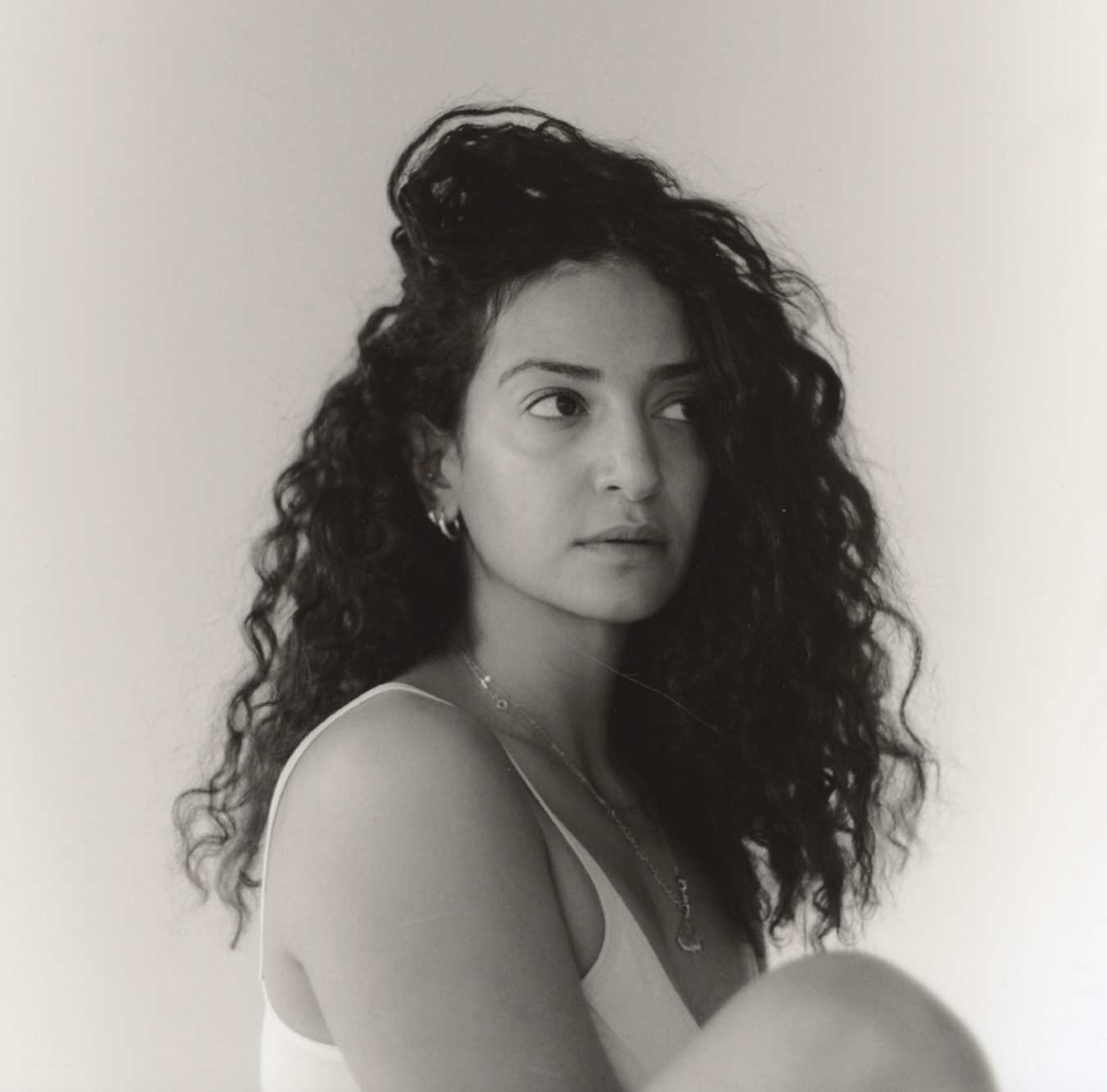
Photo Credit: Yumna Al-Arashi
For Yumna Al-Arashi, the body is the site of power. The Yemeni-Egyptian-American artist, whose first solo museum show, “Body as Resistance,” is currently running at Huis Marseille in Amsterdam, began her career as a self-taught documentary photographer before her practice evolved into something more conceptual and political: self-portraiture as resistance.
Growing up in the US after 9/11, surrounded by a media culture that reduced Arab people to a single, dangerous stereotype, Yumna found herself having to unlearn what she was being shown. She began to ask: How do you inject your own perspective into a narrative built to exclude you? Yumna’s answer was the very work itself. Her own body, often nude, appears throughout as a canvas and a political statement, short-circuiting the power dynamic between photographer and subject, and asserting that her body is a pivotal part of the political conversation she is determined to have. “Body as Resistance” brings together this mission across over a decade of Yumna’s work in photography, film, and sculpture.
At the core of Yumna’s artistic practice is a dialogue between the tender and the defiant: women bathing one another in a Beirut hammam in “Shedding Skin”; a surreal meditation on Islamic mysticism and feminine spiritual power in her short film 99 Names of God; and in “Axis of Evil,” four women from Afghanistan, Iran, Yemen, Iraq, photographed first in profile and then full face, their shared facial features and quiet dignity more powerful than any political rhetoric. At a time when Western imperialism is visibly crumbling, and the cost of dehumanization is playing out in real time, Yumna’s insistence on full humanity, complexity, and dignity feels not just necessary, but utterly urgent.
She is also one of my closest friends, so close that she is the kind I sometimes lovingly want to avoid when I am not ready to face something within myself, a hard but precious and priceless mirror.
Yumna has always refused the labels people reach for: the naked girl, the survivor, the Muslim, the Yemeni, the woman—none of it. In her words, all she desires is opacity, to be free. In a world asking all of us to be readable and useful and symbolic, that refusal, and the playfulness she carries alongside it, is so powerful to witness.
This interview has been edited for length and clarity.
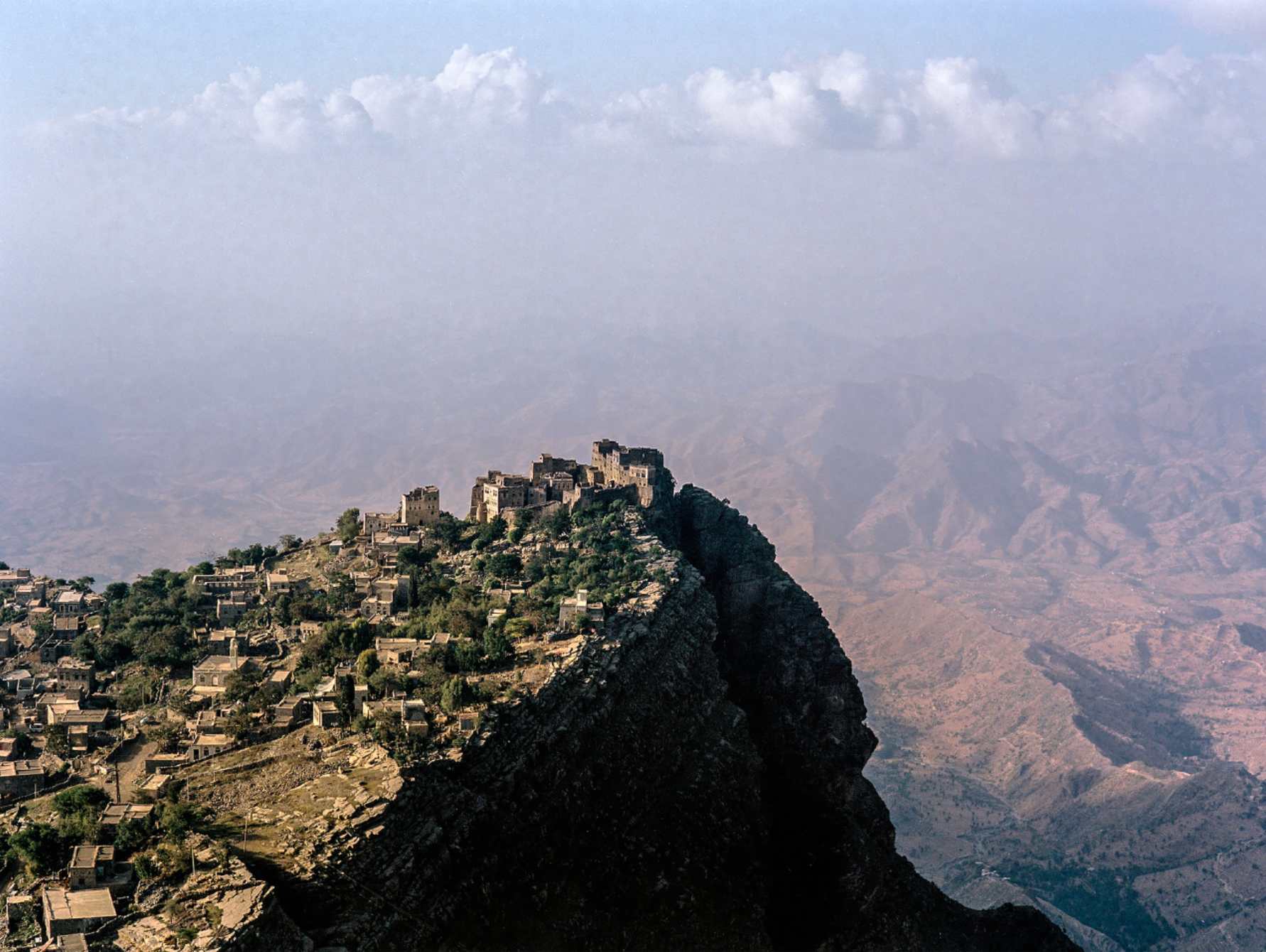
From Yumna Al-Arashi’s photo series “Northern Yemen.”
NAOMI SHIMADA: I’m such a proud friend. I’ve watched this body of work become, across so many years, conversations, and moments up close. What did it feel like to finally see it all in one place at the Huis Marseille in Amsterdam? Did you see anything you hadn’t noticed before?
YUMNA AL-ARASHI: It was maybe one of the proudest moments I’ve ever had in my life. To be able to have people physically walk through a museum and see over a decade of my work in one space, to see the red line that runs through my practice, to understand it with context and space and time. That really means so much to me.
NAOMI: You’ve always said that your work at its root is about the body in space. What does that actually mean to you, and why does it matter?
YUMNA: When I think about photography, I always think about a very physical human interaction. It is people who make photographs. It requires a human to create an image, to be in a portrait, to publish, to select, to imagine. This, at its root, is political. Who sees what? Who is represented and how? Who publishes it? Who views it?
I want my work to raise these questions. I want viewers to think about the steps of creation when they view my work, and that tool can carry forward into the way they see the whole world around them.
NAOMI: I also remember you sharing something recently on Instagram about losing the “why” of making images altogether, about the drones you sculpted, the exact models hovering over Yemen, and about your shield growing back. What did that whole period actually feel like from the inside, and how did you know when the “why” came back?
YUMNA: Ah, that period of such a hard hiatus. At the time, my career was at an all-time high. I was being commissioned commercially, my name becoming bigger each day, and yet, I could not handle it at all. I had a strong intuition that if I followed this ego-consuming celebrity-status high around my work, I would crash and eventually be replaced. Or, I’d become a commercial photographer, and I’d lose the integrity of what it is that I wanted to do. I knew that this wasn’t the way my work needed to exist, and I didn’t care about the commercial viability. I wanted, and still want, something longer lasting.
So I disappeared from social media for almost two years. I studied and really dove deep into what it was I wanted from my practice, which, essentially, is my life. It was isolating, especially because it was aligned with the COVID-19 pandemic, and I really needed to do some deep soul searching in order to grasp the “why.” It took a lot of discipline and hard work, and honestly, it was worth every second. When I graduated from my MA in Fine Arts from Zürich University of the Arts in Switzerland, I felt ready to reemerge on my terms. I began to trust that this work isn’t about me, actually. But rather, it’s about what we need right now, and that I am simply a messenger with the tools to relay it.
NAOMI: Something I’ve always so admired about you is your commitment to your mission over everything else. The easier version of your career existed. I watched you choose against it over and over. You made a choice at some point to go all in. What was that actually like?
YUMNA: It wasn’t easy, of course. The life of a financially secure celebrity-artist is appealing. Especially in this world of comparing oneself to others, of wanting to be the beautiful girl invited to all the parties, to be worshipped in some godly manner. But at the root of it, becoming a celebrity was never something I aspired for, and I had faith that financial security would find its way to me in another format, so long as I stayed true to myself. The hyper visibility into my person affected my work, and this was non-negotiable for me.
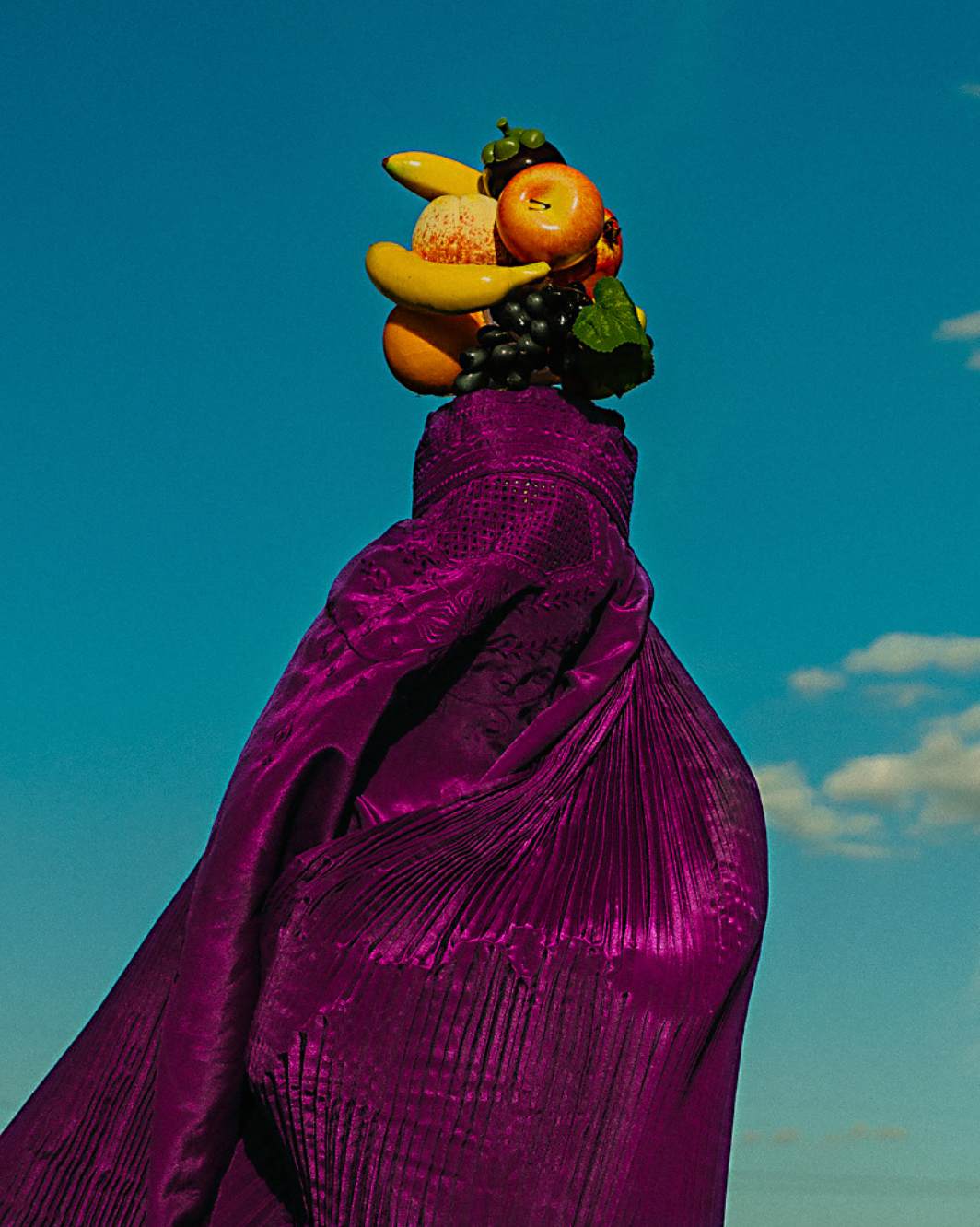
From Yumna Al-Arashi’s photo series “I Am Whoever I Want to Be.”
NAOMI: You’ve never wanted to talk about the roots of the work in the way people want you to, the labels, the survivor narrative. Why is that framing a trap to you, especially right now?
YUMNA: It is a hard thing to admit that the reason you do what you do is because you are a survivor of sexual violence. This is something I’ve had to deal with on my own, and my work is a channel of healing for me within this. Now that I have had distance and perspective and confidence around what I do, I love to see how the frame of my work is simply a projection of our society. People think I am some oppressed muslim woman. I am not. I am free. And yet, the narrative continues, when my work simply has nothing to do with my religious background. I am not interested in furthering the labels people love to smear on me and my practice. The wonderful thing about making art is that as an artist, I present viewers with every opportunity to take what they want from my work, with a simple, gentle guidance through the medium. It is up to them how they choose to receive. I am a mirror. I like it here.
NAOMI: When someone projects everything onto your work—desire, disgust, their politics, their anger—you have this way of being able to stay curious about their experience. But I’ve also watched you navigate something harder, the specific pressure that comes with being an Arab woman with a platform right now, people’s expectations of what advocacy should look like, what you should be saying, what you should be making. How do you hold both? How do you know what’s yours and what’s just noise?
YUMNA: It is a dance that one must constantly engage in. I think we’re all trying to navigate these things, regardless of who we are and what we do. There’s so much pressure around how we are and what we do, how we show up and how we don’t. I try every day to sit with myself and listen. It is a practice to address one’s needs before the needs of an imaginary other. As soon as I lean too much into the latter, I find that so many parts of myself suffer.
NAOMI: I don’t know if I’ve ever said this to you, but “Axis of Evil” has always been one of my favorite things you’ve ever made. It’s so simple yet so devastating and sadly more poignant than ever. In a time of such escalating violence, what do you believe a single image can do that no amount of words, propaganda, or political rhetoric can?
YUMNA: I listened to someone recently talking about how we experience art through the body. Music is such an easy thing to explain to anyone because it literally touches us. It vibrates through our bodies. But our eyes have a different way of touching; there’s something visceral about experiencing an image that moves you deeply. “Axis of Evil” is one of those images that is a culmination of so much refusal, and yet it is so damn simple. It really touches you, and that touch causes you to think, again and again and again. This is the power of art, and it is our duty to reclaim these spaces in such political turmoil because they unite us.
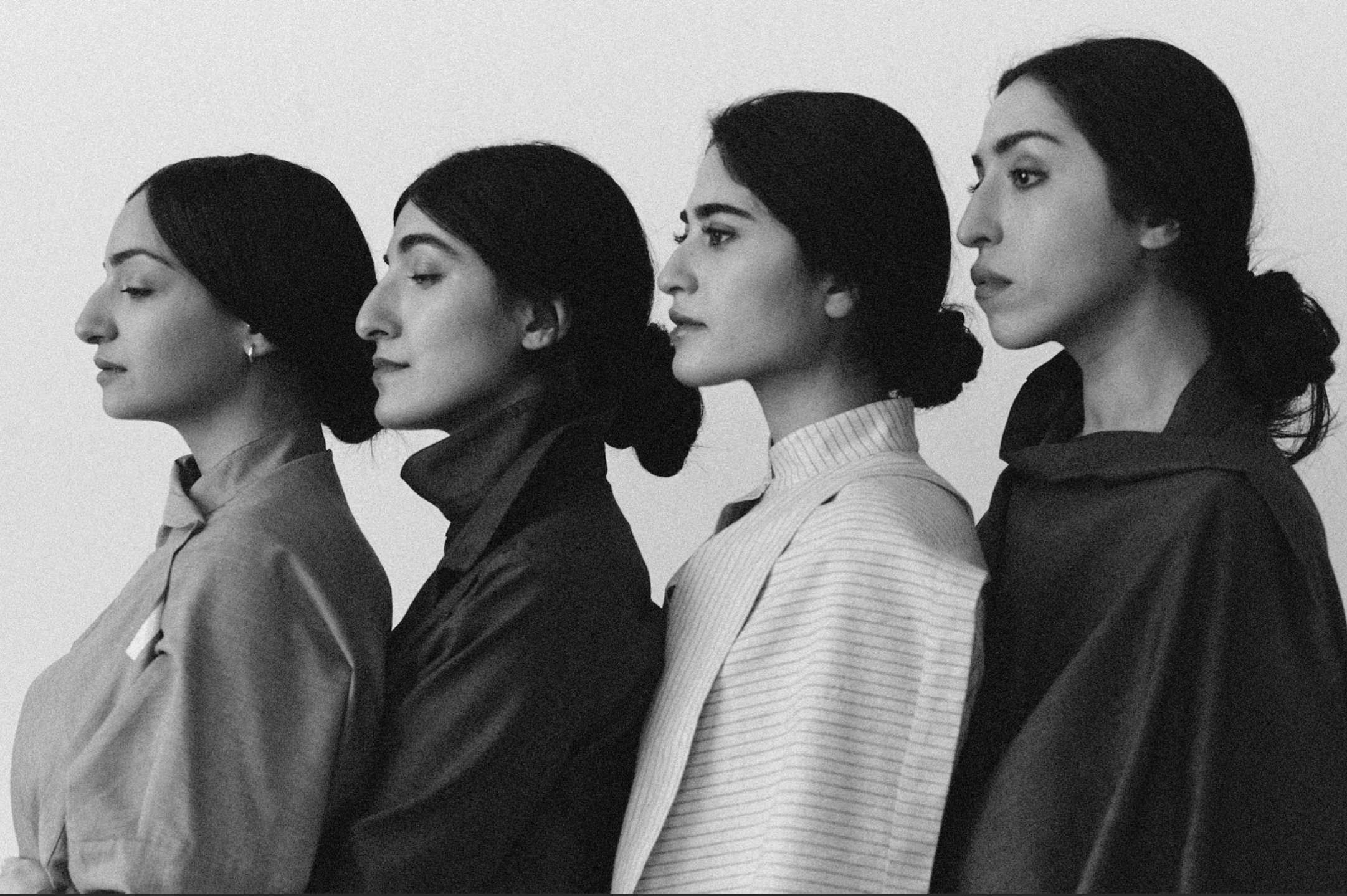
From Yumna Al-Arashi’s photo series “Axis of Evil.”
NAOMI: You once said to me that you don’t want to be the ‘naked’ lady, the survivor, the Muslim, the American, the woman, any of it. That all you want is opacity. What is that to you, and what does it give you?
YUMNA: I think it’s interesting because I portray myself so much, and yet I feel like people don’t really truly know who I am at all. I like to be in this space of anonymity. I like that my body becomes a canvas for conversations beyond me to occur. It’s a really fine line to walk, being in one’s work, and making it so universal simultaneously.
NAOMI: What’s nourishing you right now? In your life, in the world, in other people’s work—what’s actually feeding you?
YUMNA: My friends and my family. Good food, good music. Movement. Sunshine. Water. Dance. Laughter. It’s all really simple.
NAOMI: You did an NTS radio show recently where you asked people about their dreams. Do you think one of the side effects of colonization is what it does to our imagination, to our ability to even know what’s possible? And since you asked us to tell you our dreams, now I want to ask you about yours—if there were no limits, what would you dream of?
YUMNA: YES! Our imaginations are being robbed every day, and we must resist at all costs. This is my dream; my dream is to dream. I dream of freedom. I want chains broken around our hearts and our minds. I want health for this planet and every organism that inhabits it. Liberation is the ultimate dream.