

On Friday, October 23, the Parisian art world spiraled into high drama over the early shutdown of Art Basel Paris at the Grand Palais. Organizers had pulled the plug on the event two days early out of fear after calls for student demonstrations outside the venue began circulating online, sending gallerists scrambling to dismantle million-dollar installations and pack up gallery booths. Egged on by right-wing misinformation accounts and MAGA politicians hijacking the French protests to stoke fear and win the upcoming U.S. midterms, the online consensus quickly hardened around the idea that culture was under siege, and that the defining tragedy of the week was a canceled art fair and the shattered boutique windows of the weekend past. But while commentators in the capital fixated over a ruined party schedule and potential 7 figure art deals cut short, an actual tragedy was unfolding twenty miles away.
In the working-class suburb of Trappes and neighboring La Verrière, a 39-year-old white gunman went on a suburban drive-by shooting spree. Armed with a vintage WWII Sten submachine gun and tear gas, he drove through neighborhoods hunting Black, Arab, and Muslim residents at random. By the time police apprehended him in Coignières, he had murdered 26-year-old amateur MMA fighter Pengo Bossio Wangi and shot five others, including a 12-year-old girl who took eight bullets in La Verrière and was left fighting for her life in a pediatric intensive care unit.
Investigators quickly found that the suspect’s home was booby-trapped with gas canisters and timer-wired explosives, alongside far-right paraphernalia including a copy of Mein Kampf. France’s National Anti-Terrorism Prosecutor’s Office opened a formal terror investigation and the motive was explicit and undisputed by authorities, as every single person targeted by the shooter was Black, Arab, or Muslim.
So how does a high school movement over basic material demands end in an act of racially motivated terror?
To understand the tragedy in Trappes, you only need to examine the manufactured frenzy that preceded it. Videos of burning trash bins and masked crowds make for cheap, viral violence porn, the exact kind of sensationalized imagery engineered to dominate algorithmic feeds and cable news chyrons. The narrative presented on television panels suggested a nation being destroyed by reckless youth, but the empirical reality of the student movement tells a radically different story.
What began in mid-September over severe budget cuts and dilapidated classrooms was rooted in years of systemic neglect, coming on the heels of a school year where over 15 million teaching hours went unreplaced. Within weeks, it expanded into one of the largest youth mobilizations in recent French history. Across the country, more than 1,000 high schools were impacted by blockades and strikes, with over 220 secondary schools completely shut down by student barricades. At its peak, the movement swept across 30 major university campuses and reached over 280 cities and municipalities.
Official Interior Ministry statistics recorded nationwide turnouts exceeding 400,000 student demonstrators, while trade union tallies placed the figure much higher. Yet, rather than addressing why teenagers were sitting in unheated classrooms, the state met them with 70,000 police officers, thousands of arrests, and open brutality. Outside a vocational school in Lens, fifteen-year-old carpentry student Evan had his hand blown apart when a police stun grenade detonated outside his school gate. In Paris and Rennes, teenagers gathered outside their classrooms were met with water cannons, point-blank tear gas, and rubber bullets that shattered jawbones and left kids permanently disfigured.
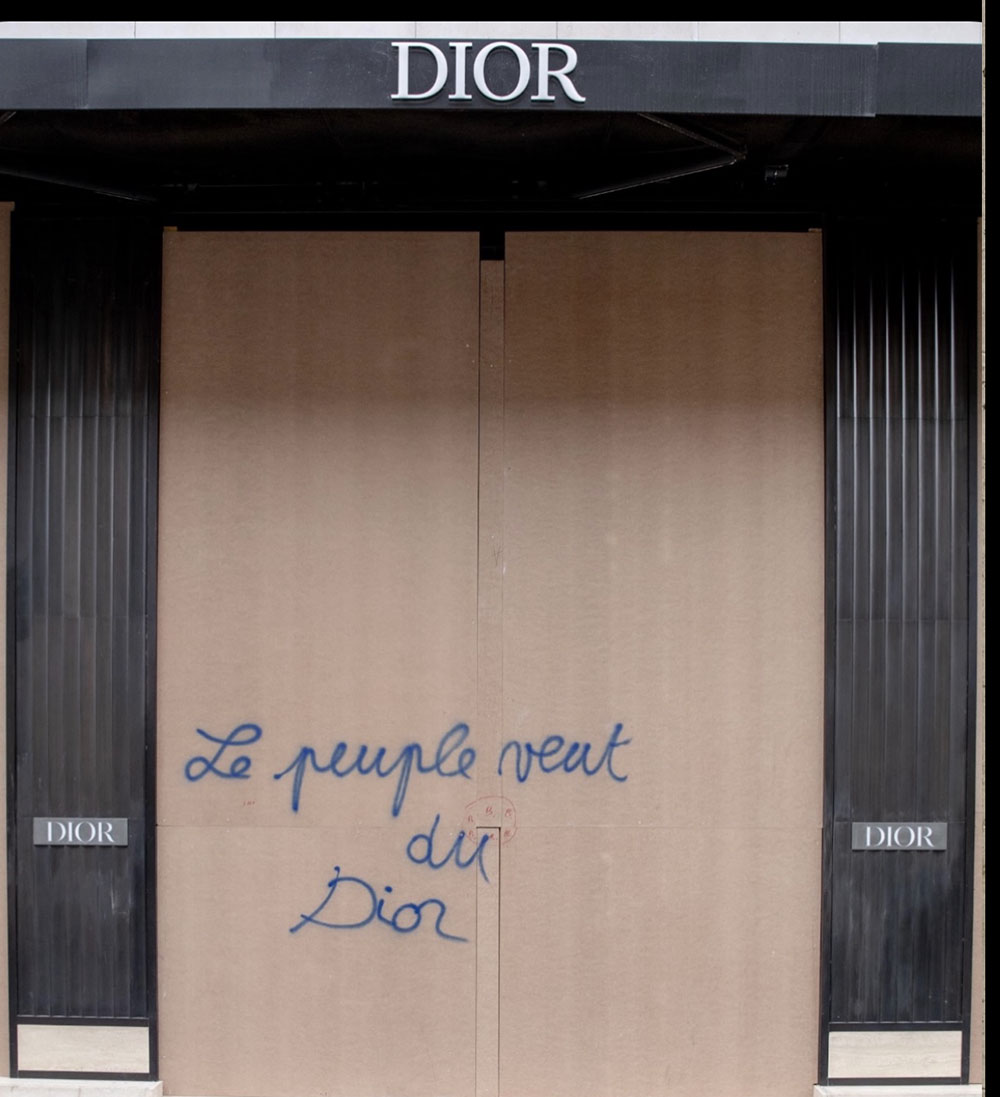
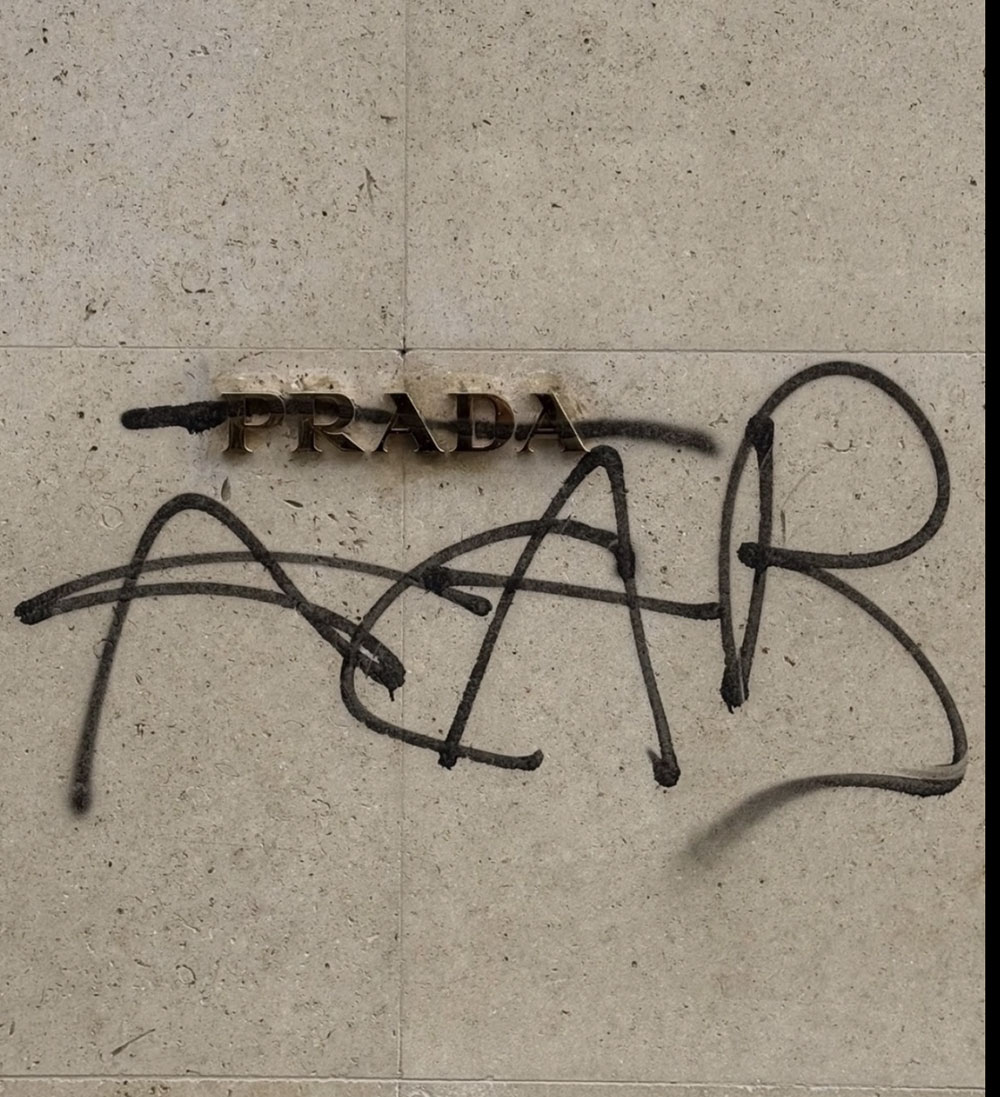
When small groups engaged in looting and property damage alongside the demonstrations, politicians and news networks quickly pivoted. The actual demands of hundreds of thousands of working-class students were pushed aside for a familiar story about lawlessness and urban decline. Overnight, broken boutique windows became the main political crisis, presented not as property loss for luxury conglomerates, but as an emblem of Western decline.
This hyper-fixation did two things at once. First, it stripped a massive student movement of its political legitimacy, reducing a broad social critique down to simple vandalism. Second, and far more dangerously, it primed the public for a violent racial backlash. As news networks broadcasted endless loops of masked bandits running away with bags of luxury goods, the narrative shifted from protest to demographics with pundits and social media users repeatedly declaring that the teenagers at the actual protests did not “look French”.
The violence in Trappes that occurred 6 days later was the predictable outcome of an online far-right ecosystem that has spent years dehumanizing marginalized communities, accelerating rapidly during times of civil unrest.
Long before the shooting, figures across the international and French far-right laid the rhetorical groundwork to frame non-white youth as an occupying force. Take Jordan Florentin, a journalist for the far-right outlet Frontières, who previously reacted to a video published by the city of Tours showing local children returning to school after summer vacation. Pointing to the visible presence of children of color, Florentin posted: “The city of Tours publishes a video on the back to school period in one of its schools… African? The only three people are the teachers. None of the children is white. The Great Replacement is neither a fantasy nor a far-right theory. It is a phenomenon that is already behind us.”
When the student protests broke out, international agitators picked up the torch to weaponize the unrest. Tommy Robinson took to Twitter to dismiss the students’ material grievances, telling his millions of followers: “The invader youths in France are saying they’re rioting because, get this, they can’t even sleep in class. Get them out.”
Posts like these reveal the core blueprint of far-right radicalization. Whether it is a school promotional video in Tours or a youth demonstration in Paris, children of color are never allowed to simply exist as students, residents, or citizens. In the minds of far-right influencers like Florentin and Robinson, they are characterized as “demographic invaders,” an internal enemy, or vanguard forces in an ongoing “spiritual warfare” against Western civilization. When student protests spill into the streets, these networks do not see citizens exercising political rights; they see an illegitimate population seizing space that does not belong to them.
This language of “spiritual conflict” and “demographic defense” is deliberately designed to turn political grievances into apocalyptic battles. When media ecosystem leaders repeatedly tell an audience that their nation is under siege by non-white “invaders,” it is only a matter of time before an individual acts on that paranoia. The gunman who loaded a submachine gun and drove through Trappes targeting Black and brown residents was acting on the logical conclusion of this rhetoric: if you believe you are in an existential war for survival, any weapon and any target, even a 12-year-old child, becomes permissible in your mind.
This is where the role of the political establishment becomes impossible to ignore. When the state responds to youth demonstrations with heavy-handed police repression and continuous rhetoric about urban chaos, it does not challenge this far-right framework. It validates it. By framing working-class youth of color as a disruptive threat that must be subdued by force, official discourse lends legitimacy to the very idea that these teenagers are an unwanted presence in their own country.
That ongoing, state-sanctioned othering is precisely what feeds white supremacist terror. Far-right agitators do not operate in a vacuum; they feed off a mainstream environment that constantly normalizes the suspicion of non-white citizens. When an entire political apparatus repeatedly signals that racialized youth are a danger to the Republic, it creates the exact fertile ground for white nationalist violence to escalate.
Now a man is dead and a 12-year-old girl lies in a hospital bed with eight bullet wounds because a gunman was convinced that their presence in France was an invasion. Until the political mainstream stops fueling the racialized paranoia that turns children and families into targets, Trappes will not be an isolated tragedy. It will be the direct outcome of a system working exactly as designed.