

In January 2025, I crossed the Moei River before dawn, leaving Thailand for Myanmar.
They covered my face with a keffiyeh before I stepped into the boat. On the opposite bank, a man waited with an M16 beside a Toyota Hilux. He would become both my driver and my guardian.
This is how I entered a civil war.
In the months leading up to that crossing, I had been speaking with anti-regime fighters and activists through social media. Most of them were young and digitally fluent, moving between frontlines and encrypted chats. One contact led to another, until I was connected with members of the Karen National Liberation Army. A week later, I was on a minibus heading north from Bangkok to the border town of Mae Sot, a place imbued with a quiet tension and populated for decades by smugglers and Burmese exiles.
From there, everything moved quickly. A short drive along the riverbank, passing a small wooden shack in which an old man surveilled the water while smoking a long,handcrafted cigarette. His job was to keep a lookout for Thai police.
I was eventually led to a boat, and by sunrise, I was in Myanmar.
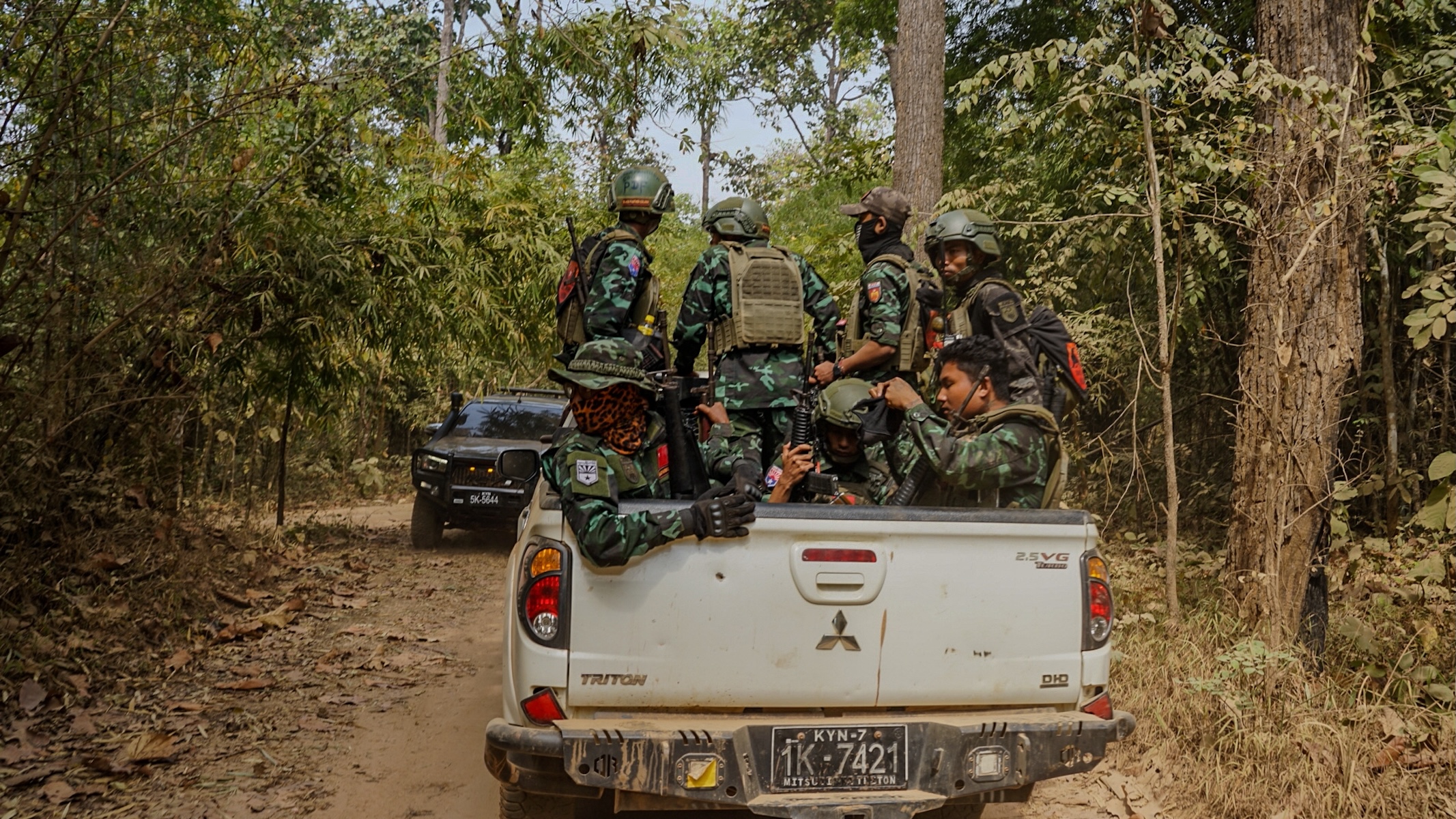
I was taken to the frontline near Kawkareik, a strategic city along Asian Highway 1, the road that cuts across the continent from Japan to Turkey. Control of that road means control of movement - of goods, people, and power.
Here, I followed two mobile units: the Cobra Column and the Black Panther Column.
The Cobra fighters specialize in fast, targeted attacks, slipping into junta-controlled territory and withdrawing before the airstrikes. The Black Panther Column holds ground, protecting villages and maintaining defensive lines.
Their camps are temporary and almost invisible - green tarps stretched between trees, bamboo frames, roofs made of leaves. Nothing is meant to last. When the monsoon comes, everything moves.
Life is reduced to essentials, with fighters sleeping on hammocks or wooden planks. They cook over open fires, often eating the same meal: rice, wild herbs, and fish from nearby streams. Occasionally, they receive different supplies - samosas, fresh meat - but most days they rely on what can be found or caught.
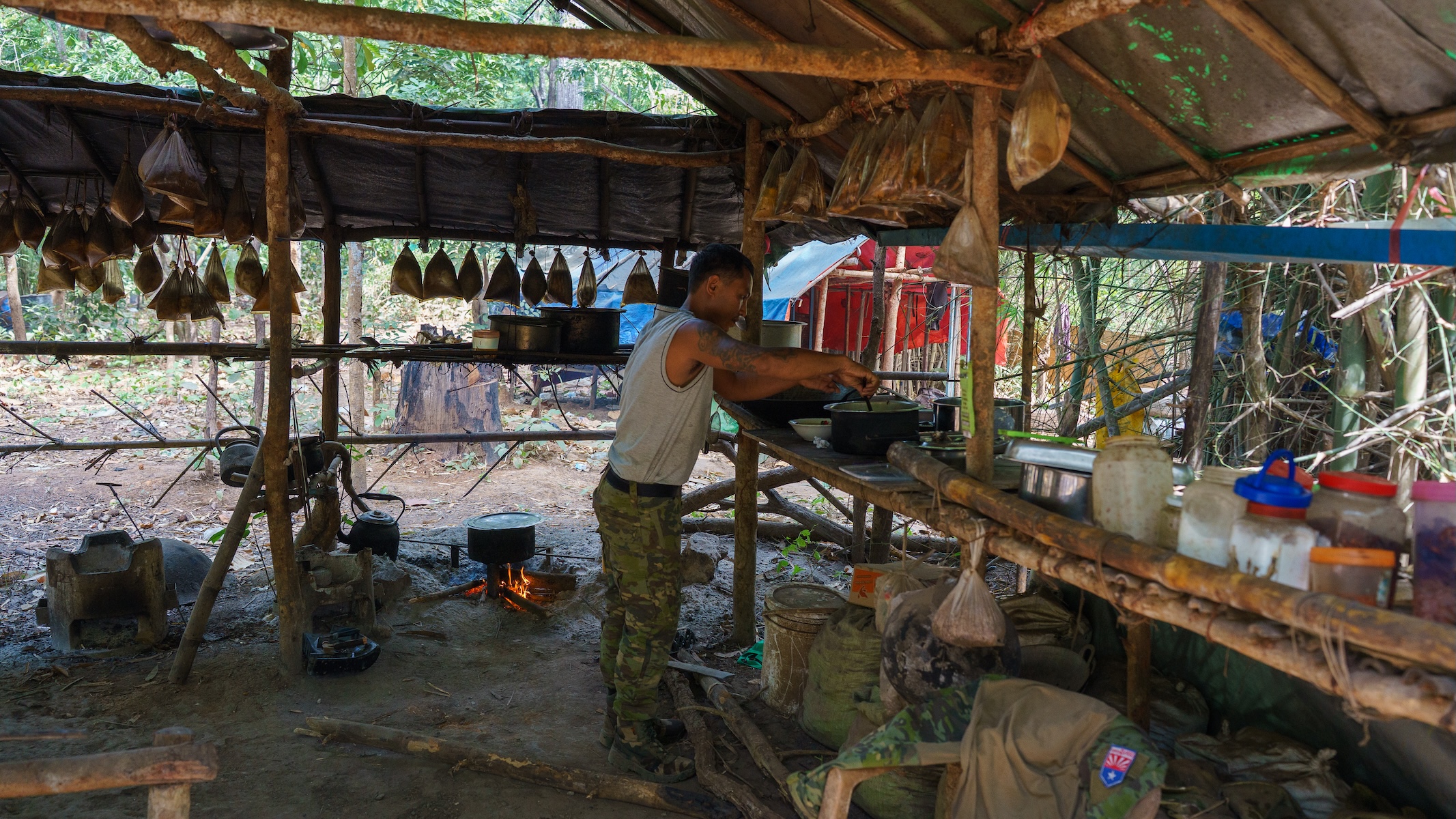
Water is collected from rain or streams. A single bucket serves for washing the body, the dishes, and clothes. Smoke from embers keeps insects away. Many go without mosquito nets, so malaria is very common.
They chew areca nuts throughout the day, their teeth stained red, alternating with cigarettes. Time is marked less by hours than by routines: they patrol, they clean weapons, they wait.
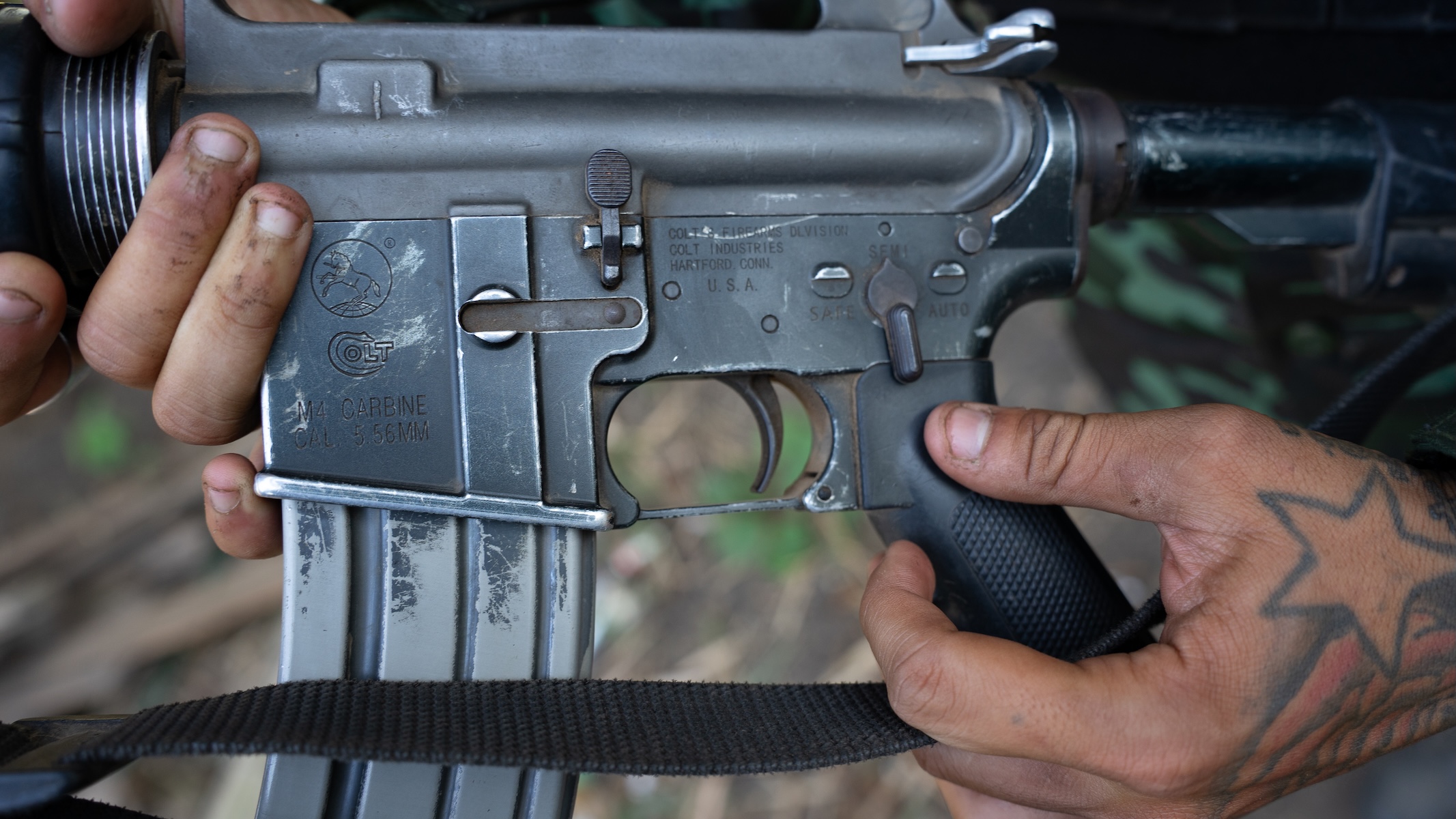
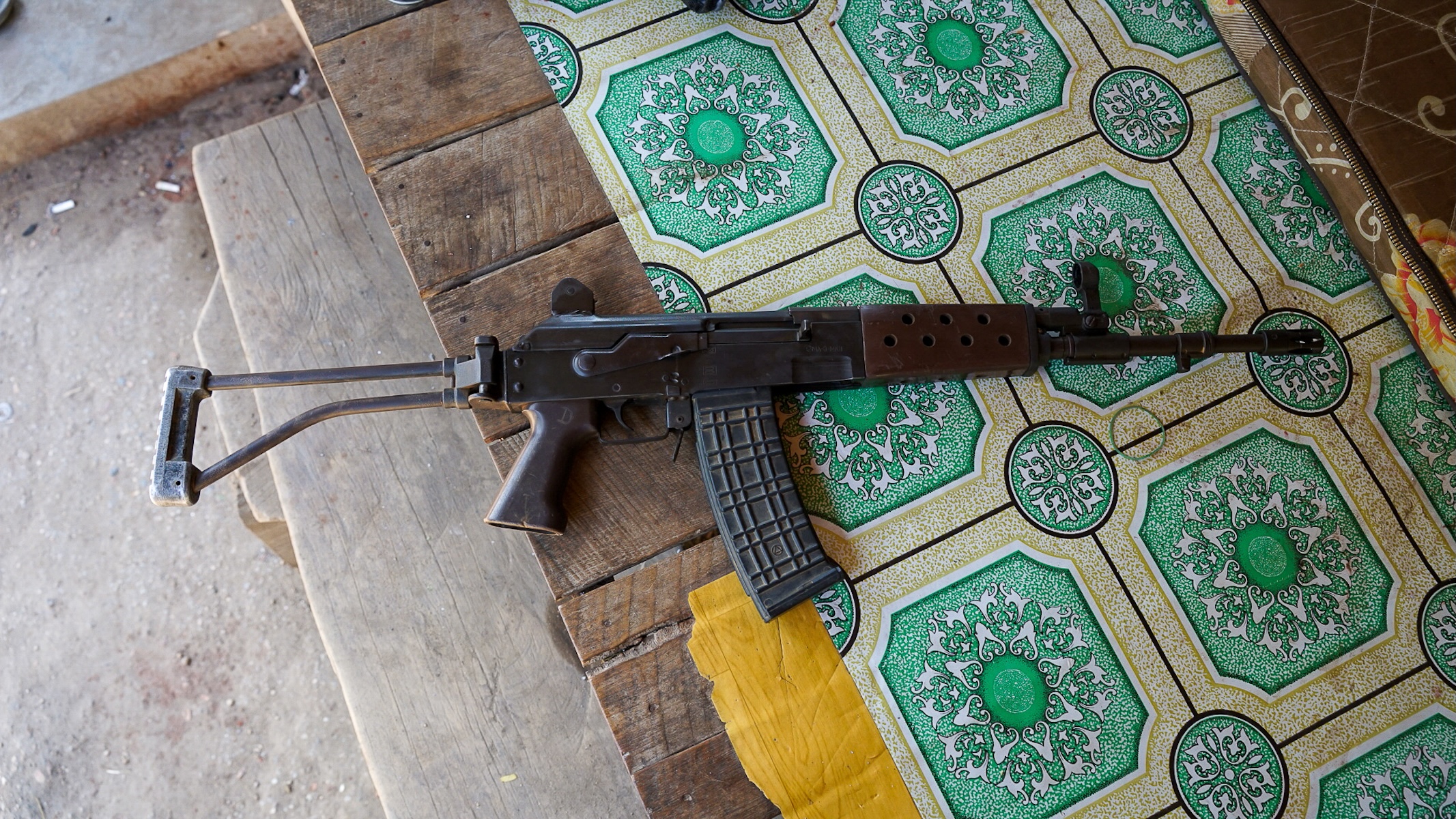
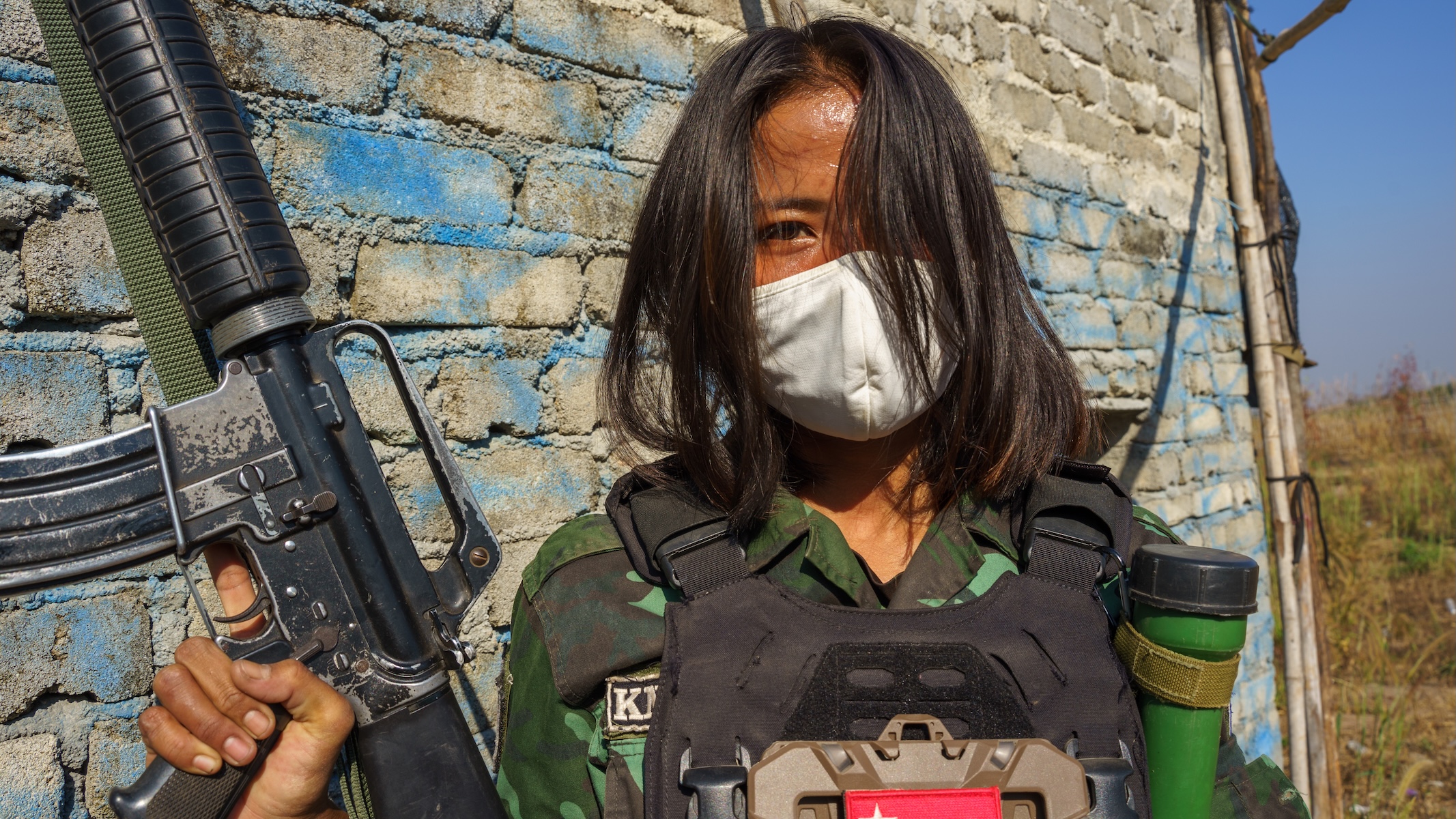
Their weapons are never set aside. Chinese-made Kalashnikovs, aging M16s, rifles assembled in clandestine workshops in the mountains. In the absence of steady supply lines, much of what they use is built by hand. I watched as explosives were assembled from fire extinguishers and spray cans. Ammunition was pieced together from salvaged materials.
“We have no choice,” one fighter told me.
There is nothing dramatic about it - it’s just stated as a fact. That phrase surfaced again and again, across conversations and backgrounds. It was not ideology, it was more like a statement of the conditions of their experience.
In the middle of this landscape of scarcity and tension, there are also moments that feel suspended from the war. After a battle, or sometimes after a funeral, fighters gather at the river. They float on makeshift inflatables, laughing and drinking local whisky, as if time has briefly loosened its grip. There is humor, too. Jokes told over and between cigarettes and music played quietly on phones. These are the small rituals that allow life to continue.
Perhaps it is also a reflection of something deeper - an acceptance of suffering shaped by their Buddhist belief, or perhaps it is simply what people must do to endure.
In the camp where I stayed, a political leader oversaw operations. Each morning, he was massaged by two soldiers while others prepared his breakfast. A VHF radio was always in his hand, connecting him to outposts across the region. He controlled their movements and communications - without him, nothing happened.
In the evenings, we ate together - rice, spicy meat, alcohol passed between hands. And yet, the structure of authority remained, even here, even now. What defines this war, more than anything, are the lives that have been interrupted by it.
Mango was one of them. Before the coup, she worked in retail, managing an online shop and building a future that had nothing to do with war. When soldiers came to arrest her, she fled into the jungle.
“My dream is to become a designer,” she told me. “But now I have to finish the revolution first.”
Next to her was Androus, once a manager in an international logistics company. He joined the resistance in March 2021, after watching peaceful protests turn into bloodshed.
“We tried non-violence,” he said. “It didn’t work.”
Now he leads a drone unit, coordinating strikes along the highway.
“We had no choice,” he added.
Others have been in this struggle far longer.
U Maung Ko is 68 years old. He first took up resistance as a student during the 1988 uprising. An engineer by training, he spent time in prison before returning to the movement. Now, he no longer goes to the front line. Instead, he supervises the production of explosives.
“I am too old to fight,” he said, smiling as he worked. “But I will serve until I die.”
Then there is Nay Lone, 27, who once played guitar in Yangon. Today, he carries a rifle. He still writes music - songs used to raise funds for his unit. And Kyaw Thet Linn, once a recognizable face on state television, now a private soldier in the jungle.
These are not isolated stories. They form a pattern: lives redirected and futures suspended.
Among them, I met one foreign fighter. He had come to Myanmar multiple times, moving between the front and civilian life abroad, working to fund both his own survival and that of the unit he fought with. He spoke of other conflicts he had joined. But here, too, the pattern repeated: improvisation, scarcity, dependence on personal networks rather than formal supplies or structures.
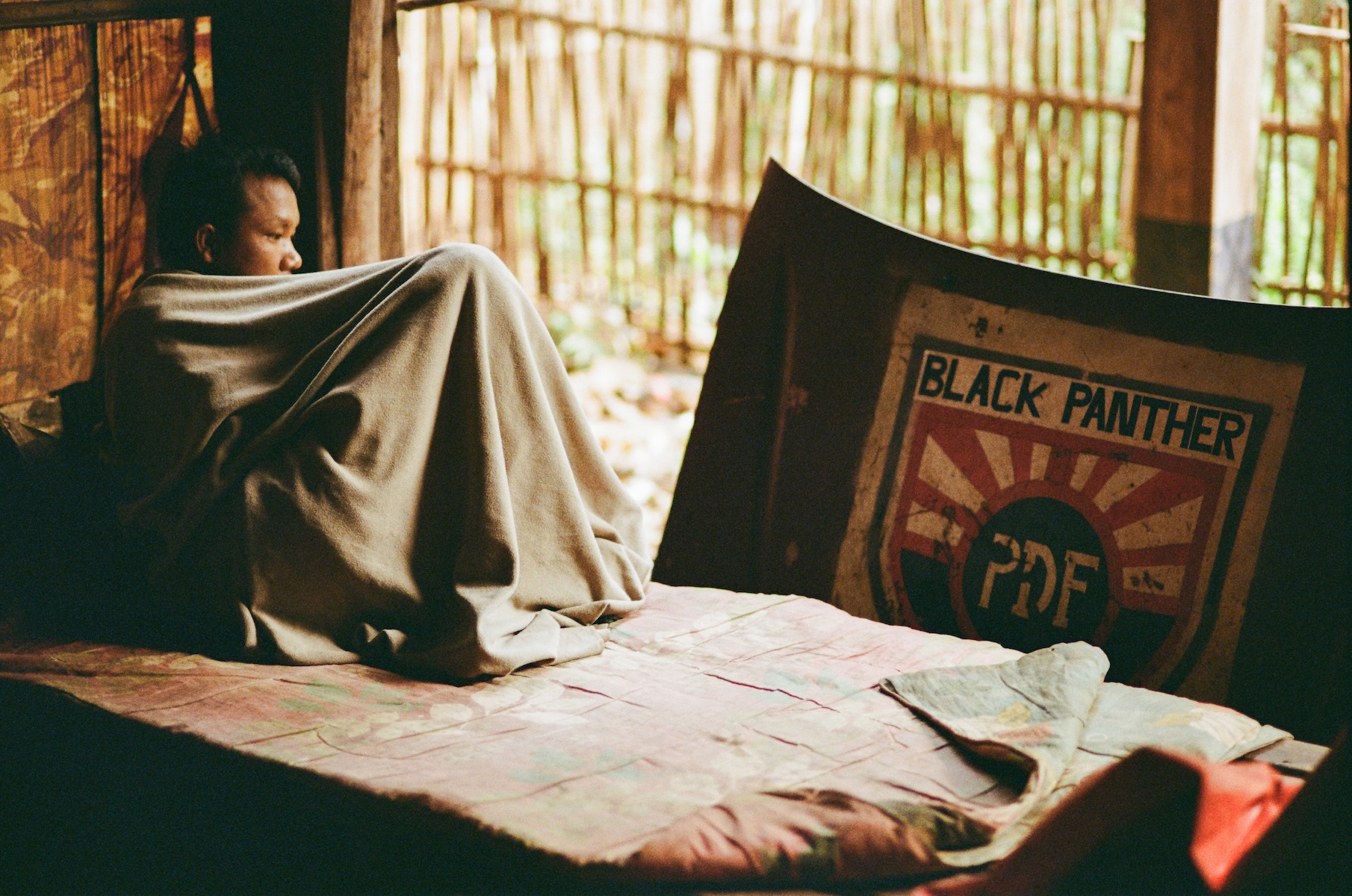
On one of his previous deployments, he had been sent into combat almost immediately after arrival. The operation ended in defeat, partly due to aerial bombardments by the Tatmadaw.
Even here, even with experience, the imbalance of power is clear. And in quieter moments, details begin to surface.
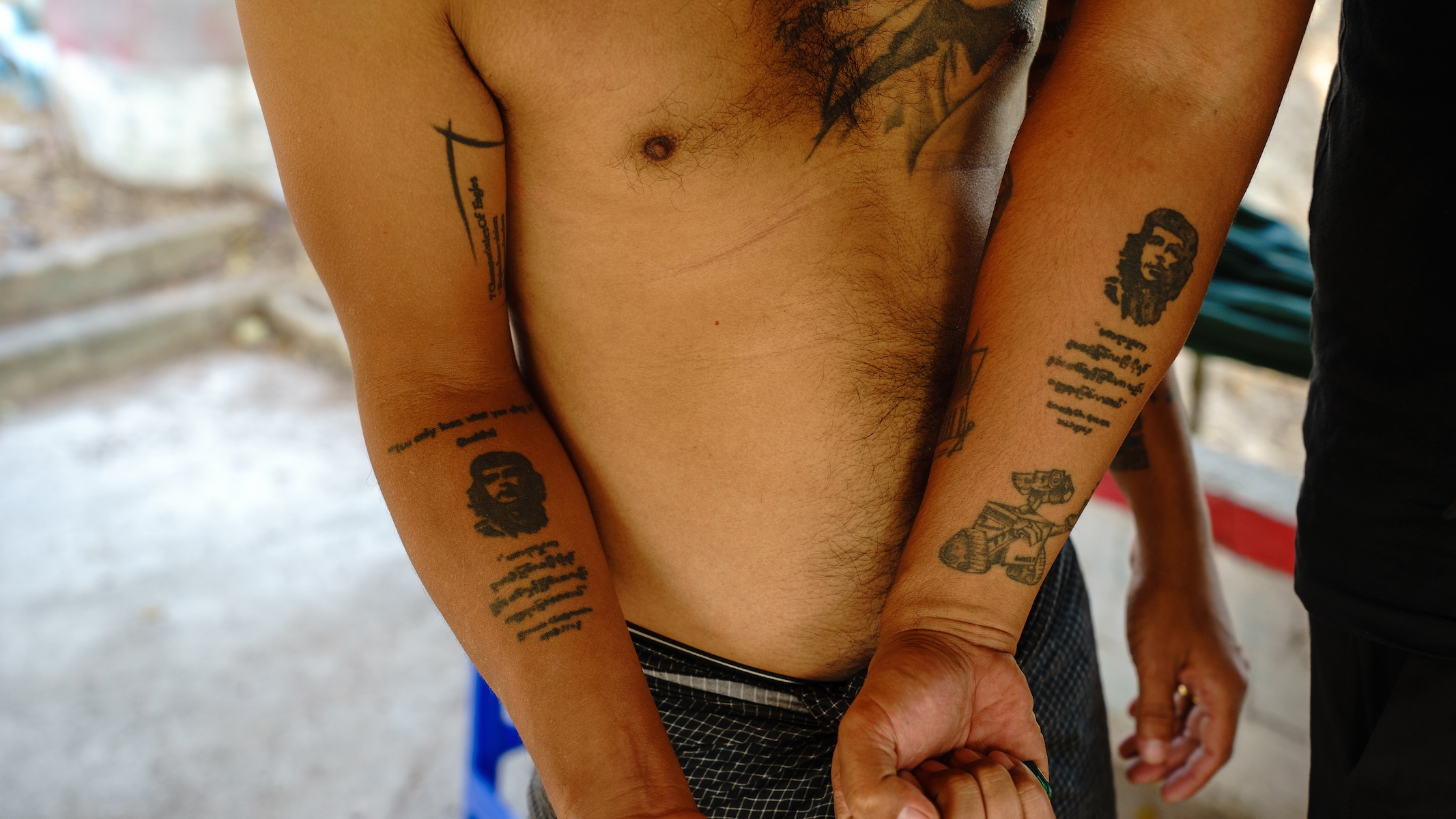
The fighters’ bodies tell their own story. Tattoos cover their arms and backs - of Che Guevara, Buddha, and symbols from The Hunger Games. The three-finger salute appears again and again, a gesture borrowed and repurposed as a sign of resistance. The references are global, fragmented, layered.
That same pattern surfaced again in Chiang Mai, among exiles and activists. There, I met members of Rebel Riot, a punk band whose music has become part of the resistance. Their version of “Bella Ciao” circulates widely, a song of another struggle translated into this one.
It is easy to think of this war as remote, contained within a particular geography or identity. But in the jungle, I met a generation that reads Orwell, dreams of studying fashion in Milan, plays punk music, and speaks in references that cross borders easily.
Before going to Thailand and Myanmar, I expected to encounter something separate from the world I knew - culturally, politically, and historically. Instead, I found something unsettlingly familiar. The folks I spent time with - they are not outside the world. They are shaped by the same currents, the same contradictions that ripple across the world. What separates them is not distance, but condition and choice - or the absence of it.
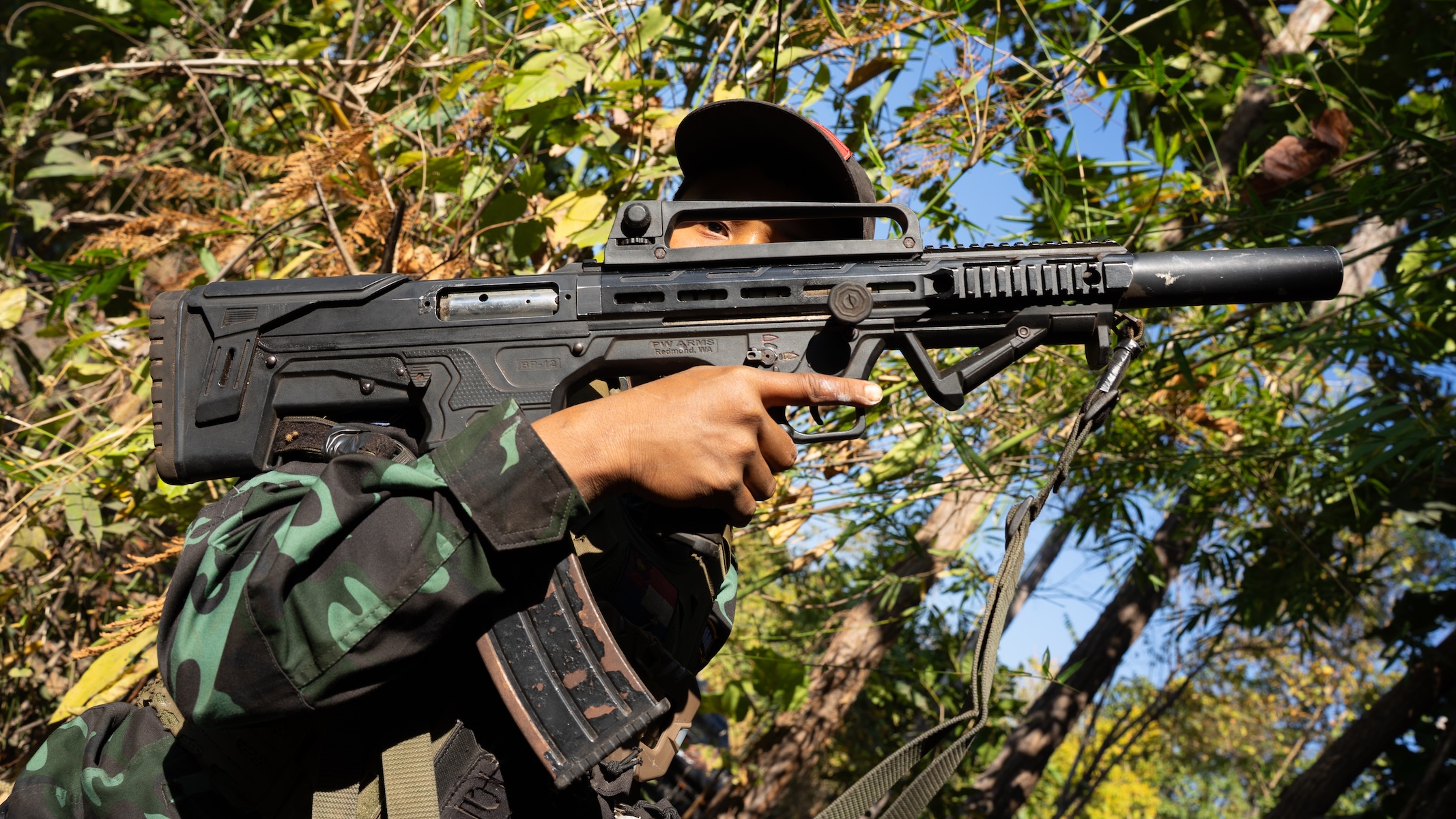
“We have no choice,” they say.
It is not a slogan. It is the line that runs through everything: through the jungle camps, through the weapons built by hand, through the lives that have been put on hold.
It is what turns a sales assistant into a soldier, or a musician into a fighter. A lifetime of quiet work into a final act of resistance.
Crossing the Moei River, I thought I was entering a distant conflict. What I found instead was a place where the boundaries between ordinary life and war had collapsed - where people continue forward not because they believe in war, but because there is no longer a way to avoid it.