

As thousands of sex workers are pushed out of their historic spot in Mexico City, they are turning to collective action: organizing, resisting, and protecting one another in the face of growing pressure.
“This year marks sixteen years of me working as a sex worker in Mexico City,” writes Natalia Lane, a trans sex worker, journalist, and activist. “We have endured the COVID pandemic, the arrival of drug trafficking, and anti-trafficking operations… But I had never seen consequences as cruel as those brought by the arrival of the World Cup.”
As Mexico prepares to co-host the 2026 FIFA World Cup alongside the United States and Canada, infrastructure projects and urban “beautification” plans are reshaping parts of the capital. In working-class neighborhoods, however, residents say those changes come at a cost. Among the most affected are informal and sex workers, particularly those based along Calzada de Tlalpan in Mexico City, a historic corridor for street-based sex work in the south of the city.
La Calzada de Tlalpan has carried the weight of Mexico City’s history for centuries. Today, it’s divided by key subway lines and stands as one of the capital’s most visible corridors for sex work, making it a frontline for disputes over urban space, visibility, and state negligence.
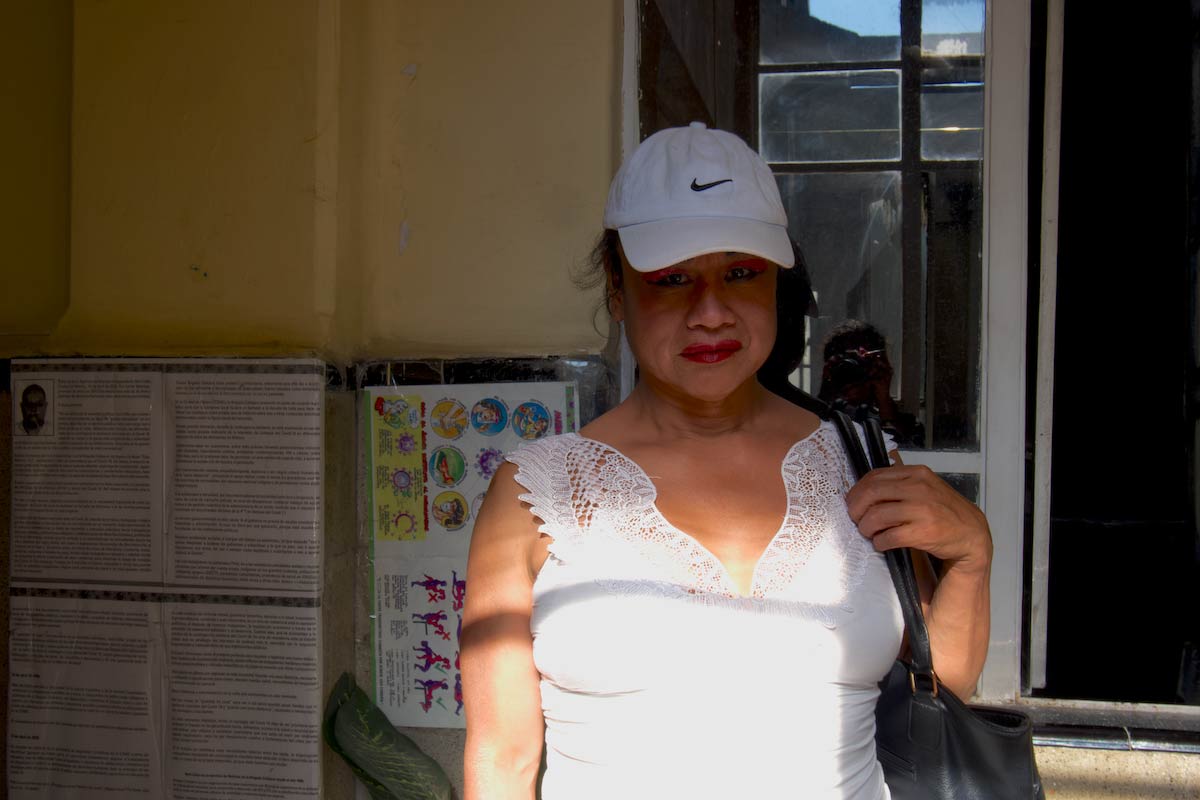
Juanita has been a sex worker for 35 years in Coyoacán, south of Mexico City. She’s been beaten, extortioned and imprisoned by police officers dressed as civilians “countless times”.
There, the impacts of the 2026 World Cup are already visible on women’s livelihood and their health: “I started noticing the symptoms when the construction began,” Juanita, a sex worker in her 50s, shared in an interview. She has worked in the same corner of Tlalpan for 35 years. “At first, I thought people were exaggerating. But three months ago, I started experiencing it myself.”
In recent months, the avenue has undergone significant renovations tied to World Cup preparations, including the construction of a new bike lane and an elevated walkway, as well as the temporary closure of nearby metro stations. Authorities have framed the project as an improvement to mobility and public space. But for the estimated 2,500 sex workers who rely on the area for their livelihoods, the changes have disrupted the fragile and stigmatized ecosystem that sustains their work.
“The dust gets in my eyes, my mouth. I’ve been coughing for months,” Juanita says. The constant construction has aggravated existing health conditions, while the noise and stress have led to insomnia, anxiety, and night sweats. “It’s making me sicker and sicker.”
Beyond health concerns, the economic impact has been devastating. Juanita says her income has dropped to the point where some days she earns just 200 pesos a day (about $11) and other days nothing at all. With rising transportation costs, she is often forced to cut her shifts short to make it home before public transit closes.
World Cup-related protests have surged across Mexico City in recent months, driven by service disruptions, labor displacement, gentrification, unsafe public works, and rising costs.
Along the Calzada de Tlalpan corridor, about 500 informal vendors have operated in 34 underground tunnels serving metro stations near the stadium for over 40 years. In early 2025, the city ordered their removal for redevelopment.
Almost half of the vendors have been displaced and are struggling in their new spots or have closed their businesses completely, in a year where the World Cup is expected to cause over 4% inflation, according to the National Bank of Mexico. Amnesty International also warns that 100,000 security personnel may heighten risks for protesters.
“I’ve worked in the same spot for decades. My clients already know me, like any other business,” she explains. “But I can’t just move somewhere else. Other areas are controlled by pimps, gangs, or the police.”
Workers say the redesign of the avenue has also made it harder for clients to approach them. With cars no longer able to pull up to the curb, potential customers are deterred or exposed.”The construction workers stare at my clients and me, and that scares them away,” Juanita says.
At the same time, police harassment has intensified. While sex work itself is not illegal in Mexico City, it exists in a legal gray zone that often leaves workers vulnerable to abuse. In 2014, sex workers were recognized as unwaged workers, meaning they could apply for a self-employed license and access safer working conditions. However, workers remain vulnerable to police abuse, corruption, and social stigma.
“The police hunt us like we’re criminals,” Juanita says. “Now they’re targeting the clients, shaming them and extorting them so they don’t come back.”
Last week, a video of a clash between cyclists and sex workers went viral. While cyclists accused sex workers of harassment and of trying to make the bike lane unusable, sex workers argued that their right to work should take precedence over what they describe as a poorly planned cycling project.
For many, this combination of reduced income, increased surveillance, and deteriorating working conditions feels intentional.
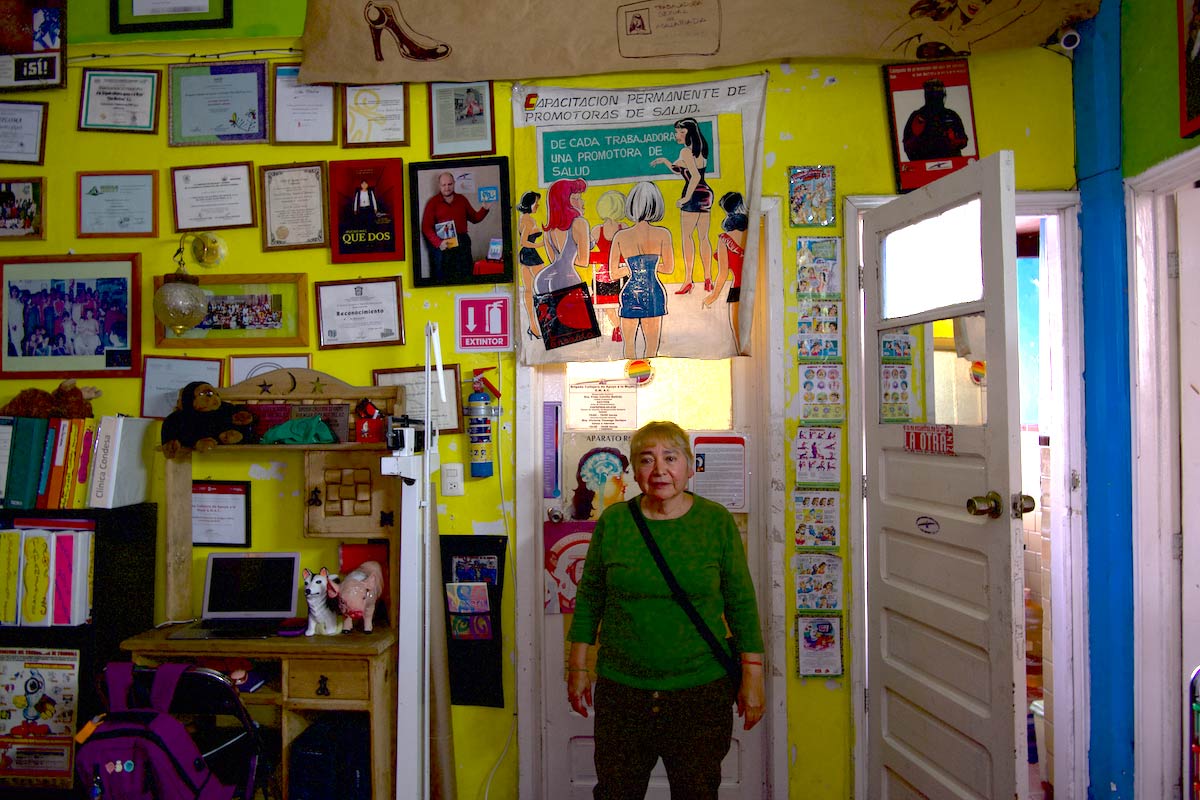
Elvira Madrid started Brigada Callejera in 1995 after noticing no one was helping sick or dying sex workers. Her work was essential for the 2014 ruling that recognizes sex workers as informal workers.
“It’s a social cleanse,” says Elvira Madrid, founder of Brigada Callejera, a grassroots organization that has supported sex workers in Mexico City for nearly four decades. “The government found in the World Cup a very good excuse to try and get rid of the sex workers in the area.”
Madrid draws parallels to earlier waves of displacement. In the 1990s, sex workers were pushed out of central areas like Insurgentes as those neighborhoods became more affluent. Tlalpan, once considered peripheral and dangerous, became a new hub. Now, as rents rise and the city prepares for an influx of international visitors, that space is being transformed again.
“Only this time, they just built a bike lane,” she says.
The story of Olympic urbanism also has precedent. As Érika Alcántar, an urbanist and professor specializing in urban history and gender-focused planning, notes, the construction of the Estadio Azteca in 1962 led to the displacement of residents in Santa Úrsula. “There’s always a connection between large-scale developments and the removal of vulnerable communities,” she says—an enduring pattern in cities unprepared for the pressures of global spectacles.
According to Madrid, the consequences have been severe. Income among workers in the area has dropped by as much as 70 percent, while poverty levels have surged. Some are now unable to afford even a motel room for the night.
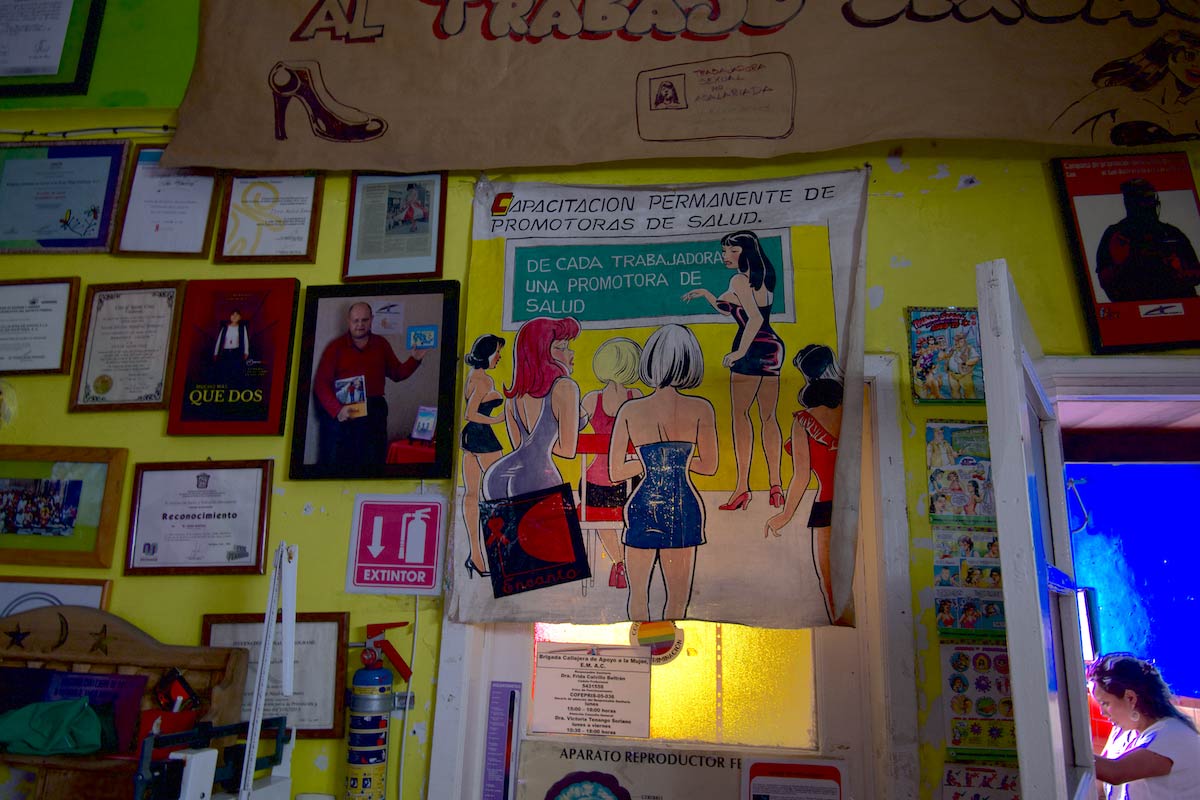
Brigada Callejera** focuses on HIV and AIDS prevention. They believe every educated sex worker can be a health promoter.**
“Sometimes they have to sleep in the streets,” she says. “[The 2014 ruling] doesn’t matter if they don’t give them their credentials anyway.”
The risks extend beyond economic precarity. With fewer workers on the street, those who remain are more exposed to violence. Madrid also warns that the disruption has created opportunities for organized crime and trafficking networks, particularly among migrant populations.
“With the influx of Venezuelan, Cuban, and Colombian migrants, gangs are taking advantage of their vulnerability,” she says. “They then use xenophobia to create conflict and keep workers divided.”
Despite these challenges, sex workers and their allies are organizing.
In February, collectives including Trabajadoras Sexuales Unidas e Independientes (TRASUIX) joined protests demanding dialogue with authorities and protections against displacement. Their demands include regulating rising hotel prices, establishing safety protocols, and ending police abuse and extortion. On the social media coverage of these protests, however, most comments highlight how much stigma sex workers face in Mexico.
For many sex workers, mutual aid networks have become essential to survival.
Juanita first connected with Brigada Callejera during the COVID-19 pandemic, when lockdowns severely disrupted sex work. “They help us with groceries, medicines, workshops,” she says. “I come here, and they feed me, they clothe me.”
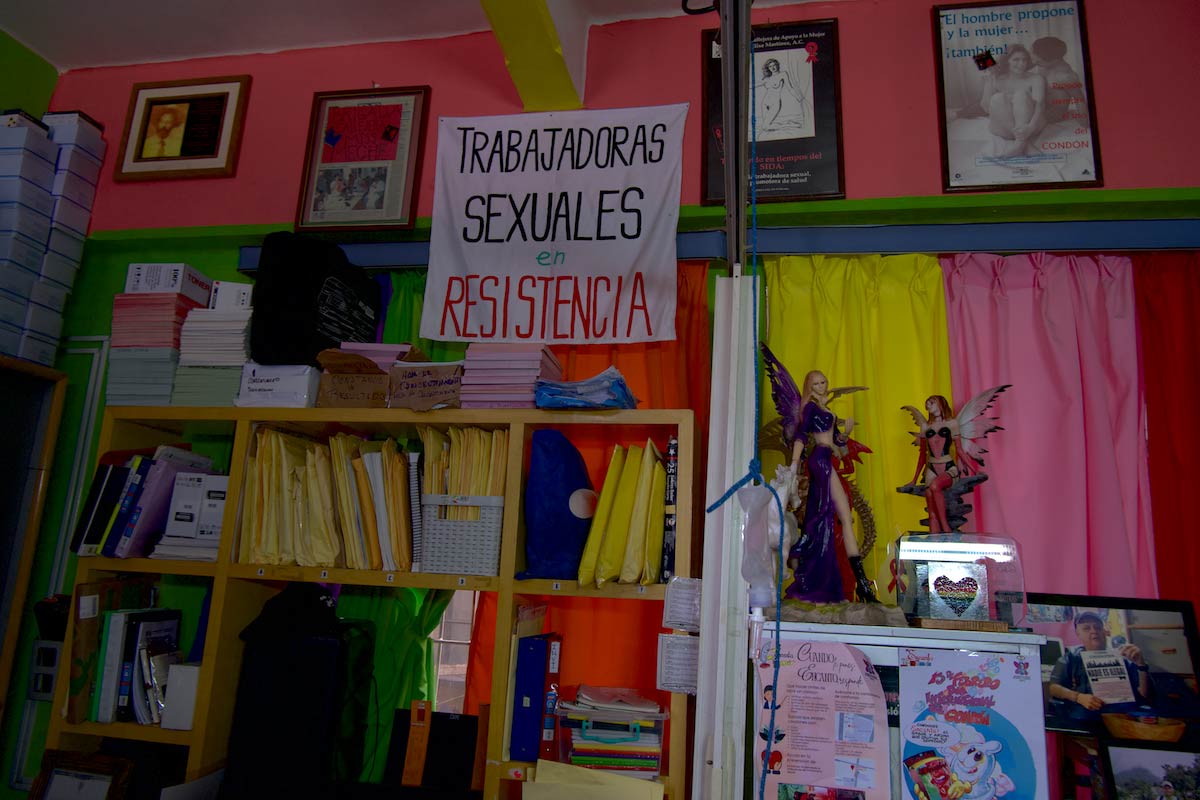
In the Brigada Callejera offices, sex workers and their families can access food, healthcare, several levels of education and a place to decompress.
The organization now provides a wide range of services, from medical care and HIV testing to legal support and education for workers and their children. In recent months, demand has surged, prompting the group to expand its clinic space.
“For us, it’s not just about prescribing a medicine or filing a lawsuit,” Madrid says. “We’re with them through the whole process.”
Juanita echoes that determination. “We, independent sex workers, have no protection but ourselves,” she says. “If a pimp comes for us, we confront them. If the police come for us, we fight them.”
In a city preparing to present itself to the world, its streets reveal a different story: one of the fight to remain visible in a rapidly changing urban landscape.