

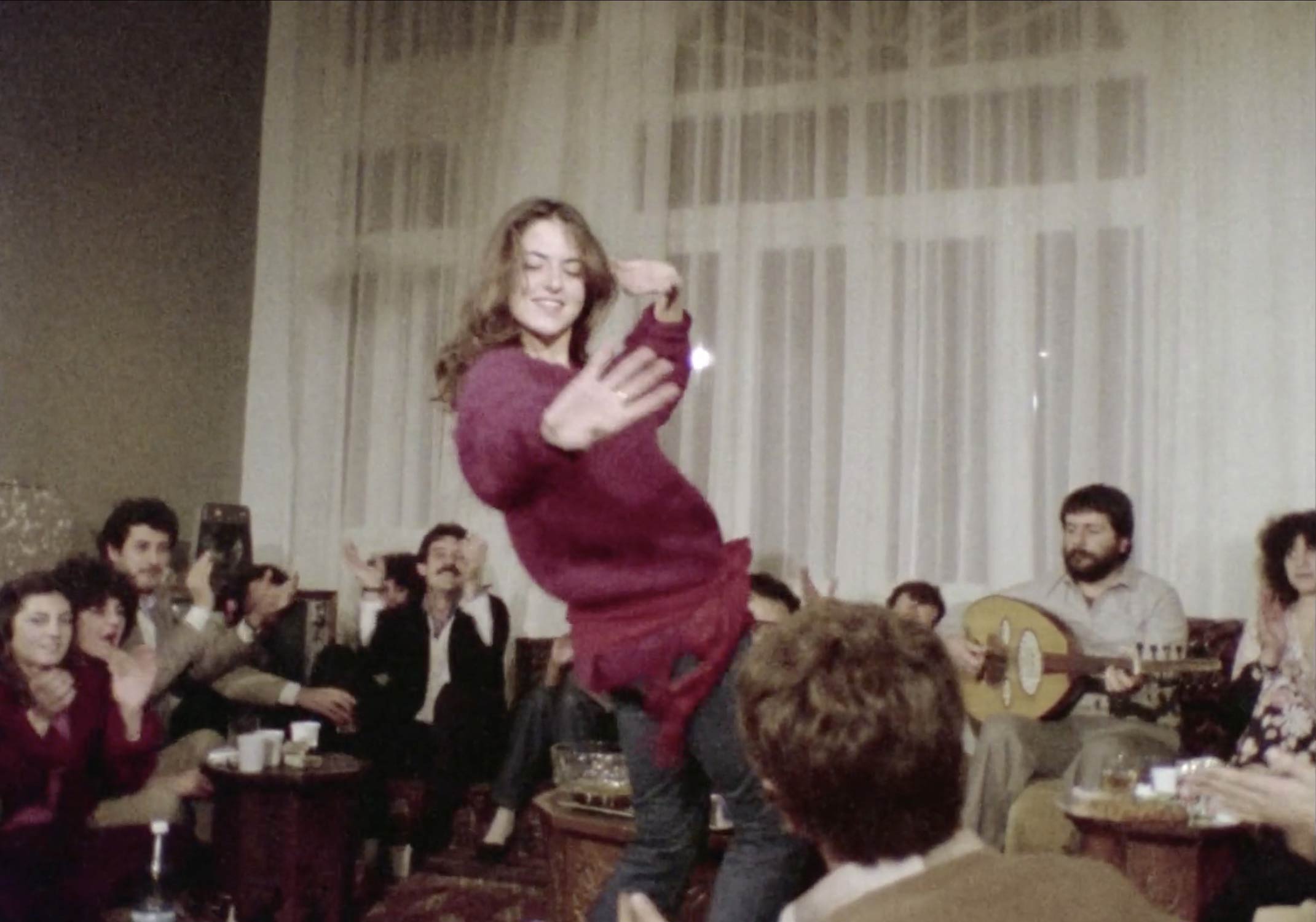
Still from Whispers (1980) by Maroun Bagdadi
Do You Love Me is a personal journey through Lebanon’s audiovisual memory, composed entirely of archival footage. It is a love letter to Beirut, spanning 70 years of film, TV, home videos, and photography, exploring the Lebanese collective psyche marked by joy and intimacy, destruction and loss. Through the eyes of citizens, filmmakers, and artists, the film reconstructs a fragmented history in a country without a national archive, celebrating creative expression as resistance, renewal, and a means to preserve memory.
CÉLINE: I couldn’t stop thinking about this film — It’s like a dream, like downloading an emotion onto people about what it feels like to live in Lebanon, to be Lebanese, to survive all of these things. The humor, the absurdity, the persistence, and the insistence of life, which is even more absurd, and you’re doing it with a collage of our archives as memory. What drove you to archival work as a filmmaker? Because usually filmmakers want to build their own archives, creating their own futures. How did you work with archives and found footage?
LANA: In Lebanon, we don’t have a unified history book, and we don’t have a national archive. I was drawn towards archival footage because we come from a place where things are always being destroyed, and then we’re rebuilding, and there’s always this sense of destruction and reconstruction. There was a curiosity and a hunger to see things, to actually see and feel and touch, and be able to tangibly understand the past, not because I’m stuck in the past, but because I’m trying to understand the present. When I started to realize that there’s a wealth of Lebanese cinema—half of my archives is independent Lebanese cinema—it made the experience of the film feel really specific.
I realized that for many of the questions I was asking myself, the answers I was looking for already existed in a very fragmented way in this body of archives. I wanted to be able to contain it and touch it and hold it and make sense of it, so I made an extreme decision to make it all from the archives. Would that collection of archives in itself then also become something that’s preserved? That can contain our experience and our history? A lot of the films I used are well-known, but much of the material is not available anywhere, so there was a desire for it to just exist out there.
CÉLINE: Absolutely. How do you see the role of storytelling through the storytelling of others?
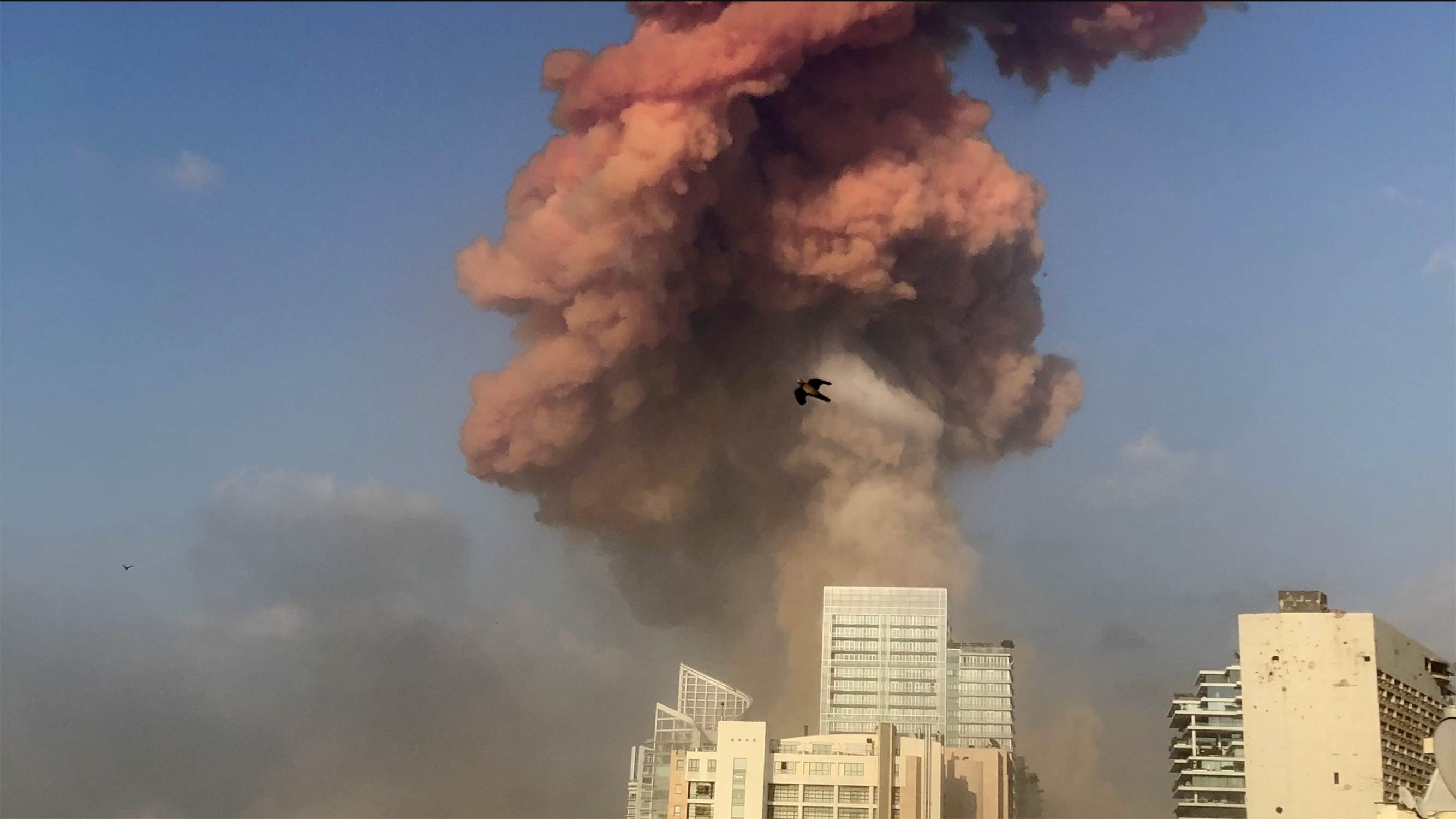
Still from Pink Smoke (2020) by Ben Hubbard
LANA: There are so many layers to this film. I’m taking all these bits and pieces from everywhere, and then I’m choosing how to put them together, so my point of view and my voice exist somewhere in there, but yes, I’m choosing to do it through everyone else’s layers of representation. I took 106 feature films, about Beirut, about Lebanon, and I’m reusing those with all the other photographs, and podcasts, and voices to tell my story. It becomes this double layer where there’s my personal take on it, but I’m using all these others’ eyes and voices and ears. For a lot of Lebanese people, the space of the film is so intimate, I wanted something that feels like a cocoon of our feeling of home, yet at the same time, I wanted to create enough separation and distance for other people to have their own associations.
CÉLINE: There’s a dream-like quality to it because of its nonlinearity. Talk to me a little bit about this nonlinearity in this film, and the process by which you insisted on making it nonlinear.
LANA: A friend of mine watched the film, and she felt like it was something she imagined, as if it was a moment before she died, and all of her experience of Lebanon was being encapsulated into this long flash of experiences and feelings. It’s so interesting, like calling it a dream exactly like you did.
I didn’t want structure, because I don’t want to give a history lesson, because the Lebanese don’t need another history lesson. I also wanted to tell a story that was not from the perspective the news portrays in our part of the world all the time, so my choice of archives was extremely specific.
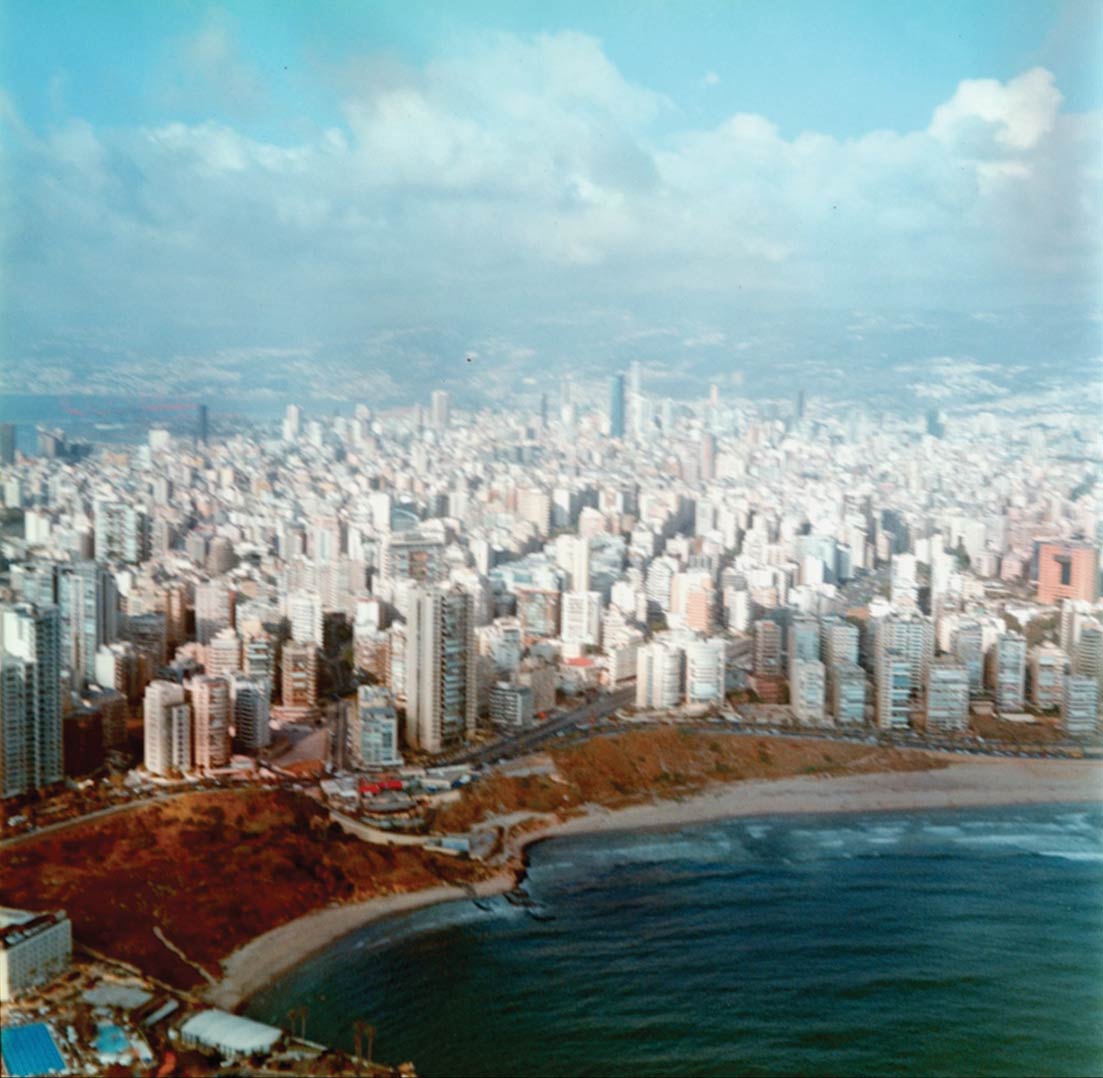
Still from Beirut From Above (2022) by Ziad Antar
I started to realize that the film I was making was very much about my and our experience of memory, how we remember, and our relationship to history. Maybe because of who I am and how I lived the last 10 years in Beirut, as well as my childhood, I realized that it didn’t matter when things happened. When the August 4 [2020] explosion happened, this extremely violent event destroyed our homes, our lives, and our futures. The impact was so violent that it also brought up much older trauma. So this idea of memory not being linear—how our bodies experience trauma—nothing about that is linear. People who were not even in Beirut when the explosion happened were suddenly re-experiencing trauma from the Civil War, trauma from their childhood.
It was extremely important to not be linear and chronological, and to resist the traditional structure. And to not give dates, because I could have done something non-linear and given you dates that go back and forth in time. I didn’t want to give dates or titles of places, because what matters in this film is not who did August 4 and who did Sabra and Shatila. First of all, we come from a place where justice is almost never served. And two, what matters is that at the end it’s society, and all of us who are receiving this and holding it and experiencing it.
CÉLINE: It’s not about finger-pointing. In the film, we don’t even know who is Christian and who is Muslim. The clips that you choose give a little bit of a history lesson, a little bit of a geopolitical lesson, and context, without being too specific.
LANA: I wanted it to be digestible and consumable, and I also noticed that you have to be extremely sensitive, and your relationship to Lebanon completely affects how you experience this film. For me, for example, what was very, very important was how I was going to make a film where I could have an extreme right-wing Christian and an extreme pro-Hezbollah and everything in between. Also, a lot of the Lebanese Christian community is verging on being Zionist. And how can I have those people?
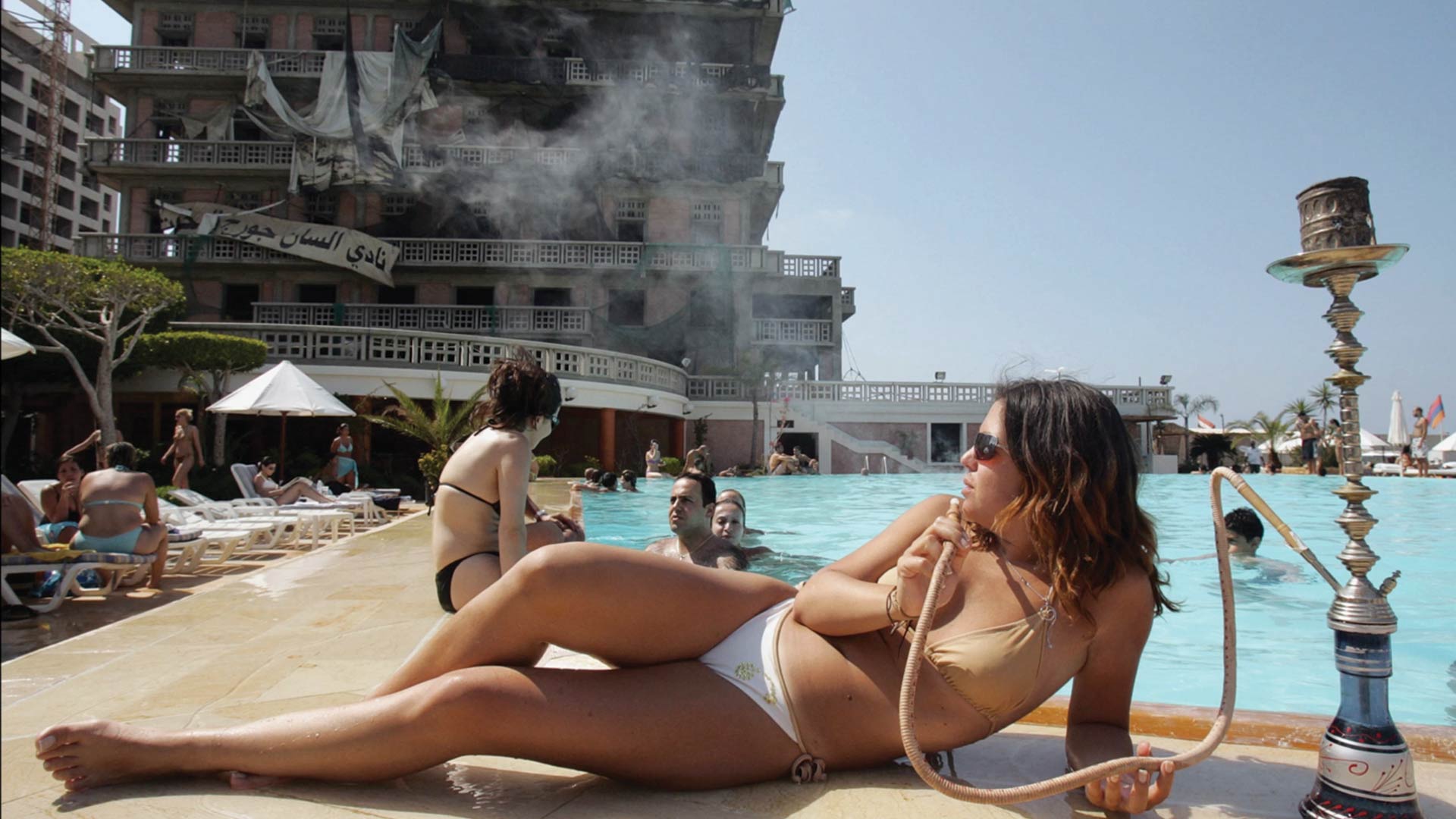
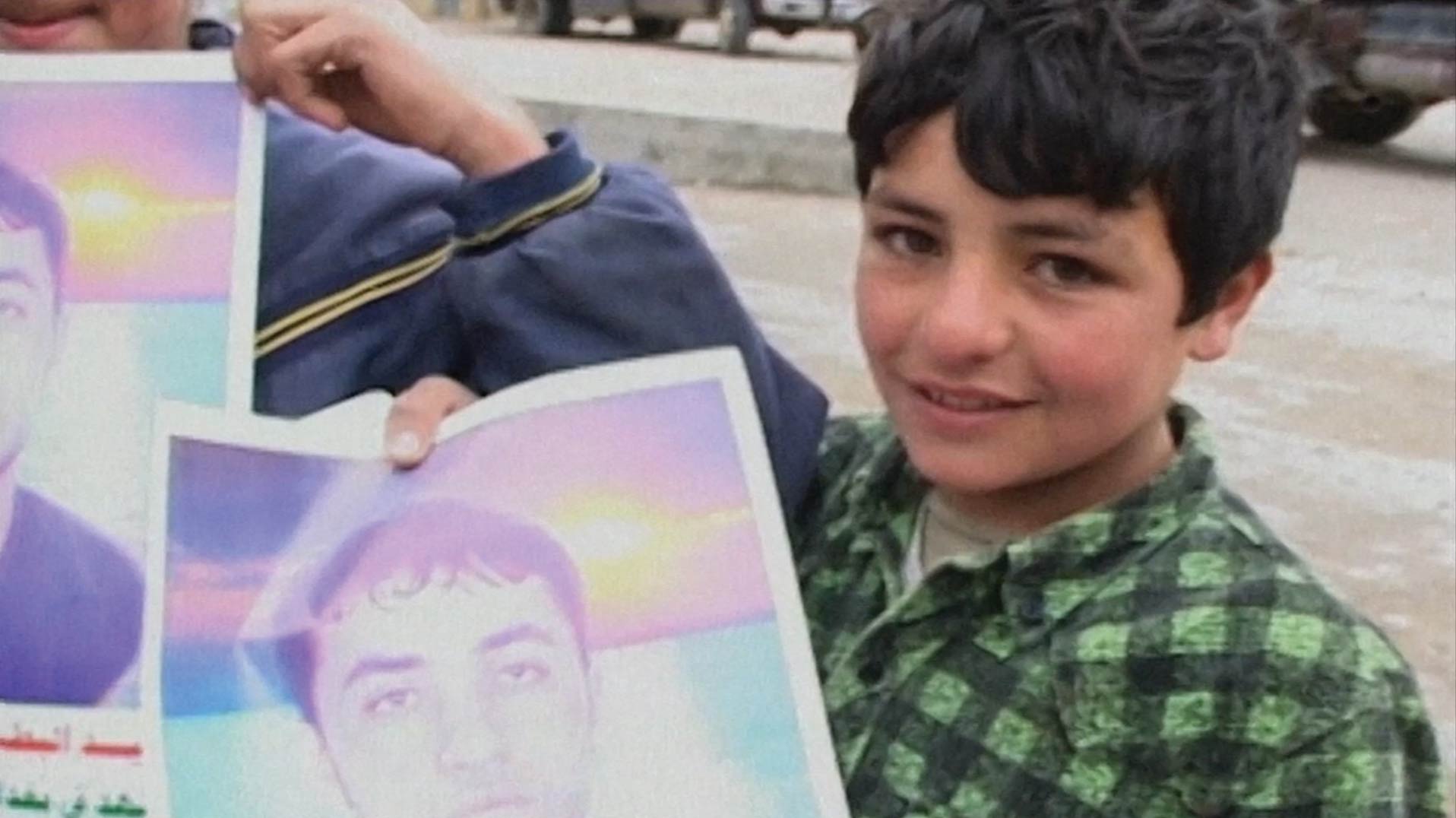
Still from Arguileh on the Beach (2015) by Patrick Baz,
Suicide (2003) by Eliane Raheb
CÉLINE: I think it’s very clear that there is a problem within our communities, absolutely, the fact that Zionism has infiltrated, and they’re playing on this separation mindset.
LANA: Exactly, so my question was, “How can I make a film where I have all of those people in one room, but when they watch this film, they come out of it feeling like they’re Lebanese?” And this happened in the screenings that I had in Beirut so far. Just for the record, I’m Shiite Muslim from the south of Lebanon. My dad’s from Nabatieh, and my mom is from Sour (Tyre). All these wars and everything that’s happening touch me in a very different way than most of the people who are socially around me in Beirut.
It was very important for me not to use political voices and faces, because if I’m going to put one, I’m going to have to put all of them, because that’s what Lebanon is made of. It is made from all these voices, and they need to dialogue with one another. So I decided to remove all of them, and to take the perspective of society, art, and culture, and use music, cinema, and photography from this perspective to bring these things together.
Of course, I had to have this conversation, which seems quite basic and binary at first, Christian, Muslim. But the truth is there’s nothing basic about it. We’re very fragmented as a society, and we actually don’t all love each other; a lot of us do, but not all of us. And that’s what Israel’s doing right now: it’s trying to separate us even more, and it’s working on some fronts. I wanted to make a film that would allow space for all these different people to watch it and to connect in moments of joy, but also in moments of pain, because we’re very trauma-bonded as a society. We forget that we’re all to different degrees affected by these wars and affected by how they affect our economy, and our livelihood, and our mental health and everything.
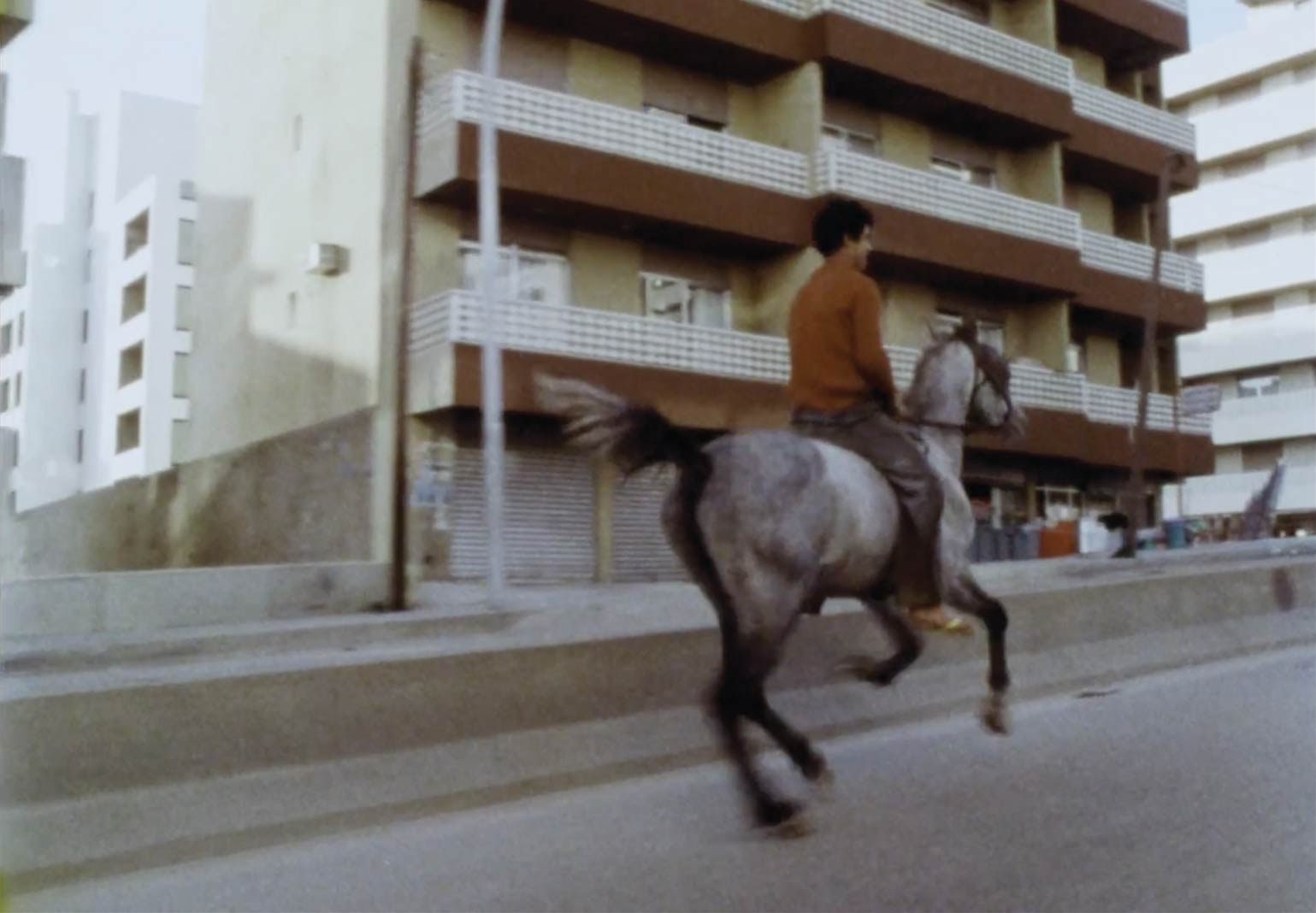
Still from Whispers (1980) by Maroun Bagdadi
CÉLINE: There is a feeling of unity in the film, a feeling of unity that reminds me of Charles el Hayek, the historian of Heritage and Roots. He said in one of the Slow Factory Open Edu classes that if you go anywhere in Lebanon, from north to south, east and west, regardless of religion, if you hold someone’s hand and start the motion of the dabke, people will do the dabke with you. Even if you go all the way to Palestine, to Jordan, to Syria, everyone knows the motion of the dabke, and it’s a unifying experience. Your film really feels like this same type of unifying Lebanese experience. Was that important to you?
LANA: Absolutely. The only place where I could find that unifying experience is in the emotional experience of being from Lebanon. There are so many things that I also couldn’t fit into the film that people connect to, so many songs, so many perspectives, but it was very important for me to feel that we have so much more in common than we’re aware of, and for me, this film was about what we share rather than about what separates us.
CÉLINE: Another thing is that when you work with archival imagery and archives in general, and especially when it comes to Lebanon, there is always a trap of entering this idea of nostalgia, of “the Paris of the Middle East”, of the perfect time before the war, which you don’t do at all. How did you manage to work with archives without portraying Lebanon as a nostalgia moment that we all fall prey to?
LANA: That’s a great question. I had somebody come up to me after the screening at the Lincoln Center, and said, “Something’s missing… candy, Bon Jus, chiclé (gum), where is that Beirut?” And then there was another person who saw it on that same day who asked: “But where’s the dancing?”
One person even asked where I’m from because they thought that, since there’s French in the film, I’m coming from an outside perspective. Actually, no, French is a part of our culture, and English is a part of our culture. We grew up in post-war Beirut, watching fucking Full House on TV. As Lebanese, we’re well traveled, and we speak all these languages, because we’ve had to emigrate endlessly because of the wars. All this is a part of us. If the archives were in French, that was okay; it’s part of how we’re represented. I wanted the film to travel the world as much as possible, because it doesn’t show the pretty postcard picture of Beirut.
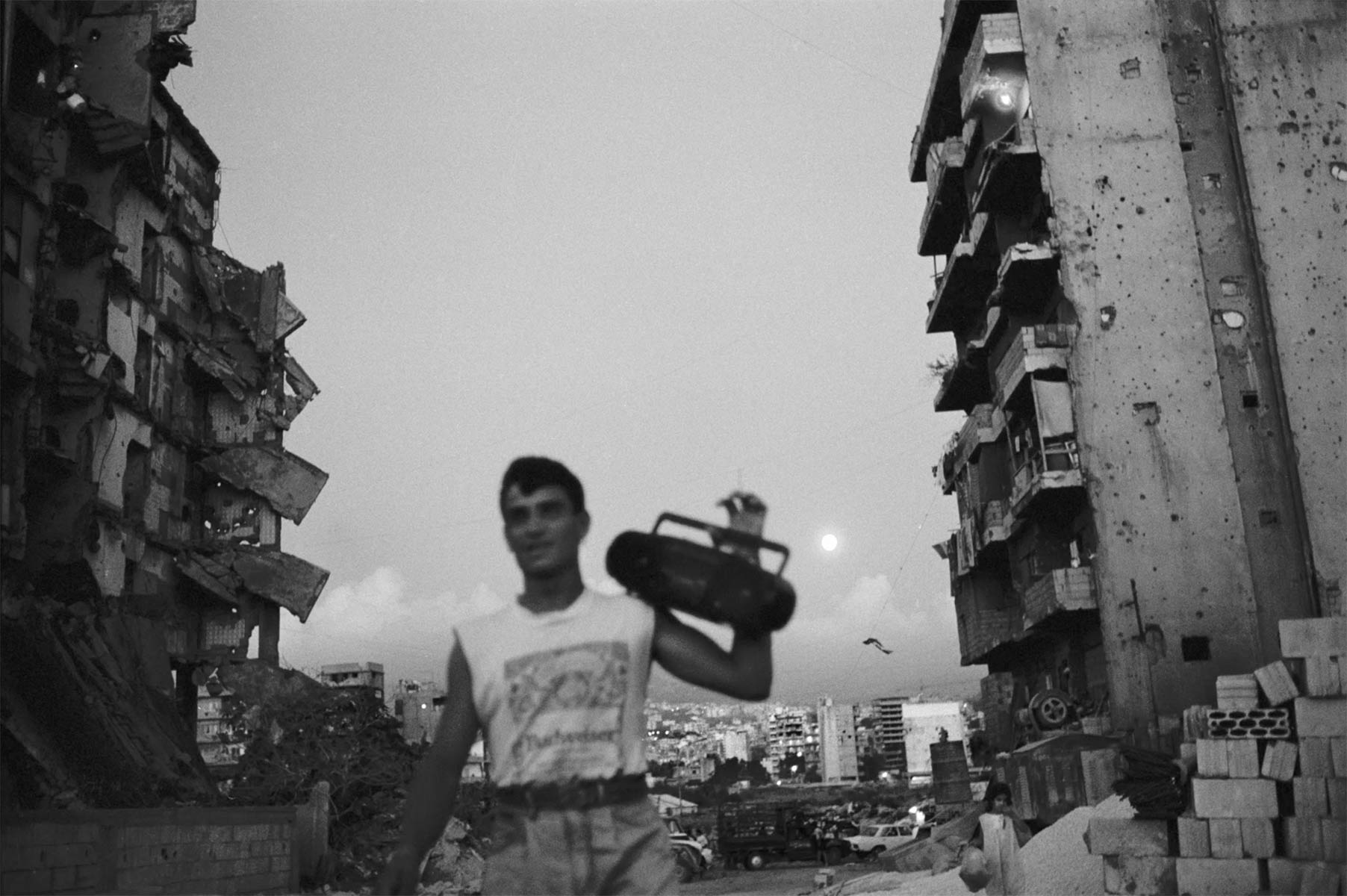
Still from The Boombox (1995) by Fouad Elkoury
For me, one scene of dancing is more than enough. My experience of living in Beirut is actually a lot of death and a lot of violence. And it’s not just because of Israel. It’s also because we’re racist as fuck as Lebanese. I saw that aspect of Beirut, and I did use to have one chapter of the film that I had edited out, on the Paris of the Middle East, but the more I read, the more I realized that it’s a trap that we’ve fallen into, the people pleaser, so that the West can look at us and say, “Wow, Beirut,”
Another person, this British artist that I was talking to at dinner a few days ago, said, I’ve heard so much about Beirut; I’m so upset I haven’t been yet, but everybody tells me about the parties. I have this image in my head, but you didn’t have that, except for that one scene.” I said, “Great, the entire world already has that image in their head; this film is filling in those other blanks.”
Because in the end they want to come dance and eat our food and swim in our beautiful sea, and when the shit hits the fan, everybody shuts the fuck up. We’re not the Paris of the Middle East; this is Beirut. I didn’t want to cater to it.
Researching the work of a lot of photographers and books, I would see these captions, where they would describe, for example, this party when the Holiday Inn first opened, but just behind people literally sleeping on the streets, slums versus riches, and I realized that the only part of those pre-war years that was represented was that lie, that illusion. It’s an image, and actually, if you look at us in good times, we’re still a little bit the Paris of the Middle East.
CÉLINE: I appreciate that you didn’t, because working with archives is tricky, because then you fall into the trap of nostalgia, and especially in Lebanon, it is a very predictable trap.
LANA: I use a lot of the past in the film, but everything that I use from the past is to bring us back to the present. It’s about now, and where we can go from here. The problem with nostalgia is that it leaves you wishing for something, but I realized that that something never existed. It wasn’t true. It was like a superficial layer covering up everything underneath.
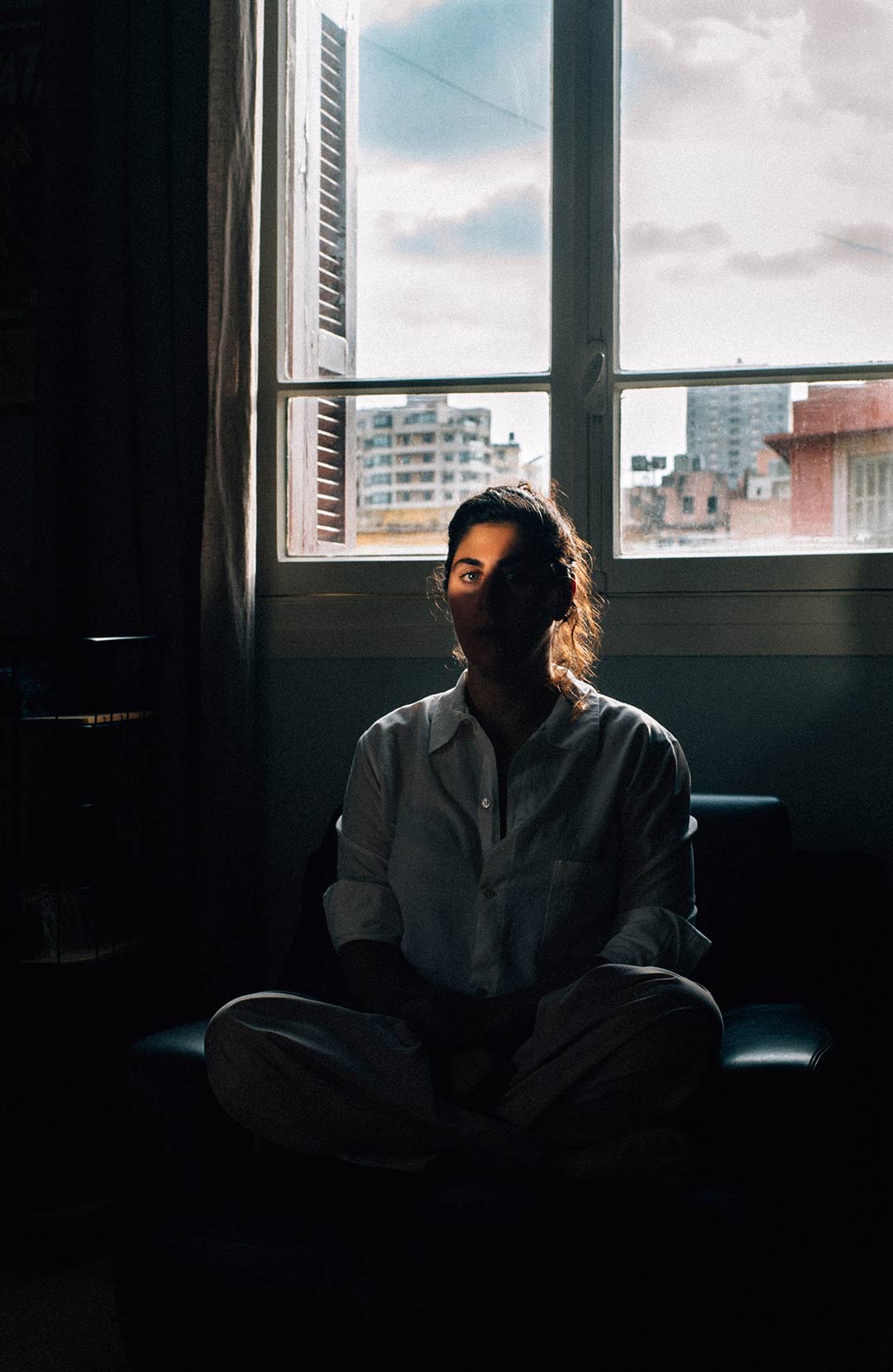
Portrait of Lana Daher by Mohamad Abdouni