


The U.S.S. Iwo Jima (LHD-7): deployed to evacuate American citizens from Lebanon in 2006.
In the summer of 2006, I found myself standing on the deck of the USS Iwo Jima, a U.S. Navy Wasp-class amphibious assault ship. There, I watched Beirut’s lights vanish into the dark – a city I was just beginning to get to know. Above us, bombs tore through the sky, while below, the hum of the massive ship filled the air. That night, sitting in the crowded cafeteria on board, I watched replay after replay of CNN’s coverage of this “conflict.” This version of the story felt very different from what I’d experienced. They used words like “escalation,” “crossfire,” “terrorist.”
The killing of civilians was reduced to collateral damage; the destruction of Beirut and all across Lebanon – homes, memories, sacred places – framed as geopolitics. The language suggested a symmetry that didn’t exist. My family’s trauma, and the suffering of thousands of others, was recast as a spectacle for Western audiences.
Patterns of Erasure
This erasure didn’t begin in Lebanon, nor does it end there. After 9/11, the pattern became unmistakable. The media didn’t report the attacks so much as cast an entire people as suspects. Overnight, Arab and Muslim communities were boxed into a narrative of terrorism, suspicion, and foreignness. Headlines blurred distinctions between faith, nationality, and politics. Mainstream outlets framed surveillance and profiling as security measures rather than violations of rights. As a result, ICE was formed. Classrooms, airports, and workplaces became sites of suspicion. I even received my first death threat in the second grade – simply because I am Lebanese.
For those of us in the diaspora, this means we exist in a double bind: our grief was never acknowledged, and our humanity is erased under the weight of collective blame. The “war on terror” became both a foreign policy project and a domestic erasure, and media narratives pave the way for both.
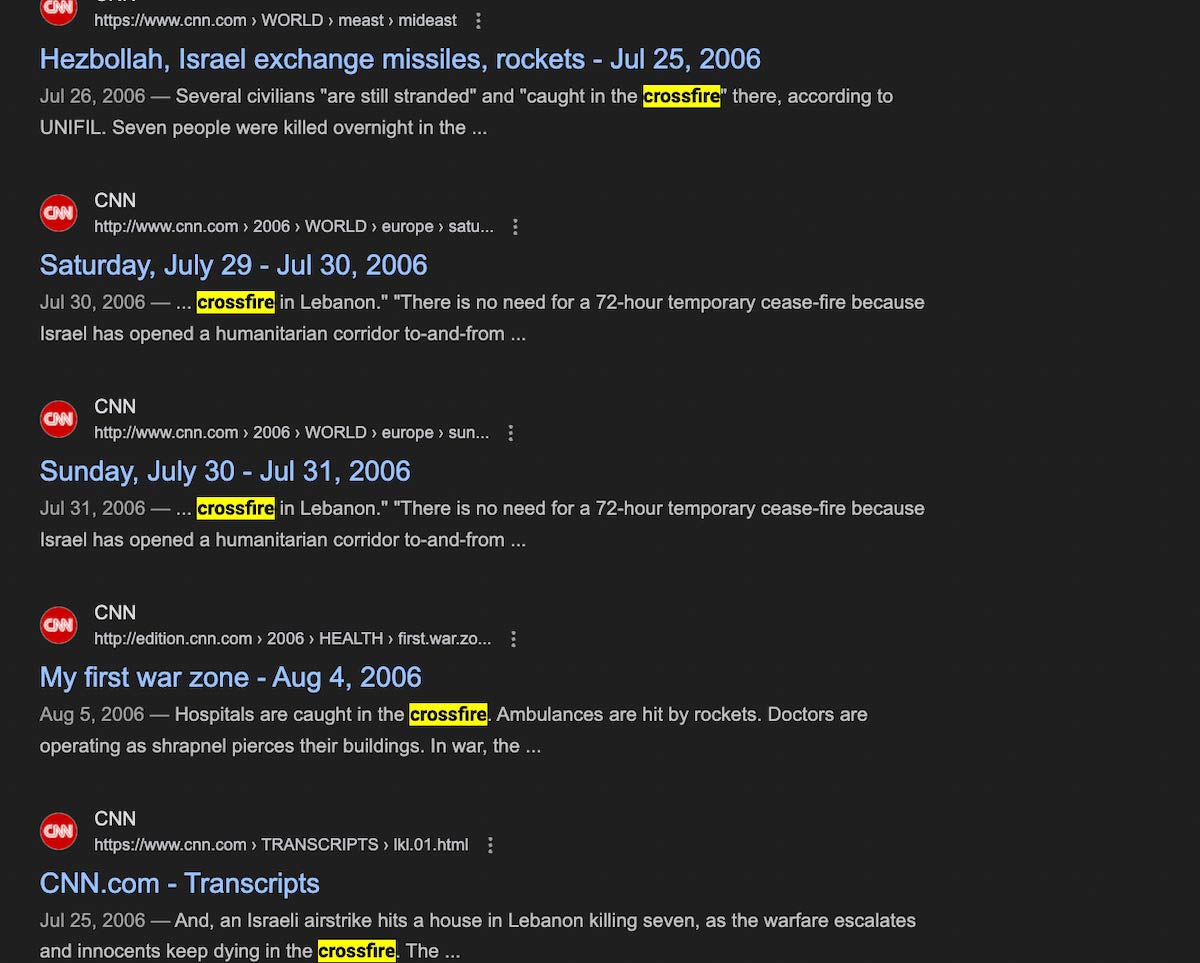
Examples of CNN coverage of the 2006 Israeli attacks on Lebanon.
This framing choice is not accidental. It shapes how conflict is understood, where sympathy lies, and which lives are deemed worthy of grief. Mainstream outlets framed the 2006 attacks on Lebanon in ways that minimized Lebanese lives while centering the Zionist narrative.
A Brookings report at the time noted that civilian deaths in Qana were used for sensational copy, often without proportional context. A visual analysis found that stories of destroyed homes and grieving families rarely made the front page, and military imagery (propaganda) dominated instead. The effect was cumulative: reduce enough deaths to copy, and eventually they stop reading as deaths at all. That is how you determine whose grief registers as real. Lebanon becomes a stage rather than a people. If our death is only “collateral,” mourning us becomes optional. We see this at play today.
Nearly two decades later, the architecture is the same – just applied to a larger scale catastrophe. During Israel’s assault on Gaza in 2023, a CfMM report found that major Western outlets frequently dismissed Gaza’s health ministry figures while refusing to contextualize decades of blockade and occupation. A letter signed by over 1,500 journalists said plainly: “Western newsrooms are accountable for dehumanizing rhetoric that has served to justify ethnic cleansing of Palestinians. Double-standards, inaccuracies and fallacies abound in American publications.”
The disconnect I witnessed in 2006 between my lived experience and the reported narrative is not an isolated glitch. It is a systemic feature of how Arabs and Muslims are portrayed: through a critically censored lens.
When Journalists Themselves Are Targeted
Perhaps the starkest proof of media erasure is how little space is given to the deaths of journalists in Palestine, Lebanon, and across SWANA.
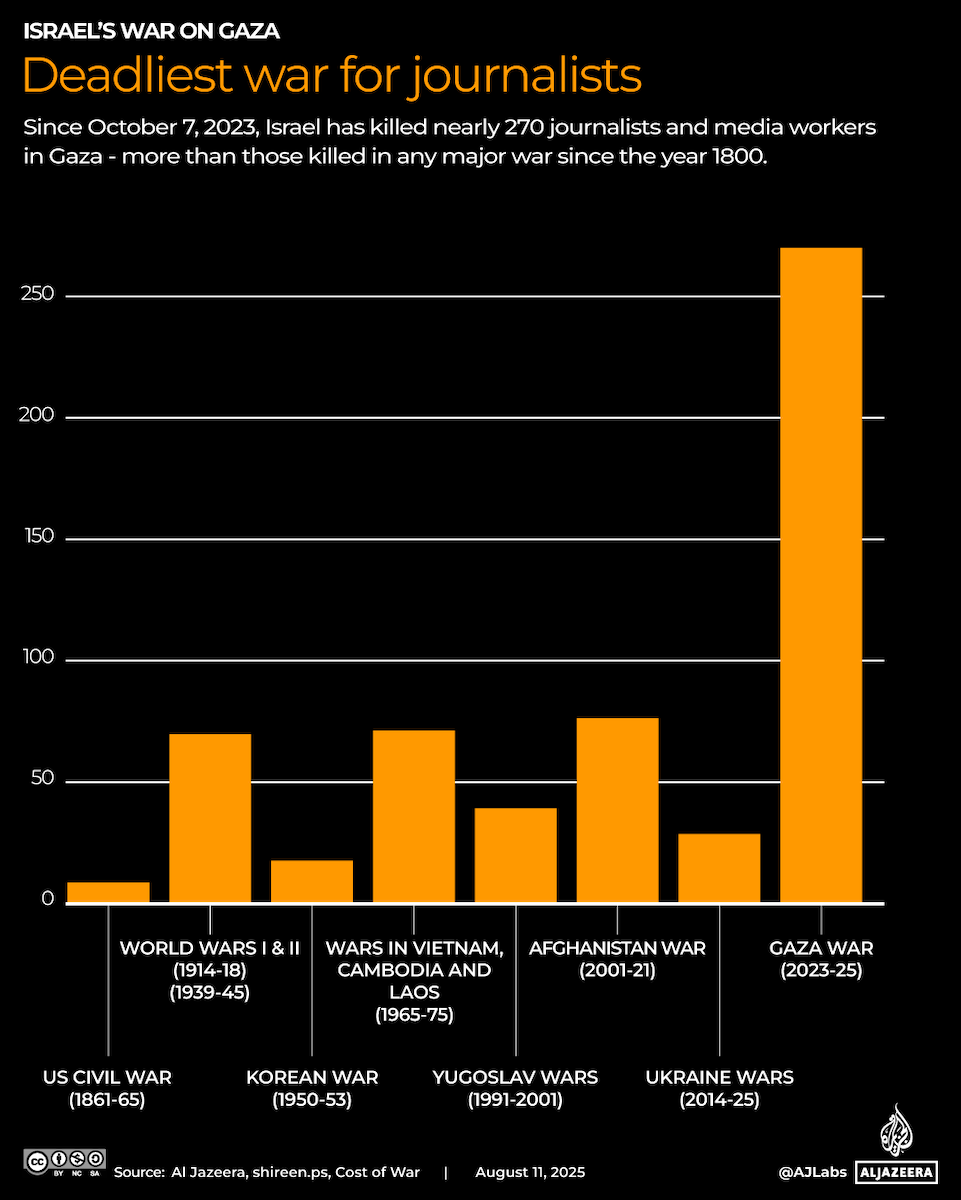
According to the Committee to Protect Journalists,the hundreds of Palestinian journalists and media workers have been murdered since October 2023; making this the deadliest period for journalists since records began four decades ago. Al Jazeera reported in October 2024 that Israel killed at least 128 journalists and media workers in Palestine and Lebanon over the past year. By August of 2025 Israel had killed over 270 journalists.
In October 2023, Reuters journalist Issam Abdallah was killed in Lebanon by an Israeli tank shell. An independent investigation confirmed it was a targeted strike, even though Abdallah was clearly identifiable in a press vest and marked vehicle.
The disregard is not subtle. It is blatant. And it reveals what corporate media cannot - and will not - say outright: some voices, even those tasked with telling the truth, are disposable if they don’t fall in line. When journalists are killed without accountability, when their deaths are buried in euphemism, it reinforces the idea that some lives just don’t matter. It gives political cover to crimes against humanity. In Gaza, Al Jazeera’s Anas al-Sharif recorded a final message before he was killed alongside four of his colleagues: “If these words reach you, know that Israel has succeeded in killing me and silencing my voice.”
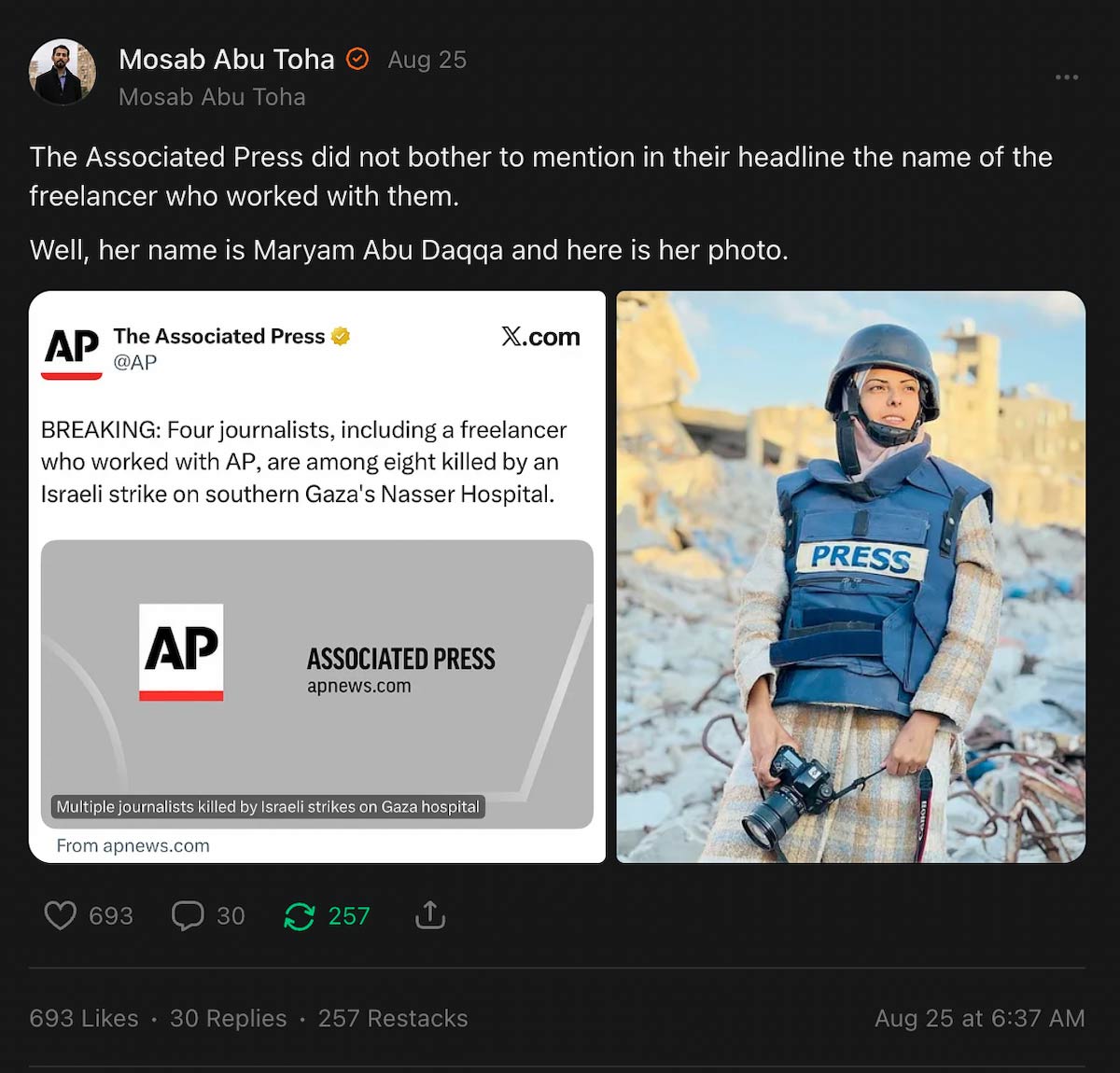
Pulitzer Prize-winning Palestinian writer and poet from Gaza, Mosab Abu Toha: on the killing of Maryam Abu Daqqa.
The Language of Euphemism
Erasure doesn’t only happen through omission; it happens through the crafted language of euphemism.
When Israel bombs Gaza, the West Bank, Lebanon, Syria, Qatar, and civilians from all nations in international waters, headlines read as “defense” or “escalations.” When Palestinians resist, words like “terrorism” and “provocation” dominate. When children die under rubble, they are “caught in the crossfire.” When Israeli settler-combatants die in battle, they are “slaughtered.”
The asymmetry of words is part of the violence. It teaches audiences who deserves empathy and who doesn’t. It shapes foreign policy by making one side’s humanity visible and the other’s disposable. If Western audiences only ever see Israeli “responses,” then U.S. tax-funded aid packages and arms sales look like neutral diplomacy rather than complicity. If Arab civilians are never humanized, then our deaths are never treated as crises. If journalists are not recognized as targets, then information itself becomes collateral.
Arabs are consistently depicted in mainstream media not as having complex societies with rich histories, accomplishments, and aspirations – but rather as problems, threats, and abstractions. To this day, the pattern holds.
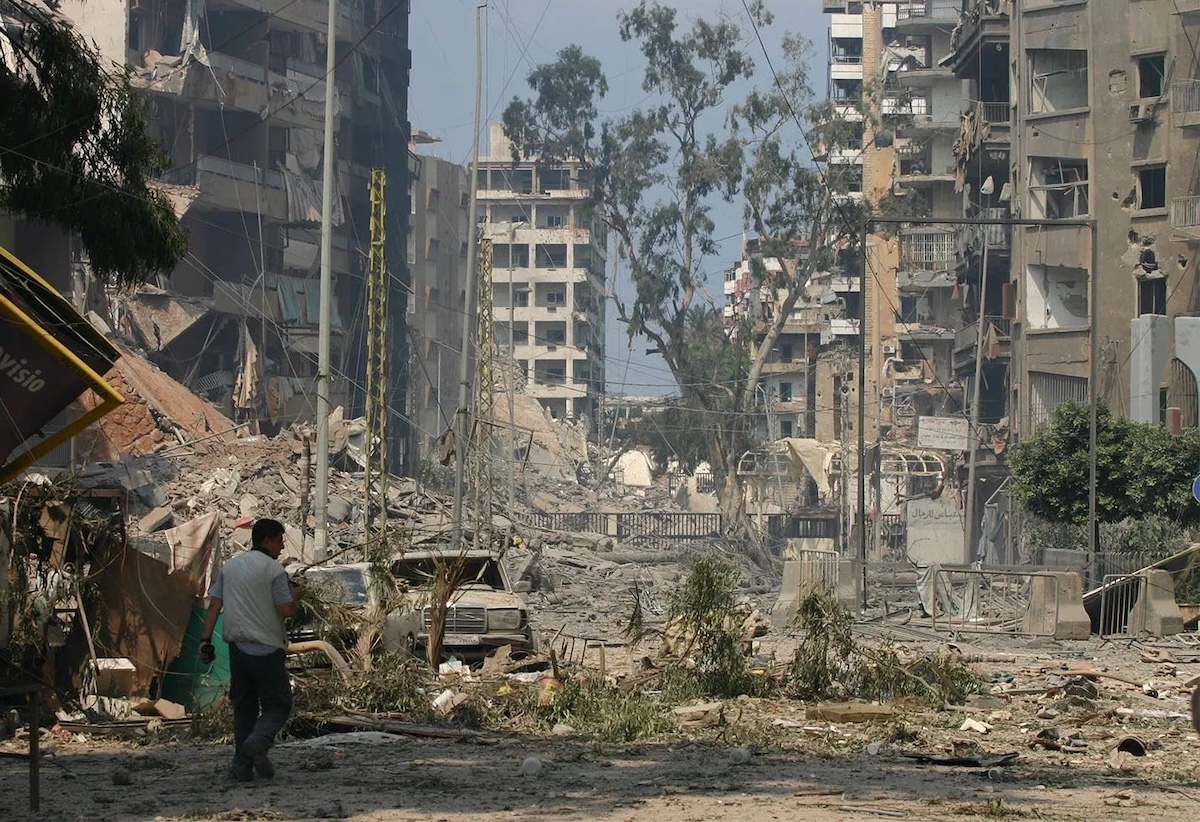
A man walks through the destruction caused by Israel in Beirut, July 2006.
Flattened Homes, Stories and Voices
The erasure doesn’t only live in coverage. I’ve felt it within my own career in media – developing campaigns, pitching stories and ideas, shaping narratives across agencies, entertainment, and advocacy spaces. I often come across an unspoken understanding that my identity, and as a result, my voice, is not received on equal terms – that my ideas are filtered through suspicion, tokenization, and hesitation.
Last year, I was helping a journalist friend source a subject for a Q&A. She was looking to interview an Arab woman working in PR and entertainment in the U.S. who could speak to her personal experiences. I couldn’t be the subject myself since I knew the journalist well. But one of the caveats to the story was that she could “not mention anything about what’s happening in the Middle East right now.”
Then how does an Arab woman candidly talk about her lived experience? While we watch from afar as our tax dollars kill children in our homelands, tear families apart, destroy our crops, our cultures, our histories– a platform with such conditions attached is not really a platform at all.
The pattern repeats: Arab stories are too political, too “sensitive,” too… risky. Unless stripped of all “political” context. Unless made palatable. So when we actually do share our stories, we are not just amplifying culture or advocacy. We are pushing back against a system that conditioned us to believe our voices don’t belong. We refuse the default narrative.
Twenty Years Later: to the Diaspora
This July will mark twenty years since I stood on the deck of that ship, watching Beirut’s lights disappear into the dark. Twenty years of the same euphemisms. The same asymmetry. The same decisions about whose deaths register as tragedy and whose dissolve into the footnotes.
Last summer I went back to Beirut for the first time in seven years – not despite the destruction, but through it. And Lebanon was still breathing. Still refusing the story being written about her.
We in the diaspora must do the same. Our voices are the counterweight, positioned uniquely in the in-between – close enough to carry memories of home, distant enough to see how the narrative gets repackaged for mass consumption. The responsibility falls to us to tell Lebanon’s story as it is.
What’s at stake is not just accuracy. It’s survival. It always has been.