

Chuck Park–a recent Congressional primary candidate for the U.S. House of Representatives in New York’s District 6 (Queens)–on building grassroots solidarity against ICE in his hometown and across the country
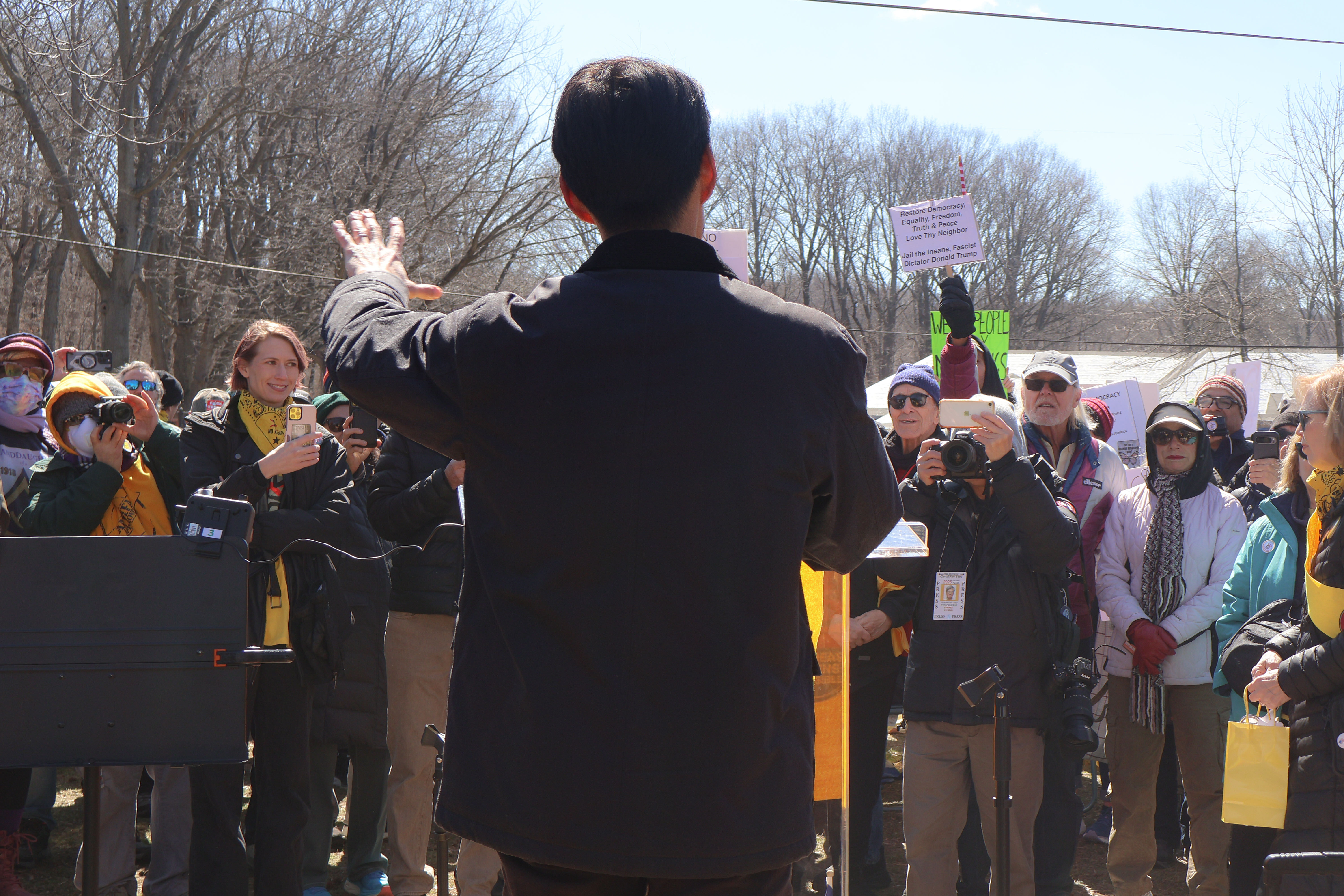
Image courtesy of Chuck Park
On a cold evening in March 2021, my wife and I attended a vigil in Union Square for the victims of a shooting in Atlanta. A lone gunman had driven to three Asian spas and killed eight people, six of them Asian women.
There were hundreds of us there that night, packing the steps facing 14th Street. Looking around at the sea of candles, illuminating faces like mine, listening to politicians as they took turns at the mic denouncing anti-Asian hate, I remember wondering if we were on the brink of some lasting political awakening.
Standing at Foley Square this past Friday, that moment felt both familiar and distant. The rally for Oscar Belgal, a Bronx man who was shot in front of his five year old by plainclothes ICE agents who had rushed his parked car, was as packed as Union Square had been five years before. But I saw few Asians in the crowd.
What more urgent interest could we share than not being disappeared or left to die at the hands of armed thugs?
Back in March 2021, the Atlanta shootings were the most egregious in a series of attacks during the early months of the COVID pandemic. Before that, there was the elderly Thai man who was slammed onto the ground in San Francisco. The Filipino man sliced in the face with a box cutter in Brooklyn. Countless videos of people resembling my aging parents, who frequently walked their dog around Flushing, or my wife, who rode the F train every morning to her work as an ICU nurse, getting randomly punched and spit on. That violence sometimes felt closer, more dangerous than the virus itself.
After the shootings, the Stop Asian Hate campaign became perhaps the largest mass mobilization of Asian Americans of my lifetime. All of a sudden, even my normie, nonpolitical Asian friends were joining protests from Columbus Park in Manhattan to Portsmouth Square in San Francisco. They were on social media posting crash courses on Asian American history, usually videos speedrunning through some combination of the Chinese Exclusion Act, Wong Kim Ark, Japanese internment, and Vincent Chin.
The attention brought money and political power. New organizations like Stop AAPI Hate and The Asian American Foundation grew rapidly. In May 2021, Congress passed the Covid-19 Hate Crimes Act.
For a moment, Asian Americans were no longer silent spectators in national conversations about race, public safety, and immigrant identity. We were driving them.
Today, it seems that moment has passed.
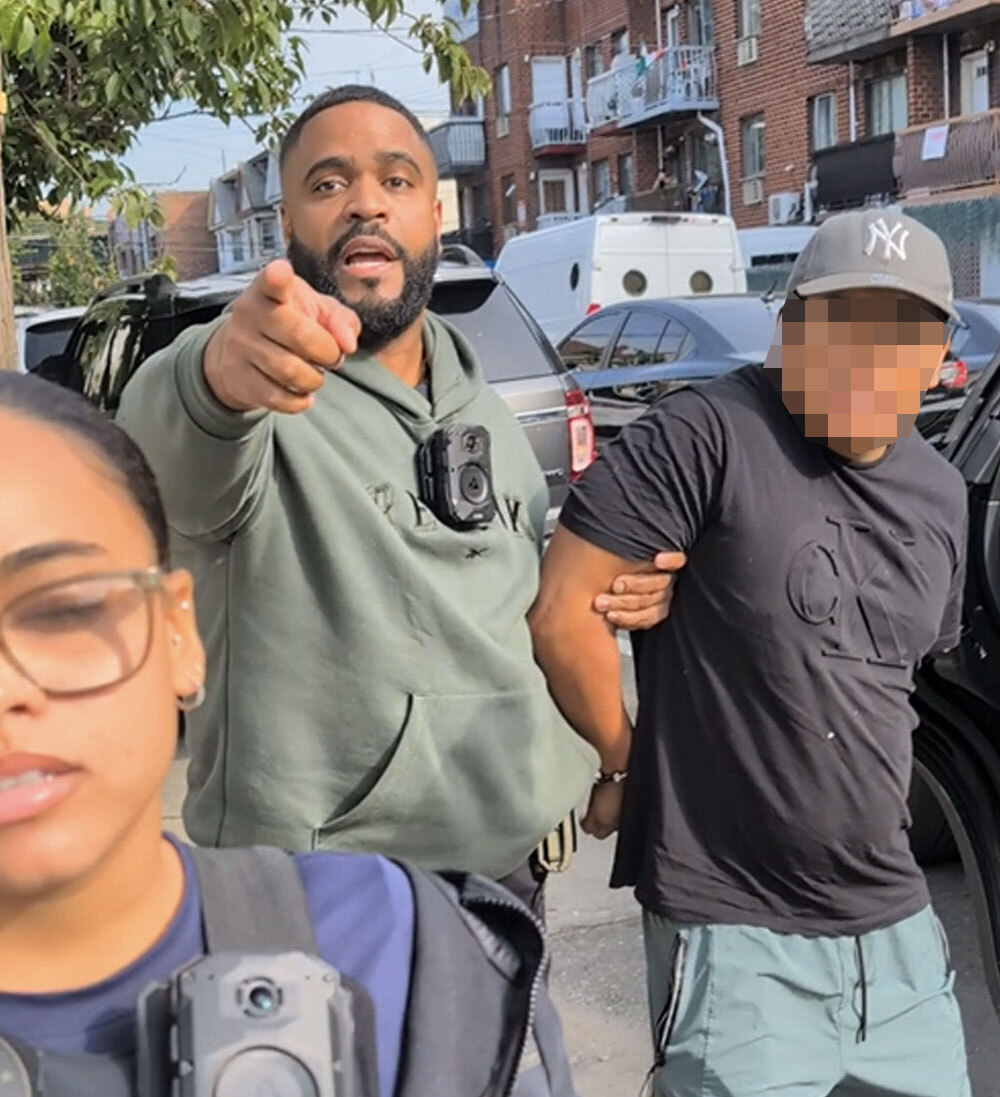
ICE just celebrated a shameful milestone: a record 49,571 arrests in the month of July alone, including almost 2,000 Asian immigrants. According to Stop AAPI Hate, ICE arrests of Asians have increased 436 percent during the second Trump administration compared with the same period under President Biden, totaling more than 21,000 since January 2025. Almost 10,000 have been deported. 12 have died in ICE detention.
In January, there was the ICE raid of the Minnesota home of ChongLy “Scott” Thao, a Hmong man. Dragged outside in sub-zero temperatures in just boxer shorts and Crocs, Mr. Thao was released after ICE disovered he was, in fact, an American citizen.
In February, immigration officers left Nurul Amin Shah Alam, a blind Rohingya refugee, in the parking lot of a closed donut shop in the frigid Buffalo winter. He was found dead of hypothermia five days later.
Where I live, in New York City, arrests of Chinese and Bangladeshi immigrants have increased ten-fold. The scale of ICE enforcement against Asian immigrants has eclipsed the number of anti-Asian hate incidents reported during Covid.
And yet, for all the energy we spent fighting anti-Asian violence during Covid, this new threat has barely registered. Where is our movement?
One place to look is our political leaders.
In June 2025, the House passed a Republican-sponsored resolution that expressed gratitude to U.S. Immigration and Customs Enforcement for “protecting the homeland.” Eight Asian or Pacific Islanders voted in favor of the resolution, including Grace Meng, the New York Democrat who chairs the Congressional Asian Pacific American Caucus. (Full disclosure: I ran and lost a Democratic primary campaign against Meng earlier this year.)
To be clear, the resolution was not an explicitly ICE-related bill. It was a condemnation of an antisemitic terrorist attack in Colorado. But that is precisely what makes the vote so revealing: even prominent Asian Democrats might accept Trump’s immigration enforcement so long as it was wrapped in a veneer of public safety.
This isn’t just true of Asian politicians. An April 2025 poll, conducted early in the second Trump term, found that more Asian Americans supported rather than opposed “deporting all immigrants living in the United States illegally,” whether or not they had been convicted of any crime. A later February 2026 poll, conducted after the chaos of ICE enforcement in Minnesota, found that a smaller proportion of Asian Americans opposed mass deportation than their Hispanic or Black peers.
Of course, none of this means all Asians are pro-ICE. The same polls show clear disapproval of ICE’s overly aggressive tactics. And in New York, there are heroic organizers like David Chung at the People’s Forum and Hae-Lin Choi, co-founder of Hands Off NYC, who both offered impassioned, angry remarks at last Friday’s rally.
But it does show that by and large, Asian Americans have a complicated relationship with institutional power.
Maybe part of the answer lies in something we may recognize in our own upbringing. For many of us, survival in America meant navigating, even coopting existing sources of power, not dismantling them. Paying for cram schools to ace standardized tests, not challenging why these narrow, shaky ladders were our only chance at upward mobility. Appealing to the police to protect our groceries and laundromats, not questioning why certain neighborhoods were so dangerous in the first place. Even during the peak of the Stop Asian Hate movement, I heard more demands for aggressive policing than calls for systemic reform, a position that put us at odds with many other racial justice activists.
So what are we to do when the perpetrators of violence are the institutions themselves?
Another Asian American history might be worth remembering here.
In the fall of 1965, Larry Itliong organized his fellow Filipino farmworkers to launch the Delano grape strike. They led the charge against abusive employers, later uniting with Cesar Chavez, Dolores Huerta and the predominantly Mexican National Farm Workers Association to win landmark collective bargaining rights for immigrant laborers.
Stories like Itliong’s are inspirational, if limited. But they do show a path toward cross-racial solidarity. A path built not on shared ethnic identities, but shared interests. And what more urgent interest could we share than not being disappeared or left to die at the hands of armed thugs?
Earlier this year I joined a local ICE rapid response group. On a recent morning patrol, biking around the predominantly Latino neighborhood of Corona, I passed by a pair of fellow volunteers on foot.
I doubled back and pulled over to compare notes, and as they pulled down their masks to talk, I noticed that they happened to be East Asian like me.
“Thanks for being out here,” I told them.
“You, too.”