


LAPD officers, on horseback, rush through a line of protesters during a protest over Trump’s deportation efforts in Los Angeles, California on June 11, 2025.
For generations, the American West has served as one of the nation’s most enduring metaphors, a frontier imagined as a place of possibility and abundance.
It has been seen as a proving ground for reinvention and a stage for the myths that shape American identity. The image of the rugged pioneer on horseback, long held up as a symbol of independence and westward expansion, still lingers today even as the country fractures and struggles with the realities of a dismantled democracy over a hollowed out landscape. These settlers steered the wagons that drove stakes into the ground, claiming land for themselves. These were the men that dug up thick black oil and gold from the earth, men and women who handed out blankets filled with disease. Their actions did more than lay the groundwork for future mythologies. They set in motion a trajectory that continues today, the formation of a nation facing drought, broken treaties, political division, Trump’s agenda.
Last June, under the blinding sun in downtown Los Angeles, I thought of these images of the westward pioneer. Those figures flashed through my mind as I watched, through my camera’s viewfinder, Los Angeles police officers on horseback charging through crowds of protesters, swinging wooden clubs through the air and into skulls. The moment felt both full circle and painfully linear. This is the America of today, shaped by overlapping crises and, in that particular moment, the early days of Trump’s mass‑deportation campaign. The scene also felt like a continuation of the country’s long history of conquest across the region, shaped by manifest destiny.
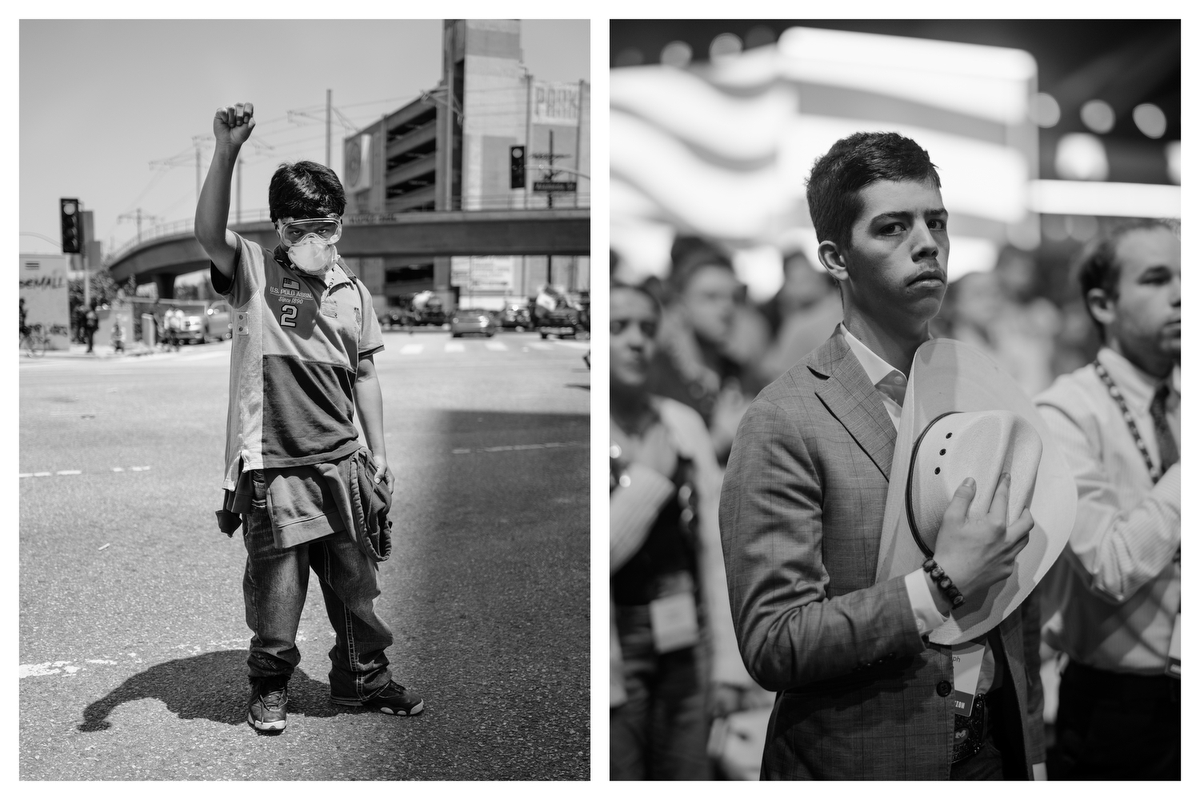
Portrait of a young latino protester during national guard clashes over Trump’s deportation efforts in Los Angeles, California on June 9, 2025. (Right) Young Republicans stand for the national anthem at Turning Point’s AmericaFest convention in Phoenix, Arizona, on Dec. 20, 2025.
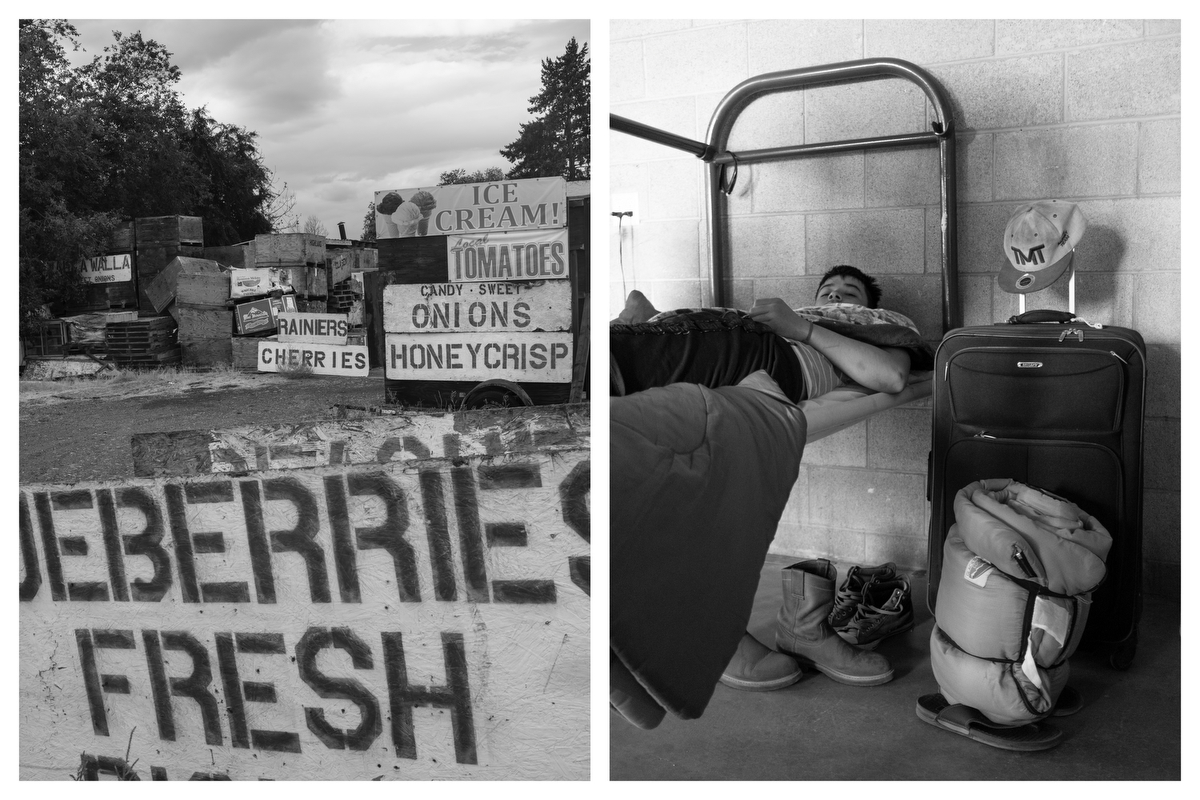
Empty produce crates line a rural highway in Yakima, Washington, on October 2, 2025. (Right) A migrant farmworker sleeps with his belongings beside him in a cabin designated for seasonal laborers at a farm in Medford, Oregon, on August. 28, 2021.
With this experience fresh in my mind, I set out to create an extensive survey of the American West that aims to show not only the region in the midst of today’s many crises, but also how this moment in time has been shaped by decisions of the past and by the enduring influence of manifest destiny. I want to present the West within a broader American reckoning. This romanticized landscape, with its drought‑scarred riverbeds, contested borders, boom‑and‑bust economies, and the communities caught between resilience and despair, reveals the tension between myth and reality. Pulled together, this cumulative portrait of a coast on the brink offers a distilled view of the national mood and direction.
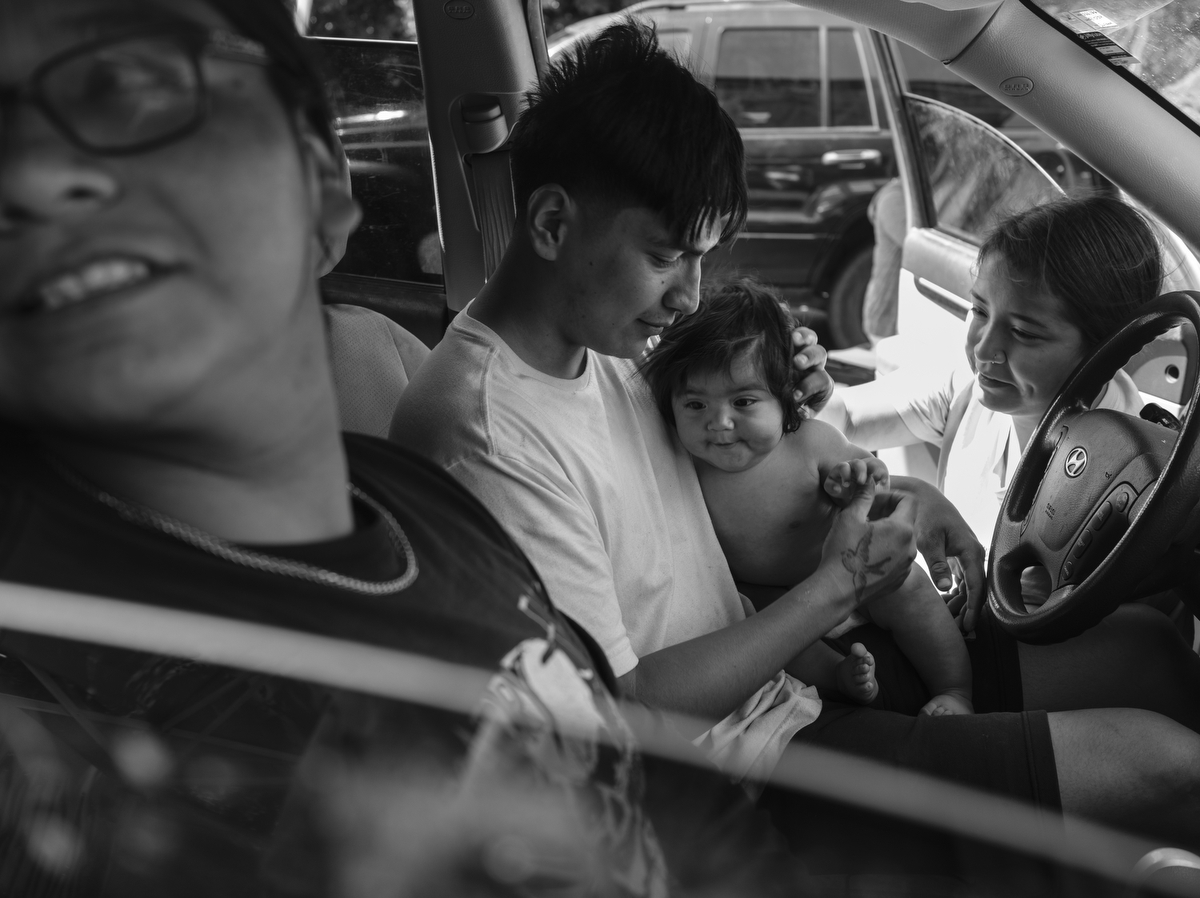
Johnathan Kaltsukis sits in the driver’s seat of his car with his son Jermaine and friends while selling freshly caught salmon along Interstate 84 in Cascade Locks, Oregon, on July 25, 2024.
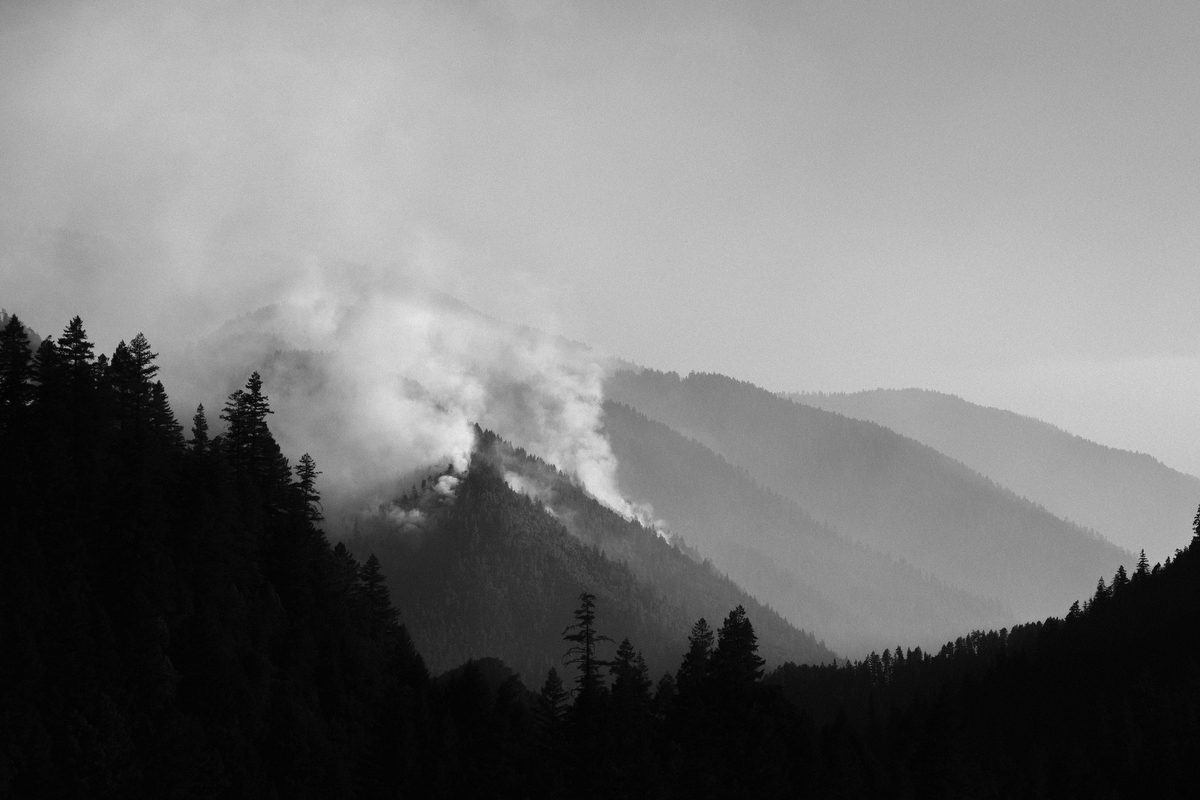
A wildfire burns through a distant mountain ridge in Northern California on September 20, 2023.
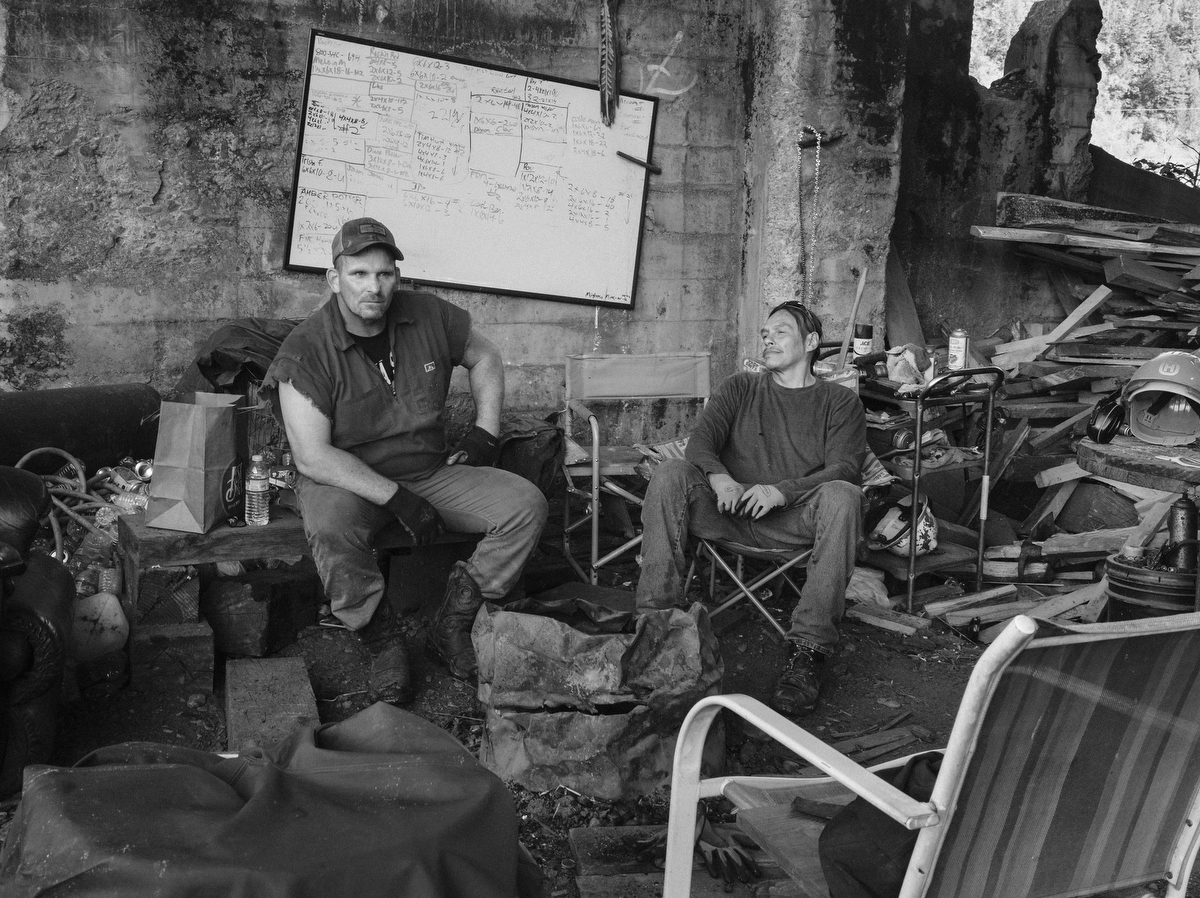
Portrait of Ronny and Levi, two of the last operators at The Hoopa Tribal Forest Industries Lumber Mill, in Hoopa, California on February 28, 2025.
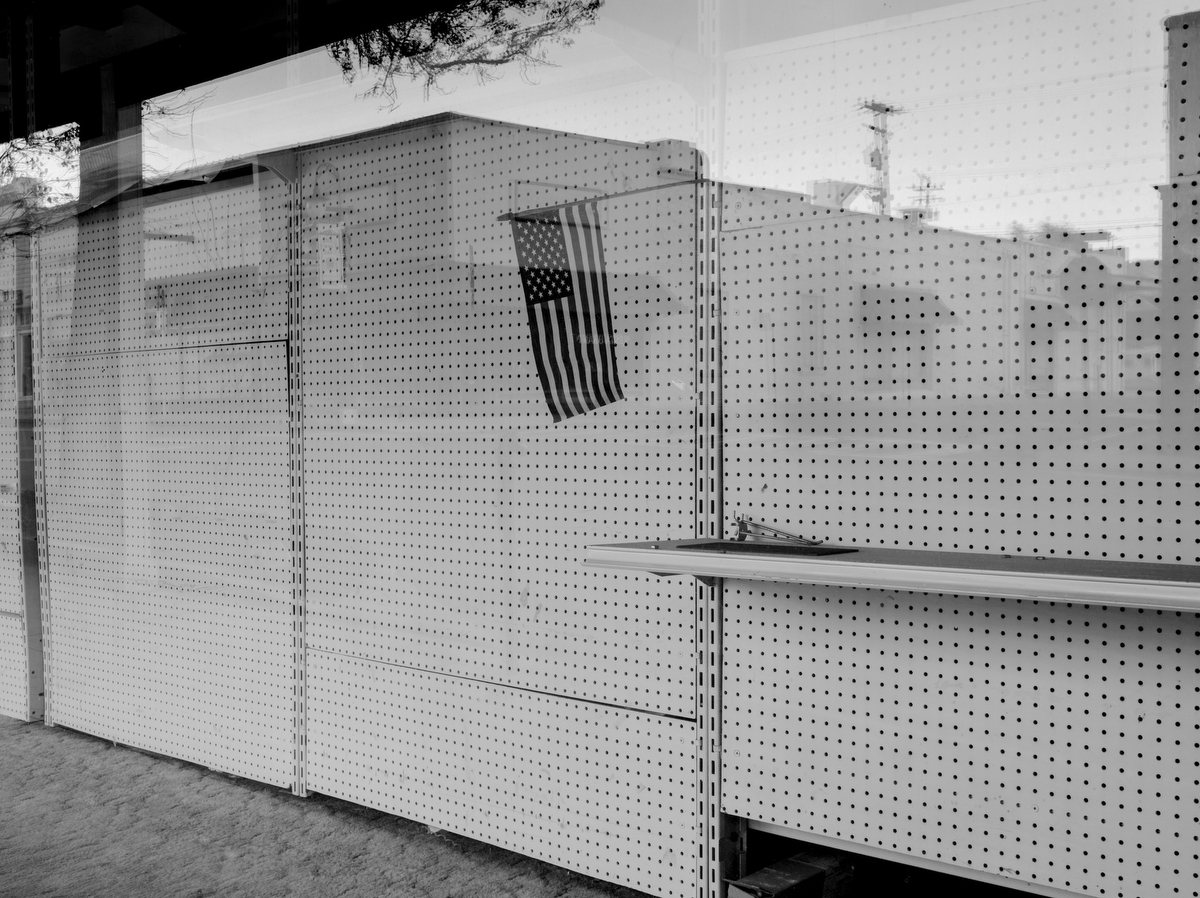
An American flag hangs in a closed down storefront window in Yreka, California on February 28, 2025.
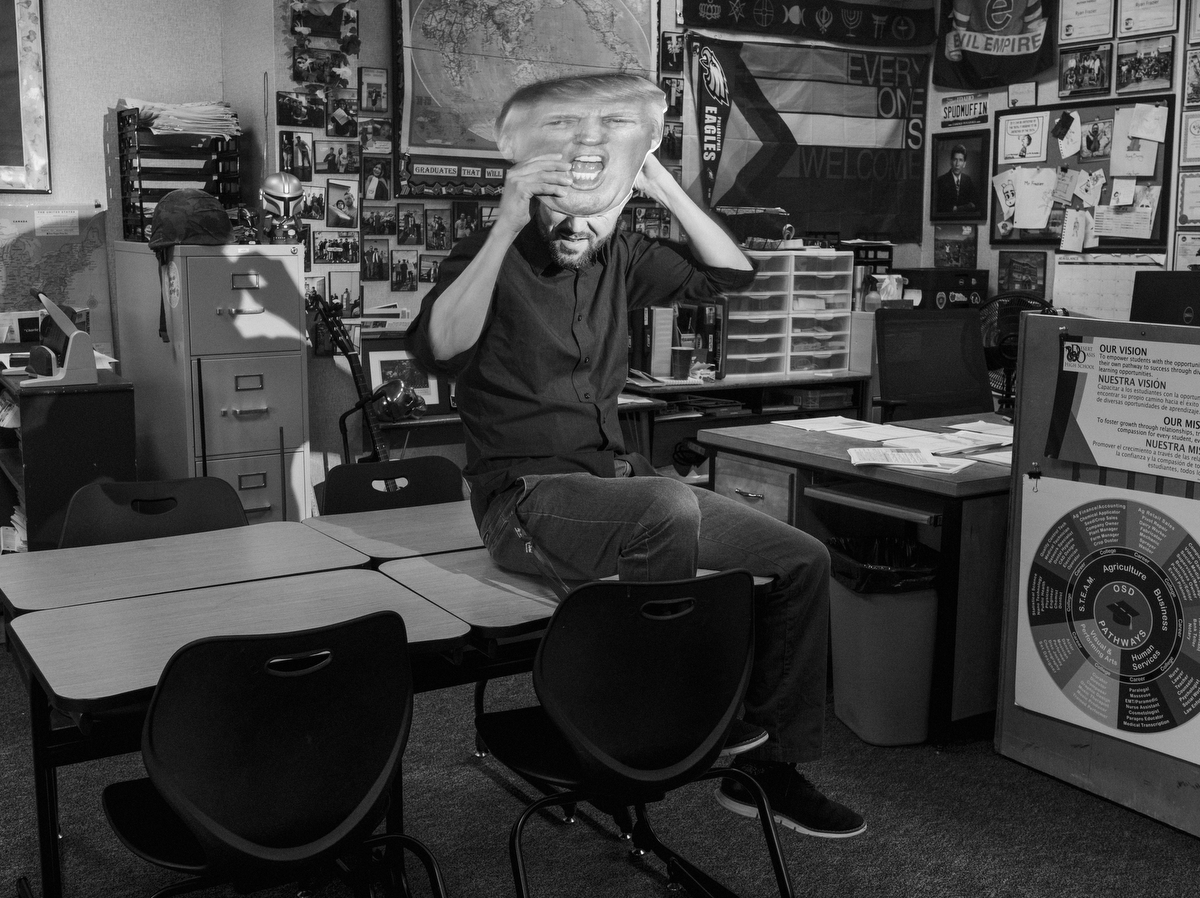
Ryan Frazier, a high school teacher, puts on a Trump mask at Desert Oasis High School in Othello, Washington, on April 2, 2025. Frazier uses the oversized mask to mock and discuss the president’s recent tweets and policies with his students.
The idea that the West was a place to be claimed, conquered, and “made productive” still echoes throughout modern American rhetoric. You can draw a line between an ICE raid on an Oxnard farm and earlier campaigns of forced assimilation, boarding schools, internment camps, and the genocide carried out against Indigenous peoples. We continue to see federal administrations roll back environmental protections as well. Many politicians still view the finite resources beneath sacred land in the west as something granted by god, for those that would advance American interests and values.
But the environmental consequences of westward expansion and the continued extraction of the region’s dwindling water, oil, and timber have accelerated severe drought, deadly wildfires, and ecological instability. The relationship between the many Indigenous nations of the West and the United States government has never healed from a history of displacement and attempted eradication. These practices and beliefs which echo and reverberate today have only deepened national wounds.
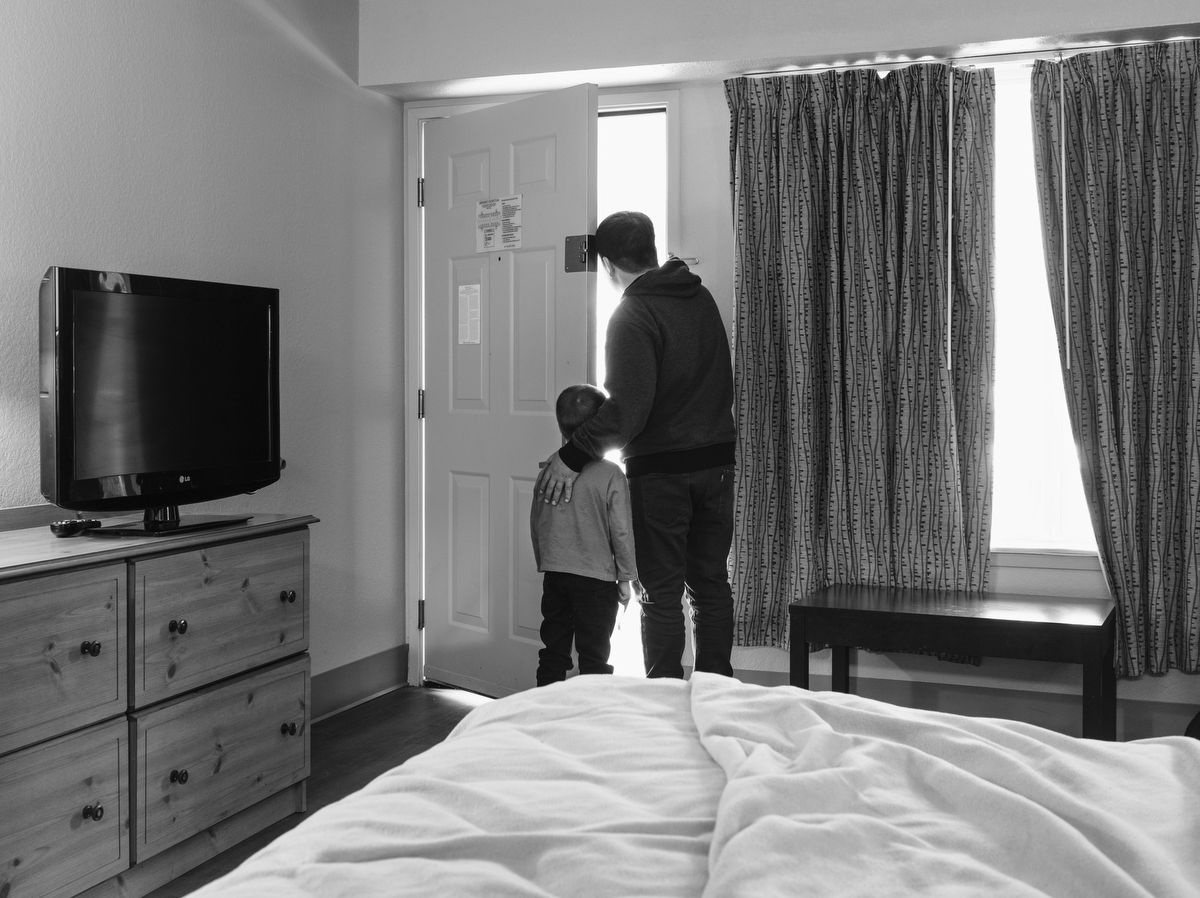
A recent Afghan refugee and his son peer out the door of their motel room, their temporary home in Beaverton, Oregon, on March 11, 2025.
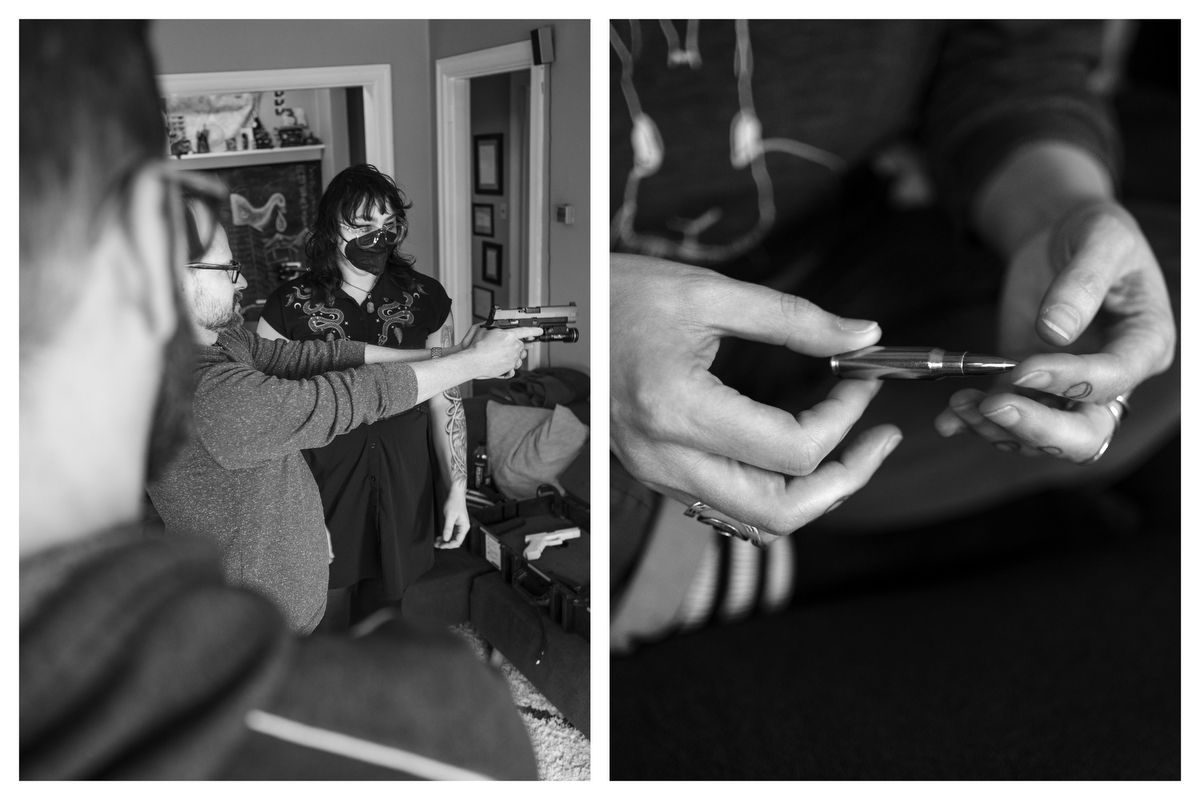 A Private LGBTQ+ gun training class at a residence in Portland, Oregon on February 15, 2025.
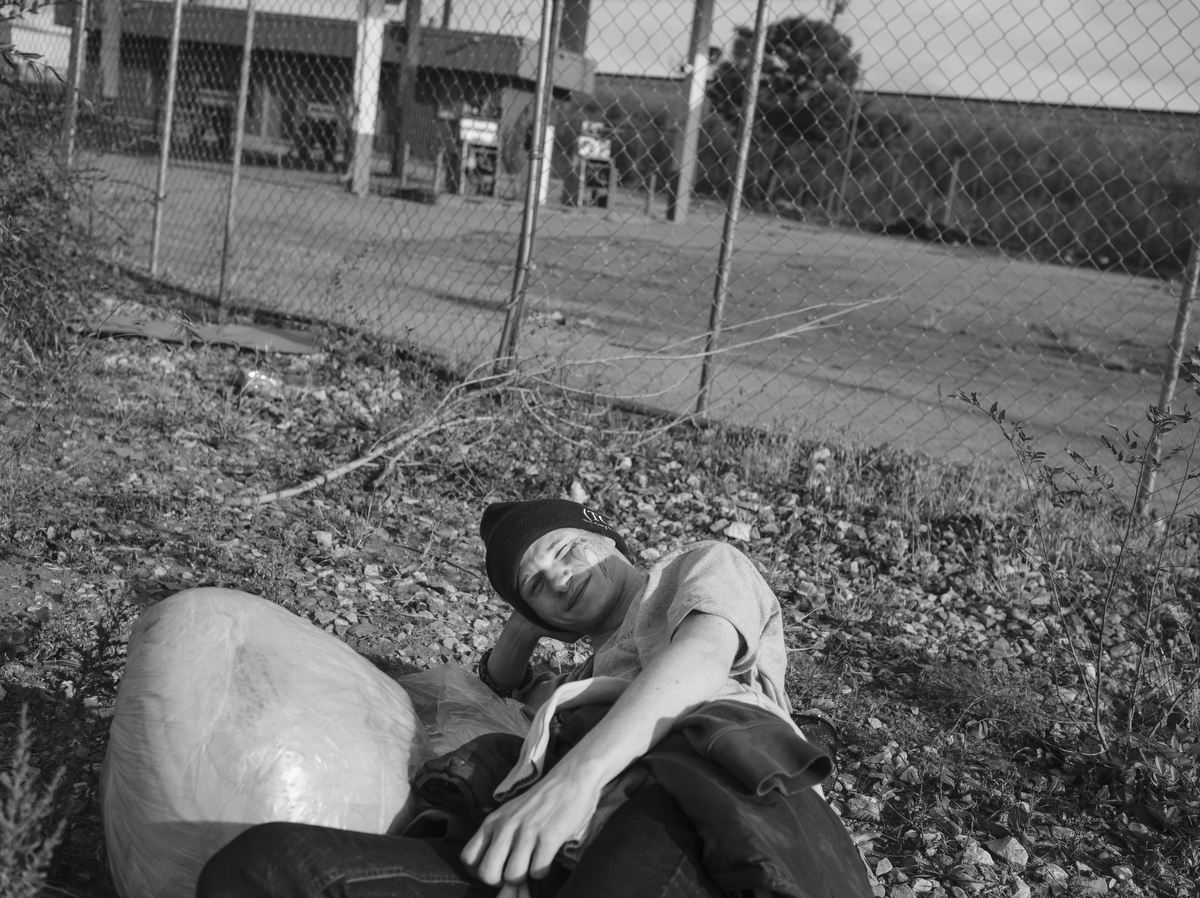
Portrait of Chris in Denver, Colorado, while hitchhiking to Wyoming to propose to his girlfriend on Nov. 10, 2025.
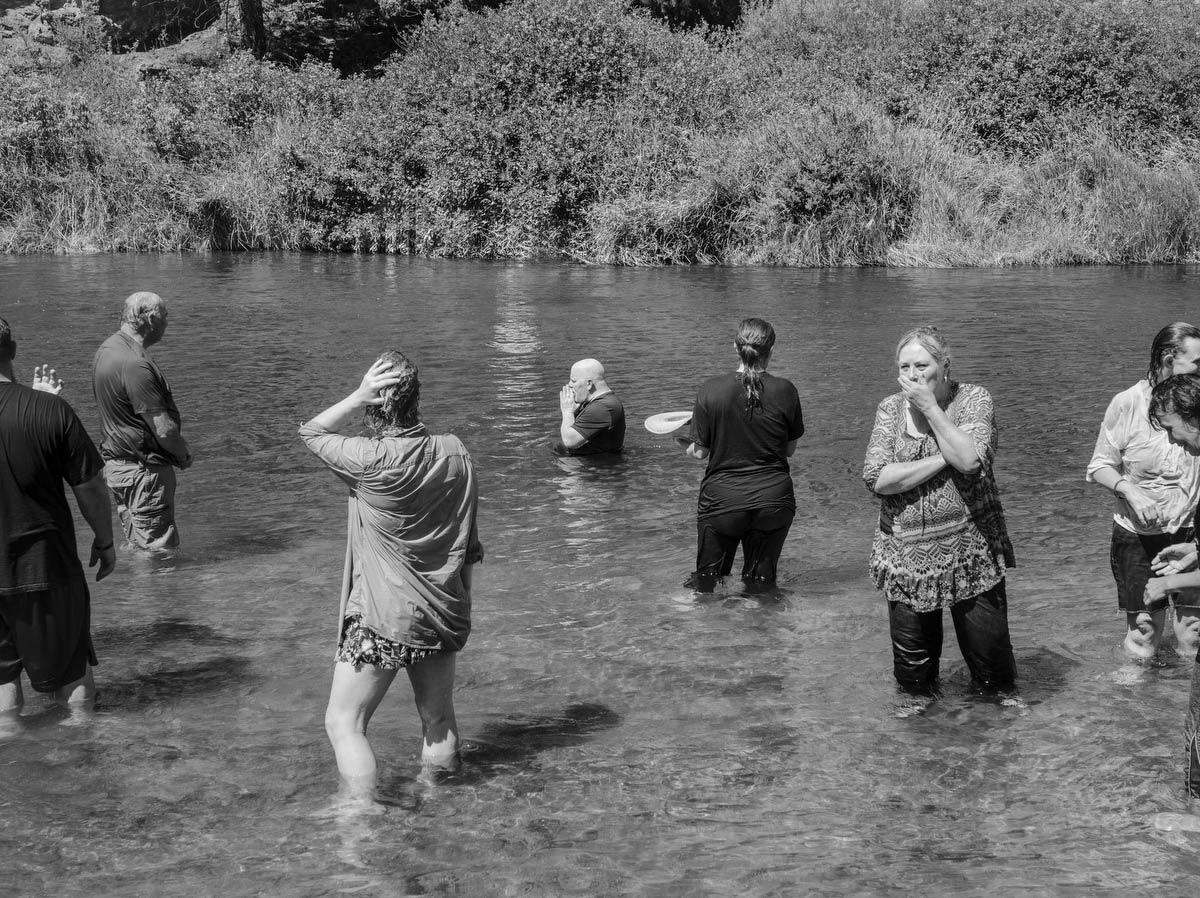
A Christian evangelical sect performs a public baptism along the Deschutes River in Bend, Oregon on August 9, 2025.
The frontier was never just a place on a map. It has always been a story we keep telling ourselves, even as the land beneath us buckles under the weight of that narrative’s consequences.
The myths that once justified conquest now surface in new forms, shaping policy, identity, and the lives of people still searching for a foothold in a country that has never stopped remaking itself through exclusion and erosion. Yet in the faces of those I meet on the road, I see the possibility of a different inheritance, one built not on erasure but on reckoning. If America is still writing its next chapter, then perhaps the most urgent task is learning to listen to the echoes of the past without mistaking them for a guide.