

First, you get the alarming news of an incoming airstrike. Or you don’t.
Then you hear what can only be described as thundering sounds overhead. This is usually when you start to hear your own people firing gunshots into the sky, warning anyone in the vicinity of the airstrike. There is no need to point a firearm at your own people when the enemy is overhead. At night, these pretty little red bullets shine bright and illuminate the sky, shooting at an enemy they cannot reach.
Then comes the unmistakable thundering overhead, followed by a boom. Or many booms. A shaken building, a broken window, a door’s thud… these are all signs you got off easy.
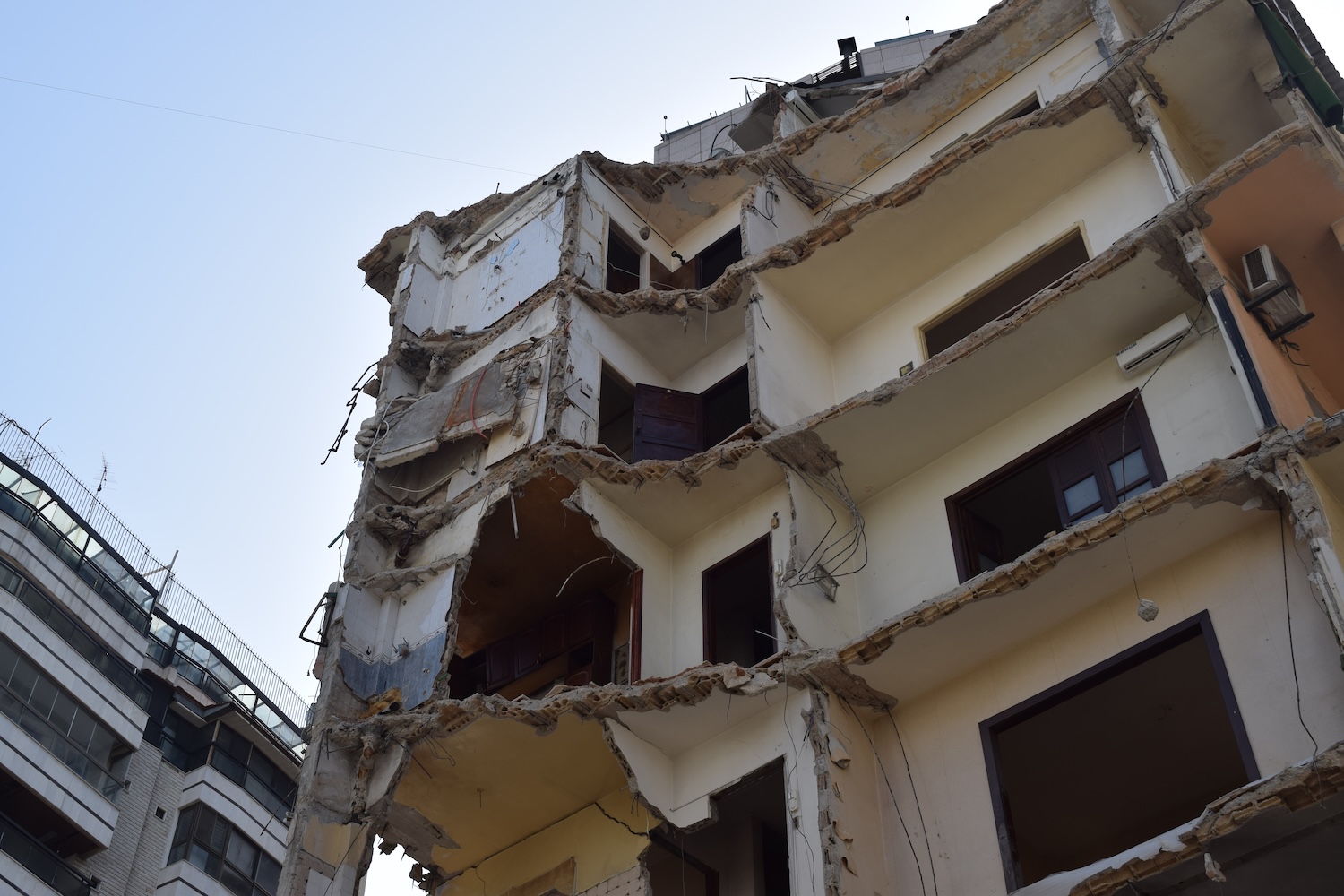
A few weeks later, when you happen to pass by the neighborhood that didn’t get off easy, you see flattened buildings. Buildings that look like they’ve been bit in half. Your heart still sinks. Slowly and surely the grey color settles into you, and becomes another part of a neighborhood targeted by an airstrike. It becomes a normal part of your drive home, a sight that now makes you shake your head instead of emotionally engaging with the depth of the tragedy. If you look closely enough into the scattered debris and rubble, beyond the few intact remains that the homeowners could find, if any, it is a sea of grey, miscellaneous objects that were once treasured possessions, appliances, clothes, and more. It is all grey. And it is all flattened, just as your emotions and reactions have been.
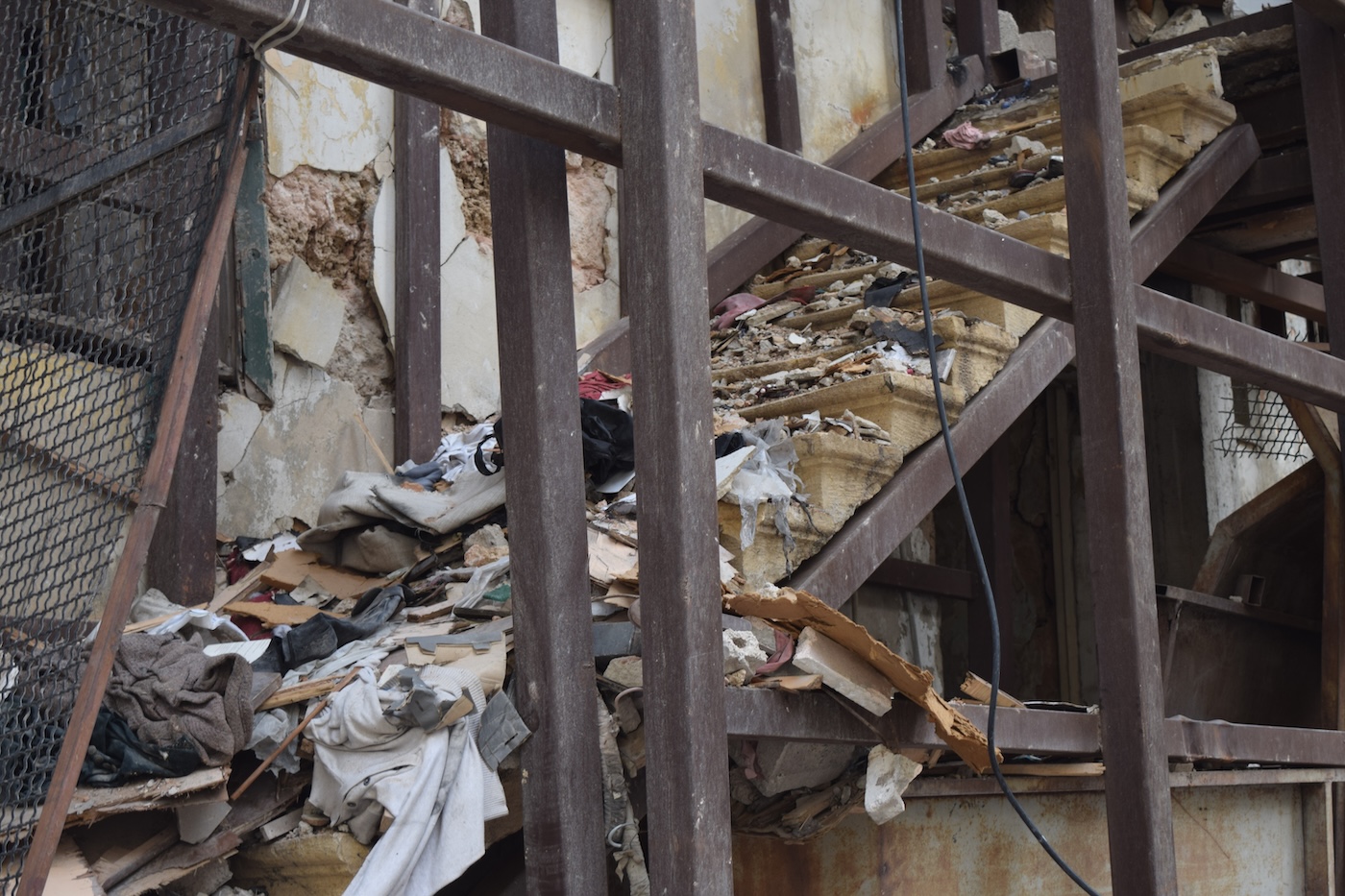
This concept of greyness is not new to Lebanon, or to Palestine. The grey is a result of reinforced concrete pulverized into billions of tiny grey particles that contain cement, water, and more. As the building is flattened, or bitten, it returns to its cementitious components. To your eyes, it is as though time is being played with, an attempt to erase the building or the floor as if it was never there. This genocidal shade of grey has become a staple of spaces targeted by the enemy. It is the tool of its continuation of ethnic cleansing and aggression, painting its way through neighborhoods and communities. It even makes its way to satellite images on a larger scale, where you can see exactly the location of a wiped-out neighborhood.
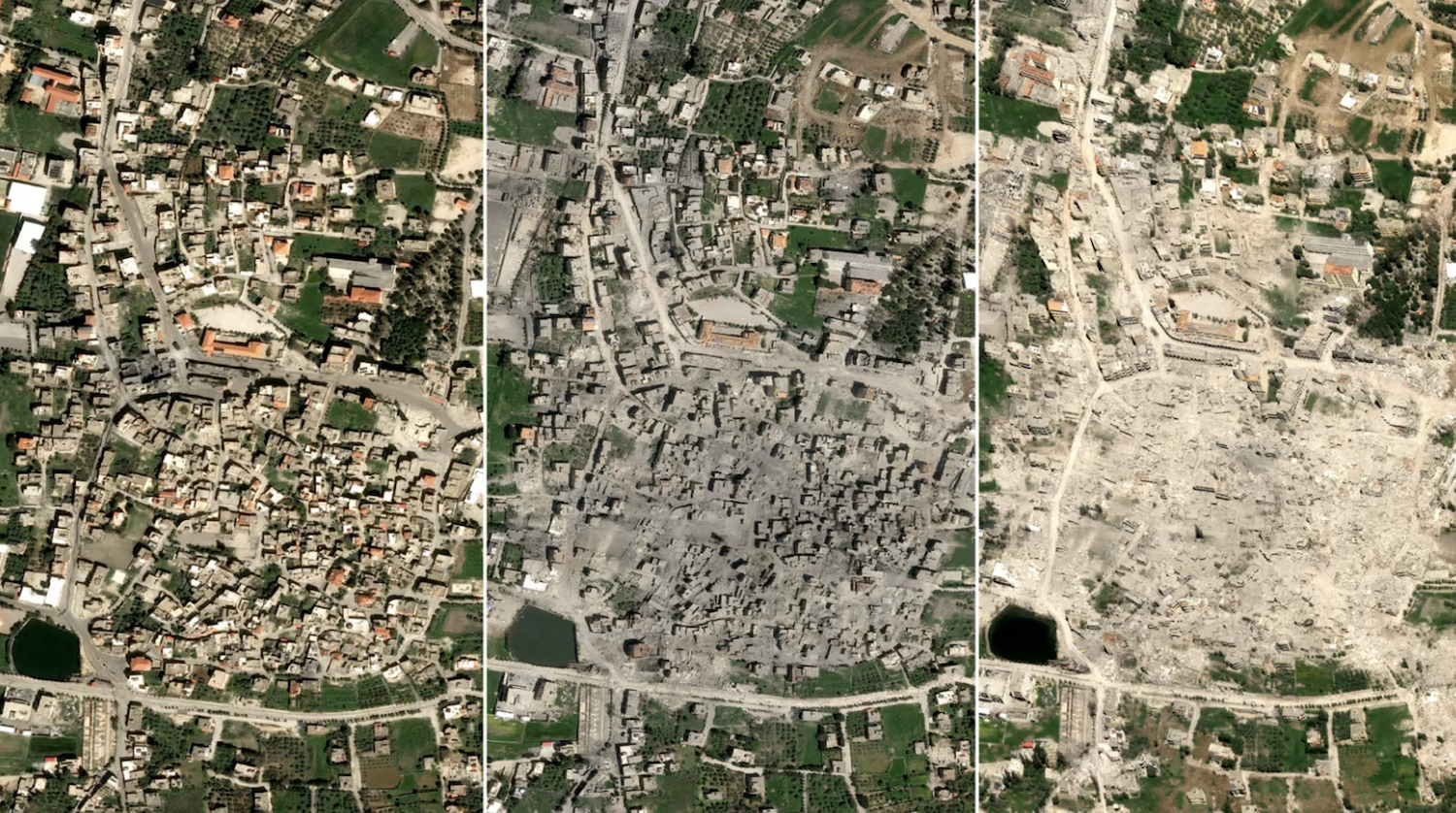
Grey is the new red. It is the new genocidal mark left behind, if not by blood, but by destruction and cleansing of all forms of belonging. It is the new colonial mark of the occupation, declaring their arrival before their settlements do. This grey also settles more into Lebanese society with every negotiation with the enemy. A new “grey” zone of morality is presented, where all past war crimes are overlooked for the sake of what is being called by our politicians a “safe, sovereign country.” Grey is the dust in the Lebanese people’s vacant homes in the South, the longer they are occupied by the enemy. Grey are their hairs with time, as the occupation slowly seeps into their homes after their government’s betrayal.
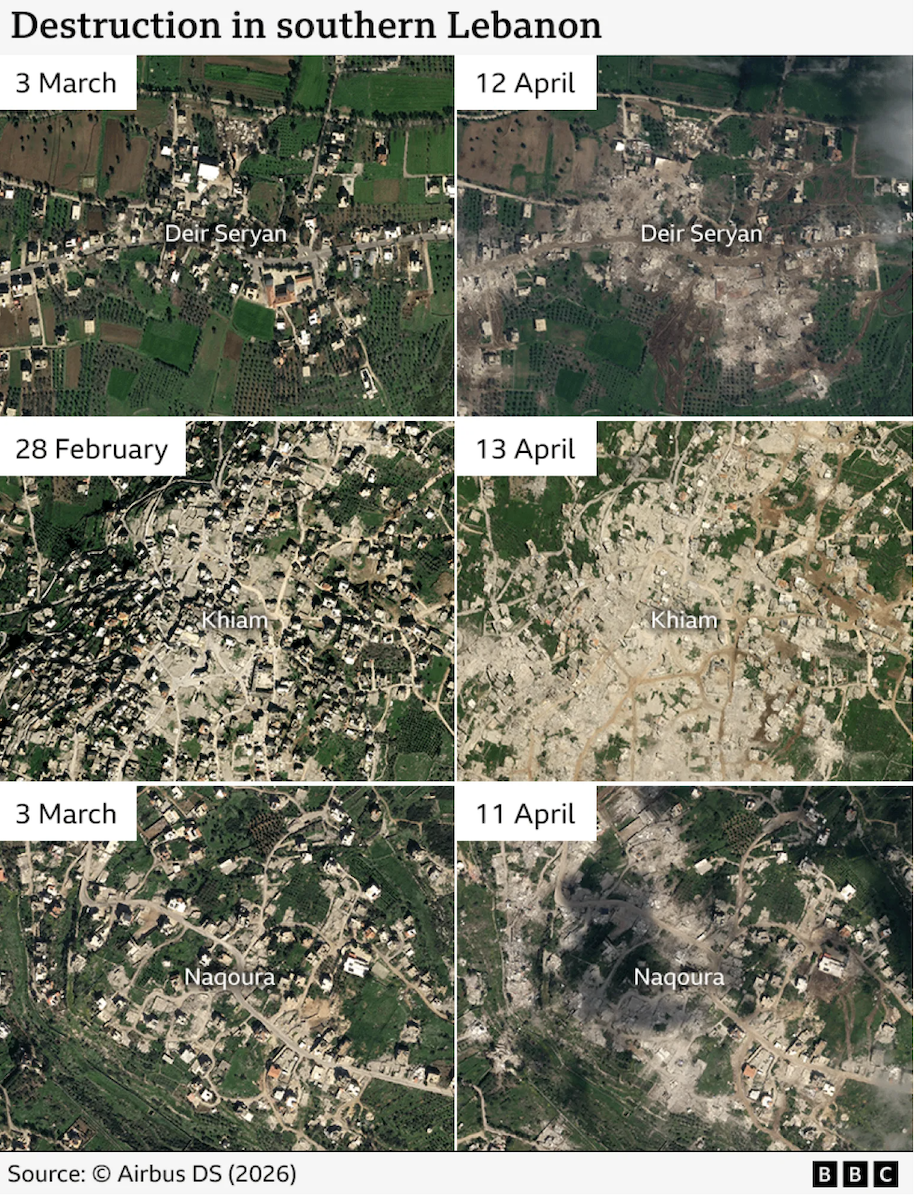
Lebanese villages on the enemy’s border are also now grey, as satellite images reveal some towns leveled to the ground. Aita-Al-Shaab, Taybeh, Deir Seryan, Khiam, Naqoura, and Beit Yahun are only a few. The color grey has become a new indicator of occupied or blown-up land, trying to be pulled under Zionist control. We have been programmed to make this association. Grey is not fear anymore, but sadness, acceptance, and neutrality.
Grey are the Occupied territories burning to the ground with foreign pine trees planted instead of Palestinian olives. The land remembers, and the enemy’s ecocide results in its own self-sabotage.
All we can do until the inevitable end of the Zionist state is hold the keys to our land close to our heart. Houses will crumble into dust and stone, concrete will crack and eventually break, but the roots that run deep never forget.